2025-04-17 11:06
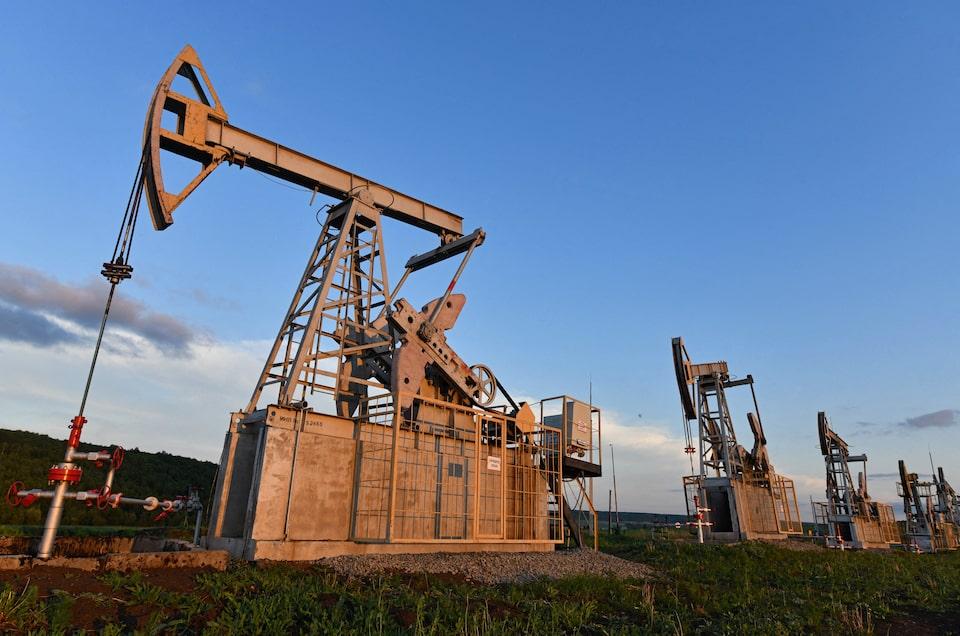
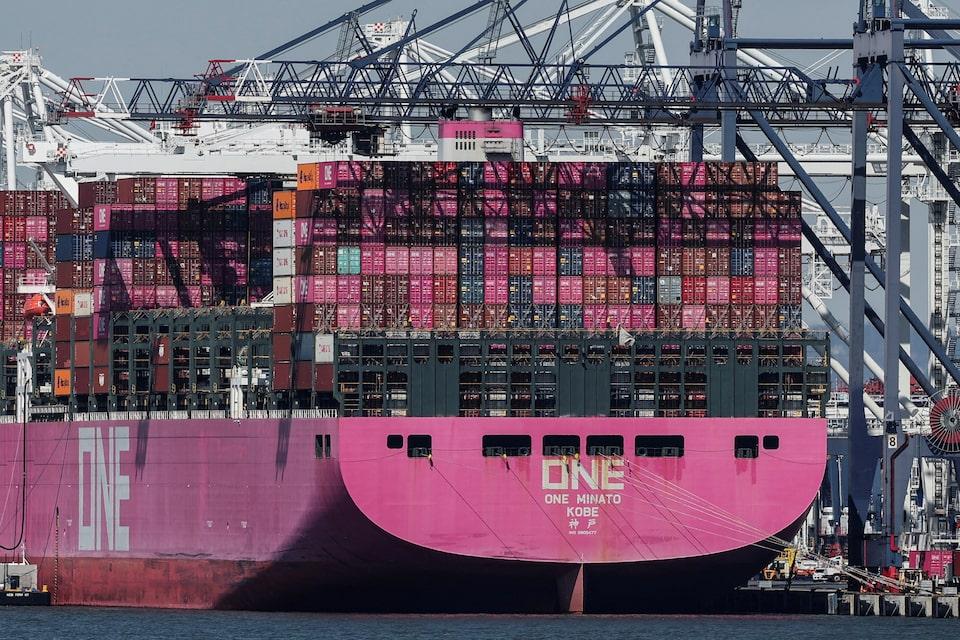
USTR exempts owners of vessels servicing Great Lakes, Caribbean and US territories Industry feared fees could raise US export prices, import costs Plan revised after opposition from global maritime industry Fees apply once per vessel voyage Empty bulk ships that collect US exports are exempt LOS ANGELES, April 17 (Reuters) - The Trump administration shielded on Thursday domestic exporters and vessel owners servicing the Great Lakes, the Caribbean and U.S. territories from port fees to be levied on China-built vessels, aiming to revive U.S. shipbuilding. The Federal Register notice posted by the U.S. Trade Representative was watered down from a February proposal for fees on China-built ship of up to $1.5 million per port call that sent a chill through the global shipping industry. Sign up here. Ocean shipping transports about 80% of global trade - from food and furniture to cement and coal. Industry executives feared virtually every cargo carrier could face steep, stacking fees that would make U.S. export prices unattractive and foist annual import costs of $30 billion on American consumers. "Ships and shipping are vital to American economic security and the free flow of commerce," U.S. Trade Representative Jamieson Greer said in a statement. "The Trump administration's actions will begin to reverse Chinese dominance, address threats to the U.S. supply chain, and send a demand signal for U.S.-built ships." Still, the fees on Chinese-built ships add another irritant to swiftly rising trade tensions between the world's two largest economies as President Donald Trump seeks to draw China into talks on his new tariffs of 145% on many of its goods. The revisions tackle major concerns voiced in a tsunami of opposition from the global maritime industry, including domestic port and vessel operators as well as U.S. shippers of everything from coal and corn to bananas and cement. They grant some requested carve-outs, while phasing in fees that reflect the fact U.S. shipbuilders, which turn out about five vessels annually, will need years to compete with China's output of more than 1,700 a year. The USTR exempted ships that ferry goods between domestic ports as well as from those ports to Caribbean islands and U.S. territories. Both American and Canadian vessels that call at Great Lakes ports have also won a reprieve. As a result, companies such as U.S.-based carriers Matson and Seaboard Marine would dodge the fees. Also exempt are empty ships arriving at U.S. ports to load up with exports such as wheat and soybeans. Foreign roll-on/roll-off auto carriers, known as ro-ros, are eligible for refunds of fees if they order or take delivery of a U.S.-built vessel of equivalent capacity in the next three years. The USTR set a long timeline for liquefied natural gas (LNG) carriers. They are required to move 1% of U.S. LNG exports on U.S.-built, operated and flagged vessels within four years. That percentage would rise to 4% by 2035 and to 15% by 2047. The agency, which will implement the levies in 180 days, also declined to impose fees based on the percentage of Chinese-built ships in a fleet or on prospective orders of Chinese ships, as originally proposed. The fees will be applied once each voyage on affected ships a maximum of six times a year. Executives of global container ship operators, such as MSC and Maersk (MAERSKb.CO) , opens new tab, which visit multiple ports during each sailing to the United States, had warned the fees would quickly pile up. Instead of a flat individual fee on large vessels, the USTR instead opted to levy fees based on net tonnage or each container unloaded, as was called for by operators of small ships and transporters of heavy commodities such as iron ore. From October 14, Chinese-built and owned ships will be charged $50 a net ton, a rate that will increase by $30 a year over the next three years. That will apply if the fee is higher than an alternative calculation method that charges $120 for each container discharged, rising to $250 after three years. Chinese-built ships owned by non-Chinese firms will be charged $18 a net ton, with annual fee increases of $5 over the same period. It was not immediately clear how high the maximum fees would run for large container vessels, but the new rules give non-Chinese shipping companies a clear edge over operators such as China's COSCO (600428.SS) , opens new tab. The notice comes on the one-year anniversary of the launch of the USTR's investigation into China's maritime activities. In January, the agency concluded that China uses unfair policies and practices to dominate global shipping. The actions by both the Biden and Trump administrations reflect rare bipartisan consensus on the need to revive U.S. shipbuilding and strengthen naval readiness. Leaders of the United Steelworkers and the International Association of Machinists and Aerospace Workers, two of five unions that called for the investigation that led to Thursday's announcement, applauded the plan and said they were ready to work with the USTR and Congress to reinvigorate domestic shipbuilding and create high-quality jobs. The American Apparel & Footwear Association reiterated its opposition, saying port fees and proposed tariffs equipment will reduce trade and lead to higher prices for shoppers. At a May 19 hearing, the USTR will discuss proposed tariffs on ship-to-shore cranes, chassis that carry containers and chassis parts. China dominates the manufacture of port cranes, which the USTR plans to hit with a tariff of 100%. The Federal Register did not say if the funds raised by the fees and proposed crane and container tariffs would be dedicated to fund a revival of U.S. shipbuilding. https://www.reuters.com/markets/global-shippers-await-word-us-plan-hit-china-linked-vessels-with-port-fees-2025-04-17/
2025-04-17 10:29
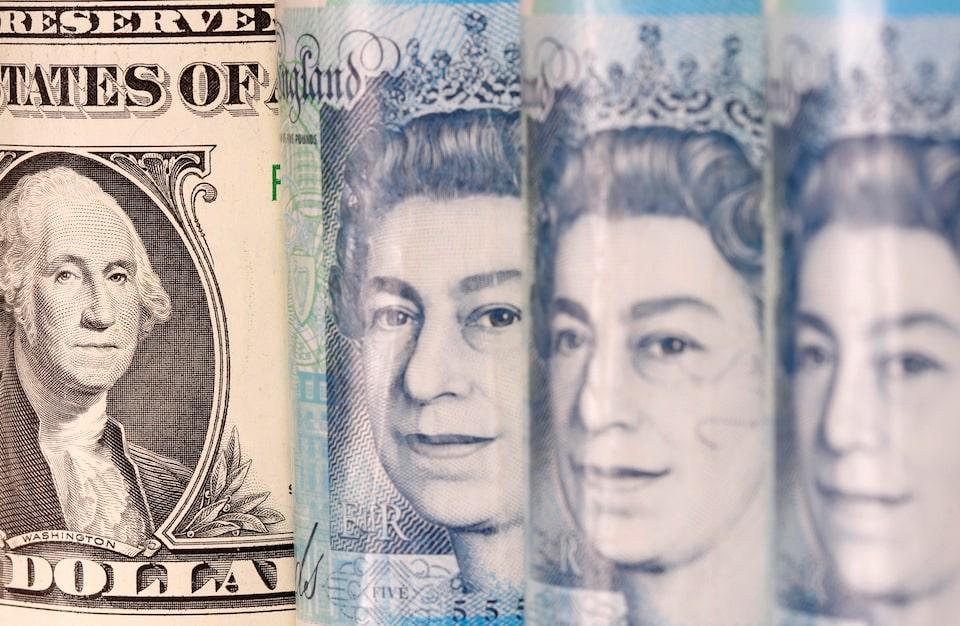
April 17 (Reuters) - The pound gained against the euro on Thursday and held steady against the U.S. dollar after economic data over the last week eased concerns about the British economy against the backdrop of U.S. tariffs. Concerns about the impact of U.S. tariffs on growth and inflation have driven investors away from U.S. assets, including the dollar. Sign up here. Sterling steadied at $1.3243 and was on track for eight straight days of gains against the U.S. currency. It also strengthened against the euro, which dipped to 85.90 pence ahead of an expected rate cut by the European Central Bank later on Thursday. Trading volumes and volatility were subdued ahead of the long Easter break, with UK markets closed on Friday and Monday. Economic data has shown UK economic growth holding up, inflation slowing and wage growth strong despite a fall in job vacancies in the run-up to an increase in employer tax this month. Together with expectations of a possible U.S.-UK trade deal and a weakened dollar, Britain's economic resilience has helped the pound to rally. "The backdrop for the UK and for sterling really is not too bad," Kenneth Broux, head of corporate research FX and rates at Societe Generale, said. "As long as we don't have another leg of risk-off and another spike in gilt yields, sterling should continue to do quite well." UK gilt yields, which surged last week on worries about Trump's trade tariffs, have eased this week. https://www.reuters.com/markets/currencies/sterling-steadies-against-dollar-ahead-long-easter-weekend-2025-04-17/
2025-04-17 10:26
What matters in U.S. and global markets today By Mike Dolan , opens new tab, Editor-At-Large, Financial Industry and Financial Markets Sign up here. As the Federal Reserve takes a hawkish turn in the face of another Wall Street swoon, the European Central Bank appears set to ease borrowing rates again - or at least that's what markets expect. In today's column, I get into all the details and explain why the bond market doesn't appear to be too worried about U.S. long-term inflation. The answer may not be all good news. I'll be off tomorrow, as the U.S. stock market will be closed for the Good Friday holiday, and then I'm on holiday next week. But 'Morning Bid' will be back on Tuesday, with all the markets coverage you're looking for from my Reuters colleagues. Now onto the market news. Today's Market Minute * European shares were mixed on Thursday as investors parsed corporate earnings to gauge the fallout of U.S. President Donald Trump's erratic trade policies, while awaiting the European Central Bank's policy decision later in the day. * Japan is "deeply concerned" over global economic fallout from U.S. President Donald Trump's trade tariffs, Finance Minister Katsunobu Kato said on Thursday in the government's strongest warning yet as the two nations began trade talks. * U.S. President Donald Trump's desire for a stronger yen against the dollar is almost certain to figure into trade negotiations with Japan, but analysts say any effort to shift the currencies is fraught with risks for both sides. * U.S. Federal Reserve Chair Jerome Powell said on Wednesday the Fed would wait for more data on the economy's direction before changing interest rates, but cautioned that President Donald Trump's tariff policies risked pushing inflation and employment further from the central bank's goals. * Plans are afoot for an American-owned company seized by the Kremlin and placed under state control to be used to supply food to the Russian army, a document seen by Reuters showed, potentially threatening Moscow's warming relations with the U.S. ECB set to ease as Fed delivers hawkish twist The final trading day of a holiday-shortened week for U.S. markets is seeing stock futures reclaim some of Wednesday's steep tech-led losses. An earnings beat from Taiwan's TSMC (2330.TW) , opens new tab, and its unchanged revenue growth outlook, helped steady the chip ship, which had wobbled again yesterday as new licensing fees linked to the U.S.-China trade spat sank Nvidia (NVDA.O) , opens new tab stock by almost 7%. But if investors expected the Fed to bail the market out, Chair Jay Powell made it clear that's not happening any time soon. Speaking in Chicago late yesterday, Powell seemed to suggest that the central bank would be on hold for an extended period to tamp down inflation expectations. "Tariffs are highly likely to generate at least a temporary rise in inflation," he said. "The inflationary effects could also be more persistent." While Powell's resolve to hold the line did little to offset a 2%-plus drop in the S&P 500, Treasury yields did fall back as market-based measures of long-term inflation expectations remain anchored close to 2%. Meanwhile, the Bank of Canada also surprised some by resisting another rate cut on Wednesday, perhaps mindful of the upcoming Canadian election. With this North American rate stasis in the background, the ECB is now on deck. Money markets are priced for another quarter point ECB rate cut today to 2.25%, as the euro is close to a three-year high against the ailing dollar amid heightened trade war uncertainty and the euro's real effective exchange rate index is at a 10-year high. The euro ebbed a touch ahead of the decision, German bund yields nudged higher and euro stock benchmarks (.STOXXE) , opens new tab were slightly in the red. A rare earnings miss from luxury brand Hermes (HRMS.PA) , opens new tab dampened the mood. Back on Wall Street, investors are awaiting another heavy release of housing and jobless data and earnings updates, including Netflix (NFLX.O) , opens new tab, on Thursday. March retail and industry figures on Wednesday showed only slight misses on the most sensitive readings. On the trade war front, attention turns to Washington's negotiations with Japan's delegation. Italy's Prime Minister Georgia Meloni also meets President Donald Trump on Thursday. Finally, check out my column today, where I look at how the Fed's hard-nosed stance in the face of tariff uncertainty and market volatility appears to be winning the battle to keep long-term inflation expectations anchored. Chart of the day As the U.S.-China trade war escalates, everyone is watching China's holdings of U.S. government debt like a hawk, especially following a serious disturbance in Treasury markets last week. Treasury data on foreign holdings of U.S. debt securities released on Wednesday are only for February - before the tariff spiral truly kicked off. But the numbers showed holdings by Chinese entities actually ticked up during the month, though that's likely only part of the picture. China held $784.3 billion, up from $760.8 billion, and Japanese investors also upped their lot too. There is a presumption that many Chinese holdings are held in proxy in Europe, most likely captured as Belgian holdings where the Euroclear clearing house is based. That said, Belgium-based holdings , opens new tab also rose by almost $20 billion in February too. So if China has offloaded Treasuries of late, we will have to wait for further hard data to find out. Today's events to watch * European Central Bank policy decision, with press conference from ECB President Christine Lagarde * U.S. March housing starts/permits, weekly jobless claims, Philadelphia Federal Reserve's April business survey * Federal Reserve Board Governor Michael Barr speaks * International Monetary Fund Managing Director Kristalina Georgieva speaks ahead of IMF/World Bank Spring meeting * Japan Economy Minister Ryosei Akazawa meets U.S. Treasury Secretary Scott Bessent in Washington. Italy's Prime Minister Giorgia Meloni meets U.S. President Donald Trump in Washington * US corporate earnings: Netflix, American Express, State Street, Blackstone, Charles Schwab, Snap-On, Fifth Third Bancorp, DR Horton, KeyCorp, Huntington Bancshares, Marsh & Mclennan, UnitedHealth, Truist Financial, Regions Financial etc * U.S. Treasury sells 5-year inflation protected securities Opinions expressed are those of the author. They do not reflect the views of Reuters News, which, under the Trust Principles , opens new tab, is committed to integrity, independence, and freedom from bias. https://www.reuters.com/markets/us/global-markets-view-usa-2025-04-17/

2025-04-17 10:13
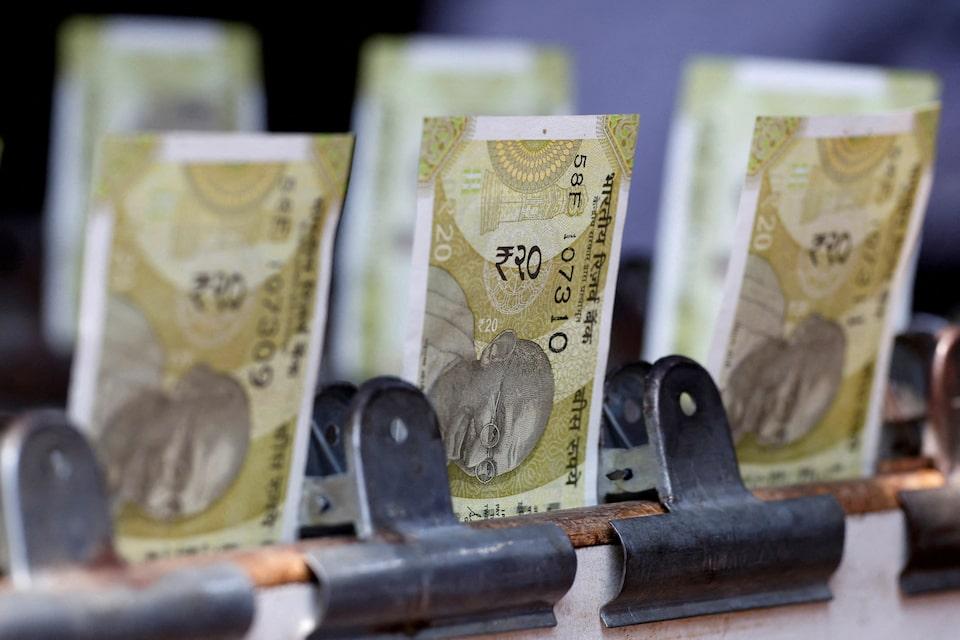
MUMBAI, April 17 (Reuters) - The Indian rupee rose on Thursday to log its best weekly performance in a month as foreign portfolio inflows into Indian equities picked up and as the dollar remained on the defensive amid concerns about how tariffs would affect the world's largest economy. The rupee closed at 85.3675 against the U.S. dollar, up from its close at 85.6775 in the previous session. The currency rose about 0.8% week-on-week, its best weekly gain since March 17. Sign up here. Indian financial markets are shut on Friday for the Good Friday holiday. Persistent weakness in the U.S. dollar has helped Asian currencies across the board, while inflows into Indian stocks have also picked up, helping lift the rupee. Foreign investors have net bought over $1 billion of Indian stocks over the last two trading sessions, per provisional exchange data. India's benchmark equity indexes, the BSE Sensex (.BSESN) , opens new tab and Nifty 50 (.NSEI) , opens new tab, ended nearly 2% higher each on Thursday to log their best weekly rise in over four years. Financials led the charge on Thursday, with the financials services index (.NIFTYFIN) , opens new tab rising 6% for the week. Bullish wagers on some emerging Asian currencies, including the rupee, have gathered steam over the last fortnight on the back of a persistently weaker dollar, per a Reuters poll. The dollar nudged higher against major peers on Thursday but was unable to benefit from Federal Reserve Chair Powell's remarks that the central bank would wait for clarity on the impact of tariffs before moving on policy rates again. "The greenback is still responding to the narrative of relative US assets underperformance and growth concerns, which are arguably being compounded by a hawkish Fed," ING Bank said in a note. Meanwhile, dollar-rupee forward premiums, declined with the 1-year implied yield easing to a three-week low of 2.13% on the back of higher U.S. bond yields and an uptick in the rupee. https://www.reuters.com/markets/currencies/inflows-faltering-dollar-help-rupee-log-best-week-month-2025-04-17/
2025-04-17 09:57
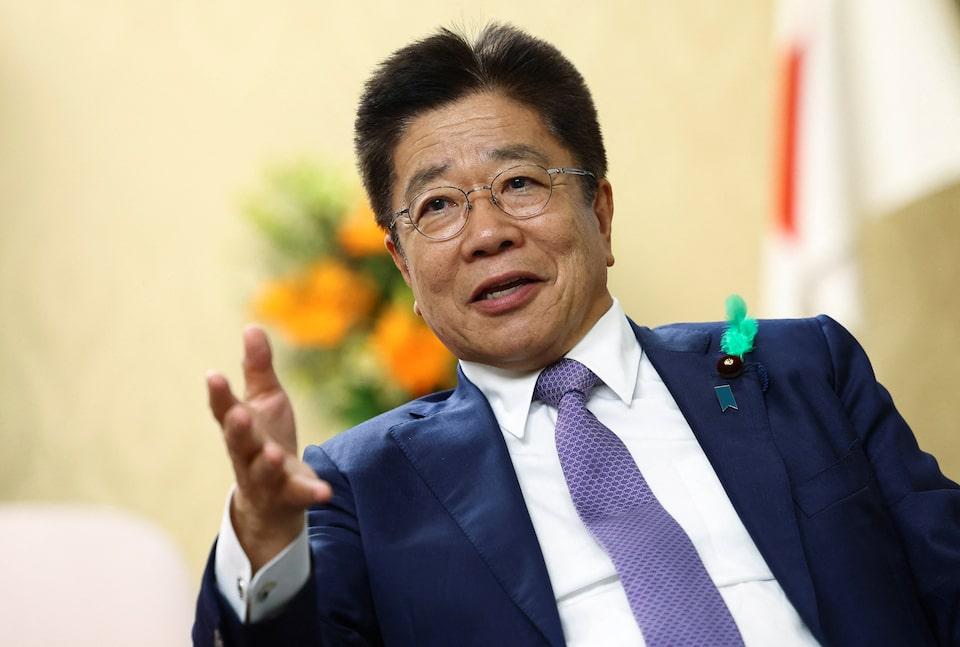
US tariffs, market volatility risk hurting economy, Japan finance minister says Japan to closely communicate with US on FX, Kato says No comment on what will be discussed at talks with Bessent Japan's Katsunobu Kato speaks to Reuters before US meetings TOKYO, April 17 (Reuters) - Japan is "deeply concerned" about global economic fallout from U.S. President Donald Trump's trade tariffs, Finance Minister Katsunobu Kato said on Thursday in the government's strongest warning yet as the two nations began trade talks. In an interview with Reuters in Tokyo hours after the talks began in Washington, Kato also voiced concern over recent volatile market moves triggered by Trump's tariff announcements, saying they could hurt Japan's economic recovery. Sign up here. "The recent U.S. tariff measures affect various industries and heighten uncertainty. We're deeply concerned they could affect Japan's economy, as well as the global economy, through various routes such as trade and financial markets," said Kato, who plans to go to Washington next week for meetings of the International Monetary Fund and the Group of 20. Kato is also expected to meet separately with Treasury Secretary Scott Bessent to continue the talks begun by Prime Minister Shigeru Ishiba's top tariff negotiator Ryosei Akazawa. Trump unexpectedly joined those talks, which included Bessent. "There's a risk of exerting downward pressure on Japan's economy," Kato said of the U.S. tariffs and the ensuing market volatility, in his first media interview since Trump announced "reciprocal" tariffs on many nations on April 2. Kato said he will "closely communicate" with the U.S. on currency issues, adding Tokyo and Washington have long agreed that excessive volatility and disorderly moves in currency rates are undesirable. "It's important for currency rates to move stably, reflecting fundamentals. There's no change to the government's concern over currency market developments, including speculative moves," he said. "We need to scrutinise how the U.S. tariff measures affect financial market moves, including currency rates." NO WORD ON YEN DISCUSSIONS Kato declined to comment on how any discussions on currencies could unfold once he meets Bessent, saying that doing so now would be premature and cause undue speculation in the market. "The only thing I can say is that we will actively exchange views based on Japan's basic stance" on currencies, Kato said, when asked about market speculation that Washington could ask Japan to join a coordinated effort to weaken the dollar. Trump has indicated he wants the trade talks to include his accusations that Japan intentionally weakens the yen to help its exporters and his complaints that Japan does not pay enough to support U.S. troops based in the country. Japan, which denies manipulating its currency, wants to avoid such topics. Trade negotiator Akazawa, Japan's economic revitalisation minister, said exchange rates did not come up in Wednesday's talks, adding that both sides deferred to an earlier agreement between their leaders that currency matters would be set aside for talks between their finance chiefs. Akazawa also brushed aside the idea that Washington might seek a coordinated effort to weaken the dollar. "As it has done in the past, Japan's government could take action in the market if there are speculative moves but it won't do anything beyond that," Akazawa told reporters in Washington after the talks. "Japan isn't manipulating the market to weaken the yen in the first place." The policy chief of Ishiba's ruling party, Itsunori Onodera, said on Sunday that Japan must strengthen the yen, such as by helping boost the country's industrial competitiveness, to fight inflation. U.S. MIGHT TARGET BOJ But even as politicians talk up the yen, the Trump administration could target the Bank of Japan over the currency's weakness, some analysts say. For more than a decade, the BOJ pursued a radical monetary easing to fight entrenched deflation, even as other big central banks raised interest rates, driving the yen to near three-decade lows against the dollar. And while the BOJ has begun raising rates, it is moving slowly and rates remain extremely low. Kato stressed that monetary policy decisions fall under the jurisdiction of the BOJ but said the government will deepen dialogue with the central bank on the economy, including the impact of U.S. tariffs. "There is no change to our expectations the BOJ would guide monetary policy appropriately to achieve its 2% inflation target in a stable and durable manner," he said. Some Japanese lawmakers and policymakers have said Japan's heavy reliance on global free trade heightens the need to convince the U.S. that tariffs are counterproductive, and reach out to other countries for policy coordination. In the bilateral trade negotiations, Japan should explain how it can help the U.S. resuscitate its ailing manufacturing sector and narrow the huge U.S. trade deficit, Kato said. He countered the view that Trump's protectionist policies could create dysfunction in multilateral cooperation, in which the U.S. plays a crucial role. "Obviously, any country would put its interest first. But countries have made efforts to iron out their differences," Kato said. "Each country has its own situation and views. But it's our job as policymakers to seek a better approach that eventually benefits the U.S., Japan, and the global economy." https://www.reuters.com/world/japan-finance-minister-deeply-concerned-over-trump-tariff-impact-2025-04-17/
2025-04-17 07:47
PRAGUE, April 17 (Reuters) - The Czech Republic has become fully independent of Russian oil supplies for the first time in its history, government officials said on Thursday, following the completion of capacity upgrades on the TAL pipeline coming from the west. Sign up here. https://www.reuters.com/world/europe/czech-republic-becomes-fully-independent-russian-oil-government-says-2025-04-17/