2025-04-17 01:01
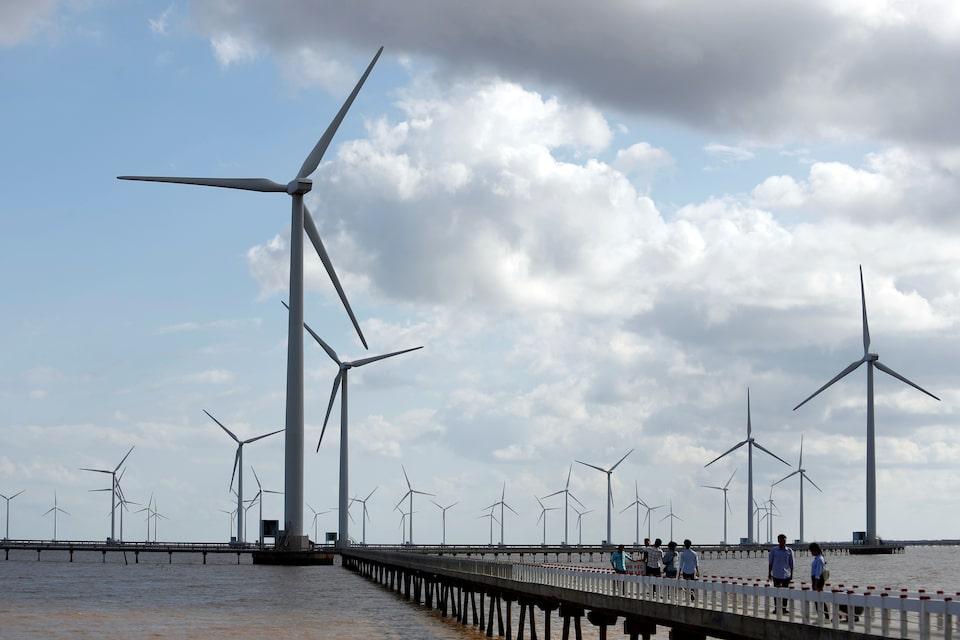
Vietnam targets generation capacity of 183-236 GW by 2030 Power plan requires investment of $136 billion by 2030, government says Vietnam's first nuclear power plants to come online in 2030-2035 HANOI, April 17 (Reuters) - Coal-reliant Vietnam aims to significantly ramp up its power generation capacity by 2030, focussing on renewable energy and adding nuclear power to the mix, according to the country's newly amended national power plan. To meet the targets, Vietnam would need a total investment of $136.3 billion by 2030, the government said, equivalent to more than a quarter of its 2024 gross domestic product. Sign up here. The Southeast Asian industrial hub needs to fast expand power supply as electricity demand grows, to avoid shortages that recently spooked foreign investors. It also wants to cut its use of coal, which remains its main source of energy. Under the adopted blueprint, Vietnam wants to raise its total installed capacity to a range of 183 to 236 gigawatts by 2030, up from more than 80 GW at the end of 2023, the government said late on Wednesday. To do so, it is renewing a bet on nuclear power, after it suspended its programme in 2016 following the Fukushima nuclear disaster in Japan and amid budget constraints. The first nuclear power plants would be online between 2030 and 2035, with combined capacity of up to 6.4 GW, the government said, adding that another 8 GW would be added to the mix by mid-century. Officials have said Vietnam has discussed small modular reactors, which the International Atomic Energy Agency says are still under development but would be more affordable to build than large power reactors. The government said earlier this year it would hold talks with foreign partners about nuclear power projects, including those from Russia, Japan, South Korea, France and the United States. On Tuesday, Korea Electric Power Corp (015760.KS) , opens new tab expressed interest in Vietnam's nuclear projects, as the company's chief visited the country. Sources close to the government told Reuters Vietnam is prioritising Russian and Japanese contractors, but remains open to others that offer good technology and competitive prices. Under the new plan, solar power would account for 25.3%-31.1% of total capacity by 2030, up from 23.8% in 2020, while onshore and nearshore wind energy would go up to 14.2%-16.1% from nearly zero at the start of the decade, the government said. The new targets come after authorities flagged a retroactive change to preferential prices for producers of solar and onshore wind energy, which has sparked concern among investors. Coal-fired power plants would account for 13.1%-16.9% of the mix, down from about one third in 2020, and plants using liquefied natural gas would account for 9.5%-12.3% of total generation capacity from zero now, according to the plan. The government has also set a target for offshore wind energy at 6-17 GW between 2030 and 2035. It had aimed for 6 GW for this decade, but none have been built yet. https://www.reuters.com/business/energy/vietnam-says-boost-power-capacity-136-bln-plan-2025-04-17/
2025-04-17 00:58
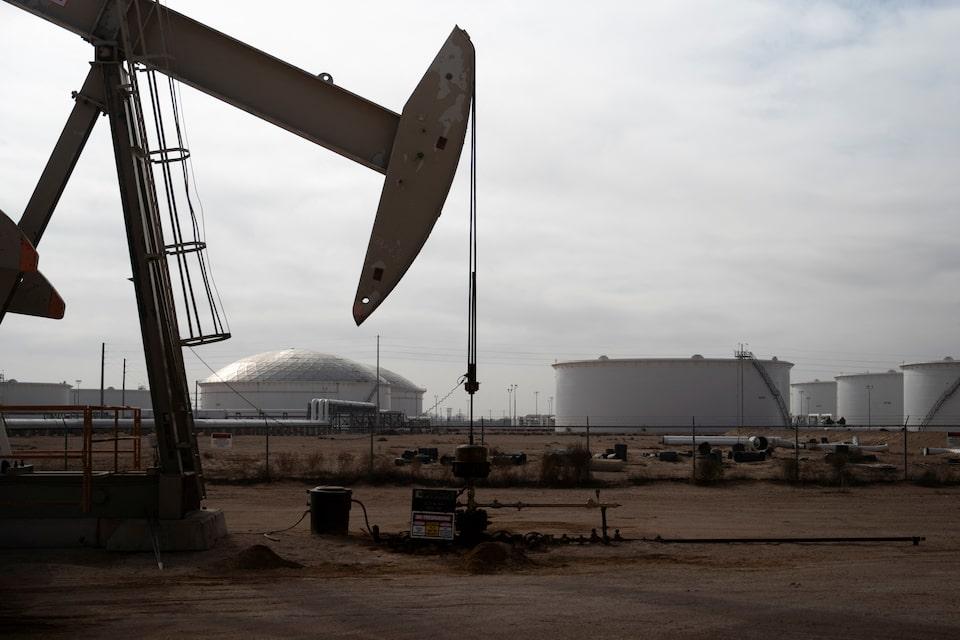
Trump expressed optimism about reaching a trade deal with Europe US issues new sanctions on Chinese importers of Iranian oil Iraq, Kazakhstan, others to cut output further in OPEC plan NEW YORK, April 17 (Reuters) - Oil prices settled more than 3% higher on Thursday, supported by hopes for a trade deal between the United States and the European Union and new U.S. sanctions to curb Iranian oil exports, which continued to elevate supply concerns. Brent crude futures settled $2.11, or 3.2%, higher to $67.96 a barrel, and U.S. West Texas Intermediate crude gained $2.21, or 3.54%, at $64.68 a barrel. Sign up here. For the week, both Brent and WTI gained about 5%, their first weekly gain in three weeks. Thursday is the last settlement day of the week ahead of the Easter holidays and trade volumes were thin. U.S. President Donald Trump and Italian Prime Minister Giorgia Meloni met in Washington and expressed optimism about resolving trade tensions that have strained U.S.-European relations. "We're going to have very little problem making a deal with Europe or anybody else, because we have something that everybody wants," Trump said. Reaching a trade deal with the EU could potentially limit oil demand destruction from Trump's tariffs, said Bob Yawger, director of energy futures at Mizuho. Sanctions issued by Trump's administration on Wednesday, including against a China-based "teapot" oil refinery, ramp up pressure on Tehran amid talks on the country's nuclear programme. "Teapot" is an industry term for small, independent and simple oil refiners. "These are far-ranging sanctions, focusing on the Chinese teapot refineries," said John Kilduff, partner with Again Capital. "It's a potential supply loss to the market." Washington also issued additional sanctions on several companies and vessels it said were responsible for facilitating Iranian oil shipments to China as part of Iran's shadow fleet. "The U.S. continues to aggressively sanction Iran and impose sanctions against buyers of Iranian oil. OPEC+ has also provided updates and reassurance to the market, stating that they remain in control with flexibility to cut production if needed," analysts at energy consulting firm Gelber and Associates said in a note. The Organization of the Petroleum Exporting Countries (OPEC) said on Wednesday it had received updated plans for Iraq, Kazakhstan and other countries to make further output cuts to compensate for pumping above quotas. However, OPEC, the International Energy Agency and several banks, including Goldman Sachs and JPMorgan, cut forecasts on oil prices and demand growth this week as U.S. tariffs and retaliation from other countries threw global trade into disarray. https://www.reuters.com/business/energy/oil-heads-weekly-rise-us-adds-sanctions-iran-opec-cuts-2025-04-17/
2025-04-17 00:48
April 16 (Reuters) - Valero Energy Corp (VLO.N) , opens new tab said on Wednesday it was taking a $1.1 billion pre-tax impairment related to its California refineries and told state regulators it would permanently shut or restructure its San Francisco-area refinery in Benicia, California by the end of April 2026. The move comes as refiners face growing regulatory and cost pressures in California, the largest U.S. gasoline market, where the state's emissions targets and proposed refinery transparency rules have weighed on long-term investment decisions. Sign up here. The Benicia converts an average of 145,000 barrels per day (bpd) of crude oil into motor fuels, according to the U.S. Energy Information Administration. "We understand the impact that this may have on our employees, business partners, and community, and will continue to work with them through this period," Lane Riggs, chief executive of San Antonio-based Valero, said on Wednesday. Valero also said on Wednesday it was weighing strategic options for its 91,300 bpd Los Angeles-area refinery. Riggs said in October that the company was keeping all options on the table for its two California refineries. The number of refineries in California processing crude oil has been shrinking with companies citing increased regulation like the state's plans to ban the sale of gasoline-powered automobiles by 2035. Six plants have shut since 2008. Two of those have converted to producing renewable diesel. Competing U.S. refiner Phillips 66 (PSX.N) , opens new tab, also in October said it would shutter its 139,000 bpd Los Angeles refinery within a year. That announcement came days after a state law was signed by Governor Gavin Newsom requiring refineries to keep stockpiles of fuel on hand to limit price spikes. Gasoline prices in California are among the highest in the United States due to the state's reliance on West Coast refineries or imports from Asia or the Middle East. Unlike other U.S. regions, there are no pipelines connecting California with refining centers along the Gulf Coast or in the Midwest. The Benicia refinery in the northeast of San Francisco Bay has a throughput capacity of 145,000 barrels per day. https://www.reuters.com/business/energy/valero-books-11-bln-impairment-may-idle-california-refinery-2025-04-17/
2025-04-17 00:43
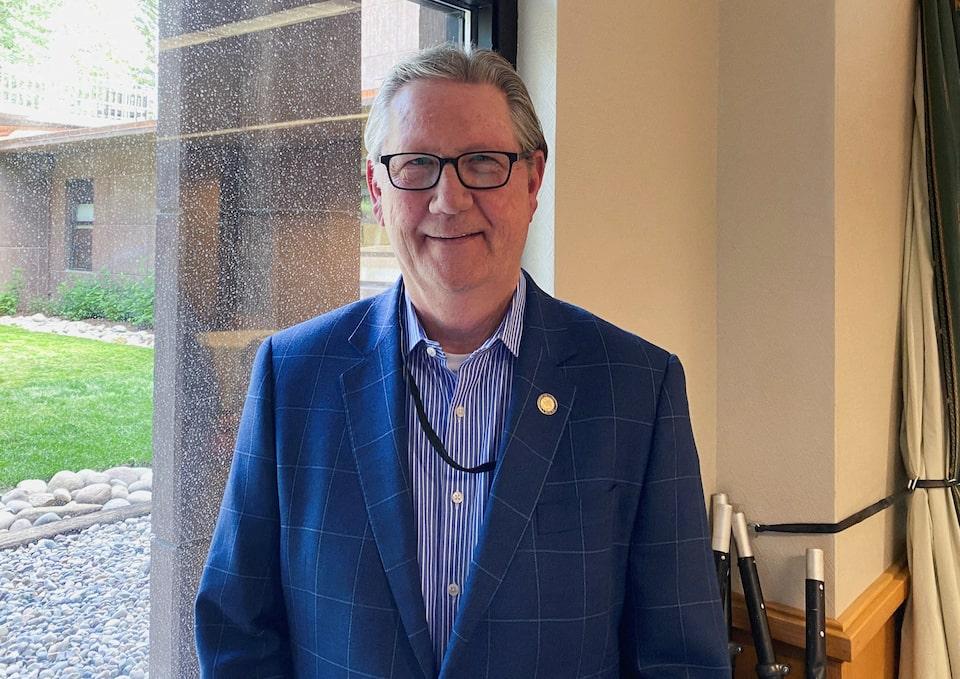
April 16 (Reuters) - The Federal Reserve faces a complicated picture for policy decisions, Kansas City Federal Reserve Bank President Jeff Schmid said on Wednesday, noting that while he is hearing nervousness about tariffs in the agricultural sector, a recent decline in energy prices may deliver an offsetting "shot in the arm" that could somewhat limit inflation. "I just think that we've got to, we've got to be a little patient to see how some of these things play out," Schmid said in a webcast conversation with Dallas Federal Reserve Bank President Lorie Logan at a Dallas Fed event. Sign up here. At the end of the day, he said, the Fed will "react in a positive way to any of those disruptions that might affect that dual mandate," referring to the Fed's mandates of achieving both price stability and full employment. Earlier on Wednesday, Fed Chair Jerome Powell said the U.S. central bank would wait for more data on the economy before considering any change in rates. But he warned that President Donald Trump's tariff policies risk both higher inflation and higher unemployment that could potentially force the Fed into choosing which fight to prioritize. Schmid and Logan did not have an in-depth discussion on interest-rate policy or of recent market volatility as investors digest the implications of Trump's trade policy. Schmid briefly touched on the importance of the Fed's political independence, which he said is what allows Fed policymakers to set rates with nothing but the financial and economic stability of Americans in mind. "Everything is being challenged now. ... All the firewalls we thought we had have turned into screen doors," he said. But, he added, "I think you are tested by fire ... and frankly the people I talk to, both politicians and the public, seem to be pleased with that structure, so I'm very optimistic." https://www.reuters.com/markets/us/feds-schmid-says-patience-needed-see-how-tariffs-play-out-2025-04-17/
2025-04-17 00:30
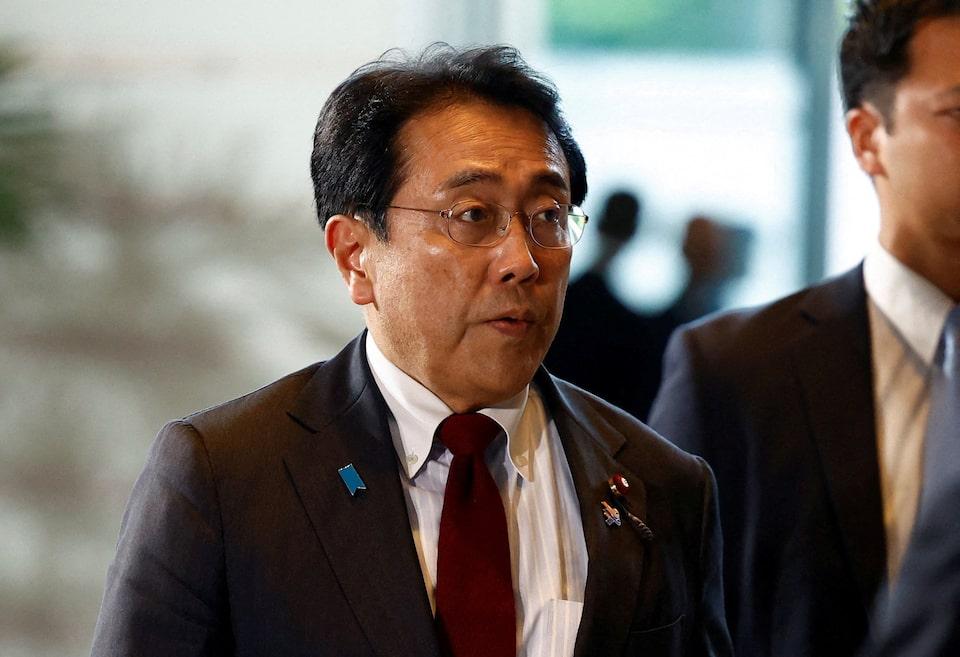
Trump jumps in on preliminary talks with trade officials Japan one of the first countries to start tariff negotiations More than 75 countries seeking deals, Washington says Exchange rates not part of talks, Tokyo's negotiator says WASHINGTON, April 16 (Reuters) - President Donald Trump touted "big progress" in tariff talks with Japan on Wednesday, in one of the first rounds of face-to-face negotiations since his barrage of duties on global imports roiled markets and stoked recession fears. Japan had not expected the president to get involved in Wednesday's talks, viewing them as a preliminary, fact-finding mission, a sign that Trump wants to keep tight control over negotiations with dozens of countries expected over coming days and weeks. Sign up here. Tokyo had also been hoping to limit the scope of the talks to trade and investment matters. But announcing his involvement early Wednesday, Trump said thorny issues including the amount Japan pays towards hosting U.S. troops were among discussion topics. "A Great Honor to have just met with the Japanese Delegation on Trade. Big Progress!" Trump said in a social media message that contained no details of the discussions. Opposite Trump was Ryosei Akazawa, a close confidant of Japanese Prime Minister Shigeru Ishiba who serves in the relatively junior cabinet position of economic revitalisation minister. Speaking to reporters after the talks, Akazawa gave few details but said the parties had agreed to hold a second meeting later this month and that Trump had said getting a deal with Japan was a "top priority". Exchange rates, which the Trump administration has said Japan and others manipulate to get a trade advantage, were not part of the talks, Akazawa added. The dollar strengthened against the yen after his remarks on forex, up around 0.5% on the day. Tokyo denies it manipulates its yen currency lower to get make its exports cheaper. Akazawa held a 50-minute meeting with Trump at the White House before another session with his Treasury Secretary Scott Bessent, Commerce Secretary Howard Lutnick and Trade Representative Jamieson Greer that stretched to almost an hour and a half, according to Japanese readouts of the talks. Japan's prime minister, who has previously said he won't rush to reach a deal and does not plan to make big concessions, sounded a more cautious tone speaking to reporters later in Tokyo. "Of course, the negotiations will not be easy going forward, but President Trump has stated that he wants to give top priority to the talks with Japan," Ishiba said. Italian Prime Minister Giorgia Meloni heads to the White House on Thursday to discuss tariffs imposed on the European Union with Trump, while Bessent has invited South Korea's finance minister to Washington for talks next week. FIRST MOVER ADVANTAGE Trump has long complained about the U.S. trade deficit with Japan and other countries, saying U.S. businesses have been "ripped off" by trade practices and intentional efforts by other countries to maintain weak currencies. Japan has been hit with 24% levies on its exports to the United States although these rates have, like most of Trump's tariffs, been paused for 90 days. But a 10% universal rate remains in place as does a 25% duty for cars, a mainstay of Japan's export-reliant economy. Bessent has said there is a "first mover advantage" given Washington has said more than 75 countries have requested talks since Trump announced sweeping duties on dozens of countries - both friend and foe - earlier this month. Akazawa declined to comment on the matter, adding only that he strongly requested a revocation of the tariffs and that he believed Washington wanted to secure a deal in the 90-day window. Washington is hoping to strike deals with countries that would cover tariffs, non-tariff barriers and exchange rates, Bessent has said, though Tokyo had lobbied to keep the latter separate. Trump earlier this month lambasted Japan for what he said was a 700% tariff on rice, a figure Tokyo disputes. Levies on autos are particularly painful for Japan as they make up nearly a third of shipments to the U.S., its biggest export market. Japan hopes that pledges to expand investment in the United States will help to convince the U.S. that the allies can achieve a "win-win" situation without tariffs. Possible Japanese investment in a multi-billion dollar gas project in Alaska could also feature in tariff negotiations, Bessent said before Wednesday's talks. "It sounds like the Trump administration really does want a quick deal, which suggests it will be a less substantive deal," said Tobias Harris of Japan Foresight, a political risk advisory. "My baseline is that if the U.S. really starts making demands on agriculture and maybe also on some of the auto regulations, it becomes a lot more contentious and hard to do quickly." https://www.reuters.com/world/japan-set-kick-off-tariff-talks-washington-2025-04-16/
2025-04-17 00:06
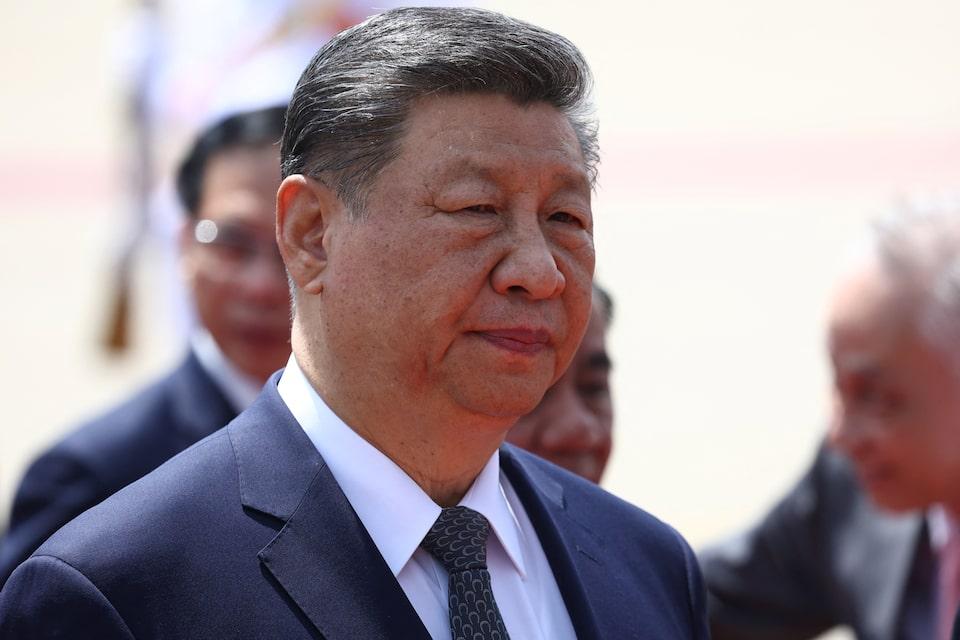
Xi lands in Cambodia after visiting Vietnam, Malaysia Cambodia expects more support on infrastructure, spokesman says Phnom Penh seeks China backing for major Mekong canal project Ahead of visit, Cambodia deported Taiwanese nationals to China April 17 (Reuters) - China's leader Xi Jinping urged Cambodia to "resist protectionism," as he arrived in Phnom Penh on Thursday at the end of a three-nation tour of Southeast Asia, as U.S. tariffs threatened the economies of both countries. Cambodia is a major exporter of clothing and footwear to the United States, and was slapped with a rate of 49%, one of the highest globally, before "reciprocal" duties were paused until Julyfor most countries, except those on China which faces combined tariffs of 145%. Sign up here. In an article published on Thursday morning in Cambodian media, Xi urged Phnom Penh to oppose "hegemonism" and "protectionism", repeating messages he sent earlier this week to Vietnam and Malaysia during the first two legs of his trip. Phnom Penh is a close partner of China, which has invested billions of dollars in projects including roads and airports, and is the country's largest creditor. "We expect more cooperation including on infrastructure development," Meas Soksensan, spokesman for the Cambodian finance ministry, told Reuters on the eve of Xi's arrival in the capital Phnom Penh. He was answering a question about whether Cambodia expected Beijing to announce financial support for a 180 km (111.85 miles) canal, which is the country's most ambitious infrastructure project. Xi, who has a road named after him on the outskirts of the capital, extolled the positive economic impact of past Chinese infrastructure projects, pledged to continue to "unswervingly support" Cambodia's development, but mentioned no new specific project in his statements on Thursday. The Cambodian government has said China would pay for the Funan Techo Canal, which would run from the Mekong River, from a site near Phnom Penh, to the coast on the Gulf of Thailand, diverting water from the fragile rice-growing Mekong Delta and reducing Cambodian shipping through Vietnamese ports. China has so far made no public financial commitment to the project, while Phnom Penh has changed its statements on Chinese engagement from covering 100% to 49% of total costs, estimated at $1.7 billion, nearly 4% of Cambodia's annual gross domestic product. Beijing signed no new loans to Cambodia last year, according to Cambodian official data, a marked contrast with previous years when it lent the country hundreds of millions of dollars. The drop in funding came as China reduced overall overseas investments amid domestic economic woes and concerns over unsuccessful projects. SCAMS AND FLAGS Xi's visit to Cambodia has been seen as a charm offensive in Southeast Asia, in the wake of the U.S. tariffs that hit the region hard. Xi reiterated the two countries have an "ironclad friendship", but also urged Cambodia to crack down on online frauds. Scam centres in Cambodia are often run by Chinese gangs and target Chinese nationals, either as victims or captive workers. Before Xi's arrival, the Cambodian government said it had deported to China a number of "Chinese criminals", including people from Taiwan, in a move that angered Taipei and was praised by Beijing. As he travelled from the airport to meetings with leaders, Xi was cheered by people lining the road waving Chinese flags, footage posted on social media showed. "Lots of flags, lots of MoUs and lots of bromances, probably not a lot of substance," a Cambodia-based Western diplomat said of the visit, referring to non-binding memoranda of understanding that are often signed during state visits. https://www.reuters.com/world/asia-pacific/cambodia-eyes-more-china-help-xi-visits-amid-us-tariff-tensions-2025-04-17/