2025-04-16 22:49
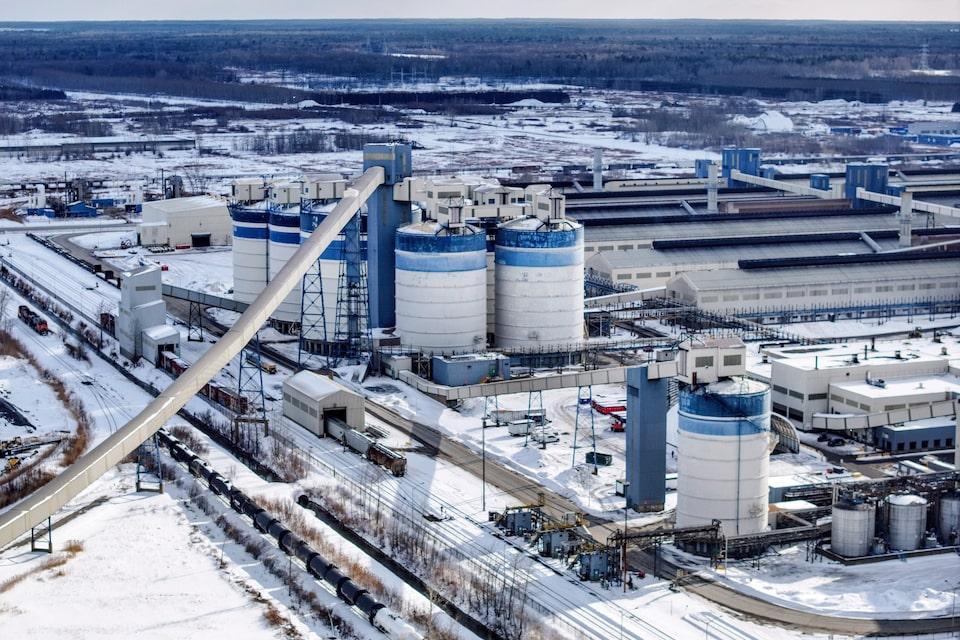
April 16 (Reuters) - Alcoa (AA.N) , opens new tab said on Wednesday it expects U.S. tariffs on aluminum imports from Canada to cost the company about $90 million in the current quarter. Since his inauguration in January, U.S. President Donald Trump has announced - and sometimes reversed - tariffs on a slew of products and countries. The duties levied on aluminum imports currently stand at 25%. Sign up here. "Approximately 70% of our aluminum produced in Canada is destined for U.S. customers and is now subject to 25% tariff costs ... Currently the net annual result is approximately $100 million negative for our business," CEO William Oplinger said during a post-earnings conference call. The aluminum producer said the tariffs on Canadian imports had cost the company roughly $20 million in the first quarter, ended March 31. Alcoa sources a portion of its input materials from Chinese suppliers, and expects the high U.S. tariffs on the country to hike up its annual costs by $10 million to $15 million "as there are no suitable replacement suppliers". Talking about current U.S. production capacity, Oplinger said that even if all idle smelting capacity were to restart, the country would still face a shortfall of 3.6 million metric tons. "Until additional smelting capacity is built in the U.S., the most efficient aluminum supply chain is Canadian aluminum flowing into the country," Oplinger added. https://www.reuters.com/markets/commodities/alcoa-expects-90-million-tariff-hit-second-quarter-sees-duties-china-raising-2025-04-16/
2025-04-16 21:11
SAO PAULO, April 16 (Reuters) - Edge, a firm under Brazilian conglomerate Cosan (CSAN3.SA) , opens new tab, has imported Argentine natural gas into Brazil through Bolivia for the first time, said the firm on Wednesday. The operation took place in partnership with Argentina's Tecpetrol, which produces 25 million cubic meters of gas per day in the country. Neither firm disclosed the volumes involved. Sign up here. The operation follows the first import of its kind by Brazil, also using Bolivian infrastructure. Earlier this month, TotalEnergies (TTEF.PA) , opens new tab exported gas from Argentina's Vaca Muerta shale formation to Brazil's Matrix Energia. Both operations took advantage of existing gas pipeline infrastructure between the three countries, raising hopes that Brazil could start to receive increasing volumes from Argentina as the country develops Vaca Muerta. "There is a huge opportunity, and transport capacity expansions are underway - and being planned - that will allow us to supply all our neighboring countries competitively and safely," Tecpetrol's CEO Ricardo Markous said in a statement, citing Vaca Muerta's potential. The gas brought from Argentina will form part of Edge's supply portfolio, which operates in gas trading and also with infrastructure and logistics projects in the segment. https://www.reuters.com/business/energy/cosans-edge-imports-argentine-gas-brazil-via-bolivia-2025-04-16/

2025-04-16 21:08
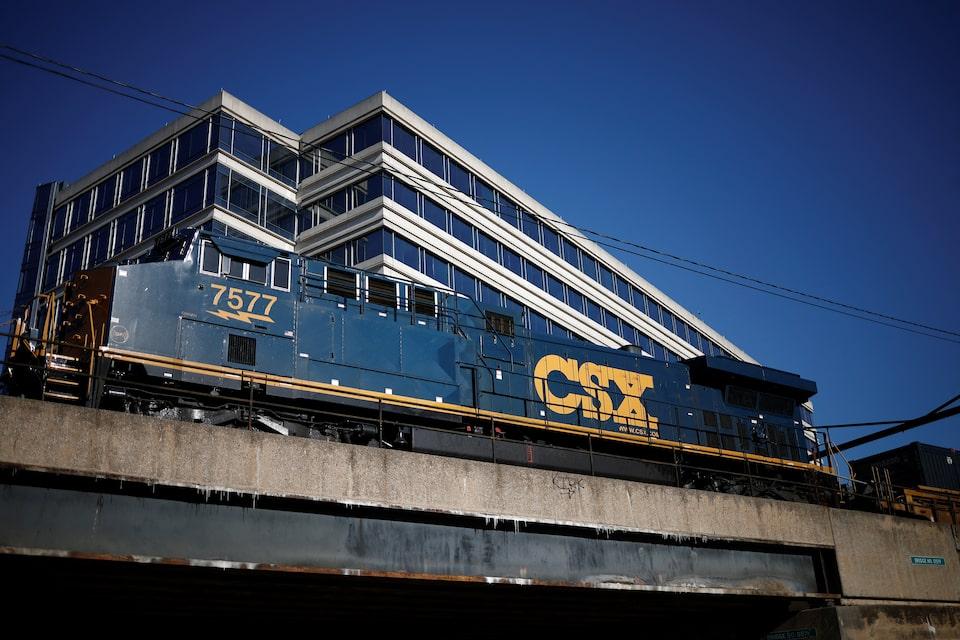
April 16 (Reuters) - Railroad operator CSX (CSX.O) , opens new tab reported first-quarter revenue and profit below Wall Street estimates on Wednesday, as gains in intermodal were offset by a decline in coal revenue and fuel surcharge. Demand for coal has been hampered by consumers switching to cheaper natural gas stockpiles for energy, but that trend is expected to change after U.S. President Donald Trump signed executive orders earlier this month aiming to boost coal production. Sign up here. "CSX faced operational challenges to start the year, which contributed to first quarter results that did not meet our expectations," CEO Joe Hinrichs said in a statement. Intermodal shipping, which involves two or more means of transportation for goods, saw a 2.1% rise in volume during the quarter, while that of coal fell 8.5%. The company reported revenue of $3.42 billion for the quarter ended March 31, below analysts' estimate of $3.47 billion, according to data compiled by LSEG. It reported a profit of 34 cents per share, also missing expectations of 37 cents. CSX's operating margin for the quarter was 30.4%, down from the 36.3% it posted a year ago. Shares of the Jacksonville, Florida-based company were marginally down in after-hours trading. https://www.reuters.com/business/autos-transportation/railroad-operator-csx-misses-quarterly-estimates-coal-revenue-falls-2025-04-16/
2025-04-16 21:07
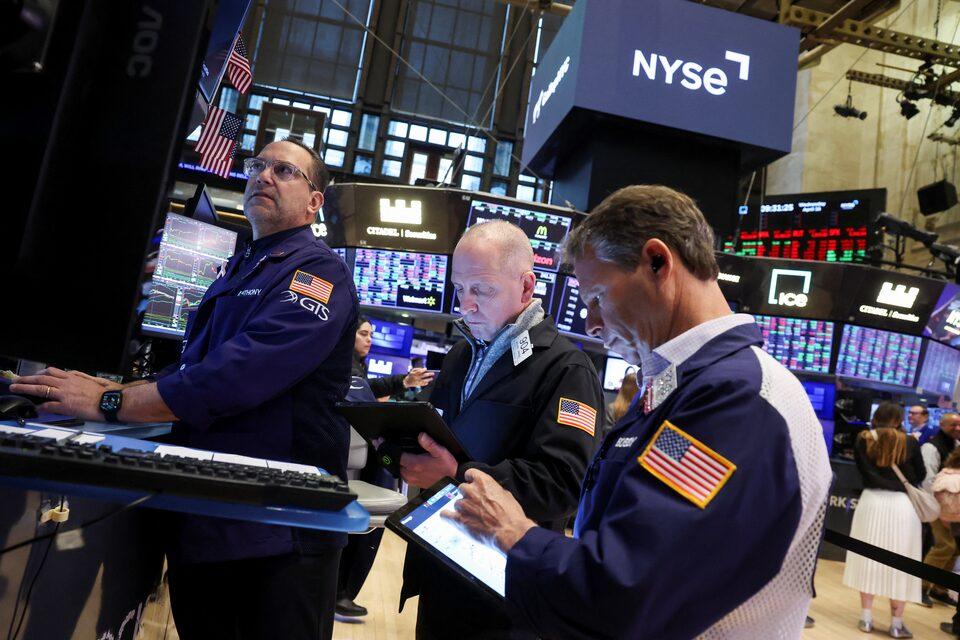
ORLANDO, Florida, April 16 (Reuters) - TRADING DAY Making sense of the forces driving global markets Sign up here. By Jamie McGeever, Markets Columnist Tariffied once again The respite was too good to last, and sure enough, it didn't. World stocks fell into a downward spiral on Wednesday led by tech losses after Washington said it is putting new curbs on AI chip exports to China, marking an escalation in the global trade war. The Trump administration's latest broadside sparked huge demand for safe-haven assets like gold, the Swiss franc and U.S. Treasuries, even though Fed Chair Jerome Powell signalled he is in no rush to cut interest rates. If U.S. Big Tech had acquired a safe-haven status in the eyes of some investors in recent years, it is disappearing fast. More on that and more below, but first, a round-up of the day's main market moves. I'd love to hear from you, so please reach out to me with comments at [email protected] , opens new tab. You can also follow me at @ReutersJamie , opens new tab and @reutersjamie.bsky.social , opens new tab. If you have more time to read today, here are a few articles I recommend to help you make sense of what happened in markets. Today's Key Market Moves When the chips are down, really down After a few days of relative calm, investors buckled up on Wednesday as the Trump administration's latest trade war salvo sent world markets reeling again, with the big loser being Big Tech. The Trump administration clearly has China in its sights but it is U.S. firms - including the biggest cash generators Wall Street has ever seen, like Apple and Nvidia - that are being caught in the crossfire. Last week it was Apple, and the White House backed down. Will the damage done to Nvidia and others on Wednesday prompt a similar rethink? Economic signals from China and the U.S. on Wednesday were surprisingly positive, with U.S. retail sales in March and first quarter Chinese GDP growth beating forecasts. But these are rear-view mirror indicators, and if anyone needed it, Wednesday's news is a reminder that the outlook is pretty bleak. Economists at Morgan Stanley and UBS this week cut their Chinese 2025 GDP outlooks to 4.2% and 3.4%, respectively. Anything close to the UBS forecast would be particularly alarming for Beijing, which is targeting growth of around 5%. Morgan Stanley's economists estimate tariffs will knock 90 basis points off growth relative to their original forecast, which will only be partially offset by 60 bps of additional stimulus. Although U.S. growth is slowing, Fed Chair Jerome Powell signaled on Wednesday the central bank will wait for "greater clarity" before deciding its next move on rates. He also said markets have been orderly and downplayed the risk of Fed intervention. Massive selling of long-dated Treasuries last week raised fears that part of the bond market wasn't functioning smoothly. There was no sign of that on Wednesday, however, as bonds' 'safe haven' qualities pushed yields down as much as 5 basis points at the short end. In Europe, eyes will turn to Frankfurt where the European Central Bank on Thursday will announce its latest policy decision and ECB President Christine Lagarde will offer her outlook. Market pricing suggests a 25 basis point cut is all but certain, with at least another two coming later this year. And after Wednesday's rout, the focus in Asia on Thursday will stay on tech as Taiwan's TSMC reports first-quarter earnings. The world's largest contract chipmaker is expected to report a 34.2% increase in revenue to $25.318 billion from $18.87 billion a year ago, according to the mean estimate from five analysts based on LSEG data. Tech and tariffs - a potent mix which roiled markets on Wednesday and will likely do so again sooner rather than later. US Big Tech swaps 'safe haven' sheen for trade war target Treasuries are not the only 'safe haven' U.S. asset getting the cold shoulder as investors around the world rethink their enthusiasm for all things America. The shadow over 'Big Tech' is darkening and lengthening too. In recent weeks, the global trade war, the Trump administration's 'America First' agenda and its apparent disdain for the post-war world order have dramatically slowed inflows into U.S. markets, and in some cases, reversed them. What used to be considered some of the safest shelters from crisis are now looking a little flimsy. It might seem a stretch to put shares of U.S. technology and chip companies, such as Nvidia, Apple, and Amazon, on par with IOUs of the federal government, but these cash-generating emblems of 'U.S. exceptionalism' certainly seemed like sure things up until recently. As these firms' global dominance spread over the past decade and their market footprint reached an unprecedented size, they effectively become ATMs for shareholders, generating record profits running into the hundreds of billions of dollars. In the fourth quarter of last year, the 'Magnificent Seven' - Nvidia, Apple, Amazon, Meta, Alphabet, Microsoft and Tesla - accounted for a record 35% of the S&P 500's market cap, with a combined valuation of around $17.5 trillion. Credit ratings on some, like Apple, are the same as the U.S. sovereign rating, and yields have even traded below Treasury yields on occasion. Investors of all stripes wanted in, from domestic to foreign, retail to official. And who could blame them? The 'Mag 7' appeared to offer the best of both investment worlds: a high income-generating asset and a safe-haven. So much so that the Swiss National Bank has a quarter of its $150 billion equity holdings in Apple, Nvidia, Microsoft and Amazon, and half of the $1.8 trillion Norwegian wealth fund's record $222 billion profit last year came from U.S. tech. REALITY CHECK But that sweet spot is gone. The 'American exceptionalism' narrative has been undermined, as the U.S. economy looks set to slow and America's AI invincibility has been shattered by China's DeepSeek. And now tech companies find themselves on the front line of the global trade war. Washington is issuing new export licensing requirements for Nvidia's H20 AI chips to China. Nvidia said it faces $5.5 billion in charges, and its shares tumbled 9% on Wednesday, wiping nearly $250 billion off its market value and dragging the broader semiconductor index down 4%. To be sure, U.S. tech has been getting slammed since mid-February, as investors have begun to re-evaluate the sunny outlook they had for the industry under a Trump presidency. The semiconductor index is now deep in a bear market. It has lost 30% in just two months and valuations have come down much more than the wider S&P 500. U.S. Big Tech is suddenly vulnerable on multiple fronts. Tariffs and trade restrictions from Washington will bite, as will retaliatory moves from China. And if Europe really wants to hit America where it hurts, tech is an obvious target. WHAT GOES UP... But it's also worth remembering how much Big Tech outperformed on the way up. They were - and remain - incredibly profitable. According to LSEG figures, the Mag 7's net profit margin hit a record 25.8% in the fourth quarter, nearly double the S&P 500's 13.4%. Nvidia's value rose 10-fold in two years to more than $3.5 trillion, Mag 7 stocks more than doubled between October 2023 and last December, and these companies accounted for almost all of the market's profit growth in 2023. While that halved last year and is expected to decline further this year to around a third, there is still a lot of air left to come out of the balloon. According to Bank of America's latest global fund manager survey, 'long Mag 7' was the most crowded trade for 23 consecutive months until April. And what was it replaced with? Long gold, one 'safe haven' that isn't giving up its title. What could move markets tomorrow? Opinions expressed are those of the author. They do not reflect the views of Reuters News, which, under the Trust Principles , opens new tab, is committed to integrity, independence, and freedom from bias. Trading Day is also sent by email every weekday morning. Think your friend or colleague should know about us? Forward this newsletter to them. They can also sign up here. https://www.reuters.com/markets/global-markets-trading-day-graphics-2025-04-16/
2025-04-16 21:03
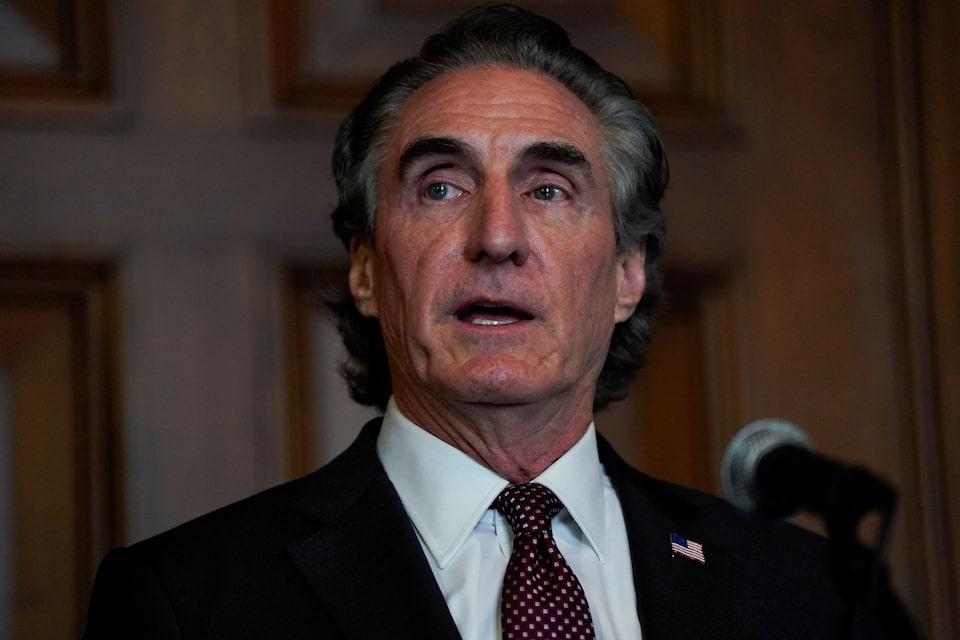
Equinor receives stop-work order Construction on fully-permitted project began last year New York Governor Hochul says will fight 'federal overreach' April 16 (Reuters) - U.S. Interior Secretary Doug Burgum ordered a halt to construction of Equinor's (EQNR.OL) , opens new tab Empire Wind project off the coast of New York, saying information suggested the Biden administration approved it without enough environmental analysis. In a post on X on Wednesday, Burgum said the information would be reviewed further but did not elaborate on the faults identified. Sign up here. The sudden order marks a major blow to Norway's Equinor and the nascent U.S. offshore wind industry, which enjoyed substantial support as a part of former President Joe Biden's plan to decarbonize the power grid and combat climate change. An Equinor spokesperson said the company had received the stop-work order from the U.S. Bureau of Ocean Energy Management (BOEM), the Interior arm that permits offshore energy projects. "We will engage directly with BOEM and the Department of Interior to understand the questions raised about the permits we have received from authorities," Equinor said. "We will not comment about the potential consequences until we know more." Burgum said he had consulted with Commerce Secretary Howard Lutnick on the decision. Commerce houses the National Marine Fisheries Service, which is involved in permitting offshore wind facilities. The Interior Department decision stems from a review of offshore wind permitting and leasing that President Donald Trump ordered on his first day back in the Oval Office in January. Interior officials did not respond to a request for additional comment. Since the January order, the offshore wind industry has sought to position itself as being aligned with Trump's domestic energy agenda. Trade groups reacted with disappointment following Burgum's announcement. "Halting construction of fully permitted energy projects is the literal opposite of an energy abundance agenda," Jason Grumet, CEO of the American Clean Power Association, said in a statement. "With skyrocketing energy demand and increasing consumer prices, we need streamlined permitting for all domestic energy resources. Doubling back to reconsider permits after projects are under construction sends a chilling signal to all energy investment," Grumet added. Empire Wind was approved by the Biden administration in November 2023 and began construction last year. The lease area, which will house two projects, is located 12 nautical miles (22 km) south of Long Island, New York. The facilities together are expected to generate enough electricity to power 700,000 homes a year. The project was expected to start producing power in 2027. It is a key part of New York state's efforts to reduce the use of fossil fuels and combat climate change. New York Governor Kathy Hochul said the project was already contributing to the state's economy and creating hundreds of jobs. "This fully federally permitted project has already put shovels in the ground before the President’s executive orders - it’s exactly the type of bipartisan energy solution we should be working on," Hochul said in a statement. "As Governor, I will not allow this federal overreach to stand. I will fight this every step of the way to protect union jobs, affordable energy and New York’s economic future." Burgum's questions about the permitting of Equinor's project come even as the Trump administration has moved to speed up environmental reviews , opens new tab and fast-track approvals for other projects under a declaration of a national energy emergency. https://www.reuters.com/world/us/us-orders-halt-construction-new-york-offshore-wind-project-2025-04-16/
2025-04-16 20:42
BUENOS AIRES, April 16 (Reuters) - Argentina's peso closed 6.6% higher on Wednesday, regaining ground lost after the currency tumbled on a lifting of capital controls earlier in the week. The currency closed the week, shortened due to the Easter holiday, at 1,125 pesos per U.S. dollar. That was 4.4% below the previous week's closing price. Sign up here. On Monday, the peso tumbled after the government undid large parts of years-long capital controls, putting it in a gradually expanding band starting between 1,000 and 1,400 pesos per dollar. Since then, the currency has shown signs of normalization, surprising analysts. Supporting the stabilization, fixed-term deposit rates also rose, from 28% to 30% on Friday to 35% to 37% on Wednesday. "Rates in pesos are once again above the implied rates of dollar futures, which would leave the exchange market facing an excess flow of dollars that could lead to an appreciation of the peso," said economist Gustavo Ber. Libertarian President Javier Milei, who championed scrapping the currency controls, ruled out on Wednesday the central bank intervening, unless the peso breaks the 1,000 per dollar floor. "There will be no intervention until it reaches the floor," Milei said on X. "That means, no (foreign-reserve) purchases will be made until 1,000 pesos per dollar." Argentina's foreign reserves have climbed in recent days, after first receiving $12 billion as part of a $20 billion deal with the International Monetary Fund on Tuesday and then another $1.5 billion from a branch of the World Bank. That provisionally brought the reserves up to $38.61 billion at end of day on Wednesday. Capital Markets Argentina said that "the agreement with the IMF will also provide strong dollar support to the central bank," adding that it will increase confidence in the new exchange-rate scheme and in the currency remaining within its predetermined band. https://www.reuters.com/markets/currencies/argentine-peso-recoups-lost-ground-after-fx-control-ease-milei-rules-out-2025-04-16/