2025-04-16 20:39
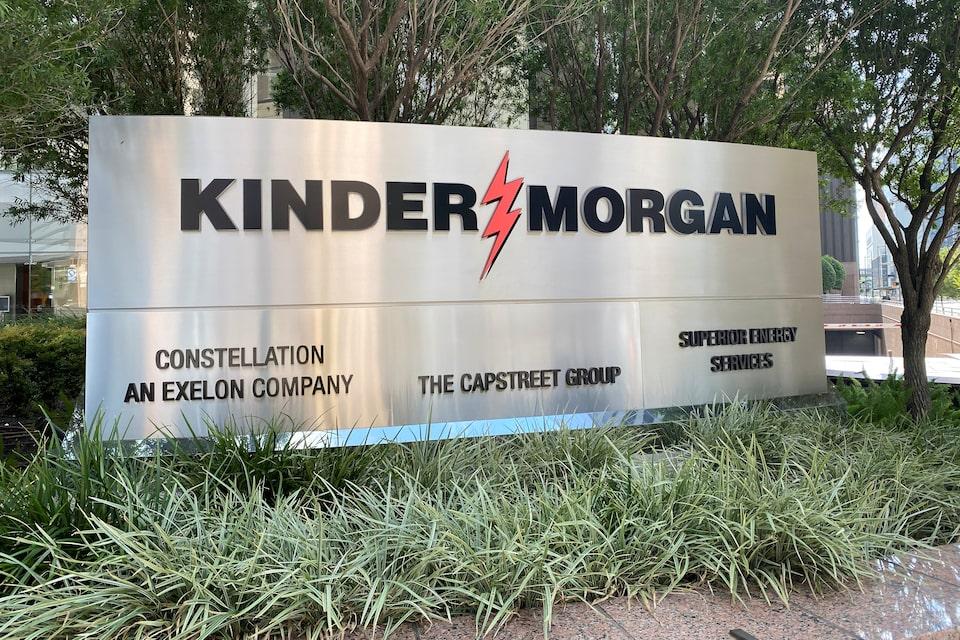
April 16 (Reuters) - U.S. pipeline and terminal operator Kinder Morgan (KMI.N) , opens new tab narrowly missed Wall Street expectations for first-quarter profit on Wednesday, hurt by weakness in its products pipelines segment and higher costs. The results come as the energy industry braces for the impact of U.S. President Donald Trump's tariffs on most Canadian and Mexican imports, including levies on steel imports, "reciprocal" tariffs on other nations, as well as falling crude prices. Sign up here. However, Kinder Morgan left its annual profit forecast unchanged as it continues to bank on an increase in natural gas demand. The terminal operator added that it does not expect tariffs to have a significant impact on project economics. "We began efforts to mitigate the potential impact early in the quarter by preordering critical project components, negotiating caps on cost increases, and securing domestic steel and mill capacity for our larger projects, which total two-thirds of our project backlog," said CEO Kim Dang. At its products pipelines segment, adjusted earnings fell 5.8% to $274 million in the first quarter, due to a planned ten-year turnaround at a petroleum condensate processing facility in the Houston Ship Channel as well as lower oil prices. Kinder Morgan's total operating costs rose to $3.1 billion in the first quarter, from $2.62 billion last year. The Houston, Texas-based firm posted an adjusted profit of 34 cents per share for the three months ended March 31, compared with analysts' estimate of 35 cents per share, according to data compiled by LSEG. https://www.reuters.com/business/energy/pipeline-operator-kinder-morgan-misses-first-quarter-profit-estimates-2025-04-16/
2025-04-16 20:35
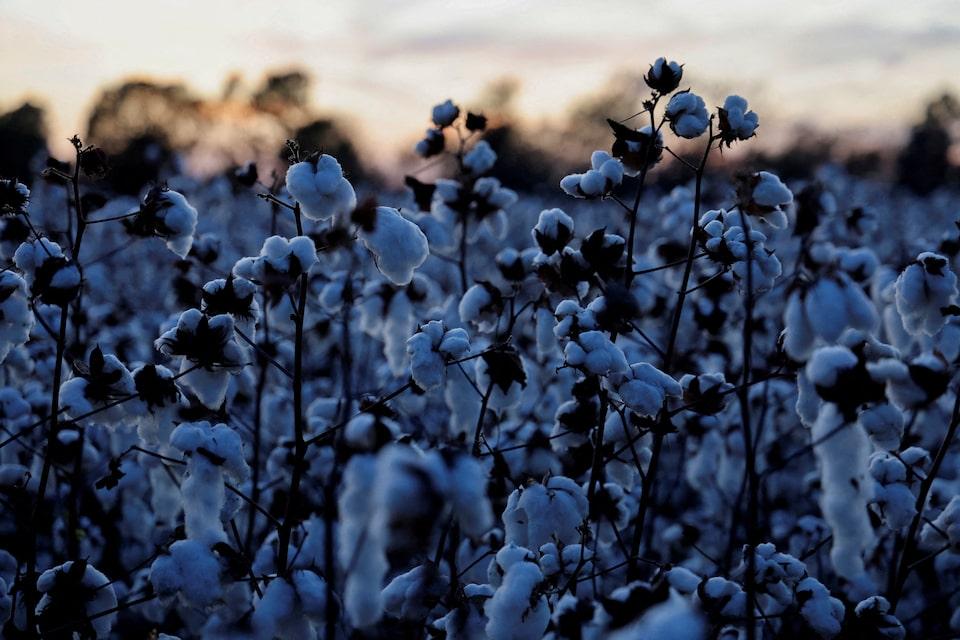
April 16 (Reuters) - U.S. upland cotton exports to India have risen in the past few months fueled by global tariff conflicts, declining American prices and rising demand in the South Asian country, industry experts said. Exports to India from February to April jumped to 155,260 running bales, from 25,901 shipped during a year ago period, according to the U.S. Department of Agriculture's (USDA) data. The exports hit an over 2-1/2-year high in the week of February 20. Sign up here. The increase comes as Washington-Beijing trade tensions escalate, reducing U.S. cotton exports to China. China will impose 125% tariffs on U.S. goods, up from the 84% previously announced, the finance ministry said on Friday. With these tariffs and a drop in China’s demand, upland cotton grown in Texas and other regions is now finding a market in India, according to Ajay Kedia, director of Kedia Advisors. At the same time, exports to China are expected to decrease, said Justin Cardwell, head of research and technology at Alternative Option. India is the world's second-largest cotton producer after China, as well as one of the world's largest cotton yarn processors and exporters. However, declining yields have recently turned the country from a net exporter to a net importer of the fibre. India mainly imports Extra Long Staple (ELS) cotton from the U.S., benefiting from a 10% duty exemption, unlike short staple cotton which has an 11% import duty. "The U.S. ELS cotton remains cost-effective for many Indian buyers due to its higher ginning efficiency, better lint yield, and superior fibre quality," said Kedia. The Cotton Association of India (CAI) this year lowered its cotton production estimate by 250,000 bales to 30.1 million bales, marking a 7.84% drop from the 2023-24 season. ICE cotton futures have dropped nearly 5% so far this year. India could see a cotton shortfall of 2.5 million bales this year, a gap that could be bridged with increased imports, said Y. G. Prasad, director of Central Institute for Cotton Research. India's cotton imports in 2024/25 are expected to double due to falling production, according to the CAI. India also imports cotton from Australia, Brazil, and Egypt. https://www.reuters.com/markets/commodities/us-cotton-exports-india-rise-lower-prices-tariff-uncertainties-2025-04-16/
2025-04-16 20:30
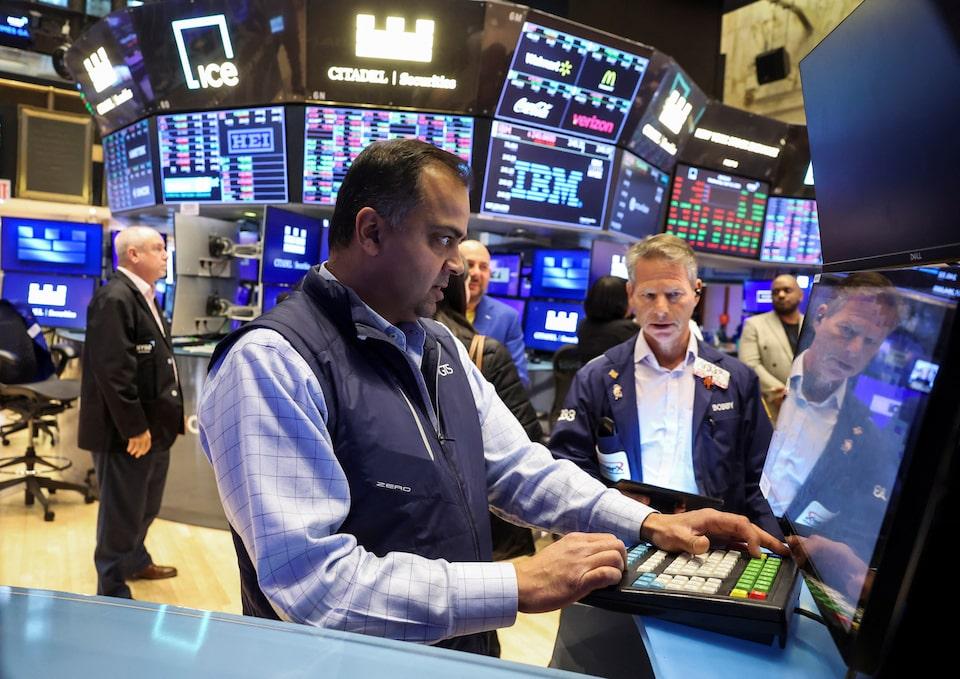
Powell says economy slowing in Q1, can wait for greater clarity Nvidia warns of charges from US curbs on chip exports to China Indexes: Dow down 1.7%; S&P 500 down 2.2%; Nasdaq down 3.1% NEW YORK, April 16 (Reuters) - U.S. stocks ended sharply lower on Wednesday as Nvidia (NVDA.O) , opens new tab warned about steep charges from new U.S. curbs on its chip exports to China and Federal Reserve Chair Jerome Powell said U.S. economic growth appears to be slowing. Powell, in remarks for the Economic Club of Chicago, said larger-than-expected tariffs likely mean higher inflation and slower growth. But he said the Fed would wait for more data on the economy's direction before making any changes to interest rates. Sign up here. The Fed chair's afternoon comments sparked further selling in stocks, which had already been under pressure from a sharp drop in shares of Nvidia and other chipmakers. "Powell is confirming what investors have been worried about, and that is the likelihood of slowing economic growth and more stubborn inflation as a result of the tariffs," said Sam Stovall, chief investment strategist at CFRA Research. Nvidia said late on Tuesday it would take $5.5 billion in charges after the U.S. government limited exports of its H20 artificial-intelligence chip to China, a key market for one of its most popular chips. It was among the latest developments in the U.S.-China trade fight. China raised its tariffs on imports of U.S. goods to 125% on Friday in a retaliatory move after U.S. President Donald Trump effectively raised U.S. tariffs on Chinese goods to 145%. "The markets and investors want certainty and of this much I am certain: this year will be a more difficult year for investors than the last two cake walks," said Gina Bolvin, president of Bolvin Wealth Management Group in Boston. The Dow Jones Industrial Average (.DJI) , opens new tab fell 699.57 points, or 1.73%, to 39,669.39, the S&P 500 (.SPX) , opens new tab lost 120.93 points, or 2.24%, to 5,275.70 and the Nasdaq Composite (.IXIC) , opens new tab lost 516.01 points, or 3.07%, to 16,307.16. The Nasdaq had fallen as low as 16,066.46 during the session. At the same time, Wall Street's fear gauge, the Cboe Volatility index (.VIX) , opens new tab, rose, ending the day at 32.64. Nvidia shares fell 6.9% on the day, while an index of semiconductor stocks (.SOX) , opens new tab dropped 4.1%. The new U.S. curbs also affected AMD (AMD.O) , opens new tab, whose shares fell 7.3%. Also on Wednesday, Dutch chip-making tools giant ASML (ASML.AS) , opens new tab warned that the tariffs had led to increased uncertainty about its outlook. "Markets continue to digest tariff implementation details that remain fluid, and as a result investors', businesses' and consumer uncertainty just remains incredibly high," said Bill Northey, senior investment director at U.S. Bank Wealth Management in Billings, Montana. "Companies are beginning to cite impacts from tariffs and the generally negative implications that that uncertainty is breeding," he said. Declining issues outnumbered advancers by a 1.58-to-1 ratio on the NYSE. On the Nasdaq, 1,469 stocks rose and 2,964 fell as declining issues outnumbered advancers by a 2.02-to-1 ratio. Volume on U.S. exchanges was 16.08 billion shares, compared with the more than 18 billion average for the full session over the last 20 trading days. https://www.reuters.com/markets/us/us-stock-futures-drop-nvidia-tumbles-new-curbs-chip-exports-china-2025-04-16/
2025-04-16 19:27
ACCRA, April 16 (Reuters) - Ghana's government has assumed operational control of Gold Fields' (GFIJ.J) , opens new tab Damang mine after it rejected an application from the South African company to renew its lease, the ministry of lands and natural resources said in a statement on Wednesday. (This story has been corrected to say 'lands ministry' in the headline, and corrects to say 'ministry of lands and natural resources,' not mines ministry in paragraph 1) Sign up here. https://www.reuters.com/world/africa/ghana-government-takes-control-gold-fields-damang-mine-mines-ministry-says-2025-04-16/

2025-04-16 18:54
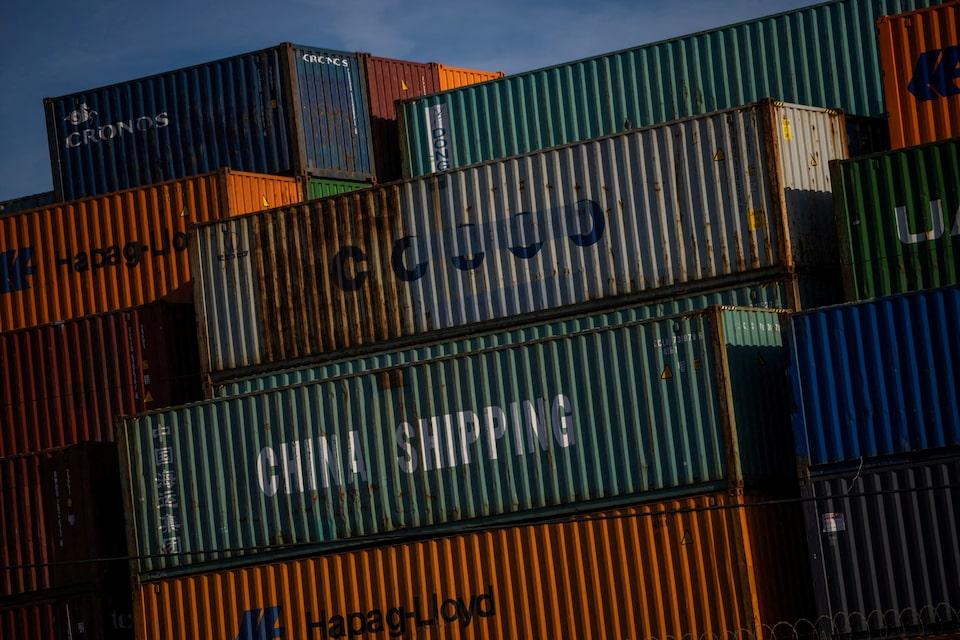
California's ports and agriculture face significant tariff impacts State says Trump has no authority to tax imports 'on a whim' Trump's tariffs face other legal challenges from other states Experts question legality of Trump's tariffs under IEEPA April 16 (Reuters) - California on Wednesday filed a lawsuit seeking to block U.S. President Donald Trump's sweeping tariffs on foreign trading partners, accusing him of abusing his powers and inflicting financial harm on the state and nation. Trump imposed 10% tariffs on goods from all countries and higher tariffs for countries the administration says have high barriers to U.S. imports, most of which he later paused for 90 days. He also imposed a 145% tariff on China, with exceptions for certain electronics. Sign up here. China has retaliated with a 125% tariff against the U.S., and the European Union has approved tariffs to retaliate as well, though they are currently paused. The U.S. Constitution vests the authority to impose tariffs in Congress, and the law that Trump cites as authority for his new tariffs, the International Emergency Economic Powers Act (IEEPA), does not allow the president to "tax all goods entering the United States on a whim," the state said in its lawsuit. "President Trump's new tariff regime has already had devastating impacts on the economy, creating chaos in the stock and bond markets, wiping out hundreds of billions of dollars in market capitalization in hours, chilling investment in the face of such consequential Presidential action with no notice or process, and threatening to push the country into recession," the lawsuit said. California, the world's fifth largest economy and the largest importer of goods among U.S. states, "bears an inordinate share" of the tariffs' costs," according to the lawsuit. Tariffs could cripple California's 12 ports, which take in 40% of goods imported to the U.S. and provide steady tax revenue for the state. And retaliatory tariffs from China and other nations could harm California's agricultural exports, which totaled $23.6 billion in 2022, potentially costing thousands of jobs, according to the lawsuit. White House spokesman Kush Desai said on Wednesday that California Governor Gavin Newsom should focus on addressing crime, homelessness, and high prices in his state instead of trying to block Trump's tariffs. "The entire Trump administration remains committed to addressing this national emergency that's decimating America's industries and leaving our workers behind with every tool at our disposal, from tariffs to negotiations," Desai said. In executive orders imposing the tariffs, Trump had invoked laws including the IEEPA, which gives presidents special powers to combat unusual or extraordinary threats to the U.S. The Republican president has said that the United States' net trade deficit relative to the rest of the world is a national emergency endangering its manufacturing capacity and making it dependent on foreign adversaries. In Wednesday's lawsuit, filed in federal court in San Francisco, Newsom and California Attorney General Rob Bonta, both Democrats, asked a judge to bar the Department of Homeland Security and Customs and Border Protection from enforcing the tariffs. The Trump administration already faces three similar lawsuits - one in the New York-based Court of International Trade by business advocacy group Liberty Justice Center seeking to block all of the tariffs, one in Florida federal court by a small business owner seeking to block the tariffs on China, and a third filed in Montana by members of the Blackfeet Nation - a Native American tribe that spans Montana and Canada's Alberta province - challenging Trump's tariffs on Canada. Experts say Trump tariffs are on shaky legal ground, because the law cited by Trump is meant to address "unusual and extraordinary" threats to the U.S. The trade deficits and decline in U.S. manufacturing that Trump has identified as justification for the tariffs do not meet that standard, and are instead a natural consequence of U.S. policies that have aimed to lower trade barriers since World War Two, according Stratos Pahis, a professor who teaches international trade law at Brooklyn Law School. "It is very hard to understand how these circumstances are 'unusual and extraordinary'," Pahis said by telephone. "Those words are in the statute, and they have to mean something." https://www.reuters.com/legal/california-sues-trump-administration-block-tariffs-2025-04-16/
2025-04-16 18:52
Trump administration pushing for energy agnostic lending Banga has championed shift since taking office in June 2023 US is largest single shareholder, with 15.83% WASHINGTON, April 16 (Reuters) - World Bank President Ajay Banga on Wednesday doubled down on his push to revamp the bank's energy strategy to end a ban on lending for nuclear power projects and enable more natural gas projects, saying he will seek executive board approval in June. The changes would mark a shift from the bank's focus only on renewable energy projects, save for consideration for some gas projects in the poorest countries. Sign up here. "We have a meeting with our board in June, and I want to discuss how to talk about the 'all of the above' strategy on energy, which is not renewable energy, but a transition plan for everyone," Banga told reporters. The strategy would include natural gas, geothermal, hydroelectric, solar, wind and nuclear power, "where it makes sense," he said, but a change in the bank's current approach requires board approval and shareholder approval. Banga, who has championed a shift in the bank's energy policy since taking office in June 2023, has discussed the changes with U.S. Treasury Secretary Scott Bessent, who oversees the U.S. shareholding in the bank, two sources said. The U.S. is the bank's single largest shareholder -- at 15.83%, followed by Japan with 7% and China with close to 6% -- and the change will likely please President Donald Trump, who withdrew the U.S. from the Paris Climate Agreement and its emission-reduction targets as one of his first acts in office in January. Washington is pushing the bank to become more "energy agnostic" and drop its ban on nuclear power investments as it reviews the United States' continued role in the multilateral development bank, a White House official said recently. The U.S. has withdrawn from other multilateral institutions such as the World Health Organization, fanning concerns that it could also pull out of the World Bank. Asked about the issue, Banga said the bank was holding constructive talks with the United States. Senior World Bank sources said the bank's new energy strategy is expected to continue to exclude oil and coal. The global development bank, which lends at low rates to help countries build everything from railroads to flood barriers, announced in 2017 , opens new tabthat it would stop funding upstream oil and gas projects beginning in 2019, but said it would still consider gas projects in the poorest countries. It had announced in 2013 that it would no longer fund nuclear power projects. The new energy paper will not be finished in time for the Spring Meetings of the World Bank and International Monetary Fund in Washington next month. Trump officials and some development experts say developing countries should not be blocked from using inexpensive power to expand their economies while advanced economies like Germany continue to burn fossil fuels. "The bank is a development bank. It is not the 'Bank of Climate Change,'" the White House official said, noting that surveys of World Bank client countries showed they ranked climate change as 19th on a list of 20 top priorities. "If you're trying to make sure that your people are fed and not dropping dead from disease, that's your priority, and that's what the World Bank is supposed to be focused on," the official said. Allowing the financing of nuclear power projects was also a geopolitical imperative, the official said, noting that China was catching up quickly to Western capabilities and was permitting new plants much faster than the United States. Climate activists worry that opening the door to nuclear and natural gas will divert funds away from urgently needed efforts by developing countries to adapt to climate change and to benefit from abundant alternative energy sources such as solar. The World Bank is sticking to its target of spending 45% of its lending on climate change, Banga said, underscoring that many projects would boost growth and jobs even as they helped countries adapt to climate change. The bank's executive board and shareholders, including long-time nuclear critic Germany, have grown more supportive of funding natural gas projects, especially in Africa, one source familiar with the board's thinking said. Gyude Moore, a non-resident fellow at the Center for Global Development, said the bank's current policy effectively punished the people least responsible for the climate crisis. "It created a perverse scenario where African oil and gas were extracted and used elsewhere, but not developed for use on the continent itself," he said. https://www.reuters.com/business/energy/world-banks-banga-seeks-board-approval-all-above-energy-strategy-2025-04-16/