2025-04-16 17:16
MOSCOW, April 16 (Reuters) - Russia should develop its own stablecoins pegged to other currencies after Russia-linked digital wallets holding the popular USDT stablecoin were blocked last month, a senior Finance Ministry official said on Wednesday. Dollar-pegged stablecoins, which are a type of cryptocurrency designed to maintain a constant value, have ballooned in recent years as they helped to move funds between different cryptocurrencies or into cash. Sign up here. Russian regulators have allowed the experimental use of cryptocurrencies in international payments, which have become more difficult due to Western sanctions. Before the blockage, USDT was popular among Russian firms as a payment tool. "The recent blockage makes us think that we need to consider creating internal tools similar to USDT, possibly pegged to other currencies," the deputy head of the ministry's financial policy department, Osman Kabaloev, said. Russian crypto exchange Garantex said on March 6 that USDT creator Tether had blocked digital wallets on its platform holding more than 2.5 billion roubles ($30.12 million), forcing it to suspend operations days after coming under EU sanctions. The head of Russia's central bank Elvira Nabiullina, who opposes the use of cryptocurrencies in domestic payments, said that Russian firms are actively testing international cryptocurrency payments as part of the experiment. ($1 = 82.9955 roubles) https://www.reuters.com/technology/russia-should-have-own-stablecoins-finance-ministry-official-says-2025-04-16/
2025-04-16 16:42
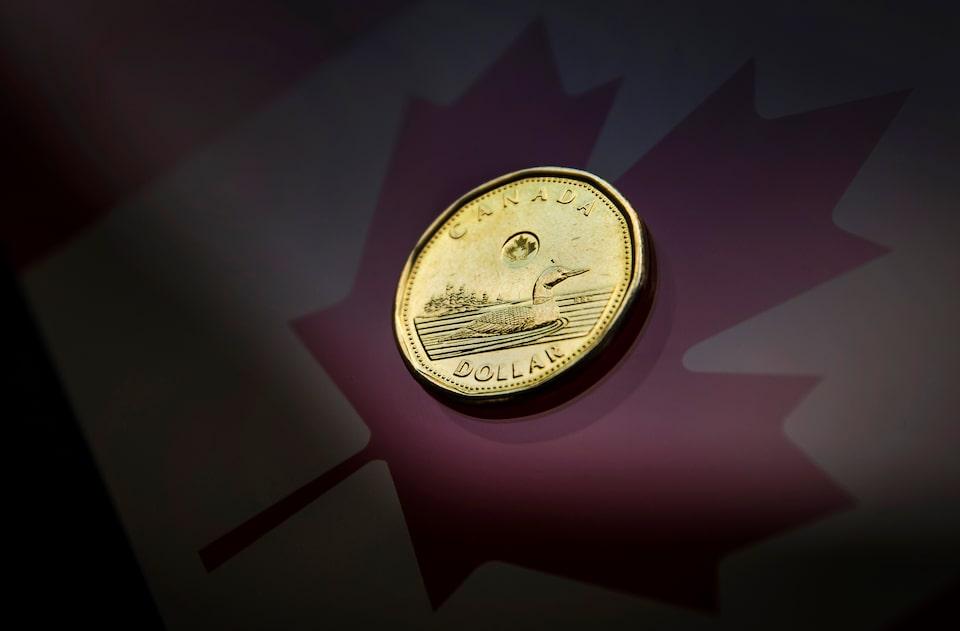
Canadian dollar rises 0.6% against the greenback Bank of Canada holds policy rate at 2.75% Investors see 50% chance of June rate cut 10-year yield rebounds from eight-day low TORONTO, April 16 (Reuters) - The Canadian dollar strengthened against its U.S. counterpart on Wednesday as the greenback posted broad-based declines and the Bank of Canada paused its interest rate cutting campaign. The loonie was trading 0.6% higher at 1.3875 per U.S. dollar, or 72.07 U.S. cents, moving back in reach of the five-month high it touched on Monday at 1.3827. Sign up here. The BoC held its benchmark rate at 2.75%, its first pause after seven consecutive cuts, and said that the uncertainty around U.S. tariffs made it impossible to issue regular economic forecasts. Investors see a roughly 50% chance the central bank will return to easing at its next policy decision on June 4 and expect two further cuts in total by year-end. The U.S. dollar (.DXY) , opens new tab resumed its recent decline against a basket of major currencies as traders waited to see if U.S. President Donald Trump's administration reaches new trading agreements with partners. "The BoC's hold is providing some support to the loonie," strategists at TD Securities, including Jayati Bharadwaj, said in a note. "In the absence of the trade spat between Canada and US worsening and Trump diverting attention to China, we can expect better price action in CAD and positioning there has been consistently improving." Speculators have reduced their bearish bets on the Canadian dollar to the lowest since October, data from the U.S. Commodity Futures Trading Commission showed on Friday. The price of oil, one of Canada's major exports, rose 1.8% to $62.45 a barrel after Washington issued new sanctions targeting Chinese importers of Iranian oil. Canadian bond yields were mixed across the curve. The 10-year was up less than one basis point at 3.121% after earlier touching an eight-day low at 3.078%. https://www.reuters.com/markets/currencies/canadian-dollar-rallies-boc-pauses-interest-rate-cuts-2025-04-16/
2025-04-16 16:23
BRASILIA, April 16 (Reuters) - Brazil's government acknowledged growing risks of public debt renegotiation, with a record level for 2025 due to an increased share of debt exposed to short-term interest rates, and stressed the need for fiscal consolidation to improve the outlook. In a fiscal risks annex to the 2026 budget guidelines bill sent to Congress on Tuesday, the Treasury estimated that 62.1% of federal public debt will be sensitive to short-term interest rate changes this year - a record high since the series began in 2008. Sign up here. The share was previously projected at 56.6% in last year's document. The measure includes debt tied to the Selic policy rate and securities maturing within 12 months, whose refinancing costs are also directly affected by the benchmark interest rate. The Treasury now sees this share reaching 58.9% in 2028, up from a previous estimate of 51.2%. Latin America's largest economy finances an unusually large portion of its debt through floating-rate bonds designed to appeal to investors during periods of market stress. The Treasury leaned heavily on these last year amid concerns over the sustainability of public finances in the face of fast-growing mandatory expenditures, leaving Brazil with its worst debt composition in two decades. This debt sensitivity is increasing as the central bank tightens policy to curb persistent inflation. Since September, policymakers have raised rates by 375 basis points to 14.25%, signaling a further increase in May. The government acknowledged the rise in floating-rate debt is linked to uncertainty over fiscal consolidation, which has hindered the issuance of long-term fixed-rate or inflation-linked bonds. "Reversing the trajectory of market risk requires a more favorable environment for fiscal consolidation and lower-cost issuances," the annex said. The government on Tuesday proposed a primary surplus of 0.25% of gross domestic product for next year, which would mark the first under leftist President Luiz Inacio Lula da Silva in his current term. Itau bank said on Wednesday that the proposal does not dispel the view that the current fiscal adjustment pace is insufficient to stabilize public debt, projecting a 0.8% of GDP deficit next year. https://www.reuters.com/world/americas/brazil-acknowledges-record-debt-risk-this-year-need-fiscal-consolidation-2025-04-16/
2025-04-16 16:20
April 16 (Reuters) - Italian luxury fashion group Brunello Cucinelli (BCU.MI) , opens new tab on Wednesday confirmed its expectations for sales growth of around 10% in both 2025 and 2026 despite looming U.S. tariffs. Starting from its Fall-Winter 2025 collections, the company will work on a new price list in the U.S. in response to the possible impact of tariffs but it does not expect this to have much impact on its business. Sign up here. "We do not believe that this measure will result in a significant change in purchases by American clients," it said in a statement, noting the strength of its brand. The group said sales had risen 10.5% at constant exchange rates in the first quarter, boosted by a solid performance in retail and wholesale channels. Best known for its cashmere garments, the Italian company sold 37% of its products in the Americas region last year. First quarter sales came in at 341.5 million euros ($388.2 million), broadly in line with an analysts' forecast of 343 million euros, according to LSEG data. Amid a slowdown in luxury demand, the group has so far outperformed the industry thanks to its high-end positioning. ($1 = 0.8797 euros) https://www.reuters.com/business/retail-consumer/italys-cucinelli-reports-105-sales-growth-first-quarter-2025-04-16/
2025-04-16 16:04
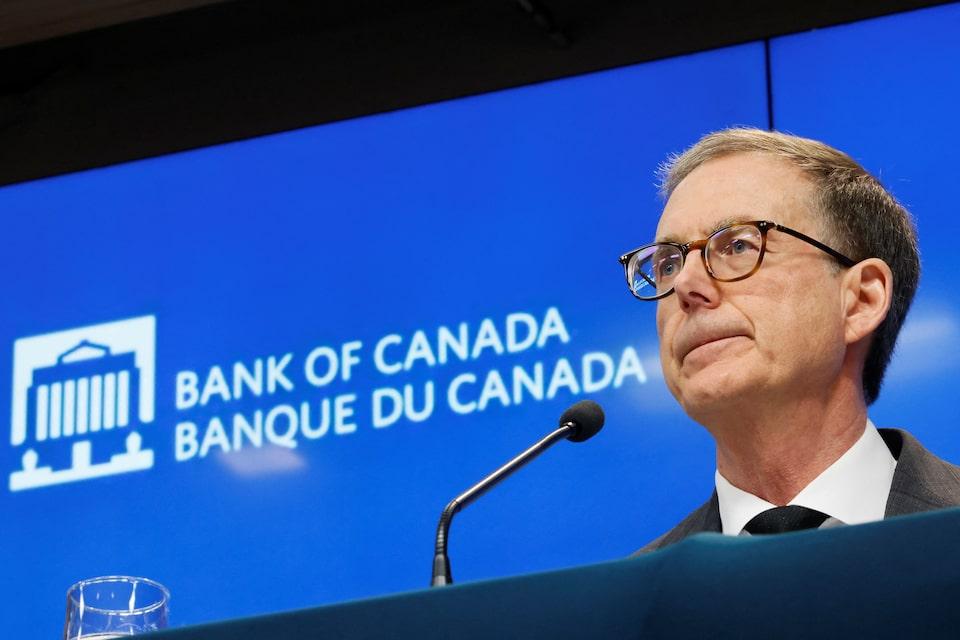
BoC keeps its key policy rate at 2.75% BOC says it will be less forward-looking than usual due to tariffs BoC is prepared to move decisively if needed Two scenarios shared for economy instead of single forecast OTTAWA, April 16 (Reuters) - The Bank of Canada on Wednesday held its key policy rate at 2.75%, its first pause after seven consecutive cuts, and said it would be ready to act decisively if needed to keep inflation under control. The bank, which began cutting last June, kept rates on hold as it gained more information on the impact of tariffs and said it would proceed carefully. Sign up here. "That means being less forward-looking than usual until the situation is clearer," Governor Tiff Macklem said in his opening remarks after the rates decision was announced. "It also means we are prepared to act decisively if incoming information points clearly in one direction," he said. The bank's monetary policy would ensure that inflation remained under control and would support economic growth, he added. Macklem said the uncertainty around U.S. tariffs made it impossible to issue regular economic forecasts, and instead he offered two different economic scenarios. Economists construed the governor's commentary as an indication that the bank's current pause was not an end to the easing cycle and it would jump in to support the economy if needed. "He's clearly laid open the possibility of getting a lot more aggressive if the economy deteriorates substantially," said Doug Porter, chief economist at BMO Capital Markets. Andrew Kelvin, head of Canadian and global rates strategy, TD Securities, said that going forward the weakness is expected to pile up in the economy and that would force the bank to cut rates again. Currency swap markets are betting on 54% odds of another pause on June 6, when the bank announces its next monetary policy decision. "We're going to have to be flexible and adaptable as we move forward," Macklem said during a press conference, when asked whether the BoC will be open for a 50 basis-point cut in June if needed. The Canadian dollar extended gains after the policy decision and was trading firmer by 0.51% to 1.3884 against the U.S. dollar, or 72.03 U.S. cents. Yields on the two-year government bonds were up 0.9 basis points to 2.541%. GDP EXPECTATIONS In the near term, the BoC expects second-quarter GDP to be much weaker, after a 1.8% growth forecast for the first quarter. Inflation is seen dipping to about 1.5% in April, mainly due to the removal of carbon taxes and lower crude prices. The bank said it was difficult to predict the path of the economy for the long term. "Forecasts for economic growth are of little use as a guide to anything," Macklem said. For the first time since the COVID-19 pandemic, the BoC scrapped the economic forecasts it gives in a quarterly monetary policy report. It instead offered two possible scenarios. The first assumes that most of the tariffs are eventually withdrawn through negotiations, which would stall GDP in the second quarter. The economy then expands moderately, while inflation sinks to 1.5% before returning to the 2% target. In the second scenario, the bank assumes the tariffs spark a long-lasting global trade war. In this case, the Canadian economy goes into a significant recession for a year while inflation spikes to 3.5% in mid-2026. Macklem said that under this scenario, the U.S. tariffs would permanently reduce Canada's potential output and lower the country's standard of living. "To be clear, these are only two of many possible scenarios, and even these do not span the possible outcomes," he said. Canada's economy, which had been teetering for most of last year, found its footing as 2024 was ending. But U.S. President Donald Trump's decision to unilaterally slap a barrage of tariffs on Canada and Mexico followed by levies on the rest of the world have dented business investments and consumer spending. This is evident in the recent hard data which showed lack of job growth, elevated inflation and weaker economic growth. "For countries like Canada, that are closely integrated with the United States, it is a particularly big deal," Macklem said of the U.S. tariffs. https://www.reuters.com/markets/rates-bonds/bank-canada-holds-rates-says-tariffs-could-cause-deep-recession-2025-04-16/
2025-04-16 15:42
TORONTO, July 30 (Reuters) - Below are some key quotes from a news conference by Bank of Canada Governor Tiff Macklem and Senior Deputy Governor Carolyn Rogers on Wednesday after the central bank held its key policy rate steady at 2.75%. MACKLEM ON TARIFFS LEADING TO A LESS EFFICIENT ECONOMY "Unfortunately, the sad reality is that tariffs mean the economy is going to work less efficiently. It means there's going to be less income, so there's going to be less consumption. So yes, the economy will resume growing, but it'll be on a permanently lower path, and in that sense, yes, the tariffs have a permanent effect on the economy unless they're removed." Sign up here. MACKLEM ON MAKING SURE THAT A TARIFF PROBLEM DOESN'T BECOME AN INFLATION PROBLEM "I would underline that the experience of the last few years has really highlighted just how much Canadians don't like inflation. We will support the economy through this period of upheaval, but at the same time we are going to make sure that a tariff problem does not become an inflation problem." MACKLEM ON UNCERTAINTY "One of the messages today is, it's hard to be as forward looking as usual when you've got an unusual amount of uncertainty. And that's why we presented three scenarios. And the reason we presented three scenarios is, against the background of unusual uncertainty, we need to be thinking more about the risks. So as we're thinking about policy, we're not thinking about a single forecast. We're thinking of a range of scenarios. MACKLEM ON FUTURE RATE DECISIONS "We're going to take our decisions one decision at a time, and our future decisions are going to depend what happens in the future... I think the first message is, the situation hasn't changed that much since our last decision. We continue to proceed carefully. Given the unusual amount of uncertainty, we're continuing to put more weight on the risks, and we're ready to respond to new information. MACKLEM ON CORE MEASURES "One of the reasons why we held the policy rate unchanged is because, yes, we have seen some additional pressures in underlying inflation. Core measures, the trim mean, trim median, have been running around 3. If you look at a broader range of core measures, they've all moved up. ... So, yes, that has got our attention. And, going forward, we are going to be watching closely what happens with those pressures and underlying inflation. MACKLEM ON CORE INFLATION UNWINDING "Some of the factors that may be causing that increase should unwind. The Canadian dollar appreciated after depreciating. That should pull in part. ... Wage growth has decelerated, and the economy is in excess supply. We think the economy contracted in the second quarter. So those things are all going to put downward pressure." https://www.reuters.com/world/americas/top-bank-canada-officials-speak-after-central-bank-holds-policy-rate-steady-2025-07-30/