2025-04-16 15:24
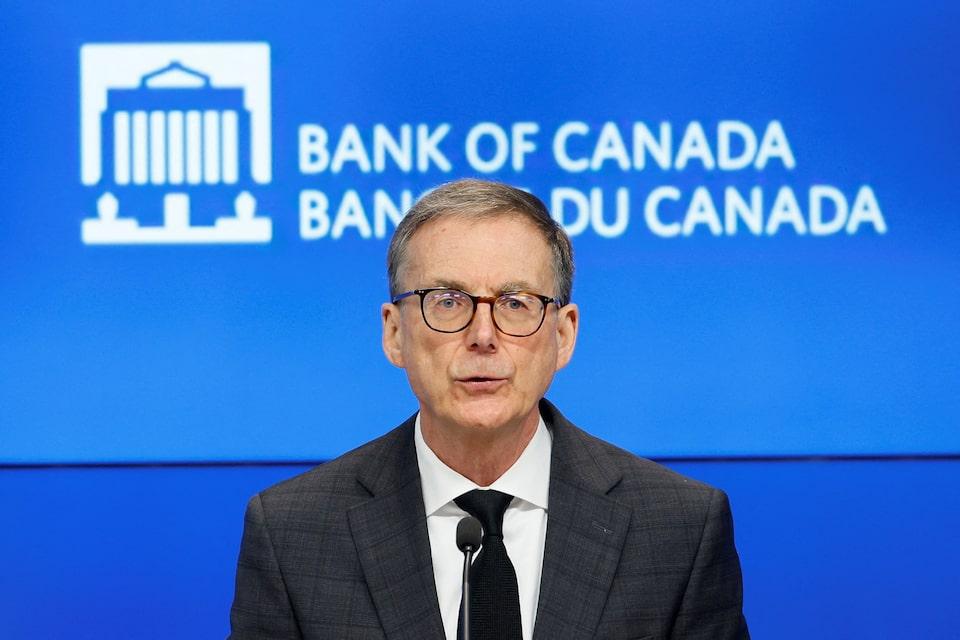
OTTAWA, April 16 (Reuters) - The Bank of Canada released the following statement by Governor Tiff Macklem on Wednesday: "Good morning. I'm pleased to be here with Senior Deputy Governor Carolyn Rogers to discuss today's policy announcement and our April Monetary Policy Report (MPR). Sign up here. "Today, Governing Council maintained the policy interest rate at 2.75% after seven consecutive rate cuts. "The Canadian economy ended 2024 in good shape. Inflation had been close to the 2% target since last summer. The substantial interest rate reductions since last spring had boosted household spending, economic growth had picked up and many businesses told us the economy had renewed momentum. "Since then, the dramatic protectionist shift in US trade policy and the chaotic delivery have increased uncertainty, roiled financial markets, diminished global growth prospects and raised inflation expectations. "The path for US trade policy remains highly unpredictable. There is also considerable uncertainty about the impacts of a trade war on our economy. "At our monetary policy decisions in both January and March, Governing Council reduced the policy interest rate a further 25 basis points as threats of higher US tariffs intensified. "A lot has happened since our March decision five weeks ago. But the future is no clearer. We still do not know what tariffs will be imposed, whether they'll be reduced or escalated, or how long all of this will last. "At this meeting, we decided to hold our policy rate unchanged as we gain more information about both the path forward for US tariffs and their impacts. "Monetary policy cannot resolve trade uncertainty or offset the impacts of a trade war. What we can and must do is ensure that Canadians continue to have confidence in price stability. "Our focus will be on assessing the downward pressure on inflation from a weaker economy and the upward pressure from higher costs. We will support economic growth while ensuring inflation remains well controlled. "Faced with pervasive uncertainty, Governing Council will proceed carefully, with particular attention to the risks. That means being less forward-looking than usual until the situation is clearer. It also means we are prepared to act decisively if incoming information points clearly in one direction. "Let me now turn to what we're seeing in the Canadian economy. "Incoming data are increasingly pointing to a considerable slowing in business investment and household spending. After expanding 5.6% in the fourth quarter of 2024, final domestic demand is expected to be roughly flat in the first quarter of 2025. Supported by a pull-forward in exports to get ahead of tariffs, GDP growth in the first quarter is forecast to be about 1.8%. But with exports expected to decline, second-quarter growth will be much weaker. "In the labour market, job growth was picking up at the end of last year, but trade tensions are disrupting this recovery. Employment was flat in February, down in March, and many businesses report they are scaling back their hiring plans. "Inflation in Canada has risen from 1.8% at the time of the January Report to 2.3% in March, reflecting the end of the GST/HST holiday and some rebound in goods price inflation. Elevated shelter price inflation continues to ease but goods price inflation rose more than shelter price inflation came down. The prices for imported goods have been boosted by the past depreciation of the Canadian dollar. Some businesses have also said suppliers are proactively raising prices in anticipation of future tariffs. Near-term inflation expectations have also risen because households and businesses expect tariffs will raise prices. "The very near-term outlook for inflation is relatively clear. The elimination of the consumer carbon tax on April 1 will reduce CPI inflation by about 0.7 percentage points for one year. Lower global oil prices will also pull inflation down, so total CPI inflation is expected to be about 1½% in April. "Looking beyond the very near term, what happens to the Canadian economy and inflation depends critically on US trade policy, which remains highly unpredictable. Given this uncertainty, point forecasts for economic growth and inflation are of little use as a guide to anything. So in this MPR, we instead present two illustrative scenarios that span a wide range of possible paths for US trade policy. In the report, we call these scenarios 1 and 2. "In Scenario 1, we assume most of the new tariffs get negotiated away, but the process is unpredictable, and businesses and households remain cautious. GDP growth in this scenario stalls in the second quarter, then expands only moderately. Inflation drops below the 2% target for the rest of 2025 and into 2026, both because of the end of the consumer carbon tax and a weak economy. "In Scenario 2, we assume a long-lasting global trade war. The economic consequences are severe. Canada’s GDP contracts in the second quarter and the economy is in recession for a year. Growth gradually returns in 2026 but remains soft through 2027 as US tariffs permanently reduce Canada's potential output and lower our standard of living. Inflation rises above 3% in mid-2026 as tariffs, countermeasures and shifts in supply chains raise costs, pushing up many prices. Inflation then eases as weak demand limits ongoing inflationary pressures. "To be clear, these are only two of many possible scenarios, and even these do not span the possible outcomes. Governing Council agreed that where US trade policy is relative to scenarios 1 and 2 is a moving target. The April 2 announcement put the situation closer to Scenario 2, but the partial rollback on April 9 and new exemptions in recent days have moved trade policy back towards the middle of the two scenarios. We don't know what's coming next, and US policy could well move back and forth before the situation is clearer. "As we considered monetary policy, we used these two scenarios to reflect the uncertainty about US trade policy. We also considered risks related to the impacts of tariffs — these could be smaller and slower, or bigger and faster than captured in the scenarios. "What happens with inflation will depend importantly on what happens with tariffs. And if we find ourselves in a protracted trade war, we will see opposing pressures on inflation. A weaker economy will put downward pressure on inflation and higher costs from tariffs will put upward pressure. Both the uncertainty about tariffs and their opposing forces on inflation make forecasting inflation especially difficult at this time. "Moving forward, we will pay close attention to the risks and uncertainties to the Canadian economy and inflation. These include: the extent to which higher tariffs reduce demand for Canadian exports; how much this spills over into business investment, employment and household spending; how much and how quickly cost increases are passed on to consumer prices; and how inflation expectations evolve. "Let me wrap up. "Since January, we've had a seismic shift in US trade policy and a sharp increase in uncertainty. New US tariffs are now in place on key Canadian industries and on every other US trading partner. Financial markets in Canada and around the world have violently repriced and remain volatile. Households and businesses in Canada and beyond are braced for weaker growth and higher prices. "Monetary policy will ensure inflation remains well controlled and support economic growth as Canada confronts this unwanted trade war. As always, we will be guided by our monetary policy framework and our commitment to maintain price stability over time. "With that, the Senior Deputy Governor and I would be pleased to take your questions." ((Reuters Ottawa bureau, +1 647 480 7921; [email protected] , opens new tab)) Keywords: CANADA CENBANK/MACKLEM https://www.reuters.com/markets/rates-bonds/full-text-bank-canada-held-rates-it-seeks-more-information-tariffs-says-governor-2025-04-16/
2025-04-16 13:57
OTTAWA, April 16 (Reuters) - If U.S. tariffs trigger a global trade war, inflation in Canada would spike and the country would enter a deep recession, according to a Bank of Canada scenario released on Wednesday. Citing the high level of uncertainty, the central bank did not issue its regular quarterly economic forecasts. Instead, it provided two scenarios as to what might happen. Sign up here. In the first scenario, most tariffs are negotiated away, and Canadian and global growth weaken temporarily. Canadian inflation falls to 1.5% for a year and then returns to the bank's 2% target. In the second scenario, the tariffs spark a long-lasting global trade war. Canada enters a significant recession, inflation spikes above 3% in mid-2026 before returning to 2%. The bank, which stressed that many other scenarios were possible, estimated annualized first quarter GDP was 1.8%, down from the 2.0% it forecast in late January. ((Reuters Ottawa bureau; [email protected] , opens new tab)) Keywords: CANADA CENBANK/FORECASTS https://www.reuters.com/markets/bank-canada-says-us-tariffs-could-trigger-deep-recession-2025-04-16/
2025-04-16 13:53
OTTAWA, April 16 (Reuters) - The Bank of Canada released the following statement on Wednesday: "The Bank of Canada today maintained its target for the overnight rate at 2.75%, with the Bank Rate at 3% and the deposit rate at 2.70%. Sign up here. "The major shift in direction of US trade policy and the unpredictability of tariffs have increased uncertainty, diminished prospects for economic growth, and raised inflation expectations. Pervasive uncertainty makes it unusually challenging to project GDP growth and inflation in Canada and globally. Instead, the April Monetary Policy Report (MPR) presents two scenarios that explore different paths for US trade policy. In the first scenario, uncertainty is high but tariffs are limited in scope. Canadian growth weakens temporarily and inflation remains around the 2% target. In the second scenario, a protracted trade war causes Canada’s economy to fall into recession this year and inflation rises temporarily above 3% next year. Many other trade policy scenarios are possible. There is also an unusual degree of uncertainty about the economic outcomes within any scenario, since the magnitude and speed of the shift in US trade policy are unprecedented. "Global economic growth was solid in late 2024 and inflation has been easing towards central bank targets. However, tariffs and uncertainty have weakened the outlook. In the United States, the economy is showing signs of slowing amid rising policy uncertainty and rapidly deteriorating sentiment, while inflation expectations have risen. In the euro area, growth has been modest in early 2025, with continued weakness in the manufacturing sector. China’s economy was strong at the end of 2024 but more recent data shows it slowing modestly. "Financial markets have been roiled by serial tariff announcements, postponements and continued threats of escalation. This extreme market volatility is adding to uncertainty. Oil prices have declined substantially since January, mainly reflecting weaker prospects for global growth. Canada’s exchange rate has recently appreciated as a result of broad US dollar weakness. "In Canada, the economy is slowing as tariff announcements and uncertainty pull down consumer and business confidence. Consumption, residential investment and business spending all look to have weakened in the first quarter. Trade tensions are also disrupting recovery in the labour market. Employment declined in March and businesses are reporting plans to slow their hiring. Wage growth continues to show signs of moderation. "Inflation was 2.3% in March, lower than in February but still higher than 1.8% at the time of the January MPR. The higher inflation in the last couple of months reflects some rebound in goods price inflation and the end of the temporary suspension of the GST/HST. Starting in April, CPI inflation will be pulled down for one year by the removal of the consumer carbon tax. Lower global oil prices will also dampen inflation in the near term. However, we expect tariffs and supply chain disruptions to push up some prices. How much upward pressure this puts on inflation will depend on the evolution of tariffs and how quickly businesses pass on higher costs to consumers. Short-term inflation expectations have moved up, as businesses and consumers anticipate higher costs from trade conflict and supply disruptions. Longer term inflation expectations are little changed. "Governing Council will continue to assess the timing and strength of both the downward pressures on inflation from a weaker economy and the upward pressures on inflation from higher costs. Our focus will be on ensuring that Canadians continue to have confidence in price stability through this period of global upheaval. This means we will support economic growth while ensuring that inflation remains well controlled. "Governing Council will proceed carefully, with particular attention to the risks and uncertainties facing the Canadian economy. These include: the extent to which higher tariffs reduce demand for Canadian exports; how much this spills over into business investment, employment and household spending; how much and how quickly cost increases are passed on to consumer prices; and how inflation expectations evolve. "Monetary policy cannot resolve trade uncertainty or offset the impacts of a trade war. What it can and must do is maintain price stability for Canadians." ((Reuters Ottawa bureau, +1 647 480 7921; [email protected] , opens new tab)) Keywords: CANADA CENBANK/RATES https://www.reuters.com/markets/rates-bonds/full-text-bank-canada-holds-key-policy-rate-275-2025-04-16/
2025-04-16 12:54
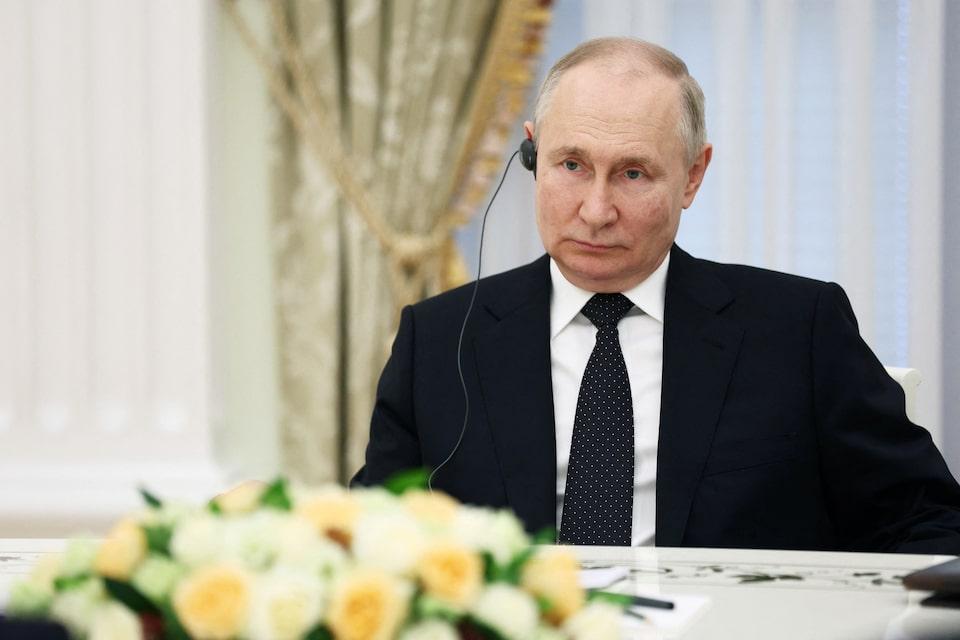
Putin and Qatar's emir to meet in Moscow To discuss Ukraine, Syria, Gaza and energy Qatar has tried to mediate for peace in Ukraine MOSCOW, April 16 (Reuters) - Russian President Vladimir Putin and Qatar's Emir Sheikh Tamim bin Hamad Al-Thani will discuss efforts to find a possible peace deal to end the war in Ukraine when they meet in Moscow on Thursday, Russia and Qatar said. U.S. President Donald Trump, who says he wants to be remembered as a peacemaker, has repeatedly said he wants to end the "bloodbath" of the three-year-old war in Ukraine, though Moscow has said it is not easy to agree a settlement. Sign up here. The Kremlin said that Putin's talks with the Qatari emir in Moscow would focus on "topical issues" with an emphasis on trade as well as on a number of issues on the international agenda. "There will definitely be an exchange of views between Putin and the Emir of Qatar on Ukrainian affairs," Kremlin spokesman Dmitry Peskov told reporters. "There will also be an exchange of views on regional affairs." "The region is replete with conflict potential. And Qatar plays a very big and important role in attempts to resolve many situations," Peskov said. Putin last met the emir in Astana in July on the sidelines of the Shanghai Cooperation Organization summit. Qatar has made a series of attempts to mediate between Russia and Ukraine, and has helped arrange the return of children from both countries who were separated from their parents during the war. Qatar's Minister of State for Foreign Affairs Mohammed Al-Khulaifi told the TASS state news agency that discussions would touch on Ukraine, Syria, the Gaza Strip and energy such as liquefied natural gas (LNG). "The Russia-Ukraine conflict has led to a global supply chain crisis due to rising prices for energy and basic commodities," Khulaifi told TASS. "Our ongoing dialogue in this area helps stabilise energy markets, which in turn supports the resilience of the global economy and helps overcome the supply chain crisis." Khulaifi noted that Qatar had played an important role as a mediator between the United States and Iran, as well as with Russia, in an attempt to find a peaceful solution to the Iranian crisis. The Kremlin said it highly appreciated the "confidential dialogue on many topics, including the most sensitive ones" with Qatar. https://www.reuters.com/world/putin-qatars-emir-discuss-ukraine-middle-east-2025-04-16/
2025-04-16 11:57
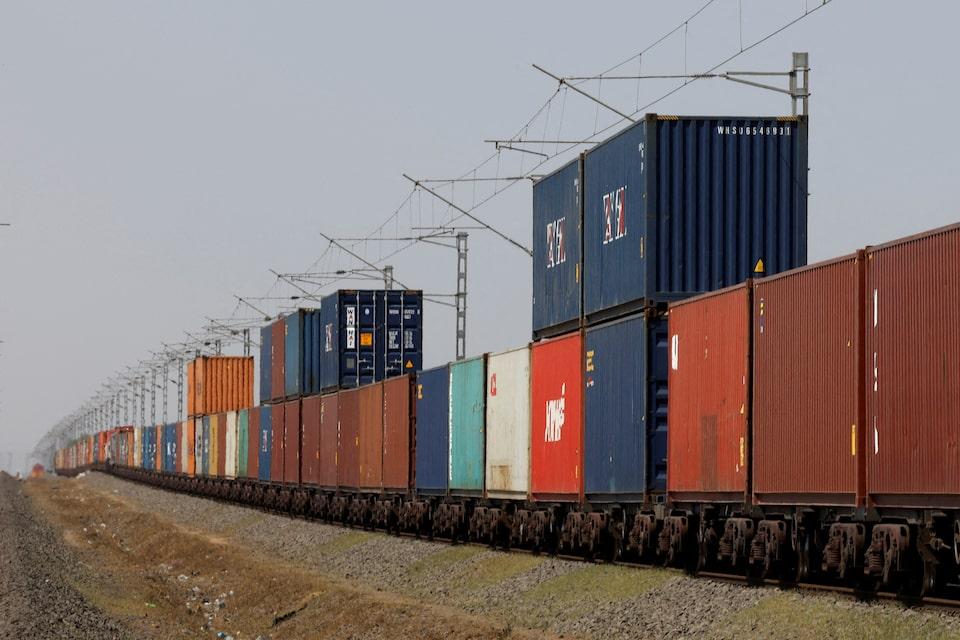
NEW DELHI, April 16 (Reuters) - India plans to end taxes on U.S. ethane and liquefied petroleum gas (LPG) imports under broader negotiations with Washington as it looks to reduce its trade surplus and ease its tariff burden, three sources familiar with the matter said. The proposal to get rid of duties for the products used for cooking gas and petrochemical production comes as India mulls scrapping import tax for U.S. liquefied natural gas (LNG) and boosting purchases of the fuel from the United States. Sign up here. As President Donald Trump's sweeping duties rattle economies and markets, several Asian countries running trade surpluses with Washington are looking to import more U.S. energy in hopes of avoiding heavier tariffs. India levies import taxes of 2.5% on ethane, mainly used as a feedstock for producing petrochemicals, and propane and butane, which are used for LPG used mostly as cooking fuel. In the 2023-24 fiscal year, India imported 18.5 million metric tons of LPG worth $10.4 billion, according to Indian government data, mostly from the Middle East. It is the No.2 buyer of U.S. ethane after China, according to the U.S. Energy Information Administration, importing 65,000 barrels per day last year, compared with 227,000 bpd for China. However, the U.S.-China trade war has sent tariffs surging and is likely to curtail China's imports. Reliance Industries (RELI.NS) , opens new tab, which operates the world's largest petrochemicals complex, is India's main buyer of ethane. New Delhi and Washington agreed in February to work on the first phase of a trade deal to be concluded late this year, with a view to growing bilateral trade to $500 billion by 2030 and reducing India's $45.7 billion trade surplus. The Indian government sources said a final decision on duty cuts will be taken by commerce and finance ministry officials. All three spoke on condition of anonymity due to the sensitivity of the talks. India's finance and commerce ministry did not respond to Reuters emails seeking comments. Analysts say there is limited scope for India to increase U.S. ethane imports in the short term due to a lack of ships, storage tanks and crackers that process the liquid gas. "It will be challenging for the US to increase ethane exports to India, as India seems to have already maximised its use of ethane as a feedstock due to favourable current margins," said Cheryl Liu, an analyst with Energy Aspects. India's steam cracker capacity is around 9.5 million metric tons of ethylene production, which can accommodate up to 2 million tons (92,000 bpd) of ethane as feedstock, she said. It is logistically easier to import more LPG, said Prashant Vashisth, vice president at Moody's affiliate ICRA. India imports about 60% of its LPG needs. https://www.reuters.com/world/india/india-eyes-ending-import-tax-us-ethane-lpg-trade-talks-sources-say-2025-04-16/
2025-04-16 11:48
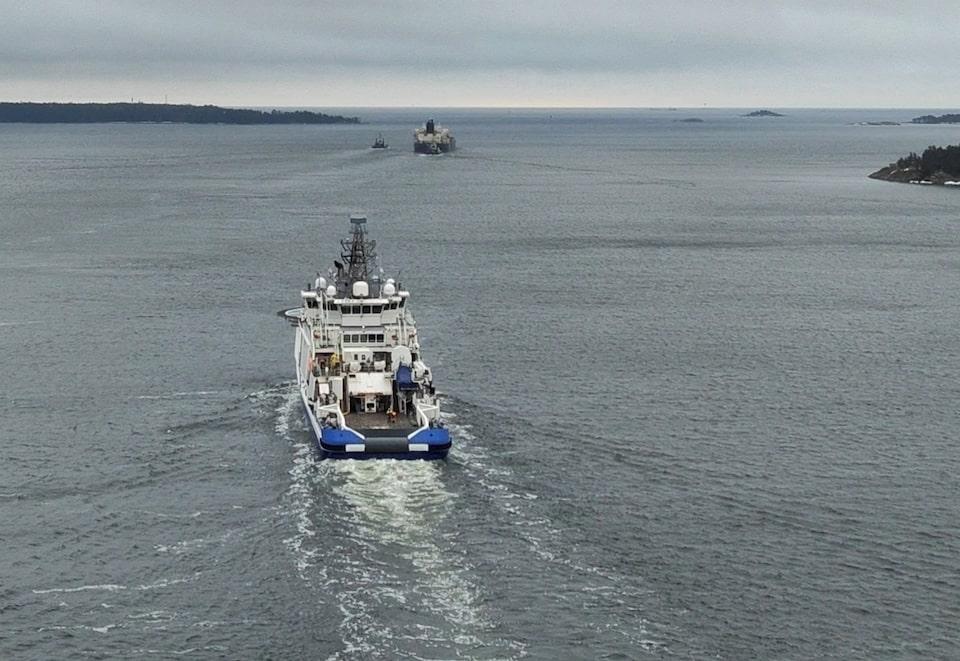
HELSINKI, April 16 (Reuters) - Repair work on the damaged subsea power line EstLink 2 that runs between Finland and Estonia will start in May and is expected to return to commercial use on July 15, Finnish power grid operator Fingrid said on Wednesday. Finnish authorities in December seized a ship carrying Russian oil in the Baltic Sea on suspicion it caused the outage of the undersea power cable as well as four internet lines. Sign up here. Fingrid said in a statement on Wednesday that a new cable was being installed on the seabed to replace the existing one over a distance of around one kilometer (0.62 miles). "Implementing such extensive repair work has required detailed planning and necessitates a specially equipped vessel for the task," the operator said, adding that the work was being carried out by Nexans (NEXS.PA) , opens new tab. https://www.reuters.com/business/energy/damaged-finland-estonia-undersea-cable-expected-back-operation-by-mid-july-2025-04-16/