2026-01-15 06:16
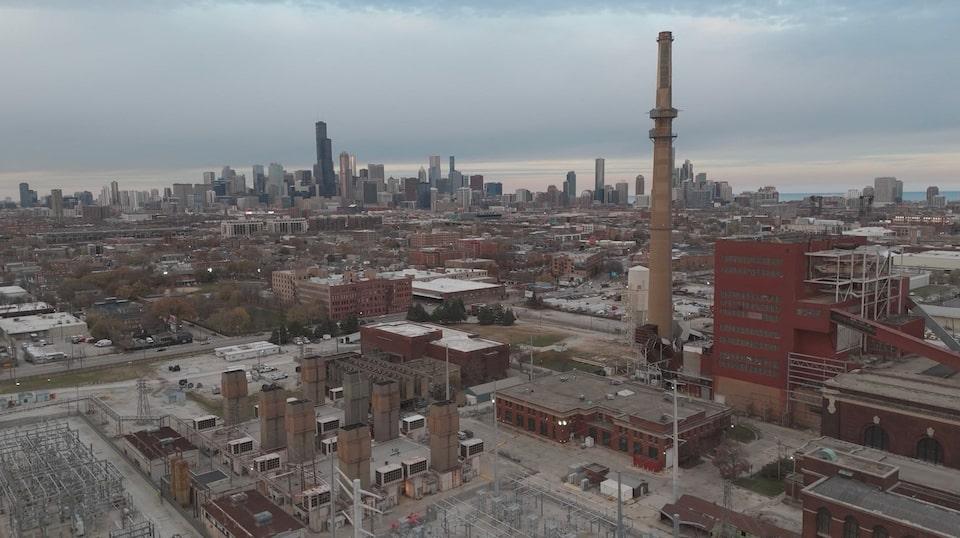
LITTLETON, Colorado, Jan 15 (Reuters) - Despite all the policy whiplash - or perhaps because of it - the U.S. energy system has started 2026 with more buzz and momentum than seen in decades. At home, electricity production is growing far faster than in most western peers, which is allowing utilities to deliver more power to the fast-growing and energy-intensive data centres and AI applications that are key drivers of the U.S. economy. Sign up here. Overseas, the U.S. is set to cement its position as the largest and most influential exporter of crude oil and natural gas, which continue to underpin a vast majority of global energy systems and generate massive earnings for the U.S. Treasury. The robust state of the U.S. energy sector makes good on U.S. President Donald Trump's "energy dominance" push, which looks set to gather even more momentum this year as further supportive energy policy measures are rolled out. Below are the main metrics on electricity generation and fossil fuel production and exports to help track the state of the U.S. energy sector through 2026 and beyond. ELECTRIC GROWTH Total U.S. electricity generation by utilities climbed by 3% in 2025 from the year before, which marks the second straight year that wholesale electricity output posted a 3% or better rise, data from Ember showed. That electricity supply growth rate compares to an annual average of 0.3% during the previous five years, and so clearly reveals that utilities have stepped up generation efforts. The lift in total utility generation resulted from a 5% annual increase in electricity output from clean power supplies, and a 1% rise in output from fossil fuel power plants. The United States' 3% expansion rate in total utility supplies compares with just a 0.2% rise last year in total utility electricity generation in Europe, which remains gripped by an economic slowdown due in part to stubbornly high energy costs. The U.S. growth rate matches the global average in 2025, but lags the 5% rise in utility electricity output posted by China. In 2026, U.S. utilities are expected to lift electricity generation to new heights, thanks mainly to scheduled additions to solar and battery networks as well as the planned restart of the Palisades nuclear plant in Michigan. However, scrapped federal support for renewable energy projects will slow the pace of new solar and wind capacity additions and may drag on the electricity output growth rate over the medium term. OIL, GAS & COAL While clean power sources gained a record share of the U.S. electricity mix in 2025, fossil fuels remain the primary pillar of the U.S. energy system and account for around 83% of total U.S. energy supplies, according to the Energy Institute. Record production of both crude oil and natural gas in 2025 has helped fossil fuels maintain that heavy share of the energy supply mix. U.S. crude oil output averaged 13.6 million barrels per day in 2025, according to the U.S. Energy Information Administration (EIA), while dry natural gas production averaged 107.4 billion cubic feet per day. The output of coal also increased in 2025 - by around 5% from the year before - but total U.S. coal production remains well below the levels of a decade ago due to reduced use in the domestic power generation system. Natural gas remains the primary power fuel in the U.S., and accounts for around 40% of electricity production and is also a major power and heating source for industry. Rising natural gas prices - driven by rising power use as well as record demand from LNG exporters - are expected to lift extraction rates from gas wells in 2026, especially in low-cost basins in close proximity to liquefied natural gas export hubs. FOSSIL EXPORTS LNG was the star of the U.S. energy export arena in 2025, with a record 252 million cubic meters shipped out, according to commodities intelligence firm Kpler. Total LNG exports in 2025 jumped by 25% from the year before, and are poised for additional growth in 2026 as new liquefaction capacity comes online along the Texas and Louisiana coasts. The EIA has estimated that total U.S. LNG exports could climb by 9% in 2026 to 1.3 billion cubic feet per day (Bcf/d) and will then rise to 1.7 Bcf/d in 2027. The trajectory of U.S. crude oil exports in 2026 is less clear. On the one hand, robust output combined with fairly flat domestic crude consumption suggests exporters will have ample supplies. However, whether exporters will be able to ship out more than the 1.38 billion barrels they exported in 2025, according to Kpler, remains to be seen, as they will have to contend with higher supplies out of Venezuela following the U.S. ouster of Venezuelan President Maduro earlier this month. U.S. exports of coal are also under pressure from declining global demand for the fuel and elevated competition from Indonesia, Australia, Colombia, Russia and South Africa, which all enjoy shorter trade routes to major importers. That said, U.S. President Trump's strong support for the coal industry is expected to yield higher coal output and use by the power sector in 2026, so even if coal exports remain flat overall, coal output and use look primed for growth in 2026. Alongside the expected continued growth in LNG exports, near-record output and exports of crude oil and record power sector output, the overall state of the U.S. energy sector looks set for another strong year in 2026. The opinions expressed here are those of the author, a columnist for Reuters. Enjoying this column? Check out Reuters Open Interest (ROI), your essential new source for global financial commentary. ROI delivers thought-provoking, data-driven analysis of everything from swap rates to soybeans. Markets are moving faster than ever. ROI can help you keep up. Follow ROI on LinkedIn , opens new tab and X , opens new tab. https://www.reuters.com/business/energy/key-us-energy-power-trends-home-world-markets-2026-01-15/
2026-01-15 06:06
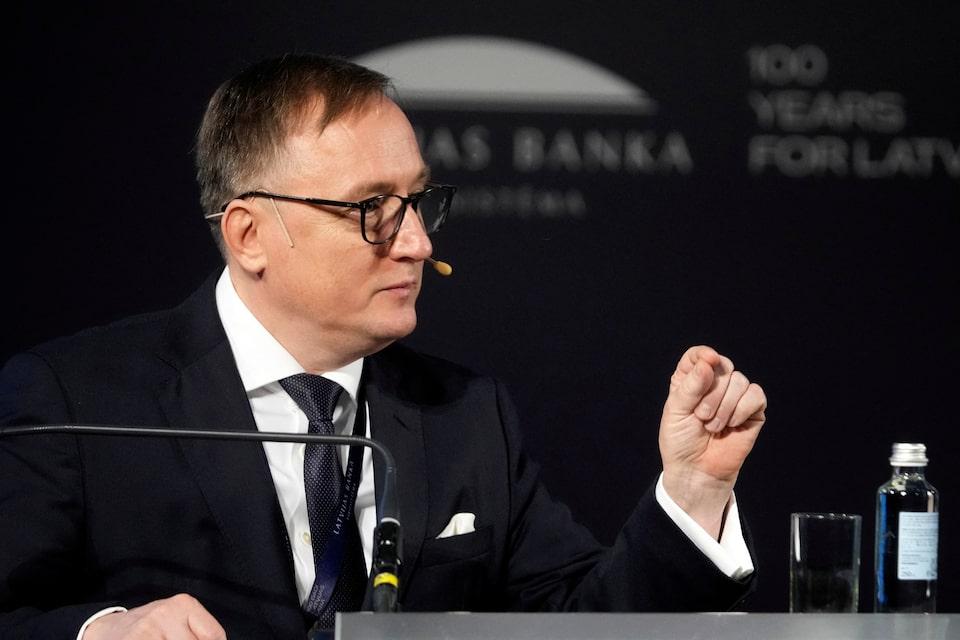
FRANKFURT, Jan 15 (Reuters) - The European Central Bank should be on alert as the U.S. administration's attack on the Federal Reserve raises new risks to the economic outlook, ECB policymaker Martins Kazaks said in an interview. Fed chair Jerome Powell has been threatened with a criminal indictment over comments he made about the renovation of the Fed's headquarters, casting a shadow over the independence of the world's most powerful central bank. Sign up here. Kazaks, the Latvian central bank governor and a candidate to become the ECB's next vice-president, said the attack on the Fed was worthy of an emerging country and added to a list of risks clouding the ECB's horizon. These include a possible financial bubble in artificial intelligence, and China's aggressive trade policy. "Risks (to inflation and growth) are on both sides and there's no room for complacency," Kazaks said in an interview. "We've seen a lapse into emerging market politics in the United States and there are risks from an AI-hype-driven valuation in the U.S. financial markets." He argued that any erosion of the Fed's independence was likely to ricochet on poorer U.S. consumers via higher inflation and, later on, higher interest rates to quell it. On China, he said its subsidies, export restrictions on rare earths and exchange-rate policy, which is seen capping the yuan's appreciation, may not be in line with World Trade Organisation rules. He called for a response from Europe, including long-delayed structural reforms but also industrial policy if needed. As for ECB rates, Kazaks said they remained at an appropriate level and euro zone inflation was delivering good news, with even core measures of price growth, which strip out more volatile components, now inching closer to the ECB's 2% target. https://www.reuters.com/business/finance/ecb-has-no-room-complacency-attack-fed-raises-risks-kazaks-says-2026-01-15/
2026-01-15 06:00
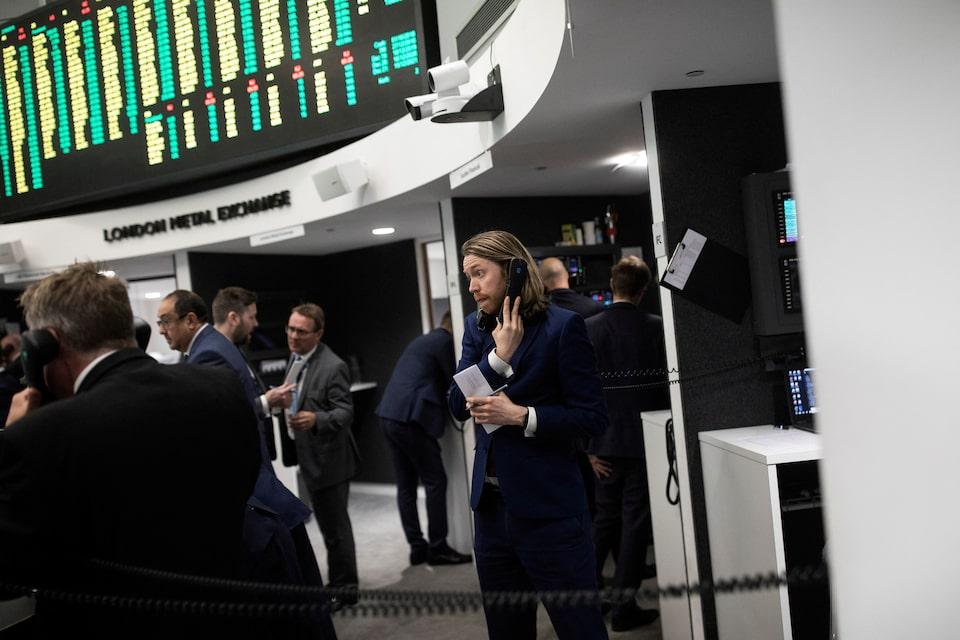
LONDON, Jan 14 (Reuters) - The London Metal Exchange (LME) posted record trading volumes last year, a remarkable recovery from the dark days of the nickel crisis four years ago, when the venerable 149-year-old institution was teetering on the brink of collapse. The London market, owned by Hong Kong Exchanges and Clearing (0388.HK) , opens new tab, has reaped the rewards of the physical market turbulence that has been a defining feature of U.S. President Donald Trump'scurrent term in office. Sign up here. Then the funds arrived. A flood of speculative buying washed into the LME base metals complex in the fourth quarter. Average daily volumes of 777,016 contracts in the last three months of 2025 were a new quarterly record, surpassing the previous peak of 735,604 contracts back in the second quarter of 2014. LME futures open interest ended the year up 15% relative to 2024 and at its highest level since early 2021. The speculative fever spilled over to both China, where Shanghai Futures Exchange (ShFE) activity exploded in December, and the U.S., where retail investors swarmed into some of the CME's smaller copper contracts. TARIFF BOOST U.S. import tariffs, actual in the case of aluminium and threatened in the case of copper, have had a massive impact on physical flows of metal around the world. Copper is still being stripped out of the global supply chain to send to the U.S. as the market bets (again) on a Trump tariff on imports of refined metal. A decision looms in June. LME copper trading moved up a gear in February, when Trump first launched an investigation into U.S. copper imports, and stayed there. Average daily volumes rose 12% in 2025 relative to 2024. The CME's (CME.O) , opens new tab flagship copper contract, by contrast, experienced a sharp 33% contraction in activity as funds took fright at the unprecedented volatility in arbitrage pricing with London. But the U.S. exchange enjoyed some offset from the dislocation in the aluminium market following the hike in U.S. import tariffs to 50% in June. CME contracts for physical aluminium premiums in the Midwest U.S. and Europe posted record volumes last year with year-on-year growth of 47% and 72% respectively. RETURN OF THE FUNDS While institutional investors remain leery of the CME copper contract, they have been flooding into the LME since September. Renewed fund interest in the base metals complex is in part spillover from the red-hot precious metals sector but money has also been drawn in by copper's record-breaking run and strong rallies in just about every LME metal other than lead. The rekindled enthusiasm for all things metallic caused a step change in LME trading during the fourth quarter. Copper and tin volumes were the highest since 2013 and 2014 respectively. Lead activity hit all-time highs and nickel posted its second-best quarterly volumes ever. Indeed, LME nickel activity last year was the strongest since 2019, underlining the return of confidence in the London market after the 2022 crisis. Most funds, it seems, have forgiven the exchange for cancelling nickel trades, a controversial decision that was upheld by the British High Court. SHANGHAI GRIPPED BY METALS FEVER The metals excitement spread to China in December. Business had been slow on the Shanghai market up until then with base metal futures volumes down across the board. But a surge of liquidity swept through the market in the last month of 2025 as Chinese investors joined the bull party. Aluminium volumes were the highest monthly tally in three years, nickel turnover the highest in four years and the Shanghai copper contract hasn't seen so much action since November 2015. A record 9 million tons of tin traded in December, prompting the state-backed China Nonferrous Metals Industry Association (CNMIA) to sternly warn against "blindly following the trend" in an "unreasonable" price rally. Not that anyone has paid much attention. The Shanghai tin market notched up turnover of almost 739,000 tons on Tuesday, equivalent to two years' worth of global usage. GOING SMALL IN THE US Shanghai has a long history of such speculative excess, driven by an army of retail investors trying to capture the next hot market move. There is no equivalent in London, where very few individuals are wealthy enough to clear the credit thresholds for direct LME trading. But there are signs that speculators are starting to join the action on the CME, not on the main copper contract but on some of the exchange's smaller, retail-oriented products. The CME micro copper contract, which at 2,500 lb is a tenth the size of the primary contract, saw volumes grow 20% year-on-year to almost four million metric tons in 2025. CME copper "event options", which offer a simple binary punt on the underlying price, registered turnover of 31,000 lots in December, more than was traded over the whole 12 months of 2024. These contracts, both launched in 2022, seem to be serving as a bridge for retail players to cross from investing in precious to industrial metals. China's CNMIA may be right to worry about excess speculation in previously fringe commodity markets such as tin but the bull narrative around industrial metals is attracting ever more converts to the metallic cause. Andy Home is a Reuters columnist. The opinions expressed are his own Enjoying this column? Check out Reuters Open Interest (ROI) for thought-provoking, data-driven commentary on markets and finance. Follow ROI on LinkedIn , opens new tab and X , opens new tab. https://www.reuters.com/markets/commodities/metals/resurgent-london-metal-exchange-rides-speculative-tsunami-2026-01-14/
2026-01-15 05:34
A look at the day ahead in European and global markets from Kevin Buckland The shift out of the high-flying tech stocks that set the pace for last year's record global equity rallies gathered more steam, to the benefit of cyclical and value shares. Sign up here. Case in point: Japan's tech-heavy Nikkei dropped 1% at the time of this narrative, after spiking to an all-time peak in the prior session. By contrast, the broader Topix index extended its record climb with a 0.4% advance. It's analogous to how the Russell 2000 is outpacing the S&P 500 currently, gaining 0.7% overnight while the larger index lost 0.5%. Capital.com analyst Kyle Rodda contended that while big drops this year for heavyweights like Apple, Meta and Microsoft can make for some ominous-looking declines in overall Wall Street indexes, the right way to view it is a healthy broadening out of the market's strength. For Europe, futures portend an extension of the record highs set on Wednesday in Britain and other parts of the region. Geopolitical risks are on the wane somewhat after U.S. President Donald Trump said he'd heard of a halt to the killing of protesters in Iran, lessening the chances of U.S. military action. That saw crude oil pull back sharply from multi-month highs, and helped bring safe-haven gold down from an all-time peak. Trump also de-escalated tensions with the Fed, saying he has no plan to fire Chair Jerome Powell, despite the criminal investigation into cost overruns for renovations of Fed headquarters. However, Trump is not ceding any ground over his bid to buy Greenland, reiterating that the U.S. needs it even as the foreign ministers of Greenland and Denmark left a high-stakes meeting in Washington by repeating that the autonomous Danish territory is not for sale. Key developments that could influence markets on Thursday: -UK GDP estimate, services, industrial production, manufacturing output -France, Spain, Sweden CPI -Germany full-year GDP -Euro zone industrial production https://www.reuters.com/world/china/global-markets-view-europe-2026-01-15/
2026-01-15 05:33
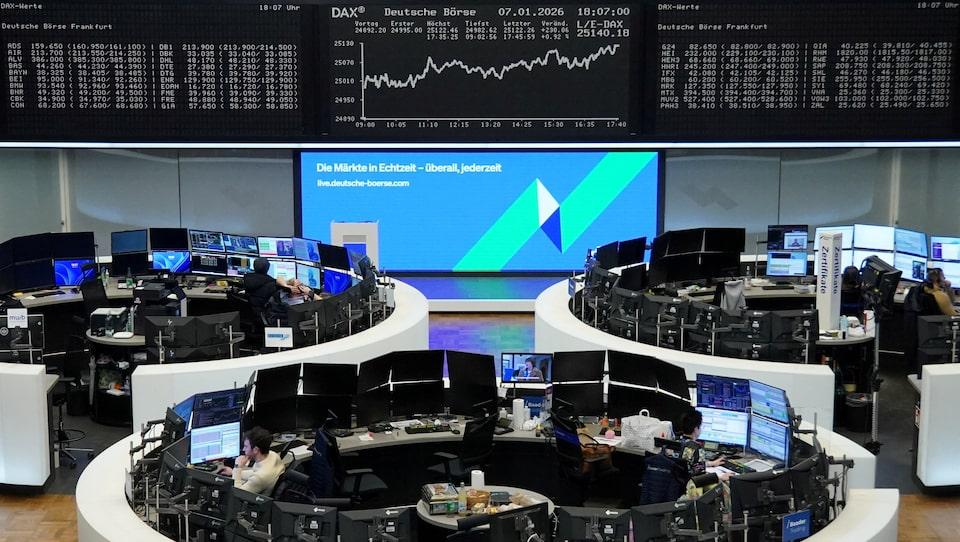
BOK keeps base rate unchanged at 2.50% as expected BOK omits earlier language on plans to implement further cuts Five of BOK's seven members see policy rates staying steady near-term Analysts adjust interest rate forecasts on hawkish signals SEOUL, Jan 15 (Reuters) - South Korea's central bank on Thursday signalled an end to its current easing cycle after keeping its benchmark interest rate unchanged, prioritising financial stability in its first policy meeting of the year as the won hovered around 16-year lows. Geopolitical tensions and fund outflows have intensified risks to growth and stability in Asia's fourth-biggest economy, particularly as policymakers have struggled to slow a slide in the local currency. Sign up here. "I can undeniably say that the forex market situation was an important factor in coming to today's (policy rate) decision," Governor Rhee Chang-yong said in a press conference after the bank's monetary policy board voted to keep the benchmark interest rate (KROCRT=ECI) , opens new tab unchanged at 2.50%. "The FX rate stabilization measures (recently announced) bolstered the won by more than 40 won against the dollar but it is weakening again, so we need to stay on alert," the BOK chief said. All 34 economists polled by Reuters had expected the bank to stand pat. Having delivered 100 basis points of cumulative cuts since October 2024, Rhee has been signalling a prolonged pause in the current easing cycle amid geopolitical uncertainties and persistent fund outflow risks. On Thursday, the BOK took a step further by dropping language from its previous statement when it said it would "decide whether and when to implement any further base rate cuts". The hawkish move pushed the March futures on three-year treasury bonds down as much as 0.29 points to 105.05. However, the won fell 0.6% to 1,472.6 per dollar, underlining policymakers' concerns about the risks to financial stability from one-sided currency moves. The won had jumped 1% on Wednesday after U.S. Treasury Secretary Scott Bessent said, in rare comments, that "excess volatility in the foreign exchange market is undesirable." ANALYSTS ADJUST RATE CALLS AFTER HAWKISH SIGNAL "Policy statements have been carrying language about needing further easing since July 2024, so removing of that today was hawkish," said Ahn Jae-kyun, an analyst at the Korea Investment Securities. "So a rate cut within the next three months has been ruled out, I'm not sure if a cut could be delivered in the next six months. I expect a cut in the third quarter but can't be too sure about that." Kang Seung-won, an analyst at NH Investment Securities, revised his rate call after the meeting and is now forecasting no change in 2026, from an earlier prediction of a 25 basis-point cut in the latter half of this year. Kang, however, said that a shift to a rate-hold stance does not necessarily raise the possibility of rate hikes. Policymakers so far have failed to stabilize the faltering won, one of Asia's worst performing currencies in the second half of last year, as appetite for U.S. equities among domestic retail investors remained strong. Prior to the BOK's statement on Thursday, analysts had pushed back the next predicted cut to the first quarter of 2027 from the first quarter of this year, as they expect authorities' efforts to steady the won to continue amid unfavourable external conditions. They expect headline inflation to average 1.9% this year, slightly below the central bank's target of 2%. https://www.reuters.com/world/asia-pacific/south-koreas-central-bank-holds-rates-safeguard-financial-stability-2026-01-15/
2026-01-15 05:29
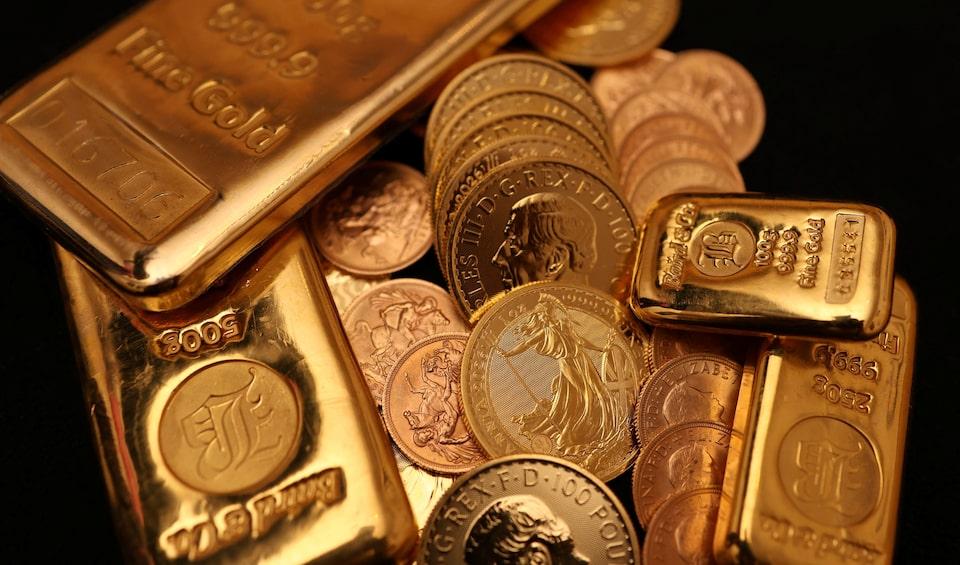
US weekly jobless claims unexpectedly fall Trump seems to adopt wait-and-see posture toward Iran protests Says he has no plan to fire Fed's Powell despite investigation Jan 15 (Reuters) - Gold prices declined on Thursday as weaker-than-expected U.S. weekly jobless claims data boosted the dollar, while U.S. President Donald Trump's moderated tone on Iran further weighed on safe-haven demand for the metal. Spot gold was down 0.1% at $4,614.93 per ounce, as of 01:30 p.m. ET (1830 GMT). Bullion hit a record $4,642.72 on Wednesday. U.S. gold futures for February delivery Sign up here. settled 0.3% lower at $4,623.70. Data showed new applications for U.S. unemployment benefits unexpectedly fell last week, pushing the dollar index (.DXY) , opens new tab to its highest level since December 2 and making bullion more expensive for overseas buyers. "Recent data sort of keeps expectations towards Fed on hold perhaps for the first half of the year, so the dollar index is at a multi-week high and that's providing a bit of a headwind for gold at this point," said Peter Grant, vice president and senior metals strategist at Zaner Metals. Trump said on Wednesday he has no plans to fire Jerome Powell despite a Justice Department criminal investigation into the Federal Reserve chair, but it was "too early" to say what he would ultimately do. The Fed is broadly expected to maintain interest rates at its January 27-28 meeting, despite Trump's calls for cuts. Markets, however, anticipate at least two 25-basis-point rate reductions later in the year. Trump also said he had been told that killings in Iran's crackdown on protests appeared to be easing and saw no immediate plan for large-scale executions, signaling a wait-and-see approach after earlier threats of intervention. Grant said easing geopolitical tensions had slightly weighed on prices, but viewed gold's move as corrective and expected traders to treat downticks as buying opportunities. Safe-haven gold tends to do well during times of geopolitical and economic uncertainty, as well as in low-interest-rate environments. Poland's central bank had 550 tons of gold at the end of 2025 and wants to raise its reserves to 700 tons, its governor Adam Glapinski said on Thursday. Spot silver slid 0.3% to $92.50 per ounce after hitting an all-time high of $93.57 earlier in the session. Spot platinum receded 0.8% to $2,404.18 per ounce, while palladium held steady at $1,826.32 per ounce. https://www.reuters.com/world/india/gold-slips-profit-taking-softer-geopolitical-tone-hit-safe-haven-demand-2026-01-15/