2025-04-16 06:49
April 16 (Reuters) - The Indonesian Attorney General's Office said it has arrested an employee of global palm oil company Wilmar Group (WLIL.SI) , opens new tab on graft charges related to corruption in obtaining export permits, a day after the firm denied its staff were being investigated. The announcement came after a string of arrests, including four judges and two lawyers, by the Attorney General's Office, which says the judges took 60 billion rupiah ($3.57 million) to arrange for a favourable verdict against three companies, including Wilmar. Sign up here. The office said late on Tuesday that the suspect will be held for 20 days in a Jakarta prison. Wilmar told Reuters: "We are now assisting with investigations." On Monday, the company released a statement saying "investigations so far have not involved Wilmar Group or any of its employees". A court had last month acquitted three companies - Wilmar Group, Musim Mas Group, and North Sumatra-based Permata Hijau Group - on charges of misconduct in obtaining export permits in 2022. When the corruption charges were first brought against the companies, prosecutors were seeking fines and payments up to 11 trillion rupiah ($653.4 million). ($1 = 16,835.0000 rupiah) https://www.reuters.com/world/asia-pacific/indonesia-arrests-wilmar-employee-linked-palm-oil-graft-case-2025-04-16/

2025-04-16 06:47
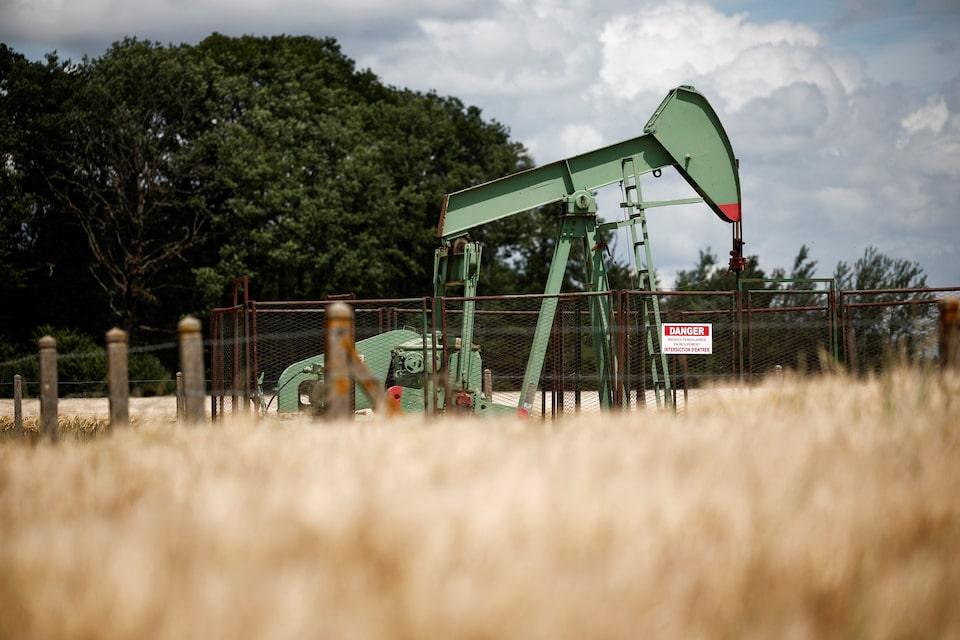
U.S. issues new sanctions on Chinese imports of Iranian oil Global trade tensions dominate U.S. crude stockpiles rose last week, EIA data shows Chinese quarterly GDP growth beats expectations HOUSTON, April 16 (Reuters) - Oil prices rose nearly 2% on Wednesday to a two-week high on concerns about global supplies after Washington issued new sanctions targeting Chinese importers of Iranian oil. Brent crude futures settled up $1.18, or 1.8%, to $65.85 a barrel, while U.S. West Texas Intermediate crude ended $1.14, or 1.9%, higher at $62.47. Sign up here. Both benchmarks closed at their highest levels since April 3, according to data from LSEG. The U.S. on Wednesday issued new sanctions targeting Iran's oil exports, including against a China-based "teapot refinery", as President Donald Trump seeks to ramp up pressure on Tehran and drive Iranian oil exports down to zero. The action comes as the U.S. government has relaunched negotiations with Iran over its nuclear programme this month. Meanwhile, Iran's right to enrich uranium is not negotiable, Foreign Minister Abbas Araqchi said ahead of the next round of talks in Rome on Saturday. The Organization of the Petroleum Exporting Countries has received updated plans for Iraq, Kazakhstan and other countries to make further oil output cuts to compensate for pumping above agreed quotas, the group said, further buoying oil futures. Elsewhere, U.S. crude stockpiles rose while gasoline and distillate inventories fell last week, the Energy Information Administration said. Crude inventories rose by 515,000 barrels to 442.9 million barrels in the week ended April 11, the EIA said, compared with analysts' expectations in a Reuters poll for a 507,000-barrel rise. TRUMP TARIFFS The International Energy Agency said on Tuesday that global oil demand growth this year will be the lowest since 2020, when demand contracted due to the COVID-19 pandemic. "The level of the tariff increases announced so far is significantly larger than anticipated. The same is likely to be true of the economic effects, which will include higher inflation and slower growth," said Federal Reserve Chair Jerome Powell. Oil futures pared some gains after Powell gave his remarks. Trump has ratcheted up tariffs on Chinese goods, prompting Beijing to impose retaliatory duties on U.S. imports. "The world economy hinges in large part on whether the U.S. and China can come to an agreement and not start a prolonged trade war," Alex Hodes, director of market strategy at financial services firm StoneX, said in a note. A Bloomberg report quoted an anonymous source as saying that China wants more respect from the Trump administration before it will agree to trade talks, analysts said. "A de-escalation of the trade war between the U.S. and China would reduce the downside in economic growth prospects and limit the downside for oil demand growth," said UBS analyst Giovanni Staunovo. The uncertainty over trade tensions has led several banks, including UBS, BNP Paribas and HSBC, to cut their crude price forecasts. "Using a conservative estimate of a 15% decline in global GDP growth, based on the impact of the U.S.-China trade war of 2018-2019, we could see oil demand growth sputter to just 600,000 bpd in 2025, roughly half of our pre-tariff estimates," said Janiv Shah, vice president of commodity markets analysis at Rystad Energy. Data showed China's GDP grew 5.4% year-on-year in the first quarter, beating the 5.1% expected in a Reuters poll, but this growth is unlikely to continue through the year, said PVM Oil analyst Tamas Varga. https://www.reuters.com/business/energy/oil-subdued-markets-assess-effects-trade-war-2025-04-16/
2025-04-16 06:32
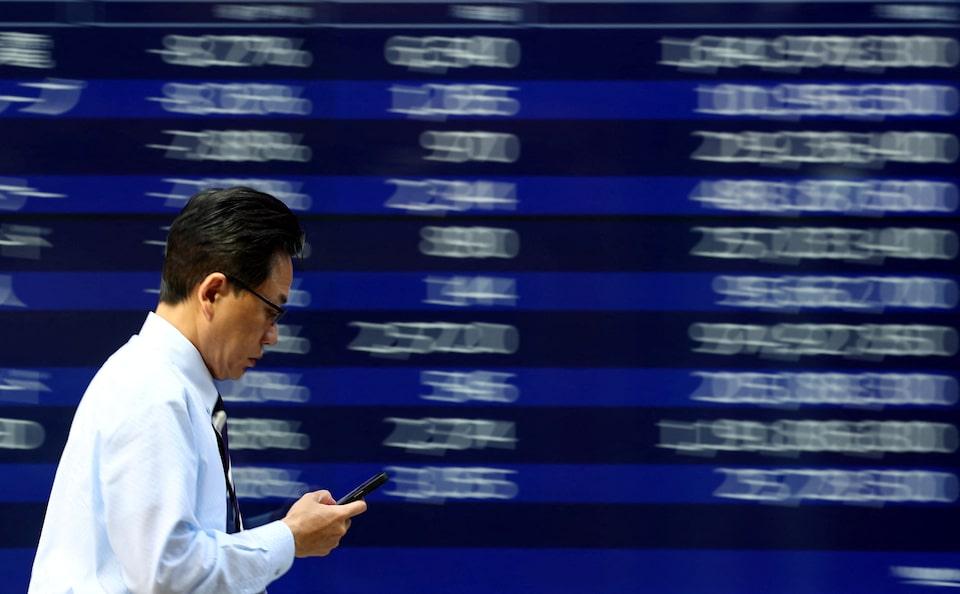
Nvidia, tech shares battered as US curbs chip sales to China Gold climbs 3.5%, dollar slides and safe havens jump Powell: Economy slowing in Q1, Fed remains in wait-and-see mode Treasury yields fall 4 bps BOSTON/LONDON, April 16 (Reuters) - Global shares fell sharply on Wednesday as U.S. restrictions on chip sales to China and continued tariff uncertainty battered tech stocks, while gold traded at record highs and support for the dollar continued to erode. Washington issued new export licensing requirements for sales to China of Nvidia's (NVDA.O) , opens new tab H20 and AMD's (AMD.O) , opens new tab MI308 artificial intelligence chips. Nvidia said the move would cost it $5.5 billion and its shares slumped nearly 7%. Sign up here. MSCI's gauge of stocks across the globe (.MIWD00000PUS) , opens new tab fell about 1.5%. "Capital markets remain caught between news about new tariffs and, on the other hand, about tariff negotiations or suspensions," Paul Christopher, a strategist with the Wells Fargo Investment Institute, wrote in a note on Wednesday. The Dow Jones Industrial Average (.DJI) , opens new tab fell 1.7%, the S&P 500 (.SPX) , opens new tab dropped 2.2%, and the tech-heavy Nasdaq Composite (.IXIC) , opens new tab slumped 3.1%. U.S. Federal Reserve Chair Jerome Powell said on Wednesday the Fed would wait for more data on the economy's direction before changing interest rates, and characterized recent market volatility as a logical processing of the Trump administration's dramatic shifts in tariff policy. "Powell is doing what the rest of us are doing - waiting and watching," Jamie Cox, managing partner for Harris Financial Group, said in an email. "The Federal Reserve won't act unless and until either the labor market turns or there is a systemic risk, such as a breakdown in the payment system." Data on Wednesday showed that U.S. retail sales surged in March as households boosted purchases of motor vehicles ahead of tariffs, though concerns about the economic outlook are hurting discretionary spending. President Donald Trump on Tuesday ordered a probe into potential new tariffs on all imports of critical minerals, on top of reviews into pharmaceutical and chip imports. Beijing is continuing to play hardball, having reportedly ordered airlines to suspend deliveries of Boeing (BA.N) , opens new tab aircraft. EUROPE, ASIA SHARES ALSO LOWER European stocks fell, with the STOXX 600 index (.STOXX) , opens new tab down 0.2%, also hit by declining tech company shares. MSCI's broadest index of Asia-Pacific shares outside Japan (.MIAPJ0000PUS) , opens new tab fell 0.8%, snapping a four-day winning streak. Chinese blue chips (.CSI300) , opens new tab rose 0.3%, as investors also digested some solid GDP data that pre-dated the tariff increases in April, but the Hong Kong Hang Seng index fell 1.9%. "The broader focus still remains on tariffs," said Aneeka Gupta, economist and strategist at WisdomTree. "In China, we've had the restrictions raise concerns that access to global tech hardware would be further choked off," Gupta said. "That's also resulting in a bit of a risk-off sentiment in the market." The White House said Trump is open to making a trade deal with China but Beijing should make the first move. The World Trade Organization sharply cut its forecast for global merchandise trade from solid growth to a decline on Wednesday, saying further U.S. tariffs and spillover effects could lead to the heaviest slump since the height of the pandemic. TREASURIES DOWN, GOLD SHINES The uncertainties left gold in an unstoppable position, with bullion hitting another record high of $3,339 per ounce, last up 3.5%. Australian bank ANZ on Wednesday updated its forecast for gold to hit $3,600 an ounce by year-end, saying safe-haven demand for the asset would accelerate. U.S. Treasury yields fell after comments from the Fed's Powell stoked concerns about economic growth and inflation pressures. The benchmark 10-year Treasury yield fell 4 basis points to 4.283%, after yields surged last week on concerns about the stability of the U.S. economy. Traders of short-term interest-rate futures are betting the Fed resumes rate cuts in June and that by year-end the policy rate, currently in the 4.25%-4.50% range, will be a full percentage point lower. The U.S. dollar index, which tracks the currency against six peers, slid 0.7% to around its lowest since April 2022 in a sign investors remained cautious about U.S. assets . The Japanese yen and Swiss franc, seen as safe assets during market turbulence, rallied around 0.8% and 1.2%, respectively. The yen was trading around its highest level since September while the franc was at its highest in 10 years . Bank of Japan Governor Kazuo Ueda told the Sankei newspaper that the central bank may need to take policy action if U.S. tariffs hurt the Japanese economy, signaling the potential to pause the bank's rate-hiking cycle. Oil prices read more to a two-week high on concerns about global supplies after Washington issued new sanctions targeting Chinese importers of Iranian oil. In cryptocurrencies, bitcoin added 0.5% to $84,389, down nearly 10% for the year. https://www.reuters.com/markets/global-markets-wrapup-1-2025-04-16/
2025-04-16 06:25
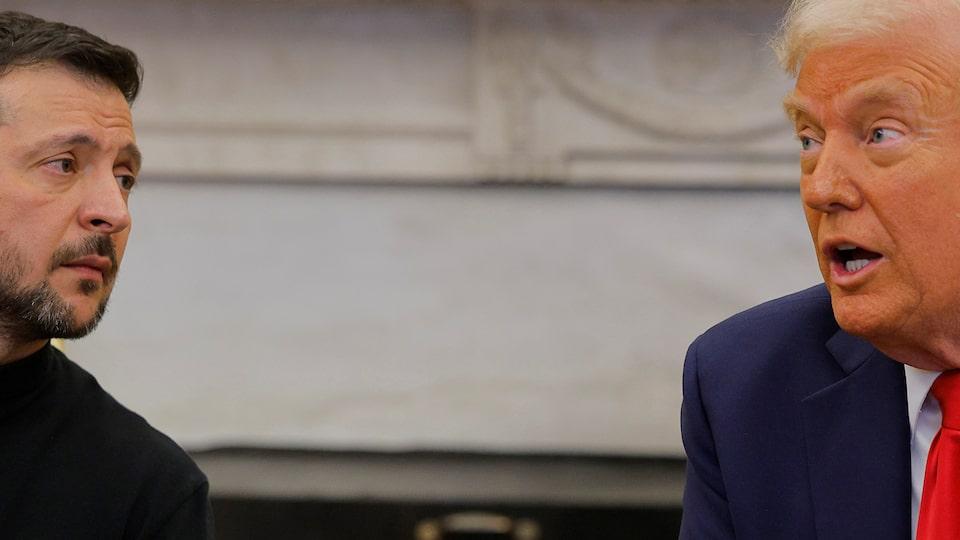
April 16 (Reuters) - The United States has reduced its cost estimate for the assistance provided to Ukraine since Russia's invasion in 2022 to about $100 billion from $300 billion, Bloomberg News reported on Wednesday, citing people familiar with the matter. U.S. President Donald Trump is seeking a bilateral minerals deal as part of a peace push to end Russia's war in Ukraine. Trump also sees it as a way to recover billions of dollars spent on military assistance to Kyiv, although the aid was not a loan. Sign up here. Ukrainian President Volodymyr Zelenskiy said on Tuesday that talks with the U.S. regarding a minerals deal were "positive", and that more meetings were expected. The White House did not immediately respond to a Reuters' request for comment. Last month, the Trump administration proposed a new, more expansive minerals deal with Ukraine, which gives Ukraine no future security guarantees but requires it to place in a joint investment fund all income from the exploitation of natural resources by state and private enterprises across Ukrainian territory. https://www.reuters.com/world/us-lowers-ukraine-aid-estimate-minerals-deal-talks-bloomberg-news-reports-2025-04-16/
2025-04-16 06:21
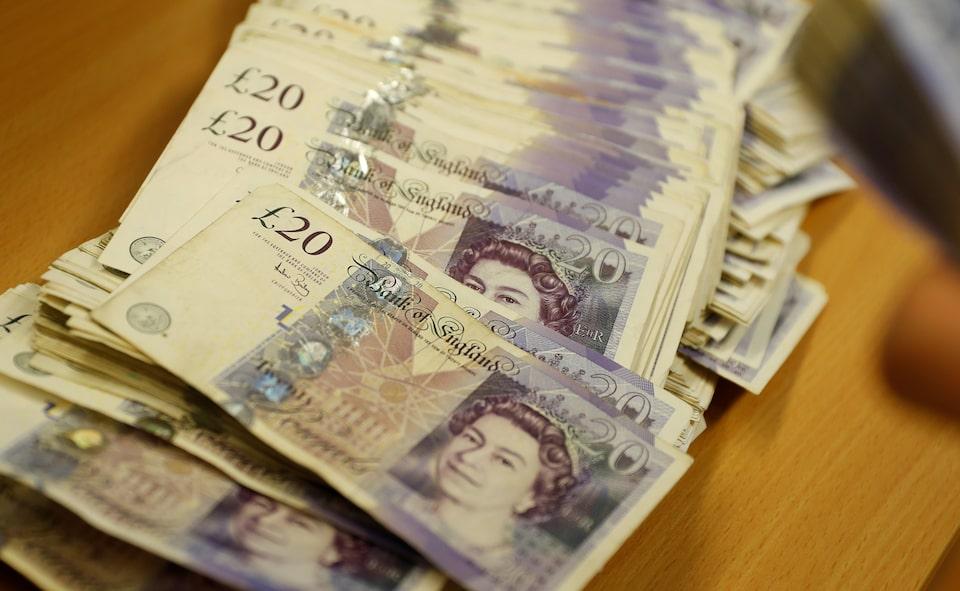
UK CPI slows to 2.6% in March from February's 2.8% Services inflation 4.7% vs 4.8% Price rises weaker than BoE forecast Expert say March drop is 'calm before storm' Markets see 86% chance of a May rate cut LONDON, April 16 (Reuters) - British inflation slowed to its weakest in three months in March and other measures watched by the Bank of England cooled too, but higher bills and employer costs will pressure prices soon against the backdrop of U.S. President Donald Trump's trade war. Inflation slowed to an annual rate of 2.6% in March from 2.8% in February, below expectations of 2.7% in a BoE forecast and a Reuters poll of economists. Sign up here. A price drop for computer games and falling fuel prices helped bring down the headline rate although the prices of clothes rose strongly after a surprise fall in February, the Office for National Statistics said. "This is very much the calm before the storm," former BoE interest rate-setter Michael Saunders said, pointing to April's increases in gas, electricity and water prices, alongside higher taxes on employers, which could push inflation to 3%. "And we'll start to see the effects on the economy of Storm Donald with the Trump trade wars," Saunders told BBC radio. He said inflation was now likely to peak below the BoE's most recent forecast of 3.7% in the third quarter this year, but the cost would be a hit to economic growth. The BoE - which has an inflation target of 2% - said in February it expected inflation to leap to 3.6% in April as regulated tariffs for household utility bills go up. Since those forecasts were made, Trump's decision to impose sweeping trade tariffs have raised the prospect of a slowdown in the global economy. Martin Sartorius, principal economist at the Confederation of British Industry, said the higher US tariffs could put both upward and downward pressures on inflation in the UK, but the BoE was likely to cut interest rates next month. Financial markets put a roughly 86% chance on the BoE cutting its benchmark Bank Rate by a quarter of a percentage point at its next monetary policy announcement on May 8, up from about 80% from before the inflation data. "Looking ahead, we expect them to continue their 'gradual and careful' approach to reducing borrowing costs amid an uncertain economic environment," Sartorius said. BoE Deputy Governors Clare Lombardelli and Sarah Breeden and Monetary Policy Committee member Megan Greene have all said it is too early to judge the inflation implications resulting from Trump's moves. Trade experts have said China is likely to send cheaper exports to Europe after being effectively barred from the U.S. market due to high tariffs on the Asian powerhouse. Sterling fell by about a fifth of a cent against the US dollar after the figures were published. Inflation in the euro zone also fell in March to 2.2% and to 2.4% in the U.S. KEY MEASURES COOL Wednesday's data showed inflation for UK services - something the BoE considers to be a good guide of price pressures in the economy - slowed to 4.7% from 5.0% in February. The Reuters poll had pointed to a 4.8% increase. Core headline inflation, which excludes energy, food and tobacco prices, also eased a touch. However, despite a slowdown in price growth from levels above 11% in 2022, inflation in Britain continues to be a concern for consumers. Inflation expectations among the public and business have risen, adding to unease among BoE policymakers who are keeping a close eye on other gauges of price pressures in the economy as they assess when to reduce borrowing costs. https://www.reuters.com/world/uk/uk-inflation-slows-26-march-ons-says-2025-04-16/
2025-04-16 06:16
Yen climbs into U.S.-Japan trade talks Swiss franc continues to post gains on dollar Fed's Powell says U.S. growth appears to be slowing NEW YORK, April 16 (Reuters) - The dollar resumed its fall on Wednesday with both safe-havens and risk-sensitive currencies outperforming the greenback as traders waited to see if U.S. President Donald Trump’s administration reaches new trading agreements with partners. The dollar tumbled last week on concerns over the economic impact of new tariffs and as investors shifted allocations overseas due to uncertainty on the erratic implementation of the trade levies. Sign up here. The United States is in discussions with countries including Japan, while tensions between China and the U.S. are intensifying. “We're in a little bit of an information vacuum now with this stalemate between China and the U.S, and we're waiting to see what deals get struck with other countries,” said Brad Bechtel, global head of FX at Jefferies in New York. “There's some big countries that could potentially be announcing deals, which then puts a framework around what the U.S. administration at least is trying to do with tariffs,” Bechtel said. Trump said he will personally attend a meeting of Japanese and U.S. trade officials on Wednesday. South Korean Finance Minister Choi Sang-mok will hold a meeting with U.S. Treasury Secretary Scott Bessent next week to discuss trade issues. Vice President JD Vance said on Tuesday there is a good chance that the United States and Britain will strike a "great agreement" on trade. Any trade agreements with China and the European Union are expected to take longer to reach. Trump on Tuesday ordered a probe into potential new tariffs on all U.S. critical mineral imports in an attempt to pressure industry leader China. Federal Reserve Chair Jerome Powell said on Wednesday that U.S. economic growth appears to be slowing, with consumer spending growing modestly, a rush of imports to avoid tariffs likely to weigh on estimates of gross domestic product, and sentiment souring. "The Fed is waiting to see where things go before they make any type of movement on rates, to see if inflation is going to be temporary or if it's going to be a one-time thing, to see how long these tariffs last and whether or not there's any kind of change to it," said Robert Pavlik, senior portfolio manager at Dakota Wealth. Powell also suggested that hopes the U.S. central bank will step in to tamp down on market volatility are likely misplaced. U.S. data on Wednesday showed U.S. retail sales surged in March as households boosted purchases of motor vehicles ahead of tariffs. The euro was last up 0.84% on the day at $1.1376, holding below a three-year high of $1.1473 reached on Friday. The dollar weakened 0.71% to 142.22 Japanese yen after earlier reaching 142.03, slipping slightly below Friday's low to hit the lowest exchange rate since September 30. Bechtel noted that volumes were declining ahead of the Good Friday holiday, when most U.S. markets will be closed though foreign exchange will remain open. The dollar was last down 1% against the Swiss franc at 0.815 , just slightly above Friday's 10-year low. The franc has appreciated the most among G10 currencies since the April 2 tariff announcement, and the resulting disinflationary effect could push the Swiss National Bank to bring rates back into negative territory. The SNB often intervenes directly in markets to limit the franc's moves, though given Washington's concern over such action, there would be risk of blowback. Market speculation that the SNB may not intervene could make traders feel more confident about buying the franc, said Chris Turner, global head of markets at ING. "I'm sure the SNB would say that their hands aren't tied, but I think investors might be second guessing that," he said. The British pound was last down 0.07% at $1.3221 , after hitting a six-month high of $1.3292 earlier. The Canadian dollar gained 0.5% to C$1.39 per dollar after the Bank of Canada held its key policy rate at 2.75%, its first pause after seven consecutive cuts, and said it would be ready to act decisively if needed to keep inflation under control. The Australian dollar rose 0.35% at $0.6365 and earlier reached $0.6391, the highest since February 24. In cryptocurrencies, bitcoin was flat on the day at $83,989. https://www.reuters.com/markets/currencies/dollar-sellers-take-breather-sterling-stands-tall-2025-04-16/