2025-04-16 00:38
NEW YORK, April 15 (Reuters) - The Mexican government has halted U.S. fuel imports sent into the country by road, as it cracks down on illegal deals, three sources familiar with the matter said on Tuesday. Trucks carrying gasoline and diesel to Mexico from the U.S. Gulf Coast refining hub are not being permitted to cross the Texas border as the Mexican government investigates import permits and steps up cargo inspections, one of the sources involved in such deliveries said. Sign up here. There was no timeline to resume the trucking trade, the sources said, adding that railway and waterborne deliveries of fuel to Mexico from the U.S. have not been impacted. The sources requested anonymity as the matter is not public. The Mexican government and state-owned energy company Pemex did not respond to requests for comment. Even though Mexico is a large crude oil producer, it imports much of its fuel requirements from the U.S. as Pemex struggles to efficiently refine the heavy sour Maya crude oil grade it pumps. Mexico is the top buyer of U.S. fuel. U.S. oil and fuel exports to the country averaged around 35.66 million barrels per day in January, according to the latest available U.S. Energy Information Administration data. The trading route has proven lucrative for fuel smugglers, pushing Mexico to establish a decree to combat illicit fuel trade in 2023. In recent months, Mexican authorities have seized a vessel and several fuel trucks for what they said were illegal cargos. Mexican Security Minister Omar Garcia Harfuch said on March 31 that federal authorities had seized a tanker in Tamaulipas that was carrying 10 million liters of diesel along with 192 containers and 29 vehicles to transport motor fuels as well as other vehicles. On March 28, he said federal authorities had seized about 8 million liters of hydrocarbon products, containers and vehicles used to transport motor fuels and pumps in Baja California. U.S. President Donald Trump's crackdown on illegal immigration and drug trafficking has also increased scrutiny at the U.S.-Mexico border. Nearly 110,000 acres of federal land along the border were transferred to the U.S. Army to help prevent illegal immigration, the U.S. Interior Department said on Tuesday. https://www.reuters.com/world/americas/us-fuel-exports-mexico-by-land-halted-by-higher-scrutiny-sources-say-2025-04-16/

2025-04-16 00:28
CAIRO, April 16 (Reuters) - Algerian energy firm Sonatrach signed two memorandums of understanding (MOU) with U.S. shale company Occidental Petroleum (OXY.N) , opens new tab to expand cooperation in hydrocarbon exploration and production in Algeria, Sonatrach said in a statement. The MOUs were signed on Monday on the sidelines of the US-Algeria Energy Forum 2025. Sign up here. https://www.reuters.com/business/energy/algerias-sonatrach-occidental-petroleum-sign-mous-hydrocarbon-cooperation-2025-04-16/

2025-04-15 23:40
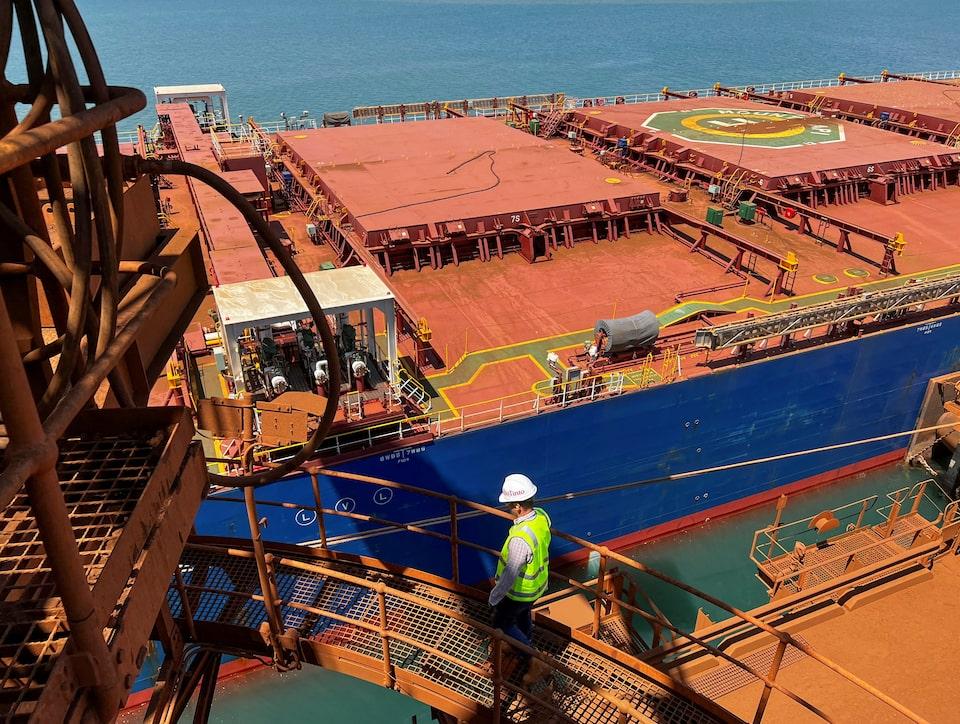
April 16 (Reuters) - Rio Tinto (RIO.AX) , opens new tab, (RIO.L) , opens new tab on Wednesday reported its weakest first-quarter iron ore shipments since 2019 and warned that more weather disruptions could lead to a 2025 forecast miss, after cyclones impacted the miner's Pilbara operations. The company now expects Pilbara iron ore shipments for 2025 to hit the lower end of its 323 Mt-338 Mt forecast range. Sign up here. A series of tropical cyclones in the first quarter snarled activities at the Dampier port in the Pilbara region, with the company previously warning of total losses of 13 million metric tons of iron ore due to bad weather. "Pilbara iron ore guidance remains subject to the timing of approvals for planned mining areas and heritage clearances. The system has limited ability to mitigate further losses from weather if incurred," the company said in a statement. The miner has been struggling to consistently ramp up production while shipping more lower-grade ore as it prepares to bring its next generation of iron ore mines online. It risks losing its position as the world's top iron ore producer if Brazil's Vale SA (VALE3.SA) , opens new tab, which reported on Tuesday, achieves the upper end of its 325 Mt - 335 Mt guidance for 2025. Rio Tinto's 2025 guidance of 323 Mt-338 Mt excludes an expected 9.7 Mt-11.4 Mt from its Canadian operations. Meanwhile, copper production on a consolidated basis rose 16% to 210 thousand tonnes compared with a year ago, but fell 8% quarter-on-quarter. At its Kennecott operation in Utah, copper production plunged 32% from the previous quarter due to unplanned conveyor failures, though it increased 7% year-on-year. The affected conveyor has since been restored to full functionality, the company said. The world's largest iron ore producer shipped 70.7 Mt of the steel-making commodity from its Pilbara operations in the three months ended March 31, down from 78 Mt in the same period last year. That missed a Visible Alpha consensus estimate of 73.6 Mt. https://www.reuters.com/markets/commodities/rio-tintos-first-quarter-iron-ore-shipments-fall-9-2025-04-15/
2025-04-15 23:11
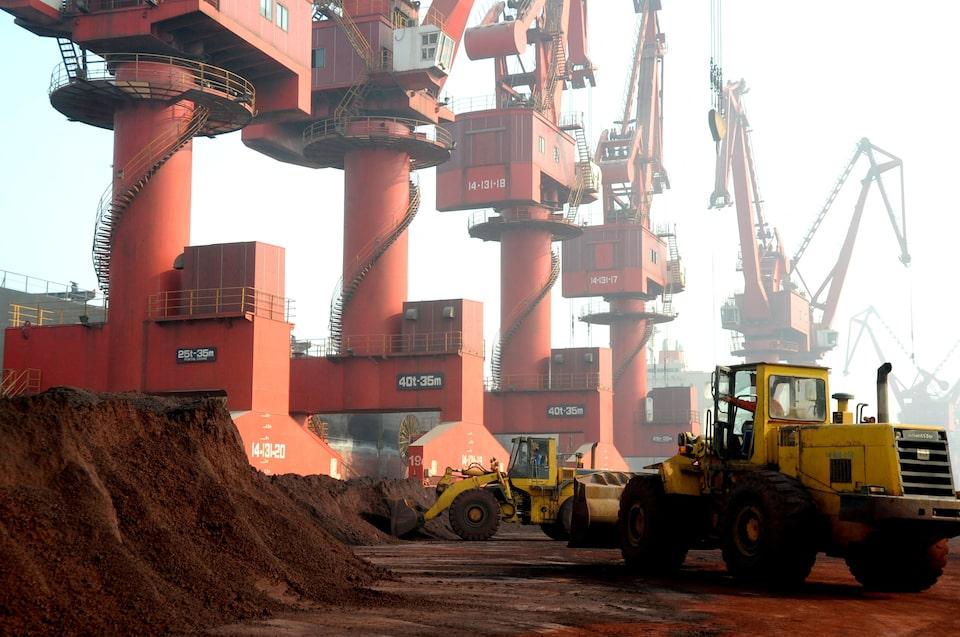
Order marks major escalation in global trade conflict US seen as overly reliant on others for critical minerals Comes after launch of copper tariff probe in February Administration again cites national security grounds April 15 (Reuters) - U.S. President Donald Trump on Tuesday ordered a probe into potential new tariffs on all U.S. critical minerals imports, a major escalation in his dispute with global trade partners and an attempt to directly rebuke industry leader China. The order lays bare what manufacturers, industry consultants, academics and others have long warned Washington about: that the U.S. is overly reliant on Beijing and others for processed versions of the minerals that power its entire economy. Sign up here. Trump signed an order at the White House directing Commerce Secretary Howard Lutnick to start a national security probe under Section 232 of the Trade Expansion Act of 1962. That is the same law Trump used in his first term to impose 25% global tariffs on steel and aluminum and one he used in February to launch a probe into potential copper tariffs. Market dynamics for all critical minerals - including cobalt, nickel and the 17 rare earths - will be studied for potential tariffs, according to the order, which added uranium and any other elements that U.S. federal officials deem necessary. The U.S. currently extracts and processes scant amounts of lithium, has only one nickel mine but no nickel smelter, and has no cobalt mine or refinery. While it has multiple copper mines, the U.S. has only two copper smelters and is reliant on other nations to process that key red metal. "The dependence of the United States on imports and the vulnerability of our supply chains raises the potential for risks to national security, defense readiness, price stability, and economic prosperity and resilience," Trump said in the order. Beijing earlier this month placed export restrictions on rare earths in response to Trump's recent broad tariffs. Rare earths are a group of 17 elements used across the defense, electric vehicle, energy and electronics industries. The United States has only one rare earths mine and most of its processed supply comes from China. Those restrictions from China were seen as the latest demonstration of the country's ability to weaponize its dominance over the mining and processing of critical minerals after it put outright bans on the export of three other metals last year to the U.S. and slapped export controls on others. Chinese mining companies across the globe have been flooding markets with cheap supplies of many critical minerals in recent years, fueling calls from industry and investors for action from Washington to support U.S. projects. https://www.reuters.com/markets/commodities/trump-signs-order-launching-probe-into-reliance-imported-critical-minerals-2025-04-15/
2025-04-15 22:35
RIO DE JANEIRO/SAO PAULO, April 15 (Reuters) - Brazilian miner Vale (VALE3.SA) , opens new tab produced 67.7 million metric tons of iron ore in the first quarter of 2025, down 4.5% from a year earlier, the company said on Tuesday in its sales and output report. One of the world's largest iron ore producers, Vale said heavy rainfall impacted production in its Brazilian Northern mining complex. Sign up here. The weaker first-quarter output had been expected, Vale said, and it reaffirmed its outlook to produce between 325 million tons and 335 million tons of iron ore in 2025, as it also began the ramp-up of mining projects VGR1 and Capanema. Sales of iron ore rose 3.6% in the quarter year-on-year to 66.1 million tons, the report showed, with Vale attributing the increase to supply from inventories, while also noting it has been prioritizing medium-grade products given market conditions. The average realized price of Vale's iron ore fines was $90.80 per ton in the quarter ended in March, down almost 10% year-on-year and a 2.4% decline from the last quarter of 2024. In a note to clients, Citi analysts said iron ore output and sales came mostly in line with expectations, but copper and nickel beat their estimates. "We estimate very minor downgrades to consensus EBITDA estimates," analysts Alexander Hacking and Stefan Weskott wrote, adding they expect the stock to perform in line following the results. Vale will release its first-quarter earnings on April 24. Vale's copper production increased 11% in the quarter year-on-year to about 90,900 tons, with the firm citing strong performance at the Voisey’s Bay mine in Canada and the Salobo and Sossego operations in Brazil. Copper sales grew 6.6% to about 81,900 tons. Nickel output rose about 11% year-on-year to around 43,900 tons, mainly due to higher output at Onca Puma in Brazil and better performance at its Canadian assets, Vale said. It sold 38,900 tons of nickel in the quarter, a 17.5% rise from a year earlier. https://www.reuters.com/markets/commodities/iron-ore-output-brazils-vale-falls-45-first-quarter-2025-04-15/

2025-04-15 22:16
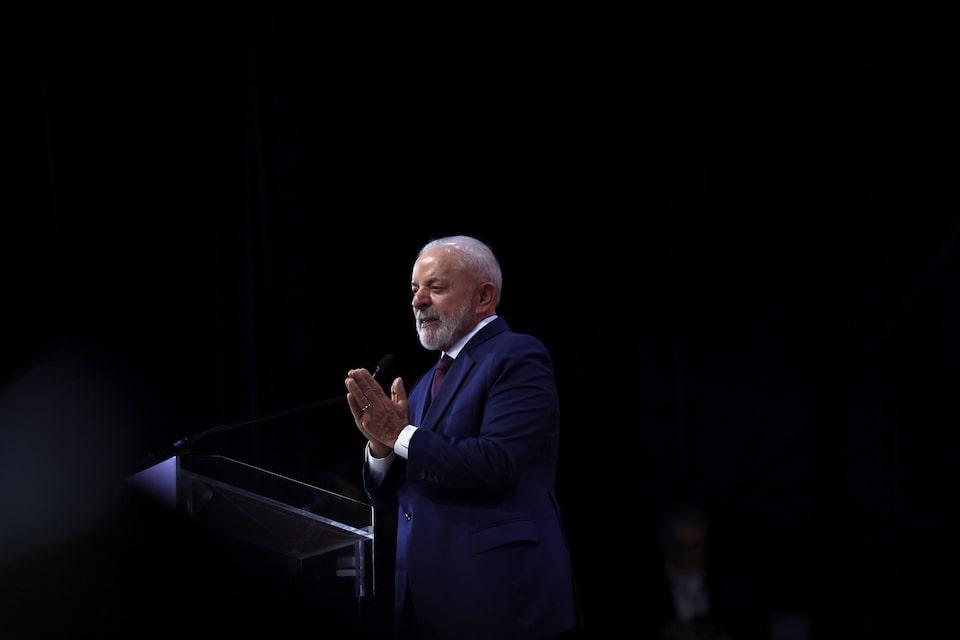
Government sets primary surplus target of 0.25% of GDP for 2026 Target to reach 1.25% of GDP by 2029, markets skeptical Gross debt-to-GDP ratio is expected to keep rising despite this BRASILIA, April 15 (Reuters) - Brazil's government on Tuesday projected a sharp rise in gross debt despite an outlook for an improving primary balance, including a 0.25% of gross domestic product surplus target for 2026 and more ambitious goals in the following years. In its annual budget guidelines bill, which requires congressional approval, President Luiz Inacio Lula da Silva's administration projected primary surplus targets of 0.5% of GDP in 2027, 1.0% in 2028, and 1.25% in 2029. Sign up here. Still, gross public debt is expected to continue rising, peaking at 84.2% of GDP in 2028, driven by high interest payments in Latin America's largest economy. Speaking at a press conference, Budget Secretary Clayton Montes acknowledged that spending and tax benefit reviews will be needed to meet the 2027 surplus target, as a waiver excluding large court-ordered federal payments from the primary balance calculation is set to expire by then. "Necessary measures to deliver these results will be taken," said Deputy Treasury Secretary Viviane Varga, without providing details. The new budget outlook represents a notable deterioration from estimates published late last year, when Brazil's Treasury forecast the gross debt-to-GDP ratio - a key indicator of a country's solvency - to peak at 81.8% in 2027. The revision reflects expectations of higher interest rates following an aggressive monetary tightening cycle by the central bank to curb inflation, partly fueled by government spending. The bill forecasts the benchmark Selic interest rate to reach a cumulative 14.02% this year, 12.56% in 2026, 10.09% in 2027, 8.27% in 2028, and 7.27% in 2029. The rate currently stands at 14.25%, and the central bank has already signaled another hike in May. The government also projected an average exchange rate of 5.97 reais per U.S. dollar next year and an average oil price of $66.74 per barrel. The Brazilian real closed at 5.89 reais per dollar on Tuesday , while Brent was priced at $64.67. FISCAL WOES If met, the 2026 fiscal target, which was previously anticipated by Finance Minister Fernando Haddad, would mark the first primary surplus in Lula's current term. However, private economists and investors have expressed skepticism about the target, as Brazil next year holds general elections, which often correspond with higher public spending. "The budget guidelines bill released today is unrealistic," investment firm Warren Rena said in a note, pointing to "inflated" revenue estimates and forecasting a primary deficit of 0.8% of GDP next year. Lula, 79, has said he intends to run for re-election in 2026 if his health allows. According to Tuesday's projections, Brazil's gross public debt - already high compared to emerging market peers - will have risen by 10.1 percentage points of GDP under his term. The leftist leader has boosted social benefits and household income, relying on more progressive taxation to offset fiscal expansion. Still, surging mandatory expenses, including pensions and welfare, have raised doubts over whether Brazil can stabilize public debt levels. Those concerns, along with a tougher global outlook, have driven 10-year sovereign bond yields above 14%. https://www.reuters.com/world/americas/brazil-sees-worsening-debt-outlook-despite-rising-primary-surplus-targets-2025-04-15/