2025-04-15 21:27
NAPERVILLE, Illinois, April 15 (Reuters) - U.S. corn farmers this year are set to plant one of their biggest areas in history as the crop’s profitability potential is unusually strong versus alternative crops. Both high-yielding and low-yielding states are set to boost corn acres this year, leading some market participants to wonder if the lower-yielding states could weigh down national yield. Sign up here. The U.S. Department of Agriculture will likely set the 2025 U.S. corn trend yield at 181 bushels per acre, almost 2 bpa above last year’s record. Final yield has fallen short of USDA’s trend for the last six years, suggesting that sub-181 could be in store for 2025. However, that is a completely separate issue from the one introduced above. Besides, many market analysts use their own trend yield calculations – not USDA’s – in their analyses. But should those analysts scale back yield assumptions because of the large acreage? SETTING THE STAGE U.S. farmers in March told USDA they would plant 95.3 million corn acres this year, about 4% above the recent average. The top five U.S. corn states (Iowa, Illinois, Nebraska, Minnesota and Indiana) account for around 61% of annual production, and their usual yields are above the national average. Those five are set to plant 51.6% of U.S. corn acres in 2025, which would represent the median of the latest five years. Assuming a normal portion of the planted acres is harvested in each state, the top five would account for 54.5% of harvested acres, a hair above the recent average. This exercise shows that there are not a disproportionate number of corn acres this year in either the top or non-top states versus normal levels, which offers early hints toward the conclusion. TESTING TIME The baseline 2025 scenario is set by applying average state-level harvested fractions to the corn planting intentions. Each state is assigned a five-year Olympic average yield, which averages the middle three results to kick out extremes. Those levels would produce a 2025 national corn yield of 176.47 bpa. If harvested areas are kept unchanged for the top five states but are increased by 5% in every other state, that raises harvested acres by a generous 2.5% or more than 2 million acres. But that clips only 0.84 bpa (0.4%) off the national yield. And this reflects a more sensitive scenario, too. If the exact same exercise is performed using the top four or top seven states instead of the top five, national yield falls by 0.78 and 0.59 bpa, respectively. For completeness, the roles are reversed. If harvested areas are increased by 5% for the top five states and the remaining states’ areas are unchanged, total harvested area jumps 2.9% but yield climbs only 0.18 bpa (0.1%). These sample computations suggest that all else equal, the current 2025 corn acreage configuration would probably not produce a noticeable effect on national yield. That is especially true as states are highly unlikely to turn out average yields all in the same year, and these yield fluctuations can easily dilute any detectable differences caused by the acreage makeup. ALTERNATE SCENARIOS The impact on national corn yield can be large when lower-yielding states struggle. Take North Dakota, which accounts for 3.3% of production with an average corn yield nearly 40 bpa below the national. Severe drought in 2021 slashed the state’s yield to a decade low, though national yield still hit 176.7 bpa, a record at the time. Had North Dakota’s yield and harvested fraction matched its preceding averages in 2021, that would have added 1.62 bpa to the national yield. Drought reduces the portion of planted corn acres harvested for grain, hence the adjustment. But the heavy hitters have more pull. Drought in Nebraska, which accounts for 11.4% of production, tanked corn yield there to a decade low in 2022. National yield sank to 173.4 bpa that year. But with average yield and a normal harvested percentage in Nebraska alone, the 2022 U.S. corn yield could have been 2.38 bpa higher. This suggests that unless a huge swath of planned corn acres don’t get planted this year, analysts should focus their efforts more on yield potential, since that’s where the truly good crops are separated from the average ones. Karen Braun is a market analyst for Reuters. Views expressed above are her own. https://www.reuters.com/markets/commodities/reality-check-will-adding-fringe-us-corn-acres-drag-down-yield-braun-2025-04-15/

2025-04-15 21:20
ORLANDO, Florida, April 15 (Reuters) - TRADING DAY Making sense of the forces driving global markets Sign up here. By Jamie McGeever, Markets Columnist ECB, China GDP, Powell up next Investors enjoyed another day of much-needed rest and recuperation on Tuesday after the last few bruising weeks, with no further strains in global trade tensions or left-field policy announcements from the White House pushing bond yields and volatility lower, although Wall Street closed slightly down. The dollar rebounded from three-year lows, but U.S. President Donald Trump's upending of the global economic order suggests the "strong dollar policy" advocated by Washington over the last three decades has never rung more hollow. More on that and more below, but first, a round-up of the day's main market moves. I'd love to hear from you, so please reach out to me with comments at [email protected] , opens new tab. You can also follow me at @ReutersJamie , opens new tab and @reutersjamie.bsky.social , opens new tab. If you have more time to read today, here are a few articles I recommend to help you make sense of what happened in markets. Today's Key Market Moves Activity, sentiment and asset price direction across global markets on Tuesday could probably best be summed up by the maxim that "no news is good news". There was no major flare-up in the global trade war although, much like Monday, lingering tariff worries tempered any sense of relief on Wall Street and U.S. stocks lagged their global peers. That was despite another dose of unexpectedly strong earnings from major Wall Street banks. Bumper profits and record trading revenues are great, but will have next to no bearing on the rest of the year - the market environment they were racked up in has radically changed. To be sure, U.S. economic data on Tuesday put a temporary pause on the stagflation narrative that has been growing rapidly and loudly recently - the New York State manufacturing index rose more than expected, and import prices surprisingly fell. And elsewhere, inflation in India and Canada came in below expectations, giving policymakers there some welcome breathing room. So as the world awaits the next move on tariffs from Trump or China, and negotiations between the Trump administration and dozens of countries get under way, markets are in a kind of limbo. That's preferable to the free fall they've sporadically been in since 'Liberation Day' but it's an uneasy, nervous holding pattern. That could get shaken up on Wednesday - China releases first quarter GDP data, the European Central Bank delivers its latest interest rate decision and guidance, and U.S. Federal Reserve Chair Jerome Powell speaks on the economic outlook. U.S. 'strong dollar' policy rings increasingly hollow U.S. Treasury Secretary Scott Bessent on Monday repeated the mantra we've heard from his nine predecessors: "We have a strong dollar policy." While the words are familiar, the conviction behind them may have softened. It was former Treasury Secretary Robert Rubin who, 30 years ago in early 1995, declared that "a strong dollar is in our national interest," articulating what has become one of the fundamental tenets of the modern global financial system. The 'strong dollar' policy has always been about more than just the exchange rate, although a more expensive currency can help keep inflation and interest rates low. This policy has represented the world's trust in the U.S., and, consequently, the greenback's role as the lynchpin of the global economy. But times have changed since 1995. A lot. The world today is losing faith in the dollar, losing trust in the government institutions backing it, and losing confidence in America's role as leader of the 'free world'. Back then, the North American Free Trade Agreement was in its infancy, China was about to emerge as an economic force, globalization was accelerating, trade and regulatory barriers were being torn down, and global capital flows were exploding. The dollar was pivotal to all that and it soared for the next seven years, right up until the dotcom crash. The dollar slumped around 40% in the following seven years to the Global Financial Crisis and then drifted for several more years after its post-Lehman surge. But this didn't stop central banks from growing their dollar FX reserves to $4.5 trillion in 2015 from around $1 trillion in 2001. That was a strong dollar, the world's reserve currency in its prime. PRESSURE AT THE LONG END The dollar has remained dominant by any measure. Central banks' dollar holdings have largely flat-lined for the past decade, but private sector buyers have increased their exposure significantly. The greenback is still the most dominant currency in FX reserves, global trade and financial market trading. But as Steven B. Kamin, senior fellow at the American Enterprise Institute, and Mark Sobel, U.S. chairman at the Official Monetary and Financial Institutions Forum, have written, future dollar dominance rests on three factors: "preserving the underpinnings of the dollar's global role; maintaining trust in the U.S. as a reliable partner; and avoiding overuse or abuse of financial sanctions." Doubt now hangs over all three as the Trump administration's 'America First' agenda has caused foreign investors to look at the dollar in a new light. Last November, before his confirmation as Chair of the U.S. Council of Economic Advisers, Stephen Miran published a paper, 'A User's Guide to Restructuring the Global Trading System', in which he argued that the dollar, from a trade perspective, is "persistently over-valued in large part because dollar assets function as the world's reserve currency." Perhaps more importantly, he also noted that while Trump supports the dollar's reserve status, he had floated "substantial changes" to dollar policy. "Sweeping tariffs and a shift away from strong dollar policy can have some of the broadest ramifications of any policies in decades, fundamentally reshaping the global trade and financial systems." This will be achieved by a range of policies aimed at getting the rest of the world to share more of the "cost" America bears for providing the reserve currency, Miran argues, rather than replacing the dollar. Tariffs are clearly Trump's policy of choice. The dollar will fluctuate in value and its dominance as the world's sole reserve currency may continue to slowly diminish. The Treasury Secretary will probably always pay lip service to the "strong dollar" policy - they have a duty, after all, to help keep borrowing costs low. "It can be wheeled out in times of need and when the Treasury Secretary worries about the long end of the curve," says Steve Englander, head of global G10 FX Research at Standard Chartered. Bessent's reaffirmation this week of Washington's 30-year-old stance, therefore, was perhaps no surprise. But it probably fell on deaf ears. What could move markets tomorrow? Opinions expressed are those of the author. They do not reflect the views of Reuters News, which, under the Trust Principles , opens new tab, is committed to integrity, independence, and freedom from bias. Trading Day is also sent by email every weekday morning. Think your friend or colleague should know about us? Forward this newsletter to them. They can also sign up here. https://www.reuters.com/markets/global-markets-trading-day-graphics-2025-04-15/

2025-04-15 21:00
Bank of America gains after higher Q1 profit Uncertainty over the outlook for tariffs still high Indexes: Dow down 0.4%, S&P 500 down 0.2%, Nasdaq down 0.1% NEW YORK, April 15 (Reuters) - U.S. stocks ended slightly lower on Tuesday as tariff uncertainty stayed high and shares of consumer and healthcare companies eased, while upbeat results from banks provided some support. Shares of Bank of America (BAC.N) , opens new tab and Citigroup (C.N) , opens new tab rose following their results. Sign up here. Still, bank executives warned that U.S. consumer spending faces huge risks if the upheaval sparked by President Donald Trump's trade policy goes on. Among the biggest weights on the Dow was Boeing (BA.N) , opens new tab. The stock fell 2.4% after Bloomberg reported, citing people familiar with the matter, that China has ordered its airlines not to take further deliveries of Boeing jets in response to the U.S. decision to impose 145% tariffs on Chinese goods. Federal Register filings on Monday showed the Trump administration was also proceeding with probes into imports of pharmaceuticals and semiconductors, as part of a bid to impose tariffs on the sectors. Trump's April 2 announcement of sweeping tariffs sparked turmoil in the market and fueled worries about a global trade war and possible recession. Trading has been more subdued this week, but investors have been unable to focus on much else. "Earnings have been pretty good, but this is a market that's just beset by tariff and trade uncertainty and those are really the only catalysts that matter at this point," said Ross Mayfield, investment strategist at Baird in Louisville, Kentucky. "On a day where you're bereft of those (catalysts), it's kind of a wayward market, and we're seeing that today." Johnson & Johnson's (JNJ.N) , opens new tab shares ended down 0.5% after the company missed estimates for sales of medical devices, despite beating Wall Street estimates for first-quarter revenue and profit. Barclays on Tuesday downgraded the U.S. auto and mobility sector, saying Trump's tariffs could pressure automakers' earnings. Shares of Ford (F.N) , opens new tab closed down 2.7% while shares of General Motors (GM.N) , opens new tab fell 1.3% and the S&P consumer discretionary index (.SPLRCD) , opens new tab slipped 0.8%. The Dow Jones Industrial Average (.DJI) , opens new tab fell 155.83 points, or 0.38%, to 40,368.96, the S&P 500 (.SPX) , opens new tab lost 9.34 points, or 0.17%, to 5,396.63 and the Nasdaq Composite (.IXIC) , opens new tab lost 8.32 points, or 0.05%, to 16,823.17. Also in the healthcare space, shares of Merck & Co (MRK.N) , opens new tab ended 1% lower. Bank of America topped estimates for first-quarter profit as interest income grew, and its shares ended up 3.6%. S&P 500 companies have just begun to report results for the quarter ended March 31, but changes in U.S. trade policy are muddying the outlook and executives could be reluctant to give earnings guidance. "As far as the results from Q1, those basically occurred in a world that doesn't really exist anymore," Mayfield said. "It's going to be about guidance, and I expect a lot of companies to just kind of punt and rescind their guidance." Johnson & Johnson's chief executive said that tariffs on pharmaceuticals can create supply-chain disruptions and that favorable tax policies would be a more effective tool to boost U.S. manufacturing capacity of both drugs and medical devices. Strategists also are paying close attention to their technical charts after the S&P 500's 50-day moving average slipped below the 200-DMA on Monday, producing a "death cross" pattern that suggests a short-term correction could turn in to a longer-term downtrend. The S&P 500 remains down 12.2% from its February 19 record-high close and down about 8% for the year to date. Advancing issues outnumbered decliners by a 1.29-to-1 ratio on the NYSE. There were 49 new highs and 67 new lows on the NYSE. On the Nasdaq, 2,399 stocks rose and 2,003 fell as advancing issues outnumbered decliners by a 1.2-to-1 ratio. The S&P 500 posted 2 new 52-week highs and one new low while the Nasdaq Composite recorded 27 new highs and 95 new lows. Volume on U.S. exchanges was 15 billion shares, compared with the roughly 19 billion average for the full session over the last 20 trading days. https://www.reuters.com/markets/us/us-stock-futures-edge-up-hopes-more-tariff-exemptions-2025-04-15/

2025-04-15 20:42
Impossible Metals requests U.S. auction for American Samoa mineral deposits Bureau of Ocean Energy Management to decide on lease sale initiation by May 23 Deep-sea mining could reduce land mining but raises ecological concerns April 15 (Reuters) - Deep-sea mining firm Impossible Metals said on Tuesday that it has asked U.S. federal officials to launch a commercial auction for access to deposits of nickel, cobalt and other critical minerals off the coast of American Samoa. The waters around the Pacific Ocean territory are estimated to contain large amounts of potato-shaped rocks known as polymetallic nodules filled with the building blocks for electric vehicles and electronics. Sign up here. The request from privately held Impossible Metals asks the U.S. Department of the Interior's Bureau of Ocean Energy Management - which oversees mineral deposits in federal waters - to launch a competitive lease process for the American Samoa nodules. A BOEM spokesperson confirmed the request and said the agency will decide by May 23 "whether to initiate steps that could lead to a lease sale." The agency has not held a competitive lease sale since 1991. If the BOEM decides to move forward, the request would be put out for public comment before any auction. Supporters of deep-sea mining say it would lessen the need for large mining operations on land, which are often unpopular with host communities. Detractors say more research is needed to determine how the practice could affect ecosystems. California-based Impossible Metals said it has developed a robotic device with a large claw that uses artificial intelligence to distinguish between nodules and aquatic life. Any country can allow deep-sea mining in its own territorial waters, roughly up to 200 nautical miles from shore. That means that California-based Impossible Metals does not need permission from the International Seabed Authority (ISA) - created by the United Nations Convention on the Law of the Sea, which the U.S. has not ratified. Reuters reported last month that the White House is weighing an executive order to let mining companies that want to mine international waters bypass the ISA. https://www.reuters.com/markets/commodities/deep-sea-mining-firm-impossible-metals-seeks-mining-lease-near-american-samoa-2025-04-15/

2025-04-15 20:30
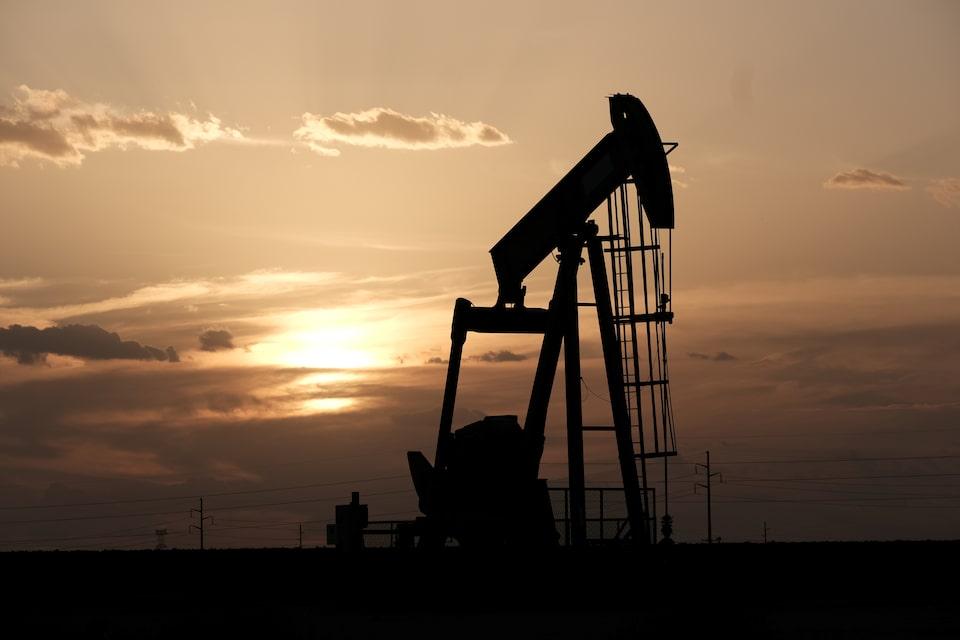
Forecast shows US shale oil boom fading after 20 years US oil output to peak at 14 million bpd in 2027, EIA says Production to fall rapidly from 2030 through 2050 US oil demand to cap post-pandemic gains next year US oil demand will not surpass 2019 levels or 2005 record NEW YORK, April 15 (Reuters) - U.S. oil production will peak at 14 million barrels per day in 2027 and maintain that level through the end of the decade, before rapidly declining, the U.S. Energy Information Administration said on Tuesday. Oil output from the world's largest producer will fall to about 11.3 million bpd in 2050, from around 13.7 million bpd this year, the statistical arm of the U.S. Department of Energy said in its Annual Energy Outlook. Sign up here. The forecasts show that the nearly two-decades old U.S. shale boom is drawing closer to its end, challenging U.S. President Donald Trump's vision of unleashing higher domestic oil supply. The DOE in a statement blamed former U.S. President Joe Biden's policies for charting a "disastrous path" for American energy production and said the EIA outlook is based on policies in place as of the end of last year. U.S. oil output set new records under Biden's presidency in both 2023 and 2024, and new drilling permits were issued faster under Biden than Trump's first term. As for Trump's policies, his sweeping tariffs against U.S. trading partners are discouraging shale drillers, who face higher costs on steel and equipment, the Paris-based International Energy Agency said on Tuesday. The advisor to industrialized nations slashed its global oil demand and U.S. oil output forecasts for 2025. Even as the oil industry welcomed Trump's early moves to ease permitting requirements and expand drilling opportunities, heightened price volatility from an uncertain market outlook has forced producers to scale back investments, Global X research analyst Kenny Zhu said. U.S. shale oil production will peak at 10 million bpd in 2027, up from about 9.69 million bpd this year, the EIA said. It will then decline to about 9.33 million bpd by 2050, the agency said. POST-PANDEMIC DEMAND BOOM FADING The post-pandemic recovery in U.S. oil demand will end next year, forecasts showed. Total product supplied, the EIA's measure of demand, will edge up from 20.51 million bpd this year to 20.52 million bpd next year, EIA data showed. Before the COVID-19 pandemic, in 2019, U.S. oil consumption averaged 20.54 million bpd. The all-time record high was in 2005 at 20.80 million bpd. The EIA last week lowered its global oil demand growth forecasts for this year and next, citing potentially weaker economic activity due to an intensifying U.S. trade war with China. The agency also sharply cut its oil price forecasts and reduced its outlook for U.S. oil production growth for 2025 and 2026 as a result of the demand uncertainty. It now expects Brent crude, which serves as the international benchmark, to average $67.87 a barrel this year, down from its earlier forecast of $74.22. U.S. benchmark West Texas Intermediate crude oil will average $63.88 a barrel in 2025, EIA said last week, nearly $7 below its prior forecast. Brent futures , were trading slightly below $65 a barrel on Tuesday, down about 13% so far this year. WTI futures were trading around $61.25, down about 14% so far this year. https://www.reuters.com/business/energy/us-crude-oil-output-peak-by-2027-eia-projects-2025-04-15/
2025-04-15 20:28
MEXICO CITY, April 15 (Reuters) - The Mexican government said on Tuesday it hopes to begin talks with the United States to renew a bilateral agreement on Mexican tomato exports from which Washington has said it intends to withdraw. The pullout by the U.S. entails duties of nearly 20.91% on most Mexican tomato exports from July 14, after the U.S. Commerce Department said the agreement had failed to protect domestic tomato growers. Sign up here. The agreement, which regulates Mexican tomato exports to the U.S. in a bid to allow U.S. producers to compete fairly, was first struck in 1996 and last renewed in 2019 to avert an anti-dumping investigation and end a tariff dispute. Mexican President Claudia Sheinbaum said in her regular press conference on Tuesday that the Mexican tomato in the U.S. market "is not substitutable by any other in the world" by quantity or quality. "This process has happened many times and Mexico has always won," Sheinbaum added, speaking about the revisions to the tomato suspension agreement and stressing that without that pact U.S. consumers would have to pay for more tomatoes. Mexican Agriculture Minister Julio Berdegue said that 90% of the tomatoes exported by Mexico go to the United States. According to official figures, Mexico exported $3.3 billion of tomatoes last year. "A 90-day window is now open, there is going to be a conversation with the United States, we are looking for this agreement to be renewed," Berdegue said. "They already did it in 2019, just like now," he added. Mexico and the United States have another similar agreement that covers sugar under which Mexico can only send sugar to the United States under a system of quotas and quality specifications. Sheinbaum and Berdegue also said Mexico has its own anti-dumping investigations that could be activated on two U.S. products: chicken and pork. https://www.reuters.com/markets/commodities/mexico-hopes-renew-tomato-agreement-with-us-2025-04-15/