2025-04-15 20:25
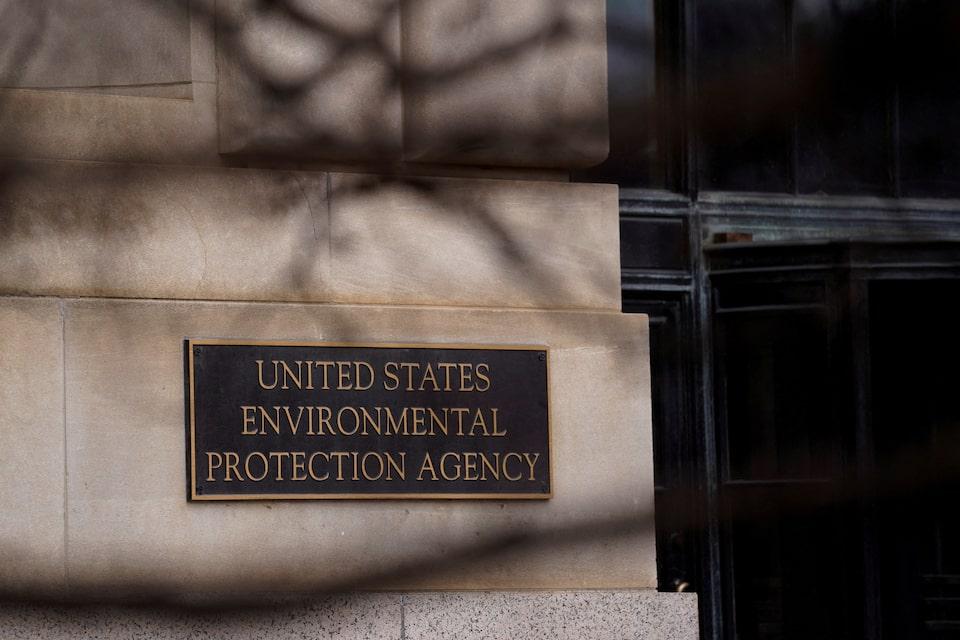
WASHINGTON, April 15 (Reuters) - The Trump administration has exempted 47 companies from regulations to curb mercury and air toxics for their coal-fired power plants for two years, according to a list of facilities published by the Environmental Protection Agency on Tuesday. The exemptions list is the latest move by the administration to use executive or emergency orders to immediately shield polluting facilities from compliance with air and water standards tightened by the Biden administration as the EPA undertakes a lengthier process to roll back those rules. Sign up here. The Biden-era Mercury and Air Toxics Standard is still in force after the Supreme Court in October declined to put the rules on hold after a group of mostly Republican states and industry groups led a legal challenge to suspend it. But U.S. President Donald Trump issued a proclamation last week detailing that certain stationary sources subject to MATS are exempt from compliance in a bid to revive the coal industry and prolong the life of aging coal power plants. Coal-burning plants generate less than 20% of U.S. electricity, a drop from 50% in 2000, according to the Energy Information Administration, as fracking and other drilling techniques have hiked production of natural gas. Growth in solar and wind power has also cut coal use. Mercury is a potent neurotoxin the American Lung Association says could cause severe developmental harm. Mercury and other air toxics associated with coal burning raise the risk of asthma attacks, strokes, heart attacks and lung cancer. The Biden-era rule required constant monitoring of emissions. Supporters of the exemption said the MATS rule placed severe burdens on coal-fired power plants and on the viability of the U.S. coal sector. Montana Republican Congressman Troy Downing applauded the inclusion of two units of the Colstrip coal plant to the exemption list, adding that it "will provide clarity and certainty for operations going forward." https://www.reuters.com/sustainability/climate-energy/trump-exempts-dozens-coal-plants-mercury-air-toxics-limits-2025-04-15/
2025-04-15 20:21
Exchange forecasts second-largest wheat production ever Forecast based on 12% tax, could rise with tax cut extension Milei govt cut wheat export tax to 9.5% till June to boost sales Government opposed to renewing grain export tax breaks Peso has weakened with free float, boosting export income BUENOS AIRES, April 15 (Reuters) - Argentina's major Buenos Aires grains exchange, already forecasting a bumper wheat crop, could raise its estimates even higher if a temporary export tax cut until the end of June is extended, the body's chief economist told Reuters on Tuesday. On the sidelines of an event to unveil the maiden forecast for 2025/26 wheat production, economist Ramiro Costa told Reuters that the current estimate of 20.5 million metric tons would go higher with an extended tax cut. Sign up here. The possibility of an even higher - and potentially record - wheat harvest has not been previously reported. Argentina is a key global wheat exporter - as well as a leading exporter of soy and corn. The current wheat harvest forecast would already mark its second-largest wheat production ever, just below the 22.4 million tons in the 2021/22 season. In January, Argentina's government under libertarian President Javier Milei reduced until the end of June export taxes on wheat to 9.5% from 12% previously, as well as export tariffs on soy and corn, hoping to boost sales. Milei, who favors tax reductions but needs farmers to speed up grains sales to bring in much-needed dollars, has said the government will not renew the tax breaks on grains exports after June, though the sector is pushing hard to get them extended. "The current estimate is made with a tax of 12%, which is the one that will be in force again as of the end of June. If the government extends the current temporary reduction (the forecast) will be higher," Costa told Reuters. Argentina's government on Monday also abandoned a crawling peg of the local currency and let the peso float freely against the dollar within a band of 1,000-1,400 pesos, leading to a sharp 10% weakening of the currency. The weaker currency benefits farmers because it means they get more pesos in exchange for their export incomes in dollars, spurring more shipments. The easing of controls on the currency has been cheered by farmers. "All these measures of the government are acceptable, but the tax burden is still not addressed," Buenos Aires grains exchange President José Martins said separately at the close of the presentation in Buenos Aires. "Let's bet that this glass half full over the course of these months will end up being filled." https://www.reuters.com/markets/commodities/argentina-bumper-wheat-harvest-could-hit-record-if-export-tax-cuts-extended-2025-04-15/

2025-04-15 20:06
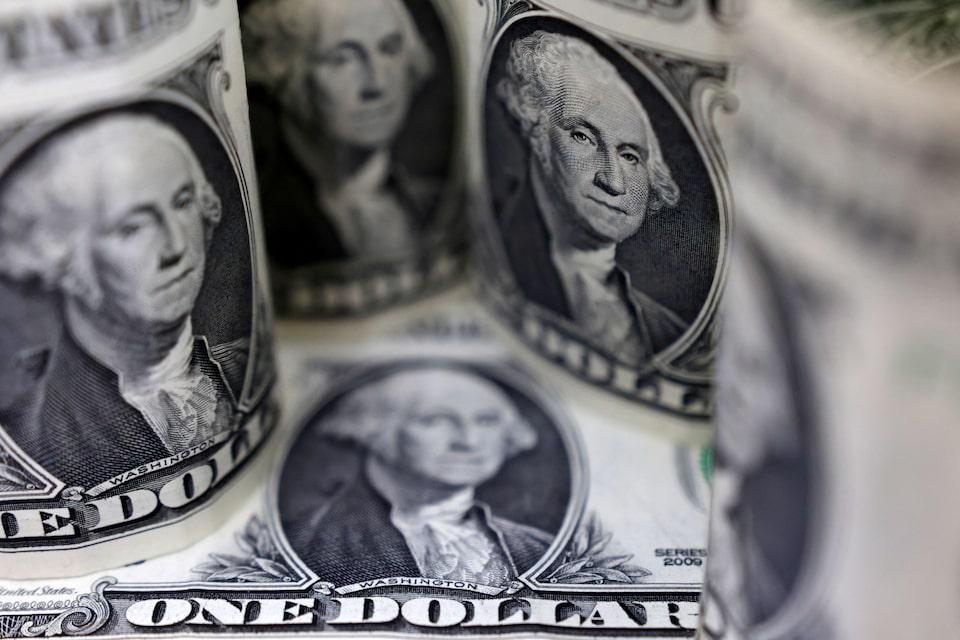
ORLANDO, Florida, April 15 (Reuters) - U.S. Treasury Secretary Scott Bessent on Monday repeated the mantra we've heard from his nine predecessors: "We have a strong dollar policy." While the words are familiar, the conviction behind them may have softened. It was former Treasury Secretary Robert Rubin who, 30 years ago in early 1995, declared that "a strong dollar is in our national interest," articulating what has become one of the fundamental tenets of the modern global financial system. Sign up here. The 'strong dollar' policy has always been about more than just the exchange rate, although a more expensive currency can help keep inflation and interest rates low. This policy has represented the world's trust in the U.S., and, consequently, the greenback's role as the lynchpin of the global economy. But times have changed since 1995. A lot. The world today is losing faith in the dollar, losing trust in the government institutions backing it, and losing confidence in America's role as leader of the 'free world'. Back then, the North American Free Trade Agreement was in its infancy, China was about to emerge as an economic force, globalization was accelerating, trade and regulatory barriers were being torn down, and global capital flows were exploding. The dollar was pivotal to all that and it soared for the next seven years, right up until the dotcom crash. The dollar slumped around 40% in the following seven years to the Global Financial Crisis and then drifted for several more years after its post-Lehman surge. But this didn't stop central banks from growing their dollar FX reserves to $4.5 trillion in 2015 from around $1 trillion in 2001. That was a strong dollar, the world's reserve currency in its prime. The dollar has remained dominant by any measure. Central banks' dollar holdings have largely flat-lined for the past decade, but private sector buyers have increased their exposure significantly. The greenback is still the most dominant currency in FX reserves, global trade and financial market trading. But as Steven B. Kamin, senior fellow at the American Enterprise Institute, and Mark Sobel, U.S. chairman at the Official Monetary and Financial Institutions Forum, have written, future dollar dominance rests on three factors: "preserving the underpinnings of the dollar's global role; maintaining trust in the U.S. as a reliable partner; and avoiding overuse or abuse of financial sanctions." Doubt now hangs over all three as the Trump administration's 'America First' agenda has caused foreign investors to look at the dollar in a new light. Last November, before his confirmation as Chair of the U.S. Council of Economic Advisers, Stephen Miran published a paper, 'A User's Guide to Restructuring the Global Trading System', in which he argued that the dollar, from a trade perspective, is "persistently over-valued in large part because dollar assets function as the world's reserve currency." Perhaps more importantly, he also noted that while Trump supports the dollar's reserve status, he had floated "substantial changes" to dollar policy. "Sweeping tariffs and a shift away from strong dollar policy can have some of the broadest ramifications of any policies in decades, fundamentally reshaping the global trade and financial systems." This will be achieved by a range of policies aimed at getting the rest of the world to share more of the "cost" America bears for providing the reserve currency, Miran argues, rather than replacing the dollar. Tariffs are clearly Trump's policy of choice. The dollar will fluctuate in value and its dominance as the world's sole reserve currency may continue to slowly diminish. The Treasury Secretary will probably always pay lip service to the "strong dollar" policy - they have a duty, after all, to help keep borrowing costs low. "It can be wheeled out in times of need and when the Treasury Secretary worries about the long end of the curve," says Steve Englander, head of global G10 FX Research at Standard Chartered. Bessent's reaffirmation this week of Washington's 30-year-old stance, therefore, was perhaps no surprise. But it probably fell on deaf ears. (The opinions expressed here are those of the author, a columnist for Reuters.) https://www.reuters.com/markets/currencies/us-strong-dollar-policy-rings-increasingly-hollow-mcgeever-2025-04-15/
2025-04-15 20:01
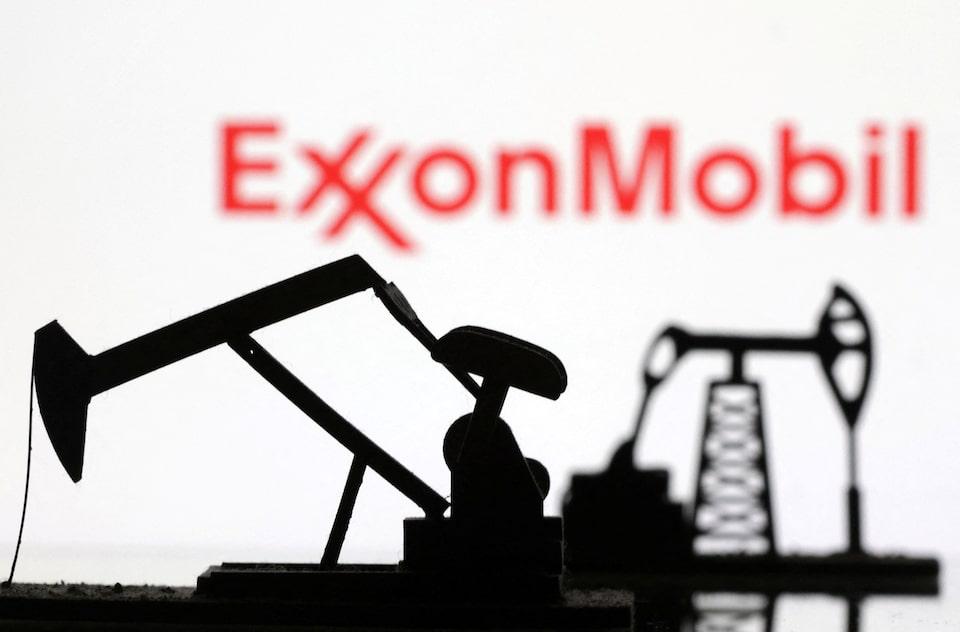
GEORGETOWN, April 15 (Reuters) - A consortium led by U.S. oil major Exxon Mobil (XOM.N) , opens new tab is about to begin installing its fourth floating oil production facility in Guyana, the South American country's maritime regulator said in a notice on Tuesday. The floating production storage and offloading (FPSO) facility 'One Guyana,' built by SBM Offshore (SBMO.AS) , opens new tab with a 250,000 barrel-per-day capacity, departed Singapore in mid-February and arrived in Guyanese waters this week. Sign up here. Once installed, the vessel will allow the consortium to boost output capacity to some 940,000 bpd later this year. The group produced an average of 616,000 bpd in 2024 after upgrades at two of its three operational facilities. Two more vessels are expected to arrive in Guyana in the coming two years. One Guyana will allow the Exxon-led consortium, which controls all production in the country, to develop the Yellowtail and Redtail fields, which are part of its massive Stabroek block, where more than 11 billion barrels of recoverable oil and gas have been found. Exxon and Guyana's Natural Resources ministry confirmed the vessel's arrival in separate statements. On Tuesday, the floating facility was near Exxon's three other production vessels, according to LSEG shipping data. "Production from the Yellowtail project is expected to commence later this year following completion of installation and well activities," Exxon said in its release. https://www.reuters.com/business/energy/exxon-consortium-begin-installation-floating-oil-facility-guyana-2025-04-15/
2025-04-15 19:45
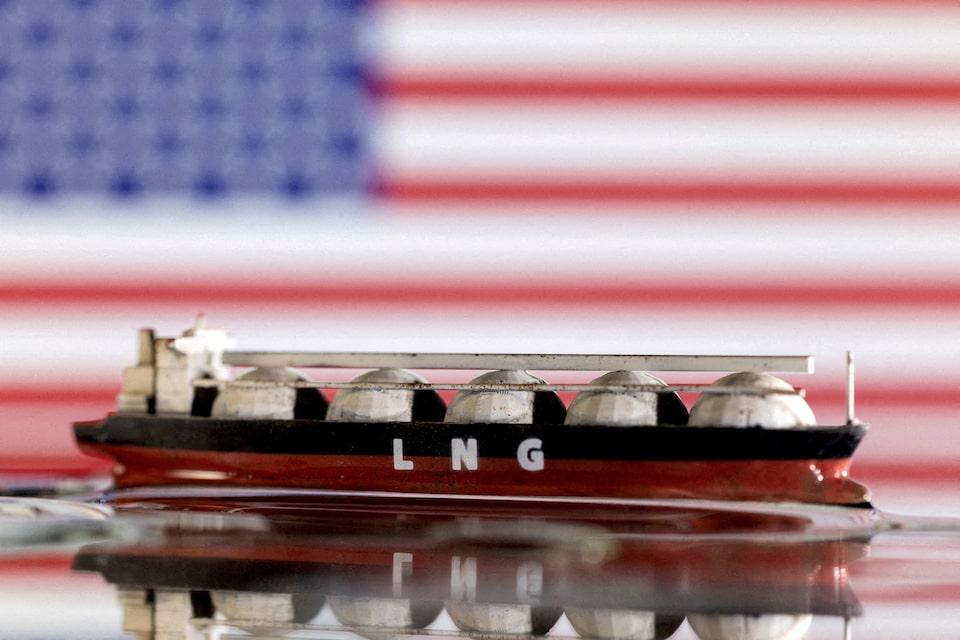
Venture Global begins commercial operations at Calcasieu Pass plant First vessel loading LNG as plant starts commercial operations Stock price not impacted by startup of commercial operations HOUSTON, April 15 (Reuters) - Venture Global LNG (VG.N) , opens new tab has begun commercial operations at its Calcasieu Pass plant in Louisiana, ending a more than a three-year commissioning process at the plant, the company said on Tuesday. Venture Global will now sell LNG to its long-term customers at lower prices rather than test cargoes to the highest bidders in the red-hot global market. Sign up here. Just a startup five years ago, Venture Global is the country's second-largest LNG producer, helping the U.S. lead the world in LNG exports. Commissioning, or making sure a new plant's systems are functioning as designed, takes months at many LNG facilities but the process dragged on at Calcasieu Pass due to several unforeseen circumstances. These included the global pandemic, two hurricanes, and a force majeure event triggered by issues with the facility's power island, the company based in Arlington, Virginia, said on Tuesday. "Having completed a multi-year rectification and remediation of key components of the facility that underpin the redundancy features inherent in the project’s design, Calcasieu Pass is now ready to operate safely and reliably," Venture Global said in a statement. Shell (SHEL.L) , opens new tab, BP (BP.L) , opens new tab, Orlen (PKN.WA) , opens new tab, Edison (EDNn.MI) , opens new tab and Repsol (REP.MC) , opens new tab filed arbitration claims saying Venture Global LNG deliberately failed to fulfill their supply contracts, dragging its feet to commission the plant so it could profit from higher spot prices. Venture Global argued that a faulty power system delayed normal operations. The Gaslog Wellington tanker is the first vessel to receive LNG from the Calcasieu Pass plant and was at its port loading 170,000 cubic meters of the supercooled gas, according to LSEG cargo flows. It was not immediately clear which of Venture Global's long-term customers would get the first shipment but Orlen has said it expects its first cargo on April 23, with Shell expected to receive its cargo at the end of the month, a person familiar with Shell's timeline told Reuters. Shell and BP declined to comment. Venture Global's stock price was down by 1%, at $8.38 in late-afternoon trading. It has declined by 66% since the company went public in January. The move to commercial operations is unlikely to stop ongoing arbitration cases brought by the long-term customers against Venture Global as Shell, Orlen and Repsol have all said they will pursue their legal battle with Venture Global even after they start receiving cargoes. Venture Global is also likely to keep profiting from strong global spot market prices, as its newer and larger Plaquemines facility ramps up production. https://www.reuters.com/business/energy/venture-global-lng-starts-commercial-operations-calcasieu-pass-plant-2025-04-15/
2025-04-15 19:21
Reuters poll graphic on U.S. safe haven concerns - BENGALURU, April 15 (Reuters) - U.S. Treasury yields will fall, according to bond strategists polled by Reuters who say an economic slowdown in the wake of President Donald Trump's erratic and sweeping tariffs on trading partners will eventually compel the Federal Reserve to lower interest rates. Their optimism on Treasury market performance comes as inflation expectations surge, creating hesitancy among Fed policymakers on rate cuts, and as nearly half of survey respondents said they were concerned about the market's safe-haven status. Sign up here. A searing sell-off last week driven by hedge funds unwinding large leveraged bets pushed up the benchmark 10-year Treasury yield by more than 70 basis points to a near two-month high of 4.59%. While Trump’s surprise 90-day backtrack on reciprocal tariffs, except on China, has since calmed markets, investor sentiment has soured considerably. Some have even speculated a large-scale global exodus away from U.S. assets may already be underway. Nearly half of strategists polled who answered an extra question, 15 of 32, said they were concerned about the safe-haven status of U.S. Treasuries. That compares with slightly more than one-third of FX analysts with similar worries about the dollar in a Reuters poll conducted two weeks ago. Despite robust demand in a 10-year Treasury auction last week, several major U.S. sell-side banks have sounded similar alarms in their recent market commentary. "The dramatic swings (last) week revealed cracks in the Treasury market that may remain visible for some time," Goldman Sachs strategists wrote in a recent note. Still, more than 50 bond strategists in an April 10-15 Reuters poll predicted the 10-year yield, currently around 4.38%, would decline to a median 4.21% by the end of June before falling to 4.14% in a year. Forecasts for the 12-month horizon ranged from 3.40% to 5.00%. Treasury market volatility, measured by the widely regarded MOVE index (.MOVE) , opens new tab, shot to an 18-month peak last week and is still more than 50% higher than its long-term average. "This week, it's my hope, without a lot of confidence, realized volatility comes down a little bit and the intermediate to longer-term themes of disinflation and slowing economic growth in the U.S. start to take hold and pull longer-term yields lower," said Guy LeBas, chief fixed income strategist at Janney Montgomery Scott. "That said, I have much more confidence in an intermediate-term view which is towards lower yields than I do in a short-term view, which seems to be dominated by overextended positioning," LeBas added. Fuelled by tariffs, consumer inflation expectations have hit their highest in more than 40 years which has effectively tied the Fed’s hands. Several officials have advocated for a pause in monetary policy moves until the economic outlook becomes clearer. Yet interest rate futures are pricing in three Fed rate cuts this year compared with one or two priced in at the start of the year. Bond market strategists appear a little more cautious - 60% of those polled, 18 of 30, said risks to their U.S. 10-year yield forecasts were tilted to the upside. "The tariffs are likely to bring inflation (and) that's making the Fed reticent to cut rates," said Robert Tipp, chief investment strategist at PGIM Fixed Income. "Slower growth makes a bad fiscal situation worse, plus the federal government is possibly going to change the rules on budgets and allow for current policy to be taken as the baseline. And that could allow for a more lenient budgeting process. All said, this would add a bit of an upward bias to rates." https://www.reuters.com/markets/rates-bonds/bond-strategists-expect-us-yields-fall-despite-tariff-turmoil-2025-04-15/