2025-04-15 11:42
HAMBURG, April 15 (Reuters) - Rain in past days has slightly raised Rhine river water levels in Germany, but improvements were moderate and vessels are still sailing considerably less than half full, commodity traders said on Tuesday. “Water levels have only risen by a few centimetres and more rain is urgently needed,” one commodity trader said. "Problems are not over." Sign up here. Extreme lack of rain in March and April mean low water is hampering shipping on all the river south of Duisburg and Cologne, including the chokepoint of Kaub, traders said. But freight deliveries are still continuing, with loads divided among more vessels, increasing costs for cargo owners. Rain in south Germany raised Kaub water levels by about four centimetres since Friday. But this was enough to enable ships to carry just over 1,000 metric tons of cargo passing Kaub against only 870 tons on Friday, traders said. Prices for a tanker freighter sailing from Rotterdam to Karlsruhe were unchanged from Friday at about 86 euros a ton of cargo, up from 46 euros in early April and 34 euros in March. Shallow water means vessel operators impose surcharges on freight rates to compensate for vessels not sailing fully loaded, increasing costs for cargo owners. Consignments must be shipped by several vessels instead of one, also raising costs. More rain is forecast in German river catchment areas this week and next week which could bring improvements. The environment ministry in the south German state of Rhineland-Pfalz forecasts water levels at Kaub will rise by a further 17 centimetres by Thursday night. The Rhine is an important shipping route for commodities including grains, minerals, ores, coal and oil products, including heating oil. German companies faced supply bottlenecks and production problems in summer 2022 after a drought and heat wave led to unusually Rhine low water levels. https://www.reuters.com/business/autos-transportation/rain-helps-rhine-shipping-river-level-still-too-low-2025-04-15/

2025-04-15 11:41
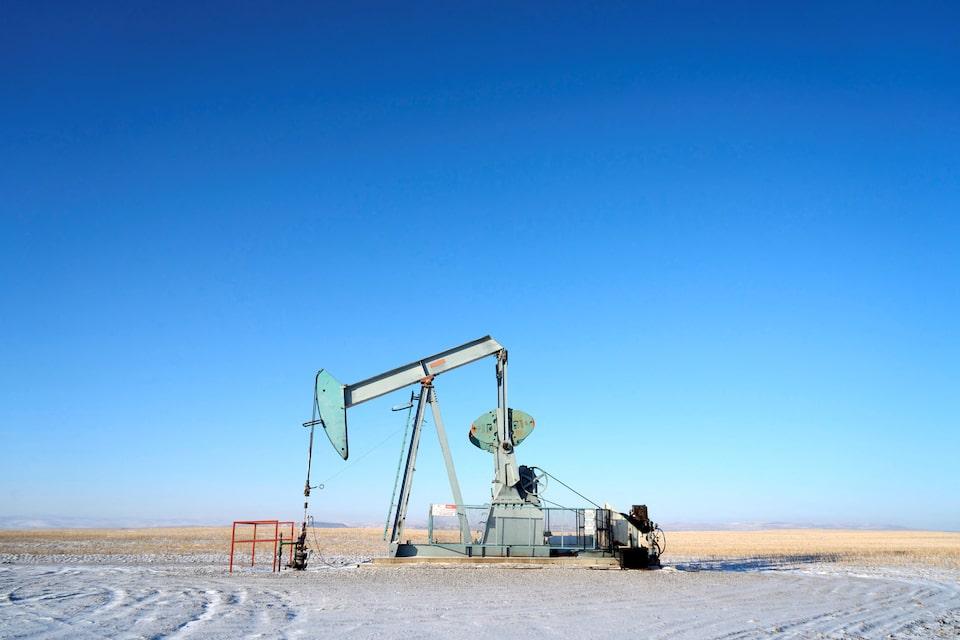
April 15 (Reuters) - HSBC revised down its Brent crude price forecast on Tuesday, citing rising trade tensions and an expected reduction in global oil demand. The bank cut its Brent price forecast to $68.5 per barrel for 2025 and $65 per barrel for 2026. Sign up here. It also trimmed its global demand growth to 0.7 million barrel per day (mbd) for 2025 and 0.8 mbd for 2026 (vs 0.9 mbd previously for both years) on the expectations of a one percentage point hit to global GDP. Vacillating U.S. trade policies have created uncertainty for global oil markets and prompted the Organization of the Petroleum Exporting Countries (OPEC) on Monday to lower its demand outlook by 150,000 barrels per day. "If prices remain around the low to mid-$60s per barrel by next winter, the group might decide to pause the unwinding of its cuts," HSBC said in a note. Brent crude futures were down 20 cents, or 0.3%, at $64.66 per barrel by 1049 GMT. On the supply side, the bank noted that U.S. actions could modestly impact Venezuelan oil supply, while pressure on Iran by U.S. has yet to show results. Elsewhere, other banks including JPMorgan and Goldman Sachs have also revised their oil price forecasts downwards. On the geopolitical front, the Trump administration has launched probes into pharmaceutical and semiconductor imports, citing national security risks from heavy reliance on foreign production, Federal Register filings showed on Monday. https://www.reuters.com/business/energy/hsbc-lowers-brent-price-forecasts-trade-tensions-sluggish-oil-demand-2025-04-15/
2025-04-15 11:31
April 15 (Reuters) - HSBC revised down its Brent crude oil price forecasts for 2025 and 2026, following the announcement of tariffs by U.S. President Donald Trump and the decision by OPEC+ to increase production, the bank said in a note on Tuesday. The bank's forecast for 2025 has been reduced to $68.5 per barrel, down from the previous estimate of $73/bbl. Its 2026 prediction has also been lowered to $65/bbl, compared to the earlier estimate of $70/bbl. Sign up here. HSBC also revised its global demand growth forecasts to 0.7 million barrels per day (mbd) for 2025 and 0.8 mbd for 2026, down from the previous estimate of 0.9 mbd for both years. The following is a list of the latest brokerage forecasts for 2025 and 2026 average prices for Brent and WTI (in $ per barrel): * indicates end-of-period forecast # current as of given date, may not indicate date of revision For a table of crude price forecasts as per Reuters' latest monthly poll, see https://www.reuters.com/markets/commodities/hsbc-trims-brent-crude-oil-price-forecasts-2025-2026-2025-04-15/
2025-04-15 11:30
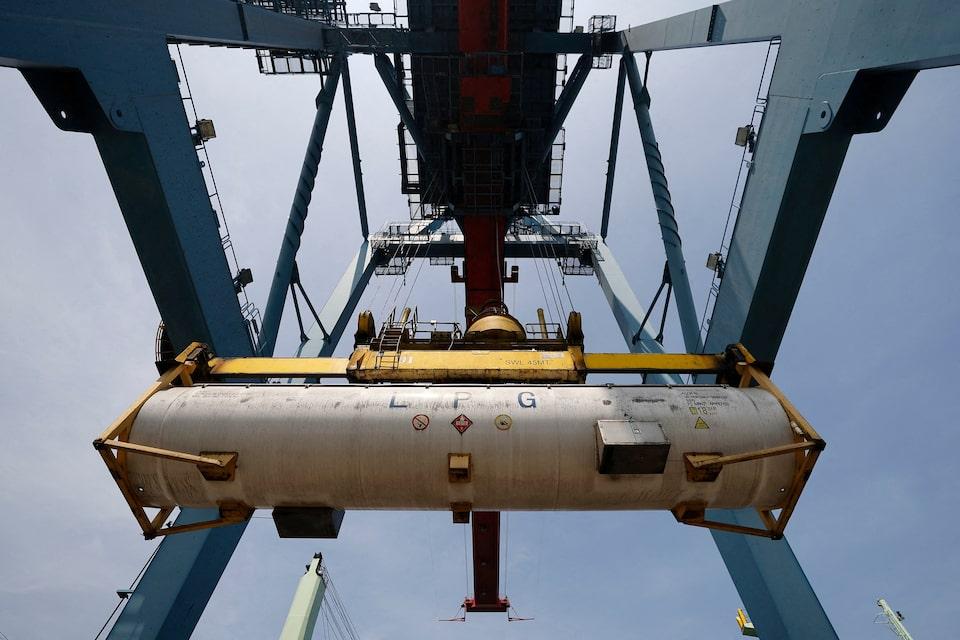
JAKARTA, April 15 (Reuters) - Indonesia will propose increasing its imports of crude oil and liquefied petroleum gas from the United States by around $10 billion as part of its tariff negotiations, energy minister Bahlil Lahadalia told local media on Tuesday. Indonesian officials are set to leave for Washington later on Tuesday for negotiations over proposed U.S. trade tariffs. Sign up here. In total, Indonesia plans to buy U.S. goods worth $18 billion to $19 billion as it seeks to eliminate its trade surplus with the U.S. and avoid a threatened 32% tariff on its exports. Bahlil said the energy ministry recommended increasing the LPG import quota for the U.S., as well as importing more U.S. crude, to help reach the target. To make room, Indonesia would need to cut LPG imports from other origins, Putra Adhiguna, managing director at thinktank Energy Shift Institute, said, adding it could start by reducing by 20%-to-30% its LPG imports from non-U.S. sources, depending on existing contracts. Kpler data show Indonesia imported 217,000 barrels per day of LPG last year, around 124,000 bpd of which came from the U.S. Around 23,000 bpd were imported from Qatar, while United Arab Emirates and Saudi Arabia each contributed around 20,000 bpd. Indonesia also imported around 306,000 bpd crude oil last year, with Nigeria, Saudi Arabia and Angola as the top suppliers, Kpler data showed. Around 13,000 bpd were imported from the U.S. Asked about the U.S. LPG import proposal, a spokeperson at state energy firm Pertamina, the biggest LPG retailer, said the company is conducting reviews of its imports and awaiting instructions from the government. https://www.reuters.com/business/energy/indonesia-propose-lifting-us-oil-lpg-imports-by-around-10-billion-2025-04-15/
2025-04-15 11:29
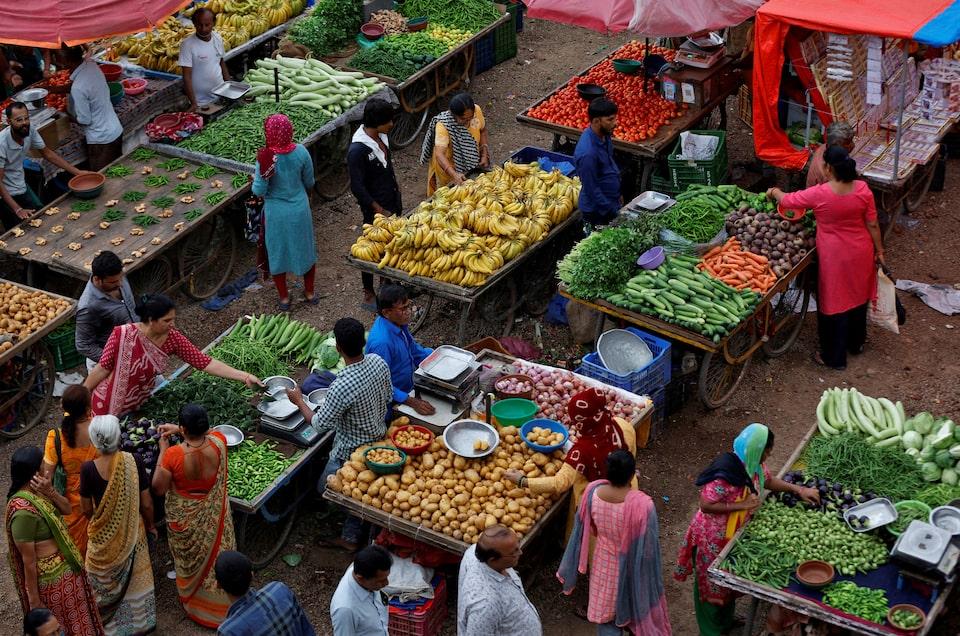
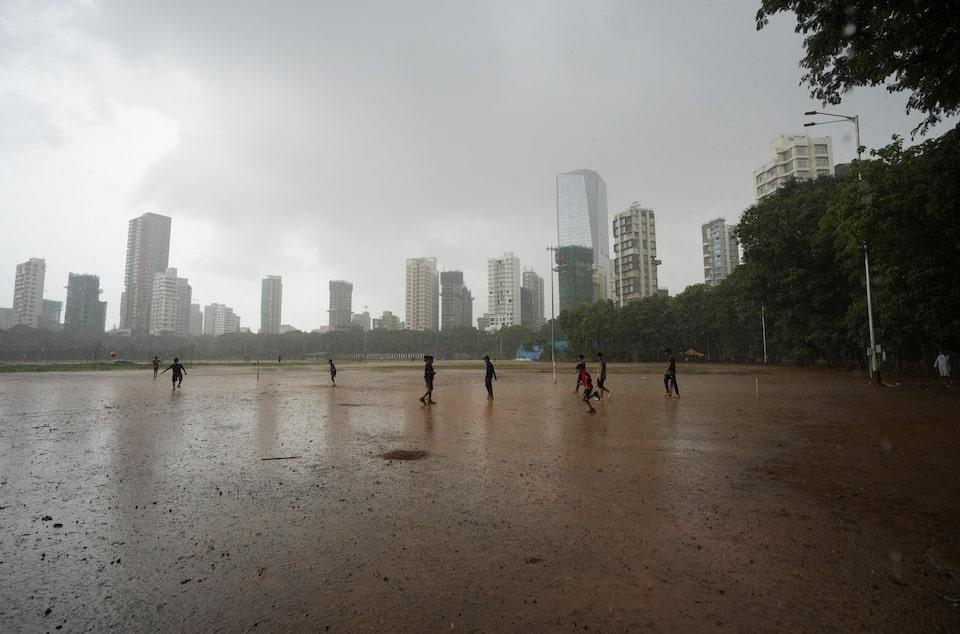
India set for above average monsoon rains for second straight year Could boost agricultural output and economic growth Should also help bring down food prices -economists June-September monsoon rains expected to be 105% of long-term average -govt estimates NEW DELHI, April 15 (Reuters) - India is likely to see above-average monsoon rains for the second straight year in 2025, the government said on Tuesday, raising expectations of higher farm and economic growth in Asia's third-biggest economy. The monsoon delivers nearly 70% of the rain needed to water crops and recharge reservoirs and aquifers. With nearly half of the country's farmland without any irrigation, it depends on the June-September rains to grow a number of crops. Sign up here. Good rains will help to bring down food prices, to keep inflation at the central bank's comfort level, and to allow the world's biggest rice exporter to ship more of the staple. The monsoon, which usually arrives over the southern tip of Kerala state around June 1 and retreats in mid-September, is expected to reach 105% of the long-term average this year, M. Ravichandran, secretary in the Ministry of Earth Sciences, told a news conference. The India Meteorological Department defines average or normal rainfall as ranging between 96% and 104% of a 50-year average of 87 cm (35 inches) for the four-month season. Above-average rainfall is very likely over most parts of the country, except for some areas over northwest India, northeast India, and southern Peninsular India, where below-average rainfall is likely, Ravichandran said. The El Niño weather phenomenon, which usually leads to below normal monsoon rains, is unlikely to occur during the four-month-long monsoon season, said Ravichandran. In 2024, India received 107.6% of its long period average rainfall, against a forecast of 106%. Steady agricultural growth will boost rural consumption and keep inflation near the Reserve Bank of India's estimate, enabling flexibility in rate cuts amid global volatility, said Aditi Gupta, economist at Bank of Baroda. The RBI lowered its key repo rate last week for a second consecutive time and changed its monetary policy stance, signalling room for more cuts ahead as it seeks to boost the sluggish economy in the face of fresh U.S. tariffs. "While a further 50 basis points cut is almost a certainty even more rate cuts are not ruled out if retail inflation remains below 3.5% levels," said Madhavankutty G, chief economist at Canara Bank. India's retail inflation eased to 3.34% in March, the slowest pace in over five years, as food prices continued to soften, government data released on Tuesday showed. India is the world's biggest exporter of rice and onions, and the second-biggest producer of sugar. Following surplus rainfall in 2024, India lifted curbs on rice and onion exports but allowed limited sugar exports of 1 million tons. "Above-average rains for the second year will help New Delhi increase sugar, rice and onion exports. It will also help reduce edible oil imports," said a Mumbai-based dealer with a global trade house. The world's largest importer of edible oils, India currently fulfils nearly two-thirds of its demand through overseas purchases of palm oil, soyoil and sunflower oil, primarily from Indonesia, Malaysia, Argentina, Brazil, Russia, and Ukraine. https://www.reuters.com/world/india/india-receive-above-average-monsoon-rains-2025-government-says-2025-04-15/
2025-04-15 11:27
April 15 (Reuters) - India's retail inflation eased to 3.34% in March, the slowest pace in over five years, as food prices continued to soften, government data released on Tuesday showed. March retail inflation was below economists' estimate of 3.60%. Inflation for February was 3.61%. The March inflation was the lowest since August 2019, the government said in a statement. Sign up here. COMMENTARY: DIPANWITA MAZUMDAR, ECONOMIST, BANK OF BARODA, MUMBAI: "Headline CPI is getting repeated breather from a softer food inflation. The outlook also remains bright with improved Rabi sowing and better Kharif production in place. High frequency price data of April also hints at some degree of softening, albeit at a softer pace than March." "What needs to be watched at this current juncture is the pass-through of global tariff policies on inflation front. However, India is much guarded, as for imported inflation, WPI is more susceptible than CPI, and the former is largely capped." GAURA SEN GUPTA, INDIA ECONOMIST, IDFC FIRST BANK, MUMBAI: "The moderation in CPI inflation is led by food inflation with continued decline in vegetable. Looking ahead, we expect CPI inflation to average at 3.5% in FY26, with expectation of evenly distributed monsoon. Based on domestic factors alone, we see space for another two rate cuts minimum in remainder of 2025. We don't rule out the possibly of a third rate cut, if global growth conditions weaken further." "Core inflation remains near historical lows, indicating negative output gap. The tariff escalation add downside risk to inflation with decline in commodity prices due to growth weakness. Moreover, exporters will try to find new markets as entry into U.S. becomes tougher." KANIKA PASRICHA, CHIEF ECONOMIC ADVISOR, UNION BANK OF INDIA, MUMBAI: "CPI clocked 3.34%, even below our consensus estimate of 3.46%. As expected, food stayed the prime driver of cooling in inflation, while core inflation picked up to 4% handle, primarily led by gold (with close to 80-90 bps contribution)." "We see underlying inflation pressures as staying benign unless weather plays spoilsport. That said, IMD forecast of above-normal monsoon helps. This makes us expect another 50bps repo rate cut by August, with monetary policy likely to continue to do the growth heavy lifting in an uncertain world." ADITI NAYAR, CHIEF ECONOMIST, ICRA, MUMBAI: "The unexpectedly sharp sequential fall in the headline CPI inflation in March 2025 was predominantly led by food items, such as meat, eggs and vegetables, whereas a number of other groups reported a modest rise in inflation." "A rise in temperatures going ahead could raise prices of perishables in the coming weeks. While the initial forecast of an above-normal monsoon is encouraging, the timing and distribution will be key for the implications for agri output and food inflation going ahead." "In our view, further monetary easing is clearly on the table, to the tune of 50 bps over the next three policies. With the next inflation print also expected to be sub-4%, a June 2025 rate cut seems highly likely, unless Q4 FY2025 GDP growth surprises sharply to the upside." RADHIKA RAO, SENIOR ECONOMIST, DBS BANK, SINGAPORE "The downside surprise in headline inflation reflected the deeper correction in food costs, led by sequential decline in vegetables, eggs, pulses. By contrast, core inflation printed an increase by 4.1% yoy, driven by year-on-year rise in precious metals, transport, and education." "Despite a firmer core, Jan-Mar headline inflation not only undershot the RBI's quarterly projection by a wide margin but also the RBI's target range. This validates the central bank's decision to shift to an accommodative stance, besides a rate cut at the April meeting. We maintain our call for further easing in June." UPASNA BHARDWAJ, CHIEF ECONOMIST, KOTAK MAHINDRA BANK, MUMBAI "The softer-than-expected CPI inflation will provide further comfort to RBI to continue to prioritise growth. We retain our view that RBI will continue on its accommodative stance, with the terminal repo rate likely around 5-5.25%." JOE MAHER, ASSISTANT ECONOMIST, CAPITAL ECONOMICS, UK "While food prices can be extremely volatile, supportive weather conditions should keep a lid on food inflation over the coming months. And with the economy still emerging from its soft patch, underlying price pressures should remain in check too." "We think inflation will hover close to the RBI's 4% target for the remainder of the year, which will give the RBI plenty of scope to cut interest rates to support economic activity. We forecast another 50bp of interest rate cuts this year, bringing the repo rate down to 5.50%, which is a slightly more dovish view than that of the consensus." KUNAL KUNDU, INDIA ECONOMIST, SOCIETE GENERALE, BENGALURU "While the potential heat wave could act as a tailwind to inflation, we believe that deflationary impact of Trump's tariffs will ensure that inflation would remain under control this year, providing enough room to RBI to announce more rate cuts this year than we were earlier anticipating." VIVEK KUMAR, ECONOMIST, QUANTECO RESEARCH, MUMBAI "Going forward, the global disinflationary backdrop in commodity prices should help offset any upside pressure from imported inflation on account of currency weakness." "We continue to expect CPI inflation to decelerate from 4.6% in FY25 to 4.1% in FY26." https://www.reuters.com/world/india/view-indias-retail-inflation-slows-over-5-year-low-march-2025-04-15/