2025-04-15 11:17
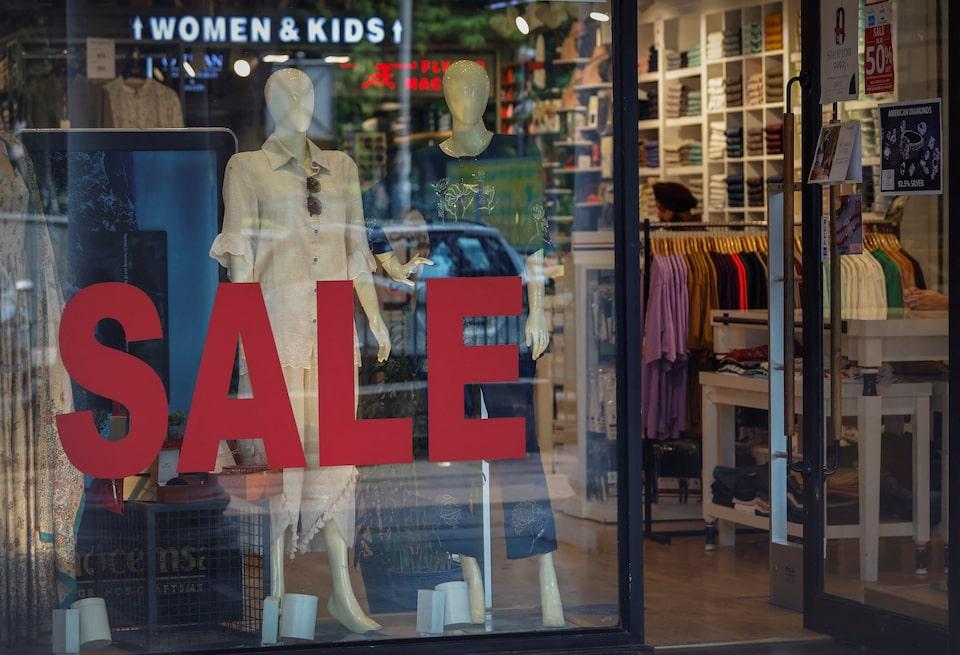
March CPI at 3.34% vs 3.61% in Feb CPI rises at slowest pace since since August, 2019 Food inflation at 2.69%, slowest since Nov, 2021 March core inflation at 4.1% vs 3.9%-4% in Feb - two economists NEW DELHI, April 15 (Reuters) - India's retail inflation slipped to a more-than-five-year low as food prices continued to moderate, creating room for deeper central bank rate cuts amid fears the U.S.-China trade war may hit global growth. Annual retail inflation (INCPIY=ECI) , opens new tab in March eased to 3.34%, below economists' estimate of 3.60%. The print was the lowest since August 2019, the government said in a statement. February retail inflation was 3.61%. Sign up here. "Retail inflation is getting a repeated breather from a softer food inflation," amid prospects of better farm output, said Dipanwita Mazumdar, economist at Bank of Baroda. The main driver for lower inflation prints has been food prices, which have seen a sharp reversal in recent months from eye-watering levels most of last year. In March, food inflation eased to 2.69% from 3.75% in the previous month. Food inflation in March was the lowest since November 2021. Vegetable prices fell 7.04% year-on-year, compared with an 1.07% increase in February. Last week, the Reserve Bank of India (RBI) lowered its key policy rate for a second consecutive time, signaling more cuts in the coming months to boost domestic demand. It also softened its monetary policy stance and cut the GDP growth estimate for the current fiscal year to 6.5% from 6.7%. The central bank, however, warned that lingering global market uncertainties and recurrence of adverse weather-related supply disruptions pose upside risks to the inflation trajectory. It forecast retail inflation of 4% for the current fiscal year, assuming a normal monsoon for the year. "Based on domestic factors alone we see space for another two rate cuts minimum in remainder of 2025," said Gaura Sen Gupta, economist at IDFC First Bank. "We don't rule out the possibility of a third rate cut, if global growth conditions weaken further." RBI's monetary policy panel will meet next in June, ahead of the fresh July deadline for lifting the pause on reciprocal tariffs by the United States. India expects to receive above-average monsoon rains in 2025, raising expectations of higher farm and economic growth. Prices of cereals rose 5.93% against a 6.1% increase in February, while those of pulses fell 2.73% compared to a 0.35% fall in the previous month. Core inflation, which excludes volatile items such as food and energy and is a better gauge of domestic demand, rose slightly to 4.1% in March from 3.9% to 4% in the previous month, according to two economists. https://www.reuters.com/world/india/indias-march-retail-inflation-eases-334-yy-2025-04-15/
2025-04-15 11:00
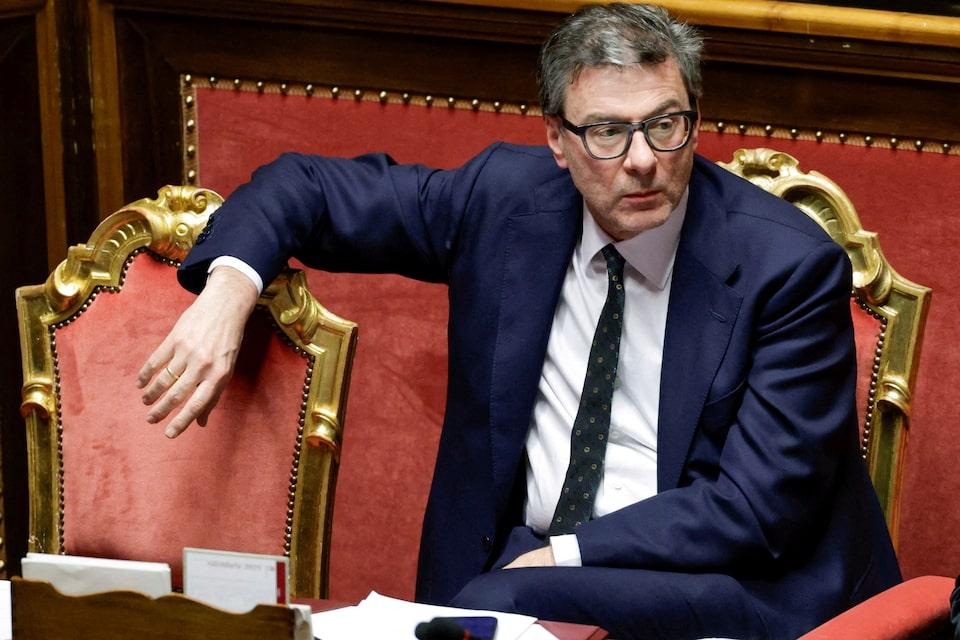
ROME, April 15 (Reuters) - U.S. policy on stablecoins offers European citizens an attractive payment method for cross-border transactions which should trigger more concern than trade tariffs, Italy's economy minister said on Tuesday. Addressing an event in Milan on asset management, Giancarlo Giorgetti said European Union authorities should adopt further steps to boost the status of the euro as an international reference currency and complained about the fragmentation of the EU's payment industry. Sign up here. U.S. President Donald Trump has pledged to overhaul rules on cryptocurrencies and reverse a crackdown on the sector that took place under his predecessor Joe Biden. Dollar-pegged stablecoins, which are a type of cryptocurrencies designed to maintain a constant value, have ballooned in recent years. They now act as a key cog in the multi-trillion dollar crypto trading industry, helping move funds between different cryptocurrencies or into regular cash. "The general focus these days is on the impact of trade tariffs. However, even more dangerous is the new U.S. policy on cryptocurrencies and in particular that on dollar-denominated stablecoins," Giorgetti said. The minister argued that stablecoins would give savers the opportunity to invest in risk-free assets and a widely accepted means of payment for cross-border transactions, without any need for a banking account with U.S. banks. "It is therefore easy to foresee their attractiveness for citizens of economies with unstable currencies, but its appeal for people of the euro zone should not be underestimated," Giorgetti said. To promote European sovereignty in payments and protect the role of fiat currencies against the spread of stablecoins, the European Central Bank (ECB) is working on the so-called digital euro. The project envisages EU residents having digital euro accounts with the ECB which they can use for online payments or in shop, or to exchange money with friends thanks to the ECB partnering with EU-based payment services providers. "The digital euro will be essential to minimise the need for European citizens to resort to foreign solutions to access such a basic service as payment," Giorgetti said. European banks have expressed concerns that a digital euro would empty their coffers as customers transfer some of their cash to the safety of an ECB-guaranteed wallet. https://www.reuters.com/technology/us-policy-stablecoins-more-dangerous-than-tariffs-italian-minister-says-2025-04-15/
2025-04-15 10:43
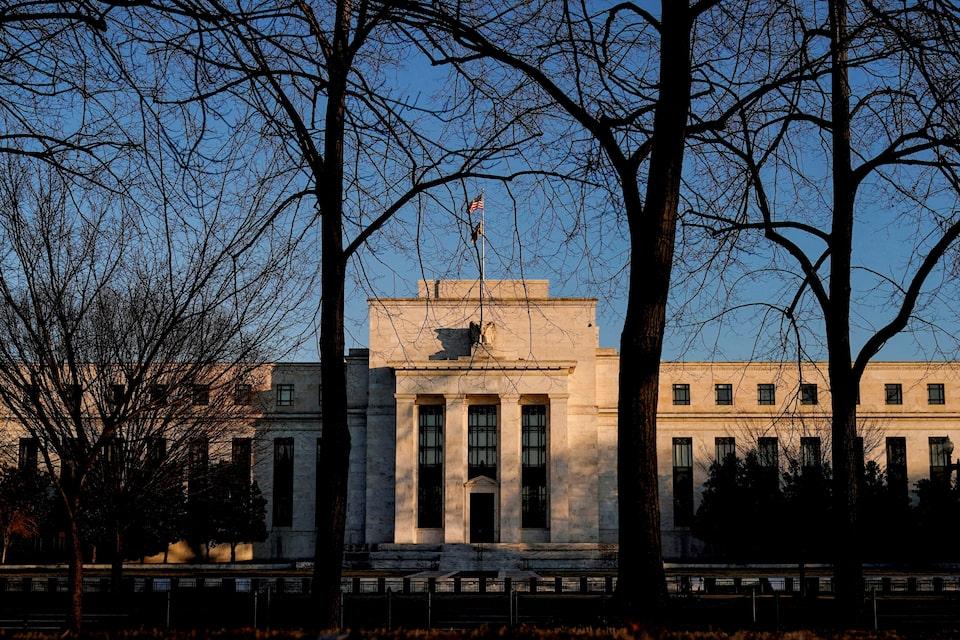
What matters in U.S. and global markets today By Mike Dolan , opens new tab, Editor-At-Large, Financial Industry and Financial Markets Sign up here. The combination of an electronics tariff reprieve and dovish noises from the Federal Reserve have created a semblance of calm in financial markets, though the lingering trade war uncertainty means the respite probably won't last long. I'll discuss all of today's market news below. Today's Market Minute * The Trump administration is proceeding with probes into imports of pharmaceuticals and semiconductors as part of a bid to impose tariffs on both sectors on national security grounds, Federal Register filings on Monday showed. * The dollar held steady on Tuesday, trading near a three-year low against the euro and a six-month trough against the yen, as investors trying to make sense of the constant changes to President Donald Trump's tariffs remained wary of U.S. assets. * LVMH shares sank on Tuesday after the world's largest luxury group posted first quarter revenue that undershot expectations as U.S. shoppers curtailed the purchase of beauty products and cognac and sales in China remained weak. * South Korea announced on Tuesday an increase in its support package for the country's vital semiconductor industry to 33 trillion won ($23.25 billion), up about a quarter from a 26 trillion won package unveiled last year. * Euro zone banks curbed firms' access to credit last quarter and expect to keep tightening credit standards due to increasing concerns about the economic outlook, the European Central Bank's lending survey showed on Tuesday. Fed gives market a breather Tech shares, including Apple (AAPL.O) , opens new tab, rallied on Monday after President Donald Trump excluded smartphones, computers and other electronics from his sweeping reciprocal duties on China, even while suggesting there would be an alternative tariff regime for the sector. The move was Trump's second climb down since the April 2 tariff shock. It was welcomed as such by investors, but it does little to defuse the huge uncertainty over what happens next. The Trump administration is now proceeding with probes into imports of pharmaceuticals and semiconductors and could potentially use national security grounds to impose tariffs there. Even though the S&P 500 (.SPX) , opens new tab closed 0.8% higher on Monday, it remains 4% below levels present just before April 2's announcement and 8% down for the year to date. Implied volatility captured by the VIX (.VIX) , opens new tab remains above 30, almost 50% higher than historical averages. Citigroup joined a string of brokerages, including Goldman Sachs and BofA, in slashing its S&P 500 target below the 6000 mark, with the bank's year-end target now at 5800, compared with a previous estimate of 6500. As it stands, that's still 7.5% above Monday's close. However, investors were glad to see fears ease about stock market volatility seeping into the 'safe haven' Treasury market. Fed Governor Christopher Waller made dovish signals on Monday, suggesting the net impact of all the tariff hits would be negative for growth, with inflationary effects likely transitory. "With a rapidly slowing economy, even if inflation is running well above 2%, I expect the risk of recession would outweigh the risk of escalating inflation, especially if the effects of tariffs in raising inflation are expected to be short lived," he said. Waller's comments helped drag 10-year Treasury yields back as low as 4.35%, a quarter percentage point below the peaks of last week. The New York Fed's consumer survey offered some support for the Fed governor's take on inflation, with one-year inflation expectations jumping to the highest in more than a year, while three- and five-year views remained steady or lower. However, one-year inflation expectations in the University of Michigan's household survey for April rose to their highest since 1981. And an Reuters/IPSOS opinion poll shows 73% of respondents said they thought prices in the next six months would increase for the items they buy every day. Other Fed officials indicated that it would be wise to stand pat for the time being, as the outcome of tariff policies obviously can't be measured if you don't know where that policy will actually end up. "The fog has just gotten really, really thick," Atlanta Fed President Raphael Bostic said. The bond yield retreat kept the dollar (.DXY) , opens new tab on the back foot, even with interest rate cuts expected from the European Central Bank and the Bank of Canada this week. Sterling was the outperformer, rising to its strongest levels in six months against the dollar. Overseas stocks in Asia (.N225) , opens new tab, (.HSI) , opens new tab and Europe (.STOXXE) , opens new tab were generally firmer, even though luxury-sector bellwether LVMH (LVMH.PA) , opens new tab dropped 7% after its latest update said sales in China were weak and U.S. shoppers had cut spending on beauty products in the first quarter. U.S. stock index futures were basically flat before Tuesday's bell. Finally, check out my column today, where I explore rising speculation about repatriation of European savings from wobbling U.S. markets and how those investment flows could underwrite the huge fiscal boost that Germany and the rest of Europe hopes will revive the region's economy. Chart of the day Apple (AAPL.O) , opens new tab has found itself at the centre of Donald Trump's trade war storm over the past week. It had been scrambling to contend with potentially brutal tariff rises on its Chinese production lines. This included chartering cargo flights to ferry some 600 tons of iPhones, or as many as 1.5 million, to the United States from India in the process. The crunch may be one reason Trump exempted many electronics, including smartphones, from his sweeping reciprocal duties on China. First quarter data just released shows Apple took the top spot for global smartphone sales on the back of the iPhone 16e's launch and strong demand in countries such as Japan and India, data from Counterpoint Research showed on Monday. Apple had 19% of the smartphone market, despite flat or declining sales in the U.S., Europe and China, followed by Samsung (005930.KS) , opens new tab with 18% of the market. Today's events to watch * New York Federal Reserve's April manufacturing survey, U.S. March import/export prices; Canada March CPI inflation * Federal Reserve Board Governor Lisa Cook and Richmond Fed President Thomas Barkin speak; European Central Bank President Christine Lagarde speaks * US corporate earnings: Bank of America, Citigroup, PNC, Omnicom, Johnson&Johnson, United Airlines, JB Hunt * China's President Xi Jinping visits Malaysia and Cambodia Opinions expressed are those of the author. They do not reflect the views of Reuters News, which, under the Trust Principles , opens new tab, is committed to integrity, independence, and freedom from bias. https://www.reuters.com/markets/us/global-markets-view-usa-2025-04-15/
2025-04-15 10:13
April 15 (Reuters) - Crypto exchange Binance said it briefly stopped allowing users to withdraw from the platform on Tuesday, due to an issue involving an Amazon Web Services (AWS) data centre, while other crypto exchanges also reported problems. Binance posted on X that withdrawals were suspended "to keep safe", before posting around ten minutes later that withdrawals had resumed. A spokesperson for Binance said withdrawals were suspended for around 23 minutes. Sign up here. AWS's service dashboard showed a "connectivity issue" affected its Tokyo cloud region at 1.15 a.m. PDT (0815 GMT). The issue was resolved by 1.51 a.m. PDT (0851 GMT). “The issue has been resolved and the service is operating normally,” an AWS spokesperson said. Another crypto exchange, KuCoin, also said it was experiencing "temporary disruptions". "Our technical team is urgently working on a fix, and the recovery time will be announced separately. Rest assured that your assets remain secure and all data is intact," KuCoin said in a post on X. A spokesperson for KuCoin said via email that the disruption was due to an AWS outage that affected services across the Tokyo data centre. "Some services have already been restored, and our team is working closely with AWS to recover full functionality as quickly as possible. No user assets or data have been affected," the spokesperson said. Crypto exchange MEXC said in a post on X that due to AWS disruption, users may experience issues including "abnormal candlestick charts", "failed order cancellations" and "delays in asset transfers for spot trading". "We want to assure you that your assets on MEXC remain fully secure. For any losses incurred as a result of this platform-related issue, we will prepare a compensation plan to appropriately reimburse affected users," MEXC said. https://www.reuters.com/technology/binance-services-start-recover-after-network-interruption-2025-04-15/

2025-04-15 10:05
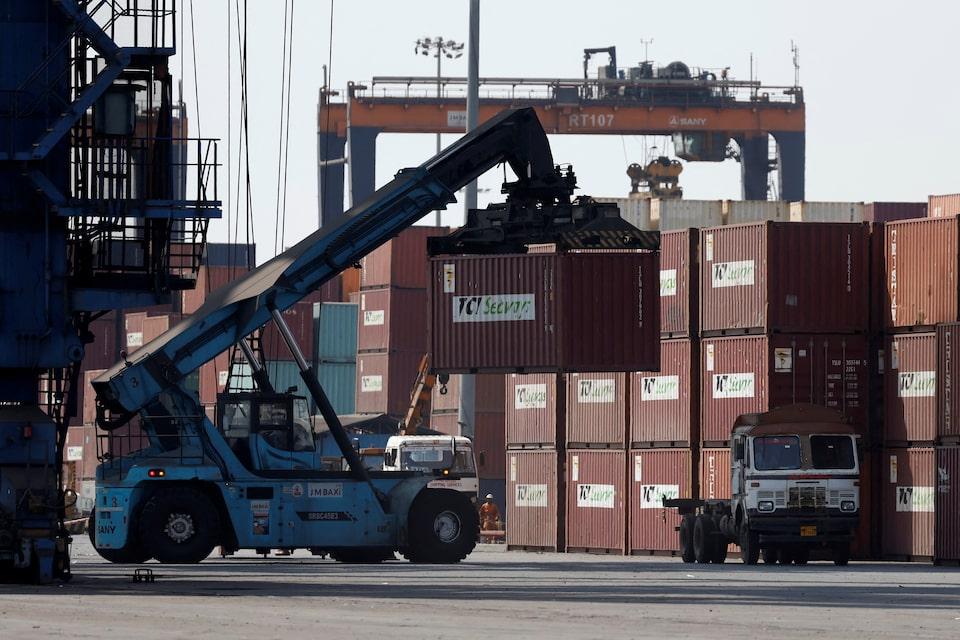
NEW DELHI, April 15 (Reuters) - India has decided to pursue a path of trade liberalisation with the United States, India's trade secretary said on Tuesday, with the two countries signing the terms of reference for the first part of a bilateral trade deal. India and the U.S. agreed in February to work on the first phase of a trade deal to be concluded late this year, with a view to reaching bilateral trade worth $500 billion by 2030. Sign up here. "India has decided to go for a path of trade liberalisation with the U.S.," trade secretary Sunil Barthwal told reporters. The two countries will start virtual discussions on the deal this month, with the next round of in-person talks scheduled for mid-May, added Rajesh Agrawal, an additional secretary in the trade ministry. Reuters reported last month that India is open to cutting tariffs on more than half of U.S. imports worth $23 billion in the first phase of a trade deal the two nations are negotiating, the biggest cut in years. U.S. President Donald Trump on Wednesday announced a 90-day pause on most tariff hikes for major trading partners including India, while raising levies on China, providing temporary relief for Indian exporters. Although Indian Prime Minister Narendra Modi was among the first leaders to visit Washington and hold talks with Trump after he returned to the White House, the U.S. president has continued to call India a "tariff abuser" and "tariff king". During Modi's U.S. visit in February, the two countries agreed to start talks towards clinching an early trade deal and resolving their standoff on tariffs. The United States has a trade deficit of $45.6 billion with India. India has also taken a number of steps to win over Trump including vowing to buy more defence and energy products. https://www.reuters.com/world/india/india-pursue-trade-liberalisation-with-us-official-says-2025-04-15/
2025-04-15 09:32
KAMPALA, April 15 (Reuters) - The Ugandan shilling was steady on Tuesday amid low demand for dollars from merchandise importers and commercial banks, traders said. At 0857 GMT, commercial banks quoted the shilling at 3,662/3,672, compared with Monday's close of 3,660 /3,670. Sign up here. https://www.reuters.com/markets/currencies/ugandan-shilling-steady-importer-fx-demand-low-2025-04-15/