2026-01-15 05:03
US jobless claims fall, boosting Fed rate hold expectations Fed futures delay rate cut expectations to June amid labor data Japanese yen weakens on potential fiscal policies by PM Takaichi NEW YORK, Jan 15 (Reuters) - The dollar reached a six-week high on Thursday after data showed that the number of Americans filing new applications for unemployment benefits unexpectedly fell last week, further boosting expectations that the Federal Reserve will keep rates on hold for the next several months. Initial claims for state unemployment benefits dropped 9,000 to a seasonally adjusted 198,000 for the week ended January 10, the Labor Department said on Thursday. Economists polled by Reuters had forecast 215,000 claims for the latest week. Sign up here. “We are at the lower end of the range,” said Lou Brien, strategist at DRW Trading, adding that market participants are likely “shifting positions a little bit and pushing the dollar higher as a result." Brien notes, however, that the U.S. data overstates jobs growth due to flaws in how the data is calculated from the "birth-death model." Annual revisions to payrolls data are likely to reveal a much weaker labor market when they are released, though those reports come with a significant lag, he said. Fed funds futures have pushed back expectations for the next rate cut to June due to the improving labor data and as Fed policymakers continue to express concern about still sticky inflation. Friday’s jobs report for December showed that the unemployment rate fell more than economists had expected, to 4.4%. Chicago Fed President Austan Goolsbee said Thursday that amid ample evidence of stability in the job market the central bank should be focused on getting inflation down. Kansas City Fed President Jeff Schmid on Thursday called inflation "too hot" while San Francisco Fed President Mary Daly said that incoming U.S. economic data looks promising despite uncertainties and continued risks to both the Fed's inflation and employment mandates. The dollar index , which measures the greenback against a basket of currencies including the yen and the euro, rose 0.24% to 99.31, and reached 99.49, the highest since December 2. The euro fell 0.25% to $1.1613, and got to $1.1592, also the lowest since December 2. Risk sentiment was boosted after U.S. President Donald Trump said on Wednesday he has no plans to fire Jerome Powell despite a Justice Department criminal investigation into the Federal Reserve chair, but it was "too early" to say what he would ultimately do. Trump also said he had been told that killings in Iran’s crackdown on protests were easing and that he believed there was no current plan for large-scale executions, adopting a wait-and-see posture after earlier threatening intervention. The U.S. and Taiwan, meanwhile, reached a trade deal that the U.S. Commerce Department said on Thursday would drive a "massive reshoring of America’s semiconductor sector." JAPANESE ELECTION IN FOCUS The Japanese yen weakened on concerns that Japanese Prime Minister Sanae Takaichi will have more leeway to introduce more fiscally expansionist policies. Takaichi plans to dissolve parliament next week and call a snap parliamentary election, the secretary general of her party said on Wednesday, as she seeks public backing for her spending plans. If Takaichi's Liberal Democratic Party secures a majority in the Lower House, the yen is likely to weaken further, TD Securities analysts led by Alex Loo said in a report. "A strong public mandate may embolden Takaichi to opt for more aggressive fiscal policies in the eyes of investors. This likely serves as the catalyst for USDJPY to breach the 162 high," they said. If the party fails to win a majority, then "the push higher in USDJPY can finally take a breather, and we could see USDJPY back below 156 as investors pare back their JPY shorts," TD added. The Japanese yen was last down 0.02% against the greenback at 158.48 per dollar. It held below an 18-month low of 159.45 reached on Wednesday, however, as traders watch for a possible intervention to shore up the currency. Japanese authorities said on Wednesday they would not rule out any options to counter foreign exchange volatility. In cryptocurrencies, bitcoin fell 2.18% to $95,384. https://www.reuters.com/world/asia-pacific/yen-steadies-traders-gird-election-intervention-fears-lurk-2026-01-15/
2026-01-15 04:32
Senate Banking Committee postpones crypto bill discussion hours after Coinbase CEO's objections Coinbase CEO criticizes bill's impact on stablecoin rewards Bill defines crypto tokens as securities, commodities, other Jan 15 (Reuters) - A U.S. Senate committee postponed a long-awaited Thursday debate on a landmark bill that would create a regulatory framework for cryptocurrencies hours after the CEO of Coinbase (COIN.O) , opens new tab said the crypto giant would not support the measure, raising uncertainty about its future. The legislation, unveiled on Monday by the Senate Banking Committee, would define when crypto tokens are securities, commodities or fall into other categories. It would also clarify the jurisdiction of the U.S. Securities and Exchange Commission over the sector. Sign up here. The bill is the culmination of a years-long lobbying campaign led by Coinbase and other big crypto companies which have argued the industry needs fresh regulation to provide legal clarity that would ultimately promote digital asset adoption. The CEO of Coinbase, however, now says he is bothered by certain aspects of the latest effort to craft new rules. Former President Joe Biden's regulators alleged many crypto companies were flouting U.S. securities laws and other rules, but the industry says existing rules are not appropriate for digital assets. The Senate Banking Committee was scheduled to debate amendments to the bill, dubbed the Clarity Act, on Thursday. But it canceled that so-called markup late on Wednesday, after Coinbase CEO Brian Armstrong said on X that the bill had "too many issues" and that the company could not support it, in a major blow for the legislation. Armstrong said the bill would erode the authority of the U.S. Commodity Futures Trading Commission, the industry's preferred regulator, and "kill" crypto companies' ability to offer rewards on customer holdings of dollar-pegged tokens known as stablecoins, among other complaints. "We'd rather have no bill than a bad bill," he wrote, adding, however, that he was "quite optimistic that we will get to the right outcome with continued effort." Coinbase donated millions of dollars to political action committees aimed at getting pro-crypto candidates elected in 2024, and has been a key stakeholder in the negotiations. There were disagreements among Republicans about the bill's stablecoin provisions, according to two people with knowledge of the discussions, with one adding Armstrong's objections pushed those concerns to the forefront. Senators involved with spearheading the bill then became concerned that it wouldn't get enough votes to advance out of the committee at the conclusion of the markup, the second source said. In order to gain approval, the bill would need support from at least seven Democrats in the full Senate. Some Democrats have expressed concerns that the measure does not include provisions to prevent political officials from profiting from crypto ventures. "I’ve spoken with leaders across the crypto industry, the financial sector, and my Democratic and Republican colleagues, and everyone remains at the table working in good faith,” said Senate Banking Committee Chairman Tim Scott, a South Carolina Republican, in a statement. Scott's office did not immediately respond to a request for further comment. The House of Representatives passed its version of the Clarity Act in July. Among the Senate bill's most contentious provisions is what banks say is a loophole created by last year's stablecoin legislation, which allows intermediaries, such as crypto exchanges, to pay interest on customer stablecoin holdings. Banks say this would lead to a flight of deposits - the primary source of funding for most banks - from the banking system, potentially threatening financial stability. Crypto companies have fought back, arguing that barring them from paying interest on stablecoins would be anticompetitive. The Senate bill prohibits crypto companies from paying interest to consumers for holding a stablecoin, but allows them to pay rewards or incentives to customers for certain activities, such as sending a payment or participating in a loyalty program. "On complex issues like digital asset market structure, moments like this can be a healthy part of policymaking, allowing time for additional deliberation," Summer Mersinger, the CEO of crypto industry trade group the Blockchain Association, which counts Coinbase as a member, said in a statement. https://www.reuters.com/sustainability/boards-policy-regulation/coinbase-cannot-support-crypto-bill-current-form-ceo-armstrong-says-2026-01-15/
2026-01-15 04:11
TOKYO, Jan 15 (Reuters) - The Bank of Japan will likely wait until July before raising its key interest rate again, economists say, with more than 75% of them expecting it to climb to 1% or higher by September from the current three-decade high of just 0.75%. While the BOJ is expected to eventually lift rates a few more times to reach a median expected terminal rate of 1.5%, it remains well out of step with its global peers, which for the most part have spent the past few years cutting borrowing costs. Sign up here. Known as a fiscal and monetary dove, Japan's new Prime Minister Sanae Takaichi rattled markets immediately after taking office in October. She said she had control over the direction of monetary policy and stressed her preference for low interest rates. Takaichi plans to dissolve parliament next week and call a snap general election, the secretary general of her ruling party said on Wednesday. Some of Takaichi's advisers have repeatedly warned against the danger of additional interest rate increases. Most analysts, who were polled between January 6-13 before that announcement, said the BOJ would prefer not to act in haste in order to assess the impact on the economy of its quarter-point hike in December unless the yen's depreciation adds cost pressure through imported goods. The BOJ waited 11 months between the December rate rise and the previous one in January 2025. All but two of 67 economists in the latest monthly Reuters poll said the BOJ will keep its key rate steady at its January and March meetings. But 76% of respondents, 50 of 66, said it would reach at least 1% by the end of September, up from 69% in last month's poll. That includes two analysts who expected the rate to reach as high as 1.25%. "Given that the policy rate has risen to its highest level in 30 years...there's a need to more carefully assess the effects of tightening, and also considering the advantage of being able to present views on economic and price conditions when the Outlook Report is released, the July meeting appears somewhat more likely," said Yusuke Matsuo, senior market economist at Mizuho Securities. Of 37 economists who specified a month when the BOJ will next hike rates, July was the top choice, with 43%. Another 27% said June and 8% each said April, October and "January 2027 or later." "It will likely take around six months to confirm, with data, how the latest hike is affecting the real economy," said Junki Iwahashi, senior economist at Sumitomo Mitsui Trust Bank, who also expects the next hike to be in the summer. The median prediction for rates by year-end was 1.00%, unchanged from last month's survey. But 24% of economists forecast it to climb to 1.25% by then. In the survey, 60% of economists who answered an extra question, 21 of 35, predicted the BOJ would raise interest rates once this year, while another 31% said twice. A slight majority, 14 of 27, said there was "neither high nor low" risk of the BOJ falling "behind the curve" in taming inflation. Another 19% said "low risk" and 15% said "high." The terminal rate is forecast at 1.5%, the median forecast from 30 economists showed, a jump from 1% in a poll taken nearly a year ago. Forecasts ranged between 1% and 2%. (For other stories from the Reuters global economic poll) https://www.reuters.com/world/asia-pacific/boj-raise-rates-again-1-or-higher-by-end-september-possibly-by-july-2026-01-15/
2026-01-15 02:14
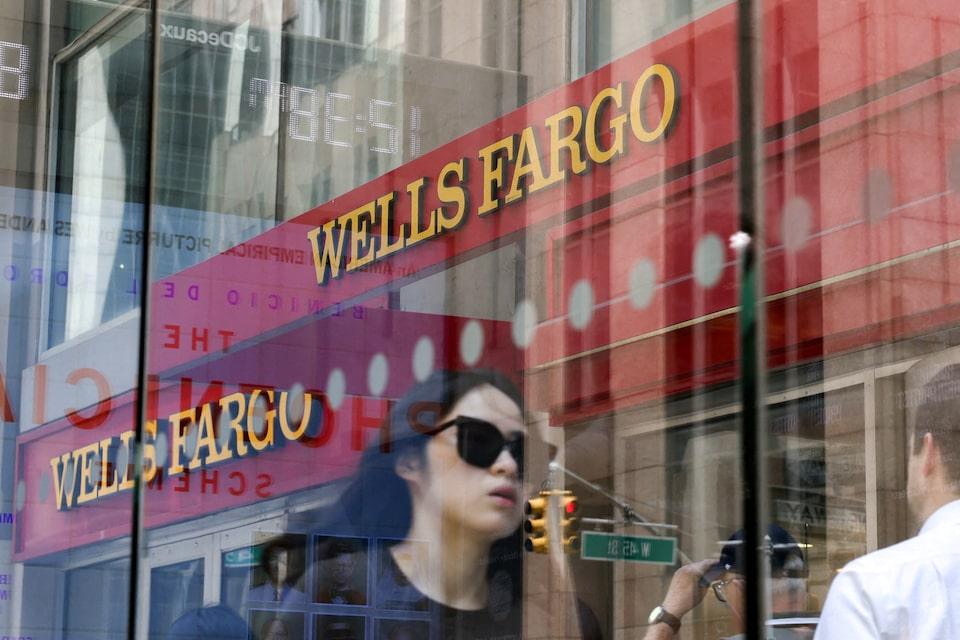
Net interest income rose 4% but missed expectations Wells Fargo forecasts $50 billion interest income for 2026, below average analyst estimate Net income of $1.62 per share up from year ago, missed expectations Bank recorded $612 million in severance expenses for job cuts Jan 14 (Reuters) - Wells Fargo (WFC.N) , opens new tab missed analysts' profit estimates in the fourth quarter on Wednesday, after it booked $612 million in severance expenses as part of CEO Charlie Scharf's effort to streamline operations, sending the bank's shares lower. Its shares closed down 4.6% at $89.25, recording its biggest one-day percentage loss in six months. Sign up here. The bank has streamlined its workforce to fund long-term growth initiatives after closing seven regulatory punishments known as consent orders last year to address its problems tied to a fake-accounts scandal. One order from 2018 remains. The fourth-largest U.S. lender, which twice reduced its annual interest income expectations last year, said net interest income — the difference between what it earns on loans and pays on deposits — rose 4% to $12.33 billion in the quarter from a year earlier, but missed expectations of $12.46 billion, according to data compiled by LSEG. For 2026, Wells Fargo forecast its interest income to be about $50 billion. Analysts, on average, were expecting $50.33 billion. The bank expects average loans to increase by a mid-to-single-digit percentage this year, driven by commercial and auto loans, alongside credit cards. Analysts said the results were mixed, highlighting disappointing interest income after Wells Fargo had a chance to catch up with peers in its first full quarter since regulators removed its asset cap. "Beyond this issue, there is still a lot of good (news) as costs are under control and loan quality remains high. With a potential lift in more mortgage applications as rates fall, they could see competitive growth in the back half of the year," said Brian Mulberry, senior client portfolio manager at Zacks Investment Management. STRONG CUSTOMER, CREDIT CARD UNCERTAINTY Wells Fargo plans to focus on new credit card products in 2026, invest in AI to modernize its services and accelerate the rollout of credit card offers, underwriting and other services. With the asset cap lifted, the bank is betting on using its larger balance sheet to extend loans and focus on fee-based businesses to boost growth. "The economy and our customers remain resilient, but we continue to closely monitor our portfolios for signs of weakness," Scharf told analysts. Separately, U.S. President Donald Trump's proposed 10% cap on credit card interest rates would cause banks to pull back on lending, CFO Mike Santomassimo said on a media call, echoing peers JPMorgan Chase (JPM.N) , opens new tab and others. "We would just encourage continued careful consideration of all proposals, including this ... to make sure we get to the right outcomes," Santomassimo said. Scharf said the bank would be open to engaging about the Trump administration's options. JOB CUTS Scharf said last month that Wells Fargo will keep trimming its workforce as it focuses on efficiency, adding that artificial intelligence presents a major opportunity to boost productivity. The bank ended 2025 with 205,198 employees, compared with 210,821 as of September 30. Its headcount has fallen every quarter since late 2020. Net income was $5.36 billion, or $1.62 per share, in the three months ended December 31, compared with $5.08 billion, or $1.43 per share, a year earlier. Wall Street analysts had expected earnings of $1.67 per share. The results cap a strong year for the U.S. bank as regulators removed a $1.95 trillion asset cap in June, lifting a penalty linked to Wells Fargo's fake-accounts scandal, allowing the bank to grow and pushing total assets past the $2 trillion mark last year for the first time. https://www.reuters.com/business/finance/wells-fargo-profit-climbs-rising-interest-income-2026-01-14/
2026-01-15 01:12
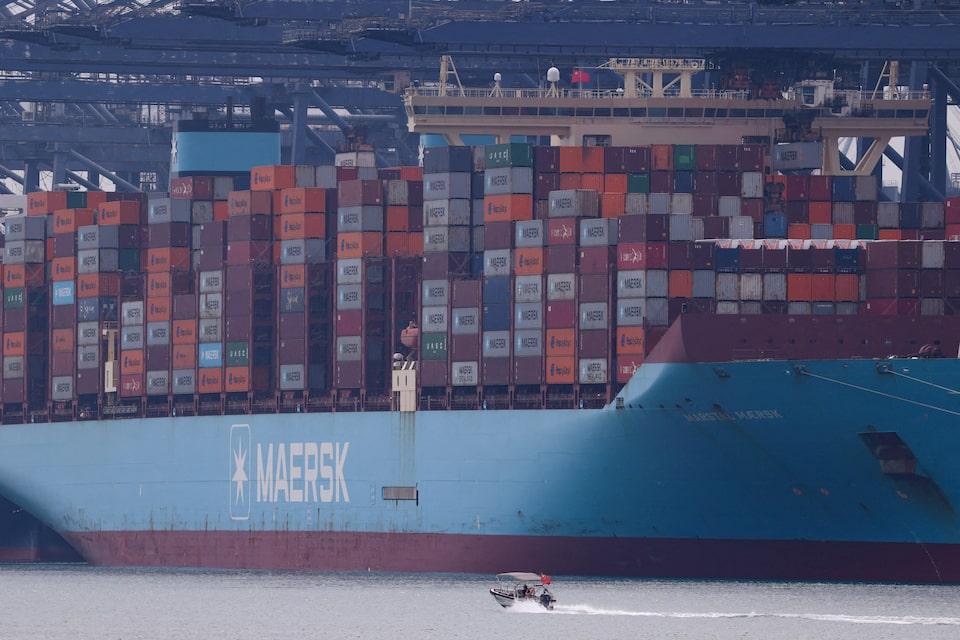
SINGAPORE, Jan 15 (Reuters) - Financial institutions globally failed to meet $2.5 trillion in financing that companies needed for trade last year, holding back the global economy, according to a new survey by the Asian Development Bank. Though the figure was unchanged since the last survey in 2023, ADB head of trade and supply chain finance Steven Beck said the persistently large gap represented a lost opportunity to drive global growth and development. The gap has also widened since 2015, when it stood at $1.5 trillion. Sign up here. "Without the financing to back trade, imports, and exports, we're just not going to be able to realise the kind of growth and development that we can from trade," he said. Beck added that the current policy environment created by tariffs imposed by the United States will drive greater demand for capital as companies diversify their trading relationships and reconfigure supply chains. "If we don't have sufficient financing to back that sort of transition into this sort of new world of trade, then the transition is going to be more bumpy than it needs to be," Beck said. In its report released on Thursday, ADB said the trade finance gap could also reflect cyclical factors rather than a lack of access, saying that falling commodity and energy prices since 2023 might have reduced working capital requirements, especially for small and medium-sized enterprises. Fintech platforms that emerged from a boom five years ago may also be helping to fill the gap, Beck noted, adding that deeper study was needed into their impact on financing. The report also noted a gradual growth in alternative currencies used, including China's yuan. Though the U.S. dollar was still used in over 82% of traditional trade finance transactions, ADB found that nearly 57% of bank respondents perceive a growing need for the use of local currencies. Beck said this was partially a result of supply chain reconfigurations, with some trade no longer passing through the United States, but the lack of access to the U.S. dollar was also a factor. "So if we can increase availability of local currency financing solutions then, presumably, we'll be able to reduce that gap, at least to some extent," he said. https://www.reuters.com/sustainability/boards-policy-regulation/global-trade-finance-gap-25-trillion-global-trade-tensions-rise-adb-says-2026-01-15/
2026-01-15 00:50
WASHINGTON, Jan 14 (Reuters) - The U.S. Justice Department said on Wednesday it sued to block a California law requiring oil and gas drilling to be separated from schools, homes and hospitals by buffer zones of more than half a mile (1 km). The Justice Department said it sought an injunction against the legislation's enforcement and will seek a preliminary injunction in the coming days. Sign up here. To protect public health, California's Senate Bill 1137, which went into full force in 2024, bans new oil and gas wells within 3,200 feet (975 metres) of community spaces and imposes new health and safety requirements on existing wells. The Justice Department, arguing that federal legislation should preempt the state law, said in a statement that the bill "would knock out about one-third of all federally authorized oil and gas leases in California." Republican U.S. President Donald Trump's administration, which favors fossil fuel development, and Democratic California Governor Gavin Newsom, who has positioned the state as a global leader in the fight against climate change, have been harshly critical of each other. According to environmental group Earthjustice, more than three million Californians, or 8% of the state's population, live within 3,200 feet of active oil wells. Those people face health harms including asthma, preterm birth and reduced lung function, the group said. https://www.reuters.com/business/energy/us-justice-department-seeks-block-california-limits-oil-wells-near-schools-2026-01-15/