2025-04-15 04:34
A look at the day ahead in European and global markets from Rocky Swift It's tax day in the United States, the deadline for most Americans to file their returns to Uncle Sam, but there's far less clarity in the rest of the world about what trade partners will pay in U.S. trade tariffs tomorrow, let alone next quarter. Sign up here. Who will catch any tax cheats after U.S. President Donald Trump gutted the Internal Revenue Service is another question, but a relief rally limped along in Asian markets after Trump suggested he might grant exemptions on auto-related tariffs. Japan's Nikkei eked out gains for a second straight day as car makers rallied, but stock futures pointed to mixed to lower openings in European and U.S. markets. Pharma looks to be the next sector to be targeted by Trump's tariffs, which would be a blow for European drugmakers like Novo Nordisk (NOVOb.CO) , opens new tab, whose weight-loss drugs have been global blockbusters in recent years. The Trump administration is proceeding with probes into imports of drugs and chips as part of a bid to impose tariffs on those sectors, Federal Register filings on Monday showed. Disappointing first quarter results from luxury group LVMH (LVMH.PA) , opens new tab on Monday added to evidence that U.S. consumers are getting antsy about the risks of a recession. The ever-evolving tariff talk has tarnished the safe harbour status of the U.S. dollar and Treasuries. The greenback hovered near a three-year low against the euro and a six-month low against the yen in Asia trading. Gold , the ultimate defensive asset, edged higher toward the record it touched on Monday. Key developments that could influence markets on Tuesday: -UK jobs market data for February -Q1 earnings from J&J, Bank of America, United Airlines and Citigroup -U.S. import prices for March, which projected to be unchanged, after rising 0.4% in February -Speeches from Federal Reserve Bank of Richmond President Thomas Barkin at the University of North Carolina and Fed Governor Lisa Cook in Washington DC. -Canada reports inflation for March, which likely remained unchanged from the previous month at 2.6%. Trying to keep up with the latest tariff news? Our new daily news digest offers a rundown of the top market-moving headlines impacting global trade. Sign up for Tariff Watch here. https://www.reuters.com/markets/europe/global-markets-view-europe-2025-04-15/
2025-04-15 03:56
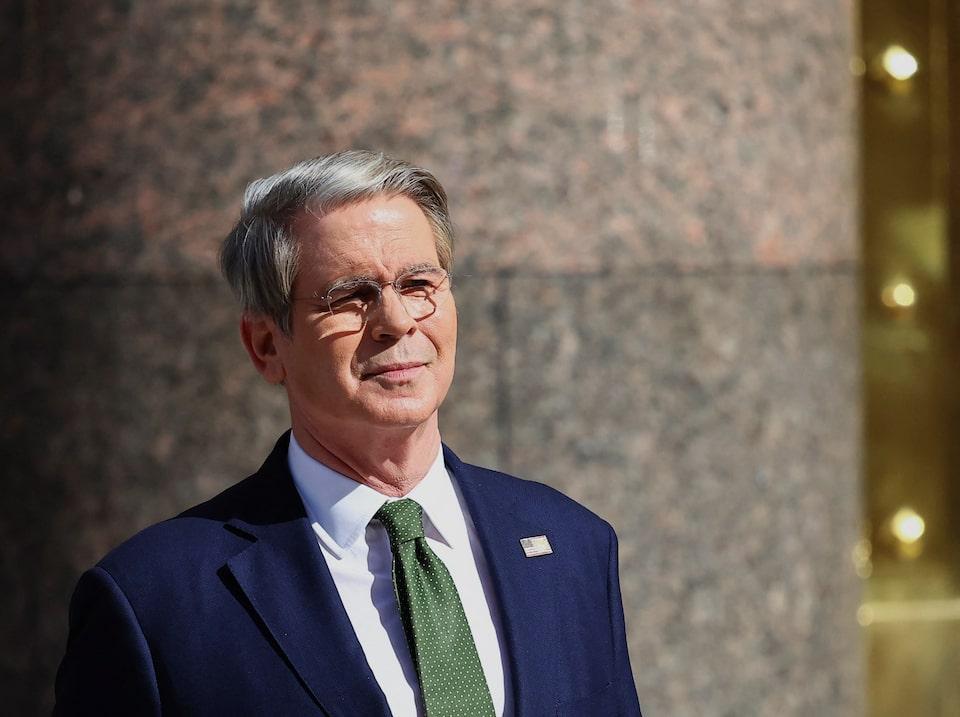
Bessent calls Milei reforms 'historic' Argentina sealed deals worth $42 bln with IMF, World Bank, IDB US not considering foreign exchange swap with Argentina WASHINGTON, April 14 (Reuters) - U.S. Treasury Secretary Scott Bessent said he met with Argentine President Javier Milei on Monday to underscore the Trump administration's full support for economic reforms that were bringing the Latin American country "back from the precipice." Bessent also commended Milei for working to reduce barriers towards reciprocal trade with the United States, Treasury said in a statement about the visit. Sign up here. In an interview with Bloomberg TV after his meeting with Milei, Bessent said the Trump administration was focused on helping Latin American countries avert what he called "rapacious" agreements made by China in Africa. Argentina on Friday sealed a $20 billion, 48-month Extended Fund Facility deal with the International Monetary Fund after dismantling key parts of its years-long currency controls. It also announced a $12 billion loan program with the World Bank and a separate $10 billion deal with the Inter-American Development Bank. "I wanted to come here today to show support for President Milei and his commitment ... to what I think is historic in terms of bringing Argentina back from the precipice," Bessent said in the interview. The U.S. sought to prevent Latin American countries giving up mining rights to China in return for aid, he said. "China has signed a number of these rapacious deals marked as aid, where ... they've taken mineral rights. They've added huge amounts of debt onto these countries balance sheets," he said. "They're guaranteeing that future generations are going to be poor and without resources. And we don't want that to happen any more than already has in Latin America." Chinese lenders provided a combined $182.28 billion to 49 African countries from 2000-2023, leaving many countries heavily in debt. Since 2005, Chinese lenders provided more than $120 billion in loans to Latin American and Caribbean countries, according to data from Boston University Global Development Policy Center. China said it opposed Bessent's remarks and criticised him for "maliciously slandering and smearing" China, and told the U.S. to refrain from "obstructing and deliberately sabotaging" developing countries. "We advise the U.S. to adjust its mindset, instead of spending time repeatedly smearing and attacking China, meddling in the foreign cooperation of regional countries," the Chinese embassy in Argentina said in a statement on Tuesday. Bessent said the U.S. was not considering a credit line directly to Argentina like the one extended by China. He said Beijing had shown a "very good faith effort" in conjunction with the IMF deal, and would be rolling forward the $5 billion drawn down by the previous Argentine government. He said Milei's government should eventually have enough foreign exchange inflows to repay that amount as it stayed the course on economic reforms. President Donald Trump has sought to expand ties with a handful of leaders in Latin America, including Salvadoran President Nayib Bukele, who visited the White House on Monday, and Ecuadorean President Daniel Noboa, who met with Trump in Florida last month. Bessent did not say whether Argentina, which received the 10% base rate in Trump's recent reciprocal tariff announcement, could achieve a zero tariff rate, saying he told Argentine officials to bring their "A game" for negotiations. Asked if any country could negotiate a zero tariff rate, Bessent said the negotiations were focused on "a whole box of things we've got to overcome: tariffs, non-tariff barriers, trade barriers, currency manipulation and subsidization of labor and facilities." https://www.reuters.com/world/americas/us-treasurys-bessent-backs-argentinas-economic-reforms-with-eye-china-2025-04-15/
2025-04-15 03:01
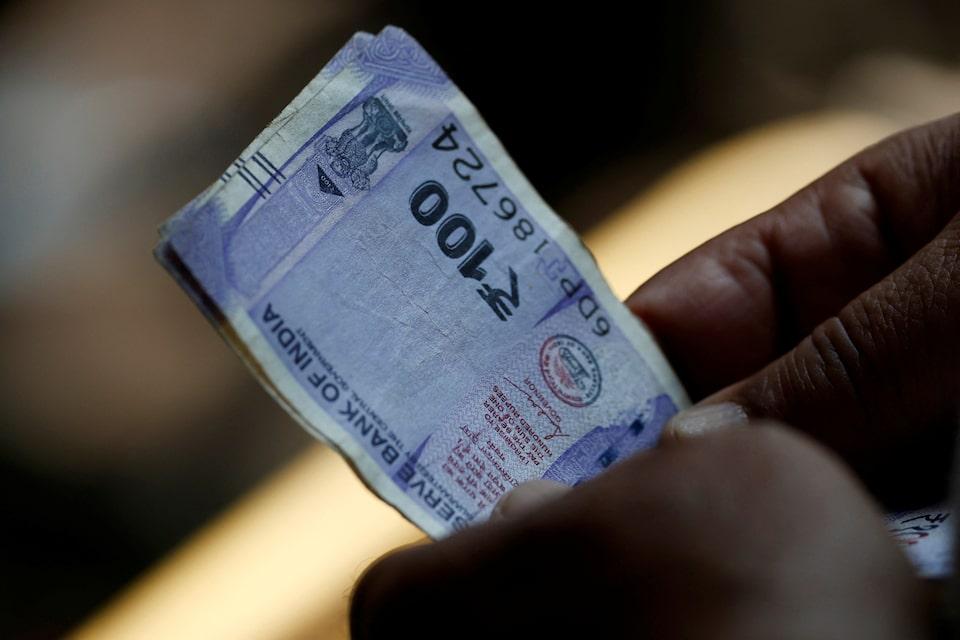
MUMBAI, April 15 (Reuters) - The Indian rupee is poised to open marginally higher on Tuesday as the U.S. dollar faces headwinds from renewed trade policy ambiguity and with risk sentiment on the mend. The 1-month non-deliverable forward indicated that the rupee will open at 85.96-85.98 per dollar compared with its close of 86.04 on Friday. The Indian markets were closed on Monday for a local holiday. Sign up here. The rupee slid nearly 1% last week, primarily hurt by increased hedging activity from importers and persistent equity outflows. "Last week's price action has likely set a floor for the dollar/rupee pair, at least for the time being," said a currency trader at a bank. He noted that the 85.50-86.00 range will likely draw good demand from importers looking to hedge their dollar payables. The dollar index (DXY) remained below the 100 level amid the flip-flop on U.S. tariff policies. Over the weekend, the U.S. removed smartphones and other electronics from its tariffs on China. However, President Donald Trump's comments suggested the reprieve will likely be short-lived, leaving the markets uncertain about the long-term direction of trade tensions. This uncertainty has piled pressure on the U.S. currency, with the dollar index down more than 4% over a month. In addition, expectations are rising that the Federal Reserve may be forced to lower interest rates more than previously anticipated, further weighing on the dollar. U.S. Fed Governor Christopher Waller said on Monday the U.S. tariff policies are a major shock to the economy that could lead the Fed to cut rates to head off a recession even if inflation remains high. KEY INDICATORS: ** One-month non-deliverable rupee forward at 86.14; onshore one-month forward premium at 17 paisa ** Dollar index down at 99.73 ** Brent crude futures up 0.2% at $65 per barrel ** Ten-year U.S. note yield at 4.35% ** As per NSDL data, foreign investors sold a net $518.1 million worth of Indian shares on April 9 ** NSDL data shows foreign investors sold a net $170.3 million worth of Indian bonds on April 9 https://www.reuters.com/world/india/rupee-likely-inch-up-dollar-drifts-amid-us-tariffs-crosswinds-2025-04-15/
2025-04-15 02:08
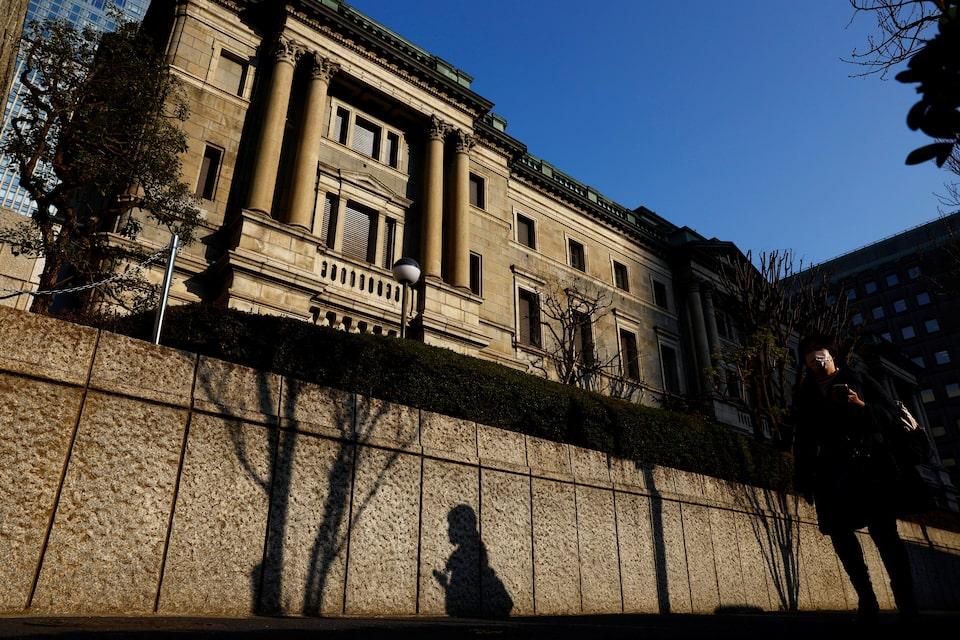
Top Japan trade negotiator to visit Washington from Wednesday Akazawa says meeting Bessent, Greer in kick-off trade talks Finance minister Kato seen travelling to Washington next week BOJ official plays down market rout, says no liquidity run TOKYO, April 15 (Reuters) - Japan will seek full removal of additional tariffs imposed by U.S. President Donald Trump, its top negotiator Ryosei Akazawa said on Tuesday, ahead of his scheduled three-day visit to Washington. Japan, a long-time U.S. ally, has been hit with 24% levies on its exports to the United States although these tariffs have, like most of Trump's sweeping "reciprocal" tariffs, been paused for 90 days. Sign up here. But a 10% universal rate remains in place as does a 25% duty for cars, which is set to be particularly painful. The U.S. is Japan's biggest export destination and automobile shipments account for roughly 28% of its exports there. "The tariffs already in place are eating away Japanese firms' profits day by day," Akazawa told a news conference. "It won't be easy but the government will work as one to achieve our goal at the earliest date possible," he said. "Our goal is the complete removal of additional U.S. tariffs." Akazawa, who is Japan's economy minister, said he will visit the U.S. from Wednesday to Friday for talks with U.S. Treasury Secretary Scott Bessent and U.S. Trade Representative Jamieson Greer. Japan hopes to convince the U.S. that the two countries can achieve a "win-win" situation without resorting to tariffs, such as by expanding Japanese investment in the U.S., Akazawa said. He did not comment on a possible timeframe for striking a deal. Given its heavy reliance on the U.S. market, Japan has much at stake in the talks that are expected to cover tariffs, non-tariff barriers and the thorny topic of exchange rates. Most economists expect Trump's tariffs to knock 0.6 percentage point off Japan's economic growth in the current fiscal year ending in March 2026, according to a survey by the Japan Center for Economic Research released last week. The market rout caused by Trump's tariffs also risks cooling business sentiment and derailing a cycle of rising wages and prices, which the Bank of Japan (BOJ) sees as a prerequisite in normalising ultra-easy policy. Global stock, currency and bond markets have whipsawed due to Trump's back-and-forth comments on tariffs, with some analysts seeing the recent sharp drops in U.S. Treasuries and the dollar as a sign markets are losing confidence in the safe- haven status of U.S. assets. A senior BOJ official played down the chance global markets are spiralling into a dangerous "dash for cash" situation. "Unlike during the global financial crisis, we're not seeing a major decline in short-term liquidity," Akio Okuno, head of the BOJ's monetary affairs department, said on Tuesday. But uncertainty over the fallout from Trump's policy will likely keep the BOJ from raising interest rates for some time, including at its next policy meeting on April 30-May 1, analysts say. CURRENCY ISSUES The yen's recent rebound, driven mostly by the dollar's broad-based declines, may also ease potential pressure from the U.S. to prop up the yen against the dollar to give U.S. exports a competitive advantage, some analysts say. Tokyo has lobbied to keep the thorny issue of currency rates separate from direct negotiations on trade, and up to the two countries' finance chiefs to discuss. Finance Minister Katsunobu Kato said he is arranging to travel to Washington next week to attend the spring International Monetary Fund and World Bank meetings, where he could hold meetings with Bessent. Japan and the U.S. share the view that markets should set exchange rates, and that excessive and disorderly currency moves have adverse effects on the economy and financial stability, Kato told parliament on Tuesday. "I hope to continue dialogue with the U.S. based on this shared understanding," he said. https://www.reuters.com/markets/boj-official-sees-no-huge-drop-global-short-term-liquidity-2025-04-15/
2025-04-15 01:32
MUMBAI, April 15 (Reuters) - Global volatility sparked by fluctuating U.S. tariff policies will remain in focus for the Indian rupee this week, even as a battered dollar offers some comfort, while government bond yields may ease on central bank bond buying. The rupee closed at 86.04 on Friday, down 0.9% on the week. India's financial markets were shut on Monday for a local holiday. Sign up here. Over the weekend, the U.S. exempted smartphones and computers from "reciprocal" tariffs, even though President Trump warned that levies would come at some point. This came shortly after he announced a 90-day postponement of most global tariffs. Despite the pause, investor confidence in U.S. assets remains shaky, which has contributed to pushing the dollar to a three-year low against major peers. While the weaker dollar has given some breathing room to Asian currencies, analysts reckon that markets will remain acutely sensitive to trade-related developments. "Negative global risk sentiment could mean that EM and commodity currencies could remain under pressure," said Abhishek Goenka, chief executive at FX advisory firm IFA Global. Trump appears to have asked for directed talks on tariffs to begin immediately with South Korea, Japan and India, South Korea's acting President Han Duck-soo said on Monday. Traders expect the rupee to trade between 85.70 and 86.70 over the holiday-shortened week, and many pointed out that the Chinese yuan's performance will be a key determinant of the rupee's trajectory. Meanwhile, the benchmark 10-year bond yield ended at 6.4445% on Friday, down 2 basis points, and posted its fourth consecutive weekly decline. Traders expect the yield to hover in the 6.40%-6.45% range this week, with Indian markets also being shut on Friday. The RBI slashed its key policy rate by 25 basis points for a second time last week, coupled with a change in stance to "accommodative" suggesting more rate cuts in coming months. Economists expect a deeper-than-expected rate cut cycle on downside risks to growth and a benign inflation outlook. "We believe that the global growth outlook is expected to be highly uncertain and may have potential negative implications for our growth. Inflation is expected to be within target of 4% due to lower crude, food," said Sachin Bajaj, executive vice president & chief investment officer at Axis Max Life Insurance. Market participants will also keep an eye out for local retail inflation data due on Tuesday. India consumer prices likely rose around the same rate in March as they did in February following four months of declines, as a sharp rise in gold prices offset flat food prices, a Reuters poll showed. KEY EVENTS: India ** March WPI inflation - April 15, Tuesday (12:00 pm IST) (Reuters poll: 2.50%) ** March CPI inflation - April 15, Tuesday (4:00 pm IST) (Reuters poll: 3.60%) U.S. ** March import prices - April 15, Tuesday (6:00 p.m. IST) ** March retail sales - April 16, Wednesday (6:00 p.m. IST) ** March industrial production - April 16, Wednesday (6:45 p.m. IST) ** March housing starts - April 17, Thursday (6:00 p.m. IST) ** Initial weekly jobless claims for week to April 7 - April 17, Thursday (6:00 p.m. IST) ** April Philly Fed Business Index - April 17, Thursday (6:00 p.m. IST) https://www.reuters.com/world/india/us-tariff-fluctuations-drive-rupee-bond-yields-may-ease-central-bank-debt-buy-2025-04-15/
2025-04-15 00:57
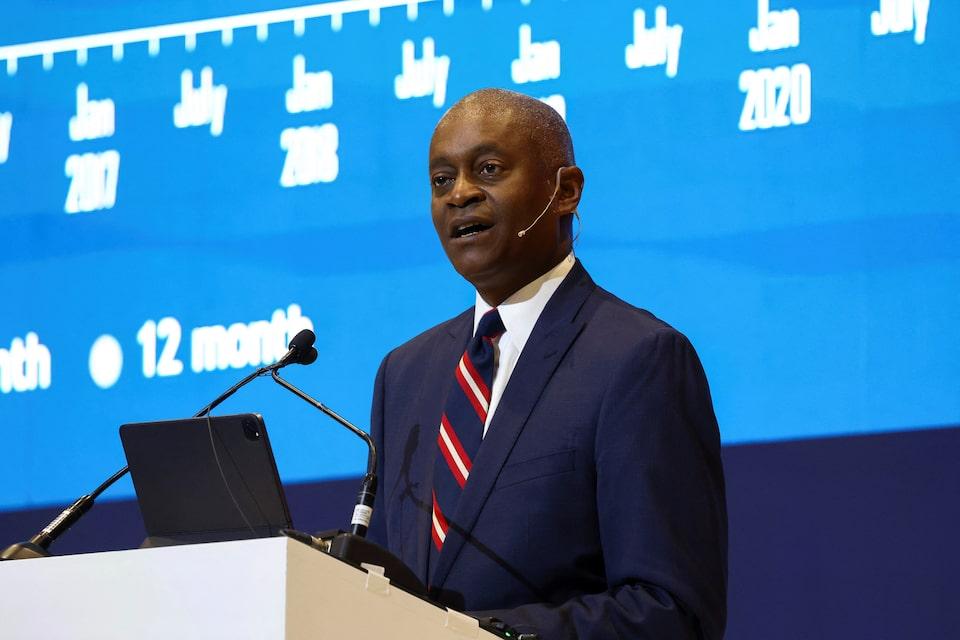
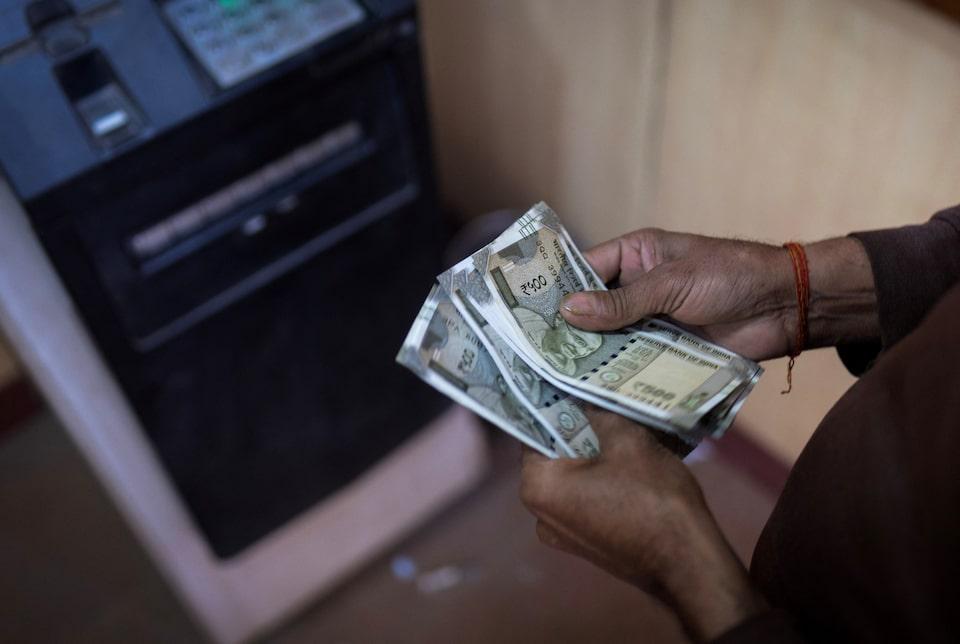
Tariffs may delay inflation reaching Fed's 2% goal until 2027, Bostic says Economy on pause, with growth likely to slow: Bostic April 14 (Reuters) - Atlanta Federal Reserve Bank President Raphael Bostic said on Monday the uncertainty surrounding the Trump administration's tariff and other policies has put the economy into a "big pause," and he suggested the U.S. central bank should stay on hold until there is more clarity. "The specific place that the economy will land depends critically on the details of where policy lands," Bostic said, speaking at Emory University. "And because we don't know that now, again, that's another reason why I feel like moving too boldly with our policy in any direction wouldn't be prudent at the moment." Sign up here. Tariffs are likely to push up on prices, Bostic said, meaning that it will take longer than he had earlier thought, perhaps until 2027, to get inflation back down to the Fed's 2% goal. At the same time, economic growth will likely slow, with GDP growing more than 1% this year, less than half the recent pace, he said. Bostic did not say whether he still believes the Fed will cut interest rates once this year, the view he had expressed in March. Since then, U.S. President Donald Trump has announced tariffs on dozens of countries, and then proceeded to roll back some of the new tariffs temporarily even as he ratcheted up import levies on China, which has retaliated with big tariffs of its own. The result, analysts say, is that tariffs on U.S. imports now average out at about 25%, about tenfold what they were when Trump took office in January. It is unclear if tariffs will remain there. Trump on Monday, in his latest shift, floated possible exemptions to his auto tariffs, even as the administration opened investigations into pharmaceutical and chip imports, a move that could presage fresh tariffs. "I think the fog has just gotten really, really thick," Bostic said. "The economy is in a big pause position and we'll just have to see sort of how things evolve." https://www.reuters.com/markets/us/feds-bostic-bold-moves-wouldnt-be-prudent-amid-fog-uncertainty-2025-04-15/