2025-04-14 21:51
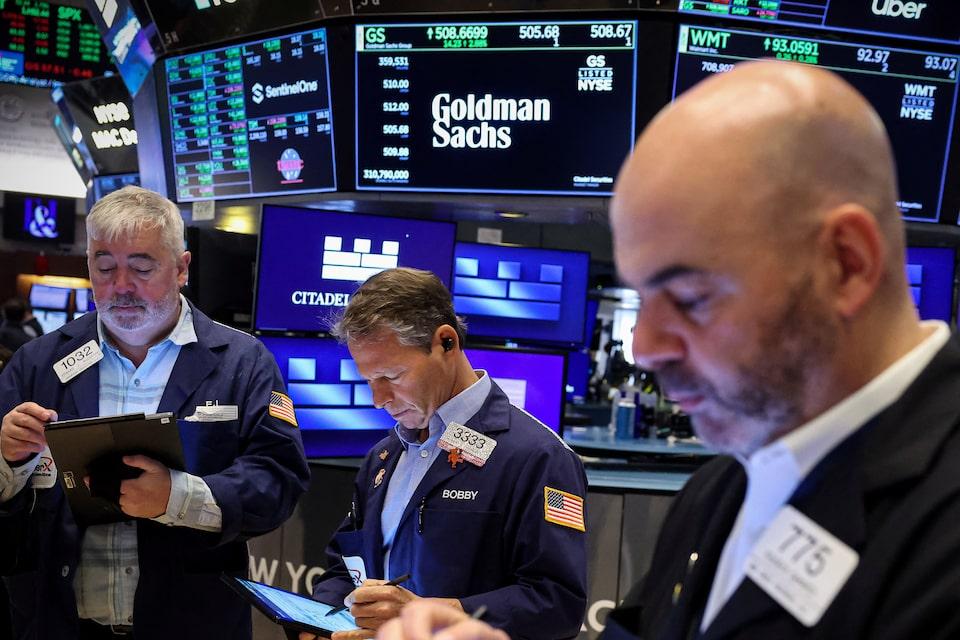
ORLANDO, Florida, April 14 (Reuters) - TRADING DAY Making sense of the forces driving global markets Sign up here. By Jamie McGeever, Markets Columnist Global rally fizzles as it reaches Wall Street Another tariff climb down from the Trump administration sparked a relief rally in world stocks and bonds on Monday, but smoldering growth fears and deep-rooted doubts over the wisdom and execution of U.S. trade policy limited the euphoria. Zoom out and the world continues to reassess its long-held faith in the dollar and U.S. Treasuries, the fates of which increasingly appear to be in the hands of foreign private sector investors. More on all that and more below, but first, a round-up of the day's main market moves. I'd love to hear from you, so please reach out to me with comments at [email protected] , opens new tab. You can also follow me at @ReutersJamie , opens new tab and @reutersjamie.bsky.social , opens new tab. If you have more time to read today, here are a few articles I recommend to help you make sense of what happened in markets. Today's Key Market Moves There's no doubt investors welcomed the news late on Friday that smartphones, computers and other electronics imported mainly from China will be exempt from the steepest U.S. tariffs, but Wall Street's fizzle as Monday's trading progressed was telling. The main U.S. indices posted considerably smaller gains than their main Asian and European counterparts earlier in the global day, and the steep fall in short-dated Treasury yields reflected investors' underlying gloomy view of the U.S. economy. Fed Governor Christopher Waller said the economic shock from Trump's tariff policies could necessitate steeper-than-expected rate cuts even if inflation remains high. The New York Fed's latest consumer survey showed one-year inflation expectations jumped last month to the highest in two and a half years, while unemployment fears were the highest since the pandemic. All in all, and even accounting for the latest tariff exemption, the shadow of 'stagflation' is looming large over the U.S. economy. It's the worst of both worlds for policymakers and investors. The performance of tech shares on Monday was revealing. Chinese tech stocks listed in Hong Kong rose more than 2% - their fifth daily rise in a row - and European tech stocks climbed 2.6%. But despite a strong open and shares in Apple surging as much as 7.5% at the open, the wind came out of U.S. tech's sails and the sector ended the day only 0.6% higher. China said it is evaluating the impact of the exemptions, and if Beijing confirms its initial cautious welcome, global trade tensions may ease for a while. Or at least stop intensifying. This could allow markets to take their cue from other drivers, such as the first quarter U.S. earnings season that is now picking up steam. Big banks like JPMorgan and Goldman Sachs have reported strong results, although the trading and economic environment in the January-March period will bear no resemblance to the following quarters. But Trump himself has signaled investors should not get too excited, telling reporters on Sunday that although there will be flexibility with some tech companies, he plans to announce tariff rates on imported semiconductors over the next week. Foreign private sector holds key to U.S. Treasuries, dollar Amid the cacophony of chaos in financial markets created by the Trump administration's tariffs, the loudest - and most alarming - signal is surely the simultaneous slump in the dollar and U.S. Treasury bonds. It's too early to say whether this is the beginning of a more prolonged trend. But it is a warning that faith in U.S. assets - and indeed, the global financial system of the past half-century shaped in America's image - cannot be taken for granted. It's never advisable to let long-term forecasts be swayed by short-term price moves but last week was potentially pivotal, both for the dollar and Treasuries. Whether it turns out that way will be determined to a large extent by overseas private sector investors, who have emerged as significant marginal buyers even as foreign official sector holdings of Treasuries barely moved over the past decade. Private sector investors have greatly increased their holdings of Treasuries and, by doing so largely on an unhedged basis, also greatly increased their exposure to the dollar. If a global crisis of confidence in the U.S. does snowball, they will be more likely to head for the exits before their more staid, conservative central bank counterparts. Foreigners held $8.5 trillion of Treasuries in January, U.S. Treasury figures show - central banks with $3.8 trillion and the private sector with $4.7 trillion. Five years ago central bank holdings were $4.2 trillion and private sector investors held $2.9 trillion, and a decade ago official holdings were more than twice as large as the private sector's stash of $2 trillion. Japanese institutions and households are among the largest holders of Treasuries on the planet, and if they reflect private sector thinking in other countries, investors and policymakers should brace for further market upheaval. According to Bank of America, Japanese private investors sold $17.5 billion in long-term Treasuries in the week through April 4, the largest amount of foreign bond sales since before the U.S. election in November. DOLLAR TIDE TURNING Eroding confidence in the dollar and Treasuries, the two pillars of the global financial system would of course have serious long-term consequences for the world. The more immediate fallout for investors has been no less dramatic. Last week the 30-year U.S. Treasury yield rose 48.5 basis points. It was the biggest weekly rise since June 1982. The benchmark 10-year yield's 50-basis point surge was its steepest weekly rise since November 2001. At the same time, the dollar fell nearly 3% against a basket of major currencies. Excluding the Global Financial Crisis and the COVID-19 pandemic, this has only happened five times in the past 30 years, and one of them was last month. Analysts at Goldman Sachs note that last week also marked only the fifth week since 1980 where the euro, or a pre-single currency weighted equivalent, rose 2% and the S&P 500 fell 2%. In other words, a significant slump on Wall Street is rarely accompanied by an equally steep decline in the dollar. Goldman's FX strategy team last week flipped their dollar call to a bearish view, arguing that the recent breakdown in "usual" correlations is a clear sign that "markets are concerned about what recent policy actions imply about U.S. governance and institutional credibility." They were joined on Monday by strategists at HSBC, who note that "as long as U.S. economic policy uncertainty is elevated, it will be difficult for the dollar to recover versus other core currencies." Also on Monday, Barclays' FX team published a note, "The end of the dollar as we know it?", in which they observe that the euro's spike to $1.1480 from $1.0950 last week was a move rarely seen over a six-month time frame never mind two days. The tide is turning against the dollar and U.S. bonds, certainly at the long end of the curve, and the power to direct the flow is now increasingly in private, not official sector hands. What could move markets tomorrow? Opinions expressed are those of the author. They do not reflect the views of Reuters News, which, under the Trust Principles , opens new tab, is committed to integrity, independence, and freedom from bias. Trading Day is also sent by email every weekday morning. Think your friend or colleague should know about us? Forward this newsletter to them. They can also sign up here. https://www.reuters.com/markets/global-markets-trading-day-graphics-2025-04-14/
2025-04-14 21:44
April 14 (Reuters) - Canadian power producer Capital Power Corp (CPX.TO) , opens new tab said on Monday it would buy two natural-gas fired power plant operators located in the PJM market for about $2.2 billion. The deal comes at a time when electricity prices are rapidly increasing in PJM, the United States' biggest power market, and as demand for electricity continues to increase on the back of the proliferation of energy-guzzling AI data centers and the electrification of transportation and buildings. Sign up here. Capital Power said it would buy power plant operators Hummel Station Intermediate Holdings III and Rolling Hills Generating Holdings from LS Power Equity Advisors. Hummel Station owns a 1,124 megawatt (MW) combined-cycle natural gas facility in Shamokin Dam, Pennsylvania, while Rolling Hills owns the 1,023 MW combustion turbine natural gas facility in Wilkesville, Ohio. The acquisition will immediately add to adjusted funds from operations per share, Capital Power said, adding that upon completion the company would be positioned as one of five North American independent power producers with over 10 gigawatts of natural gas capacity. Capital Power expects the acquisition to generate average annual adjusted EBITDA of about $443 million for the 2026-2030 period. It expects to close the transaction in the third quarter. The power producer added it has commenced an offering of $500 million of its common stock, the gross proceeds of which would help finance the acquisition. https://www.reuters.com/markets/deals/capital-power-expand-pjm-power-market-with-22-billion-deal-2025-04-14/

2025-04-14 21:33
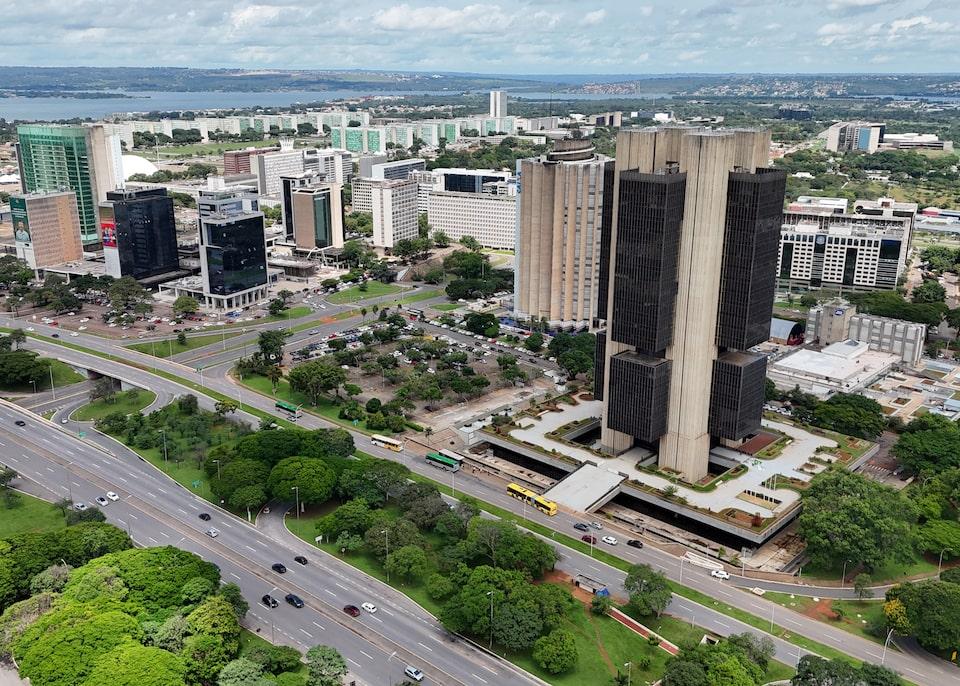
BRASILIA, April 14 (Reuters) - Brazilian central bank executive director Rogerio Lucca said on Monday that unclogging the transmission channels of monetary policy is a potential challenge, highlighting that some credit lines exhibit limited sensitivity to interest rate changes. Speaking during a central bank-hosted livestream, Lucca said this is due to subsidies and earmarked credit, ultimately forcing policymakers to make larger interest rate adjustments to achieve their desired effect. Sign up here. Earmarked credit lines make up 42% of all bank lending in Latin America's largest economy. Those credit lines are regulated by the National Monetary Council or tied to budget resources, mainly for medium- and long-term housing, rural, and infrastructure financing, and do not have interest rates freely determined by financial institutions, as they must adhere to parameters set by the government. This means credit costs in these segments are influenced by government decisions, making them less responsive to central bank efforts to cool the economy. "Unclogging monetary policy channels is a potential challenge for us," said Lucca. In the minutes of its latest policy meeting, after a 100 basis-point rate hike that raised the Selic rate to 14.25%, the central bank stressed the importance of keeping monetary policy channels clear and effective. Improving credit quality is key to enhancing the effectiveness of monetary policy, said Lucca. "A lot of this depends on being able to use your assets, your property, as collateral for credit operations," he added. Lucca also noted that the central bank is in talks with the government and market participants to explore alternative sources of funding for real estate lending, which currently relies heavily on savings accounts. While he did not disclose the options under discussion, Lucca said that Brazilians have increasingly favored other types of investments over savings accounts, weakening the funding base for real estate credit. In the first quarter, savings accounts saw net outflows of 45.7 billion reais ($7.81 billion), according to central bank data. The accounts have posted annual net withdrawals in each of the last four years. ($1 = 5.8523 reais) https://www.reuters.com/markets/brazil-central-bank-says-unclogging-monetary-policy-channels-is-challenge-2025-04-14/
2025-04-14 20:59
April 14 (Reuters) - The CEO of the largest U.S. power grid, PJM Interconnection, has decided to leave his post at the end of the year, the organization said on Monday, amid rising electricity prices that have drawn public scrutiny. Manu Asthana, who has led the power market that spans 13 states in the Mid-Atlantic and Midwest, along with the District of Columbia, said he plans to move closer to family in Texas. Sign up here. "My five-plus years at the helm of PJM have been some of the most fulfilling of my career," Asthana said in a statement issued by PJM. The board of PJM has launched a search committee for the next CEO, and said Asthana provided strong leadership during a time of significant changes in the electricity industry. "Under his leadership, PJM successfully navigated the COVID-19 pandemic, significant market reforms, interconnection process enhancements, the buildout of a robust risk management function, and the delivery of world-class grid reliability through a variety of extreme weather events," said PJM Board Chair Mark Takahashi. The PJM market covers more than 67 million Americans and includes the world's largest data center hub in Northern Virginia. In recent years, the organization has struggled with a tightening balance of supply and demand as the retirement of old power plants outpaces the addition of new electricity supplies. Last July, PJM announced the results of its capacity auction, which determines prices paid to power plants to operate at time of peaking demand, that were more than 800% higher than the previous year. It cited a shrinking supply of fossil-fired power plants, which operate around-the-clock, as the main reason for surging prices. The capacity auction drew widespread scrutiny, including consumer advocates concerned about spiking power bills, and threats by the governor of Pennsylvania - the country's biggest electricity exporter - to leave PJM. Environmental groups including Sierra Club and Earthjustice also filed a complaint with the Federal Energy Regulatory Commission, alleging that PJM drove up capacity prices partly by unjustifiably excluding certain power plants, leading PJM to delay its 2024 capacity auction and implement market reforms. https://www.reuters.com/business/energy/head-biggest-us-power-grid-pjm-step-down-2025-04-14/

2025-04-14 20:54
Some federal workers say they will take new buyout offer due to exhaustion Have decided to leave government work despite economic uncertainty due to Trump's tariffs Three months of cost-cutting, chaos driven by Musk's DOGE have taken a toll, workers say WASHINGTON, April 14 (Reuters) - Nick Gioia was terminated from the U.S. Department of Agriculture in February as part of President Donald Trump and tech mogul Elon Musk's effort to slash the size and cost of the federal government. Gioia was then reinstated and placed on paid leave after a court ruling. Now, after a second round of buyout offers were emailed in recent days to government workers in at least half a dozen federal agencies, the U.S. Army veteran decided to take it. Sign up here. The roller coaster of terminations and reinstatements, as well as the fear and uncertainty suffered by Gioia and his colleagues, have taken a toll. "For some of us, the time has come to step away before this experience completely erodes what remains of our well-being," Gioia told Reuters. Several other federal employees told Reuters they are taking this second buyout offer, saying that many civil servants are suffering from nervous exhaustion after three months of chaos and cuts driven by Musk's Department of Government Efficiency. It was unclear how many federal workers would take the buyout, and the White House and DOGE did not immediately respond to a request for comment. "I didn't want to take this one, but it's just been such a confusing and unsettling few months. I have decided to accept it," said one employee at the General Services Administration, which oversees government real estate, who requested anonymity out of fear of retribution. "I'm emotionally exhausted. I basically hit an emotional brick wall last week," the employee added. The original "deferred resignation program" offer was sent to most of the 2.3 million-strong civilian federal workforce in late January. Over 75,000 government employees took it, part of the more than 200,000 workers pushed out of the federal government. A second, similar offer was sent to a range of government workers in recent days, giving them the chance to go on leave with pay until September 30. The deadlines to accept this second buyout offer vary. The Department of Agriculture's deadline passed last week, others expire at midnight on Monday, while workers at the GSA have until Friday to decide whether to take it. Some workers who have taken the offers, and government employee unions, have expressed concern that the resignation programs might not be legal, or that the funds are not even there to pay people through September because money for the buyout offers has not been appropriated by Congress. Trump administration officials have said the buyout offers are binding and do not require the approval of Congress, which is controlled by Trump's Republican Party. Trump has said the federal bureaucracy is bloated, inefficient and needs to be streamlined. He also says he wants to reduce waste and fraud. GREATER UNCERTAINTY Bill Hoagland, a former Republican staffer and director of the Senate Budget Committee for more than 20 years, said the new buyout offer comes at a time of greater economic uncertainty triggered by Trump's trade war with China and tariffs on other countries. Employees leaving the government are entering a far tougher job market than just a few weeks ago, Hoagland said. "During the first buyout, I don't think we had anticipated the degree of geopolitical and economic difficulties brought about by the tariffs and the likelihood that has moved us into a potential recessionary situation," Hoagland said. Another GSA employee, speaking on the condition of anonymity, said many more colleagues had decided to take the latest buyout, despite fears of a worsening economy and job market. "A lot more people are taking this one. People are basically exhausted, they are stressed out, and most think they'll end up getting fired anyway if they don't take it." Daniel Meyer, an employment attorney at Tully Rinckey in Washington, said three of his federal worker clients have taken the latest buyout. He said his clients had been subjected to pressure tactics, including conduct and performance reviews. "That puts pressure on the employees to leave," Meyer said. "They looked at the deferred resignation program and found it more attractive than staying." https://www.reuters.com/world/us/exhausted-government-workers-decide-take-trumps-second-buyout-offer-2025-04-14/

2025-04-14 20:51
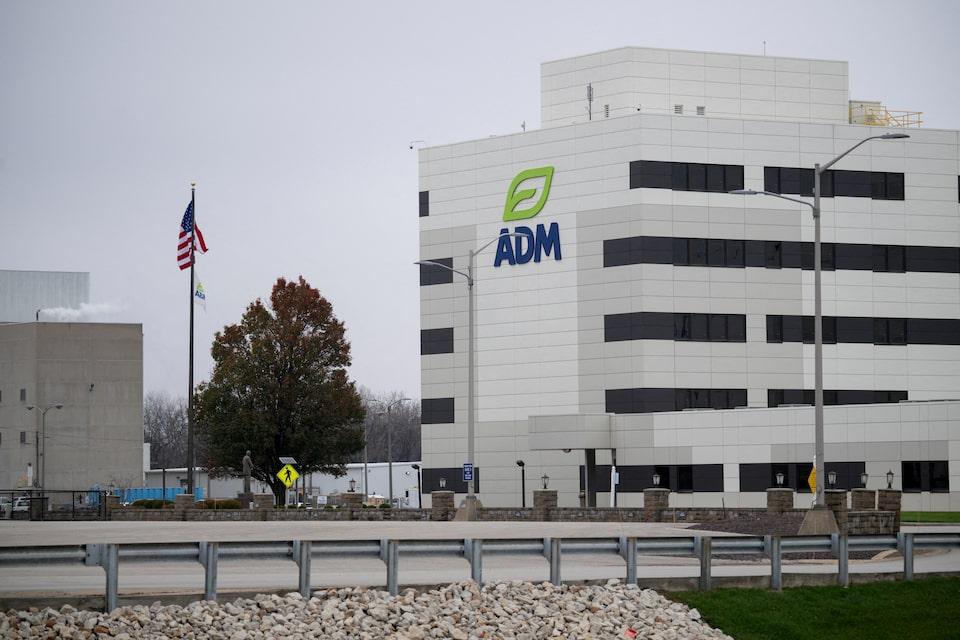
BEIJING/CHICAGO, April 14 (Reuters) - Global grain merchant Archer-Daniels-Midland (ADM.N) , opens new tab has begun shutting down domestic trading operations in China and laying off staff within its largest business segment as part of a global cost-cutting push, the company said on Monday. The move is designed to help ADM, which has been embroiled in an accounting scandal since last year, "remain agile in a challenging environment," the company said in an emailed statement. Sign up here. The company did not disclose the number of layoffs, but a source familiar with the matter said job cuts would impact 40 to 50 employees, leaving only around 10 staff in the financial hub of Shanghai. "The entire Ag Services and Oilseeds team in China has essentially been let go," the source said, referring to ADM's largest business segment. A second source said layoffs would affect some 30 people at ADM's Toepfer Shanghai subsidiary starting this week, and said it is part of a global cost-cutting effort announced earlier this year. ADM's earnings have eroded due to slumping crop prices, inflation-reduced consumer demand and weak crop processing margins, with operating profit down 40% last year in its large Agricultural Services and Oilseeds division. Rising trade tensions between Washington and Beijing are now stirring up new headwinds for ADM, which relies on trade between top farm goods exporter the United States and China, the top importer. The phase-out of domestic trading at Toepfer Shanghai was expected to conclude by the end of September, ADM said in its statement, adding that its other operations in Shanghai would not be affected. ADM began layoffs in February as part of a broader cost-cutting drive to save $500 million to $700 million over the next three to five years. The company had posted its weakest fourth-quarter adjusted profit in six years. ADM shares ended 1.3% higher on Monday at $46.43 after falling last week to the lowest level in nearly five years. https://www.reuters.com/markets/commodities/adm-halting-domestic-trading-china-cutting-jobs-shanghai-2025-04-14/