2025-04-14 11:06
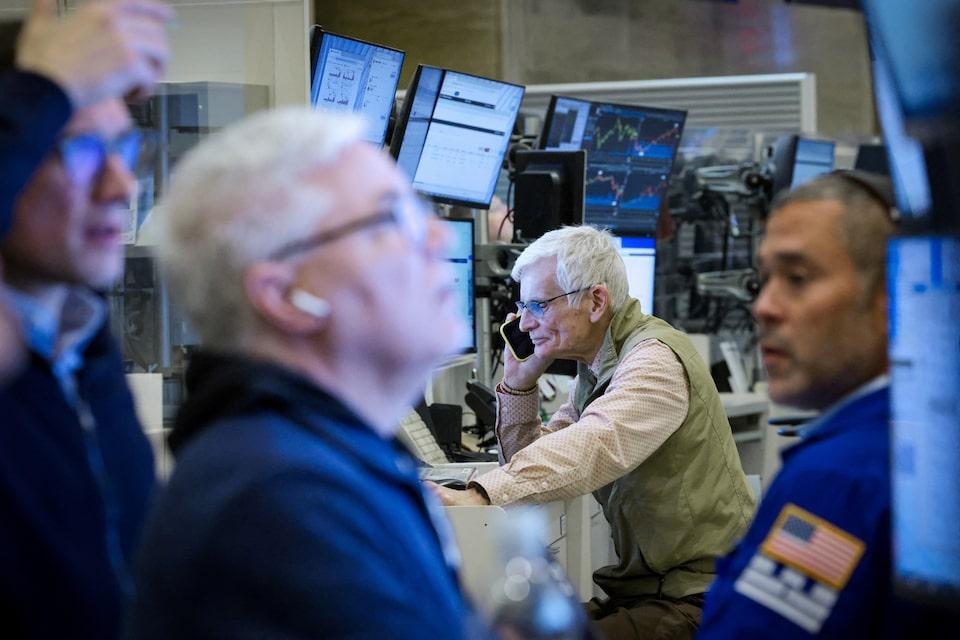
LONDON, April 14 (Reuters) - What matters in U.S. and global markets today By Mike Dolan , opens new tab, Editor-At-Large, Financial Industry and Financial Markets Sign up here. For investors praying for some respite from weeks of extreme volatility as the Easter break approaches, weekend events weren't all that encouraging. Even though a late stock market rally on Wall Street on Friday has been extended in futures prices into a new holiday-shortened week, flip-flopping of U.S. trade policy announcements over the past two days doesn't bode well for corporate and household planning - or indeed market stability. Another big focus of the week will be central bank meetings in Canada and in the euro zone, with both the European Central Bank and the Bank of Canada expected to lower interest rates by a quarter point each. Today, we look at the ECB's decision in detail and how it will view the sharp appreciation of the euro in its deliberations. Many fear it may start to become wary of deflationary forces building. Today's Market Minute Easter rising? Markets seek solace In Washington's second significant retreat from its sweeping April 2 trade tariff plans, President Donald Trump granted exclusions from steep tariffs on smartphones, computers and some other electronics imported largely from China - sizeable relief to tech firms like Apple reliant on imported products. That in itself may have bamboozled anyone trying to frontload electronic purchases to beat the tariffs, but before the weekend was out, the picture changed yet again. Trump on Sunday announced a national security trade probe into the semiconductor sector and then said he would announce the tariff rate on imported semiconductors over the next week, with "certain flexibility" for some companies in the sector. It's probably wise to prepare for at least three more months of this. Households were certainly pessimistic. The University of Michigan Surveys of Consumers on Friday said its monthly consumer sentiment reading dropped much further than forecast to its lowest in almost three years. But perhaps most alarming was its reading of consumer price views, which showed 12-month inflation expectations soaring to 6.7% - the highest reading since 1981. After a week in which the U.S. long-bond yield surged by its most since 1987, there's a pattern developing perhaps. The New York Federal Reserve publishes its equivalent survey later on Monday - though markets will be bracing more for the release of hard U.S. retail sales numbers later this week. A question in these will be whether consumers have stepped up goods purchases in advance of expected tariff increases. While Wall Street stock futures showed some stability, the plummeting dollar (.DXY) , opens new tab - which hit three-year lows against the euro on Friday - continued to ebb on Monday. But U.S. 10-year and 30-year Treasury yields did calm down a little - the former hovering just under 4.45%. Chart of the Day: In a world of such dramatic fundamental policy and economic disruptions, financial chart patterns and trends may seem a little beside the point. But some of these remain important for investment funds and strategists who rely on market momentum signals. One of the most basic is how the stock market is trading relative to its long-term 200-day moving average. The S&P500 fell below this on March 11 and has lost more than 500 points since then as the tariff war ensued. Another closely watched momentum signal is when the shorter-term 50-day average moves above or below the 200-day line. And it's now about to slice below it for the first time in more than a year, a move ominously dubbed a "Death Cross". The last time this happened in 2022, the S&P500 lost almost 1,000 points over the subsequent six months. Today's events to watch * New York Federal Reserve's March consumer sentiment survey and inflation expectations * Federal Reserve Board Governor Christopher Waller, Richmond Fed President Thomas Barkin, Philadelphia Fed chief Patrick Harker and Atlanta Fed boss Raphael Bostic all speak * U.S. corporate earnings: Goldman Sachs, M&T Bank * U.S. Treasury Secretary Scott Bessent visits Argentina to meet Argentine President Javier Milei. * China's President Xi Jinping will pay a state visit to Vietnam https://www.reuters.com/markets/us/global-markets-view-usa-2025-04-14/
2025-04-14 10:31
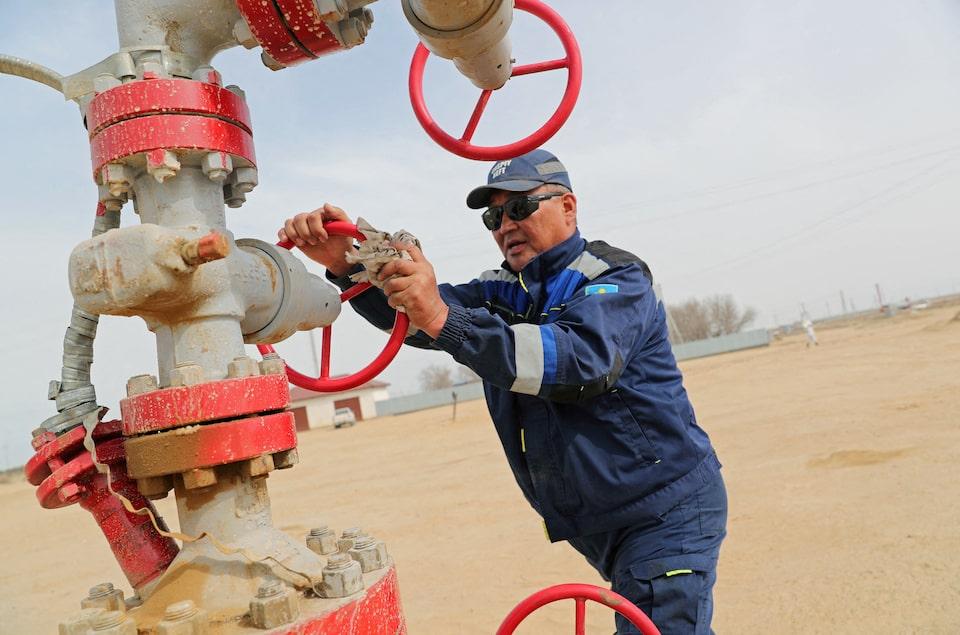
Output down about 3% from April 1-13 vs March average - source Production still above OPEC+ quota - source OPEC+ has pressed Kazakhstan to reduce oil production MOSCOW, April 14 (Reuters) - Kazakhstan's oil output fell in the first two weeks of April from the March average, but is still above the OPEC+ quota it has pledged to meet after months of overproduction, an industry source told Reuters. The central Asian country's crude production, excluding gas condensate, was down 3% in April 1-13 from the March average at about 1.82 million barrels per day due to a decrease at the Chevron-led (CVX.N) , opens new tab Tengiz field, the source said, speaking on condition of anonymity due to the sensitivity of the matter. Sign up here. Kazakhstan, a top-10 oil producer, has persistently exceeded quotas set by OPEC+, an alliance between the Organization of the Petroleum Exporting Countries and other producers led by Russia, leading to complaints from other members of the group. The decline still leaves Kazakhstan's output on course to exceed its OPEC+ quota of 1.473 million bpd for April. The energy ministry said on Thursday that Kazakhstan exceeded its OPEC+ quota in March but would fulfil its commitments in April and partially compensate for earlier overproduction, according to Interfax news agency. Several Western oil majors, such as Chevron (CVX.N) , opens new tab, Shell (SHEL.L) , opens new tab, ExxonMobil , TotalEnergies (TTEF.PA) , opens new tab and Eni (ENI.MI) , opens new tab, are active in Kazakhstan. A production boost at the Chevron-led Tengiz oilfield, Kazakhstan's largest, has been the main contributor to the country's overall increase in oil output. The source said daily output at Tengiz declined from April 1-13 to 111,000 metric tons (884,000 barrels) from March's average of 119,340 tons (950,000 barrels). Chevron declined immediate comment. Kazakhstan's energy ministry did not reply to a request for comment. CPC Kazakhstan has also faced challenges in exporting its oil, as the main pipeline, operated by the Caspian Pipeline Consortium, has been beset by drone attacks and wrangling over terminal equipment at Russia's Black Sea port of Novorosssiisk. Russia has said a CPC pumping station in the south of the country was attacked by a Ukrainian drone in February, while in March, a nearby oil depot was set ablaze also following a suspected Ukrainian drone strike. Russia also restricted CPC's exporting capacity at the Black Sea, which was partially restored last week. Kazakhstan has said the oil exports via the CPC pipeline have been largely stable. https://www.reuters.com/business/energy/kazakhstans-oil-output-down-early-april-still-above-opec-quota-source-says-2025-04-14/
2025-04-14 10:26
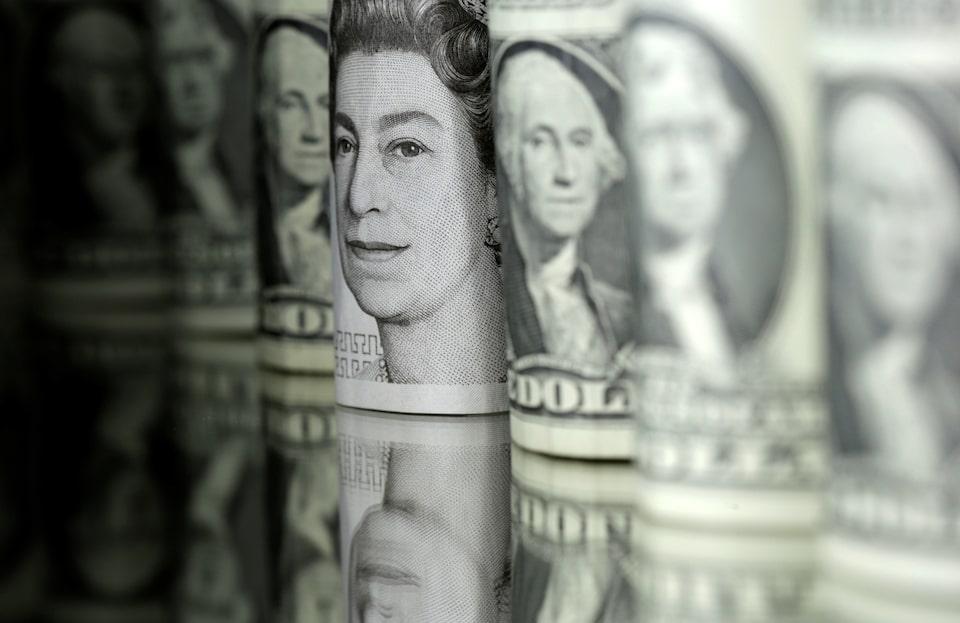
April 14 (Reuters) - The British pound climbed against the dollar and the euro on Monday after U.S. President Donald Trump excluded smartphones and computers from his tariffs, offering some respite although uncertainty over trade persisted. The dollar was broadly weaker against major peers as nervous investors pulled some money out of U.S. assets and piled into other currencies, such as the euro, amid tariff-induced uncertainty over the U.S. economy. Sign up here. Trump on Sunday said he would be announcing the tariff rate on imported semiconductors over the next week, indicating that the exemptions for smartphones and computers from his tariffs on China likely will be short-lived. Sterling rose for the fifth-straight session against the greenback and was last up 0.4% to $1.31825, hovering close to its six-month high of $1.3207 hit on April 3. Against the euro, the British currency regained some footing, coming off its November 2023 lows seen on Friday. The euro was down 0.3% at 86.45 pence . Still, the shared European currency is up more than 3.5% on the pound since Trump announced what he calls "reciprocal" tariffs. "We thought the sterling/euro would largely hold its ground, even if we did see these big haven flows in large part because that has been the market bias for many, many years," said Nick Rees, head of macro research at Monex Europe. "As markets, I think, continue to assess, the UK is likely to become a beneficiary of some of these flows as well." Markets are also focusing on UK employment and inflation data due this week. Bank of England interest rate-setter Megan Greene said on Saturday it was unclear what Trump's import tariffs would do to UK inflation with the unpredictable behaviour of the dollar adding to the puzzle. UK gilt yields declined on Monday after last week's Trump tariffs surge. https://www.reuters.com/markets/currencies/sterling-gains-dollar-euro-focus-remains-us-tariffs-2025-04-14/
2025-04-14 10:03
Likely to be the first pause since rate cuts began in June Currency markets expect 58% chance of no rate reduction Bank will also release range of forecasts for the economy Rates decision to be announced on Wednesday at 09:45 ET OTTAWA, April 14 (Reuters) - The Bank of Canada is likely to pause its rate-cutting cycle this week as rising inflation, weakened employment and U.S. President Donald Trump's retreat from sweeping reciprocal tariffs have reduced the urgency of economic stimulus. Odds for a pause in interest rates were around 58% as of Friday, currency swap market bets showed, a sharp reversal from Wednesday when markets were heavily leaning toward a reduction in interest rates by the BoC next week. Sign up here. Market bets and economists' expectations between a cut and a pause have changed course several times in the last few weeks as Trump has seesawed between imposing and withdrawing tariffs. This has made predictions for the path of the economy and consequently monetary policy very uncertain, economists said, as interviews with them revealed that many are vacillating between a cut and a pause. "They (BoC) want to retain some kind of dry powder, some ammunition," said Tony Stillo, director at forecasting and analysis group Oxford Economics, referring to the aid the economy would need if it enters a recession. "If they cut, it would be some kind of added insurance," he said, adding that he expects a pause by the bank. The central bank has reduced its key borrowing cost by 225 basis points in the last 10 months to 2.75%, bringing the interest rate to the midpoint of its neutral range, a band within which rates are just enough to not restrict or stimulate economic growth. If the bank pauses on rate cuts, it will be the first time since June, after what has been the most aggressive rate reduction cycle amongst all major central banks. BoC Governor Tiff Macklem will announce the governing council's decision at 9:45 a.m. ET (1345 GMT) on Wednesday. The bank will also release its quarterly monetary policy report. The bank has said that this will be the first time since the pandemic that it would not give a single forecast for the economy, but would offer a range of predictions owing to the difficulty in determining a set path for growth. Trump's move to slap and then pause tariffs and the likelihood of an all-out trade war with China have shaken markets and hurt business and consumer spending. "If this period of uncertainty persists ... a Canada recession that we were calling for in March becomes even more severe," said David Doyle, managing director and head of economics at Macquarie Group. These pressures could likely push the BoC to cut rates again this week, he said. A sudden surge in inflation in February, which jumped to an eight-month high of 2.6%, could be making the BoC uneasy on softening interest rates further. A loss of 32,600 jobs in March, a first in three years, has also added fuel to the uncertainty of the rate path. "I think it's become a lot more murky because of the trade war, and also because some of the recent inflation data," Doyle said about the rate-cut chance. https://www.reuters.com/markets/rates-bonds/bank-canada-is-more-likely-halt-interest-rate-cuts-after-tariff-pause-2025-04-14/

2025-04-14 09:24
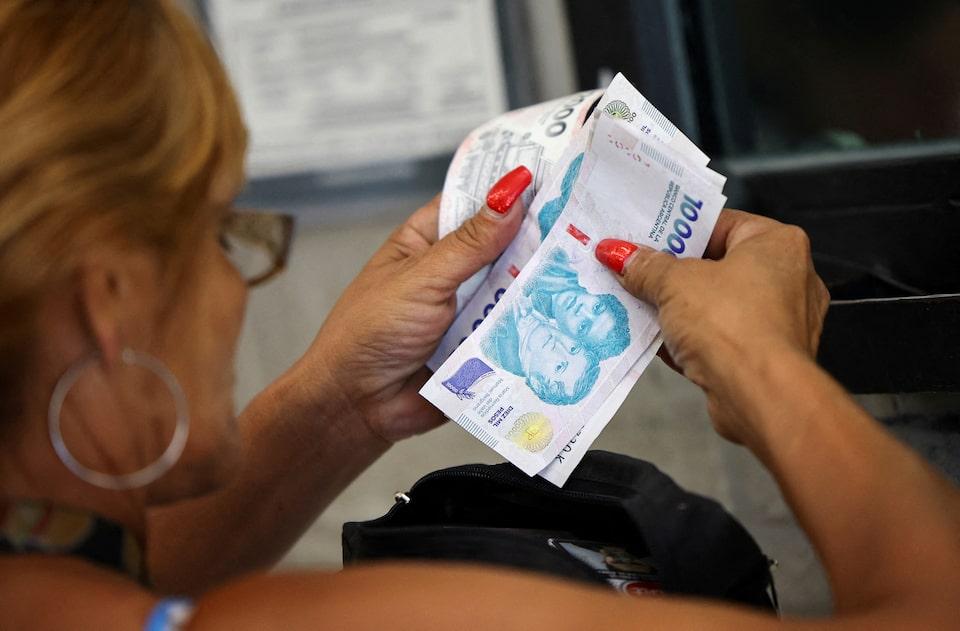
Argentina's government eases years-long currency controls Peso can float freely between 1,000-1,400 per dollar Analysts see peso weakening in trading on Monday Government met banks to limit volatility - sources BUENOS AIRES, April 14 (Reuters) - The question on every trader's lips in Argentina: How much will the peso be worth on Monday morning? The long-suffering currency will start on a new exchange rate regime on Monday after the government dismantled large parts of the country's years-long capital controls, putting the peso on a far wider trading band than its previous fixed peg. Sign up here. The peso will now be allowed to float freely within a gradually expanding band between 1,000-1,400 pesos per dollar. It closed at 1,074 per dollar on Friday, with parallel markets at 1,355. The official exchange rate was previously on a crawling peg, only allowed to depreciate 1% each month. Traders consulted by Reuters over the weekend said the peso should open between 1,250 and 1,350 pesos, which would signify a near 20% drop versus the previous close, despite the government avoiding calling it a devaluation. The peso exchange rate "will surely head toward the upper end of the (floating) band, and that's where exporters will appear," said economist Damián Di Pace. "Monday's exchange rate won't be the one that will remain on the trading boards for long." The unexpected and sudden exchange rate shift marked the end of some six years of tough capital controls put in place to stall a sharp slide in foreign currency reserves, which remain in net negative territory. However, Argentina sealed a $20 billion loan deal with the International Monetary Fund on Friday, along with other big loans from international lenders, which will bolster the central bank's balance sheet and was key to unlocking the controls. The removal of the controls, which jammed up investments by making it hard to send profits overseas, ends a key market distortion investors and businesses have long pushed for and that libertarian President Javier Milei had pledged to unravel. DOLLAR BUILD-UP Buenos Aires-based analyst Salvador di Stefano said that the government would try to push the dollar towards the lower end of the band at 1,000 as it tries to build up dollar reserves. Its IMF agreement has reserve accumulation targets. "I think we're going to have a very significant supply of dollars, due to seasonal export issues," Stefano said, referring to the coming harvest of main cash crop soybeans. Economist Maria Castiglioni said that easing the so-called "cepo" currency controls was a return to "normalcy". "It means trying to regain confidence in one's own currency," she said, adding the size and speed of the international loans were favorable. "The amount of aid from international organizations is surprising, as it is much more than expected." A trader at a local brokerage said that the weaker peso could even help bring in hard currency as exporters liquidated their dollars at a better exchange rate. "This will help ease pressure on the market, even offering the opportunity to seek pesos for carry trades given speculation about the floating band ceiling," the person said. Market sources said that over the weekend government officials held informal contacts with private banks to collaborate on a rapid normalization of the exchange rate. They also noted that the official Banco Nación could be the one to set the wholesale peso opening rate on Monday. "It's important that the market welcomes this," Federico Furiase, a central bank director, said in a radio interview on Sunday. https://www.reuters.com/markets/currencies/argentinas-peso-wheres-currency-headed-after-fx-regime-overhaul-2025-04-14/
2025-04-14 09:16
JOHANNESBURG, April 14 (Reuters) - The South African rand firmed on Monday, boosted by a news report , opens new tab that the country's biggest political party may back down on a plan to raise value-added tax (VAT) and dollar weakness on global markets. At 1404 GMT, the rand traded at 18.89 against the dollar , about 1.4% firmer than Friday's closing level. Sign up here. The Sunday Times newspaper reported that the African National Congress was likely to drop its insistence on a VAT hike in this year's budget after indications that none of the parties it has been talking to would support it. The ANC has clashed with its main coalition partner, the Democratic Alliance over the budget's proposal to raise VAT by 0.5 percentage points on May 1 and another 0.5 points next year. The pro-business DA voted against the budget's fiscal framework in parliament and is challenging the VAT hike in court, raising investor concern it could quit or be forced from the coalition government. Andre Cilliers, currency strategist at TreasuryONE, said scrapping the VAT increase would keep the government intact and that prospect was supporting the rand. The ANC and DA met on Saturday to discuss the impasse. Neither party gave a detailed readout of their talks, but both described them as constructive. The rand was volatile last week on U.S. President Donald Trump's changing tariff policies and local political news. Trump's tariffs have escalated tensions between the U.S. and China, South Africa's biggest trading partner. Shares on the Johannesburg Stock Exchange's blue-chip Top-40 index (.JTOPI) , opens new tab also rose, trading about 2% higher. South Africa's benchmark 2030 government bond gained, as the yield fell 8 basis points to 9.225%. https://www.reuters.com/markets/south-africas-rand-gains-report-anc-may-scrap-vat-hike-2025-04-14/