2025-04-14 08:55
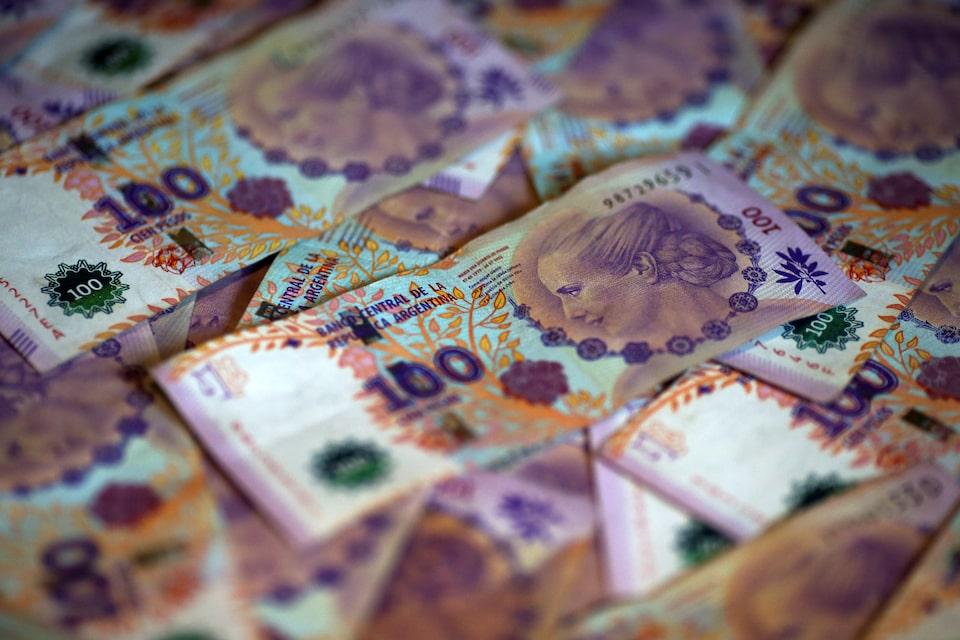
Argentina struck IMF deal, eased FX controls Peso currency drops sharply as peg withdrawn International bonds, equities up; local bonds more mixed Economists, investors cheer 'positive' reforms BUENOS AIRES, April 14 (Reuters) - Argentina's peso slid 10% on Monday to near 1,200 per dollar after the country undid large parts of its currency and capital controls at the end of last week, part of sealing a $20 billion loan program with the International Monetary Fund. Despite the volatility, the move to unravel controls in place since 2019 has been cheered by investors and economists, who say it marks a key step toward normalizing the Argentine economy after years of crises. Sign up here. The move, which could risk stoking inflation and cause Argentines to rush to snap up dollars, is a key plank of libertarian President Javier Milei's bold and risky reforms in the grains-to-shale-rich country that has been battling triple-digit inflation, dwindling currency reserves and tepid growth. More than half the IMF cash is expected this week, and alongside commitments from other multilateral lenders it is seen as fundamental for the building of reserves at the central bank. Milei wants to bring international investors back to the country's mining and energy sectors, spurring development of shale oil and gas reserves in Vaca Muerta and deposits of lithium, which is used in electric vehicle batteries. The currency controls jammed up investment. The peso drop came after the central bank undid its so-called crawling peg and allowed the currency to float freely within a far wider trading band of 1,000-1,400 pesos per dollar, a major policy shift investors and firms had been pushing for. "In a baseline scenario, given the size and front-loaded nature of the IMF deal, the support of other multilaterals, the U.S. support ... all this points to a peso that should not persistently test the upper limit of the band," said Alejo Czerwonko, chief investment officer, emerging markets Americas, at UBS Global Wealth Management. The currency had closed at 1,074 per dollar on Friday, though popular parallel rates often used by Argentines and local firms were nearer 1,350 per dollar. The gap between the two rates narrowed sharply on Monday to around 5%, versus 28% at the end of last week, with the official exchange rate weakening and parallel rates gaining. BONDS RALLY The country's international bonds on Monday rallied with some maturities adding more than 4 cents on the dollar, according to data from MarketAxess. Some local bonds slipped, while the local Merval stock exchange (.MERV) , opens new tab closed up 4.7%. The IMF support is seen boosting overall confidence and the removal of controls could help spur investment. "We have a positive view of the announced macro framework, which should allow for FX reserve accumulation and more sustained growth," said Morgan Stanley economist Fernando Sedano in a note on Monday. He added that inflation could heat up in the short term, and interest rates may have to rise. A visit to Argentina on Monday by U.S. Treasury Secretary Scott Bessent was an explicit show of support, while Argentina has been pushing the United States for a deal to avoid getting caught in U.S. President Donald Trump's global trade war. Milei and Trump are ideological allies. "Is what we're seeing today influenced by the Milei-Trump relationship? Yes, I think that's consensus," UBS's Czerwonko said. 'A SEMBLANCE OF MACROECONOMIC STABILITY' The IMF deal will release an initial $12 billion, with $3 billion more coming later in the year. Argentina also announced loan deals for close to $6 billion with other multinational lenders and banks that should help bolster its depleted foreign currency reserves. The South American grains producer is digging itself out of a major economic crisis under Milei, who came to office in late 2023 and has managed to stabilize the economy with austerity and fiscal discipline. Capital Economics said Buenos Aires had moved "more quickly than we'd anticipated to restore macro orthodoxy," though cautioned that the peso still looked overvalued. "The country appears closer to a semblance of macroeconomic stability than at any point since the 2000s," it wrote. The IMF deal came with targets and baseline assumptions in which the country would continue to commit to a "zero deficit" and to build up reserves this year. New investment in areas like energy and grain exports will be important for that. J.P. Morgan said the fall in the peso could be tempered by demand from grain exporters for pesos as they looked to liquidate their foreign currency income at a more attractive exchange rate. "In our view, the official FX will likely stabilize below the parallel FX level as of Friday, with agriculture-related FX supply catching up. The FX gap will likely shrink to around 5%," the investment bank said. https://www.reuters.com/markets/currencies/wall-st-expects-argentina-market-boost-imf-deal-big-shift-fx-controls-2025-04-14/
2025-04-14 07:42
Institutional outflows not seen as broader client activity pattern CEO sees volatility as opportunity for EM investment Assets under management fall to $46.2 billion April 14 (Reuters) - Emerging markets-focused fund manager Ashmore (ASHM.L) , opens new tab on Monday reported $3.9 billion in net outflows in the three months ended March 31, as some large institutional clients redeemed their holdings in currencies near the end of the period. The company's shares slipped 3.1% to 129.6 pence in early trade, hovering near a 16-year low hit last week. Sign up here. Ashmore said market volatility had heightened since U.S. tariffs came into effect this month, but the institutional outflows did not indicate "a broader pattern of client activity". U.S. President Donald Trump's policies have led to dramatic swings in global markets, with recently-announced tariffs sparking recession fears despite most being suspended for 90 days. Ashmore CEO Mark Coombs said the increased volatility offered a chance for investors to reallocate their holdings into emerging markets. Coombs said tighter fiscal policy in the United States, fiscal stimulus in Europe, higher rates in Japan and China's focus on boosting domestic demand, along with the impact of the tariffs, would weaken the dollar and support emerging market performance. The London-based firm reported assets under management of $46.2 billion at March 31, the end of its fiscal third quarter, down from $48.8 billion at the end of December. https://www.reuters.com/business/finance/ashmores-quarterly-managed-assets-fall-5-institutional-withdrawals-2025-04-14/

2025-04-14 07:04
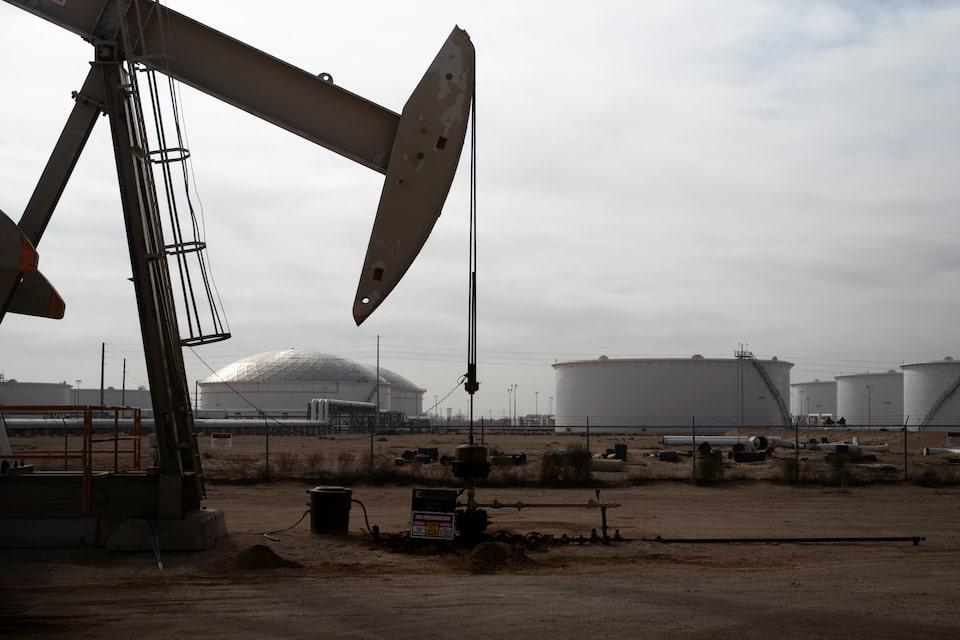
China's crude oil imports rebounded in March, data shows OPEC downgrades its 2025 global oil demand growth forecast Goldman Sachs sees Brent averaging $63 for rest of 2025 HOUSTON, April 14 (Reuters) - Oil prices settled slightly higher on Monday on exemptions for some electronics from U.S. tariffs and data showing a sharp rebound in China's crude imports in March, but gains were limited by concerns that the trade war could weaken global economic growth and dent fuel demand. Brent crude futures closed 12 cents, or 0.2%, higher at $64.88 per barrel, while U.S. West Texas Intermediate crude settled 3 cents higher at $61.53. Sign up here. Late on Friday, U.S. President Donald Trump's administration granted exclusions from steep tariffs on smartphones, computers and some other electronic goods imported largely from China. It was the latest in a series of policy announcements that imposed tariffs and then walked them back, spurring uncertainty for investors and businesses. Trump said on Sunday he would announce the tariff rate on imported semiconductors over the next week. Meanwhile, China's crude oil imports in March rebounded sharply from the previous two months and were up nearly 5% from a year earlier, data showed on Monday, boosted by Iranian oil and a rebound in Russian deliveries. However, Brent and WTI have lost about $10 a barrel since the start of the month and analysts have lowered oil price forecasts as the trade war between the world's two largest economies has intensified. The Organization of the Petroleum Exporting Countries said in a monthly report on Monday that global oil demand will rise by 1.3 million barrels per day in 2025, down by 150,000 bpd from last month's forecast, citing trade tariffs among the reasons. "OPEC cutting its global demand forecast just underscores the troubled outlook we have here from the tariffs and all the other uncertainty in the market," said John Kilduff, partner with Again Capital. "Markets are still continuing to sort out the impact of the tariffs and this escalation with China," Kilduff said. Goldman Sachs expects Brent to average $63 and WTI to average $59 for the remainder of 2025, with Brent averaging $58 and WTI $55 in 2026. It sees global oil demand in the fourth quarter of 2025 rising by only 300,000 bpd year on year, analysts led by Daan Struyven said in a note, adding that slowing demand is expected to be most pronounced for petrochemical feedstocks. UBS reduced its Brent forecasts by $12 a barrel to $68. At the same time, it expects WTI to trade at $64 a barrel. JPMorgan lowered its oil price forecasts for 2025 and next year, citing higher production from OPEC+ and weaker demand. The Brent price spread between December 2025 and December 2026 has flipped into contango as investors have priced in oversupply and demand concerns, said BMI, part of Fitch Solutions. In a contango market, front-month prices are lower than those in future months, indicating no shortage of supply. Potentially supporting oil prices, U.S. Energy Secretary Chris Wright said on Friday the United States could stop Iranian oil exports as part of Trump's plan to pressure Tehran over its nuclear programme. Iran and the U.S. held "positive" and "constructive" talks in Oman on Saturday and agreed to reconvene next week, officials said over the weekend. Also hurting prices, South Bow detailed plans for a controlled restart , opens new tab of the Keystone pipeline on Monday after an oil leak last week forced it to shut the key conduit for crude oil between Canada and the United States. https://www.reuters.com/business/energy/oil-prices-flat-us-china-trade-war-weighs-global-growth-outlook-2025-04-14/
2025-04-14 07:04
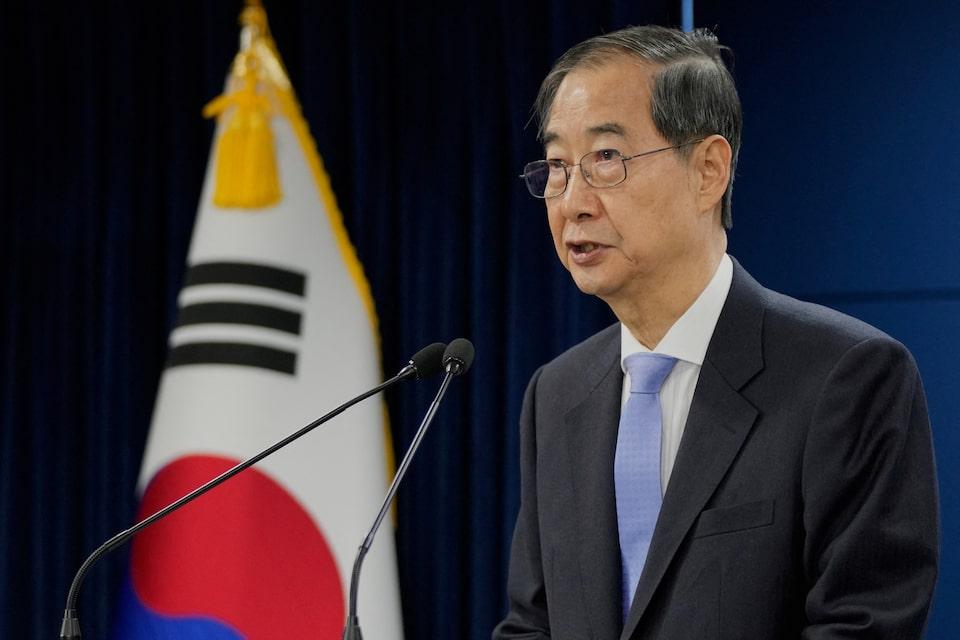
SEOUL, April 14 (Reuters) - South Korea's acting President Han Duck-soo said on Monday U.S. President Donald Trump appeared to have directed talks on tariffs to begin immediately with South Korea, Japan and India, Yonhap News Agency reported. Han also said he expected there to be a video meeting between the U.S. and South Korean officials on the proposed Alaska LNG project soon, Yonhap said. Sign up here. The acting president had explained in detail South Korea's stance on tariff negotiations to Trump and the U.S. president had been satisfied, Han was quoted as saying during a meeting of the economic security strategy task force. He also vowed to talk directly with Trump again if necessary as part of efforts to find common ground in cooperation between the countries over liquefied natural gas (LNG) and shipbuilding, Yonhap reported. Last week, South Korea's trade and industry minister said potential cooperation with Washington in the shipbuilding sector was a "very important card" in negotiating over tariffs. South Korea has shown interest in the Alaska LNG project, which is part of Trump's bid to boost U.S. gas exports, but any participation would hinge on discussions with Washington, the minister said, noting the project might struggle to achieve profitability. Kim Hong-kyun, Seoul's first vice foreign minister, told parliament on Monday that the Trump administration has yet to propose talks to negotiate defence costs related to U.S. troops stationed in the country. South Korea was, however, preparing for various scenarios, he said. Trump has said he talked to Han last week about South Korea's payment for "big time" U.S. military protection, signaling that defence costs could be part of a broader deal not only about tariffs and trade. https://www.reuters.com/world/south-korea-sees-trump-starting-tariff-talks-with-seoul-japan-india-yonhap-says-2025-04-14/
2025-04-14 07:03
April 14 - One of the biggest surprises since Donald Trump’s "Liberation Day" tariff announcement has been the continued weakness of the U.S. dollar, which is raising fears about an emerging market-style crisis brewing in the world’s largest economy. But what we’re likely witnessing is a healthy rebalancing of global capital. Before the U.S. president announced his "reciprocal tariffs" on April 2, almost all economists expected the dollar to strengthen following the news. Tariffs are inflationary, so, in theory, they should cause bond yields to move higher, reflecting expectations of fewer potential rate cuts by the Federal Reserve. Sign up here. The dollar’s relative yield pickup versus other currencies should, in turn, have strengthened the greenback in the short run. Only at a later stage, if the trade deficit of the U.S. were to decline, and with it demand for dollars from foreign businesses, should the greenback have weakened. Meanwhile, these broad-based tariffs should lead to lower growth in the euro zone and other export countries, which should have translated into euro weakness. Alas, the exact opposite happened. Our model for trade-weighted exchange rate movements related to the tariffs suggested that the dollar should have strengthened by 1% if there were no retaliation or weakened modestly with retaliation, while the euro should have weakened by 1% in the first scenario and by 0.7% in the latter. What has actually occurred? A more than 4% decline in the dollar and a 2.8% jump in the euro. This could be written off as yet another example of flawed economic modelling were it not for the simultaneous moves in the bond market. In the U.S. Treasury market, 5-year breakeven inflation rates dropped 20 basis points in reaction to the tariffs, even though, again, tariffs should be inflationary. And 5-year real yields rose despite the fact that tariffs should lead to a drop in economic growth and push real yields lower. As I write these lines, U.S. bond yields continue to rise, driven almost entirely by rising real yields, as market chatter about the end of U.S. exceptionalism grows louder. ‘LIZ TRUSS MOMENT’ Experienced investors will recognise this pattern. It’s one we typically see in an emerging market crisis when investors lose confidence in a country’s government and its ability to service its debt. The result is capital flight and a rapid sell-off of government bonds as the risk premium increases. This phenomenon was largely absent in developed markets until September 2022 when then-UK Prime Minister Liz Truss lost the confidence of global investors with her infamous mini-budget. The result was a rapid increase in gilt yields and capital flight that forced the Bank of England to step in before ultimately compelling the prime minister to abandon her policies. Eventually, the prime minister was ousted herself, famously outlasted by a head of lettuce. The current weakness in the dollar and the moves in Treasury real yields indicate that Donald Trump could be facing his own Liz Truss moment. International investors may be losing confidence in the dollar and the U.S. as the best place to allocate capital. Detailed capital flow data is not yet available, but we can get an idea of what may be happening by looking at daily ETF flows. When looking at the net flows from equity ETFs in the U.S. and Europe in the week after the tariffs were announced, it is clear that there were large outflows from U.S.-focused ETFs and hardly any outflows from ETFs investing in Europe. Among U.S. investors, there were even net inflows to "international ETFs" that focus on global equities ex-U.S. REBALANCING In short, we may be seeing the end of U.S. exceptionalism in real time. But it is not the end of the U.S. dollar as the world’s reserve currency. What we are witnessing is likely a rebalancing of international investment portfolios, which, over the last decade, have become increasingly concentrated in U.S. assets. For example, the U.S. share of the MSCI World stock market index has risen from 48% in 2010 to 73% today. In a way, this is reminiscent of what occurred after the tech bubble burst in 2000. Back then, investors gradually reduced their U.S. portfolio allocations in favour of European and Asian investments after the U.S. market share in the MSCI World had risen from 40% to 60% in just five years. The result was the gradual decline of the valuation discount of European stocks versus their U.S. counterparts, as U.S. markets devalued while European valuations remained largely stable. Unsurprisingly, investors moved money from the U.S. to better-performing markets. Over the next few years, there may be a similar period of portfolio rebalancing that leads to persistent U.S. underperformance in favour of European and Asian markets. Given how much foreign capital has flooded U.S. markets in recent years, this rebalancing could be painful for Wall Street. (The views expressed here are those of Joachim Klement, an investment strategist at Panmure Liberum, the UK's largest independent investment bank) https://www.reuters.com/markets/currencies/is-dollar-weakness-panic-signal-or-healthy-rebalancing-klement-2025-04-14/
2025-04-14 07:03
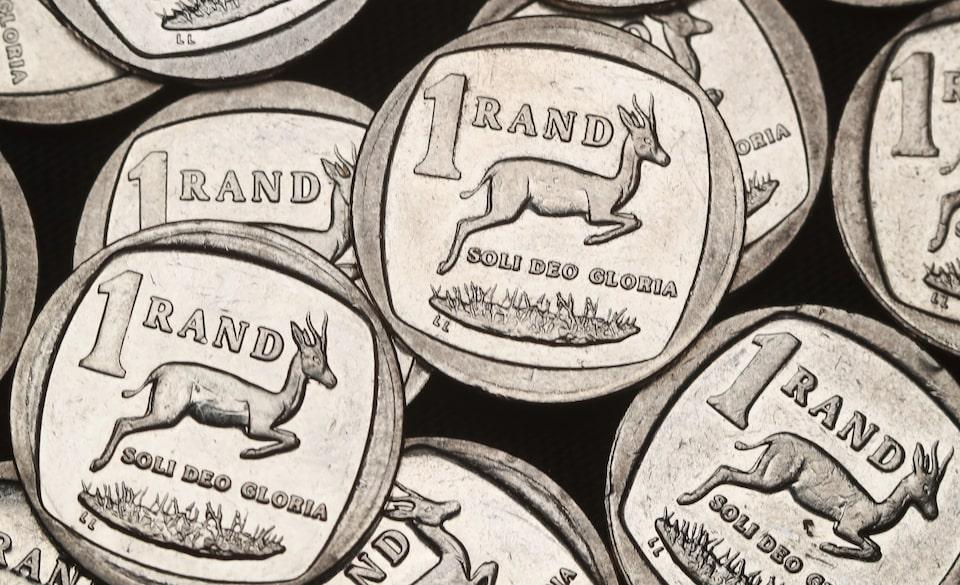
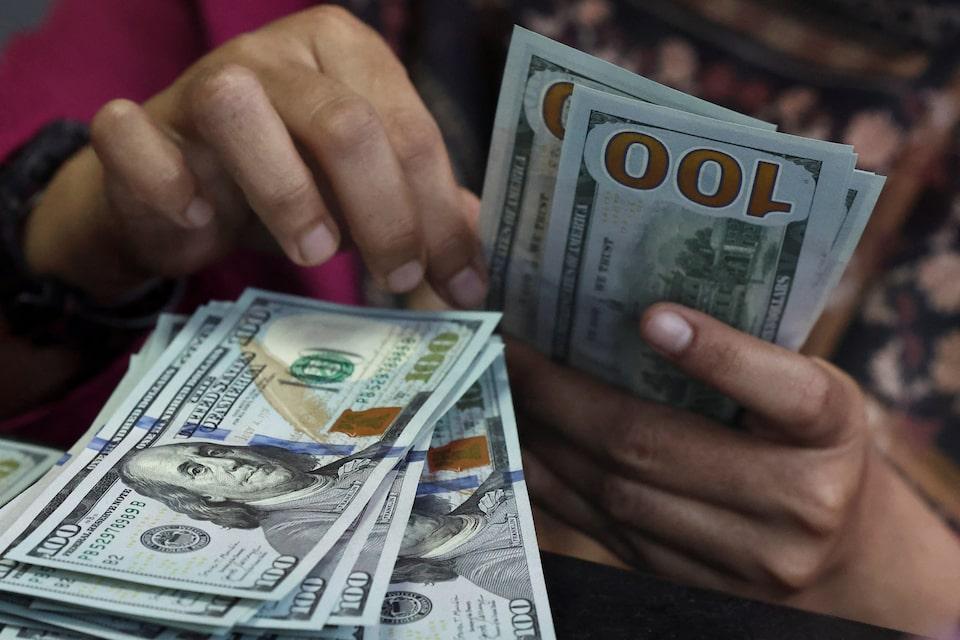
JOHANNESBURG, April 14 (Reuters) - South Africa's rand recovered further against a weaker dollar on Monday, extending a recent bout of extreme volatility linked to U.S. President Donald Trump's trade war and worries that a key coalition partner could leave the country's government. At 0638 GMT, the rand traded at 18.9675 against the dollar , about 1% stronger than its previous close. Sign up here. The dollar last traded about 0.6% weaker against a basket of currencies. "The markets were spooked and confused last week. This is set to continue this week," said Adam Phillips, treasury specialist at Umkhulu Treasury. The risk-sensitive rand has see-sawed on Trump's changing tariff policies, which have escalated tensions between the U.S. and the world's second-biggest economy, China. Over the weekend Trump exempted smartphones and other electronics imported largely from China from his tariffs, suggesting a growing awareness of the effect the measures will have on consumers, though U.S. Commerce Secretary Howard Lutnick said the reprieve was temporary. The rand has also moved on local headlines about tensions in South Africa's coalition government. The two biggest parties in the coalition, the African National Congress (ANC) and the Democratic Alliance (DA), clashed over the budget, leading to speculation that the DA could quit or be forced from the Government of National Unity. The ANC and DA met on Saturday to discuss the impasse. Neither party gave a detailed readout of their talks, but both described them as constructive. If the ANC and DA end their dispute, analysts say the rand could rally. "Continue to expect big moves, although maybe not as big as last week," Phillips said. South Africa's benchmark 2030 government bond also strengthened in early deals, as the yield fell 8 basis points to 9.225%. https://www.reuters.com/markets/south-africas-rand-recovery-continues-with-volatile-global-local-backdrop-2025-04-14/