2026-01-15 00:39
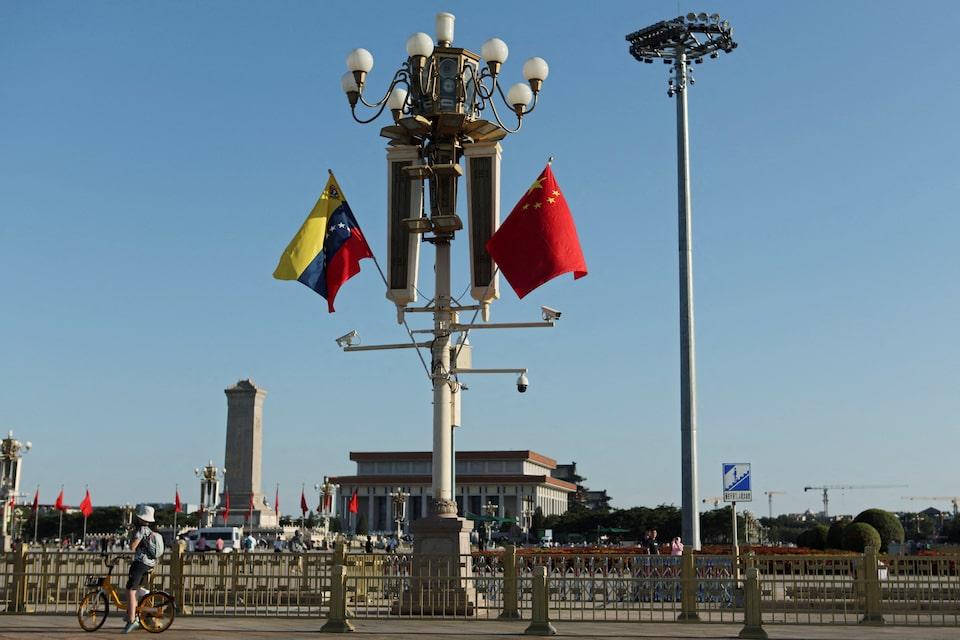
Only 3 shipments passed US blockade since mid-December Venezuelan oil in transit to Asia near 43 million barrels - Kpler Venezuelan oil discharges into China hit record in November - Vortexa China made up 75% of Venezuelan oil export in 2025 - PDVSA SINGAPORE, Jan 14 (Reuters) - China's oil imports from Venezuela are expected to slump starting from February as fewer tankers have managed to leave for Caracas' top crude buyer after the U.S. claimed control of the OPEC producer, traders and analysts said. The number of oil tankers departing Venezuela for China has fallen sharply after U.S. President Donald Trump imposed a blockade in December on sanctioned ships transporting Venezuelan oil, part of its pressure campaign on Venezuelan President Nicolas Maduro that culminated in a U.S. military incursion that captured him. Sign up here. After his capture, Trump claimed the U.S. is in control of the country, a founding member of the Organization of the Petroleum Exporting Countries, and began urging U.S. companies to begin investing in the Venezuelan oil sector. However, the U.S. has seized five Venezuela-linked vessels after announcing the blockade, prompting ship owners to u-turn their vessels away or return to the country's waters after loading to avoid the risk of seizure, creating a measure of control on the country's oil flows. About a dozen loaded tankers left Venezuela with their location transponders switched off amid the U.S. raid on January 3, but most of them have returned to the country after Caracas' interim government negotiated a 50 million barrel oil supply deal with Washington. Three of those tankers have continued sailing towards Asia and are expected to arrive in China around late February, said a person involved in shipping the oil. The tankers are carrying about 3 million barrels of fuel oil and 2 million barrels of Merey heavy crude, according to the person, who declined to be named due to the sensitivity of the matter. Since the blockade started in December, 2.9 million barrels of crude have left Venezuela for Asia on three vessels carrying Merey and other Venezuelan crude, Richard Ro, crude analyst for the Americas at Kpler said in an email. The company also estimates another 2.6 million barrels of fuel oil passed the blockade. PDVSA did not reply to requests for comment on the tankers' departures or return. The 5 million barrels of fuel oil and crude set to arrive in China is equal to about 166,000 barrels per day. That is down from the average of 642,000 bpd of crude oil and fuel oil Venezuela exported to China in 2025, or 75% of total average exports of 847,000 bpd last year, according to internal PDVSA documents. CHINA STOCKPILES However, China stocked up on Venezuelan oil late last year while millions of barrels are still in transit, which means Chinese refiners are not in a rush to seek alternative supply. Kpler estimates some 43 million barrels of Venezuelan oil are heading East, while tracker Vortexa sees 52 million barrels. China received a record 660,000 bpd of Venezuelan crude in November, according to Vortexa data, which dropped to around 450,000 bpd in December as tanks were full. Trading houses Trafigura and Vitol have begun marketing Venezuelan oil under the U.S. mandate, targeting Indian refiners and Chinese state major CNPC for March delivery. TEAPOTS The drop in supply will likely hit independent Chinese refiners, colloquially known as teapots, that have been the biggest buyers of Venezuelan crude. Still, Venezuelan supply accounts for only around 4% of China's total seaborne crude imports. Some of the teapot buyers have orders in place for cargoes arriving in March and April that left Venezuela before the U.S. blockade, and are awaiting with "great uncertainty" the availability of supplies going forward, said a senior Chinese trader who deals in teapot sales. For the second quarter, Chinese teapots may be forced to seek alternatives such as Canada's Cold Lake and Access Western Blend, as an expected diversion of Venezuelan oil to the U.S. may push more Canadian supplies towards Asia, traders said. The teapots typically process Venezuelan oil, mostly Merey and fuel oil, into road-paving bitumen. For the past few years traders have branded Venezuelan oil into China as Malaysian or Brazilian supplies to circumvent U.S. sanctions. https://www.reuters.com/business/energy/venezuelan-oil-exports-china-set-drop-us-blockade-limits-cargoes-2026-01-14/
2026-01-15 00:03
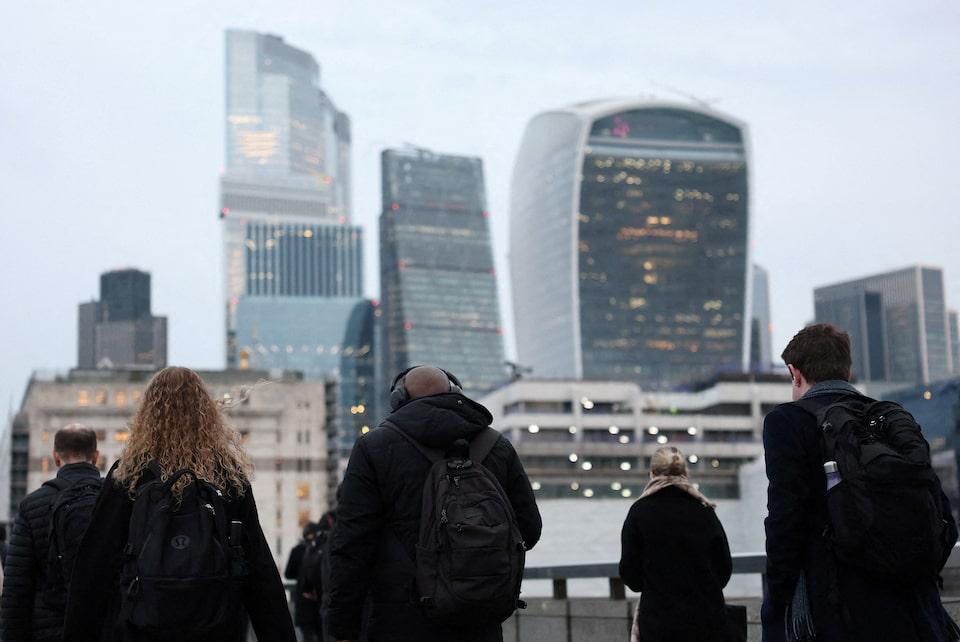
LONDON, Jan 15 (Reuters) - Britain has moved up the rankings as a destination for new foreign direct investment, helped by growth in artificial intelligence and clean energy, but needs to do more to attract other types of investment, consultancy McKinsey said. The United Kingdom was the world's third-largest destination for newly announced FDI projects between 2022 and 2025 - behind the United States and India, up from fourth place in 2015–19, McKinsey said in a report published on Thursday. Sign up here. Inflation-adjusted inflows averaged about $85 billion a year, 40% higher than before the COVID-19 pandemic and stronger than a 20% increase in global announced FDI, it said. By comparison, France and Germany attracted averages of $45 billion and $43 billion. Britain's government has said it wants to attract more foreign investment as part of its push to speed up the country's weak productivity and overall economic growth. McKinsey also said: https://www.reuters.com/sustainability/climate-energy/uk-climbs-fdi-rankings-ai-clean-energy-booms-mckinsey-says-2026-01-15/
2026-01-15 00:02
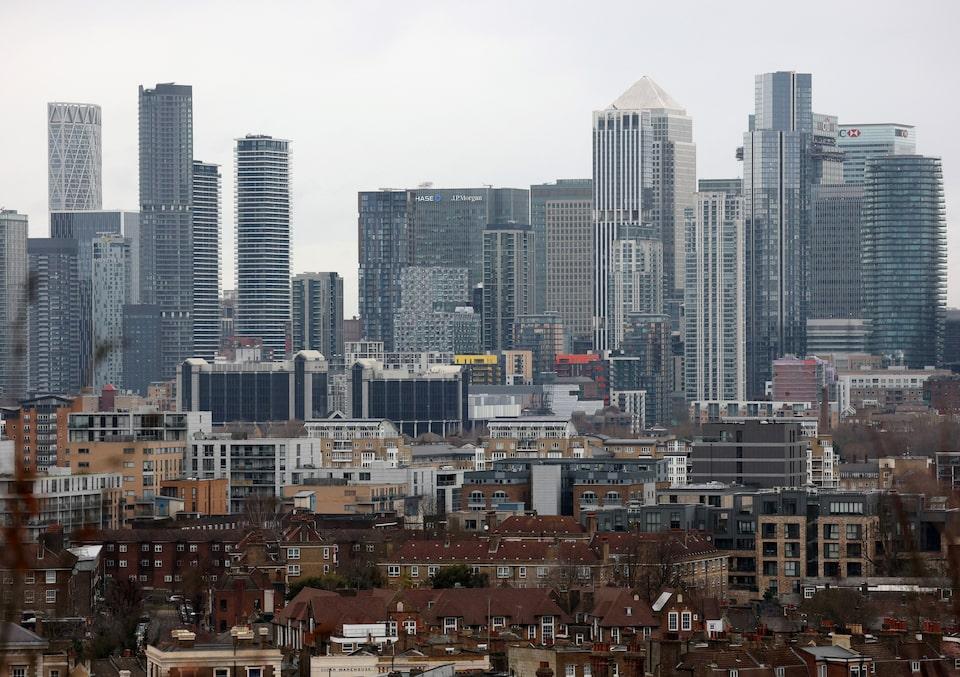
LONDON, Jan 15 (Reuters) - Britain's housing market showed some signs of turning a corner last month as uncertainty about finance minister Rachel Reeves' tax plans lifted and borrowing costs looked set to come down further, a survey showed on Thursday. The Royal Institution of Chartered Surveyors said activity remained weak in December but expectations for sales volumes and prices in 2026 rose. Sign up here. "The UK residential market remains in a prolonged soft patch, with December's survey recording a sixth consecutive month of negative momentum in buyer enquiries. That said, there are tentative signs of a shift in sentiment," RICS' head of market research and analysis, Tarrant Parsons, said. Sales expectations for the next three months hit their highest since October 2024 at +22 and optimism about the 12 months ahead more than doubled to +34, the highest since the end of 2024. RICS linked the improvement in confidence among surveyors to the prospect of further cuts to Bank of England interest rates and to the end of months of speculation about possible tax rises in Reeves' budget on November 26 - when she announced 26 billion pounds ($35 billion) in tax hikes but deferred most of them. The RICS report also showed: ($1 = 0.7437 pounds) https://www.reuters.com/world/uk/uk-surveyors-turn-more-upbeat-about-housing-market-outlook-2026-01-15/
2026-01-14 23:56
WASHINGTON, Jan 14 (Reuters) - Iran temporarily closed its airspace to all flights except international ones to and from Iran with official permission at 5:15 p.m. ET (2215 GMT) on Wednesday, according to a notice posted on the Federal Aviation Administration's website. The prohibition is set to last for more than two hours until 7:30 p.m. ET, or 0030 GMT, but could be extended, the notice said. Sign up here. The United States was withdrawing some personnel from bases in the Middle East, a U.S. official said on Wednesday, after a senior Iranian official said Tehran had warned neighbours it would hit American bases if Washington strikes. Missile and drone barrages in a growing number of conflict zones represent a high risk to airline traffic. India's largest airline, IndiGo (INGL.NS) , opens new tab said some of its international flights would be impacted by Iran's sudden airspace closure. A flight by Russia's Aeroflot (AFLT.MM) , opens new tab bound for Tehran returned to Moscow after the closure, according to tracking data from Flightradar24. Earlier on Wednesday, Germany issued a new directive cautioning the country's airlines from entering Iranian airspace, shortly after Lufthansa (LHAG.DE) , opens new tab rejigged its flight operations across the Middle East amid escalating tensions in the region. The United States already prohibits all U.S. commercial flights from overflying Iran and there are no direct flights between the countries. Airline operators like flydubai and Turkish Airlines have canceled multiple flights to Iran in the past week. "Several airlines have already reduced or suspended services, and most carriers are avoiding Iranian airspace," said Safe Airspace, a website run by OPSGROUP, a membership-based organisation that shares flight risk information. "The situation may signal further security or military activity, including the risk of missile launches or heightened air defence, increasing the risk of misidentification of civil traffic." Lufthansa said on Wednesday that it would bypass Iranian and Iraqi airspace until further notice while it would only operate day flights to Tel Aviv and Amman from Wednesday until Monday next week so that crew would not have to stay overnight. Some flights could also be canceled as a result of these actions, it added in a statement. Italian carrier ITA Airways, in which Lufthansa Group is now a major shareholder, said that it would similarly suspend night flights to Tel Aviv until Tuesday next week. https://www.reuters.com/world/middle-east/germany-cautions-flights-over-iran-lufthansa-rejigs-middle-east-operations-2026-01-14/

2026-01-14 23:46
Trump defers decision on critical minerals tariffs Officials ordered to negotiate for overseas minerals supply Supply negotiations should incorporate price floor, Trump says Trump's move defers to report from Commerce Secretary WASHINGTON, Jan 14 (Reuters) - U.S. President Donald Trump said on Wednesday he had opted for now against imposing tariffs on rare earths, lithium and other critical minerals, and instead ordered his administration to seek supplies from international trading partners. The move defers a decision on duties that could further roil the U.S. economy, especially while the Supreme Court is deliberating the legality of Trump's tariffs. By acknowledging the country is far from being self-reliant for its critical minerals needs, though, it may rankle the domestic mining sector. Sign up here. Trump ordered U.S. Trade Representative Jamieson Greer and Commerce Secretary Howard Lutnick to "enter into negotiations with trading partners to adjust the imports of (critical minerals) so that such imports will not threaten to impair the national security of the United States." The negotiations, Trump said, should promote the use of price floors for critical minerals, a step long sought by Western miners and policymakers. G7 finance ministers and those from other major economies like Australia met in Washington earlier this week to discuss such a step, for example. If Greer and Lutnick's negotiations are not successful, Trump said he would consider setting minimum import prices for critical minerals or "may take other measures," without elaborating. Trump is essentially agreeing to a recommendation by Lutnick, who last April launched a national security review under Section 232 of the Trade Expansion Act of 1962 and in October submitted his findings to the president. Lutnick's report found that the U.S. is "too reliant on foreign sources" of critical minerals, lacks access to a secure supply chain, and is experiencing "unsustainable price volatility" for the materials, with all those factors fueling a "significant national security vulnerability that could be exploited by foreign actors." It was not immediately clear why Trump waited until this month to act on Lutnick's report. China is a top global producer of more than half of the 54 minerals considered critical by the U.S. Geological Survey, for example, and has been curtailing exports in the past year amid its trade dispute with Washington. The country is also a major refiner of critical minerals. "Mining a mineral domestically does not safeguard the national security of the United States if the United States remains dependent on a foreign country for the processing of that mineral," Trump said in the order , opens new tab. https://www.reuters.com/world/china/trump-says-no-critical-minerals-tariffs-now-will-seek-overseas-supplies-2026-01-14/
2026-01-14 23:43
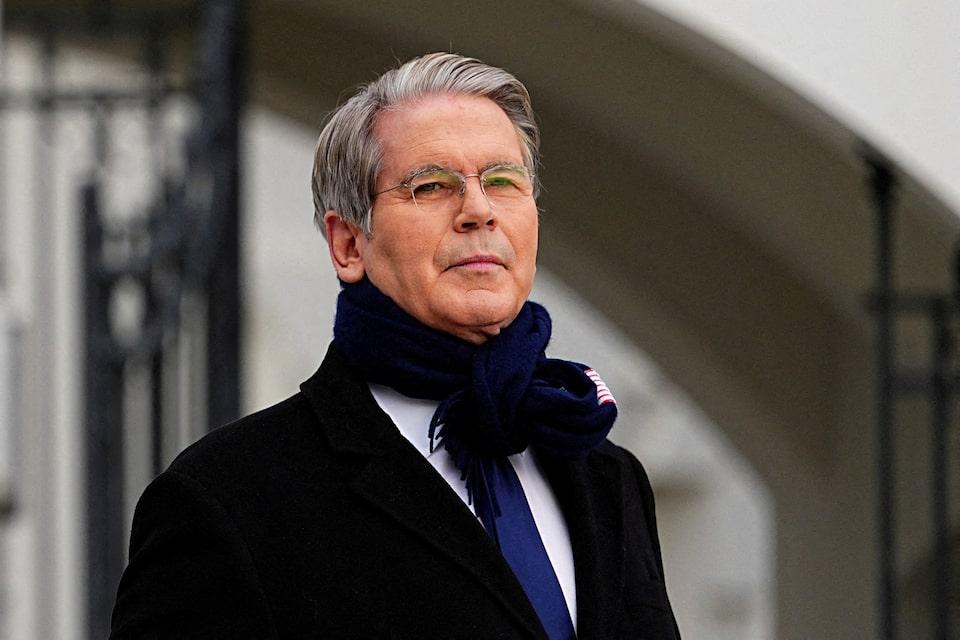
WASHINGTON, Jan 14 (Reuters) - U.S. Treasury Secretary Scott Bessent met Japanese Finance Minister Satsuki Katayama on Monday and "emphasized the need for sound formulation and communication of monetary policy," the U.S. Treasury Department said in a statement on Wednesday. "Noting the inherent undesirability of excess exchange rate volatility, the Secretary also emphasized the need for sound formulation and communication of monetary policy," the department said about the meeting. Sign up here. The remarks came as markets brace for the chance of Japan intervening in the currency to reverse the downtrend in the yen, which has fallen to an 18-month low earlier this week. The yen rebounded on Wednesday after Katayama issued another verbal warning, saying officials would take "appropriate action against excessive currency moves without excluding any options." The yen strengthened 0.43% against the greenback to 158.46 per dollar on Wednesday. It earlier had reached 159.45, the weakest since July 2024. After her meeting with Bessent in Washington, Katayama had said the two had shared concerns over what she called the yen's recent "one-sided depreciation." Bessent, for his part, has repeatedly signalled that the yen's weakness can be better addressed through faster interest rate hikes by the Bank of Japan (BOJ). In October, he urged the government of Prime Minister Sanae Takaichi, an advocate of loose monetary policy, to allow the BOJ to raise rates and avoid excessive yen declines. The BOJ raised interest rates to 0.75% from 0.5% in December on the view Japan was making progress in achieving its 2% inflation target. Critics have said the slow pace of rate increases has been behind the weak yen, which gives exports a boost but raises households' cost of living through higher import prices. https://www.reuters.com/world/asia-pacific/bessent-urges-sound-boj-policy-address-excess-fx-volatility-2026-01-14/