2025-04-14 06:42
April 14 (Reuters) - UK-based gas producer Energean (ENOG.L) , opens new tab said on Monday that its Israeli subsidiary has signed a gas sale and purchase contract with Kesem Energy to supply fuel for a new power plant in Israel. Under the agreement, which represents over $2 billion in revenue, Energean Israel will supply Kesem's new plant with about 12.5 billion cubic meters of gas over the 17-year lifespan of the contract. Sign up here. Energean, which primarily operates in Israel, has been benefiting from increased gas demand in the country due to rising electricity needs and coal phase-out plans. The company aims to double its production in the coming years, primarily by developing new prospects in Israel. https://www.reuters.com/business/energy/uks-energean-inks-new-gas-supply-contract-israel-2025-04-14/

2025-04-14 06:31
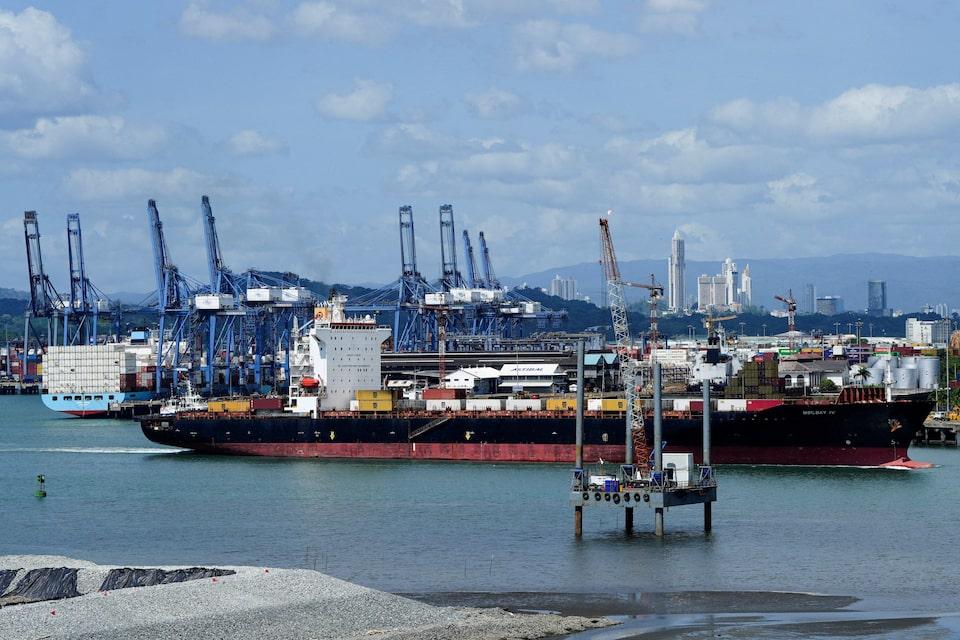
April 14 (Reuters) - Italian billionaire Gianluigi Aponte's family-run business is emerging as the lead investor of a group seeking to buy 43 ports from conglomerate CK Hutchison (0001.HK) , opens new tab, Bloomberg News reported on Monday, citing people familiar with the matter. The Aponte family's Terminal Investment Ltd (TIL), which manages a diverse portfolio of container terminals according to its website, will be the sole owner of all the ports once the deal is completed, except for two in Panama that would be controlled by BlackRock Inc, Bloomberg reported. Sign up here. BlackRock's Global Infrastructure Partners will own 51% of the two ports near the Panama Canal, while TIL will own the rest. CK Hutchison declined to comment. The port facilities at the strategic waterway account for about 4% of the total value of the deal. CK Hutchison's founder tycoon, Li Ka-shing, is expected to make more than $19 billion in cash, Bloomberg said, citing a person aware of the details. CK Hutchison has faced an increasing barrage of criticism from China on its decision to sell most of its $22.8 billion port business to BlackRock. The deal has become highly politicised as the conglomerate is thrust into the crosshairs of an escalating China-U.S. trade war. Shares of CK Hutchison extended gains to 3.1% after the report, versus a 2.1% rise in the main Hang Seng Index (.HSI) , opens new tab https://www.reuters.com/markets/deals/italian-tycoon-emerges-lead-investor-ck-hutchison-ports-bloomberg-news-reports-2025-04-14/
2025-04-14 06:30
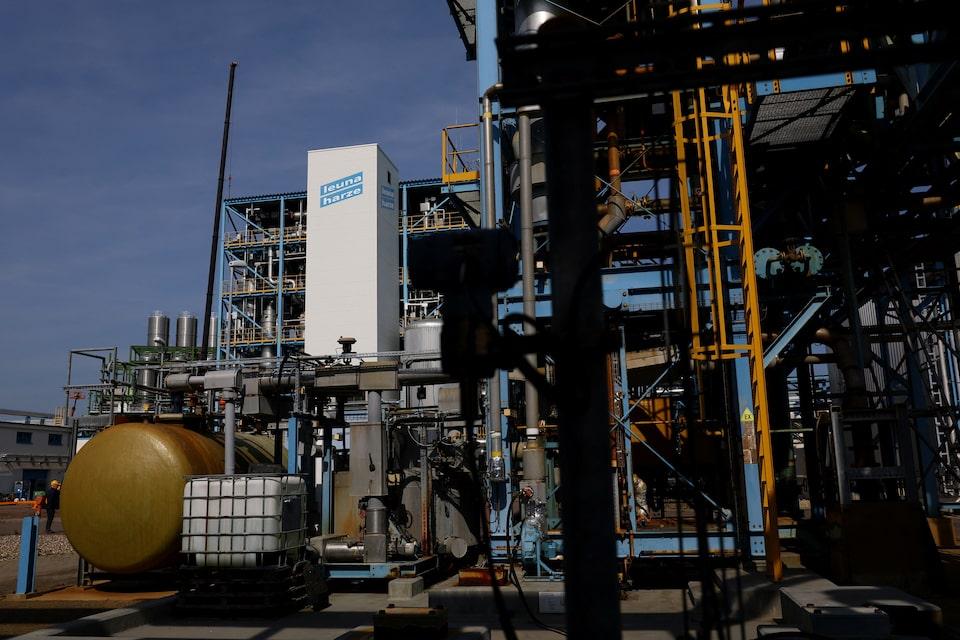
French, German firms open to modest return of Gazprom's gas Trump has made US LNG a politically loaded commodity EU aims to quit Russian gas by 2027, has no detailed plan on how Arbitrations against Gazprom complicate supply resumption PARIS/BERLIN, April 14 (Reuters) - More than three years after Russia's invasion of Ukraine, Europe's energy security is fragile. U.S. liquefied natural gas helped to plug the Russian supply gap in Europe during the 2022-2023 energy crisis. Sign up here. But now that President Donald Trump has rocked relationships with Europe established after World War Two, and turned to energy as a bargaining chip in trade negotiations, businesses are wary that reliance on the United States has become another vulnerability. Against this backdrop, executives at major EU firms have begun to say what would have been unthinkable a year ago: that importing some Russian gas, including from Russian state giant Gazprom (GAZP.MM) , opens new tab, could be a good idea. That would require another major policy shift given that Russia’s invasion of Ukraine in 2022 made the European Union pledge to end Russian energy imports by 2027. Europe has limited options. Talks with LNG giant Qatar for more gas have stalled, and while the deployment of renewables has accelerated, the rate is not fast enough to allow the EU to feel secure. "If there is a reasonable peace in Ukraine, we could go back to flows of 60 billion cubic metres, maybe 70, annually, including LNG," Didier Holleaux, executive vice-president at France's Engie, told Reuters in an interview. The French state partly owns Engie, which used to be among the biggest buyers of Gazprom's gas. Holleaux said Russia could supply around 20-25% of EU needs, down from 40% before the war. The head of French oil major TotalEnergies (TTEF.PA) , opens new tab, Patrick Pouyanne, has warned Europe against over-relying on U.S. gas. "We need to diversify, many routes, not over-rely on one or two," Pouyanne told Reuters. Total is a large exporter of U.S. LNG and also sells Russian LNG from private firm Novatek (NVTK.MM) , opens new tab. "Europe will never go back to importing 150 billion cubic meters from Russia like before the war ... but I would bet maybe 70 bcm," Pouyanne added. GERMAN PIVOT France, which produces large amounts of nuclear power, already has one of the most diversified energy supplies in Europe. Germany relied heavily on cheap Russian gas to help drive its manufacturing sector until the Ukraine war and has fewer options. In Leuna Chemical Park, one of Germany’s biggest chemical clusters hosting plants of Dow Chemical and Shell (SHEL.L) , opens new tab among others, some makers say Russian gas should return quickly. Russia used to cover 60% of local needs, mainly through the Nord Stream pipeline, which was blown up in 2022. "We are in a severe crisis and can’t wait," said Christof Guenther, managing director of InfraLeuna, the operator of the park. He said the German chemical industry has cut jobs for five quarters in a row, something not seen for decades. "Reopening pipelines would reduce prices more than any current subsidy programmes," he said. "It's a taboo topic," Guenther added, saying many colleagues agreed on the need to go back to Russian gas. Almost a third of Germans voted for Russia-friendly parties in the February federal election. In the state of Mecklenburg-Vorpommern, the east German region where the Nord Stream pipeline comes ashore after running from Russia under the Baltic Sea, 49% of Germans want a return to Russian gas supplies, a poll carried out by the Forsa institute found. "We need Russian gas, we need cheap energy - no matter where it comes from,” said Klaus Paur, managing director of Leuna-Harze, a mid-sized petrochemical maker at the Leuna Park. "We need Nord Stream 2 because we have to keep energy costs in check." The industry wants the federal government to find cheap energy, said Daniel Keller, economy minister for the state of Brandenburg - home to the Schwedt refinery, co-owned by Russian oil firm Rosneft but held in German government trusteeship. "We can imagine resuming the intake or transport of Russian oil after peace is established in Ukraine," Keller said. TRUMP FACTOR U.S. gas covered 16.7% of EU imports last year - behind Norway with 33.6% and Russia with 18.8%. Russia's share will drop below 10% this year after Ukraine shut pipelines. The remaining flows are mainly LNG from Novatek. The EU is preparing to buy more U.S. LNG as Trump wants Europe to lower its trade surplus with the United States. "For sure, we will need more LNG," EU trade commissioner Maros Sefcovic said last week. The tariff war has strengthened Europe’s concern about reliance on U.S. gas, said Tatiana Mitrova, a research fellow at Columbia University's Centre on Global Energy Policy. "It's becoming increasingly difficult to regard U.S. LNG as a neutral commodity: at a certain point it might become a geopolitical tool," Mitrova added. If the trade war escalates, there is a small risk the United States could hold back on LNG exports, said Arne Lohmann Rasmussen, chief analyst at Global Risk Management. A senior EU diplomat, speaking on condition of anonymity, agreed, saying no one could rule out "that this leverage is used". In the event U.S. domestic gas prices surge because of rising industrial and AI demand, the U.S. could curtail exports to all markets, Warren Patterson, head of commodities strategy at ING, said. In 2022, the EU set itself a non-binding goal to end Russian gas imports by 2027, but has twice delayed publishing plans on how. An EU Commission spokesperson declined to comment on the companies' comments. ARBITRATION Several EU firms have opened arbitration cases against Gazprom for non-delivery of gas following the Ukraine war. Courts awarded Germany’s Uniper and Austria’s OMV 14 billion euros and 230 million euros respectively. Germany’s RWE has claimed 2 billion euros, while Engie and other firms have not disclosed their claim. Engie's Holleaux said Kyiv could allow Russia to send gas via Ukraine to meet arbitration repayments as a starting point of resuming contractual relationships with Gazprom. "You (Gazprom) want to come back to the market? Very good, but we won’t sign a new contract if you don’t pay the award,” Holleaux said. The return of Russian gas worries Maxim Timchenko, the chief of DTEK, Ukraine’s private gas company, which hopes to import U.S. LNG into Ukraine’s storage and export it to Europe. "It’s hard to comment, being Ukrainian, but my hope is that European politicians learned their lessons dealing with Russia,” Timchenko said. https://www.reuters.com/business/energy/back-russian-gas-trump-wary-eu-has-energy-security-dilemma-2025-04-14/
2025-04-14 06:04
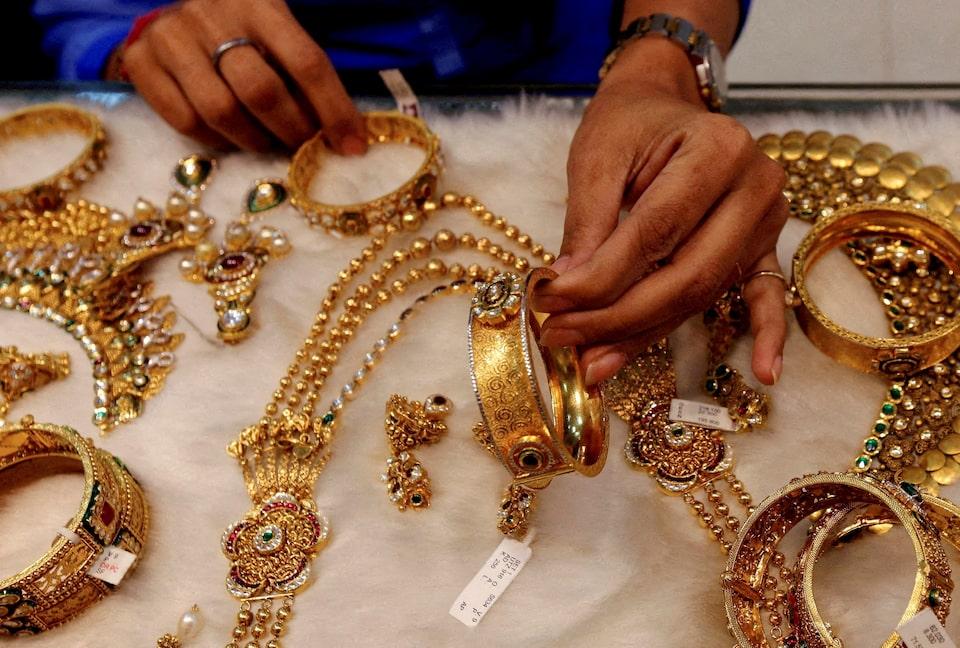
Gold hits record high of $3,245.42 Goldman Sachs raises end-2025 gold price forecast to $3,700/oz U.S. dollar hits 3-year low April 14 (Reuters) - Gold prices fell from a record high on Monday after U.S. President Donald Trump excluded smartphones and computers from his reciprocal tariffs, although uncertainty around tariff plans kept prices above the significant $3,200 per ounce level. Spot gold fell 0.4% to $3,223.12 an ounce, as of 1123 GMT. Bullion hit a record high of $3,245.42 earlier in the day. Sign up here. U.S. gold futures fell 0.2% to $3,238.20. "Market sentiment has improved a bit this morning after President Trump excluded electronics and smartphones from US tariffs. This has partly caused a dip in gold prices, likely due to profit-taking," said Zain Vawda, an analyst at MarketPulse by OANDA. Gold is traditionally viewed as a hedge against geopolitical and economic uncertainty. The White House on Friday announced exclusions of smart phones, computers and other electronics from steep reciprocal tariffs on China. On Sunday, however, Trump said he would be announcing the tariff rate on imported semiconductors over the week. Any drop in gold prices is likely to be temporary, said Vawda. "A US-China deal seems unlikely anytime soon, and global trade tariffs continue to pose challenges, keeping demand for safe-haven assets like gold strong. Additionally, the weakening US dollar adds further support to gold's appeal," Vawda added. Goldman Sachs remained most bullish among major banks on gold, raising its year-end forecast to $3,700, citing stronger-than-expected central bank demand and heightened recession risks impacting ETF inflows. Gold prices could potentially hit $4,500 by year-end in extreme tail scenarios where the market's focus on the risks of Federal Reserve subordination or changes in U.S. reserve policy increases, analysts at Goldman Sachs said. The U.S. dollar (.DXY) , opens new tab hit its lowest level in three-years against its peers, making greenback-priced bullion cheaper for overseas buyers. Spot silver rose 0.3% to $32.35 an ounce, while platinum added 0.9% to $951.46. Palladium gained 1.7% to $931.43. https://www.reuters.com/markets/commodities/gold-prices-ease-record-highs-trump-grants-tariff-exemptions-2025-04-14/
2025-04-14 06:00
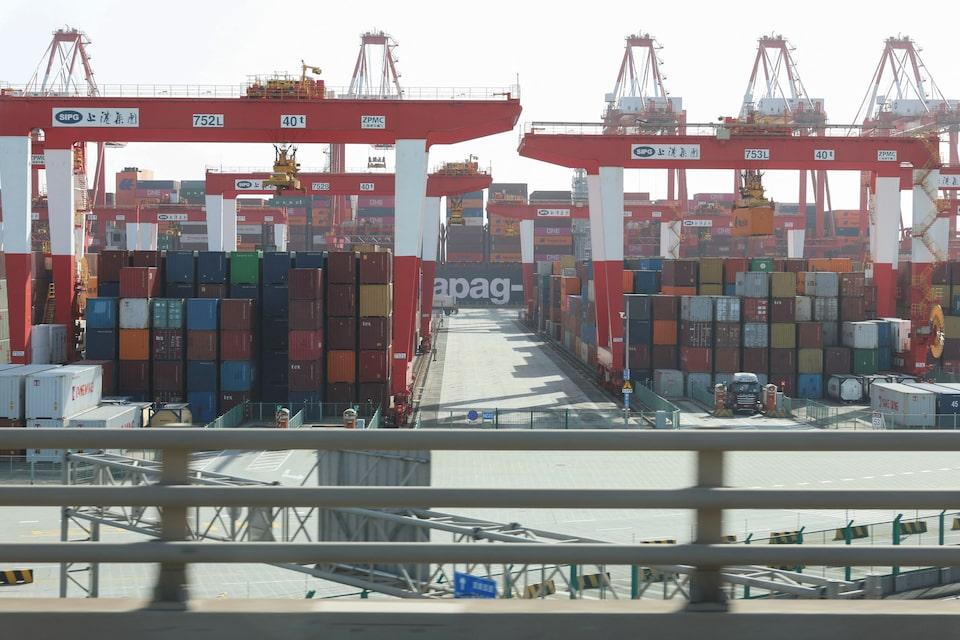
Exports up better-than-expected 12.4% in March on pre-tariff rush U.S. tariffs on China reach 145%, Beijing retaliates Escalating trade row threatens China and global growth China vows to fight tariffs; analyst expect more stimulus measures China's Q1 trade surplus with U.S. rises to $$76.6 billion BEIJING, April 14 (Reuters) - China's exports rose sharply in March after factories rushed out shipments before the latest U.S. tariffs took effect, but an escalating Sino-U.S. trade war has darkened the outlook for factories and growth in the world's second-biggest economy. U.S. President Donald Trump has ratcheted up tariffs on Chinese goods to hefty levels that many economists say will profoundly impact global trade flows and business investment. Sign up here. Exports rose 12.4% year-on-year, a five-month high, handily beating 4.4% growth expected in a Reuters poll of economists. Exports grew 2.3% in January-February. Trade uncertainties have rocked financial markets this month after Trump announced sweeping tariffs on many countries on April 2. Trump unexpectedly paused the higher duties on a dozen economies days later, but slapped even stiffer levies on China that Beijing has dismissed as "a joke". Economists warn the March export figures will be eclipsed by a fast deteriorating outlook. "Export growth accelerated in March, as manufacturers rushed to ship goods to the U.S. ahead of 'Liberation Day'," said Julian Evans-Pritchard, head of China economics at Capital Economics, in a note to clients. "But shipments are set to drop back over the coming months and quarters," he added. "We think it could be years before Chinese exports regain current levels." Trump levied 10% tariffs across all Chinese imports into the United States, effective on February 4, and followed that up with another 10% in March, accusing Beijing of not doing enough to stem the flow of fentanyl into the United States. Washington's fresh round of tariffs lift duties on China to an eye-watering 145%, prompting Beijing to jack up levies on U.S. goods by 125% in an intensifying trade war between the world's two biggest economies. Monday data also highlighted a soft underbelly in domestic demand in China, meaning policymakers will have their work cut out in trying to guard against any sharp trade downturn. Inbound shipments fell 4.3%, compared with a 2.0% decrease forecast in a Reuters poll, and an unexpectedly steep contraction of 8.4% at the start of the year. Markets in China were up modestly, but much of the activity was linked to mixed messages from Trump over the weekend regarding exemptions on smartphones and other electronics. China's blue-chip CSI300 Index (.CSI300) , opens new tab climbed 0.3%. TRADE IMBALANCE? China's March trade surplus was $102.64 billion, down slightly from $104.8 billion in December, the most recent comparable reading. More importantly, China's trade surplus with the United States in the first quarter came in at $76.6 billion, up from $70.2 billion a year earlier. This will likely keep the production powerhouse in Trump's sights given that improving the trade gap is at the top of his agenda. Commodities data showed while Chinese imports of crude oil rose in March, those of soybeans, coal, iron ore and unwrought copper dropped. Imports from the United States may have already been affected by the trade spat. China's total soybean imports tumbled by 36.8% in March year-on-year. "China seems to stop its farming imports from the U.S. altogether already," said Xu Tianchen, senior economist at the Economist Intelligence Unit. "Its soybean imports tumbled by around half in March during a high season of China-U.S. farming trade, perhaps because state-owned importers already received the guidance to stop imports," he said. FIGHT TO THE END Beijing has vowed to fight U.S tariffs to the end and protect the economy from "external shocks", with markets widely expecting authorities to roll out further fiscal and monetary stimulus measures in coming months to underpin growth. Exports have been a lone bright spot in China's economy, which has struggled to mount a solid post-COVID recovery as confidence has remained low in the face of a protracted property crisis and deepening deflationary pressures. President Xi Jinping, in his first public comments on the tariffs, told Spanish Prime Minister Pedro Sanchez during a meeting in Beijing on Friday that China and the EU should "jointly oppose unilateral acts of bullying", state-run Xinhua news agency reported. Xi kicked off a three-nation tour of Southeast Asia on Monday, aiming to consolidate ties with some of China's closest neighbours amid the tariff disruptions. The World Trade Organization has warned the high-stakes Sino-U.S. trade row could cut the shipment of goods between two economies by as much as 80% and severely hurt global growth. Goldman Sachs last week lowered its forecasts for China's 2025 GDP growth to 4% from 4.5%, citing the effects of tariffs. Citi cut its forecast to 4.2% from 4.7% two days earlier. Their revised forecasts are well below the government's growth target of "around 5%." China's export industry is facing a complex and severe external environment, customs official Lv Daliang said on Monday. Mounting trade pressure and a dwindling U.S. consumer base have prompted Chinese exporters to assess domestic opportunities. "The data showed that overall exports remained quite resilient, but that easily replaceable and price-sensitive categories are already taking a hit," said Lynn Song, Greater China chief economist at ING. "With a staggering 145% tariffs coming into effect, it's likely that next month's data will tell a dramatically different story." https://www.reuters.com/world/china/chinas-march-exports-beat-expectations-with-124-gain-imports-fall-2025-04-14/
2025-04-14 05:32
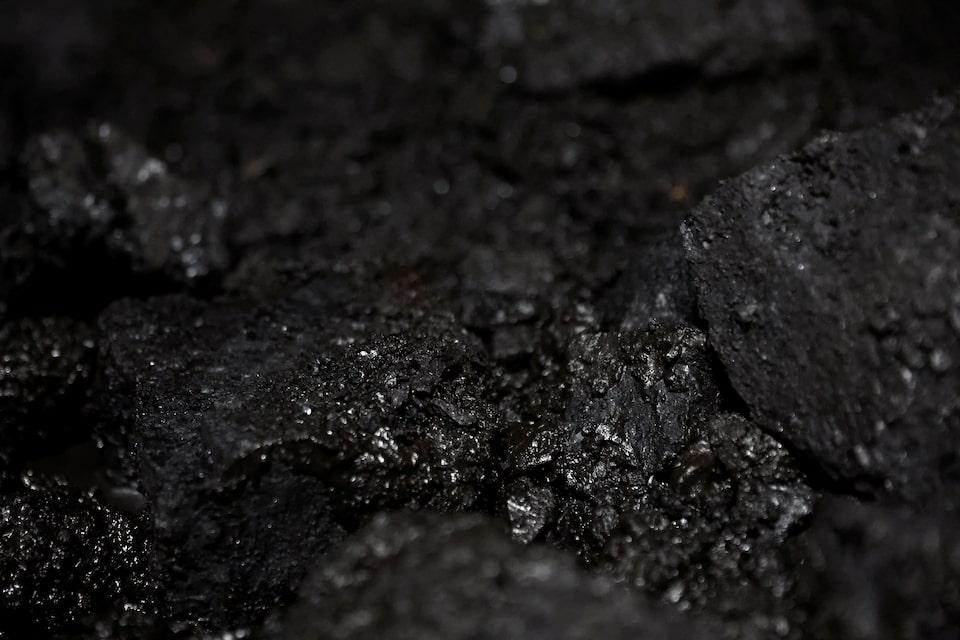
China's coal imports fall 6% in March due to high inventories and weak demand China's domestic coal prices at 4-year lows, making imported coal less cost effective Coal import decline likely to continue due in part to squeezed profits BEIJING, April 14 (Reuters) - China's coal imports fell 6% in March, hurt by high inventories at ports and weak domestic demand that have pushed spot prices down to four-year lows. Imports for the month were 38.73 million metric tons, down from 41.38 million tons in March 2024, according to the General Administration of Customs. That was the first monthly year-on-year decline for coal imports since March 2022, outside of the January-February period, when year-on-year comparisons are affected by the lunar new year holiday. Sign up here. China's domestic price for medium-grade coal with a heat value of 5,500 kilocalories per kilogram was 676 yuan ($92.70) per metric ton on April 11, the lowest since March 2021, according to the Bohai-Rim Bay thermal coal price index. Miners in key supplier Indonesia, who face an upcoming hike in royalties and rising operational costs, have not lowered prices in line with the declines in China, pushing Chinese power plants to rely more on domestic supply. China's coal imports in January-February had risen to a record high for the period of 76.12 million metric tons, up 2% on the year. The drop for March was expected and declines are likely to continue for some months due to narrowing import profits and high port inventories. China publishes data for the first two months of the year in a combined release to smooth out the impact of the Lunar New Year, which falls in either of those two months. For the first three months of 2025, coal imports were at 114.85 million metric tons, down 0.9% from 115.89 million tons a year earlier, the data showed. https://www.reuters.com/markets/commodities/chinas-march-coal-imports-sink-6-domestic-prices-reach-four-year-lows-2025-04-14/