2025-04-14 00:17
Olam to invest $500 million of equity into Olam Food Ingredients Company will allocate $2 billion to repay debts Implications of current tariff war quite minimal, CEO says Olam shares jump 7%, outperforming broader domestic index April 14 (Reuters) - Singapore-based food and agri-business conglomerate Olam Group (OLAG.SI) , opens new tab said on Monday it would invest $500 million in its food ingredients unit and sell its other businesses and assets over time. The commodity trader, which counts state investment company Temasek as its largest shareholder, also said it plans to allocate $2 billion to repay the debts of its remaining businesses and make them self-sustaining, before selling them. Sign up here. Olam said the plan took into consideration the need to strengthen its balance sheet and the resilience of its operating groups "in the face of unprecedented macroeconomic uncertainties including tariffs". Commodities ranging from coffee to cocoa have experienced volatile prices alongside global markets amid the economic uncertainty triggered by U.S. President Donald Trump's tariffs and policy orders. "Agricultural commodities will be subject to tariffs between the countries concerned, and particularly between the U.S and China," Olam's co-founder and group CEO Sunny Verghese said in a briefing on Monday. "But we believe that given the broad nature of production from multiple countries and the broad nature of consumption or demand also emanating from multiple countries, the impact on this, as we have seen in Trump 1.0 is quite minimal during this period." Olam will use the estimated $2.58 billion it receives from the sale of its stake in Olam Agri (IPO-OLAA.SI) , opens new tab to Saudi Arabia's agricultural and livestock investment firm SALIC, along with the proceeds from future divestments, for the restructuring. The equity investment in Olam Food Ingredients will allow the company to explore options including a potential concurrent listing in Europe and in Singapore, it said. Verghese said the timing of the listing is subject to the performance of Olam Food Ingredients and market conditions including the geopolitical situation. Olam also plans to resume share buybacks and progressively distribute proceeds from the sale of its other assets to shareholders via special dividends. In 2022, the company delayed a planned London listing for the food ingredients unit, citing market volatility as a result of the war in Ukraine. Its remaining businesses include startups incubator Nupo Ventures, technology and business services firm Mindsprint and Olam Global Holdco, which owns the group's non-core assets such as Olam Palm Gabon and Packaged Foods, its website showed. Shares of Olam were up 7% at 91 Singapore cents per share on Monday midday, outperforming the 1.5% rise in the benchmark index (.STI) , opens new tab. https://www.reuters.com/markets/commodities/olam-focus-food-ingredients-business-sell-rest-2025-04-14/

2025-04-13 22:01
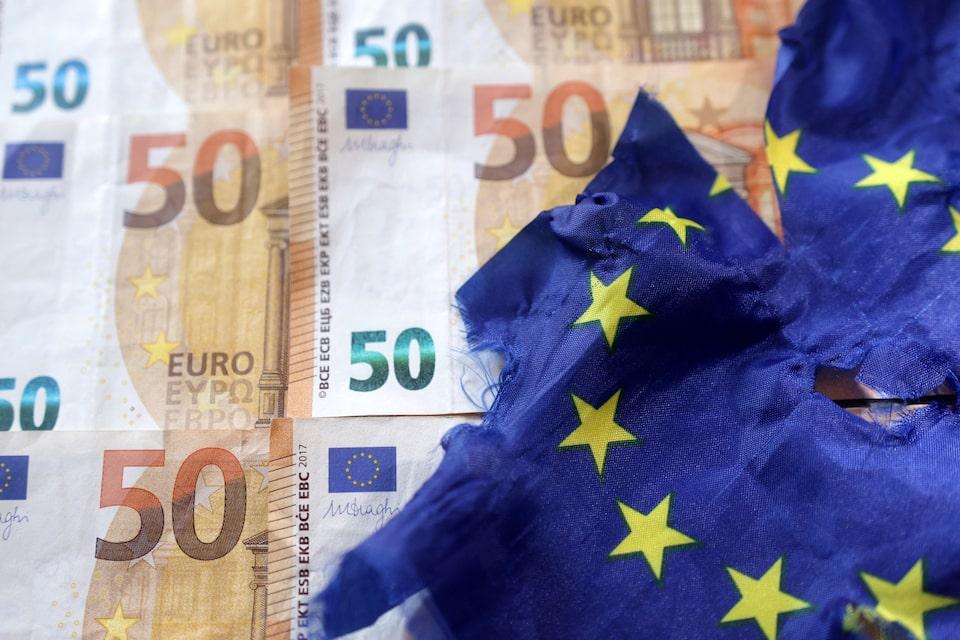
LONDON, April 14 (Reuters) - The last thing you want in a global trade war is a rocketing currency. So the soaring euro's rise may not yet be "brutal", but it may still depress the inflation outlook enough to give the European Central Bank space to ease big. One of the most used headlines in European central banking research notes last week was "Clear Cut". There is little doubt that the ECB will now lower its main borrowing rate again on Thursday, and markets are fully priced for another quarter-percentage-point cut to 2.25%. Sign up here. But these are febrile times. And trade wars can quickly morph into currency wars. Speculation about the ECB possibly cutting more than 25 basis points is bound to circulate. It could even consider halting the rundown of bonds from its balance sheet, as the Federal Reserve has effectively done recently. Last week's precipitous dollar slide on fears of capital flight from the U.S. and the euro's resulting 4% surge against the greenback puts a different gloss on ECB deliberations. Even assuming Germany's recently announced fiscal splurge kicks in next year, a still struggling euro zone will not welcome an over-valued euro, especially not when it's facing a U.S. tariff sweep, trade-hampered growth and the risk of intensified competition from Chinese imports. While the euro hit three-year highs on Friday, other more important measures of the exchange rate are more extreme. The ECB's nominal euro exchange rate index against 41 trading partners is at an all-time high. And inflation-adjusted measures - the so-called real effective exchange rate - surged to their highest levels in 10 years. What the euro may be about to experience is the opposite of what many believe happened to the dollar over the past decade, namely that the greenback's over-valuation was driven primarily by investment flows rather than trade competitiveness. And while the ECB's primary focus is on domestic inflation and prices, a shock revaluation of the euro would increase the risk that it starts to undershoot rather than overshoot its 2% inflation goal going forward. The ECB has proven time and again over the past 15 years that its price stability mandate applies as much to warding off deflationary forces as reining in excessive price gains. Fiscal policy is now playing its part after a long hiatus but will only hit with a long lag. The ECB has more immediate tools at its disposal. ATTENTIVE AND READY Addressing the risk of rising financial stress, ECB President Christine Lagarde on Friday said volatile markets were functioning in an orderly fashion but that the central bank was watching closely for any dislocations. She also said the impact of U.S. tariff rises could halve euro zone growth this year from an already meagre 0.9% forecast and added, pointedly, that the ECB was "attentive" to euro exchange rate movements. "The European Central Bank is monitoring and is always ready to use the instruments that it has available," Lagarde told reporters in Warsaw. The ECB "has come up in the past with the adequate instruments and tools that were necessary in order to procure price stability, and of course financial stability, because one doesn't go without the other." In this nervy environment, the ECB's own systemic stress indicator remains well below the peaks of recent years, but it has skipped a beat and risen to its highest reading since 2023. The euro foreign exchange component is at its highest since February of that year. The word "attentive" in relation to the euro bears some consideration. It's milder ECB language than Lagarde's predecessor, Jean-Claude Trichet, used 20 years ago when he warned about the euro's "brutal" rise back then, but it indicates that the currency's rapid strengthening is now on the ECB's radar. What seems likely to many is that the ECB's 2.3% inflation forecast for this year will prove too high, barring a significant positive change in the recent trade and financial market developments. For Deutsche Bank ECB watcher Mark Wall, market pricing for this week's meeting may be correct, but the ECB's guidance will likely be more dovish. In particular, it will likely avoid any suggestion of a pause thereafter. "This is a complex and dynamic trade shock - the euro exchange rate is rising fast - and the ECB needs to be nimble," he wrote, underscoring his view of a 1.5% ECB terminal rate. "The ECB assumption that tariffs would boost inflation has been challenged," he said. "Higher FX, lower oil prices and greater risk of trade diversion are skewing the inflation risks to the downside." So things are not "brutal" quite yet. But in a world of central bank preemption, leaning against mounting euro pressure seems wise. The opinions expressed here are those of the author, a columnist for Reuters https://www.reuters.com/markets/currencies/attentive-ecb-can-lean-against-euro-rise-mike-dolan-2025-04-14/
2025-04-13 21:13
NAPERVILLE, Illinois, April 13 (Reuters) - After building immensely bullish bets, speculators in late February rode out Chicago corn’s worst downturn in over a year as the United States prepared to upend global trade. Most of those long positions were dumped during March as economic uncertainties intensified, and corn futures sank to three-month lows by the end of March. Sign up here. But those who stayed the course were rewarded last week. CBOT corn surged 6.5% between Monday and Friday, the most-active contract’s best five-day stretch since late 2023. Washington on April 2 announced steep tariffs on goods from almost every country, though much of that was walked back on Wednesday, with hefty rates remaining against China only. The U.S. Department of Agriculture on Thursday cut domestic corn supplies to a level that suggests nearby corn futures could be undervalued, adding fuel to the ongoing rally. Despite many other commodities notching sizable losses amid the escalating global trade war, CBOT corn had drifted 1.6% higher in the week ended April 8, notching their highest prices in over two weeks. That strength may have aroused suspicion among money managers, who trimmed their net long in CBOT corn futures and options to 53,576 contracts from 56,757 a week earlier, driven by an increase in gross short positions. But corn futures jumped 4.5% in the following three days and most-active CBOT soybeans added 5%, both reaching six-week highs on Friday. This confused some investors as the United States and its top soybean buyer China ratcheted up tariffs against one another throughout the week. However, China rarely does business in the U.S. soy market at this time of year since Brazilian supplies are plentiful. The late-week bean rally was not friendly for money managers, who through April 8 had boosted their net short in CBOT soybean futures and options to a 15-week high of 50,447 contracts. That compared with 29,847 in the prior week. SOY PRODUCTS, WHEAT Short covering was rampant in CBOT soybean oil for a second straight week amid volatility in global vegoil prices. Money managers established a net long of 30,125 soyoil futures and options contracts as of April 8 versus a net short of 5,762 a week earlier. Money managers slightly trimmed what had been a record net short in CBOT soybean meal futures and options, resulting in a net short of 97,630 contracts. CBOT soymeal added 3% over the last three sessions, on Friday topping $300 per short ton for the first time in three weeks. CBOT wheat futures also reached three-week highs on Friday with a settlement price of $5.55-3/4 per bushel. That is nearly identical to the same date a year ago, when funds held a net short of about 87,000 contracts. As of April 8, money managers’ CBOT wheat net short totaled 102,132 futures and options contracts, down about 10,000 on the week. Funds also remain heavily bearish in the other wheat flavors. Their net short in Kansas City wheat futures and options, some 49,834 contracts as of April 8, is their largest since May 2019. Money managers’ net short in Minneapolis wheat futures and options as of April 8 reached a 13-week high of 28,844 contracts, not far off the record. This week, traders will continue to monitor any headlines on U.S. tariffs, but they will also be watching the start of the U.S. growing season. As of Sunday, U.S. corn is about 5% planted, on average. Karen Braun is a market analyst for Reuters. Views expressed above are her own. https://www.reuters.com/markets/commodities/patient-corn-bulls-emerge-victorious-post-tariff-onslaught-braun-2025-04-13/

2025-04-13 19:51
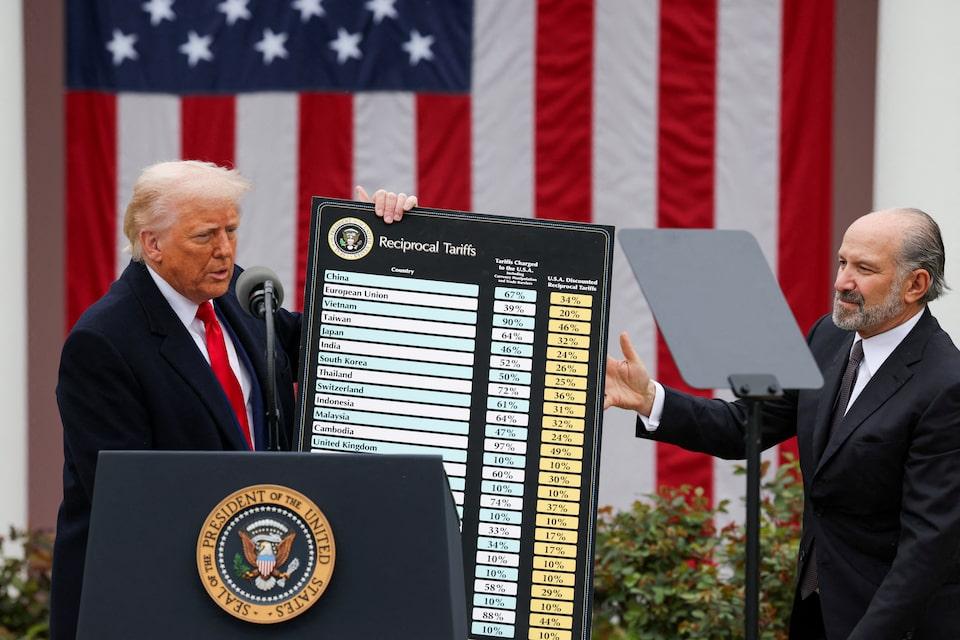
April 13 (Reuters) - U.S. President Donald Trump posted on Truth Social on Sunday that his administration is looking at semiconductors and the electronics supply chain as part of upcoming national security tariff investigations. Sign up here. https://www.reuters.com/markets/us/trump-says-looking-electronics-supply-chain-national-security-tariff-probe-2025-04-13/
2025-04-13 13:24
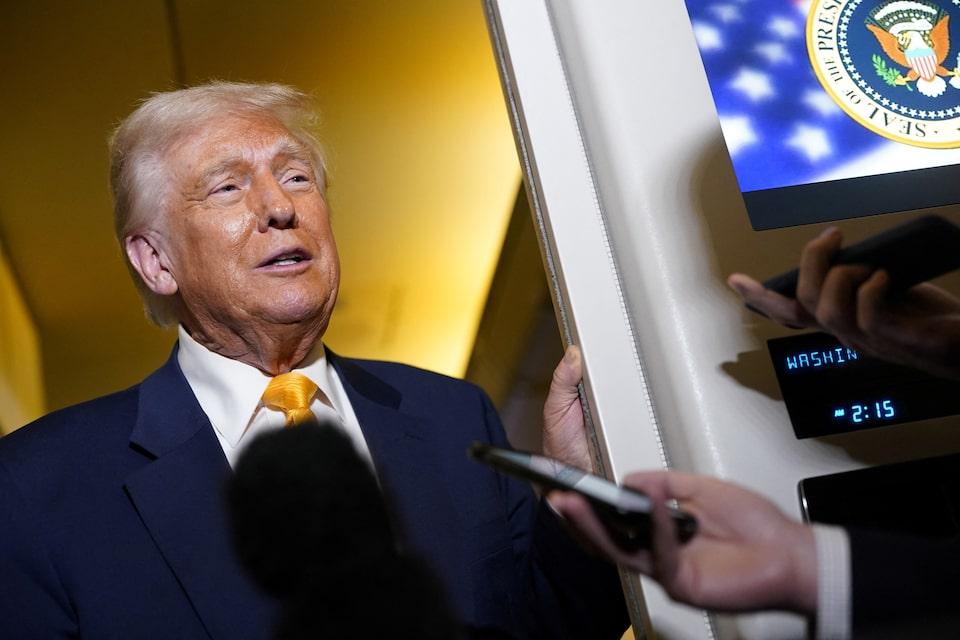
WASHINGTON, April 13 (Reuters) - U.S. Commerce Secretary Howard Lutnick said on Sunday in an interview with ABC's "This Week" that smartphones, computers and some other electronics will come under separate tariffs, along with semiconductors that may be imposed in a month or so. U.S. President Donald Trump's administration late on Friday granted exclusions from steep tariffs on such products, imported largely from China, providing a big break to tech firms like Apple that rely on imported products. Sign up here. https://www.reuters.com/markets/us-commerce-secretary-says-exempted-electronic-products-come-under-separate-2025-04-13/
2025-04-13 12:55
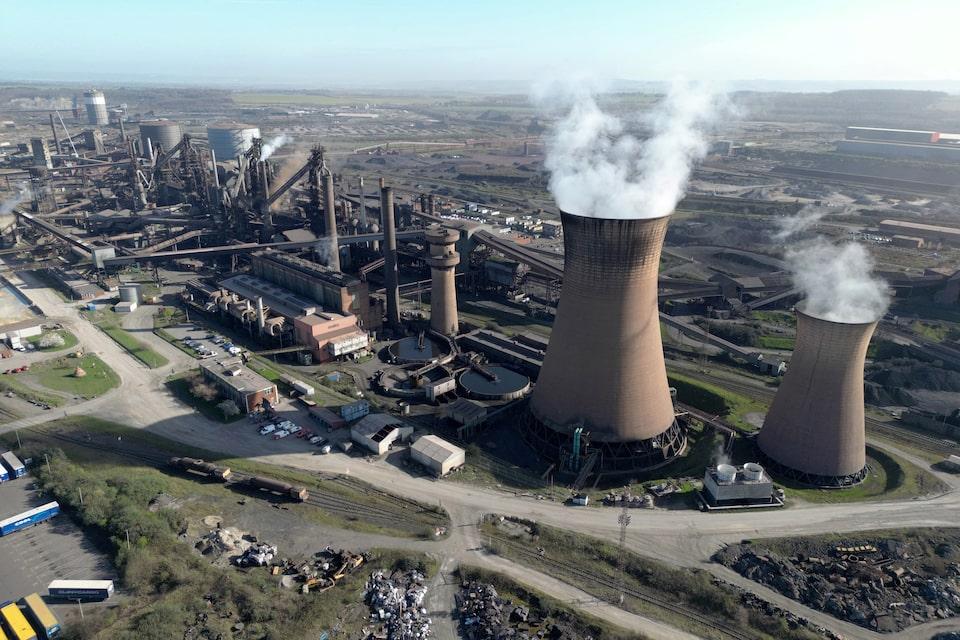
UK business secretary says steel too sensitive for Chinese firms UK passed emergency law control of Chinese-owned British Steel British Steel operates UK's last blast furnaces Room for Chinese investment in autos, life science, agricultural products LONDON, April 13 (Reuters) - China is no longer welcome in Britain's steel sector after the government had to pass emergency legislation on Saturday to ensure control of Chinese-owned British Steel, business minister Jonathan Reynolds said on Sunday. Reynolds said the refusal of China's Jingye Group (600768.SS) , opens new tab to accept a roughly 500 million pound ($654 million) government aid package last week to stop irrevocable damage to blast furnaces left the government with no alternative to intervening directly. Sign up here. British Steel was not immediately available for comment outside office hours. Against a backdrop of global overcapacity in much of the steel industry and challenges from U.S. tariffs, Jingye wanted to import steel from China for further processing in Britain, Reynolds said in an interview with Sky News. But the closure of blast furnaces at the British Steel plant in Scunthorpe - which need to be constantly fuelled and are losing 700,000 pounds a day - would have left Britain as the only major economy unable to produce so-called virgin steel from iron ore, coke and other inputs. Previous British governments had been "naive" to allow Chinese companies to be involved in the steel sector, Reynolds said. Large industrial companies such as Jingye Group had direct links to the Chinese Communist Party and China's government would understand why Jingye's proposal was unacceptable to Britain, he added. "You've got to be clear about what is the sort of sector where we can promote, cooperate; and ones, frankly, where we can't. I wouldn't personally bring a Chinese company into our steel sector. I think steel is a very sensitive area," he said. Jingye bought British Steel from the government in 2020 after the company became insolvent. Since coming to office in 2024, the Labour government has stepped up engagement with China after tensions under previous Conservative governments over human rights, Hong Kong and latterly restrictions on investment over security concerns. Reynolds said he viewed other sectors such as car making, life sciences and agricultural products as less sensitive areas for Chinese investment. British finance minister Rachel Reeves visited Beijing in January and Chinese foreign minister Wang Yi visited London in February to revive talks that were paused for over six years. https://www.reuters.com/world/uk/china-no-longer-welcome-uk-steel-sector-minister-says-2025-04-13/