2025-04-12 19:51
Ukraine seeks solutions for Chornobyl containment vessel repair EBRD involved in analysis Solar facility inaugurated to support renewable energy efforts CHORNOBYL, Ukraine, April 12 (Reuters) - Ukraine is seeking solutions to repair the damage caused by a Russian drone attack to the confinement vessel at the stricken Chornobyl nuclear power plant, a government minister said on Saturday. Minister of Environmental Protection and Natural Resources Svitlana Hrynchuk was speaking outside the decommissioned station during the inauguration of a 0.8-megawatt solar power facility ahead of two conferences due to discuss Chornobyl and other issues related to nuclear power operations. Sign up here. She said Ukraine was working together with experts to determine the best way to restore the proper functioning of the containment vessel, or arch, after the February 14 drone strike. "Unfortunately, after the attack, the arch partially lost its functionality. And now, I think, already in May, we will have the results of the analysis that we are currently conducting ...," Hrynchuk said. Taking part in the analysis, she said, was the European Bank for Reconstruction and Development, scientific institutions and companies involved in installing the arc in 2019 to cover the leaking "sarcophagus" underneath, hurriedly put in place in the weeks following the 1986 Chornobyl disaster. "In a few weeks we will have the first results of this analysis," she said. "We are actively working on this ... We, of course, need to restore the "arch" so that there are no leaks under any circumstances, because ensuring nuclear and radiation safety is the main task." Officials at the plant said the drone attack punched a large hole in the new containment structure's outer cover and exploded inside. Russian Foreign Ministry spokeswoman Maria Zakharova at the time called the incident at Chornobyl "a provocation". The containment vessel was intended to cover the vast, and deteriorating, steel and concrete structure erected after the plant's fourth reactor exploded, sending radioactivity over much of Europe in the world's biggest nuclear accident. The plant lies within the 30-km (18-mile) exclusion zone set up after the accident, with abandoned high-rise apartment buildings and an amusement park still standing nearby. Hrynchuk said the solar power facility was important to maintain the power supply to the disused station and was also a start to plans to promote renewable energy in the area. "We have been saying for many years that the exclusion zone needs to be transformed into a zone of renewal," she said. "And this territory, like no other in Ukraine, is suitable for developing renewable energy projects." https://www.reuters.com/world/europe/ukraine-seeking-solutions-damaged-chernobyl-confinement-vessel-minister-says-2025-04-12/

2025-04-12 16:59
April 12 (Reuters) - South Bow plans to restart the Keystone pipeline by Tuesday, April 15, the company said on Saturday, after it shut the key conduit for the flow of Canadian oil to the U.S. due to an oil spill in North Dakota. South Bow still needs written approval from the U.S. Pipeline and Hazardous Materials Safety Administration (PHMSA) before restarting the pipeline, the company said. Even after it restarts, Keystone will operate at reduced rates in the U.S. to address a corrective action order issued by the PHMSA on Friday, the company said. Sign up here. Keystone will also reduce pressure on the Canadian sections of the pipeline, and it has notified with the Canada Energy Regulator of that, it said. PHMSA earlier on Friday said that Keystone's history of issues shows a pattern of more frequent and larger oil spills on the over 600,000-barrel-per-day pipeline. A 2021 report from the U.S. Government Accountability Office found 22 spills from the pipeline between 2010 and 2020. PHMSA has also ordered South Bow to re-evaluate previous inspection tests of the pipeline, and conduct new mechanical and metallurgical testing. South Bow has also agreed to conduct a root cause failure analysis. Keystone was pumping about 17,844 barrels of oil per hour when a part of the pipeline ruptured on Tuesday near Fort Ransom, North Dakota, spilling an estimated 3,500 barrels onto agricultural land. As of 1 a.m. CDT on April 11, around 1,170 barrels of the spill had been recovered and cleanup operations were ongoing, according to the PHMSA. The regulator said this week's rupture looked similar to another one on the same pipeline in North Dakota in 2019, in which over 4,000 barrels of oil were leaked. Initial findings of PHMSA's investigation show the failed pipe in both incidents was manufactured by Berg Steel Pipe. Berg Steel did not immediately respond to a request for comment. (This story has been officially corrected from South Bow to say it notified Canadian regulator, not that it agreed with them on reduction of Keystone pressure in paragraph 3) https://www.reuters.com/business/energy/keystone-operator-given-corrective-action-order-after-north-dakota-oil-spill-2025-04-12/

2025-04-12 12:51
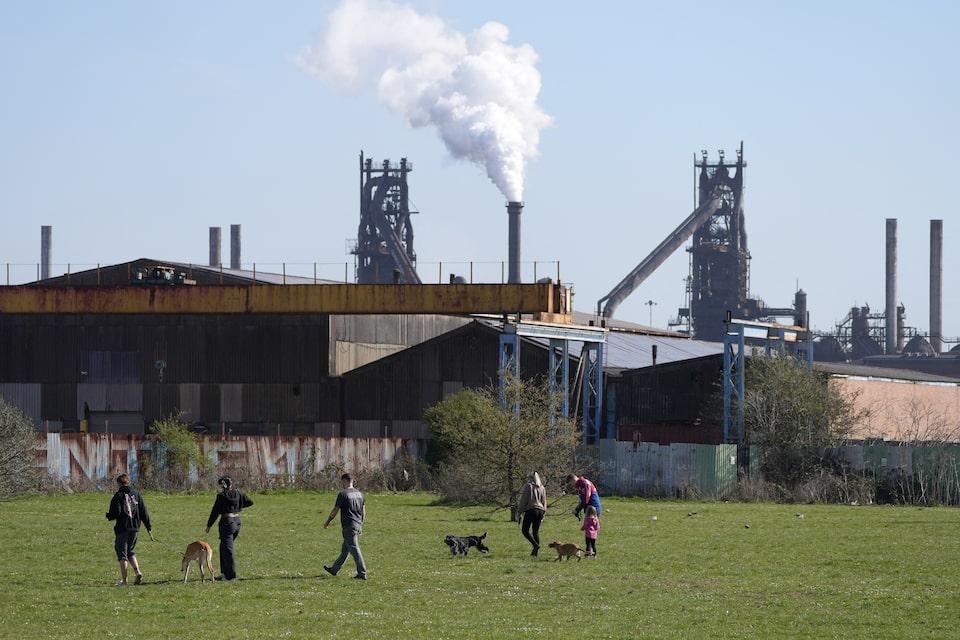
Parliament recalled to pass emergency law Government seeks to avert blast furnace shutdown Nationalisation may be "likely" option, minister says China-owned firm employs 3,500 at Scunthorpe plant LONDON, April 12 (Reuters) - Britain moved to take control of British Steel and keep its blast furnaces open on Saturday, as a minister told an emergency parliamentary session that a full nationalisation of the UK's last maker of virgin steel was becoming increasingly likely. The company, owned by China's Jingye Group, employs 3,500 people at its Scunthorpe plant, whose future had been in question after the government and the company failed to agree a funding deal to switch to greener steel production. Sign up here. The government recalled lawmakers, who had been on Easter recess, in order to pass a law enabling it to direct the company's board and workforce, ensure they get paid, and order the raw materials to keep the blast furnace running. Prime Minister Keir Starmer said that he was taking action to avert the imminent closure of the blast furnaces, which are operating at a loss of 700,000 pounds ($915,600) a day. "The bill will go through today... and that means that we will then be in control of the site," Starmer said on a visit to the steelworks. He acknowledged that the emergency law was "pretty unprecedented", but said it meant there would be a future for steel in Britain and that it was in the national interest. The recall of parliament for a Saturday sitting during a recess is the first since the Falklands War in 1982. Addressing lawmakers, business minister Jonathan Reynolds said the bill would give more time to negotiate a permanent future for British Steel. "A transfer of ownership to the state remains on the table, and it may well at this stage, given the behaviour of the company, be the likely option," Reynolds told lawmakers, saying he still hoped to partner with the private sector to secure its long-term future. "A failure to act today would prevent any more desirable outcome from even being considered." The bill cleared its initial stages in parliament's House of Commons without anyone attempting to vote it down. STRATEGY PENDING The closure of the furnaces would leave Britain as the only G7 country unable to produce so-called virgin steel from iron ore, coke and other inputs. British Steel was already struggling in an over-supplied global market before the rise in energy costs of recent years. U.S. tariffs of 25% on all steel imports, taking effect in March, delivered another blow. The U.S. receives about 5% of British steel exports, worth 400 million pounds a year, according to industry body UK Steel. Reynolds said the issues impacting British Steel went beyond those tariffs, though he would seek to negotiate to remove them. The government had already earmarked 2.5 billion pounds for the steel industry, saying it would publish a strategy for the sector in spring 2025. Funding to keep the plant running would come from existing budgets, the government said. Reynolds said Britain would be dependent on foreign imports if British Steel's Scunthorpe furnaces were to close. UK Steel said it welcomed the proposed law, as did unions representing steelworkers. If British Steel were nationalised it would be the biggest state rescue since a number of banks were taken into government hands in 2008. Less carbon-intensive electric arc furnaces, which make new steel from scrap, are being built at Tata Steel's Port Talbot site, following a government support package worth 500 million pounds. The two blast furnaces at Port Talbot closed last year, and the new electric furnace will not start producing steel until late 2027 or early 2028. ($1 = 0.7645 pounds) https://www.reuters.com/world/uk/uk-seeks-emergency-powers-take-control-british-steel-2025-04-12/
2025-04-12 11:09
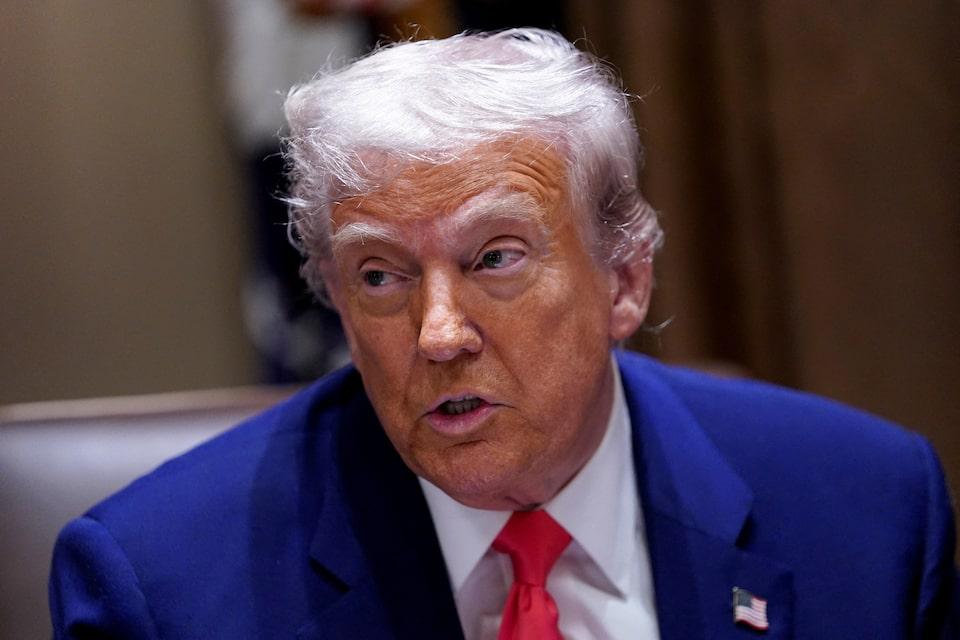
April 12 (Reuters) - The Trump administration is drafting an executive order to enable the stockpiling of deep-sea metals to counter China's dominance in battery minerals and rare earth supply chains, the Financial Times reported on Saturday, citing people familiar with the matter. Under the plans, the stockpile would "create large quantities ready and available on U.S. territory to be used in the future", in case of a conflict with China that might constrain imports of metals and rare earths, the report added. Sign up here. Last week, China placed some rare earth elements under export restrictions as part of its response to President Donald Trump's tariff package, potentially cutting the U.S. off from minerals vital to everything from smartphones to electric car batteries. The stockpile is being considered as part of a broader push to fast-track deep-sea mining applications under U.S. law, and to create onshore processing capacity, the report added. China produces around 90% of the world's refined rare earths, a group of 17 elements used across the defense, electric vehicle, clean energy and electronics industries. The U.S. imports most of its rare earths, and most come from China. The White House and China's foreign ministry did not immediately respond to Reuters requests for comments. https://www.reuters.com/world/us/trump-plans-stockpile-deep-sea-metals-counter-china-ft-reports-2025-04-12/
2025-04-12 10:04
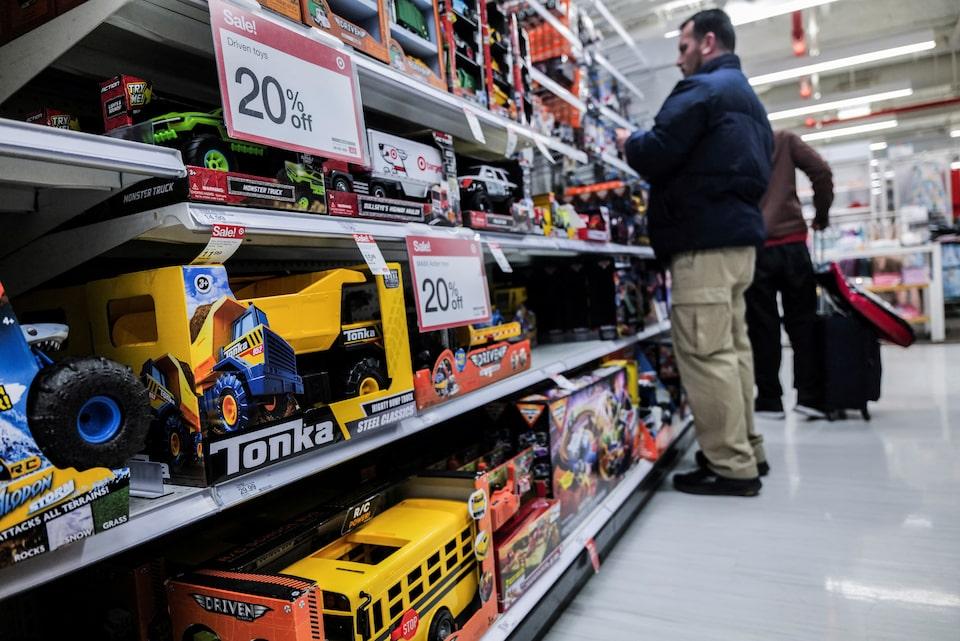
US businesses face rising costs due to Trump's tariffs Companies cancel orders, delay hiring amid tariff uncertainty One business contacted by Reuters has sued US government over tariffs BOULDER, Colorado, April 12 (Reuters) - A toy store manager hit with daily price increase notifications. A lip balm manufacturer forecasts a $5 million jump in cost of goods. A concert venue impresario who saw a surprise price hike of $140,000 to install new seats in a performance hall. They are among a dozen business owners and managers who spoke with Reuters about the impacts of President Donald Trump's tariff regime, providing an early idea of what many more Americans might expect, even as taxes on imports - paid by U.S. companies and often passed on to consumers - were partially paused for 90 days this week. Sign up here. The businesspeople expressed concern about continued economic turbulence. While announcing the 90-day tariff pause on dozens of countries, Trump ratcheted up tariffs on Chinese imports, raising them effectively to 145% when levies imposed earlier this year are taken in to account. He kept tariffs on imports from most other nations at 10% for 90 days, after whipsawing on trade taxes for the past week. Tariffs on Canada and Mexico remain at 25% for goods not covered by the region's existing trade deal. "We're constantly dealing with the uncertainty of the future and of our future supply chains," said Steve Shriver, the founder and CEO of Eco Lips, a Cedar Rapids, Iowa-based company that makes organic health and beauty products with ingredients sourced from more than 50 countries and sold in 40,000 stores nationwide. It has annual sales of around $30 million. On Wednesday, the day Trump announced the pause, Shriver sent a letter to 300 clients for whom Eco Lips manufactures products for their own labels, letting them know that prices will rise and that time frames for delivery will be pushed out. "I don't trust it. It's a 90-day pause. It could change again in 10 days," Shriver said. "There are still 10% tariffs across the board, and that's a substantial addition to our prices." Shriver forecast that his 12-month cost of goods could rise by $5 million, atop his typical $10 million annual outlay for, among other things, ingredients that cannot be grown in the U.S., such as vanilla, coconut oil and cacao. Other businesspeople said they have canceled purchase orders, halted expansion plans and delayed hiring. 'WE'RE SCRAMBLING' Shriver and others said they have received price-increase notifications from suppliers and have already raised their own prices since Trump first started announcing tariffs last month to address what he said were unfair trade imbalances. Trump also has imposed tariffs in pursuit of goals that include keeping out migrants and illegal drugs and encouraging domestic manufacturing. Paul Kusler's Into the Wind is a beloved Boulder, Colorado, kite and toy store that has been around for 45 years and has about $2.5 million in annual sales. Most of the goods Kusler sells are manufactured in China. "The tariffs on China are simply unworkable, it's a serious threat to our business," said Kusler, standing amid a sea of colorful kites, Frisbees, puppets, stuffed animals and every other toy imaginable. "We pay bills weekly. These price increases are happening now for items I already have in the door." Kusler said the increased prices he has seen have been between 7% and 10% - but those reflect the brief period that tariffs on China were at 34% following Trump's "Liberation Day" announcement of the trade taxes on April 2. Kusler thinks he can absorb around 3% of increased costs. He added that he has already seen and will continue to feel suppressed consumer demand amid economic turbulence. "People aren't going to buy toys if they are worried about prices rising for food and other staples," he said. Emily Ley, the owner of Simplified, a Pensacola, Florida-based company that specializes in high-end office planners for women, said that since Trump announced tariffs on Chinese goods in 2017 during his first term, she has paid well over $1 million in trade taxes to the U.S. government. She forecast that at the new tariff level for China, she will nearly match that $1 million within the next 12 months. Ley said she tried for years to have her goods manufactured in the U.S., but could find no way to do it and still make a profit. "This could put us under, put us out of business," she said. "We're scrambling right now over what to do." One thing Ley is doing: suing the U.S. government, arguing the taxes unconstitutionally rely on statutes that have nothing to do with tariffs. In Denver, Colorado, Aisha Ahmad-Post, the executive director for the Newman Center for the Performing Arts at the University of Denver, has spent more than a year managing a major renovation - the replacement of all 971 chairs inside the June Swaner Gates Concert Hall. The Newman Center considered chairs from two U.S. suppliers and one in Canada. One of the American makers was far over their budget and the other's chairs required the use of harsh dry-cleaning solvents as maintenance. In early 2024, Ahmad-Post ordered chairs from Montreal-based Ducharme for just over $560,000 and blacked out a six-week period of hosting any shows for installation in mid-July. On March 5, Ahmad-Post received a letter from Ducharme that it was required to comply with the new Trump trade taxes and "apply the corresponding tariffs to your project." At the time, those tariffs for Canada were at 25% - an increase in $140,000 for the Newman Center seat project, an unwelcome development for an institution still trying to rebuild its rainy day fund that was depleted by the COVID-19 pandemic. "The chairs are already in production, it's not like we can just pivot," Ahmad-Post said. "Now we're stuck trying to figure out how we'll pay for this." https://www.reuters.com/markets/us/that-seat-will-cost-how-much-us-businesses-already-seeing-impact-trump-tariffs-2025-04-12/
2025-04-12 06:46
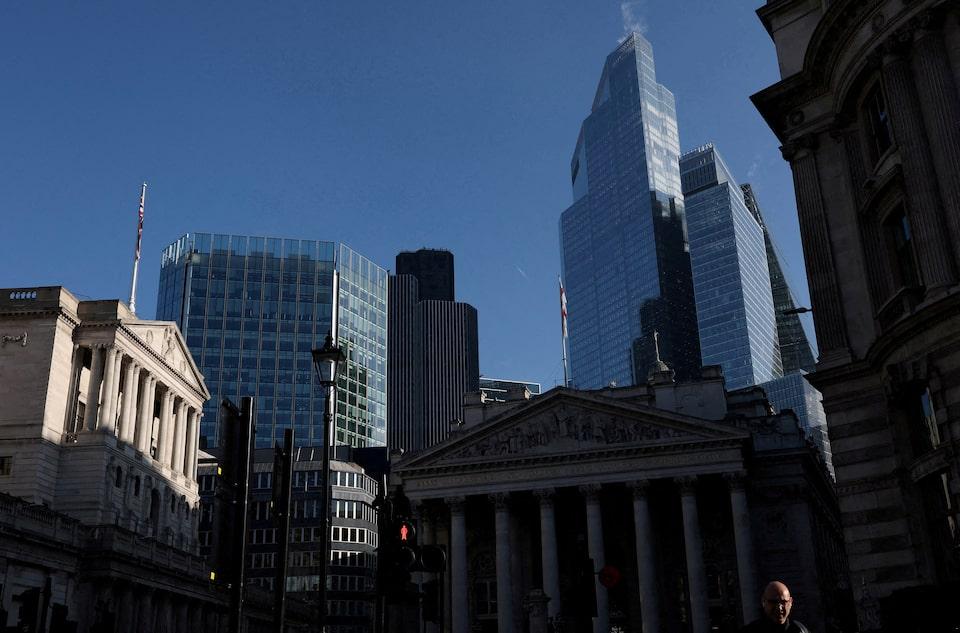
April 12 (Reuters) - Bank of England interest rate-setter Megan Greene said on Saturday it was unclear what U.S. President Donald Trump's import tariffs would do to UK inflation with the unpredictable behaviour of the dollar adding to the puzzle. Higher barriers to trade were likely to weigh on economic growth in countries in Europe, Greene said during a panel discussion at the Delphi Economic Forum conference in Greece. Sign up here. "The implications for inflation, though, are somewhat ambiguous," she said, noting the possibility of Chinese exports being diverted away from the U.S. and towards Europe which could push down on prices. But the most important thing to watch is what happens to currencies, Greene said. "The key channel, really is exchange rates, and that's been really difficult because exchange rates haven't operated in the past week as the models would suggest," she said. "The dollar has fallen instead of appreciating as you would expect." A stronger dollar would normally push up inflation in other countries, Greene said. BoE deputy governors Clare Lombardelli and Sarah Breeden both said earlier this week that it was too early to say what the inflation implications from Trump's tariffs will be. https://www.reuters.com/world/uk/bank-englands-greene-says-dollar-drop-adds-tariff-inflation-puzzle-2025-04-12/