2025-04-12 00:47
Judge rules USDA didn't follow legal procedures in freezing funds Program funds used to feed schoolchildren and vulnerable adults April 11 (Reuters) - President Donald Trump's administration cannot cut off Maine's federal school lunch funding over the state's refusal to ban transgender women from sports, a federal judge ruled on Friday. U.S. District Judge John Woodcock Jr. did not weigh in on the dispute over Maine's transgender athlete policies but ruled that the U.S. Department of Agriculture did not follow proper legal procedures under a law called the Administrative Procedure Act when it froze grant money the state uses for nutrition programs. Sign up here. USDA representatives did not immediately respond to a request for comment. Maine Attorney General Aaron Frey, whose office filed a lawsuit seeking to block the freeze, said in a statement that the ruling by the judge in Portland, Maine, confirms that the Trump administration did not follow the law when it "cut program funds that go to feed school children and vulnerable adults." The dispute stems from Trump's executive order banning transgender women from participating in women's sports at schools that receive federal funding. The USDA notified Maine on April 2 that it was freezing certain federal funds because it believed the state was violating Title IX legal prohibitions against sex discrimination. The funds were used by Maine to administer federal programs designed to fight hunger by reimbursing schools, childcare centers and after-school programs for providing free or reduced-price meals to children. The USDA's decision followed a February 21 meeting with governors in which the Republican president threatened to withhold funds from Maine if it did not comply with his transgender athletes order. Maine Governor Janet Mills, a Democrat, responded to Trump: "We're going to follow the law, sir. We'll see you in court." https://www.reuters.com/markets/commodities/trump-administration-cannot-freeze-maine-school-lunch-funds-over-transgender-2025-04-12/

2025-04-12 00:20
South Bow laid off 2 crude traders on April 4, sources say It seeks to hike contracted volumes on its pipeline systems South Bow sees marketing unit EBITDA down $30 million in 2025 HOUSTON, April 11 (Reuters) - Calgary-based pipeline company South Bow (SOBO.TO) , opens new tab has cut the size of its crude trading team as it seeks to boost the volume of oil sold on contract through its pipeline systems and reduce how much crude it trades, three people told Reuters this week. South Bow was spun out of Canadian pipeline company TC Energy (TRP.TO) , opens new tab in October 2024 as part of a plan to help TC reduce its debt load. Sign up here. South Bow laid off two traders on April 4, the people said. TC Energy had already cut a member of the team in June last year before the spin-off. The latest layoffs have reduced the crude trading team to two from five. A South Bow spokesperson declined to comment on employee matters for this story. The company is seeking more stable revenues through contracted volumes shipped through its pipeline systems, the sources said, after the start up of the Trans Mountain pipeline in Canada left it with fewer trading opportunities. South Bow expects EBITDA for its marketing unit, which includes its crude trading team, to turn negative in 2025, falling $30 million from $12 million in 2024, it said in its fourth quarter earnings report. It, however, expects the company's normalized overall EBITDA to be approximately $1.01 billion, versus $1.09 billion in 2024. The projected loss from the marketing unit is in part because Canada's highly anticipated Trans Mountain pipeline expansion has begun operations. The Trans Mountain pipeline takes crude from Alberta to Canada's Pacific Coast for export. The pipeline was expected to take away arbitrage opportunities from South Bow, CEO Bevin Wirzba explained during an investor call in March. Higher overall Canadian pipeline capacity and uncertainty from potential tariffs would also weigh on marketing earnings this year, the company said in its quarterly earnings report. South Bow expects 90% of its EBITDA in 2025 to be secured through committed arrangements. "With a contracted strategy, those dollars of EBITDA should be worth more to shareholders given the consistency of them," Wirzba said in the investor call. South Bow operates the 750,000 barrel-per-day Marketlink pipeline system, which ships crude from Cushing, Oklahoma, to the U.S. Gulf Coast via the Gulf Coast extension of the Keystone pipeline. The company will reallocate available spot capacity on Marketlink that the trading team had been using to increase contracted shipments to third-party customers, sources told Reuters. South Bow stock was last trading at around $32.30 on Friday, according to LSEG, recovering some losses after falling to a five-month low on Tuesday at $31.10 after South Bow shut down the Keystone pipeline after an oil spill. https://www.reuters.com/business/energy/canadas-south-bow-cuts-crude-trading-team-focuses-contracted-pipeline-volumes-2025-04-12/

2025-04-11 23:51
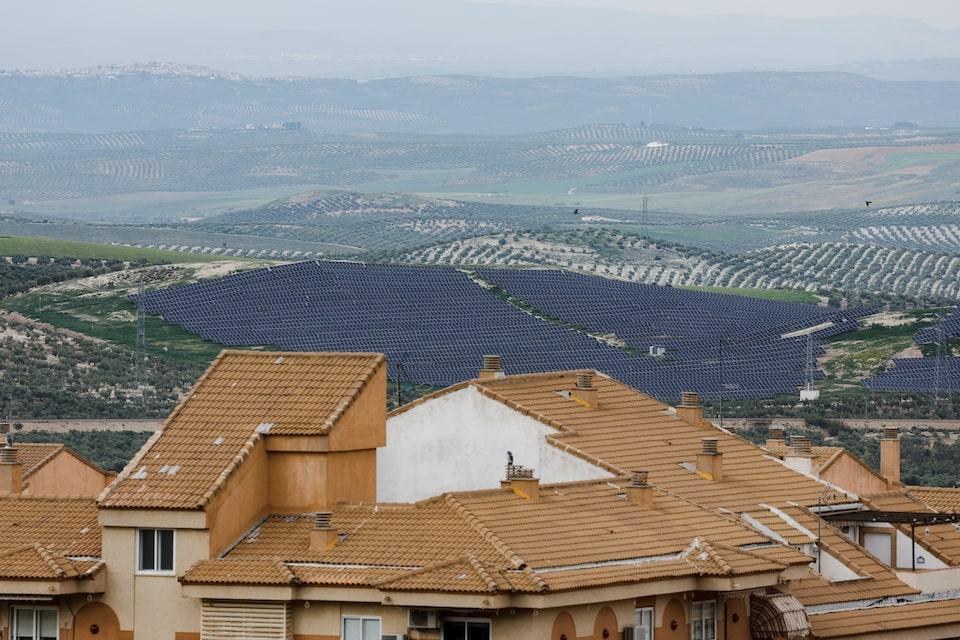
ANTEQUERA, Spain, April 11 (Reuters) - One of Spain's leading olive oil producers is pondering an expansion into the U.S. in response to the tariff war unleashed by Washington, just as its peers are rushing out exports while the bulk of new tariffs are still on hold. Spain produces about 40% of the world's olive oil and sends about 180,000 metric tons a year to the United States. Sign up here. "In the medium to long term, we may have to make more investments in the United States, which ultimately are investments that will be made there instead of Europe," said Antonio Luque, the CEO of Dcoop, one of the two partners behind the top-selling U.S. brand Pompeian. He said Dcoop, a cooperative of 75,000 families in the southern region of Andalusia, could expand its still modest olive plantations in the United States, where Pompeian has two bottling plants. Last year, Dcoop sales there totalled 240 million euros ($273 million). President Donald Trump's administration has slapped a 10% tariff on imports of most European goods, including olive oil, although it announced a 90-day pause on Wednesday on higher, 25% "reciprocal" duties. Luque said the uncertainty around Trump's trade policies made it hard to plan, but that Dcoop still hoped to expand its U.S. market share, believing that a 10% tariff would not significantly hurt sales. The Spanish exporters' association Asoliva expects the supply of olive oil to surge over the coming months thanks to a recovery from an extended drought, and says likely falls in prices could partially offset the tariffs. Other producers like Nortoliva, which exports 10% of its production to the U.S., are accelerating their shipments before the 25% tariff rate kicks in. "We are loading new orders to the U.S. today and next week," said Nortoliva's general director, Jordi Guiu. "Our American customers are increasing orders, they want to bring shipments forward to avoid paying the tariff surcharge in 90 days' time." ($1 = 0.8802 euros) https://www.reuters.com/markets/commodities/spanish-olive-oil-makers-mull-us-investment-rush-exports-avoid-tariffs-2025-04-11/
2025-04-11 23:46
BUENOS AIRES, April 11 (Reuters) - Argentina's central bank has announced a major overhaul to the country's exchange rate policy, unleashing the peso and dismantling its years-long controls on the currency as the country reached a $20 billion IMF deal. The central bank announced that it will undo a fixed currency peg from Monday, letting the peso freely fluctuate within a moving band. Sign up here. Here is what economists and institutions have to say about the policy changes and the International Monetary Fund loan program, the country's 23rd in a long and complex history between Argentina and the lender. ARGENTINE BANKS ASSOCIATION (ABA) "The lifting of exchange restrictions means a strong step towards the normalization of the economy and international trade necessary for the sustained development of the country. "The improvement of the central bank's balance sheet is necessary and essential to continue generating confidence both locally and internationally." AMERICAN CHAMBER OF COMMERCE IN ARGENTINA (AMCHAM) "From AmCham Argentina, we welcome the recent agreement reached by the national government with the International Monetary Fund. "This step is key to strengthen macroeconomic stability, reduce uncertainty and generate a framework of greater predictability." ARGENTINA'S OILSEED EXPORT AND CRUSHING CHAMBER The institution said in a statement that the FX reforms will help the country recover "export competitiveness" and bring new trade opportunities. CLAUDIO LOSER, EX-IMF WESTERN HEMISPHERE DIRECTOR "I must say I am surprised by the amount of money at Argentina's disposition starting next week, approximately $20 billion." "Eliminating the CEPO (currency controls) is important, though it does not mean everyone can take out their money. What's more important is that the dollar will fluctuate, there will be fluctuation. People will be very nervous." RICARDO DELGADO, ECONOMIST "This is a devaluation, different from what the government would have wanted ahead of the elections ... Lifting the CEPO is striking at this time of global volatility." MARTIN REDRADO, ECONOMIST AND FORMER CENTRAL BANK HEAD "There will be a limit to what the central bank will be able to invest in the upper part of the band. The IMF will surely set a limit that we may or may not be aware of, but that the market will put to the test." AGUSTIN ETCHEBARNE, HEAD OF FREEDOM AND PROGRESS FOUNDATION "Uncertainty will diminish and that's a positive thing." "This will help to strengthen the central bank... That is good news and it will allow inflation to continue decreasing in the mid-term to much lower levels than we currently have." JAIME REUSCHE, MOODY'S VP - SENIOR CREDIT OFFICER "The $20 billion agreement with the IMF is an important anchor that will help Argentina prepare for the next phase of its adjustment, which involves the elimination of the currency controls and capital controls." "Argentina's credit outlook remains positive, although navigating the current global environment in the context of the planned macroeconomic adjustment will be more challenging for the authorities." https://www.reuters.com/world/americas/what-economists-say-about-argentinas-fx-reforms-imf-deal-2025-04-11/
2025-04-11 23:42
WASHINGTON, April 11 (Reuters) - The World Bank is poised to announce a $12 billion financing package for Argentina on Friday, supplementing the International Monetary Fund's expected approval of a $20 billion Argentina loan deal, a source with knowledge of the plan said. The Inter-American Development Bank also is expected to announce its own Argentina financing package, a second source said after Argentina's central bank announced on Friday that it will ease its foreign exchange market controls, allowing the peso to freely fluctuate within a moving band of between 1,000 and 1,400 pesos per dollar. Sign up here. The move to tear down Argentina's strict capital controls was seen as prerequisites to unlocking new financing from the institutions, which are expected to be announced together with the IMF approval. https://www.reuters.com/world/americas/world-bank-announce-12-billion-financing-package-argentina-source-says-2025-04-11/
2025-04-11 23:41
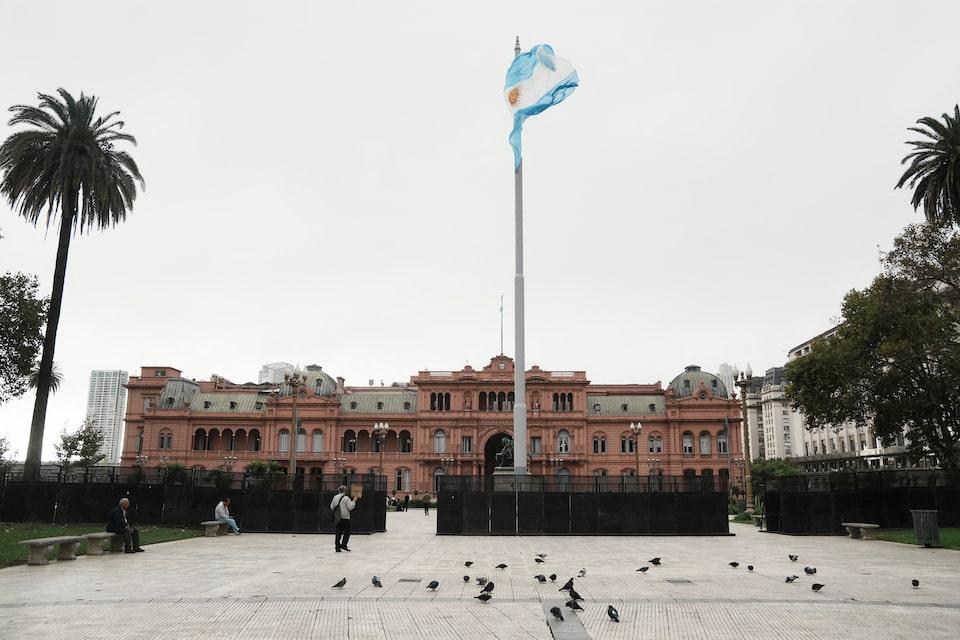
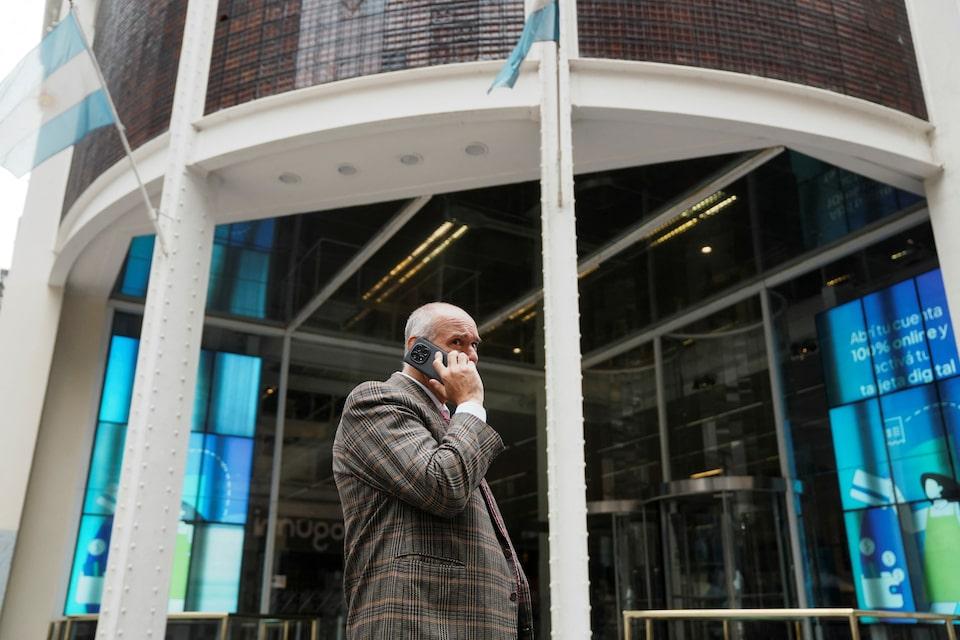
Argentina eases currency controls IMF to disburse $12 billion immediately New FX system may allow peso to weaken by a third BUENOS AIRES, April 11 (Reuters) - Argentina sealed a $20 billion, 48-month Extended Fund Facility deal with the International Monetary Fund on Friday and, in a major policy move ahead of the deal, dismantled key parts of its years-long currency controls and loosened its grip on the peso. The IMF will disburse $12 billion by next Tuesday, while another $2 billion will become available by June. Sign up here. The deal is expected to help Argentina "catalyze additional official multilateral and bilateral support, and a timely re-access to international capital markets," the IMF said. "Key pillars of the program include maintaining a strong fiscal anchor, transitioning towards a more robust monetary and FX regime, with greater exchange rate flexibility," it added in a statement. Earlier, the South American nation's central bank announced it would undo a fixed currency peg from Monday, letting the peso freely fluctuate within a moving band between 1,000 and 1,400 pesos per dollar, versus 1,074 at the close on Friday. Argentina will eliminate major parts of the so-called "cepo" capital controls that have restricted access to foreign currency, the central bank said in a statement. Companies, from this year, will also be able to repatriate profits out of the country, a key demand from businesses that could unlock more investment. "As of Monday, we will be able to put an end to the foreign exchange restrictions which were imposed in 2019 and which limit the normal functioning of the economy," Economy Ministry Luis Caputo said at a press conference. Libertarian President Javier Milei addressed the nation in a televised speech on Friday night and stated that Argentina was "in a better position than ever to withstand external turbulences." However, an IMF staff report on the $20 billion deal warned that "downside risks remain elevated," as program implementation could be challenged by rising global trade tensions and, domestically, by the volatility added by the upcoming electoral cycle and fragile social conditions. 'THIS IS A DEVALUATION' The new exchange rate system could allow the peso to weaken almost a third if the currency were to hit the weaker edge of the band, although the central bank is likely to have some tools to intervene. The band will expand 1% each month, the bank said. The policy move came ahead of the final IMF nod for what is the 23rd program in a long and mottled history between the grains-producing nation and the Washington-based lender. Funds from the IMF deal will be used to recapitalize Argentina's central bank and the government expects they will help usher in a healthier currency, reduce inflation and allow for tax cuts, Caputo said. Other multi-year disbursements were also announced, including $12 billion from the World Bank and $10 billion from the Inter-American Development Bank. Argentina needs the financial firepower to bolster depleted foreign currency reserves that are in the red on a net basis and have been falling in recent weeks, amid sticky inflation and a country risk index that has started to rise again. The funds are also key to unlocking the currency controls, which will likely prompt a period of local market volatility already stirred up by the international tariff war between the United States and its trade partners. "This is a devaluation, which rather goes against what the government would have intended to calmly get to elections," said economist Ricardo Delgado, referring to midterm legislative elections later in the year. "It's a bit surprising that at this time of global volatility, the controls are being lifted," he added. https://www.reuters.com/world/americas/argentina-eases-fx-controls-major-policy-shift-ahead-imf-deal-2025-04-11/