2025-04-11 20:54
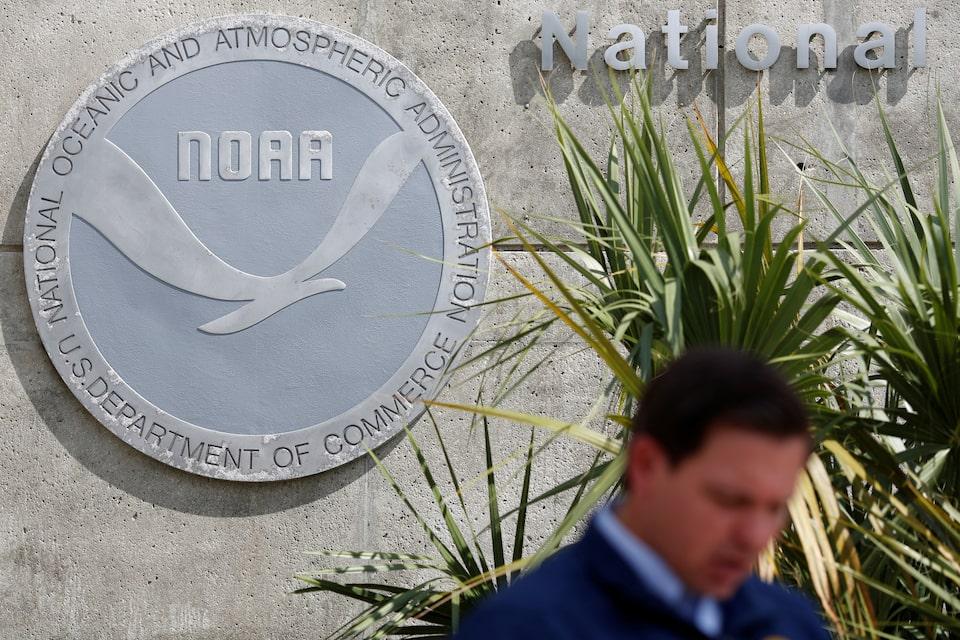
April 11 (Reuters) - The administration of President Donald Trump aims to eliminate the arm of the National Oceanic and Atmospheric Administration that oversees research on climate change and refocus the U.S. fisheries service to support energy development, according to a draft White House budget document seen by Reuters. The moves are part of a plan to downsize NOAA dramatically, slashing agency funding by around $1.67 billion, or 27%, according to the proposal. Sign up here. The Office of Oceanic and Atmospheric Research, known also as NOAA Research, would be closed under the proposal, along with $480 million in funding for regional climate data and information, agency research laboratories, and cooperative institutes, among other programs. NOAA, a division of the Department of Commerce, is a scientific agency that oversees weather and climate forecasts, monitors ocean and atmospheric conditions and manages the nation's commercial fisheries. The Trump administration has fired hundreds of NOAA workers as part of its effort to slash government bureaucracy. “No final funding decisions have been made,” Alexandra McCandless, a spokesperson for the White House Office of Management and Budget, said in an email. Environmental groups criticized the proposal, saying it would leave communities vulnerable to extreme weather, threaten ocean species and harm commercial fisheries. “This is ludicrous! Whether you live on a coast or in the heartland, these proposed cuts to NOAA will impact you,” Beth Lowell, an executive at conservation group Oceana, said in an email. “Congress must act to stop the dismantling of NOAA that would directly threaten the millions of Americans that depend on healthy oceans for their jobs, businesses, and seafood dinners.” Commerce Department officials did not respond to requests for comment. Under the proposal, NOAA would transfer key responsibilities of the National Marine Fisheries Service (NMFS) for protecting endangered species and marine mammals to the U.S. Fish and Wildlife Service, which is housed by the Interior Department. NMFS, known as NOAA Fisheries, would also lose funding for species recovery grants, interjurisdictional fisheries grants and habitat conservation and restoration - programs that are significant to the commercial fishing industries. "NMFS should prioritize permitting and consultation activities in order to support Administration priorities and unleash American energy," the document said. The proposal would preserve $170 million in (OAR) funding for some programs related to severe storms, weather and ocean exploration, according to the document. https://www.reuters.com/sustainability/climate-energy/white-house-proposes-eliminate-noaa-climate-research-budget-proposal-2025-04-11/
2025-04-11 20:41
Consumer sentiment plunges to near three-year low in April Twelve-month inflation expectations highest since 1981 Producer price index falls 0.4% in March Goods, mostly gasoline, account for 70% of decline in PPI Producer prices increase 2.7% year-on-year WASHINGTON, April 11 (Reuters) - U.S. consumer sentiment deteriorated sharply in April and 12-month inflation expectations surged to the highest level since 1981 amid unease over escalating trade tensions that have roiled financial markets and raised the risk of a recession. The University of Michigan Surveys of Consumers said on Friday that the slump in sentiment to the lowest level in nearly three years was "pervasive and unanimous" across age, income, education, geographic region and political party affiliation. Sign up here. The jump in inflation expectations poses a dilemma for Federal Reserve officials, who have argued they remain anchored. President Donald Trump this week ratcheted up trade tensions, hiking duties on Chinese goods to 125%, even as he delayed reciprocal tariffs on other trade partners for 90 days. Beijing on Friday retaliated with a 125% tariff of its own. Trump has maintained a 10% blanket duty on almost all U.S. imports as well as a 25% tariff on motor vehicles, steel and aluminum, leaving businesses and consumers bracing for a burst in inflation. "Consumers have spiraled from anxious to petrified," said Samuel Tombs, chief U.S. economist at Pantheon Macroeconomics. The Consumer Sentiment Index dropped to 50.8 this month, the lowest reading since June 2022, from a final reading of 57.0 in March. Economists polled by Reuters had forecast the index falling to 54.5. The decline in sentiment was more pronounced among Democrats and Independents. Morale was also down among Republicans. The survey was concluded on April 8, before Trump's latest moves on import duties. Apart from causing apprehension about inflation, the White House's tariffs campaign has wiped out billions of dollars from retirement accounts and heightened uncertainty for businesses, which could hurt the labor market. The survey showed the share of consumers expecting unemployment to rise in the year ahead increased for the fifth straight month to the highest level since 2009, when the economy was in the midst of the Great Recession. "This lack of labor market confidence lies in sharp contrast to the past several years, when robust spending was supported primarily by strong labor markets and incomes," said Surveys of Consumers Director Joanne Hsu. Consumers' 12-month inflation expectations soared to 6.7%, the highest reading since 1981, from 5.0% in March. The jump, which marked four straight months of increases of 0.5 percentage points or more, was across party affiliation. Over the next five years, consumers saw inflation running at 4.4%. That was the highest level since June 1991 and was up from 4.1% in March. The persistent rise in inflation expectations could be problematic for U.S. central bank officials. FINANCIAL MARKETS TURMOIL Some economists expect the Fed to delay resuming cutting interest rates until later this year after pausing its easing cycle in January. Financial markets expect a rate cut in June. "The rise in long-term inflation expectations should catch the Fed's attention," said Ryan Sweet, chief U.S. economist at Oxford Economics. "Keeping inflation expectations anchored is critical for the Fed and one reason we don't anticipate the central bank cutting interest rates until December." Stocks on Wall Street rose in volatile trade. The dollar slumped to a decade low against the Swiss franc and was the weakest versus the euro in three years. The yield on the benchmark U.S. 10-year Treasury rose and was on track to post the biggest weekly increase in more than 23 years. Other data from the Labor Department's Bureau of Labor Statistics on Friday showed the producer price index for final demand dropped 0.4% in March, the first decline since October 2023, after an upwardly revised 0.1% gain in February. The data has, however, been superseded by the trade wars. Economists had forecast the PPI rising 0.2% after a previously reported unchanged reading in February. In the 12 months through March, the PPI increased 2.7% after advancing 3.2% in February. A 0.9% drop in goods prices accounted for more than 70% of the decrease in the monthly PPI. Last month's decline in goods prices was the largest since October 2023 and followed a 0.3% gain in February. Goods prices were depressed by an 11.1% tumble in the cost of gasoline, amid worries that the tariffs tit-for-tat would slow global economic growth. Wholesale food prices dropped 2.1% amid decreases in eggs, beef and veal as well as fresh and dry vegetables. But prices for steel mill products jumped 7.1%, likely boosted by tariffs. Excluding the volatile food and energy components, goods prices increased 0.3% for a second straight month. The anticipated surge in inflation could, however, be tempered somewhat by softening domestic demand, evident in March's consumer price report that showed monthly declines in airline fares as well as hotel and motel room prices. That was replicated in the PPI report. Wholesale airline fares tumbled 4.0% after being unchanged in February, while the cost of hotel and motel rooms dropped 1.2%. There have been reports of Canadians boycotting travel to the U.S. Trump has often mused about annexing Canada. The declines more than offset moderate increases in portfolio management fees and healthcare costs, resulting in services prices falling 0.2% after being unchanged in February. Portfolio management fees, healthcare, hotel and motel accommodation and airline fares are among the components that go into the calculation of the core Personal Consumption Expenditures price index, one of the inflation measures tracked by the Fed for its 2% target. Economists estimated the core PCE price index rose 0.1% in March after jumping 0.4% in February. That would slow the annual increase in core inflation to 2.6% from 2.8% in February. "Although the core PCE estimates are a welcome relief, we don't think we can extrapolate much from this," said Pooja Sriram, an economist at Barclays. "The tariff regime in place in March was relatively benign compared with the current circumstances, which implies that price pressures may only now start to build." https://www.reuters.com/markets/us/us-monthly-producer-prices-decline-march-2025-04-11/

2025-04-11 20:40
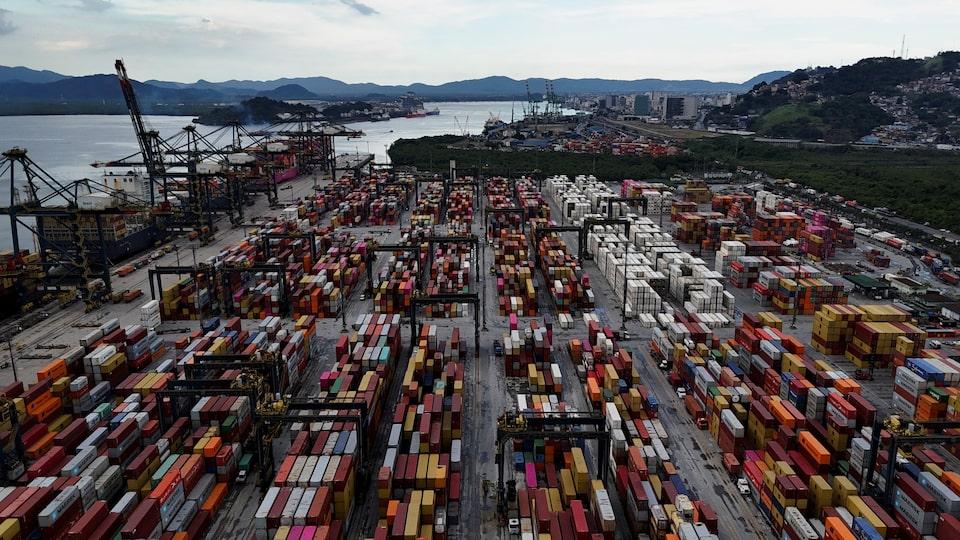
Deal will set first global CO2 price in any sector Criticised as weak by climate-vulnerable Pacific nations Still needs final approval at Oct IMO meeting Ships will face CO2 emissions fees from 2028 LONDON, April 11 (Reuters) - Countries at the U.N. shipping agency struck a deal on Friday on a global fuel emissions standard for the maritime sector that will impose an emissions fee on ships that breach it and reward vessels burning cleaner fuels. The U.S. pulled out of the climate talks at the International Maritime Organization in London this week, urging other countries to do the same and threatening to impose "reciprocal measures" against any fees charged on U.S. ships. Sign up here. Despite that, a majority of countries approved the CO2-cutting measures to help meet the IMO's target to cut net emissions from international shipping by 20% by 2030 and eliminate them by 2050. Under the scheme, from 2028 ships will be charged a penalty of $380 per metric ton on every extra ton of CO2 equivalent they emit above a fixed emissions threshold, plus a penalty of $100 a ton on emissions above a stricter emissions limit. Countries still need to give final approval at an IMO meeting in October. The talks exposed rifts between governments over how fast to push the maritime sector to cut its environmental impact. A proposal for a stronger carbon levy on all shipping emissions, backed by climate-vulnerable Pacific countries - which abstained in Friday's vote - plus the European Union and Britain, was dropped after opposition from several countries, including China, Brazil and Saudi Arabia, delegates told Reuters. The deal is expected to generate up to $40 billion in fees from 2030, some of which will go towards making expensive zero-emission fuels more affordable. In 2030, the main emissions limit will require ships to cut the emissions intensity of their fuel by 8% compared with a 2008 baseline, while the stricter standard will demand a 21% reduction. By 2035, the main standard will cut fuel emissions by 30%, versus 43% for the stricter standard. Ships that reduce emissions to below the stricter limit will be rewarded with credits that they can sell to non-compliant vessels. MIXED REACTIONS The IMO's deal triggered mixed reactions from member states, industry lobbies and campaign groups. The European Commission called the deal "a meaningful step" towards achieving the goals of the Paris Agreement on climate change, while noting it does not yet ensure the sector’s full contribution to them. Britain's transport minister Heidi Alexander said the deal would incentivise emission reductions and drive forward the development of clean fuels. Ralph Regenvanu, climate minister of Vanuatu, one of the low-lying nations most exposed to climate change, said countries had "failed to support a set of measures that would have gotten the shipping industry onto a 1.5°C (2.7 degrees Fahrenheit) pathway", referring to the level of global warming scientists say would avert the most damaging consequences. International shipping lacks available volumes of zero-emission fuels, such as green ammonia and methanol, but initially ships will be able burn LNG and biofuels to comply with the new rules, analysts say. Welcoming Friday's deal and predicting a scaling up of production of new fuels, industry group the International Chamber of Shipping said "governments have understood the need to catalyse and support investment in zero emission fuels". But campaign group Opportunity Green said there was a risk the IMO’s agreement would lock in the use of crop-based first generation biofuels and LNG, which is not carbon-free. "The sector’s only credible path to net zero that doesn’t compromise biodiversity is green hydrogen e-fuels," Aoife O’Leary, head of Opportunity Green, said. https://www.reuters.com/sustainability/boards-policy-regulation/un-shipping-agency-strikes-deal-fuel-emissions-co2-fees-2025-04-11/
2025-04-11 20:33
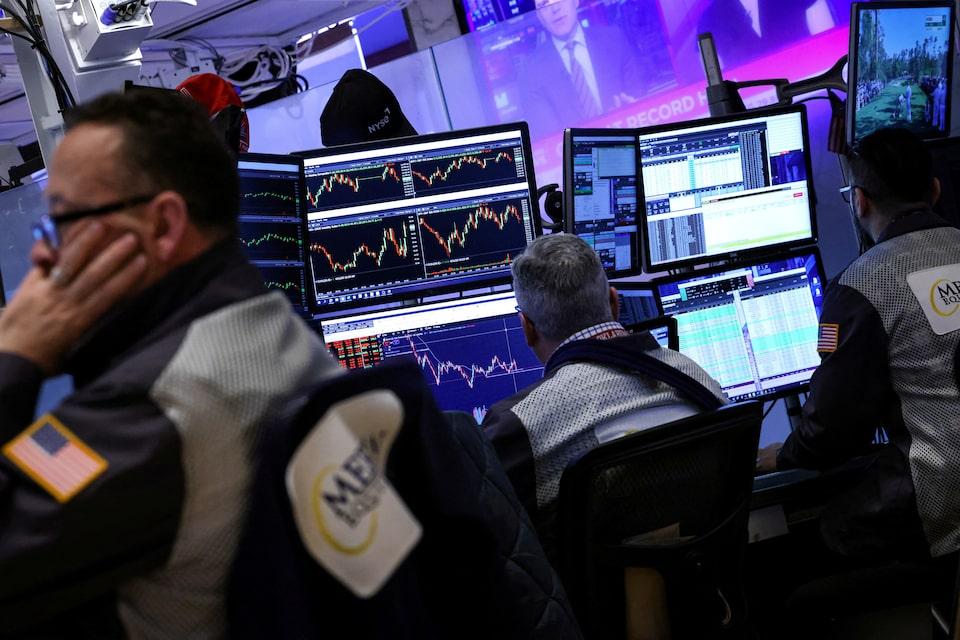
ORLANDO, Florida, April 11 (Reuters) - TRADING DAY Scorn in the USA Sign up here. If there is one takeaway for investors above all others from yet another tumultuous week in world markets, it may be this: the safe-haven status of U.S. Treasuries and the dollar's status as the world's reserve currency are now in serious doubt. There is a growing belief - indeed, fear - that the Trump administration's economic, fiscal and political agenda is undermining the credibility and reliability of the U.S. financial system. Investors are voting with their feet. "Dedollarization was nonsense for my entire life - until this past week," as currency analyst Chris Vecchio succinctly puts it. U.S. President Donald Trump's tariffs and all-out trade war with China appeared to hammer another nail in the coffin of 'U.S. exceptionalism' this week as the dollar and U.S. bonds got crushed, stoking concern over the dislocation at the long end of the Treasury curve. Fed officials on Friday said they will act to keep markets functioning should the need arise. Traditional 'safe-haven' assets like gold, the Japanese yen and Swiss franc rose significantly this week, as did the euro. This presents huge difficulties for the European Central Bank and Swiss National Bank - the last thing they want in a global trade war is a rapidly appreciating exchange rate. China's yuan is headed in the opposite direction. With its economy already wracked by a property sector bust, deflation, and weak demand, an all-out trade war with the U.S. has helped push the onshore and offshore yuan to historic lows. Wall Street just notched its best week in years, but it would be disingenuous to take that at face value. The bounce was entirely due to the historic relief rally on Wednesday after Trump's tariff climb-down, only half of the previous week's losses were recovered, and the VIX volatility index is still roughly double its 'normal' level. Visibility is virtually non-existent, so investors will be desperately seeking any scraps of guidance next week from the White House, Treasury or Fed. The U.S. earnings season is underway, but it will be a stretch to expect CEOs and CFOs to offer any clarity on the outlook. I'd love to hear from you, so please reach out to me with comments at [email protected]. You can also follow me at @ReutersJamie and @reutersjamie.bsky.social. This Week's Key Market Moves Charts of the Week Two charts for you today. The first is what it looks like when the world starts questioning the wisdom of holding the dollar and U.S. Treasuries. The second shows why the Fed is in a real bind. Although it may want to cut rates to mitigate the economic slowdown, its hands are tied - consumer inflation expectations this month surged to the highest since 1981. Here are some of the best things I read this week: What could move markets on Monday? Opinions expressed are those of the author. They do not reflect the views of Reuters News, which, under the Trust Principles , opens new tab, is committed to integrity, independence, and freedom from bias. Trading Day is also sent by email every weekday morning. Think your friend or colleague should know about us? Forward this newsletter to them. They can also sign up here. https://www.reuters.com/markets/global-markets-trading-day-2025-04-11/
2025-04-11 20:30
WASHINGTON, April 11 (Reuters) - The U.S. Federal Trade Commission took a step toward potentially reversing bans on certain oil executives joining the boards of Chevron (CVX.N) , opens new tab and Exxon Mobil (XOM.N) , opens new tab that the Biden administration made a condition that allowed them to acquire two other oil producers. Exxon, which acquired Pioneer Natural Resources last year, had agreed to bar former Pioneer CEO Scott Sheffield from its board. Chevron, which agreed to buy Hess (HES.N) , opens new tab in 2023, consented to a similar order keeping that company's CEO, John Hess, off its board. Sign up here. The FTC said on Friday that it was seeking public comment on petitions filed by Sheffield, Chevron and Hess Corp seeking to reverse the bans. “Mr. Hess is a highly respected industry leader, and our board would benefit from his global experience, relationships and expertise," a Chevron spokesperson said in a statement. Both deals got the greenlight from the FTC, then led by Chair Lina Khan, on the condition that Hess and Sheffield be barred from the respective boards over concerns they would coordinate with members of the Organization of the Petroleum Exporting Countries. Both John Hess and Sheffield denied the allegations. A spokesperson for Hess Corp said the concerns raised by the FTC were "entirely without merit." FTC Chairman Andrew Ferguson, then a commissioner, and fellow Republican Commissioner Melissa Holyoak voted against the agreements, saying they overstepped the agency's authority. Exxon, the No. 1 U.S. oil company, bought Pioneer in a deal worth $59.5 billion last year. Chevron's acquisition of Hess for $53 billion is pending ongoing arbitration proceedings related to potential preemptive rights over Hess's stake in the oil-rich Stabroek block in Guyana. https://www.reuters.com/markets/deals/ftc-seeks-public-comment-ex-pioneer-ceos-petition-modify-exxon-order-2025-04-11/
2025-04-11 20:27
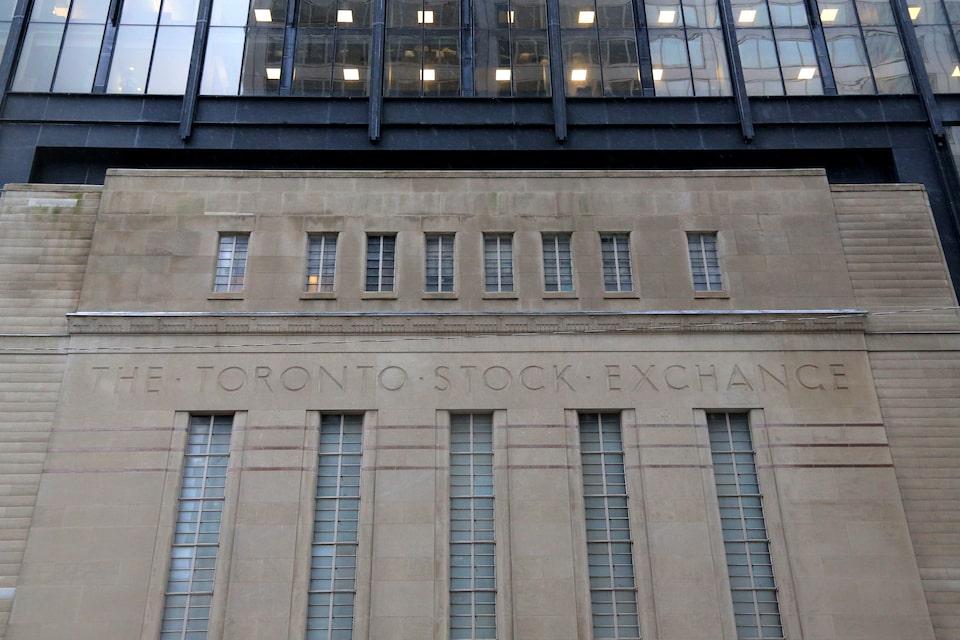
TSX ends up 2.5% at 23,587.80 For the week, the index adds 1.7% Mining shares climb as gold hits record high Oil settles up 2.4%; energy adds 3% April 11 (Reuters) - Canada's main stock index rose on Friday as higher commodity prices boosted resource shares and investors weighed the potential for recent financial market volatility brought on by a global trade war to subside. Toronto Stock Exchange's S&P/TSX Composite Index (.GSPTSE) , opens new tab ended up 572.93 points, or 2.5%, at 23,587.80. For the week, the TSX was up 1.7% after some wild swings, which included a near eight-month low on Tuesday. Sign up here. Wall Street also notched gains on Friday as big banks kicked off first-quarter earnings season. "It's a positive outcome to what has been a very chaotic week as far as announcements go, but I think investors will take the positives wherever they can get them," said Philip Petursson, chief investment strategist at IG Wealth Management. "I am reluctant to say that the volatility is over, but I think that the worst of the volatility is likely behind us." The materials group, which includes fertilizer companies and metal mining shares, rose 4.8% as copper prices jumped and gold climbed above $3,200 per ounce for the first time. The precious metal has benefited from safe-haven demand as well as recent sharp declines for the U.S. dollar (.DXY) , opens new tab. The Canadian dollar strengthened to a five-month high against its U.S. counterpart as the erratic nature of U.S. trade policy weighed on the greenback and ahead of a potential pause in the Bank of Canada's interest rate-cutting campaign at a policy decision on Wednesday. The price of oil also rose, settling 2.4% higher at $61.50 a barrel. Energy added 3.3% and heavily weighted financials ended 2% higher. All 10 major sectors notched advances, but the gain for real estate was marginal as the recent rout in the U.S. bond market helped drive up Canada's long-term borrowing costs. The Canadian 10-year yield touched a 2-1/2-month high at 3.309%. https://www.reuters.com/world/americas/tsx-futures-climb-tariff-turmoil-looms-corporate-earnings-await-2025-04-11/