2025-04-11 20:18
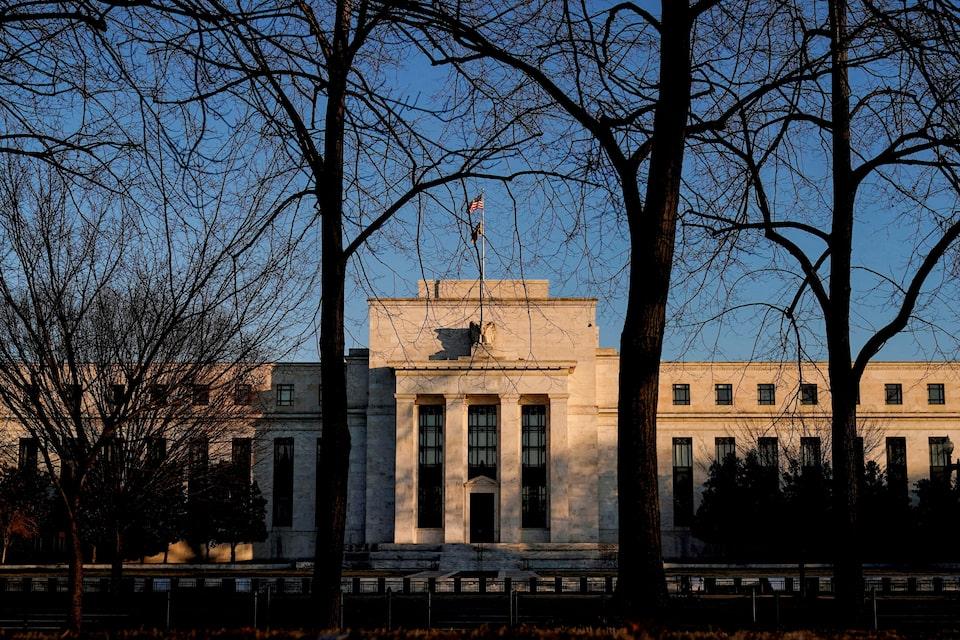
April 16 (Reuters) - Thank you for the introduction. I am looking forward to our conversation, Professor Rajan. First, I will briefly discuss the outlook for the economy and monetary policy. At the Fed, we are always focused on the dual-mandate goals given to us by Congress: maximum employment and stable prices. Despite heightened uncertainty and downside risks, the U.S. economy is still in a solid position. The labor market is at or near maximum employment. Inflation has come down a great deal but is running a bit above our 2 percent objective. Sign up here. Recent Economic Data Turning to the incoming data, we will get the initial reading on first-quarter GDP in a couple of weeks. The data in hand so far suggest that growth has slowed in the first quarter from last year’s solid pace. Despite strong motor vehicle sales, overall consumer spending appears to have grown modestly. In addition, strong imports during the first quarter, reflecting attempts by businesses to get ahead of potential tariffs, are expected to weigh on GDP growth. Surveys of households and businesses report a sharp decline in sentiment and elevated uncertainty about the outlook, largely reflecting trade policy concerns. Outside forecasts for the full year are coming down and, for the most part, point to continued slowing but still positive growth. We are closely tracking incoming data as households and businesses continue to digest these developments. In the labor market, during the first three months of the year, nonfarm payrolls grew by an average of 150,000 jobs a month. While job growth has slowed relative to last year, the combination of low layoffs and lower labor force growth has kept the unemployment rate in a low and stable range. Meanwhile, the ratio of job openings to unemployed job seekers has remained just above 1, near its pre-pandemic level. Wage growth has continued to moderate while still outpacing inflation. Overall, the labor market appears to be in solid condition and broadly in balance and is not a significant source of inflationary pressure. As for our price-stability mandate, inflation has significantly eased from its pandemic highs of mid-2022 without the kind of painful rise in unemployment that has frequently accompanied efforts to bring down high inflation. Progress on inflation continues at a gradual pace, and recent readings remain above our 2 percent objective. Estimates based on data released last week show that total PCE prices rose 2.3 percent over the 12 months ending in March and that, excluding the volatile food and energy categories, core PCE prices rose 2.6 percent. Looking forward, the new Administration is in the process of implementing substantial policy changes in four distinct areas: trade, immigration, fiscal policy, and regulation. Those policies are still evolving, and their effects on the economy remain highly uncertain. As we learn more, we will continue to update our assessment. The level of the tariff increases announced so far is significantly larger than anticipated. The same is likely to be true of the economic effects, which will include higher inflation and slower growth. Both survey- and market-based measures of near-term inflation expectations have moved up significantly, with survey participants pointing to tariffs. Survey measures of longer-term inflation expectations, for the most part, appear to remain well anchored; market-based breakevens continue to run close to 2 percent. Monetary Policy As we gain a better understanding of the policy changes, we will have a better sense of the implications for the economy, and hence for monetary policy. Tariffs are highly likely to generate at least a temporary rise in inflation. The inflationary effects could also be more persistent. Avoiding that outcome will depend on the size of the effects, on how long it takes for them to pass through fully to prices, and, ultimately, on keeping longer-term inflation expectations well anchored. Our obligation is to keep longer-term inflation expectations well anchored and to make certain that a one-time increase in the price level does not become an ongoing inflation problem. As we act to meet that obligation, we will balance our maximum-employment and price-stability mandates, keeping in mind that, without price stability, we cannot achieve the long periods of strong labor market conditions that benefit all Americans. We may find ourselves in the challenging scenario in which our dual-mandate goals are in tension. If that were to occur, we would consider how far the economy is from each goal, and the potentially different time horizons over which those respective gaps would be anticipated to close. Conclusion As that great Chicagoan Ferris Bueller once noted, “Life moves pretty fast.” For the time being, we are well positioned to wait for greater clarity before considering any adjustments to our policy stance. We continue to analyze the incoming data, the evolving outlook, and the balance of risks. We understand that elevated levels of unemployment or inflation can be damaging and painful for communities, families, and businesses. We will continue to do everything we can to achieve our maximum-employment and price-stability goals. Thank you. I look forward to your questions. https://www.reuters.com/markets/us/minn-feds-kashkari-rising-treasury-yields-could-show-investors-moving-us-2025-04-11/
2025-04-11 19:56
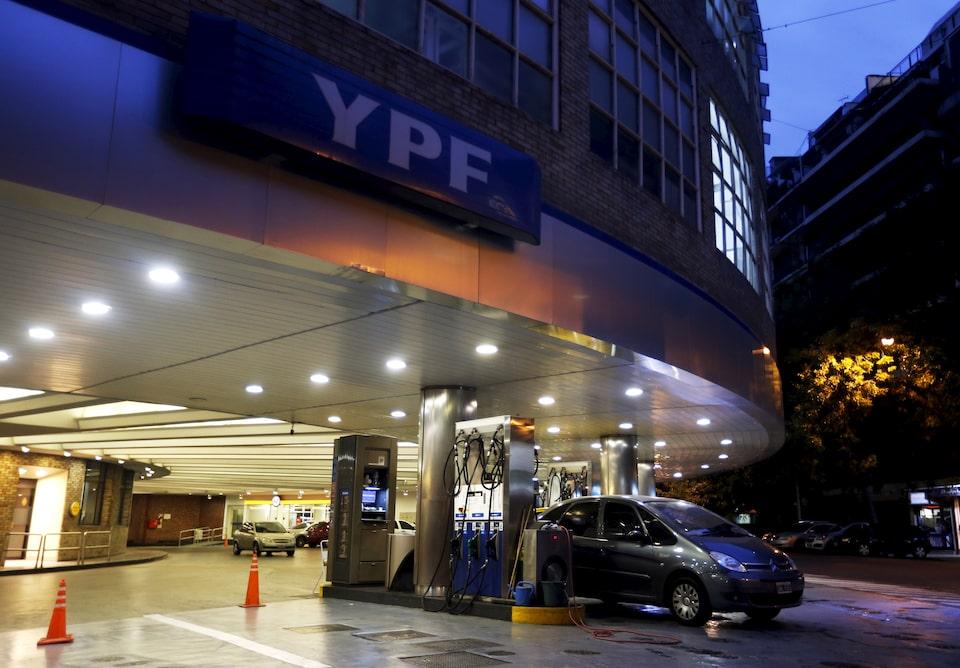
BUENOS AIRES, April 11 (Reuters) - Argentine state-run oil producer (YPFDm.BA) , opens new tab could see its core earnings this year slide on lower crude prices, a presentation to investors showed on Friday. The firm currently estimates its earnings before interest, taxes, depreciation and amortization (EBITDA) in 2025 will range between $5.2 billion and $5.5 billion, assuming Brent crude prices at $72.5 a barrel. Sign up here. However, with crude selling for around $60 a barrel, that would bring projected EBITDA down to $4.2 billion to $4.5 billion, the firm estimated. Oil prices have faced volatile price swings this week as U.S. tariffs forced traders to reconsider risks to the crude market. Prices ticked up on Friday, however, with Brent futures settling up 2.26% to $64.76 a barrel after U.S. Energy Secretary Chris Wright said Washington could move to halt Iran's oil exports, stoking concerns over global supply. Still, YPF's business operation remains resilient in uncertain times, it said in a presentation to investors in New York. Earlier this week, CEO Horacio Marin said that Argentina's sweeping shale formation, Vaca Muerta, could be profitably developed even with lower crude prices. YPF is divesting from mature oil fields to concentrate its investments in Vaca Muerta, the world's second-largest unconventional gas reserve and fourth-largest oil reserve. This year, YPF expects to spend between $5 billion and $5.2 billion, with 66% of the funds going toward shale investments. By 2030, that should come up to $5.4 billion, with 88% of spending on shale. https://www.reuters.com/business/energy/argentinas-ypf-could-see-earnings-slide-lower-crude-prices-2025-04-11/
2025-04-11 19:23
NEW YORK, April 11 (Reuters) - The U.S. Treasury said on Friday it is seeking guidance from primary dealers on stablecoins as well as potential changes to the 20-year bond auction schedule, including possibly shortening the when-issued period. The when-issued period typically begins after the announcement of a new security issue and ends the day before the actual issuance date. Trading typically occurs during this period, allowing investors to participate in the market and express their view on the price of the security. Sign up here. Meetings by the U.S. Treasury with primary dealers will be on April 24 and 25, with their input on budget deficit and debt issuance estimates, among other topics, to be considered for the refunding announcement in May. Primary dealers are trading counterparties of the New York Federal Reserve, acting as market makers on U.S. government debt. The 20-year auction is currently announced mid-month, settled at the end of the month, and has a mid-month "dated date", the period in which interest starts or accrues on a bond. The "dated date" is important for calculating accrued interest, especially when a bond is sold between interest payment dates. This schedule often results in a longer when-issued period for 20-year bond sales, including auctions of the Treasury Inflation-Protected Securities, compared to other auctions, the documents showed. The department also sought comments from dealers on the potential demand for Treasury securities as a reserve asset for stablecoins, particularly given recent Congressional action in this area. Stablecoins, a type of cryptocurrency designed to maintain a constant value, usually a 1:1 dollar peg, are commonly used by crypto traders to move funds between tokens. Their use has grown rapidly in recent years, and proponents say that they could be used to send payments instantly. The House of Representatives and the Senate have both introduced bills to create a regulatory regime for stablecoins. The Senate Banking Committee advanced one measure last month, and the House Financial Services Committee approved another last week. https://www.reuters.com/markets/rates-bonds/us-treasury-seeks-dealer-guidance-20-year-bond-auction-schedule-stablecoins-2025-04-11/
2025-04-11 19:09
US tariffs impact 70% of Peru's exports, says central bank economist Energy and critical minerals exports exempt from US tariffs Peru's economy grew 4% in Q1, central bank maintains low interest rate LIMA, April 11 (Reuters) - Newly implemented U.S. tariffs will have a moderate impact on Peru's economy, the chief economist of the Andean nation's central bank said on Friday. Peru, a major exporter of metals and agricultural commodities to the United States, now faces 10% tariffs on around 70% of its exports to the country, central bank economist Adrian Armas said. Sign up here. The rest fall under an exemption made for sectors such as energy and critical minerals, he added. "There will be an impact (from the U.S. tariffs), but with the current information, it is expected to be moderate, given that our exports do not directly compete with those of the United States," Armas said. Peruvian firms are prepared to hold on to their footprints in the U.S. despite the tariffs, he added, saying the central bank had spoken with local executives on the matter. The Andean nation's economy likely grew around 4% in the first quarter of this year, Armas added, which shows Peru's strong performance compared to its regional peers. The INEI is set to release official GDP data mid-May. On Thursday, Peru's central bank held its benchmark interest rate at 4.75% for the third consecutive time. The country has one of the lowest interest rates in Latin America and has gradually reduced its key rate from 7.75% since September 2023. https://www.reuters.com/markets/peru-economy-face-moderate-impact-us-tariffs-central-bank-says-2025-04-11/
2025-04-11 19:00
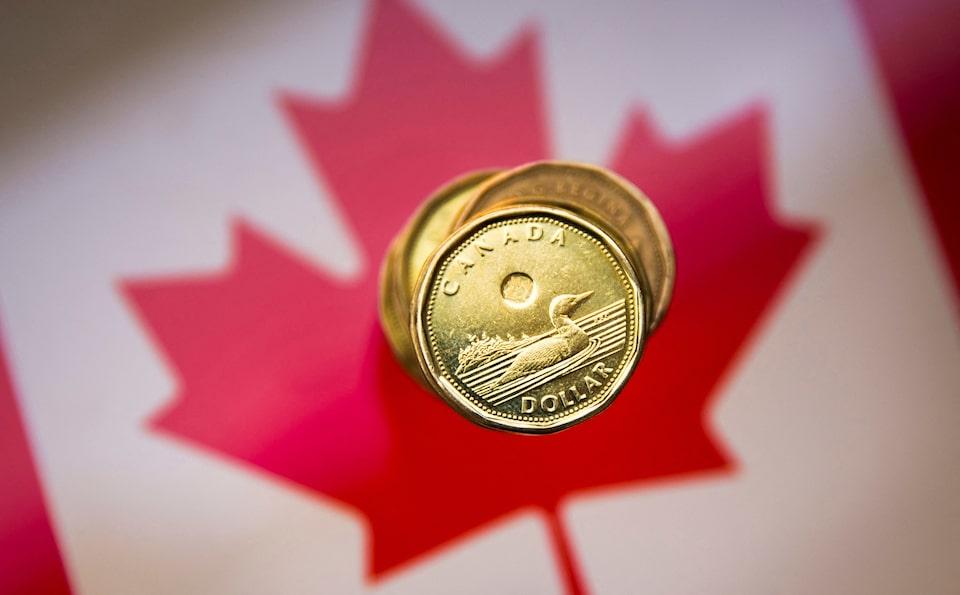
Canadian dollar gains 0.7% against the greenback For the week, the loonie adds 2.4% Investors see 60% chance BoC pauses rate hikes 10-year yield touches highest since January 24 TORONTO, April 11 (Reuters) - The Canadian dollar strengthened to a five-month high against its U.S. counterpart on Friday as the erratic nature of U.S. trade policy weighed on the greenback and ahead of a potential pause in the Bank of Canada's interest rate cutting campaign. The loonie was trading 0.7% higher at 1.3880 per U.S. dollar, or 72.05 U.S. cents, after touching its strongest intraday level since November 6 at 1.3840. Sign up here. For the week, the currency was up 2.4%, its sixth straight weekly gain and the biggest since June 2020. "The back-and-forth on the tariff front has caused the market to question the credibility of the U.S. administration as well as raise concerns over the U.S. economic outlook," said George Davis, chief technical strategist at RBC Capital Markets. "Bond and stock market selloffs point to investors exiting U.S. assets in response, with resulting pressure on the U.S. dollar serving as a benefit to the Canadian dollar." The U.S. dollar (.DXY) , opens new tab fell against a basket of major currencies and benchmark U.S. 10-year Treasury yields were on track for their biggest weekly increase in more than two decades. U.S. consumer sentiment deteriorated sharply in April and 12-month inflation expectations surged to the highest level since 1981. Investors see a roughly 60% chance the Bank of Canada pauses its easing campaign at a policy decision on Wednesday. Last month, the central bank lowered its benchmark interest rate to 2.75% and said it would "proceed carefully with any further changes" to rates given the need to assess both the upward pressures on inflation from higher costs and the downward pressures from weaker demand. Canadian bond yields moved higher across the curve but the move was less than for U.S. Treasury yields. The 10-year was up 2.7 basis points at 3.269%, after earlier touching its highest level since January 24 at 3.309%. https://www.reuters.com/markets/currencies/canadian-dollar-notches-biggest-weekly-gain-five-years-2025-04-11/
2025-04-11 16:46
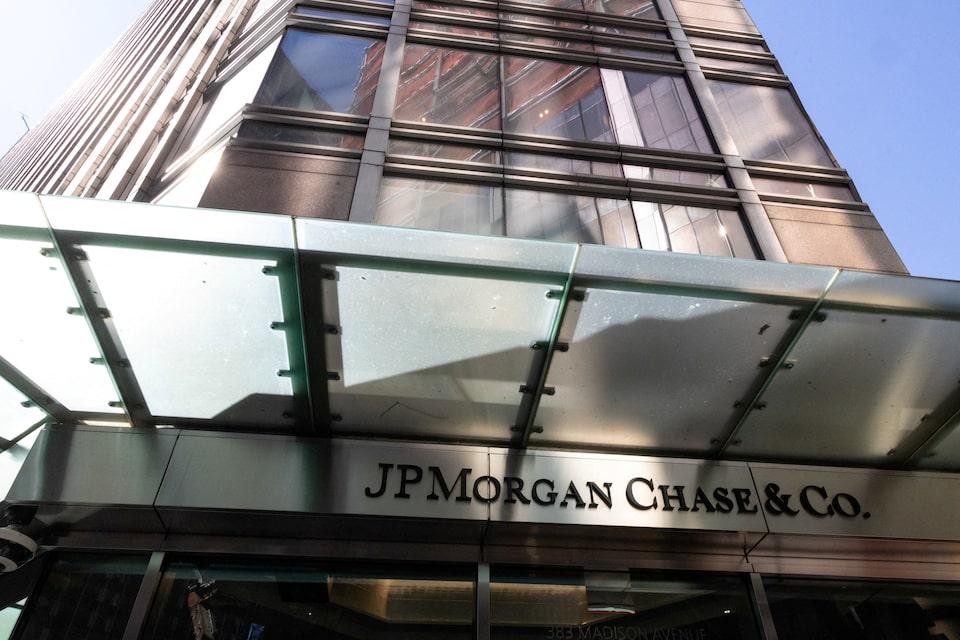
Earnings exceed estimates, driven by trading and investment banking fees Trading revenue climbs 21% CEO Dimon warns of credit risks amid market volatility JPMorgan sees 50% chance of US, global recession this year, down from 60% April 11 (Reuters) - JPMorgan Chase (JPM.N) , opens new tab topped first-quarter profit estimates on record equities trading and higher fees from debt underwriting and advising on mergers, but the bank remained wary about a possible global recession this year. CEO Jamie Dimon, who warned this week of negative consequences from trade wars, maintained his cautious tone as corporate America navigates President Donald Trump's tariffs. Sign up here. "Clients have become more cautious amid an increase in market volatility driven by geopolitical and trade-related tensions," Dimon said. "The economy is facing considerable turbulence, including geopolitics." The results from the biggest U.S. bank offer a glimpse into the implications of Trump's trade agenda. While his return to the White House boosted business optimism in the first quarter, policy uncertainty has upended those hopes. The administration last week unveiled steep reciprocal tariffs on dozens of countries, only to pause many of them on Wednesday. JPMorgan's shares rose over 3% after hitting a seven-month low earlier this week. Dimon said the bank's economists estimate a 50% chance of a U.S. and global recession this year, down from 60% earlier this month. "People are being cautious and pulling back on deals. The middle-market companies are being very cautious on investments," Dimon added. The bank increased its provisions for credit losses in the first quarter to $3.3 billion from $1.9 billion a year earlier. Consumers and businesses could struggle to repay their loans if the import levies reignite inflation and dampen economic growth. The buildup of reserves shows JPMorgan is taking a cautious approach to the economic uncertainty, which is a good signal, said Chris Marinac, director of research at Janney Montgomery Scott. Earnings were $14.6 billion, or $5.07 a share, for the three months ended March 31. That compares with $13.4 billion, or $4.44 a share, a year earlier. Excluding one-time costs, the bank earned $4.91 per share, higher than estimates of $4.61, according to data compiled by LSEG. Heightened volatility in the first quarter due to shifting expectations lifted the bank's trading business as investors quickly adjusted their portfolios. Trading revenue climbed 21% to $9.7 billion, higher than the earlier expectations of a low double-digit percentage gain. Equities trading surged 48% to a record $3.8 billion. Investment banking fees climbed 12% to $2.2 billion, helped by higher debt underwriting and advisory fees. Chief Financial Officer Jeremy Barnum said the bank was taking a cautious stance on investment banking. "Corporate clients have a bit of a wait and see attitude," said Barnum. CREDIT RISK U.S. consumer confidence plunged to the lowest level in more than four years in March amid worries of a recession and higher inflation because of tariffs. Analysts have also warned that escalating trade tensions between the U.S. and China could upend supply chains and trigger price hikes. On Monday, Dimon warned shareholders that trade wars could have lasting negative consequences, including persistent inflation and high fiscal deficits. That could strain the financial health of consumers and increase risks of loan defaults. However, the bank is so far not seeing distress signs among its clients, including low-income customers, Barnum said. There has been no weakness in the credit-card business and consumers are front-loading some spending over concerns about price increases, Barnum added. Net interest income - the difference between what the bank earns on loans and pays on deposits - rose 1% to $23.4 billion. The bank expects NII to be $94.5 billion for the full year, higher than the $94 billion it forecast earlier. Guidance for NII excluding markets remained unchanged at $90 billion. "JPMorgan continues to defy any and all odds from a performance perspective and it continues to outperform all its peers," said David Wagner, portfolio manager at Aptus Capital Advisors. "There is going to be increased uncertainty, but some of their guidance, including on net interest income, is better than what I would have had expected." While management expressed concern about uncertainty weighing on earnings, overall commentary was reassuring for investors when combined with JPMorgan's results, said Matt Stucky, chief portfolio manager of equities at Northwestern Mutual Wealth Management. "One of the key things to watch out for with regards to the bank earnings will be how consumer behavior shifts and what happens to unemployment rates," Stucky added. Dimon urged regulators to make changes to the supplementary leverage ratio, a rule that requires big U.S. banks to keep an extra layer of loss-absorbing capital. If there was a "kerfuffle," or dislocation in the market, the Federal Reserve would probably step in, but that seems unlikely at this stage, he said. "They will do it when they start to panic a little bit and we don't know if and when that is going to happen," he added. https://www.reuters.com/business/finance/jpmorgans-profit-jumps-dealmaking-trading-boost-2025-04-11/