2025-04-11 11:40
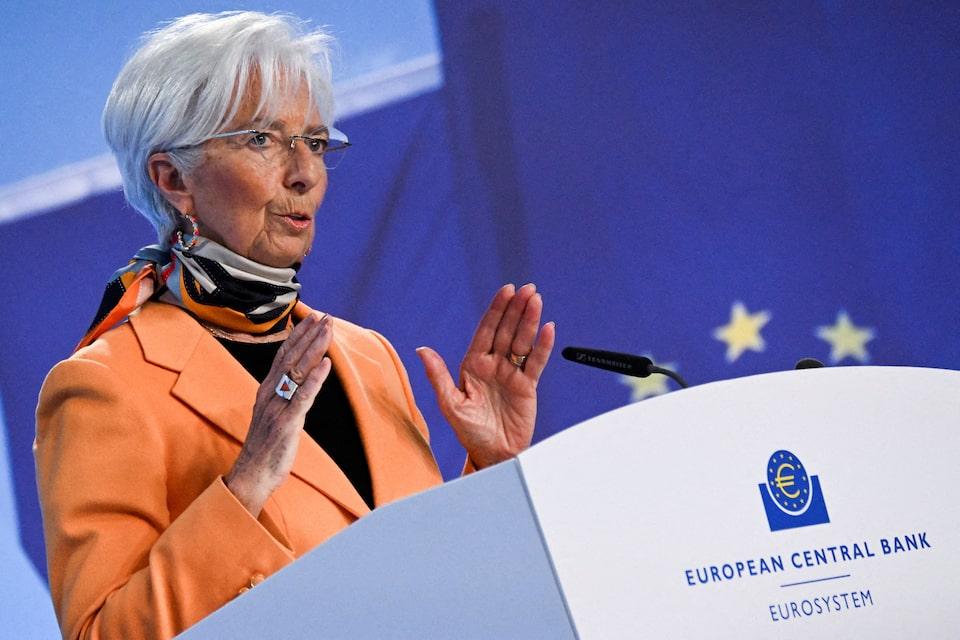
WARSAW, April 11 (Reuters) - Euro zone financial markets are functioning well despite global turbulence and the European Central Bank is ready to deploy its financial instruments to maintain financial stability if necessary, ECB President Christine Lagarde said on Friday. Markets have endured a brutal week, marked by the eruption of an all-out trade war and a bond market selloff that has ignited fears of a global recession and shaken confidence in U.S. assets. Sign up here. "In Europe and in the euro area in particular, we have observed that market infrastructures and... the bond market (are) functioning in an orderly fashion," Lagarde told a press conference in Warsaw. The dollar slid to multi-year lows against most currencies on Friday and Treasuries sold off as investors sought safer haven assets, bracing for even more volatility in U.S. assets. Lagarde said the ECB did not target any particular exchange rate but remained attentive to movements since they impact inflation and needed to be factored into economic models. The euro's trade-weighted exchange rate hit an all-time high this week, which is likely to lower inflation since these movements make imports cheaper but could also slow economic growth since exporting goods becomes more expensive. This is one of the key reasons why financial investors now think a rate cut by the ECB next week is essentially a done deal, to be followed by more easing later in the year. Lagarde said the ECB was always ready to act and had a solid track record in devising new instruments when required. "The European Central Bank is monitoring and is always ready to use the instruments that it has available, and has come up in the past with the adequate instruments and tools that were necessary in order to procure price stability, and of course financial stability, because one doesn't go without the other," Lagarde told the press conference. https://www.reuters.com/markets/europe/european-markets-functioning-well-ecb-attentive-fx-movements-lagarde-says-2025-04-11/
2025-04-11 11:26
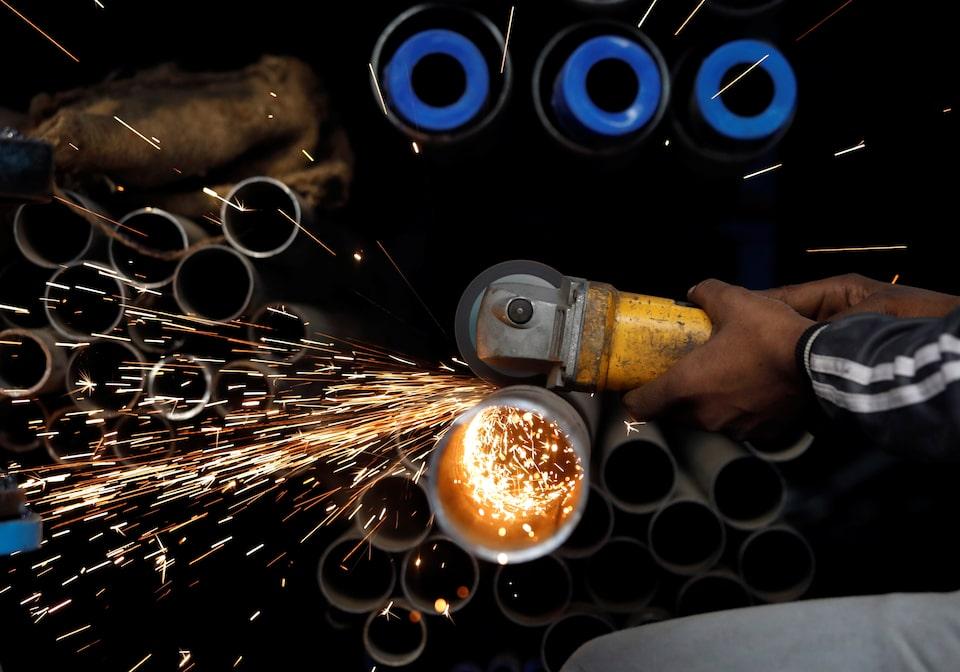
NEW DELHI, April 11 (Reuters) - India's industrial output (INIP=ECI) , opens new tab in February was its weakest since August 2024, hurt by slowing manufacturing and mining sector growth, government data released on Friday showed. Industrial output grew 2.9% year-on-year in February, missing the 4% growth expected by economists polled by Reuters. Industrial output declined 0.1% in August. Sign up here. The growth rate was revised to 5.2% in January, from the initial estimate of 5%. Manufacturing output advanced 2.9% in February, electricity generation grew 3.6% and mining activity rose 1.6%, data showed. These sectors had grown by a revised 5.8%, 2.4% and 4.4%, respectively, in the previous month. In the April-February period, industrial output increased by 4.1%. The deceleration was broad-based, with all the use-based categories and two of the three sectors barring electricity witnessing slower growth in February compared to the previous month, said ICRA economist Aditi Nayar. "While the growth performance of mining is expected to deteriorate in March 2025 relative to February 2025, this is likely to be offset by an uptick in electricity generation, amid steady manufacturing growth," she said. Industries globally are reeling under uncertainty over U.S. import tariffs, which could worsen the outlook for the manufacturing sector and weigh on economic growth. Earlier this week, India's central bank cut its growth forecast for the current year by 20 basis points to 6.5% but economists say growth could fall even further amid the global turmoil. https://www.reuters.com/world/india/indias-industrial-output-rises-29-yy-february-2025-04-11/
2025-04-11 11:18
LONDON, April 11 (Reuters) - The European Central Bank meets on April 17 with all focus on what tariff chaos means for how much further policymakers will need to cut rates. U.S. President Donald Trump first announced reciprocal tariffs around the world, including 20% on the European Union, last week before suddenly dialling back those duties on Wednesday for a 90-day period, whipsawing financial markets. Sign up here. The resulting additional time to negotiate has barely relieved jittery markets and the outlook hasn't become any more certain. "It will be very interesting how they (the ECB) walk that fine line between acknowledging what needs to be acknowledged without putting too stressed a tone to it," said Morgan Stanley chief European economist Jens Eisenschmidt. Here are five key questions for markets: 1/ Will the ECB cut rates next Thursday? Most likely. Traders fully price a 25-basis-point cut, bringing the ECB's deposit rate to 2.25% next Thursday, a move they had seen as more of a coin toss before catching on that Trump's reciprocal tariffs were really on the way. Policymakers had previously looked more divided on an April cut, but several have since suggested that tariff developments have strengthened the case for a move. 2/ How will Trump's latest tariffs impact growth and inflation? Hard to say, given negotiations ahead. But even with the 90-day reprieve, the EU is still being hit by a broad 10% tariff, not to mention higher rates on steel, aluminium and cars, so they will certainly hurt growth. Before Trump's U-turn on Wednesday, ECB sources told Reuters a previous estimate of a 0.5-percentage-point hit to growth in the first year was too low and could even exceed 1 percentage point, which would wipe out all expected growth for 2025. The impact on inflation is more ambiguous and will depend on the degree of retaliation against Trump's tariffs and, longer term, on how fragmented global trade becomes. But for now, oil prices have tanked 15% this month, the euro is up over 9% since the start of March while China, the biggest source of EU imports, is taking the biggest hit from tariffs, all pointing to further disinflation. "There is an across-the-board downward revision to the growth forecast and also because the euro has been so strong, which helps dampen inflation, (the ECB) can in the short-term focus on growth," said Principal Asset Management chief global strategist Seema Shah. 3/ So will the ECB have to speed up rate cuts? Markets sure think so. Traders now expect the ECB to cut rates twice more this year after Thursday. That's quite a change, given they had seen less than a full chance of another move this year and priced in the chance of a 2026 hike when the bank last convened in March. But economists see a more modest path. The median expectation in a Reuters poll was for just one further cut, putting rates at 2% in the second half of the year. "The fundamental problem, that we are facing very high uncertainty as to what type of economic policy we can expect out of the U.S., that has not gone away," said Morgan Stanley's Eisenschmidt, a former ECB economist. 4/ Will German stimulus come to the rescue? Not yet. Germany's historic debt-rule overhaul to ramp up infrastructure and defence spending is seen as a game changer for the European economy, but it will take time to feed through. "The economic impact of German fiscal spending is a story for 2026, not 2025," said Simon Wells, HSBC's chief European economist. 5/ How concerned is the ECB about financial stability? Policymakers don't seem alarmed yet, but have stepped up their monitoring of banks and markets. Euro zone bonds have also swung, but been less volatile than U.S. Treasuries, while the gap in borrowing costs between poorer member states and Germany, Europe's largest economy, has not widened to worrying levels. But the ECB remains concerned that financial stress could spread from non-financial entities to regular lenders in periods of market stress. Hedge funds unwinding some debt-laden bets is thought to have played a role in recent volatility. "I expect them (the ECB) to say they are ready to act if volatility in the market is unjustified by the fundamentals," said Gregoire Pesques, fixed income chief investment officer at Europe's largest asset manager Amundi. Indeed, ECB chief Christine Lagarde said on Friday the bank is ready to deploy its instruments to maintain financial stability and has a solid track record in devising new tools when required. (This story has been refiled to remove the extraneous word ‘market’ in paragraph 23) https://www.reuters.com/markets/europe/all-about-tariffs-five-questions-ecb-2025-04-11/
2025-04-11 11:08
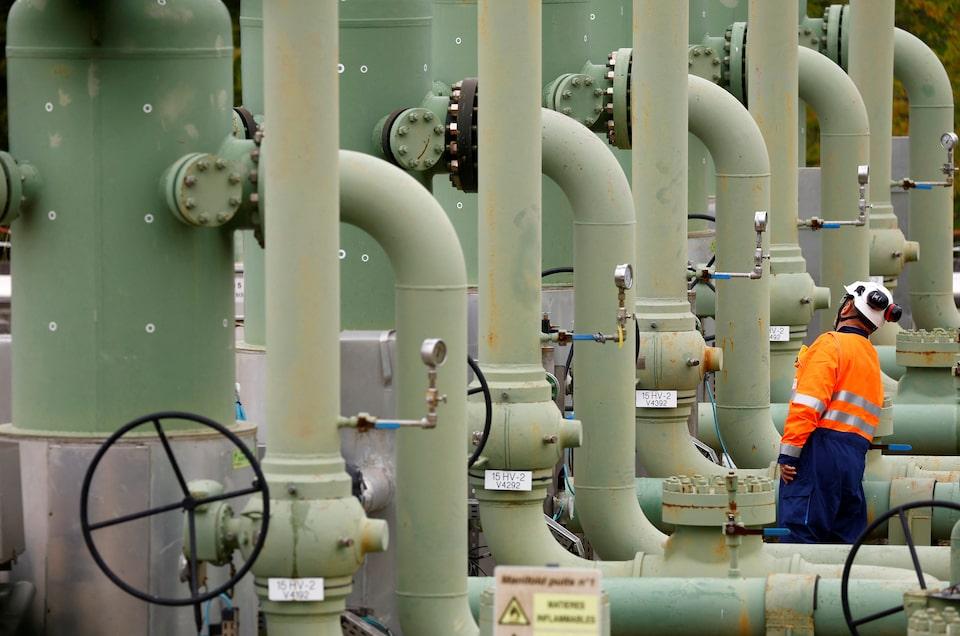
Countries back loosening targets to fill gas storage Changes affect 2026 and 2027, plus 2025 if approved fast enough Changes would let countries miss 90% filling goal by 10 percentage points EU countries, lawmakers will now negotiate final rules BRUSSELS, April 11 (Reuters) - European Union countries on Friday backed looser rules on filling gas storage ahead of winter, amid concerns that the bloc's current binding regime inflates gas prices. The EU's gas storage rules were introduced in 2022 to ensure EU countries had a buffer of stored fuel during winter, after Russia cut gas deliveries, sending Europe's gas prices soaring. Sign up here. Ambassadors from EU countries approved the planned changes in a meeting on Friday, the council of the EU said in a statement. The changes would let countries deviate by 10 percentage points from the EU's requirement to fill gas storage to 90% of capacity ahead of winter, if market conditions are unfavourable. The existing regime includes a binding commitment to fill storage to 90% capacity by November 1 this year. Countries agreed to keep this binding goal, but proposed amending its deadline to allow them to reach it at any time between October 1 and December 1. Countries must now negotiate the final rules with the European Parliament. Negotiations are due to begin in May. The changes will apply to EU filling targets for 2026 and 2027. They will also amend this year's November target if countries and lawmakers approve them before that date. Countries, including Germany, France and the Netherlands, have warned that the rules inflate gas prices by signalling to market participants when European buyers need to buy large volumes. The negotiating stance backed by EU member countries would also let them deviate by an extra five percentage points from the 90% target in certain circumstances - for example, if technical constraints mean a storage facility takes more than 115 days to fill. Countries also want to make voluntary the EU's binding intermediate filling targets for the months leading up to November. Industry group Eurogas urged policymakers to finalise the changes by July. The group said in a statement that uncertainty over the rules "creates additional challenges for market operators in making informed decisions regarding storage filling". Benchmark EU gas prices have tumbled since February, retreating to a near-nine-month low this week, in reaction to concerns of the economic fallout from U.S. President Donald Trump's trade war, as well as the push from EU countries to ease storage-filling targets. https://www.reuters.com/business/energy/eu-countries-agree-soften-gas-storage-rules-diplomats-say-2025-04-11/
2025-04-11 10:45
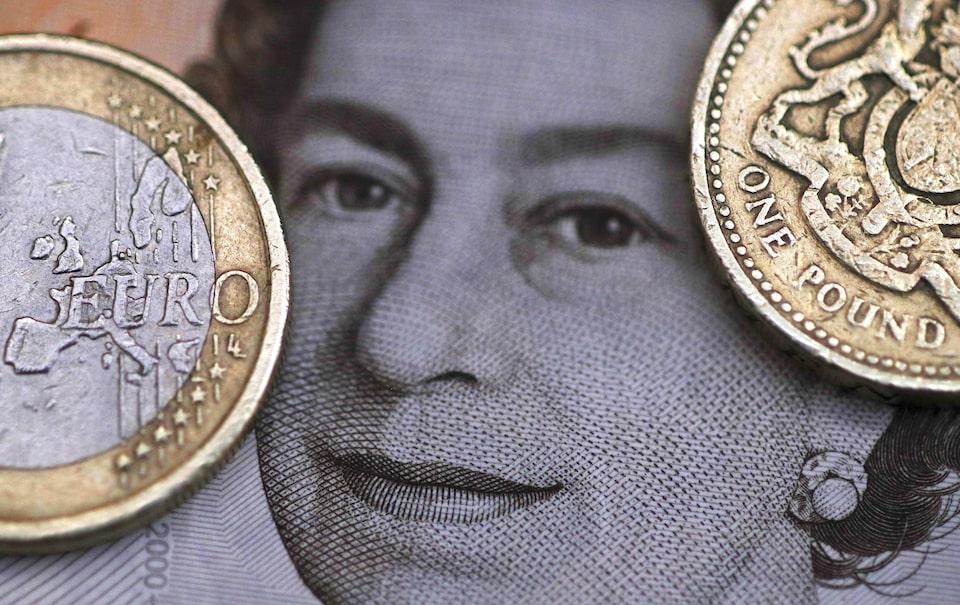
LONDON, April 11(Reuters) - The pound fell versus the euro and rose versus the dollar on Friday, reflecting a sell-off in U.S. assets as traders flee to safe-haven currencies amid an escalating global trade war, while better-than-expected UK GDP figures barely moved the dial. At 1004 GMT, the pound was 1% higher versus the dollar at $1.30950, and 0.5% lower versus the euro at 0.8675. Sign up here. Heavy dollar selling has seen the greenback plunge versus a range of currencies, as investors' confidence in the world's largest economy flags. Safe-haven currencies such as the Swiss franc and euro are meanwhile at multi-year highs as traders dump U.S. assets. "The story with sterling it is more sensitive to risk sentiment than the euro ... and it's less liquid than the euro, in general it makes sense in these conditions to have euro/sterling move higher. When it comes to cable, it is just a dollar story," Francesco Pesole, FX strategist at ING, said. Earlier on Friday, official figures showed Britain's economy returned to growth in February with its fastest expansion in 11 months, beating economists' expectations. The pound barely moved on the news as attention remained squarely on tariff-related developments, with China slapping additional tariffs on the U.S. on Friday morning in a further escalation of the trade war. One additional factor weighing on sterling is the gilt market, Pesole said. "At a moment where bond market instability is driving outflows from the U.S. dollar in the U.S., markets are looking at bond market instability in the UK," he said. Thirty-year gilt yields plunged 16.8 bps on Thursday - their biggest daily drop in over two years - but on Friday resumed the upward climb seen since Trump's tariffs roiled markets. https://www.reuters.com/markets/currencies/sterling-falls-against-euro-rises-versus-dollar-traders-focus-trade-war-2025-04-11/
2025-04-11 10:44
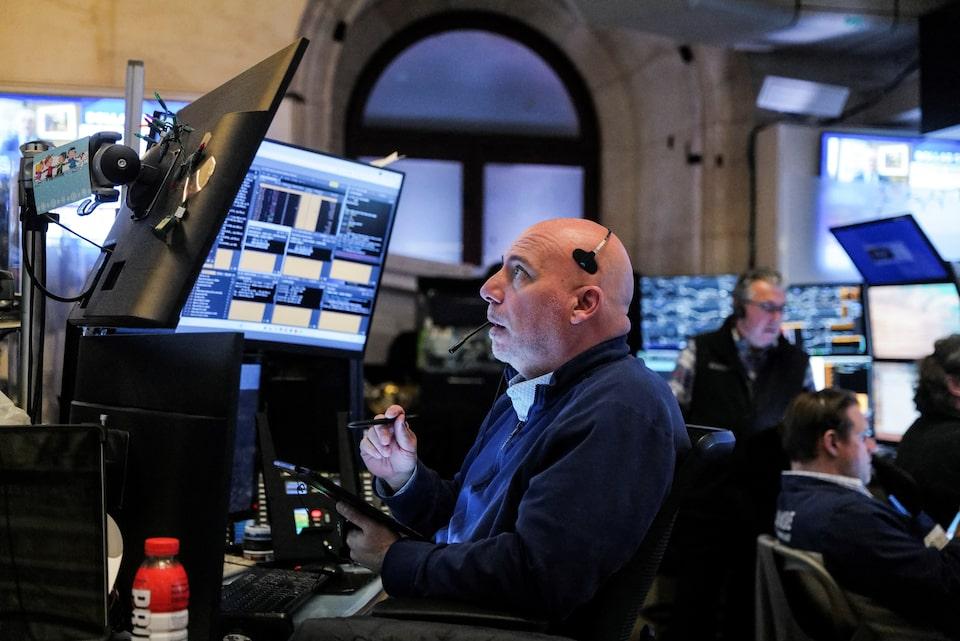
LONDON, April 11 (Reuters) - What matters in U.S. and global markets today By Mike Dolan , opens new tab, Editor-At-Large, Financial Industry and Financial Markets Sign up here. It's Friday, so today I'll provide a quick overview of what's happening in global markets and then offer you some weekend reading suggestions away from the headlines. Today's Market Minute * The brief reprieve for battered stocks seen after President Donald Trump decided to pause duties for dozens of countries quickly dissipated, as attention returned to his escalating trade war with China that has fuelled global recession fears. * Safe-haven gold surpassed the key $3,200 mark for the first time on Friday, spurred by a weaker dollar and economic concerns due to an intensifying trade war. * Just before President Donald Trump's social media post on Wednesday pausing tariffs, some unidentified options traders placed bets worth millions of dollars that the market would rebound, data shows. Some Democratic lawmakers are calling for investigations into whether Trump's policy reversal led to any market manipulation or insider trading. * China said on Thursday it would immediately restrict imports of Hollywood films in retaliation for President Donald Trump's escalation of U.S. tariffs on imported Chinese goods, targeting one of the most high-profile American exports. * In hope of avoiding punishing U.S. tariffs, Vietnam is prepared to crack down on Chinese goods being shipped to the United States via its territory and will tighten controls on sensitive exports to China, according to a person familiar with the matter and a government document seen by Reuters. Capital flight fears sink dollar As the U.S.-China trade war escalates and overseas investors brace for another three months of seemingly daily shifts in U.S. policymaking and whiplashes on Wall Street, the dollar is sinking on fears of foreign capital flight from America. Wall Street stocks (.SPX) , opens new tab suffered a relapse on Thursday, which wiped out a third of the prior day's surge. This was matched by an ongoing selloff in Treasury bonds . Now markets are bracing for a string of U.S. company profit warnings as the corporate earnings season kicks off in earnest later today. But the dollar's slide and the dash for overseas havens may be generating the most anxiety, with the dollar's DXY index (.DXY) , opens new tab index hitting its lowest in three years, led by the euro's surge to its highest since early 2022 and the Swiss franc's climb to its strongest in 10 years. Gold prices - now up 23% for the year so far - soared anew to record highs. This all partly reflects the alarming levels of uncertainty and fears about the direction of the U.S. economy, but some economists reckon the move is also a matter of simple math. If Washington is intent on wiping out the U.S. trade deficit, it also has to accept an evaporation of the counter-balancing capital surplus, essentially the excess of overseas investments in America over U.S. investments abroad. The resulting weaker dollar may be the holy grail that some in the administration are seeking to regain U.S. export competitiveness, but it could come with a huge and destabilising cost. Bank of America's weekly tally of mutual fund flows suggests this flight was already underway this week. Foreign investors shed $6.5 billion of U.S. equity in the five trading sessions ending on Wednesday, while funds holding U.S. 'junk' bonds saw the biggest weekly outflow on record of almost $16 billion. This relatively narrow set of fund metrics is small beer against the bigger picture of foreign exposure to U.S. markets, hence the growing concern playing out in the currency market. Using Federal Reserve data, Apollo chief economist Torsten Slok showed how foreigners own a fifth of the U.S. equity market, with some $18.5 trillion of holdings, as well as almost one third of both the Treasury and U.S. corporate bond markets, some $7.2 trillion and $4.6 trillion, respectively. TS Lombard chief economist Dario Perkins sliced the Fed numbers in a different way. He points out that the world has accumulated an exposure to U.S. equity of around $14 trillion since 2012, with Europe responsible for roughly half that, more than the entire market cap of the Euro Stoxx 50. Meanwhile, the surging euro, on course for its biggest weekly rise since 2020, is pricing in the likelihood of another European Central Bank interest rate cut next week. What next? As stocks around the world sink yet again on Friday, with the notable exception of China and Hong Kong bourses likely buoyed by official state buying, U.S. stock futures remained in the red ahead of earnings reports from the big U.S. banks today. With China appearing ready to go toe-to-toe with the U.S., the two biggest economies in the world have now effectively placed trade embargoes on each other, intensifying fears of a global economic crunch. Weekend reading and listening suggestions Here are some reading and listening suggestions to help you make sense of today's volatile financial markets and evolving geopolitical landscape. 1. Undone alliances. The latest issue of the Council on Foreign Relations' Foreign Affairs magazine leads with an article on "Underestimating China" , opens new tab by Kurt Campbell and Rush Doshi. They argue the United States can only compete strategically with China by building coalitions, not by retreating from them. "If the United States fails to pursue scale with others, or retreats to the Western hemisphere while undoing its alliances, the contest for the next century will be China's to lose." 2. Churchill and the dollar. In a column for Project Syndicate, University of California, Berkeley professor and respected currency scholar Barry Eichengreen , opens new tab argues the United States should heed the lessons of how sterling lost its status as the global reserve currency a century ago. "What was achieved over a long period could be demolished in the blink of an eye – or with the stroke of a president's pen." 3. Fentanyl fight. A Reuters Special Report by correspondents Maurice Tamman, Laura Gottesdiener and Kristina Cooke shows how Federal spending cuts instigated by the White House threatens to reverse what was a steep decline in American overdose deaths and potentially jeopardize other gains in the battle against synthetic opioids. 4. Brexit hit. With the world wondering how to calculate the impact of unravelling deeply integrated trade relationships, a study published on the Centre for Economic Policy Research , opens new tab's (CEPR) VOXeu website shows how Brexit led to 6.4% drop in worldwide UK exports and a 3.1% drop in imports. 5. Independence in name. In a CEPR podcast, former Bank of England policy maker and Citigroup chief economist Willem Buiter , opens new tab discusses central bank independence and how the relationship between central banks and governments, particularly their role as financial agents of the state, creates potential risks that could threaten economic stability. 6. French deportations. Hundreds of foreign nationals previously protected because they grew up in France now face the risk of expulsion under legislation introduced last year. Reuters correspondents Sofia Christensen, Juliette Jabkhiro and Layli Foroudi interview some of those affected and detail the impact of the new laws. 7. China InetlLip-Bu Tan, the man chosen to lead Intel, the U.S.'s largest chip maker, has invested in hundreds of Chinese tech firms, including at least eight with links to the People's Liberation Army, according to a Reuters review of corporate filings. The report by Reuters correspondents Eduardo Baptista, Stephen Nellis and Max A. Cherney shows how Tan, one of Silicon Valley's longest-running investors in Chinese tech, raised questions among some investors about the extent of his ongoing involvement with businesses in China. Chart of the day Foreign investors in U.S. assets are clearly spooked by Washington's trade war and concerned about radical shifts in U.S. policymaking, alliances and government institutions. If they decide to repatriate their capital longer-term, it could undermine U.S. financial markets considerably. By way of illustrating just how much, Apollo chief economist Torsten Slok this week outlined the scale of these massive holdings. Today's events to watch * U.S. March producer price report, University of Michigan April consumer sentiment survey * New York Federal Reserve President John Williams, Boston Fed President Susan Collins, St Louis Fed chief Alberto Musalem speak * US corporate earnings: JPMorgan, Morgan Stanley, Bank of New York Mellon, Wells Fargo, BlackRock, Fastenal * Eurogroup and other European Union finance ministers meet in Warsaw, with European Central Bank President Christine Lagarde * Spanish Prime Minister Pedro Sanchez meets China's President Xi Jinping and Premier Li Qiang in Beijing Opinions expressed are those of the author. They do not reflect the views of Reuters News, which, under the Trust Principles , opens new tab, is committed to integrity, independence, and freedom from bias. https://www.reuters.com/markets/us/global-markets-view-usa-2025-04-11/