2025-04-11 10:35
WARSAW, April 11 (Reuters) - The European Central Bank is ready to deploy its instruments to maintain financial stability and has a solid track record in devising new tools when required to deal with turbulence, ECB President Christine Lagarde said on Friday. "The European Central Bank is monitoring and is always ready to use the instruments that it has available, and has come up in the past with the adequate instruments and tools that were necessary in order to procure price stability, and of course financial stability, because one doesn't go without the other," Lagarde told a press conference. Sign up here. https://www.reuters.com/business/finance/ecb-ready-deploy-its-instruments-maintain-financial-stability-lagarde-says-2025-04-11/
2025-04-11 10:31
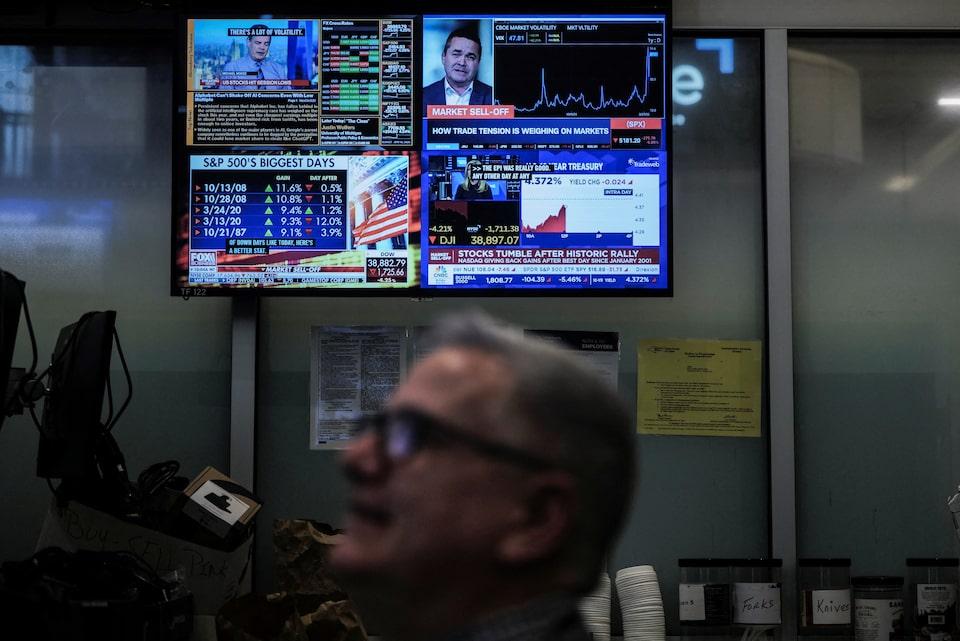
More than $5 trillion wiped out since 'Liberation Day' Bond market meltdown 'has no precedent' - strategist U.S. dollar wobbly, investors question safety of U.S. assets SINGAPORE/LONDON, April 11 (Reuters) - The pain, said Shuntaro Takeuchi, was 10 out of 10. Not in the portfolio of Japanese stocks he runs out of San Francisco, California, but in his appendix. Sign up here. It would have to come out, just as his colleagues at Matthews Asia were on a phone call to chart the $7 billion asset manager's path through a deepening market rout. "I was on a conference call two minutes before the surgery," said Takeuchi. "The nurse was like: 'Do you really have to attend this?'" In Tokyo, the Nikkei was on its way to Wednesday's 4% drop and trillions were being wiped from global equities, the largest dollar-value drops of any market drawdown on record. The 10 trading days since U.S. President Donald Trump hit automakers with tariffs have been the most convulsive since the pandemic panic of 2020, as prices of stocks to bonds, oil, gold and even the U.S. dollar itself have swung wildly. Selling in U.S. Treasuries - the lynchpin safe asset in global markets - was the heaviest for decades, as if to underline how the foundations of trade and finance have been shaken. The meltdown began in the wake of what Trump called "Liberation Day". He raised, on April 2, the highest wall of tariffs around the U.S. economy in a hundred years with a blanket 10% tax on imports and even higher rates on individual trading partners. In the week that has followed that has morphed into open economic conflict with China, which by Friday was all but under a U.S. trade embargo as tariffs rose to 145%. More than $5 trillion in market value has vanished from the MSCI all-country index (.MIWD00000PUS) , opens new tab of world stocks during the roller-coaster ride since April 2. It has exposed how investors were unprepared for the aggression of Trump's tariffs and that his unpredictability and reversals risk harming the United States' place at the centre of the financial universe. "We've had a fracturing of confidence and we don't know what the second-order effects of that are from the market falling," said Geoff Wilson, a veteran fund manager in Australia. "There could be some hedge funds that have gone under, there could be other consequences which will only become clear over the next few weeks." His funds were buyers in the turmoil. TOMB SWEEPING At first the epicentre of selling was in any sort of exposure to economic growth - banks, industrial metals and firms such as Apple with supply chains anchored in China. Then, just before sundown on April 4 in Beijing, on tomb sweeping day - a national holiday to pay respects to ancestors, China retaliated and put a 34% tariff on imports from the U.S. Oil plunged to a four-year low and the main global stock market index tipped past the threshold for what market-types call a "correction" - a drawdown of 10% or more from a peak. Even gold , seen as a haven in times of turmoil, started tumbling, an ominous sign as investors who faced margin calls were forced to sell their safest assets to square losses. For Wong Kok Hoi, founder and chief executive officer of APS Asset Management in Singapore, it was a scenario he has been worrying about for years. "Obviously, I did not in my wildest dreams think tariff rates could go up as high as 125%," he said, as subsequent days saw tit-for-tat levies ratchet higher. "Basically, trade will stop between the two largest economies in the world." Handily, for him, he had positioned into China's semiconductor, artificial intelligence and biotechnology sectors and said his portfolio was up some 20% for the year so far. TRADE WAR On Wall Street, bankers dialled in to global meetings and tried to reassure rattled clients. There were hopes, last weekend, that Trump would relent before the tariffs actually hit. But returning from a weekend golfing reporters asked him about markets on Air Force One on Sunday and he replied that "sometimes you have to take medicine." That opened the floodgates. Nasdaq 100 futures were soon down more than 5% and Nikkei futures hit a circuit breaker after diving 8%, then kept falling. The CBOE Volatility Index (.VIX) , opens new tab, nicknamed Wall Street's "fear gauge", spiked above 60 - a level usually seen during meltdowns such as 2020 or the 2008 financial crisis. The S&P 500 (.SPX) , opens new tab finished the day 17% below a record high it had hit just seven weeks earlier. Christopher Forbes, head of Asia at CMC Markets said Friday and Monday were the highest volume trading days on record. Takeuchi, in California, aside from his rush to surgery, was trying to make sure his portfolio was as sheltered as possible. "We did trade," he said, buying and selling when stocks in his book or watch list hit target or buy prices, finding companies with limited U.S. exposure, but not wanting to make big bets on sectors or the outcome of Trump's trade war. "I don't want to be too dramatic about it. What we are doing is to not panic, control the risk and focus on stock selection." BOND FIRE For months currency markets, as the means of global trade, were expected to be the front line for price adjustments to tariffs. The shock, instead, came from bonds. Shortly after the tariffs took effect in the middle of the New York night, a massive wave of selling hit Treasuries in Asia on Wednesday. Yields, which usually make small moves since the market is liquid and deep, rose wildly and unleashed the most manic phase - so far - of markets' tariff tantrum. The 10-year Treasury yield jumped nearly 20 basis points in two hours in what traders took as a signal of either forced selling somewhere in the market, or even more worryingly, that U.S. bonds were faltering as a safe haven. But within hours, markets were whipsawed again. Trump stunned the world by announcing a pause on the heavier bilateral tariffs, keeping a blanket 10% tax on imports and raising levies again on China. Equities roared higher, notching some of the largest percentage gains since 2008, but with so much uncertainty they have started to wobble again. WHIPLASH Martin Whetton, Westpac's head of financial markets strategy and a 30-year veteran of markets in Sydney and London, said Wednesday's trade in fixed income had no historical precedent. "That money did not scramble to secure U.S. dollar funding, to buy Treasuries and the U.S dollar for safety, is startling and a sharp warning," he said. By Friday, the eleventh session since Trump's auto tariffs were announced, exhaustion had set in but there was little sense of dust settling. Beijing on Friday increased its tariffs on U.S. imports to 125%. Stocks fell , opens new tab, the dollar sank to a decade-low on the safe-haven Swiss franc and talk turned to whether the period marks the beginning of the end of U.S. dominance of global finance. "It's like we had a year of trading in a few days," said Jack McIntyre, portfolio manager for Brandywine Global, U.S, which runs almost $60 billion in assets. "You focus on things that you know," he said, with a view to further falls in the dollar as the U.S. economy slows down and, maybe, the rest of the world keeps selling U.S. assets. https://www.reuters.com/markets/wealth/global-markets-tariffs-ticktock-pix-2025-04-11/
2025-04-11 10:16
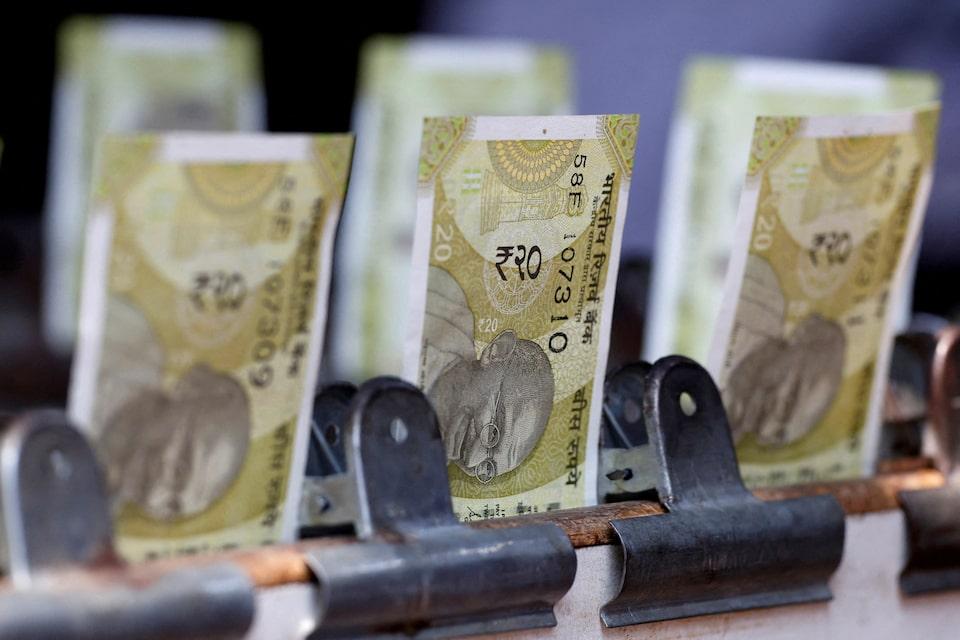
MUMBAI, April 11 (Reuters) - The Indian rupee logged its worst week since February as drastic shifts in U.S. trade policy sparked volatility in global markets and weighed on risk assets, but also pummelled the dollar, which helped limit the losses. The rupee closed out the week 0.9% weaker, though it ended up 0.7% to 86.04 per U.S. dollar on Friday. Sign up here. Worsening sentiment on the dollar helped boost Asian currencies on Friday, with the offshore Chinese yuan also up 0.1% despite an escalation in the Sino-U.S. trade war. Beijing said it is raising tariffs on U.S. goods to 125%, in response to U.S. President Donald Trump's 145% levy. On the day, the dollar index was down 0.7% after touching a three-year low as trade policy shifts have ignited fears of a U.S. recession and shaken confidence in U.S. assets. Even though the U.S. has paused "reciprocal" tariffs for all countries, excluding China, the dollar has lost out against the euro and safe-haven currencies such as the Japanese yen and the Swiss franc. "In this environment it is hard to see any near-term revival in U.S. dollar confidence," MUFG Bank said in a note. The dollar's worsening fortunes have helped the rupee, as traders exited short bets on the local unit. While the currency touched a peak of 85.96 on the day, dollar demand from importers ate into some of the gains. Meanwhile, dollar-rupee forward premiums fell on interbank forward dollar sales and a slight reduction of bets that the Federal Reserve could cut interest rates as soon as May. The 1-year implied yield was down 8 basis points at 2.25%. Traders reckon that the rupee's trajectory will depend on how enduring the dollar's losses are, and how the Chinese yuan reacts in response to shifting U.S. trade policies. If the yuan weakens, "markets will try to push up USD/INR but a weaker dollar could lighten the pressure," a Singapore-based trader at a bank said. https://www.reuters.com/markets/currencies/rupee-posts-worst-week-two-months-dollar-slump-cushions-fall-2025-04-11/
2025-04-11 08:03
SINGAPORE, April 11 (Reuters) - In just a week, the dollar has gone from a safe haven to investors' whipping boy as U.S. President Donald Trump's chaotic tariffs on friend and foe alike undermine decades of trust in the world's reserve currency. The sudden loss of confidence was nowhere more stark than in the Treasury market, which saw the largest weekly increase in borrowing costs since 1982 as offshore funds fled. Sign up here. "The U.S., almost overnight, it seems to have lost its safe-haven attributes," said Ray Attrill, head of FX strategy at National Australia Bank. "There is ... a loss of confidence to some extent ... you're overlaying that with the loss of exceptionalism and the view that in the short-term, at least, it's the U.S. economy that's going to be suffering more than any other from what's happening on the tariff front." The dollar, already on course for its worst year since 2017 , on Friday plunged to a decade-low against the Swiss franc and dropped to its weakest level against the euro in more than three years. "The whole premise of the dollar as a reserve currency is being challenged, effectively, by what we've seen since Trump's election," said Attrill. It was the establishment of the Bretton Woods system in 1944 that cemented the greenback's global standing. Post-war planners devised a system built on exchange rate stability and deepening international trade and the dollar remained dominant even after Bretton Woods broke down in the early 1970s. But Trump's recent moves on trade have shaken perceptions. In a matter of days he has imposed hefty tariffs on the world, made an abrupt U-turn on his decision and intensified a trade war with China, throwing into question the reliability of the U.S. administration. Stocks globally have shed trillions of dollars and world markets have gone into a tailspin. "Regardless of how the next 90 days evolve, the U.S.'s international reputation has been eroded," ANZ group chief economist Richard Yetsenga said in a note. "The global economy is in a weaker position than it was before the tariffs." Martin Whetton, head of financial markets strategy at Westpac, said this week's massive shift in U.S. dollar swap spreads, the "sharp flash-crash" move higher in U.S. Treasury yields and the heavy selloff in the dollar showed "a stripping away of the shield of liquidity and safety". "By losing or diminishing credibility as a financial safe haven, the willingness of creditors to lend money to the U.S. is reduced," he said. Things are so bad that the U.S. now has to pay investors more to borrow their money than Italy, Spain or Greece. To be sure, some believe the dollar selloff could be temporary. "Once the uncertainty is more or less gone, the tariff rates are set, there's no back and forth, we'll see the dollar getting stronger again because the eventuality is that the tariffs are set in place and this is the new normal," said Francis Tan, chief strategist for Asia at Indosuez Wealth Management. But even if it does prove short-lived, any erosion of the dollar's standing as a safe-haven is bad news for investors. For those who have piled trillions of dollars into buoyant U.S. markets in recent decades, a sharp dollar fall could result in higher interest rates for longer as price pressures at home persist, which is bad for bonds and equities. Foreigners owned $33 trillion of U.S. debt and stocks at the end of 2024. "The Trump administration's ambitious agenda to reform the international financial system seems almost oblivious to the reality of America's extreme dependence on foreign capital as reflected in its net international investment position," said Chris Wood, global head of equity strategy at Jefferies, in a note. https://www.reuters.com/markets/currencies/mighty-us-dollar-feels-heat-trumps-tariffs-spark-trade-turmoil-2025-04-11/
2025-04-11 08:01
April 11 (Reuters) - Energy group BP (BP.L) , opens new tab expects its first-quarter gas marketing and trading result to be "weak" while net debt will rise, the company said on Thursday, sending its shares down in early trading. The update offers an early glimpse into BP's quarterly performance with scrutiny of its debt and spending intensifying following activist investor Elliott Management's build-up of a stake in the company in recent months. Sign up here. BP did not give further details on its gas trading result. Energy companies rarely reveal details of their trading divisions. BP shares were down about 2.7% in early trading, compared with a 1.3% fall in a broader index of energy companies (.SXEP) , opens new tab. The company is due to report first-quarter results on April 29. The British oil major said it expects net debt to increase from the previous quarter by about $4 billion, citing seasonal builds in inventories and the timing of payments, including annual bonuses and costs related to low-carbon asset sales. In a strategy revamp in February, BP CEO Murray Auchincloss pledged to cut BP's net debt from about $23 billion at the end of last year to between $14 billion and $18 billion by the end of 2027. BP, meanwhile, expects earnings from its oil production and operations segment to be broadly flat from the previous quarter while upstream production will dip as asset sales in Egypt and Trinidad dent gas output. Stronger refining margins are expected to contribute between $100 million and $300 million to first-quarter earnings while oil trading is expected to be flat, the company added. https://www.reuters.com/business/energy/bp-forecasts-lower-first-quarter-reported-upstream-production-2025-04-11/
2025-04-11 07:36
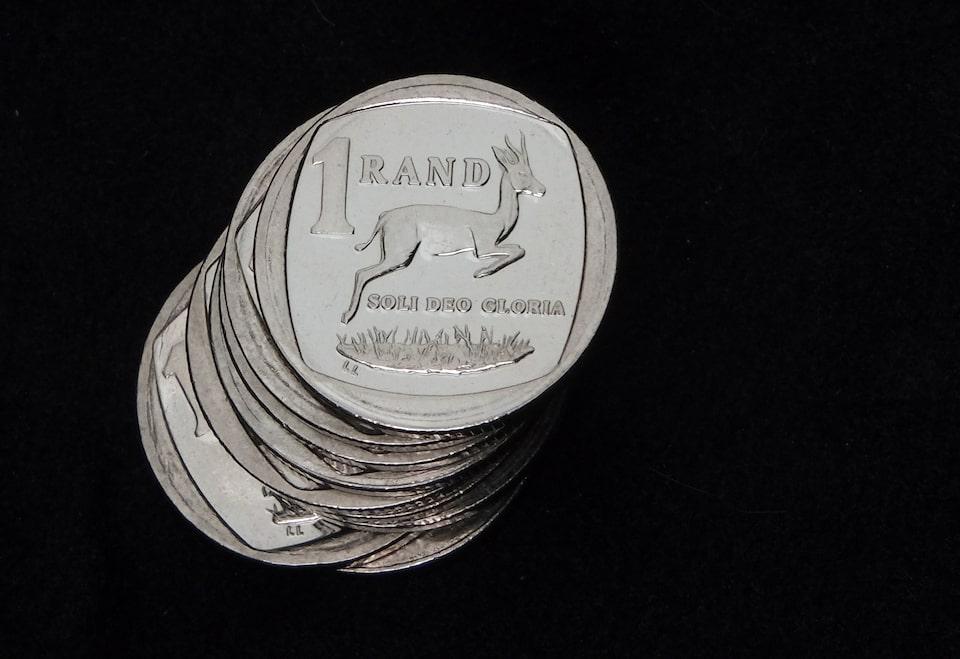
JOHANNESBURG, April 11 (Reuters) - The rand gained in early trade on Friday, making a cautious recovery after this week's global tariff turmoil, but worries lingered over U.S. President Donald Trump's next trade move and over whether South Africa's coalition government might split. At 0720 GMT the rand traded at 19.3675 against the dollar , roughly 0.5% stronger than Thursday's closing level. Sign up here. The risk-sensitive currency has been highly volatile this week. It fell steeply on Monday and Tuesday and hit a record low against the dollar on Wednesday, before staging a sharp relief rally after Trump announced a 90-day pause in higher tariff rates on dozens of trading partners including South Africa. Analysts said the rand would continue to move on global developments in Trump's tariff war, as well as local headlines on the future of the market-friendly coalition government. The two biggest parties in the coalition, the African National Congress (ANC) and the pro-business Democratic Alliance (DA), clashed over the budget last week, with the DA voting against it in parliament and challenging it in court. The ANC and DA are due to meet on Saturday to discuss the budget impasse. The benchmark 2030 government bond was marginally weaker in early deals, as the yield rose 1 basis point to 9.25%. https://www.reuters.com/markets/currencies/south-african-rand-stages-cautious-recovery-tariff-coalition-worries-linger-2025-04-11/