2025-04-11 07:11
Taiwan hopes to speed ahead with U.S. tariffs talks Taiwan had due to be hit with 32% tariff Neither Taiwan nor U.S. have given timeframe for talks TAIPEI, April 11 (Reuters) - Taiwan is to be included in the first batch of trading partners to hold talks with Washington, President Lai Ching-te said on Friday, as his economy minister said the island could import over $200 billion worth of U.S. goods, much of it in energy. U.S. President Donald Trump said on Wednesday he would temporarily lower the hefty duties he had just imposed on dozens of countries while further ramping up pressure on China. Taiwan, a major semiconductor producer, was due to be hit with 32% tariffs. Sign up here. Countries around Asia have already said they have begun or are preparing to begin talks with Washington over the tariffs, and the White House has said nearly 70 countries have reached out to begin negotiations. "We are in the first batch of negotiations, and the government will be well prepared," Lai told business leaders in the central Taiwanese city of Taichung, in comments broadcast live by local media, without offering a timeframe. "Taiwan's desire to strengthen economic and trade cooperation with the United States over the past years can be (fulfilled) by taking this opportunity," he added. The office of the United States Trade Representative did not immediately respond to a request for comment sent outside of office hours in Washington. Speaking to reporters at parliament in Taipei, Economy Minister Kuo Jyh-huei, who said on Thursday Taiwan could buy $200 billion more from the U.S. over 10 years and increase LNG imports as part of a trade deal, said it could be more than that amount. "This is just the part from the economy ministry," he said, adding much of the imports could be energy-related. Taiwan has not said when formal talks with the United States might start. But Foreign Minister Lin Chia-lung told reporters he hoped a consensus with the United States could be reached within 90 days. "Taiwan and the United States have been communicating smoothly and have continued to make arrangements for the tariff talks," he said. President Lai on Sunday offered zero tariffs as a basis point for talks with the United States, saying Taiwan would buy more from and invest more in the country. Taiwan, home to the world's largest contract chipmaker TSMC (2330.TW) , opens new tab, has long sought a free trade deal with the United States. The United States is Taiwan's most important international backer and arms supplier, despite the absence of formal diplomatic ties. Taiwan faces increase military and political pressure from its giant neighbour China, which views the democratically governed island as its own territory. Taiwan's government rejects those claims, saying only the island's people can decide their future. https://www.reuters.com/world/asia-pacific/taiwan-be-one-first-talk-tariffs-with-us-president-says-2025-04-11/

2025-04-11 07:06
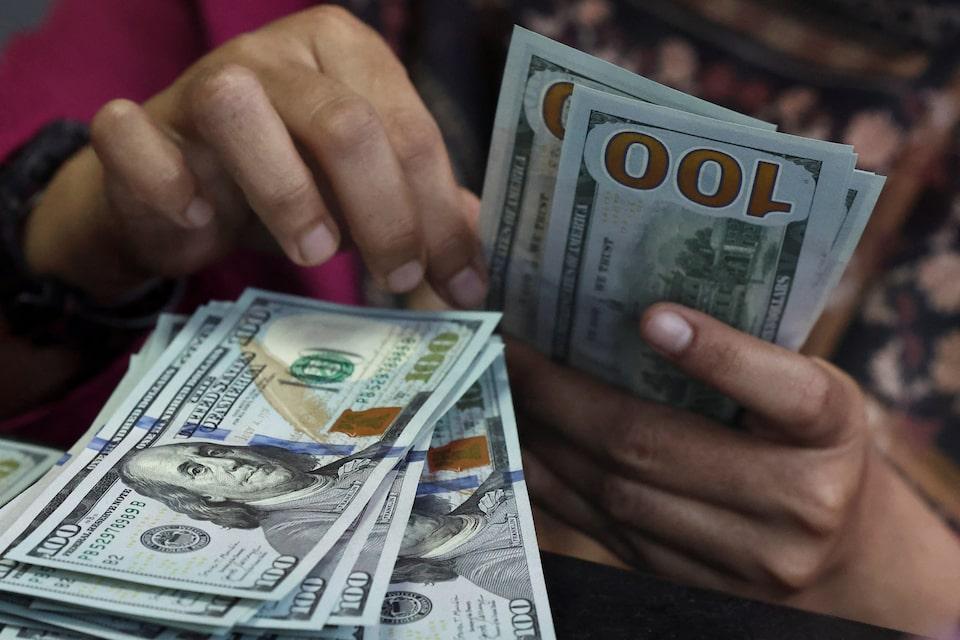
April 11 (Reuters) - The dollar appears set to embark on a multi-year correction against a wide range of currencies, even in the absence of a trade war, as the dollar’s lofty Wall Street valuation runs up against Main Street reality. After the announcement of broad-based tariffs on President Donald Trump’s "Liberation Day" on April 2, global equity markets experienced a violent correction, and the dollar initially weakened – undermining the consensus idea that tariffs equal a strong dollar. Sign up here. This episode has raised the question of whether the “Dollar Smile” has stopped working, as this rule of thumb would suggest that a risk-off scenario should lead to a strong dollar. But I don’t think the dollar smile is obsolete. I think what’s happening is that the dollar’s lofty clearing price in asset markets is finally converging with its real value in the goods market. OVERVALUATION Trade globalisation has enriched the rest of the world over the past quarter of a century, but a multi-polar real world has not been accompanied by a multi-polar financial world: the dollar and dollar assets have continued to dominate. This unipolar financial world means that there has been huge foreign demand for USD assets, disproportionate to the relative size of the U.S. economy. This has arguably led to an over-valuation of the dollar, ever-larger external deficits for the U.S. and an uncompetitive manufacturing sector, as the cost of manufacturing labour has priced the U.S. out of global markets. The dollar index was around 19% too expensive at the end of 2024, according to our valuation framework, using the median valuation across 34 currencies. This is the third episode of a dollar overshoot in the last 40 years, following those in the mid-1980s and around 2000. While the size of the current dollar overshoot is slightly less extreme than that witnessed in 1985, on the eve of the Plaza Accord – a joint agreement to weaken the dollar – the current episode is the longest. By our calculation, the dollar has been over-valued for 10 years, almost double the length of the prior two episodes. EXCEPTIONAL MIRAGE Much of the dollar appreciation in recent years was justified with the ‘American Exceptionalism’ narrative, the idea that corporate America was simply more productive, more profitable and more dynamic than the rest of the world. But that story appears to have been part genuine and part a mirage. The U.S. economy has enjoyed a premium in productivity growth over other major economies in recent years, with an average annual labour productivity growth rate in the past decade of about 1.4%, compared to 0.5% in Europe. However, these productivity measures may be misleading. For one, the tech sector has almost certainly boosted them. There is little evidence that the U.S.’s traditional manufacturing and services sectors like healthcare or education are more productive than their respective sectors overseas. More importantly, the outsized – and unsustainable – fiscal stimulus of some 6.5-7.0% of GDP in recent years has flattered many of the macroeconomic measures that have helped substantiate the ‘American Exceptionalism’ notion. CAPITAL REPATRIATION The dollar’s elevated valuation is also vulnerable because it is highly exposed to the risk of a ‘sudden stop’ in foreign capital inflows, given the U.S.’s huge net foreign liability position. In 1980, the U.S. net liability position was worth about 10% of GDP. It has now surged to 85% of GDP. The trade war is far from over, and the more protracted it becomes, the more the Fed will be under pressure to provide monetary stimulus, while much of the rest of the world will be under pressure to provide fiscal stimulus. The resulting weaker dollar could, in turn, fuel prospective repatriation of short-term capital back to surplus jurisdictions like Europe or China. Several European countries, including Britain, Ireland, Germany, and France, hold substantial short-term capital that could potentially be repatriated easily. In aggregate, these four European countries hold more than $8 trillion of U.S. equities and bonds. SHADOW PRICES There are at least two shadow prices for any currency exchange rate: one reflects the capital markets, and the other reflects the real economic fundamentals. In most countries and most of the time, these shadow prices track each other. But in the U.S., the former has been materially higher than the latter for years, creating an unsustainable and vulnerable setting for the lofty dollar. And the dollar’s overvaluation has been one factor contributing to the U.S.’s loss of manufacturing competitiveness. Trump’s tariffs are a reaction to this unpleasant reality. Given the administration’s stated goals of reshoring manufacturing and reducing the country’s twin deficits, it makes little sense to us to expect the dollar to appreciate in response to the trade war, no matter where tariffs end up. If anything, it is more likely that the administration will be focused on guiding the dollar lower to give U.S. manufacturers a chance to compete in fiercely competitive global markets. (The views expressed here are those of Stephen Jen, the CEO and co-CIO of Eurizon SLJ asset management.) https://www.reuters.com/markets/currencies/tariffs-or-no-tariffs-dollar-correction-is-finally-here-jen-2025-04-11/
2025-04-11 06:55
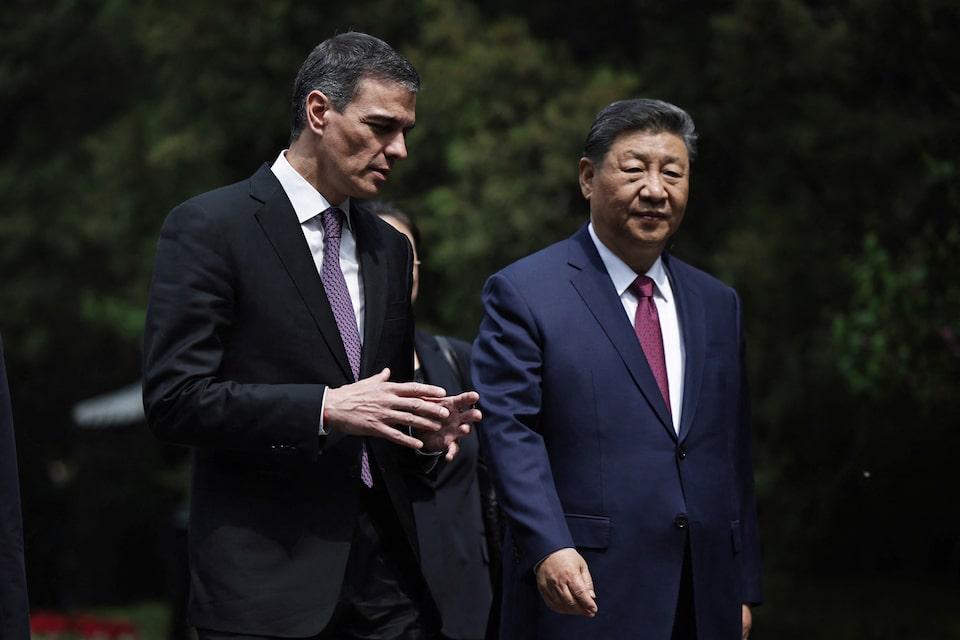
Xi says China, EU must work together to defend globalisation Says 'no winners' in trade wars, without mentioning Trump Spanish PM calls for more balanced China-EU relationship BEIJING/MADRID, April 11 (Reuters) - President Xi Jinping told Spain's prime minister on Friday that China and the European Union must join together in defending globalisation and opposing "unilateral acts of bullying", in a clear swipe at U.S. President Donald Trump's tariff policies. Xi, in his first public comments on the issue since Trump launched his tariff offensive last week, said there could be "no winners" in any trade war, and he said the EU had a key role to play in ensuring global economic stability. Sign up here. Spanish Prime Minister Pedro Sanchez said China and the United States needed to hold talks to defuse the situation, and he also called for a more balanced relationship between Beijing and the 27-nation EU, which has its own trade issues with China. "China has always regarded the EU as an important pole in a multipolar world, and is one of the major countries firmly supporting the EU's unity and growth," Xi told Sanchez during their talks in Beijing, according to the Xinhua news agency. "China and the EU should fulfill their international responsibilities, jointly safeguard the trend of economic globalisation and the international trade environment, and jointly oppose unilateral acts of bullying," Xi added. In a stunning reversal, Trump said on Wednesday he would temporarily lower hefty duties he had just imposed on dozens of countries including the EU-27, for 90 days. However, he further jacked up tariffs on Chinese imports to over 145%, escalating a high-stakes confrontation between Washington and Beijing, which retaliated by imposing 125% tariffs on U.S. imports. Sanchez said he hoped the European Commission would use the 90-day window on the EU's behalf to negotiate the "best possible" deal with Washington. The EU has paused its own retaliatory tariffs that it was set to impose on U.S. imports. 'NO WINNERS' Without directly mentioning Trump or the United States, Xi said: "There are no winners in a tariff war," prompting the Spanish leader to say: "Trade wars aren't good - the world needs China and the U.S. to talk." Sanchez's trip to Beijing, his third in as many years, aims to forge closer economic and political ties with China amid the global fallout from Trump's tariff policy, seeking to position Spain as an interlocutor between China and the EU and to attract more Chinese investment. Spanish officials have rejected a U.S. warning that moving closer to the Asian country would be "cutting your own throat". "We believe there are opportunities to deepen relations, but it's important that China shows sensitivity to European demands for more balanced relations," Sanchez said, referring to the EU's trade deficit with Beijing, which last year exceeded $300 billion. The EU describes China as a "partner for cooperation, an economic competitor and a systemic rival". During a press conference at the Spanish embassy in Beijing, Sanchez said the two countries had signed agreements on science, technology, education and the film industry, as well as protocols regarding pork and cherry exports. According to Xinhua, Xi said Spain and China should tap the potential for cooperation in new energy, high-tech manufacturing and smart cities. Spain receives crucial Chinese investment flows that are of considerable interest to the EU as they mainly involve advanced technology - such as batteries, electric vehicles and hydrogen - in which the bloc lags behind China. https://www.reuters.com/world/spains-sanchez-calls-more-balanced-relationship-between-eu-china-during-visit-2025-04-11/
2025-04-11 06:55
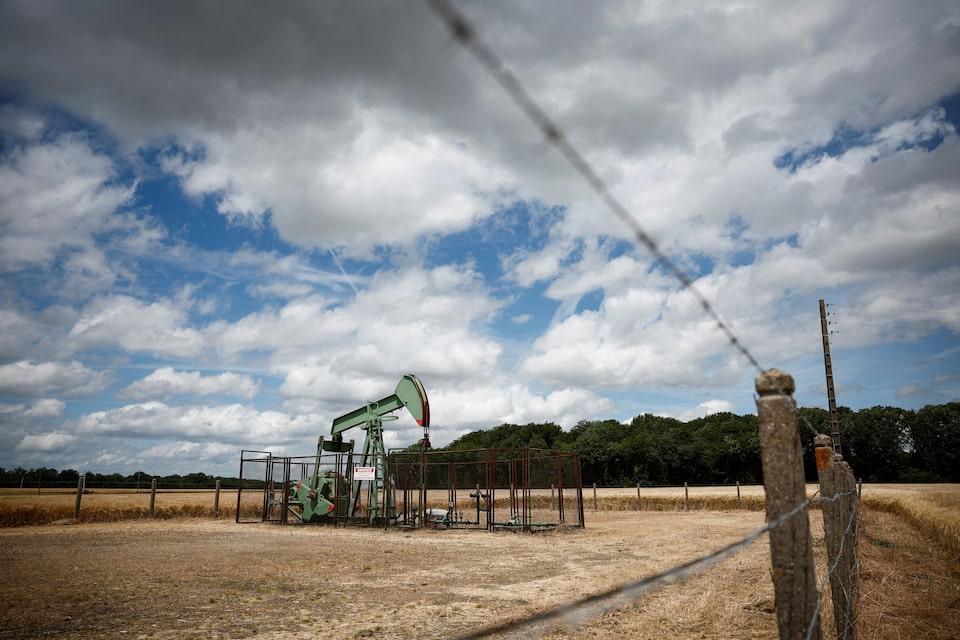
Brent and WTI benchmarks set for weekly declines of about 3% China to impose 125% tariff on US goods, escalating trade war EIA lowers global economic growth and oil demand forecasts April 11 (Reuters) - Oil prices were stable on Friday but on track for their second weekly loss in a row against a backdrop of investor concern over the burgeoning trade war between the United States and China. Brent crude futures were up 16 cents, or 0.25%, at $63.49 a barrel by 1221 GMT while U.S. West Texas Intermediate crude added 15 cents, or 0.25%, to $60.22. Sign up here. Brent and WTI are poised to register weekly declines of about 3%, having both lost about 11% last week. Brent dipped below $60 a barrel at one point this week for its lowest since February 2021. "China’s retaliations, with higher U.S. tariffs, have weighed on market sentiment and dragged oil prices lower," said UBS analyst Giovanni Staunovo. China announced on Friday that it will impose a 125% tariff on U.S. goods from Saturday, up from the previously announced 84%, after U.S. President Donald Trump raised tariffs against China to 145% on Thursday. Trump this week paused heavy tariffs against dozens of trading partners, but a prolonged dispute between the world's two biggest economies is likely to reduce global trade volumes and disrupt trading routes, weighing on global economic growth and reducing demand for oil. "It is a tariff-driven market influenced by the loss of confidence in transparent and succinct policymaking," said PVM analyst Tamas Varga. BMI analysts, meanwhile, "expect prices will remain under pressure as investors assess ongoing trade negotiations and rising tensions between Washington and Beijing". The U.S. Energy Information Administration on Thursday lowered its global economic growth forecasts and warned that tariffs could weigh heavily on oil prices. It reduced its U.S. and global oil demand forecasts for this year and next year. China's 2025 economic growth is expected to fall relative to last year's pace, a Reuters poll showed, as U.S. tariffs raise pressure on the world's top oil importer. The impact of tariffs could be "catastrophic" for developing countries, the director of the United Nations' trade agency said. ANZ Bank analysts forecasts oil consumption to decline by 1% if global economic growth falls below 3%, said senior commodity strategist Daniel Hynes. Oil prices declined on Thursday as traders focused on tariffs, largely sidestepping fresh U.S. sanctions on Iran in the process, PVM's Varga said. The U.S. imposed sanctions on an Iranian oil trading network on Thursday, including a China-based crude oil storage terminal. Nuclear talks in Oman between the U.S. and Iran on Saturday will be given "a genuine chance" by Iran, its foreign ministry said. https://www.reuters.com/business/energy/oil-prices-set-drop-second-week-us-china-trade-war-cut-demand-2025-04-11/
2025-04-11 06:54
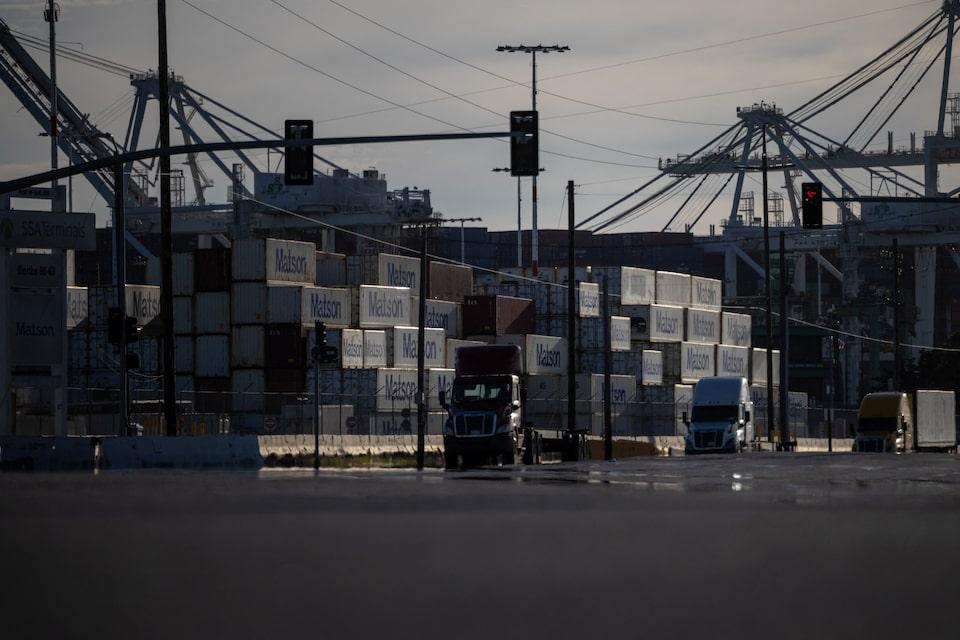
Beijing raises tariffs again, says it will oppose US 'bullying' Bond prices fall, dollar weakens, gold hits record high Trump predicts stability once countries cut trade deals with US Stocks recover but inflation and recession fears persist ABOARD AIR FORCE ONE/BEIJING/LONDON, April 11 (Reuters) - Beijing increased its tariffs on U.S. imports to 125% on Friday, hitting back against President Donald Trump's decision to raise duties on Chinese goods and increasing the stakes in a trade war that threatens to upend global supply chains. The retaliation intensified global economic turmoil unleashed by Trump's tariffs. U.S. stocks ended a volatile week higher, but the safe haven of gold hit a record high during the session and benchmark U.S. 10-year government bond yields posted their biggest weekly increase since 2001 alongside a slump in the dollar, signaling a lack of confidence in America Inc. Sign up here. One U.S. survey of consumers showed inflation fears have mounted to their highest since 1981, while financial institutions have been forecasting an ever greater risk of recession. Trump downplayed the market turbulence, predicting the dollar would strengthen and saying his 10% across-the-board tariffs represented a floor in most cases as countries strike their own trade deals with Washington. "When people understand what we're doing, I think the dollar will go way up," he told reporters aboard Air Force One late on Friday. "The bond market's going good. It had a little moment but I solved that problem very quickly." The $29 trillion Treasury market saw an acute selloff following Trump's initial announcement about what he calls reciprocal tariffs. That turbulence was seen as part of what drove Trump to announce a 90-day pause for countries other than China on Wednesday. The White House has said since then that more than 75 countries have sought trade negotiations with the United States and that future deals would bring certainty. India and Japan are among the powers to have advanced toward trade talks, but generally foreign leaders have puzzled over how to respond to the biggest disruption to the world trade order in decades. The tit-for-tat tariff increases by the U.S. and China stand to make goods trade between the world's two largest economies impossible, analysts say. That commerce was worth more than $650 billion in 2024. "We pretty much can do what we want to do, but we want to be fair. We can set the tariff and they can choose not to deal with us or they can choose to pay it," Trump said on Air Force One, repeating his contention that U.S.-imposed tariffs are paid by foreign exporters. Although such levies can inflict pain on the exporter by making its products less competitive, tariffs are paid by the importer, which often passes the additional cost on to the consumer. Trump, who said on Friday he was comfortable with the tariffs on China, has suggested that a deal with Beijing could be in the offing, too, heaping praise on President Xi Jinping despite their differences over trade. But there were no signs that the world's two largest economies were ready to back down. "The president made it very clear: When the United States is punched, he will punch back harder," White House Press Secretary Karoline Leavitt told reporters on Friday. The market responded by punishing both the dollar and bond prices. Benchmark 10-year U.S. Treasury yields, which move opposite to price, registered their biggest weekly rise in more than two decades, with trading volumes well above average, amid fears that China may be offloading a large portion of its U.S. bond holdings. Treasury Secretary Scott Bessent is closely monitoring the bond market, Leavitt said. A second day of data on U.S. inflation showed price pressures were not yet building broadly across the U.S. economy, although the Producer Price Index for March did show industrial metals prices rising due to import levies on things like steel and aluminum, in place for a month now. "Tarifflation will be much more important for the outlook than backward-looking data," said Bill Adams, chief economist at Comerica Bank. "If tariffs stay in place they will push inflation considerably higher in coming months." The University of Michigan said its Consumer Sentiment Index dropped to 50.8 this month from 57.0 in March. Economists polled by Reuters had forecast the index falling to 54.5. In a reversal of previous surveys, the latest one also showed weakening confidence among Trump's fellow Republicans. Consumers' 12-month inflation expectations soared to 6.7% this month, the highest since 1981, from 5.0% in March, according to the survey. TRADE WAR WITH CHINA This week, Trump announced his reprieve for levies on dozens of countries while ratcheting up tariffs on Chinese imports effectively to 145%. China retaliated with more tariffs on Friday. China's finance ministry called Trump's tariffs "completely unilateral bullying and coercion." Beijing indicated this would be the last time it matched U.S. tariff rises but left the door open for other types of retaliation. "If the U.S. truly wants to have talks, it should stop its capricious and destructive behavior," Liu Pengyu, spokesperson for the Chinese embassy in the U.S., wrote on social media. "China will never bow to maximum pressure of the U.S." UBS analysts in a note called China's declaration "an acknowledgement that trade between the two countries has essentially been completely severed." Leavitt, in turn, delivered a warning to Beijing: "If China continues to retaliate, it's not good for China." On Thursday, Trump told reporters he thought the U.S. could make a deal with China. On Friday, Xi made his first public remarks on Trump's tariffs, telling Spanish Prime Minister Pedro Sanchez in Beijing that China and the European Union should "jointly oppose unilateral acts of bullying." https://www.reuters.com/world/trumps-tariff-pause-brings-little-relief-recession-risk-lingers-2025-04-11/
2025-04-11 06:35
BEIJING, April 11 (Reuters) - Northern China is bracing for typhoon-like gales this weekend, with Beijing postponing major sporting events, closing parks, suspending dozens of train services and warning its 22 million residents against non-essential travel. Dozens of flights were cancelled. A cold vortex from Mongolia is forecast to sweep across northern Chinese provinces from Friday afternoon through the weekend, bringing unusually powerful winds, state-run Xinhua news agency reported, with gusts of up to 150 kph (93 mph). Sign up here. Strong winds carrying sand and dust from Mongolia are normal at this time of the year, but climate change has made weather events more extreme. Beijing issued its first orange gale alert in 10 years for this weekend, the second-highest of four tiers. Temperatures in the capital were set to fall by 12 degrees Celsius on Saturday, and meteorologists warned that wind speeds could rival or exceed April records dating back to 1951. Heavy snow is expected to blanket parts of the Chinese region of Inner Mongolia as well as northeast China, while southern China could be hit by the most intense hailstorms so far this year. A half marathon in Beijing scheduled for Sunday in which humanoid robots were due to race alongside humans to showcase China's technological advances has been postponed by a week. Fifty-six train services to or from the capital were cancelled on Friday and 103 for Saturday. As of noon local time, China Southern Airlines (600029.SS) , opens new tab had cancelled 31 flights for Friday and 17 for Saturday. More than 4,800 trees across the city were either reinforced or pruned to reduce the risk that they would break or fall. Natural disasters in China caused direct economic losses of 9.3 billion yuan ($1.27 billion) in the first two months of 2025, according to the Ministry of Emergency Management. ($1 = 7.3207 Chinese yuan renminbi) https://www.reuters.com/sustainability/climate-energy/northern-china-alert-typhoon-like-winds-mongolia-2025-04-11/