2025-04-11 06:08
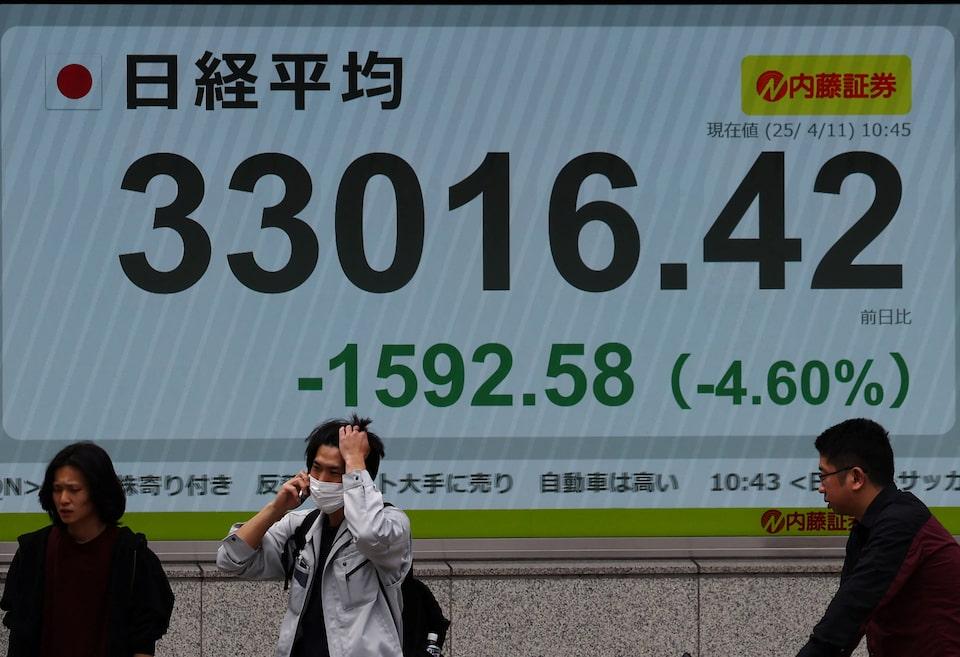
China hits back at Trump tariff hike Bullion up over 6% for the week US PPI data due at 1230 GMT April 11 (Reuters) - Safe-haven gold gained nearly 2% and surpassed the $3,200 mark on Friday, spurred by a weaker dollar and recession concerns over the intensifying trade war between U.S. and China. Spot gold was up 1.4% to $3,217.15 an ounce at 1211 GMT, after hitting a record high of $3,237.56 earlier in the session. Bullion is up nearly 6% so far this week. Sign up here. U.S. gold futures climbed 1.8% to $3,234.90. "Recession risks are mounting, bond yields are soaring, and the U.S. dollar continues to weaken – all factors reinforcing gold's role as a crisis hedge and inflation shield," said Alexander Zumpfe, a precious metals trader at Heraeus Metals Germany. Beijing increased its tariffs on U.S. imports to 125% on Friday, hitting back against U.S. President Donald Trump's decision to hike duties on Chinese goods to 145%, raising the stakes in a trade war that threatens to upend global supply chains. Global stocks fell and the dollar tumbled (.DXY) , opens new tab. A lower dollar makes greenback-priced bullion cheaper for overseas buyers. Spot gold has continued its blazing rally from the last year, hitting multiple record highs and gaining nearly 21% so far this year driven by uncertainties, central bank demand and increased flows into gold-backed exchange-traded funds. "We believe gold has further to run - in the upside case, we target USD 3,400-3,500/oz over the months ahead," said UBS analyst Giovanni Staunovo. Data on Thursday showed U.S. consumer prices unexpectedly fell in March. Focus was also on the U.S. producer price data due at 1230 GMT for insights into the Federal Reserve's monetary policy trajectory. Traders now bet that the Fed will resume cutting rates in June and probably reduce by a full percentage point by the end of 2025. Spot silver gained 0.9% to $31.46 an ounce, while platinum shed 0.4% to $934.60. Palladium jumped 1.6% to $922.68. https://www.reuters.com/markets/commodities/gold-bolts-past-3200-dollar-slide-safe-haven-flows-2025-04-11/

2025-04-11 05:41
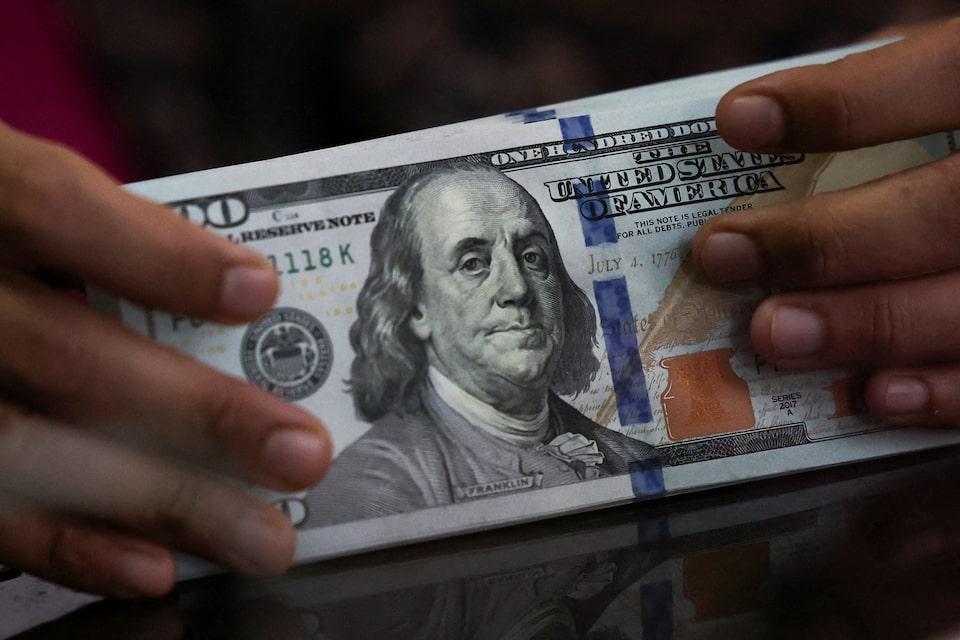
Analysts say trade policies undermine confidence Swiss franc leaps to decade-high, euro at three-year peak Yen hits multi-month high after selloff in US shares, Treasuries Gold hits fresh new peak NEW YORK/LONDON, April 11 (Reuters) - The dollar continued to slide against major currencies on Friday as the back-and-forth over import tariffs shook investor confidence in the safety of the greenback, sending it to its lowest level in a decade against the Swiss franc and a three-year low versus the euro. China increased its tariffs on U.S. imports to 125% from 84% on Friday, retaliating against U.S. President Donald Trump's decision to hike duties on Chinese goods to a total of 145% after pausing many of his latest tariff hikes on most countries. Sign up here. The dollar has been hit hard by a global selloff that spread to stocks and even safe-haven U.S. Treasuries. The yields on benchmark 10-year notes are on course for their biggest weekly jump since 2001. Brad Bechtel, global head of FX at Jefferies, said dollar weakness is being driven partly by the view that U.S. economic exceptionalism is waning - with the potential of a looming recession - and a switch from the dollar as a safe-haven asset to the yen and Swiss franc. "There's a great rotation, which is basically foreign investors diversifying away from the U.S. into other regions such as the euro zone. And for those foreign investors still involved in the U.S., they're realizing they need to currency hedge their assets. There's a scramble to do so, which is putting additional pressure on the dollar." Data on Friday showed U.S. consumer sentiment deteriorated sharply in April while 12-month inflation expectations surged to the highest level since 1981 amid unease over the trade tensions. On Wall Street, the benchmark S&P 500 (.SPX) , opens new tab, Dow Jones Industrial Average (.DJI) , opens new tab and the Nasdaq Composite (.IXIC) , opens new tab indices edged higher after losing ground earlier in the session. They were set to end higher in a week marked by topsy-turvy developments in the global trade war. The dollar was down 0.9% at 0.81650 against the Swiss franc , extending losses in the previous session when it plunged to its lowest level since January 2015. It is on track for its biggest weekly drop since November 2022. The greenback was down 0.51% at 144.05 yen after hitting its lowest level since September 2024. It is set for its largest weekly drop since early February. Gold soared past $3,200 an ounce, hitting a fresh new high supported partly by the dollar weakness. Spot gold rose 1.75% to $3,229.46 'LOSS OF CONFIDENCE' European Central Bank President Christine Lagarde on Friday said her central bank was ready to deploy its instruments to maintain financial stability and that it had a solid track record in devising tools when required to deal with turbulence. The euro surged 1.25% to $1.134050, after hitting its highest level since February 2022. It is on track for its biggest weekly gain since early last month. The single currency also rose 0.43% against the pound in a sign of its outperformance. The pound was up 0.89% against the dollar, at $1.30825. The dollar index , which measures the greenback against a basket of currencies including the yen and the euro, fell 0.56% to 99.958 - hitting its lowest mark since April 2022. It is on track for its biggest weekly drop since early last month. China's yuan fell sharply against the euro, which hit an 11-year high against the currency in the offshore market. This week, the Chinese currency fell to its weakest level on record against the dollar, both onshore and offshore, though it has since rebounded. The dollar was last down 0.45% against the offshore yuan at 7.2807. "Part of the dollar weakness in the past few weeks has been linked to worries over a recession or the Fed cutting rates, but it's kind of gone beyond that," said Win Thin, global head of markets strategy at Brown Brothers Harriman in New York. "It's more really loss of confidence and credibility in the dollar and then in U.S. policymaking. Typically in risk-off episodes, the dollar should gain as a safe haven, but it's really been the yen and Swiss franc that have been picking that up, and the dollar has been under pressure." https://www.reuters.com/markets/currencies/dollar-slide-decade-low-vs-swiss-franc-us-assets-selloff-2025-04-11/
2025-04-11 05:24
NEW DELHI, April 11 (Reuters) - Nearly 100 people have died since Wednesday after heavy rain lashed parts of India and Nepal, officials and media said, and the weather department has predicted more unseasonal rain for the region. The Indian Meteorological Department (IMD) had on Wednesday raised a multi-hazard warning for the country, with heatwave conditions in the western parts and thunderstorms in the eastern and central region. Sign up here. In the eastern state of Bihar, at least 64 people died in rain-related incidents since Wednesday, a senior official from the state's disaster management department told Reuters. Local media reported that more than 20 people have died in India's most populous state of Uttar Pradesh. Meanwhile in neighbouring Nepal, lightning strikes and heavy rain killed at least eight people, National Disaster Authority officials said. India's weather office expects heavy rain with thunderstorm, lightning and gusty winds over central and eastern India till Saturday. The monsoon season usually begins in June in southern India, and summer months in the recent past have been marked by intense heatwaves that have killed several people. State-run IMD said last week that India is expected to experience a much hotter April, with above normal temperatures across most of the country. https://www.reuters.com/sustainability/climate-energy/nearly-100-killed-after-heavy-rain-india-nepal-2025-04-11/

2025-04-11 05:21
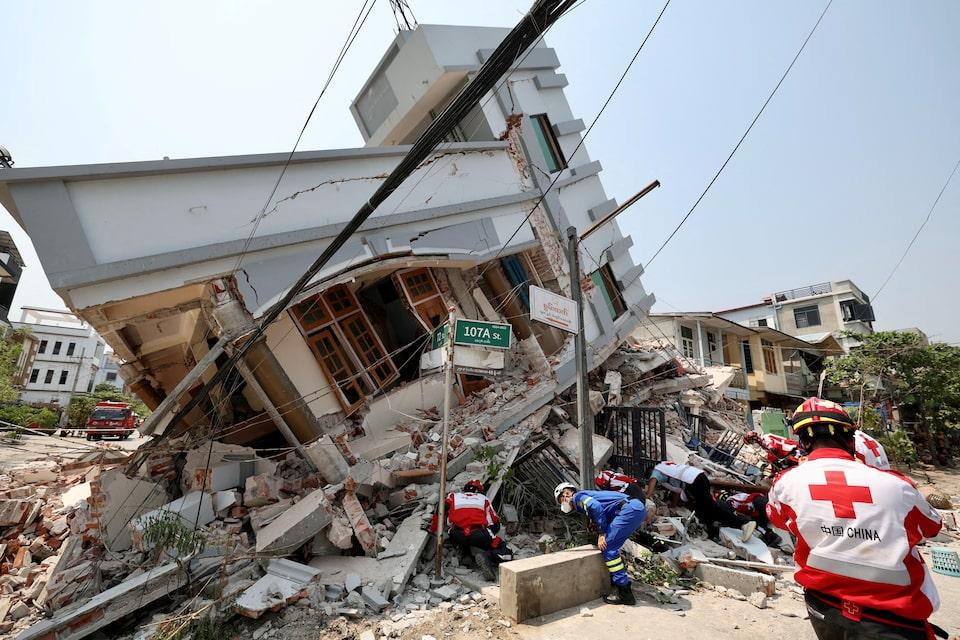
BEIJING, April 11 (Reuters) - China has pledged emergency humanitarian assistance of 1 billion yuan ($137 million) to earthquake-stricken Myanmar, its embassy in the southeast Asian nation said. The March 28 quake of magnitude 7.7 was one of Myanmar's strongest in a century, killing 3,645, as it toppled buildings, flattened communities and deprived many of food, water and shelter. Sign up here. In a statement on Thursday, the Chinese embassy said the funds would provide urgently needed food, medicines and prefabricated homes, as well as pay for medical, epidemic prevention and disaster assessment expert groups. Beijing has sent first-response teams, including dozens of medical workers, earthquake experts, field hospital workers and rescue dogs to alleviate the suffering. China, which has sent more than 30 rescue teams to Myanmar, has said it would participate in disaster loss assessment and reconstruction. The Chinese Red Cross has also provided about 1.5 million yuan ($206,000) in cash. China's search-and-rescue team left Myanmar on April 9 upon completing its mission, the embassy said. ($1=7.3230 Chinese yuan renminbi) https://www.reuters.com/business/environment/china-pledges-137-million-myanmar-earthquake-relief-2025-04-11/
2025-04-11 05:14
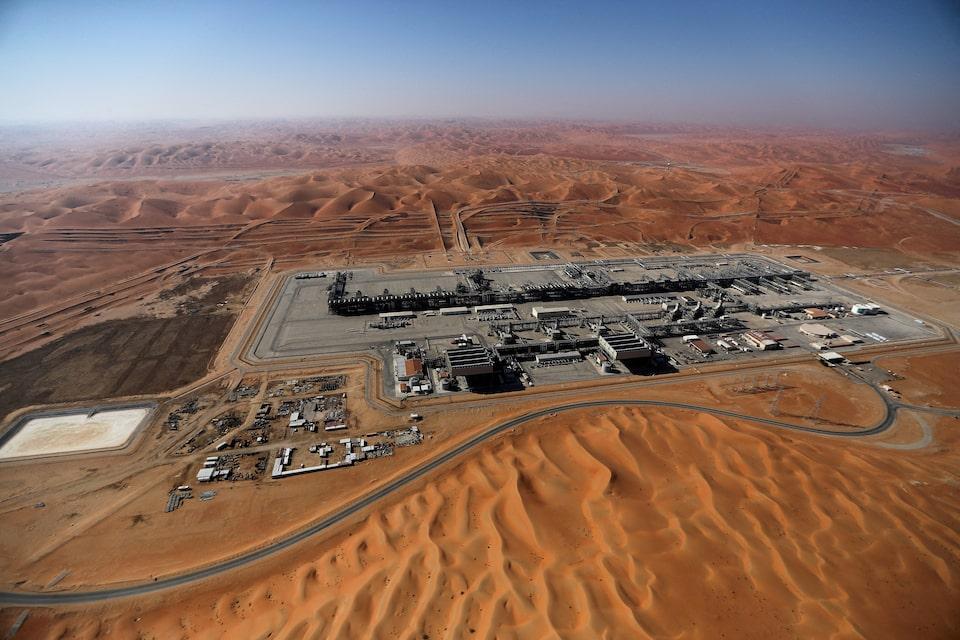
May supply to China to hit 48 million barrels, versus 35.5 million barrels in April Saudi cuts May price to Asia as OPEC+ boosts supply Oil market sinks to four-year low as trade war escalates SINGAPORE, April 11 (Reuters) - Saudi Arabia's crude oil supply to China will surge in May from the month before as a sharp price cut by the kingdom boosts demand, sources said on Friday. State oil firm Saudi Aramco (2222.SE) , opens new tab will ship about 48 million barrels to China in May, a tally of allocations to Chinese refiners showed, up from April's 35.5 million barrels. Sign up here. The figure marks the highest since at least 2024 and the first increase in Aramco's allocation to China since the beginning of this year, according to Reuters data. Chinese state major Sinopec (600028.SS) , opens new tab, China National Offshore Oil Corp (CNOOC) and private refiner Shenghong Petrochemical will all be lifting more Saudi crude in May, the sources said. Aramco and CNOOC did not immediately respond to emails seeking comment on their May allocation. The other firms were not immediately reachable for comment. The increased lifting is in line with market expectations amid lowered prices and a planned output boost by OPEC+, a group that pumps more than 40% of the world's oil. On Sunday, Aramco cut the May official selling price (OSP) for flagship Arab Light crude to $1.20 a barrel above the average of Oman and Dubai prices, down $2.30 from the April OSP. That's a four-month low for the premium over Oman and Dubai prices and also close to the lowest in four years. The reduction in the premiums follows a surprise decision by OPEC+ to boost output by 411,000 barrels per day in May, triple the expected increase. The increase in supply and concerns about future demand fuelled by an escalating trade war between the U.S. and China have driven oil prices to a four-year low this week. "The combination of lower benchmark prices and sharp cuts in OSPs provides term lifters some relief by reducing feedstock costs," said LSEG senior analyst Anh Pham. "Also, abundant oil supplies could help stabilise prices, particularly if sanctions further restrict supplies from Venezuela or Iran," he added. Saudi Arabia is the second largest crude supplier to China after Russia. China imported 84.3 million barrels of crude from Saudi in the first two months of this year, down by 13% from the 96.6 million barrels in the same period a year earlier, Chinese customs data showed. https://www.reuters.com/markets/commodities/saudi-crude-china-surge-may-after-price-fall-sources-say-2025-04-11/
2025-04-11 05:09
US stocks up more than 1%; banks kick off earnings season Gold rises above $3,200 per ounce to another record high US 10-yr bond yields rise as global trade war goes on NEW YORK, April 11 (Reuters) - Benchmark 10-year U.S. Treasury yields registered their biggest weekly rise in more than two decades on Friday, while the dollar fell, in a turbulent week marked by the trade war and a loss of appetite for some U.S. assets. Gold prices hit another record high on Friday after Beijing increased its tariffs on U.S. imports to 125%, hitting back against U.S. President Donald Trump's decision to hike duties on Chinese goods. Sign up here. Global markets have been hit by wild swings this week as investors reacted to news following Trump's announcement of sweeping tariffs on April 2. Even so, major U.S. stock indexes rose more than 1% on the day as banks kicked off the first-quarter earnings season. Also helping stocks were assurances from Boston Federal Reserve President Susan Collins that the Fed is prepared to keep financial markets functioning should the need arise. All three major U.S. indexes also rose sharply for the week. Ten-year Treasury yields jumped this week, with trading volumes well above average, amid fears that China may be offloading a large portion of its U.S. bond holdings after the announcement of U.S. tariffs. "Trump continues to dominate the headlines and the financial markets, especially as we get into this period of negotiating tariffs," said Tim Ghriskey, senior portfolio strategist at Ingalls & Snyder in New York. "There will be lots of rumors and posturing," he said. Strong auctions of 10-year and 30-year debt on Wednesday and Thursday helped stabilize the Treasury market somewhat, but many investors remain wary of buying bonds until there is further improvement in liquidity. The 10-year note yield was last up 8.6 basis points on the day at 4.478% and reached 4.592%, the highest since February 13. It posted its largest weekly increase since 2001. Concerns over U.S. trade policy made euro-denominated assets appear safer than their dollar counterparts. The German 10-year bond yield , the benchmark for the euro zone bloc, eased 5 bps to 2.53% on Friday. JPMorgan Chase (JPM.N) , opens new tab, Morgan Stanley (MS.N) , opens new tab and Wells Fargo (WFC.N) , opens new tab were among the big banks to report earnings, which mostly showed they beat forecasts for the first quarter. JPMorgan shares rose 4%. With the trade war hanging over the outlook, investors will be watching to see whether U.S. companies continue to offer guidance during the earnings period. The Dow Jones Industrial Average (.DJI) , opens new tab rose 619.05 points, or 1.56%, to 40,212.71, the S&P 500 (.SPX) , opens new tab rose 95.31 points, or 1.81%, to 5,363.36 and the Nasdaq Composite (.IXIC) , opens new tab rose 337.15 points, or 2.06%, to 16,724.46. The Nasdaq registered its biggest weekly percentage gain since November 2022. MSCI's gauge of stocks across the globe (.MIWD00000PUS) , opens new tab rose 11.36 points, or 1.46%, to 790.63. he pan-European STOXX 600 (.STOXX) , opens new tab index ended down 0.1%. Investors also digested a report showing U.S. consumer sentiment deteriorated sharply in April and another showing U.S. monthly producer prices unexpectedly fell in March. The dollar was down 0.9% at 0.81650 against the Swiss franc , extending losses in the previous session when it plunged to its lowest level since January 2015. It is on track for its biggest weekly drop since November 2022. The dollar also hit a three-year low versus the euro . Spot gold was up 2% at $3,236.67 an ounce, after hitting a record high of $3,243.82 earlier in the session. Bullion is up over 6% this week. Oil prices also climbed. Brent crude futures settled at $64.76 a barrel, up $1.43, or 2.26%. U.S. West Texas Intermediate crude finished at $61.50 a barrel, up $1.43 or 2.38%. https://www.reuters.com/markets/global-markets-wrapup-1pix-2025-04-11/