2025-04-11 00:34
LONDON, April 10 (Reuters) - As U.S. President Donald Trump turns up the tariff heat on China, Beijing is targeting ever more of the United States' critical material supply chains. Weird and wonderful metals such as antimony, gallium and germanium have already been sucked into the escalating trade war with China restricting exports and banning sales to the United States. Sign up here. Beijing has just raised the mineral threat another level by adding seven rare earths to its dual-use list of restricted exports. Rare earths are China's ultimate metallic weapon. The country has a vice-like grip on every stage of the global supply chain from mining to processing to manufacturing the permanent magnets that power laptops, electric vehicles and fighter jets. China supplies around 90% of the world's rare earth magnets, according to the CRU research house. Which is a big problem, since the magnets themselves are also now on the export control list. INVISIBLE METALS Chances are you've never heard of the rare earths that are now going to be subject to export restrictions, but they have seeped into all aspects of modern technology. Consider, for example, yttrium. Yttrium compounds are used in everything from jet engines to microwave radar to super-conductors and even dentistry. Global production may be no more than 20,000 metric tons a year, according to the U.S. Geological Survey, but in tiny quantities it's just about everywhere. So too are the other six metals now joining the Ministry of Finance's watch list. But the common theme is their use in permanent magnets. Dysprosium and terbium are used as additives to enhance the performance of neodymium magnets while samarium is combined with cobalt for even higher-performance applications such as missiles and fighter aircraft. Magnets make the modern world go round and their inclusion on China's export control list is a major red flag for everyone else. ON THE WATCH LIST Being put on the dual-use watch list doesn't automatically lead to outright bans on exports to specific countries but, as already seen with antimony, gallium and germanium, it can do. It also allows Chinese authorities to scrutinise buyers and exclude those involved in military supply chains, particularly U.S. military supply chains. It's noticeable that Chinese exports of germanium and gallium to the United States stopped months before the full ban in December 2024, suggesting licenses to export to what was previously a major market were already being refused. Moreover, depending on just how tightly the export controls are exercised, the market impact can be explosive. The price of antimony has jumped from $14,000 to nearly $60,000 per ton since China cut off exports to the United States. Bismuth has surged from $6 to $40 per kilogram since the metal was put on the dual-use export control list in February. Rare earths have been here before of course. China's ban on exports to Japan in 2010 caused a momentous price spike and ultimately ended up with China losing a trade case at the World Trade Organization. STILL DOMINANT The world largely ignored that warning. Fifteen years on and China's grip on the rare earths market is as tight as ever. The country accounts for around 60% of global mined production and is embedded in Myanmar, the world's second-largest producer. China's control over the processing stage of rare earths production is almost total at around 90% of global output. Even Mountain Pass, the only major operating rare earths mine in the United States, sends much of its output to China for the tricky business of separation and refining. Moreover, Mountain Pass mainly produces light rare earths rather than the heavy rare earths China is now threatening. The only significant producer of the heavy stuff outside of China, Myanmar and Laos is the Serra Verde mine in Brazil, according to consultancy Project Blue. No prizes for guessing where it sends its production for processing. COUNTDOWN Western countries have belatedly woken up to their problematic dependence on China for rare earth magnets. Multiple projects to lift production capacity from both new mines and recycling are under way in both the United States and Europe. But few are anywhere near commercial production and few can compete with China's rare earth giants, meaning the West remains highly vulnerable to China's export threats. At the very least, the new export controls on these rare earths and the associated magnets will cause short-term supply disruption as exporters apply for new licences. They may also presage a broader decline in Chinese supply as the authorities stop sales to Western buyers involved in military procurement chains. The good news, as it were, is that China has a long list of critical metals it can weaponise and a rare earths export ban will likely be kept in reserve for now. But as the trade war between China and the United States escalates, there's a strong sense that the rare earth time bomb is now ticking. The opinions expressed here are those of the author, a columnist for Reuters. https://www.reuters.com/world/china/china-primes-rare-earths-weapon-trade-war-escalates-andy-home-2025-04-11/

2025-04-10 23:36
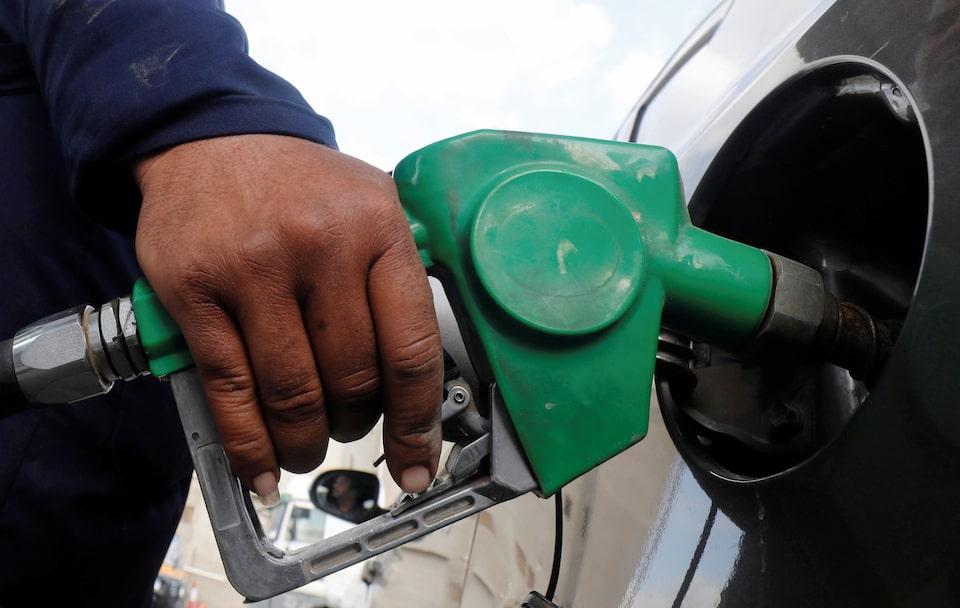
Fuel prices rise as Egypt aims for subsidy cost recovery IMF pushes Egypt to cut subsidies amid economic challenges Egypt's government plans to reduce petroleum subsidies by year-end Fuel subsidies cost Egypt 10 billion pounds monthly despite price hikes CAIRO, April 11 (Reuters) - Egypt hiked prices on fuel products on Friday by up to almost 15%, state media reported, marking the first increase in 2025 as the government seeks to reduce fuel subsidies as required by the International Monetary Fund's (IMF) $8 billion support package. The increases of between 11.76% and 14.81% on a wide range of fuel products come almost a month after the IMF approved the disbursement of $1.2 billion to Egypt following completion of the fourth review of its loan programme signed last year. Sign up here. Egypt has taken on back-to-back financing facilities with the IMF since 2016, when it agreed a $12 billion loan programme to resuscitate its economy after years of political turmoil since the Arab Spring protests began. Since then, the lender has pushed the government to cut fuel, electricity and food subsidies while expanding social safety nets. The fund said in March that Egypt was committed to lowering its energy subsidies to reach cost recovery by December as it works to reduce a wide current account deficit. Prices for diesel fuel, one of the most commonly used fuels in the country, were raised by 2 Egyptian pounds ($0.0390) to 15.50 pounds per litre from 13.50 pounds. Gasoline prices increased by as much as 14.5% depending on the grade, with 80 octane gasoline rising to 15.75 pounds, 92 octane to 17.25 pounds and 95 octane to 19 pounds. Meantime, the prices of the butane cooking gas were hiked to 200 pounds per cylinder from 150 pounds. Prime Minister Mostafa Madbouly said in March that by the year's end the government will have stopped petroleum subsidies from being a financial strain, but it will continue to subsidise diesel to some degree and will not price it at 100% of its cost. Egypt still spent about 10 billion Egyptian pounds ($197.71 million) on fuel subsidies each month, despite having raised prices three times in 2024, Petroleum Minister Karim Badawi said in October following the last hike that ranged between 11% and 17%. Egypt in 2024 witnessed a sharp decline in revenues from its Suez Canal, a main source of foreign currency for the government, as the war in Gaza led Iran-aligned Houthis in Yemen to attack vessels transiting the Red Sea in support of Palestinians. That, combined with diminishing local natural gas production which Egypt had even begun exporting, has compounded the country's economic woes and left it strapped for dollars. Egypt needs these dollars to import natural gas, petroleum and wheat for its sprawling food subsidy programme that feeds more than 62 million people. Since early 2022, the foreign currency shortage has curbed local business activity and led to backlogs at ports and delays in payments for commodities, forcing Egypt to request a 46-month expanded loan from the IMF. The pound has since lost more than two-thirds of its value against the dollar in a series of staggered devaluations, while petrol prices in Egypt remain some of the lowest in the world. ($1 = 51.2800 Egyptian pounds) https://www.reuters.com/world/americas/egypt-raises-fuel-prices-first-time-2025-local-media-report-2025-04-10/
2025-04-10 23:30
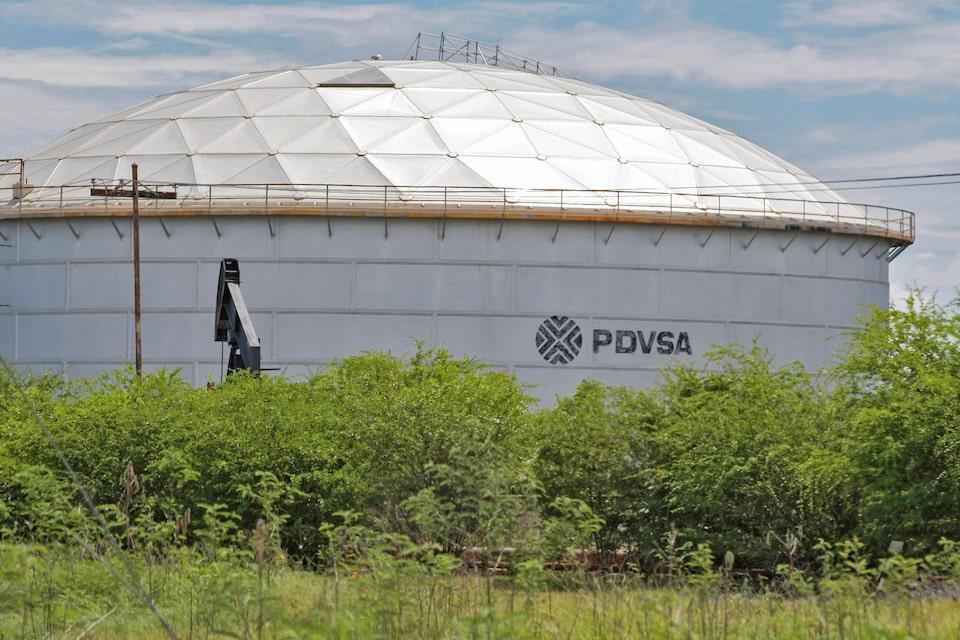
HOUSTON, April 10 (Reuters) - Venezuela's state oil company PDVSA has canceled several authorizations it had granted U.S.-based producer Chevron (CVX.N) , opens new tab to load and export Venezuelan crude in April, three sources with knowledge of the decision said on Thursday. The cancellations follow U.S. President Donald Trump's imposition of tariffs on Venezuela's oil buyers. The suspensions also comes after Washington canceled key licenses last month to a handful of PDVSA partners and customers, including Chevron, that had allowed them to operate and export Venezuelan oil under exemptions to the U.S. sanctions on the South American country. Sign up here. The U.S. Treasury Department gave the companies until May 27 to wind down operations and complete purchases. Chevron was exporting about 250,000 barrels per day (bpd) of Venezuelan crude to the U.S. under its license. In early April, Washington imposed a 25% tariff on buyers of Venezuelan crude and gas, a measure experts said could hurt China the most. Two of the cargo cancellations by PDVSA involve tankers that had already loaded, so the oil would have to be returned to ports, while a third had not loaded, one of the sources said. PDVSA and Chevron did not immediately reply to requests for comment. It was not immediately clear if the cargoes would be rescheduled. The government of Venezuelan President Nicolas Maduro on Thursday again rejected the U.S. measures. Officials have said they amount to an "economic war". The tariffs on Venezuela's oil buyers earlier this month prompted the temporary suspension of some cargo loadings, particularly those bound for China, which is the largest recipient of Venezuela's oil. But the loadings were resuming this week. Chevron, whose exports of Venezuelan crude were not affected by the tariffs because of its license, had not been impacted by the measures until now, according to the sources and shipping data showing tanker movements. https://www.reuters.com/markets/commodities/venezuelas-pdvsa-suspends-oil-loading-authorizations-chevron-sources-say-2025-04-10/
2025-04-10 23:16
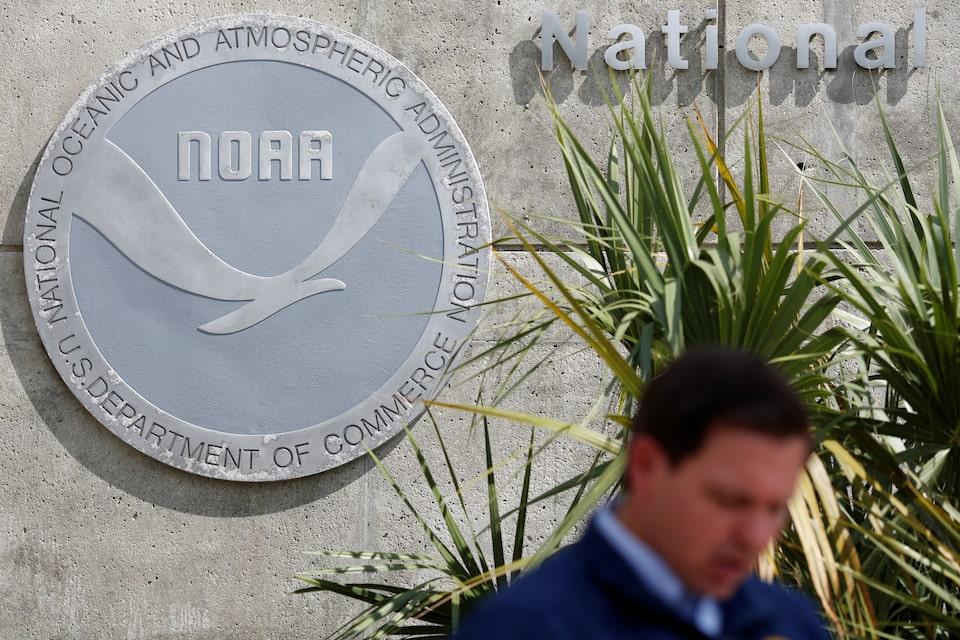
April 10 (Reuters) - The National Oceanic and Atmospheric Administration has fired previously reinstated probationary workers after an appeals court on April 9 cleared the way for the Trump administration to fire thousands of employees, according to five sources familiar with the situation. The agency, which sits within the Department of Commerce, fired more than 800 employees on February 27, one of many federal agencies to fire probationary workers as President Donald Trump and billionaire ally Elon Musk seek to shrink the federal workforce. Sign up here. The employees were then reinstated on March 17 to administrative leave, during which they were paid but not permitted to work, in line with a federal court order that blocked the probationary worker firings. "The Department is reverting your termination action to its original effective date," said a memo from John K. Guenther, the Department of Commerce's acting general counsel, sent to the affected employees on Thursday and seen by Reuters. Firings at NOAA caused disruption in recent weeks to the nation's fishing industry, which relies on its scientists for assessments of how many fish are available to be caught and other scientific work. The agency last week moved to reclassify some of its career workforce to a job category that makes them easier to fire. https://www.reuters.com/world/us/noaa-fires-previously-reinstated-probationary-workers-sources-say-2025-04-10/
2025-04-10 23:10
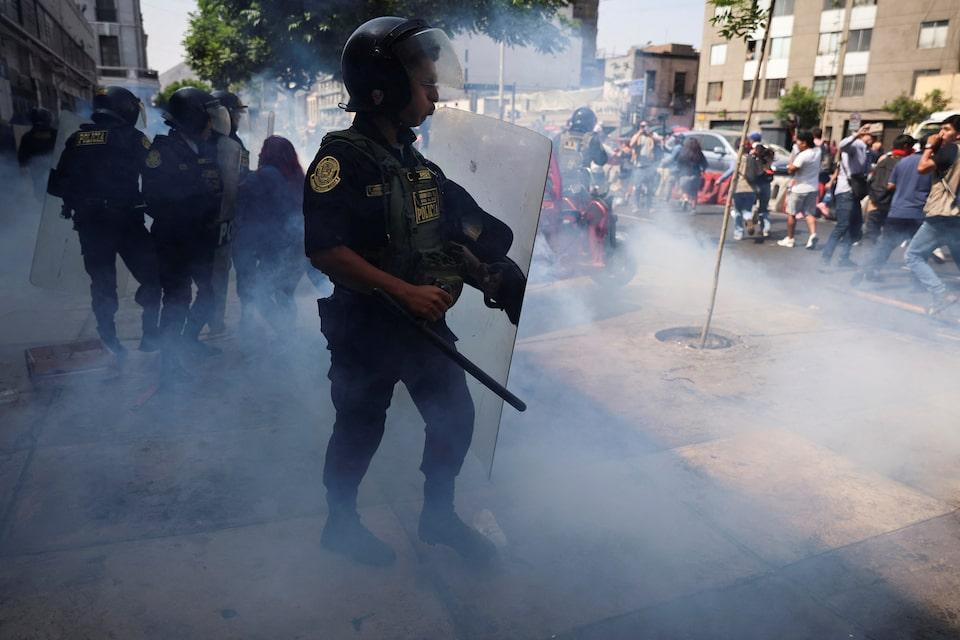
Transit workers demand stronger action against crime and extortion 13,000 police and military deployed in Lima for security Record homicides in Peru despite government crime reduction claims LIMA, April 10 (Reuters) - Public transport workers in Peru's capital of Lima went on strike on Thursday, stranding tens of thousands of people as they marched to Congress demanding action against a surging crime wave that has led to record numbers of murders. The government urged employers and schools to prioritize remote work and classes due to limited transportation and possible clashes between protesters and police. Sign up here. Murders in Peru spiked by more than a third to 2,059 in 2024 from 1,508 in 2023, government figures showed. Much of the violence has been blamed on criminal groups that often target businesses, including transport companies. President Dina Boluarte, whose approval rating has fallen to all-time lows, announced that she would ask the Organization of American States to declare on gang, Tren De Aragua, a terrorist organization after a meeting with her cabinet on Thursday. "Their bloodthirsty nature and use of terror leads nations to consider their modus operandi and objectives as terrorist in nature," Elmer Schialer, Peru's foreign affairs minister, said during the meeting with Boluarte and other security advisors in the government palace. From January to March, homicides rose by 100 year-on-year to 562. Murders and extortion against transit workers have also risen, with over a dozen killed this year. "This has to stop! Sixteen drivers have been killed by hit men this year alone," Martin Valeriano, leader of a transit union in Lima, told reporters during the march. On Tuesday, three public bus drivers were shot and one was killed in separate incidents by unknown gunmen on motorcycles, according to witnesses and the police. The government declared a state of emergency in mid-March to deploy soldiers to help battle street violence after Paul Flores, a famous Cumbia musician, was killed when his tour bus was raked with gunfire by unknown assailants. During the march to Congress, transit workers flanked by hundreds of police officers carried signs reading: "No more driver deaths" and "Justice for the dead drivers," among others. Police Chief of Staff General Oscar Arriola said the government has mobilized 13,000 police and military personnel in Lima and the neighboring province of Callao to provide security for people traveling to work. Police have also provided 22 buses to help transport people around the capital. Boluarte set up a "war room" in March with police, the military and her cabinet to deal with the crime wave, but she has drawn criticism from opposition parties and transit unions as crime continues to rise. https://www.reuters.com/world/americas/lima-grinds-halt-perus-transit-workers-demand-action-against-crime-surge-2025-04-10/
2025-04-10 21:47
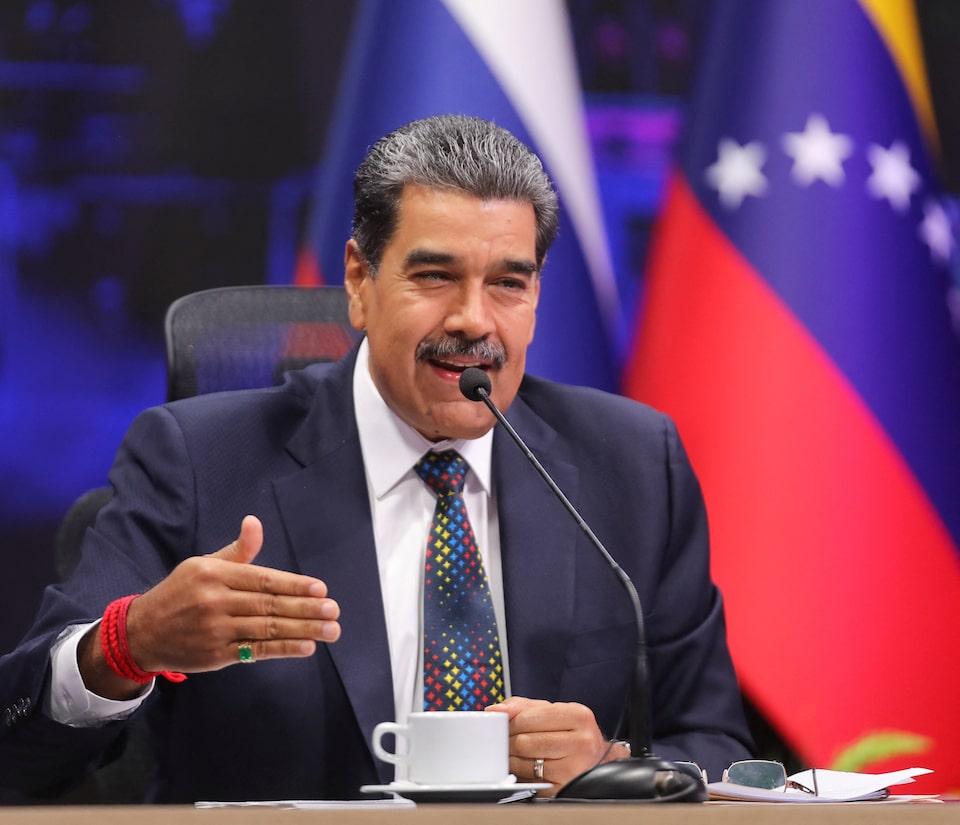
April 10 (Reuters) - Venezuela's national assembly on Thursday passed a decree proposed by President Nicolas Maduro's government declaring a state of economic emergency in response to U.S. sanctions and tariffs. In March, the administration of U.S. President Donald Trump began suspending authorizations for oil companies operating with Venezuela's state-owned PDVSA and imposed secondary tariffs on crude oil and gas exports. Sign up here. Maduro signed the decree on Tuesday, citing constitutional powers to declare states of emergency. The new regulation allows Maduro to implement measures to boost economic growth, curb inflation, offer special treatment to investors, suspend taxes or exemptions and establish import-substitution mechanisms, among other actions. The emergency decree aims to aid national production, Vice President and Oil Minister Delcy Rodriguez said during the presentation of the document to lawmakers. The economy is being affected by the U.S. measures, she said, but oil and gas production is continuing despite a 30% fall in price. International producers are welcome in Venezuela, she said, so long as they comply with Venezuelan laws. The United States has set a deadline of May 27 for oil companies operating in Venezuela, including U.S.-based Chevron (CVX.N) , opens new tab, Italy's Eni (ENI.MI) , opens new tab, and Spain's Repsol (REP.MC) , opens new tab, to wind down their operations and exports. Analysts have pointed out that Washington's measures will affect the flow of oil revenues, affecting Venezuela's exchange market and prices. Maduro and his government have always rejected sanctions by the United States and others, saying they are illegitimate measures that amount to an "economic war" designed to cripple Venezuela. Maduro and his allies have cheered what they say is the country's resilience despite the measures, though they have historically blamed some economic hardships and shortages on sanctions. Maduro signed a similar decree in 2016, extending it through 2021, citing the impact of U.S. sanctions on Venezuela. The decree will now go to a chamber of the nation's supreme court for consideration. https://www.reuters.com/world/americas/venezuela-national-assembly-greenlights-economic-emergency-decree-2025-04-10/