2025-04-10 21:36
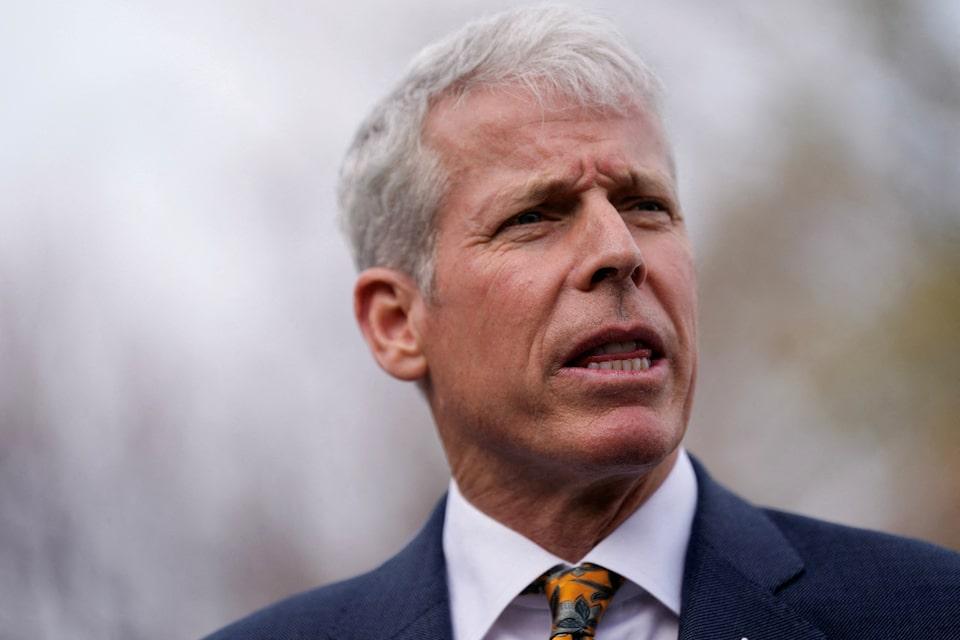
WASHINGTON, April 10 (Reuters) - More than 2,600 U.S. Department of Energy staffers have opted to take the Trump administration's second round of resignation offers, two sources said on Thursday, with offices on power grid stability and loans for high-tech energy projects hit hard. The number is more than double the 1,217 staffers that took the first round offered in January, according to a document seen by Reuters. The number could go significantly higher in coming weeks as staffers over 40 years of age get an additional 45-day period to consider the offer, one of the sources said. Sign up here. In January, the administration made a financial offer to 2 million federal workers, including DOE staffers, as part of a broader effort by U.S. President Donald Trump and billionaire ally Elon Musk to shrink the federal government. The acceptances of resignations at the DOE, which has about 17,000 staffers, occurred as the department said more workers could be let go after the initial round of layoffs. U.S. Energy Secretary Chris Wright sent a email to department employees this week that said "it is increasingly likely that our department will undergo a wide-ranging RIF (reduction in force) to align with broader strategic priorities outlined by President Trump." Wright said in the email that some safety, national security, law enforcement and other essential employees may not be able to take an offer to resign. A DOE spokesperson said they could not confirm the number of staffers accepting the second round of offers because the deadline to accept them was extended by more than a day to a minute before midnight on Friday. In addition, all requests to take the offer are subject to approval, the spokesperson said. The sources said most staffers at the Policy Office, the Grid Deployment Office that is responsible for maintenance of the U.S. power grid and the Loan Programs Office which offers low-interest financing to projects on high-tech vehicles, renewable energy, nuclear and transmission that struggle to get bank loans, have taken the offer. The offices of Manufacturing and Energy Supply Chains and Clean Energy Deployment have also been hit hard, they said. https://www.reuters.com/world/us/more-than-2600-us-energy-dept-staffers-accept-second-offer-resign-sources-say-2025-04-10/
2025-04-10 21:36
April 10 (Reuters) - The number of vessels that transited the Panama Canal, the world's second-busiest waterway, fell to an average of 33.7 per day in March for a total of 1,045 ships that month, according to a bulletin on Thursday by its administrative authority. In February, an average of 34.8 vessels per day crossed the waterway, an increase from 32.6 per day in January, but still below the maximum number of ships authorized. Sign up here. Transits this year have remained below the maximum of 36 vessels allowed to pass per day since the waterway lifted drought-related restrictions in the third quarter last year, despite lower fees. Transit fees in Panama this year have been 15% below last year's levels, according to figures from its authority. A severe drought between late 2023 and early 2024 forced the waterway that connects the Atlantic and Pacific oceans to impose passage restrictions that prompted long waiting lines and higher transit fees. The fees have been closely monitored since U.S. President Donald Trump complained about them earlier this year, adding that Washington would take over the canal if it determines that the presence of firms from China and Hong Kong near the waterway constitutes a security risk. In late March, the canal's authority announced it would offer a net-zero weekly passage slot starting in October for dual-fuel vessels operating at low carbon intensity. The plan is part of an initiative to reward and encourage investments in energy efficiency and low-carbon fuels. https://www.reuters.com/world/americas/panama-canal-traffic-fell-337-ships-per-day-march-authority-says-2025-04-10/

2025-04-10 21:33
NAPERVILLE, Illinois, April 10 (Reuters) - Chicago corn futures have shot nearly 5% higher so far this week despite gratuitous geopolitical uncertainties, especially when it comes to the United States and its foreign grain customers. But based on Thursday’s supply and demand update from the U.S. government, an argument could be made for nearby CBOT corn futures to strengthen even further. Sign up here. Robust demand, particularly for exports, has driven U.S. corn supply estimates well below initial projections. The U.S. Department of Agriculture on Thursday reduced 2024-25 corn ending stocks to 1.465 billion bushels, down from 1.54 billion last month and 2.1 billion forecast last May. Factoring in demand, U.S. corn stocks-to-use (SU) clocks in at 9.6% for 2024-25, which ends on August 31. That would be a three-year low and down notably from 11.8% in 2023-24. However, current corn prices may not properly reflect that ratio. So far this month, CBOT May corn has averaged $4.66 per bushel. The 9.6% SU is eerily similar to USDA’s outlooks from other recent Aprils. In April 2022, U.S. corn SU for 2021-22 was pegged at 9.6%. A year later, a 9.7% SU was forecast for 2022-23. But in the first 10 days of April 2022 and 2023, May corn averaged $7.55 and $6.51, respectively, well above current levels. Adjusting these to 2025 dollars yields averages close to $8.40 and $6.90, creating an even bigger divergence with this year. There are three additional occasions within the last two decades where USDA’s April outlook for U.S. corn SU was in the 9% range. In nominal dollars, corn futures in early April averaged above $5 per bushel in all three cases. The historical relationship between SU and price makes it easy to argue that corn futures may have been overpriced in April 2022 and 2023. But the running April 2025 average of $4.66 probably corresponds with a U.S. corn SU outlook above 12%. Final corn SU in 2021-22 and 2022-23 came in close to the April projections at 9.2% and 9.9%, respectively. But those are below both the recent five-year average of 10.7% and 10-year average of 12.5%, validating this year’s situation as tighter than normal. GLOBAL BACKING The global situation supports the possibility that nearby corn futures are undervalued. USDA’s estimates imply world corn SU in 2024-25 falling to 11-year lows. Exclude serial grain hoarder China from the mix and world corn SU is at 29-year lows. USDA on Thursday hiked 2024-25 U.S. corn exports by 100 million bushels to 2.55 billion bushels, the second-largest program on record after 2020-21. That season heavily relied on Chinese purchases, yet there is no Chinese involvement this year. As of April 3, U.S. corn exporters had sold 85% of USDA’s target for 2024-25, just above the date’s average of around 83%. That indicates slight favorability for the full-year export volume to increase even further. Barriers to U.S. corn price strength include U.S. farmers’ plans for a huge corn acreage in 2025, as well as relative weakness and fund bearishness in soybean and wheat prices. South America could also have a solid corn offering by mid-year. Although corn prices have thrived amid this month’s tariff firestorm, that trend could flip as quickly as it did during the February downturn, especially if relations sour again with Mexico, U.S. corn exporters’ biggest supporter. Karen Braun is a market analyst for Reuters. Views expressed above are her own. https://www.reuters.com/markets/commodities/cbot-corn-rally-more-than-justified-by-us-supply-cuts-braun-2025-04-10/

2025-04-10 21:31
Electricity customers hope to cut wait times to connect to grid The first time AI will be used to manage grid connections US power demand jumps as Big Tech rolls out data centers for AI NEW YORK, April 10 (Reuters) - Alphabet Inc's (GOOGL.O) , opens new tab Google unit is partnering with the largest electrical grid operator in North America, PJM Interconnection, to roll out artificial intelligence technologies aimed at getting new power supplies connected faster, the company said on Thursday. The collaboration is the first time AI would be used to comprehensively manage an interconnection queue. Electricity demand has been rising as Big Tech builds more data centers to train and deploy artificial intelligence. Sign up here. "The industry has been talking about building smarter grids for well over a decade, and now with AI, we have a real opportunity to turn discussion into action," Amanda Peterson Corio, Google's data center energy lead, said at a press conference. Wait times have grown to historic lengths in recent years for connecting the country's grids to new electricity supplies generated from sources like wind, solar and natural gas. Those delays have worsened an electricity supply crunch in many parts of the country, pushing up power bills and raising the risk of blackouts, as old power plants retire faster than new supplies connects. Google, in partnership with the Alphabet-backed Tapestry, says it can help eliminate at least some of the wait by using artificial intelligence to synthesize information and automate parts of the review and planning processes for projects in line to connect to PJM. "This is really about automating a lot of the things that are being laboriously reviewed," said Page Crahan, General Manager of Tapestry, which will work with PJM to develop AI tools and models that will be rolled out in 2025 and phased in over the course of several years. Initially, the technology will be used to automate parts of processes currently done by hand by grid planners, including a review of applications to determine whether a project seeking to connect to the grid is viable. Over time, the collaboration between Google, Tapestry and PJM will develop a model of the PJM grid like a Google Maps for grid information, "bringing in different layers that planners might need to see in a single toggle on and off view to guide faster decisions, introduce new insights, hopefully find efficiencies in those ways," Crahan said. It remained too early to say how working with Google would cut down on times to add new power plant supply to the system, said Aftab Khan, executive vice president of operations, planning and security for PJM. PJM controls the electrical system that covers 67 million people in the U.S. PJM's territory includes northern Virginia, the world's largest data center hub. https://www.reuters.com/technology/google-deploys-ai-speed-up-connections-pjm-largest-us-power-grid-2025-04-10/

2025-04-10 21:10
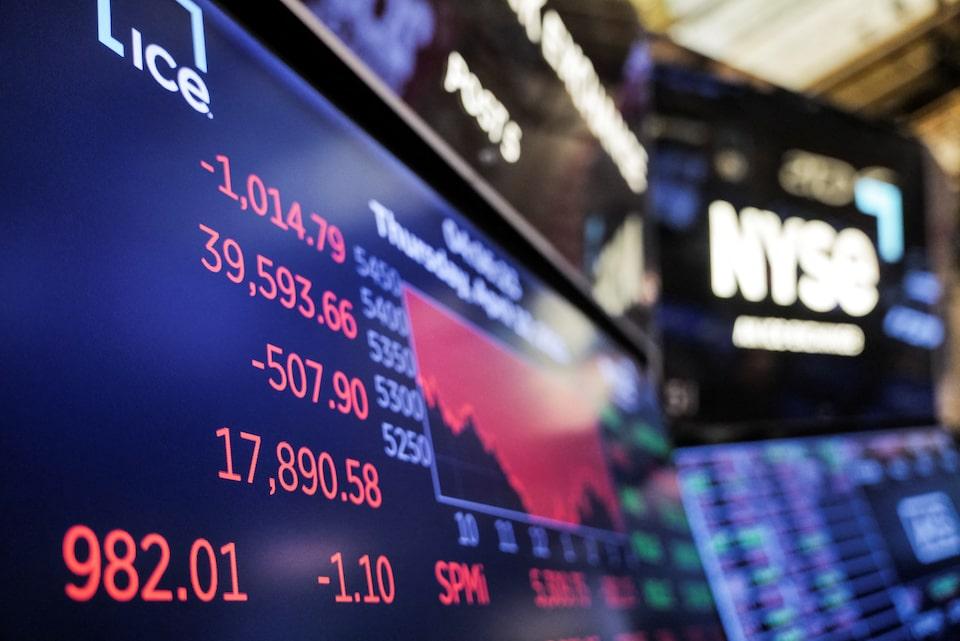
ORLANDO, Florida, April 10 (Reuters) - TRADING DAY Making sense of the forces driving global markets Sign up here. By Jamie McGeever, Markets Columnist Desperately seeking safety After Wall Street clocked one of its best days in history on Wednesday, a sense of sober realism was always likely to return on Thursday. But few would have anticipated such a sudden, screeching reversal in sentiment. Stocks sank and demand for 'safe-haven' assets exploded - gold leaped 3% to a new high and the Swiss franc had one of its best days ever. Maybe U.S. President Donald Trump's tariff truce on Wednesday wasn't as conciliatory as it first seemed. More on that below, but first, a round-up of the main market moves on another extraordinary day. I'd love to hear from you, so please reach out to me with comments at [email protected] , opens new tab. You can also follow me at @ReutersJamie , opens new tab and @reutersjamie.bsky.social , opens new tab. If you have more time to read today, here are a few articles I recommend to help you make sense of what happened in markets. Today's Key Market Moves Market nurses hangover as harsh tariff reality sets in The relief from Trump's tariff climb-down was visceral, but fleeting. Global trade tensions may have cooled a bit, but the outlook for consumers, businesses and investors is as murky as it was before Trump's surprise Truth Social post on Wednesday. Whatever concessions he offered to the rest of the world were essentially offset by the extra duties slapped on imports from China. The world's two economic superpowers are locked in a full-scale trade war, a confrontation with no winners. Former U.S. Treasury Secretary Janet Yellen, in her first broadcast interview since leaving office, told CNN International that the likelihood of a U.S. recession has risen, and slammed Trump's tariffs as a terrible "self-inflicted wound". In financial market terms, the big losers on Thursday were assets leveraged to growth and risk appetite like stocks, oil and bitcoin. The big winners were safe-haven plays like the Swiss franc and gold. The franc's 4% rally against the dollar was stunning. Not only is that its biggest rise since the Swiss National Bank scrapped the franc's cap in January 2015, it's among the top 10 since the era of free-floating exchange rates was introduced more than 50 years ago. The euro rallied sharply too and German government bonds outperformed U.S. Treasuries, suggesting investors switching out of U.S. assets may be turning to Europe. There's a case to be made for it - there are few sufficiently liquid alternatives. Economic data and commentary from central bank officials are playing second fiddle to trade issues for investors right now, evidenced by figures on Thursday that showed a surprising fall in U.S. inflation in March. Treasury yields fell a bit, but not across the whole curve and not as much as one might expect with Wall Street falling so steeply. A solid 30-year bond auction - demand for the $22 billion sale was the strongest since November - failed to prevent long-dated yields from rising. Just as tariff fears haven't dissipated, nor have concerns over the long end of the U.S. Treasury curve. U.S. still facing 1930s tariff shock, vice tightens around China With the dust now settled on the euphoric market rebound following President Donald Trump's trade war climb-down, investors are realizing that the global economy still faces the most punishing U.S. tariffs in nearly 100 years. The picture is marginally brighter than it was before Trump blinked at 1:18 p.m. Eastern Time on Wednesday and announced a 90-day hiatus and a reduction to 10% for most of his 'reciprocal' tariffs. Washington is now pursuing negotiations with its trading partners and most retaliatory measures have been put on ice. But the big picture remains pretty dim. Analysis published by the non-partisan Budget Lab at Yale on Thursday suggests U.S. consumers will face an overall average effective tariff rate of 25.3%, only "slightly different" from before Trump's pullback, and the highest since 1909. Even accounting for likely consumption shifts away from Chinese goods the average tariff rate will be 18.1%, the highest since 1934. "It's clear the U.S. economy hasn't seen a shock like this since the 1920s and 1930s," PIMCO economist Tiffany Wilding wrote on Thursday. She estimates that every percentage point increase in the average effective tariff rate shaves about 0.1 ppt off U.S. growth and adds a similar amount to inflation. She says U.S. recession is now likely, as is core inflation surging to 4.5%. That's a dismal picture. TIGHTENING GRIP By some measures, the trade war's vice-like grip on the global economy has tightened, particularly because of the pain being inflicted on China. Essentially, any semblance of a truce in Trump's broad trade war is being offset by the ratcheting up of tensions with China. Levies on Chinese goods are now an eye-popping 145%, the White House on Thursday. As Pictet Wealth Management's Frederik Ducrozet notes, the global trade war narrowed on Wednesday, but it also deepened. A "full decoupling" between the U.S. and China, the world's two largest economies, is playing out in front of our eyes. Little wonder that China's stock market significantly lagged its regional and global peers on Thursday, although eking out a 1.3% rise was an achievement given the increasingly alarming U.S.-China standoff. TD Securities strategist James Rossiter calculates that the import-weighted average U.S. tariff has actually risen to 26.2% from 23.9% on April 2, Trump's 'Liberation Day'. Of course, if U.S.-China trade collapses, as could happen if neither Washington or Beijing backs down, the average effective rate will be closer to the global 10%. But freezing the two-way flow of nearly $600 billion in annual trade isn't exactly bullish, as investors realize - in U.S. trading hours on Thursday stocks plunged again, and 'safe-havens' like the Swiss franc, gold and short-dated Treasuries surged. CUE THE YUAN DEVAL? So what are China's options? Policymakers in Beijing were already facing an unenviable domestic situation - a real estate crash, deflation and moribund demand and investment - and Trump's belligerence can only make that more difficult. If the economic battle lines between the world's two economic superpowers are being marked by tariffs, the market battle lines are being drawn by the dollar/yuan exchange rate. In bright Technicolor, too. It's hard to envisage how China withstands or fights back against such punitive tariffs without a significant depreciation of its tightly controlled yuan, or perhaps a much bigger devaluation. The currency market is leaning heavily that way: onshore spot dollar/yuan is a whisker from levels last seen in December 2007; Thursday's central bank dollar/yuan fixing of 7.2092 yuan was the highest since September 2023; the offshore 'CNH' dollar/yuan rate touched a record peak of 7.4287 on Tuesday. Economists at Goldman Sachs on Thursday slashed their Chinese GDP growth forecasts to 4.0% this year and 3.5% next year from 4.5% and 4.0%, respectively. They also said that they expect "significant" monetary and fiscal policy easing from Beijing. No matter who blinks first in the coming months – Trump or President Xi Jinping – the rest of the global economy probably won't like what it sees. What could move markets tomorrow? Opinions expressed are those of the author. They do not reflect the views of Reuters News, which, under the Trust Principles , opens new tab, is committed to integrity, independence, and freedom from bias. Trading Day is also sent by email every weekday morning. Think your friend or colleague should know about us? Forward this newsletter to them. They can also sign up here. https://www.reuters.com/markets/global-markets-trading-day-graphics-2025-04-10/
2025-04-10 21:06
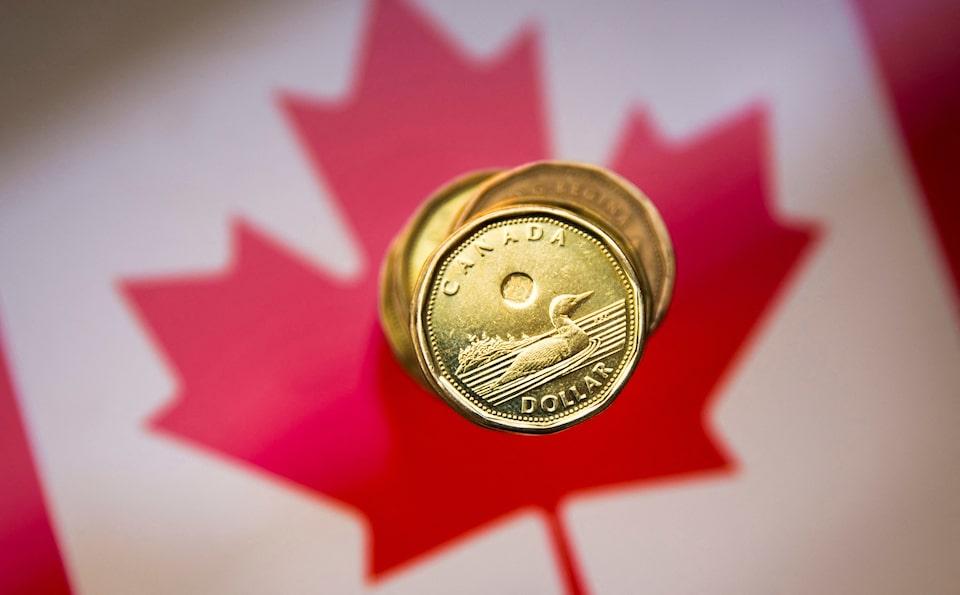
Canadian dollar gains 0.6% against the greenback Touches its strongest since November 25 at 1.3952 Price of oil settles 3.7% lower 10-year yield rises 3.8 basis points TORONTO, April 10 (Reuters) - The Canadian dollar rose to a near five-month high against the greenback on Thursday as investors reduced their exposure to U.S. financial markets, anticipating that the global trade war could upend a period of outperformance for the American economy. The loonie was trading 0.6% higher at 1.3995 per U.S. dollar, or 71.45 U.S. cents, after touching its strongest intraday level since November 25 at 1.3952. Sign up here. "We're seeing a bit of repatriation out of U.S. assets," said Noah Buffam, an FX strategist at CIBC Capital Markets. "The market is reassessing how exceptional the U.S. is over a longer-term period." Wall Street's main indexes gave back some of the previous day's sharp gains, while the U.S. dollar (.DXY) , opens new tab tumbled against a basket of major currencies. On Wednesday, U.S. President Donald Trump said he would temporarily lower new tariffs on many countries, even as he raised them further on goods from China. The rally at the front-end of the U.S. yield curve has contributed to gains for the loonie, "with the market worrying about U.S. growth given these really high tariff rates on China," Buffam said. Investors are pricing in as many as four interest rate cuts from the Federal Reserve by December, while just two cuts are expected from the Bank of Canada which has moved more aggressively than the Fed to this point in the easing campaign. , Canadian Prime Minister Mark Carney said he would convene a meeting of top cabinet colleagues on Friday to discuss the economic threat posed by U.S. tariffs. The price of oil , one of Canada's major exports, settled 3.7% lower at $60.07 a barrel on the deepening U.S.-China trade war. Canadian bond yields were mixed across a steeper curve, with the 10-year up 3.8 basis points at 3.242%. https://www.reuters.com/markets/currencies/repatriation-flows-help-lift-canadian-dollar-four-month-high-2025-04-10/