2025-04-10 20:48
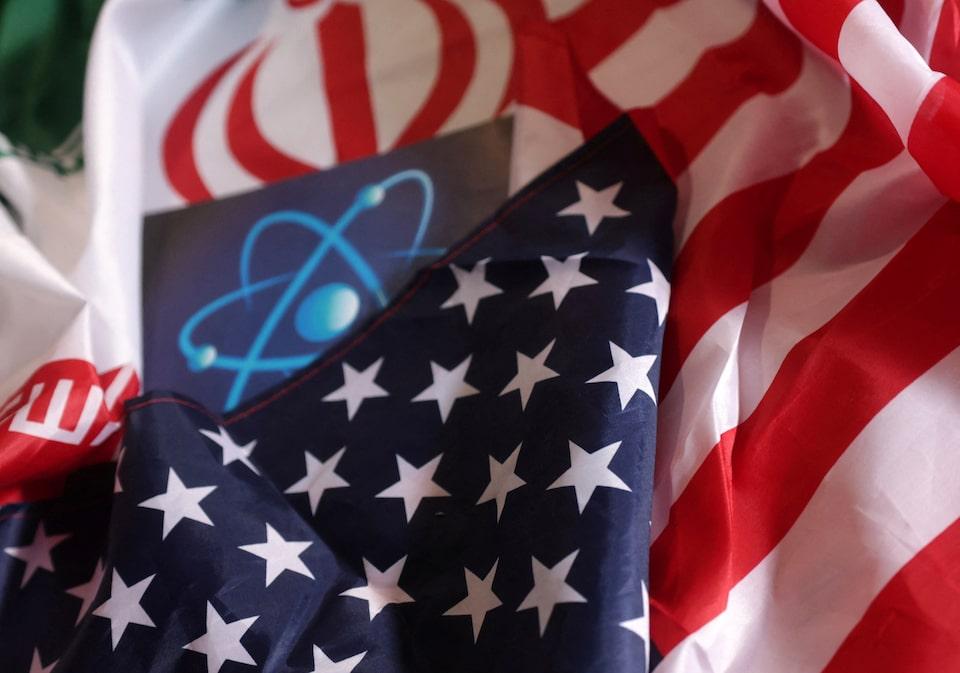
Move comes ahead of US-Iran talks on Saturday Sanctions on China-based terminal for dealing in Iranian oil Sanctions also target individual and vessels carrying the oil Lawyer says sanctions days ahead of talks 'defies logic' WASHINGTON, April 10 (Reuters) - The Trump administration imposed sanctions on Iranian oil trading networks on Thursday, including on a China-based crude oil storage terminal linked via a pipeline to an independent refinery, just days before talks between the U.S. and Iran. The sanctions came after Secretary of State Marco Rubio said the U.S. will hold direct talks with Iran on Saturday in Oman. President Donald Trump said on Monday that Iran would be in "great danger" if the talks were unsuccessful. Sign up here. The U.S. imposed sanctions on Guangsha Zhoushan Energy Group Co Ltd, which operates a crude oil and petroleum products terminal on Huangzeshan Island in Zhoushan that knowingly engaged with oil from Iran and is connected through the Huangzeshan–Yushan Under Sea Oil Pipeline to an independent refinery, the U.S. State Department said. "This terminal is directly connected to a major refinery complex in China, demonstrating the role that China-based refiners continue to play in the purchase, acquisition, and processing of Iranian crude oil," the State Department said, without naming the refinery. However, tanker tracking firms Vortexa and Kpler and trade sources told Reuters that the refinery has refrained from buying Iranian oil. The State Department said the terminal had acquired Iranian crude at least nine times between 2021 and 2025, including from U.S. sanctioned vessels, and has imported at least 13 million barrels of Iranian crude oil. The terminal, in the eastern province of Zhejiang, is not a major player in Iranian oil, which lands mostly in independent refining hub Shandong province to the north. China buys roughly 90% of Iran's exported oil, with imports averaging about 40 million barrels per month, according to traders and analysts. Calls and an email to Guangsha Zhoushan Energy went unanswered. China's Iranian oil imports surged in March as buyers and dealers stocked up, anticipating more U.S. measures would tighten supplies further. "The United States remains focused on disrupting all elements of Iran’s oil exports, particularly those who seek to profit from this trade," U.S. Treasury Secretary Scott Bessent said. China and Iran have built a trading system that uses mostly Chinese yuan and a network of middlemen, avoiding the dollar and exposure to U.S. regulators. The Chinese embassy in Washington did not immediately respond to a request for comment. But in response to a sanction on a teapot refinery last month, a spokesperson said: "China has always been firmly opposed to illegal and unjustifiable unilateral sanctions and so-called long-arm jurisdiction by the U.S." It was Washington's latest round of sanctions on Iran since Trump said in February he was re-imposing a "maximum pressure" campaign including efforts to drive down the country's oil exports to zero in order to prevent it from getting a nuclear weapon. Iran says its nuclear program is for civilian purposes. 'DEFIES LOGIC' Typically Washington puts a pause on fresh sanctions ahead of delicate negotiations with adversaries such as Iran, a lawyer and sanctions expert said. "It defies logic," said Jeremy Paner, a partner at the law firm Hughes Hubbard & Reed and a former Treasury Department sanctions investigator. The Treasury Department also designated United Arab Emirates (UAE)-based Indian national Jugwinder Singh Brar, who owns shipping companies with a fleet of nearly 30 vessels. "Brar’s vessels engage in high-risk ship-to-ship (STS) transfers of Iranian petroleum in waters off Iraq, Iran, the UAE, and the Gulf of Oman," the department said in a statement. The sanctions also target two UAE- and two India-based entities that own and operate Brar’s vessels that have transported Iranian oil on behalf of the National Iranian Oil Company and the Iranian military, Treasury said in a statement. "The Iranian regime relies on its network of unscrupulous shippers and brokers like Brar and his companies to enable its oil sales and finance its destabilizing activities," Bessent said. The sanctions block U.S. assets of those designated and prevent Americans from doing business with them. Paner said the Chinese targets would likely be impacted by the sanctions, but Thursday's sanctions overall will not choke Iran's oil trade. "If you're going to show them that you are really serious, you would target (Chinese) banks or P&I clubs," or protection and indemnity insurance groups that provide services to oil tankers, Paner said. https://www.reuters.com/world/us-targets-iran-shadow-fleet-operations-with-more-sanctions-2025-04-10/
2025-04-10 20:44
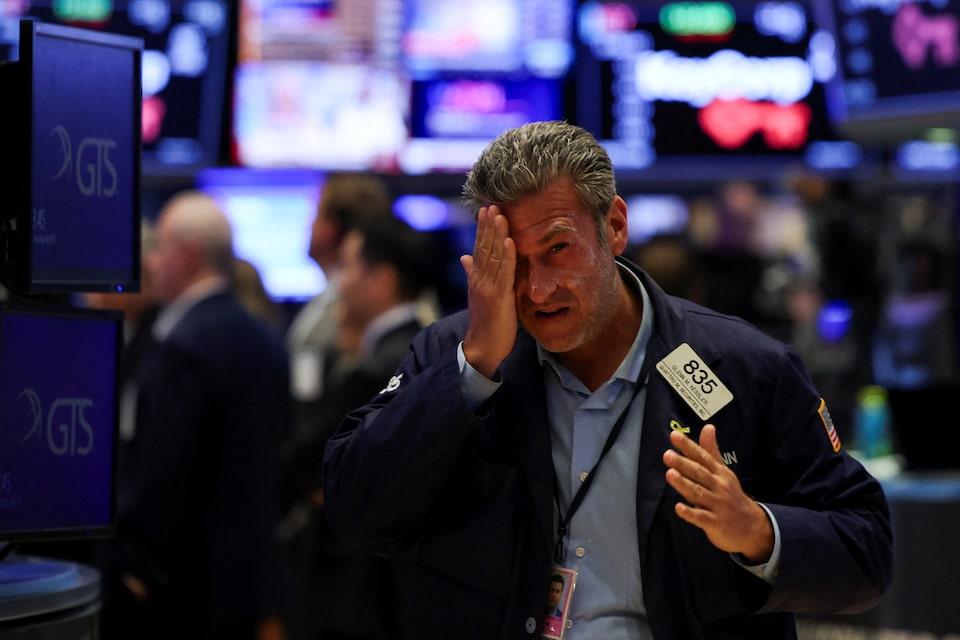
Tariff-induced market crisis whips up epic volatility Stocks, Treasuries reverse big moves Currencies more stable, dollar yo-yos LONDON, April 10 (Reuters) - U.S. President Donald Trump's U-turn on tariffs has rained yet more volatility on markets, leaving investors skidding from stocks to safe-havens and back, and while previous crises have seen bigger moves, few have been this fast. Trump said on Wednesday he would temporarily lower the hefty duties imposed on dozens of countries while ramping up pressure on China, igniting one of the most intense turnarounds for markets since the 2020 COVID crisis. Sign up here. With volatility, it's the speed of a move that can set alarm bells off. And April's market swings have played out with roughly the same intensity as they did in 2020 and near that of the 2008 financial crisis, but in a fraction of the time. Here's how the moves have unfolded since Trump's reciprocal tariff announcement on April 2: 1/ TO THE MOON? Equity markets across the globe rebounded on Wednesday and Thursday after Trump's pause. The S&P 500 (.SPX) , opens new tab soared 9.5% on Wednesday, its biggest daily gain since 2008, while Europe (.STOXX) , opens new tab staged its biggest jump since March 2020 on Thursday. But most major indexes remain below Trump's "Liberation Day" announcement, and all have suffered some of their steepest falls in years. Hong Kong shares slumped 13% on Monday (.HSI) , opens new tab, their biggest fall since 1997, while Europe's STOXX 600 index and S&P 500 had their steepest three-day falls since the COVID-19 pandemic. "We are seeing levels of uncertainty and levels of volatility that we haven't seen since the global financial crisis," said George Lagarias, chief economist at Forvis Mazars. "These levels of volatility are not good for financial markets. It risks dislocations," he added. 2/ BOND VORTEX The U.S. bond market has found itself at the epicentre of the gyrations as investors, rattled about the impact of tariffs on the U.S. economy and the ensuing damage to the stability of U.S. assets, dumped Treasuries. Ten-year Treasury yields, which fell 30 basis points over the days following April 2, rose by as much as 25 bps at one point on Wednesday, before dropping almost as quickly once news of the pause hit. Yields soared by as much as 36 bps between April 2 and the high on April 9 and are now 14 bps higher. During the COVID crisis in early 2020, they fell as much as 120 bps before snapping back to trade some 100 bps higher when the worst of the crisis had passed. 3/ BUDDY, CAN YOU SPARE THE DOLLAR? The dollar has not acted as the FX market's safe-haven anchor and has fallen against a number of major currencies since April 1. It has lost almost 5% against the Swiss franc and nearly 3% against the Japanese yen and the euro . As far as volatility is concerned, traders have rushed to lock in protection against big price swings, not least because the winners and losers of the next set of tariff headlines may not be obvious. Against a basket of currencies , the dollar has had the kind of round trip since April 2 that it did during COVID, but again, in a fraction of the time. 4/ BANKING ON A REBOUND? Global banks have had to contend with expectations of a shock to global growth and the prospect of accelerated rate cuts in the wake of Trump's tariff plans, a combination that sent shares plunging, before rebounding with Trump's pause. The U.S. KBW Bank Index (.BKX) , opens new tab slumped almost 16% in two days, its biggest such slide since March 2020, while European lenders (.SX7P) , opens new tab fell by their most since 2020, two days after "Liberation Day". That marked a remarkable turnaround for the sector that had previously benefited from higher interest rates, a robust U.S. economy and improved growth in Europe. Markets quickly priced in rate cuts from the European Central Bank and the Federal Reserve due to increased recession risks but have since dialled back some of those expectations. Banking shares have rebounded. The KBW Bank Index surged 9% on Wednesday, its biggest one-day jump since Trump's re-election in November. European bank stocks rallied almost 7% on Thursday, on track for their biggest one-day rally since a rebound in March 2022 after Russia's invasion of Ukraine. 5/ AN EPIC BOUT OF VOLATILITY There have been times when markets have moved more in one direction or another than now, but few periods with such speed. The VIX index (.VIX) , opens new tab, which reflects the extent to which investors are snapping up protection against volatility, has hit crisis levels. It jumped to a high of 60 this week, something that has happened in just three instances since the inception of the index in 1990 - a sharp market selloff in August, 2020 and 2008. The index has since dropped to closer to 35, meaning the rise and fall over the past three days has been one of the fastest on record. https://www.reuters.com/markets/global-markets-volatility-graphic-2025-04-10/
2025-04-10 20:39
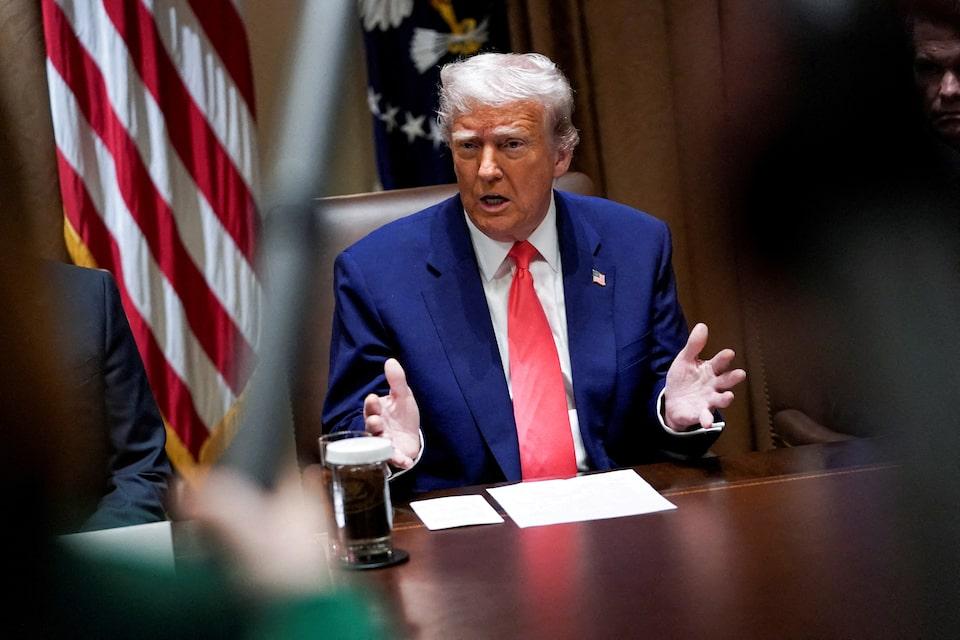
April 10 (Reuters) - U.S. President Donald Trump suggested on Thursday that farmers will be able to petition the federal government to retain some farmworkers in the U.S. illegally, provided the workers leave the country and return with legal status. Trump's comments during his Cabinet meeting are, though vague, the most detail the administration has provided on the fate of the nation's farmworkers without legal status - who make up half the farm sector's workforce - under his plan for mass deportations. Sign up here. Farm industry groups have warned that deporting large numbers of agricultural workers would grind the food system to a halt. In addition to farming, many workers without legal status are also employed in the meat and dairy industries. "We're going to work with farmers that, if they have strong recommendations for their farms, for certain people, that we're going to let them stay in for a while and work with the farmers and then come back and go through a process, a legal process. We have to take care of our farmers and hotels and various places where they need the people," Trump said. "A farmer will come in with a letter concerning certain people saying, they're great, they're working hard, we're going to slow it down a little bit for them and then we're going to ultimately bring them back. They'll go out, they're going to come back as legal workers," he said. The White House and the Department of Agriculture did not respond to requests to clarify the policy or when it will be implemented. During his first administration, Trump promised the farm sector that deportations would not affect agricultural workers, but has made no such promise in this term. Immigrant farmworkers prepared for the Trump administration by assigning guardians to their children in the case of their detention and taking other precautions. https://www.reuters.com/world/us/trump-suggests-farmers-could-petition-keep-workers-without-legal-status-2025-04-10/
2025-04-10 20:32
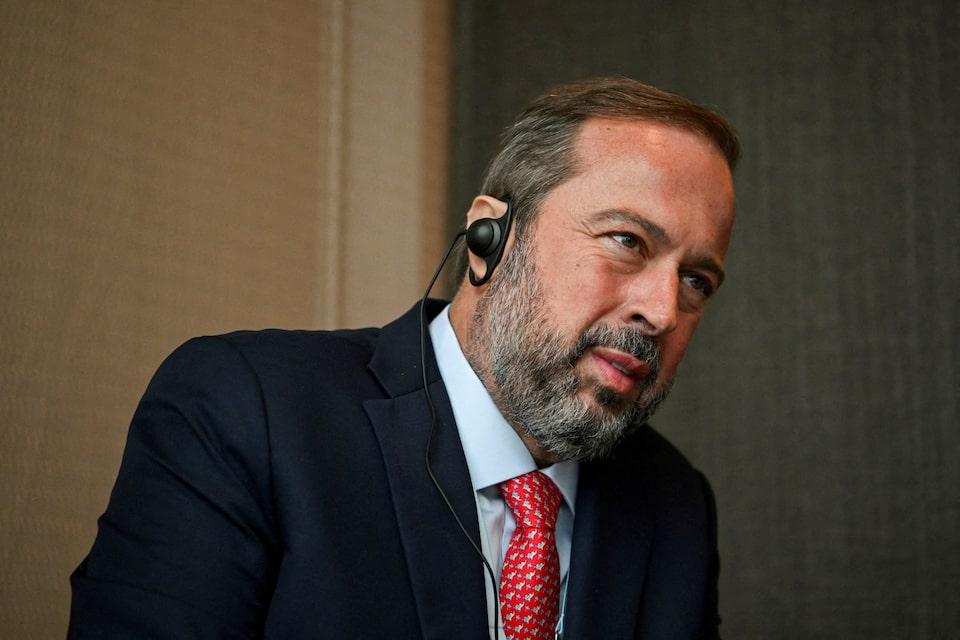
RIO DE JANEIRO/BRASILIA, April 10 (Reuters) - Brazil is preparing a power sector reform that will increase the number of low-income households exempt from paying energy bills to 60 million, Energy and Mines Minister Alexandre Silveira said on Thursday. At an event in Rio de Janeiro, Silveira said some 50 million households currently have some discount in their energy bills under the program. It was not immediately clear how many of those households were fully exempted. Sign up here. Low-income households in Brazil can request their energy bill to be partially or fully subsided under a government program, with their cost added to the bills of the remaining power consumers. The energy and mines ministry's proposed reform would come as President Luiz Inacio Lula da Silva's government reached earlier this year its lowest popularity level among his three terms in office amid a surge in consumer prices. After Silveira's remarks, Finance Minister Fernando Haddad told reporters in Brasilia that no study about increasing energy bill subsidies for the poorest has reached his ministry or the office of Lula's chief of staff. Silveira has said the reform - details of which remain scarce - will aim to reduce other subsidies, particularly those granted to large companies that generate their own power, which currently drive up electricity costs for Brazilian consumers. The Brazil power regulator estimates total subsidies for the sector to reach near 41 billion reais ($7 billion) this year, with 6.7 billion reais coming from the program on low-income households. The reform is expected to be sent to Congress in the year's first half, Silveira added. ($1 = 5.8926 reais) https://www.reuters.com/business/energy/brazil-working-power-reform-raise-subsidies-poorest-minister-says-2025-04-10/
2025-04-10 20:31
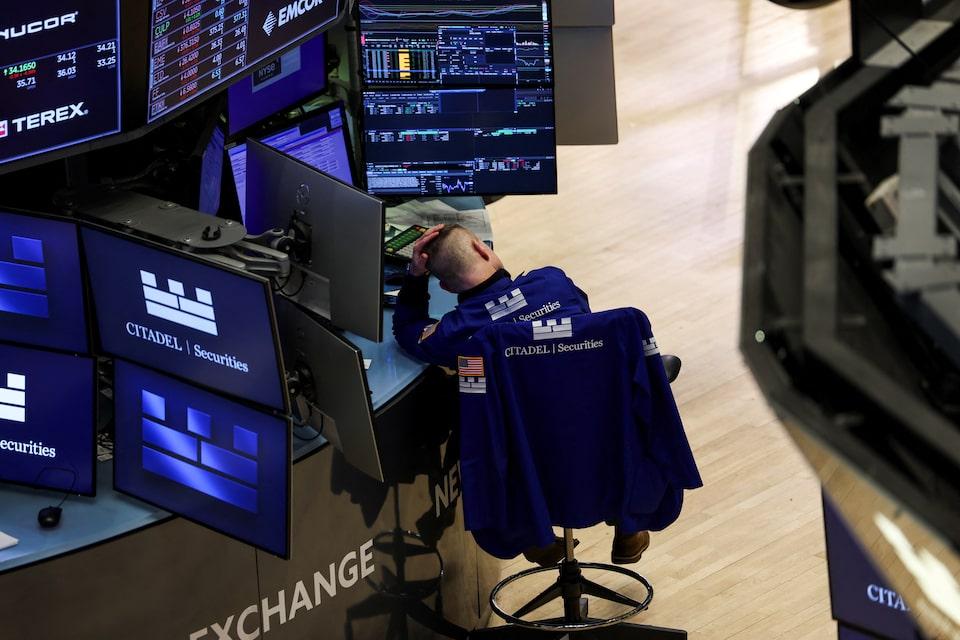
CarMax falls as Q4 profit misses estimates March CPI at 2.4% YoY vs 2.6% estimate Indexes down: Dow 2.50%, S&P 500 3.46%, Nasdaq 4.31% NEW YORK, April 10 (Reuters) - Wall Street stocks tumbled on Thursday on mounting worries over the economic impact of U.S. President Donald Trump's multi-front tariff war. All three major U.S. stock indexes suffered steep losses, forfeiting much of the previous session's gains as growing concerns over the escalating Washington-Beijing trade face-off dampened optimism over upbeat economic data and U.S.-Europe trade negotiations. Sign up here. After Trump announced a 90-day tariff reprieve on Wednesday, the S&P 500 surged 9.5%, the largest one-day percentage jump since October 2008. The tech-heavy Nasdaq soared 12.2%, notching its second-biggest daily gain on record. Following the whipsaw of Wednesday's bounce and Thursday's selloff, the S&P 500 remained 7.1% below where it was just before the reciprocal tariffs were announced last week. "Investors are still uncomfortable with it, because they don't know what the end game is," said Paul Nolte, senior wealth advisor at Murphy & Sylvest in Elmhurst, Illinois. "I think what we're seeing, still, is investor concern about tariffs and that is pretty much front and center for everything." The Labor Department's Consumer Price Index report showed the prices consumers pay for a basket of goods unexpectedly edged lower in March, with core price growth cooling down 2.8% year-on-year, coming within one percentage point of the Federal Reserve's 2% inflation target. But the Fed's path forward, in light of ongoing trade negotiations, is less clear. Fed Governor Michelle Bowman said on Thursday that while the U.S. economy remains strong, the effects of Trump's trade policies are unclear, while Chicago Fed President Austan Goolsbee said rate cuts could resume once the uncertainties surrounding trade policy is resolved. In response to Trump's 90-day tariff pause, the European Union will delay retaliatory levies on American goods as countries within the bloc scramble to reach trade deals with Washington, said European Commission chief Ursula von der Leyen. But the trade war with Beijing persists, with China vowing to "follow through to the end" if the U.S. does not let up. The CBOE Market Volatility Index (.VIX) , opens new tab, often called the "fear index," remained elevated, but closed off the session high of 40.86. "It's hard for investors to feel comfortable about buying stocks with volatility so high," Nolte added. The Dow Jones Industrial Average (.DJI) , opens new tab fell 1,014.79 points, or 2.50%, to 39,593.66. The S&P 500 (.SPX) , opens new tab lost 188.85 points, or 3.46%, at 5,268.05 and the Nasdaq Composite (.IXIC) , opens new tab dropped 737.66 points, or 4.31%, to 16,387.31. Among the 11 major sectors in the S&P 500, all but consumer staples (.SPLRCS) , opens new tab ended in negative territory, with energy (.SPNY) , opens new tab and tech (.SPLRCT) , opens new tab suffering the largest percentage drops. Big Tech came under pressure once again, with each of the so-called Magnificent Seven group of artificial intelligence-related momentum stocks down between 2.3% and 7.3%. CarMax (KMX.N) , opens new tab slid 17.0% after the used-car retailer missed fourth-quarter profit expectations. First-quarter earnings season kicks off on Friday with big banks, including JPMorgan Chase (JPM.N) , opens new tab, Morgan Stanley (MS.N) , opens new tab and Wells Fargo (WFC.N) , opens new tab due to report. Declining issues outnumbered advancers by a 4.81-to-1 ratio on the NYSE. There were 39 new highs and 224 new lows on the NYSE. On the Nasdaq, 867 stocks rose and 3,588 fell as declining issues outnumbered advancers by a 4.14-to-1 ratio. The S&P 500 posted no new 52-week highs and nine new lows while the Nasdaq Composite recorded 13 new highs and 166 new lows. Volume on U.S. exchanges was 23.65 billion shares, compared with the 18.50 billion average for the full session over the last 20 trading days. https://www.reuters.com/markets/us/futures-fall-after-sharp-rally-trump-tariff-reversal-2025-04-10/
2025-04-10 20:07
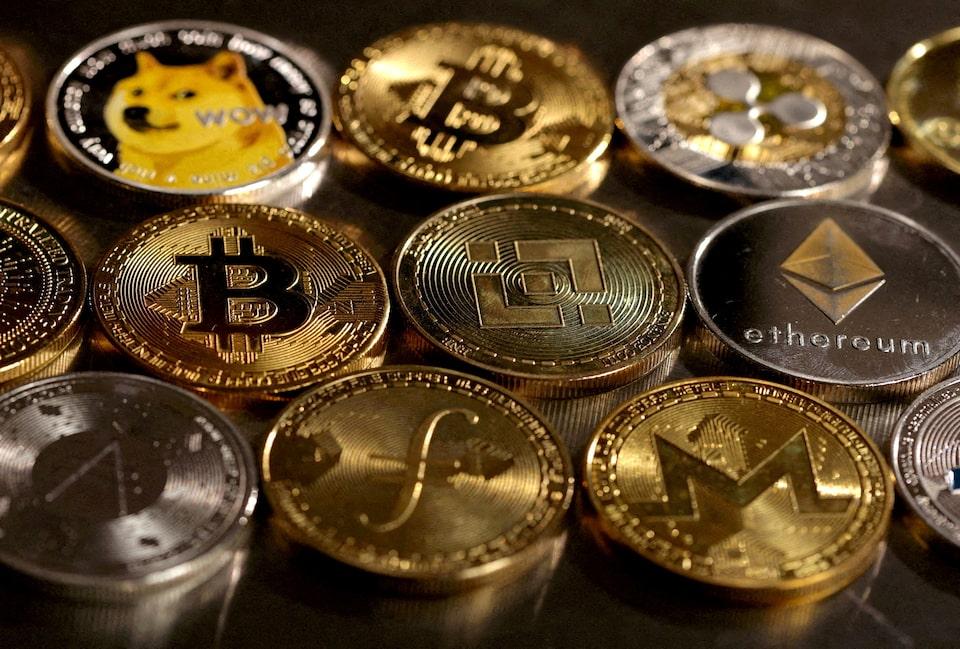
April 10 (Reuters) - New York Attorney General Letitia James urged lawmakers on Thursday to pass legislation to create a federal regulatory framework for cryptocurrencies, arguing that digital asset investors urgently need stronger protections. In a letter to top congressional leadership, including Senate Majority Leader John Thune and U.S. House Speaker Mike Johnson, James said that lawmakers should require crypto companies to register with a federal regulatory agency and set minimum listing standards for crypto tokens. Sign up here. WHY IT’S IMPORTANT James' letter comes as Congress appears likely to pass a bill creating stablecoin rules for the first time. Stablecoins, a type of cryptocurrency designed to maintain a constant value, usually a 1:1 dollar peg, are commonly used by crypto traders to move funds between other crypto tokens like bitcoin and ether. In her letter, James said that lawmakers should require stablecoin issuers to have a U.S. presence, and to deposit U.S. Treasuries and other cash equivalents in American banks. CONTEXT The digital asset industry has seen growing influence in Washington after spending more than $119 million backing pro-crypto congressional candidates in last year's elections. President Donald Trump has sought to broadly overhaul U.S. cryptocurrency policies after courting cash from the sector during his presidential campaign. Bo Hines, who leads Trump's Council of Advisers on Digital Assets, said last month that the White House wants a stablecoin bill passed before August. KEY QUOTE “Countless New Yorkers invest in cryptocurrency and digital assets, and more must be done to protect them and their money,” said James. “Thousands of investors in New York and across the country have lost millions of dollars to cryptocurrency scams and fraud that could be prevented with stronger federal regulations." https://www.reuters.com/technology/new-york-attorney-general-urges-congress-bolster-crypto-regulations-2025-04-10/