2026-01-14 22:14
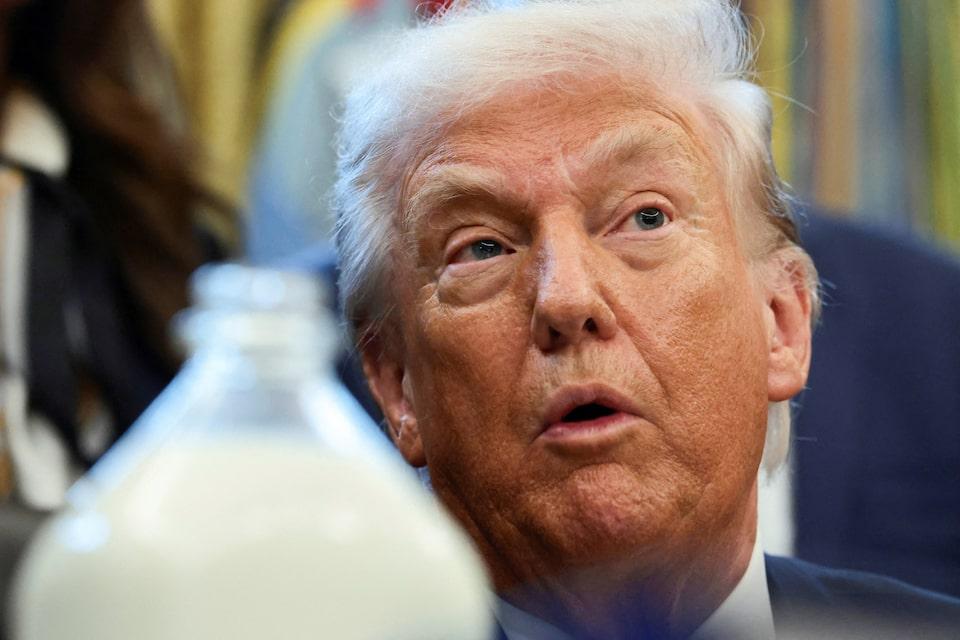
Whole Milk for Healthy Kids Act expands milk options for 30 million children Farm and dairy groups support whole milk USDA guidelines now encourage full-fat dairy, aligning with MAHA strategy WASHINGTON, Jan 14 (Reuters) - U.S. children could soon drink whole milk at school for the first time in nearly 15 years after President Donald Trump on Wednesday signed a law allowing the beverage to be served alongside low-fat and fat-free alternatives. The Whole Milk for Healthy Kids Act, which will expand milk options for nearly 30 million children who eat school meals, enacts a longstanding priority of the dairy industry dating back to the administration of former President Barack Obama. Sign up here. "These changes will be major victories for the American dairy farmers, who we love and who voted for me in great numbers," Trump said at the White House on Wednesday. The law is also aligned with the administration's Make America Healthy Again agenda, named for the social movement that backs Health Secretary Robert F. Kennedy Jr. The administration has promoted other MAHA priorities like curbing childhood vaccines and discouraging the use of artificial dyes in food. "This is exactly the kind of practical change that will make America healthy again," Kennedy said at the White House. WHOLE MILK GOES BACK TO SCHOOL Schools have been required to serve only low-fat and fat-free milk since the 2012 implementation of the 2010 Healthy, Hunger-Free Kids Act, a school meal reform bill championed by former first lady Michelle Obama as part of a broader effort to curb childhood obesity. Farm and dairy groups have since said the Act led to reduced milk consumption at schools and that higher-fat milk is not associated with poorer health outcomes for children. Under the new law, schools will be permitted to serve whole or reduced-fat milk as well as lower-fat options. Farm-state lawmakers have attempted to pass similar legislation several times in recent years. Implementation of the law will take a few weeks, said Agriculture Secretary Brooke Rollins at the White House. MAHA-ALIGNED MILK School meals are regulated by the U.S. Department of Agriculture. To receive federal reimbursement for the meals, schools must meet strict nutrition standards that align with the Dietary Guidelines for Americans. The latest dietary guidelines, unveiled last week by the USDA and Department of Health and Human Services, encourage the consumption of full-fat dairy, a major shift from decades-old guidance to opt for lower-fat varieties. The administration's MAHA strategy report released last year included allowing schools to serve whole milk. In his first term, Trump rolled back several other Obama-era school meal provisions, including relaxing curbs on sodium and allowing schools to offer flavored milks. https://www.reuters.com/legal/litigation/trump-signs-bill-allowing-whole-milk-back-school-meals-2026-01-14/
2026-01-14 22:09
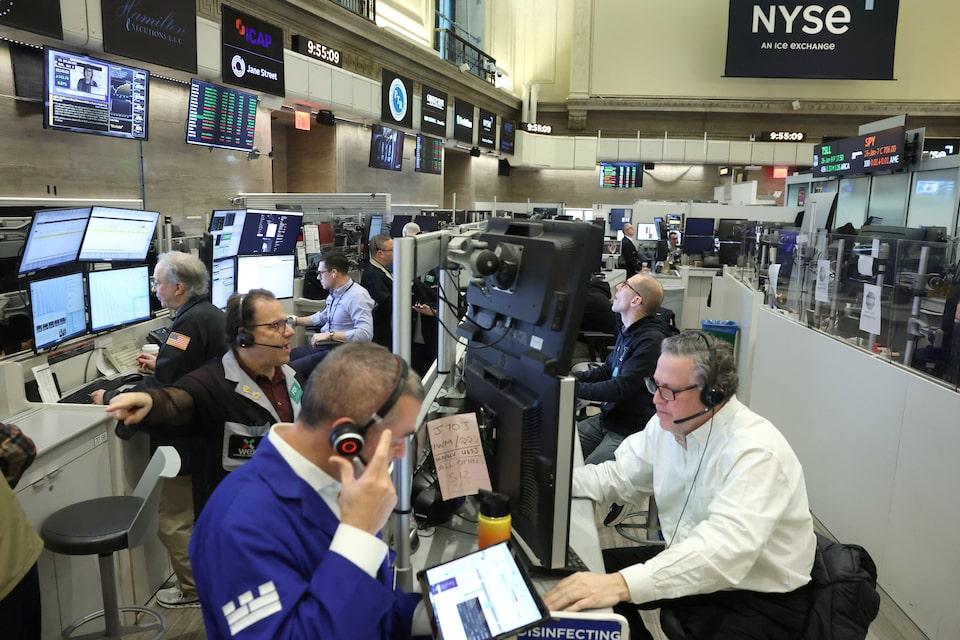
ORLANDO, Florida, Jan 14 (Reuters) - Rising geopolitical tensions centering on Iran and the U.S. loomed large over world markets on Wednesday, overshadowing strong U.S. retail sales figures to push Wall Street lower, lift oil prices and send gold and other metals prices to new highs. More of that below. In my column today I look at U.S. inflation, and why it may be stickier than Tuesday's headline CPI figures suggest. Not good news for inflation-weary consumers or policymakers alike. Sign up here. If you have more time to read, here are a few articles I recommend to help you make sense of what happened in markets today. Today's Key Market Moves Today's Talking Points * Parsing the "everything" rally The relentless scramble for hard assets shows no sign of abating, with several precious and base metals surging to new highs on Wednesday. We are barely at the halfway point in January, and silver and tin prices are already up 30%. Some of that is safe-haven demand, some is hedging against dollar debasement, and an increasing chunk is speculation. Global stocks and money market funds are also at record peaks, and credit spreads are the tightest in months. Equity sentiment could be beginning to falter though, despite a solid start to the U.S. earnings season. Will it spread? * China defies the trade war odds If you'd said last April at the height of Trump's tariff and trade war chaos that China would shrug off America's crippling import duties and go on to record a record-busting $1.2 trillion trade surplus in 2025, you might have got some funny looks. But official figures from Beijing on Wednesday showed this is exactly what happened, as surging exports to Southeast Asia and Europe, in particular, more than offset fewer shipments to the U.S. The big loser in all this? Maybe Europe. * Don't bank on it The Q4 U.S. earnings season is underway, with Wall Street's big banks reporting first. So far, they have mostly delivered earnings beats, with strong trading, lending or wider net interest margins behind the rise. Solid demand for credit suggests the economy is in pretty good shape. But banking stocks are under pressure, and not just because of the broader market wobbles. President Donald Trump's controversial call last week to cap credit card interest rates at 10% has triggered widespread pushback across the industry, and investors seem equally alarmed. U.S. inflation - it's stronger than it looks While the U.S. CPI inflation report on Tuesday showed a slightly softer-than-expected annual increase in core prices, there's little reason for consumers or policymakers to cheer. For consumers, the sharp spike in food prices is a reminder - as if one were needed - of the ongoing affordability crisis. Meanwhile, underlying numbers pointing to upside risks for the Federal Reserve's favored Personal Consumption Expenditures (PCE) inflation gauge will make uncomfortable reading for policymakers. Figures showed that the consumer price index (CPI) rose at an annual rate of 2.7% in December, as expected, while core prices excluding food and energy rose 2.6%, a tenth of a percentage point below forecasts. On the face of it, this is reasonably welcome news. But food prices surged 0.7% on the month, the biggest rise since October 2022, lifting the annual rate of food inflation to 3.1%. This comes just as oil prices have been starting to pick up again, with U.S. President Donald Trump's unpredictable and controversial foreign policy agenda raising geopolitical tensions. True, oil prices remain relatively low and may well be capped by a looming oversupply, but the recent uptick is still liable to worry U.S. households nonetheless. GIVE PCE A CHANCE Fed officials prefer to focus on inflation that excludes volatile food and energy prices, but consumers don't have that luxury, especially those at the lower end of the income spectrum. Economists point out that the "wedge" between monthly CPI and PCE inflation is widening. December's PCE inflation could thus come in a bit hot, although we won't know for some time because the government shutdown has delayed its release until February 20. Skanda Amarnath, co-founder and executive director of Employ America, notes that CPI, a fixed-weight basket of goods and services, "underweights" some areas where consumers spend meaningfully, like software and computer accessories. PCE inflation, meanwhile, better reflects consumers' actual spending habits. "When you look at the goods where people actually allocate their dollars ... we're seeing some meaningful upside right now," he says. Echoing this, economists at Barclays and Morgan Stanley upped their monthly December PCE forecasts to just under 0.5%, which would steer the annual rate up to 2.8% or 2.9%. And in a note titled "December CPI: Stronger than you may think," BNP Paribas' Andy Schneider said December's PCE inflation will be "significantly" higher than CPI. 3% IS THE NEW 2%, RIGHT? Of course, Fed officials are aware of these dynamics too. New York Fed President John Williams said earlier this week that he expects inflation to peak close to 3% in the first half of this year, ease in the second half, and return to the central bank's 2% target next year. None of that is particularly new. It broadly reflects the median projections in the Fed's Summary of Economic Projections in December. But the lack of urgency is notable nonetheless given how long inflation has been above the Fed's target and how far away that goal still is. It has been nearly five years since annual inflation - whether measured by CPI or PCE, headline or core - was below the Fed's 2% target. If Williams is right in his outlook, it will end up being nearly six. The PCE prints are higher and close to 3%, but the CPI readings aren't that much lower. Fed officials will never admit it publicly, of course, but they appear to have tacitly accepted that 3% is the new 2%. And inflation may very well stay closer to that 3% level in the coming months due to multiple factors, such as companies passing on tariffs, tight housing supply, potential energy shocks, and growth-fueled demand driven by expected tax relief and fiscal stimulus. Some of these risks may not materialize and other factors could weigh on prices, but, as it stands, consumers and policymakers will have to deal with above-target inflation for some time to come. What could move markets tomorrow? Want to receive Trading Day in your inbox every weekday morning? Sign up for my newsletter here. Opinions expressed are those of the author. They do not reflect the views of Reuters News, which, under the Trust Principles , opens new tab, is committed to integrity, independence, and freedom from bias. https://www.reuters.com/world/china/global-markets-trading-day-graphic-2026-01-14/
2026-01-14 21:18
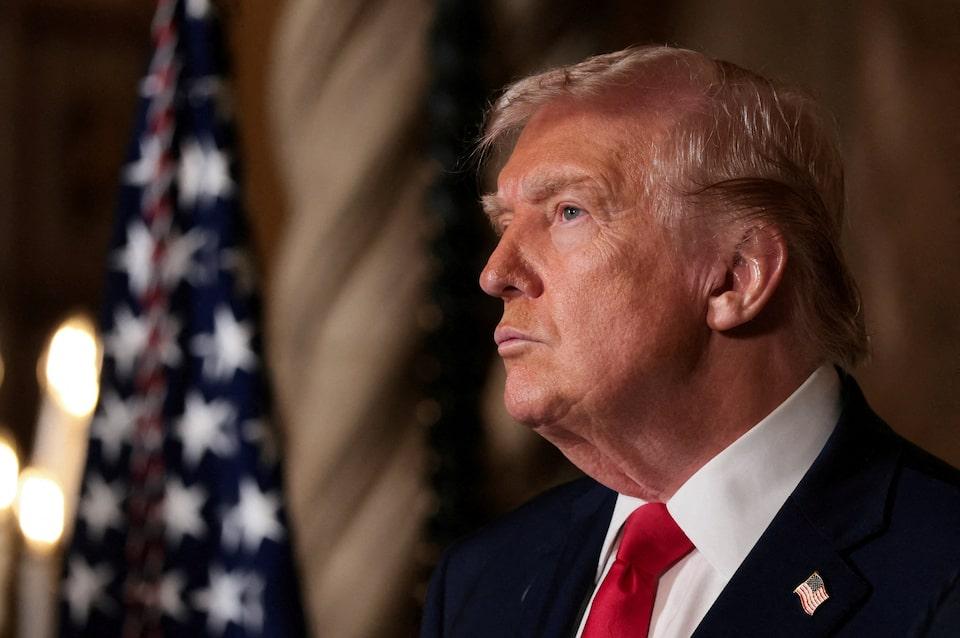
Trump administration paused five offshore wind leases citing national security Equinor faces project termination if not resumed by January 16 Jan 14 (Reuters) - A U.S. judge will rule on Thursday on whether to allow Norwegian offshore wind developer Equinor to resume construction of the Empire Wind project off the coast of New York in a lawsuit over the Trump administration's suspension of the industry. U.S. District Judge Carl Nichols in Washington had declined to issue an immediate ruling at a hearing on Wednesday, two days after the same court ruled Danish offshore wind developer Orsted (ORSTED.CO) , opens new tab could restart work on its nearly completed Revolution Wind project off Rhode Island. Sign up here. The telephonic hearing will take place at 11 a.m. (1600 GMT) local time, according to the court. The court decisions in these cases hold high stakes for companies and their shareholders because they could allow multi-billion-dollar projects to be completed, but the underlying lawsuits and the administration's aversion to offshore wind will continue to create uncertainty. FIVE PROJECTS PAUSED Equinor's request for an injunction, which would allow work to continue while the lawsuit proceeds, is the latest in a string of legal challenges to U.S. President Donald Trump's all-of-government opposition to the offshore wind sector. Trump's Interior Department last month paused activity on five offshore wind leases, citing new classified information on risks to national security from radar interference. During the hour-long hearing, Empire Wind attorney Ann Navaro said the pause created an "existential risk" for the company, and that it could lose access to construction vessels it needs to complete the $5.5 billion project. U.S. Department of Justice attorney Stanley Woodward, arguing for the administration, said national security concerns justified the halt and argued the "parade of horribles" Empire Wind said would result from the pause was "speculative." Nichols questioned whether the government's national security concerns would apply during construction of the project as opposed to during operations. Empire Wind said the project is not slated to start operations until October. The judge, who was appointed by Trump during his first term, also raised the possibility of temporarily halting the pause before ruling on the merits of the case in an expedited proceeding. Equinor (EQNR.OL) , opens new tab has spent $4 billion on its project, and said in court papers that it faces likely termination if it cannot proceed by January 16. Empire Wind is located 20 miles (32 km) off the coast of Long Island and is about 60% complete. It is expected to produce electricity to power about 500,000 homes. Offshore wind developers, including Equinor, have faced repeated disruptions under Trump, who says wind turbines are ugly, expensive and inefficient. Empire Wind was halted previously by the administration for a month last year. https://www.reuters.com/sustainability/climate-energy/us-court-weigh-new-york-project-challenge-trump-offshore-wind-halt-2026-01-14/
2026-01-14 21:07
Jan 14 (Reuters) - A federal judge will rule on whether Norwegian offshore wind developer Equinor (EQNR.OL) , opens new tab can resume work on its New York Empire Wind project at a hearing on Thursday, according to a court communication. The decision is high stakes for Equinor, which is seeking to block the Trump administration's Dec. 22 pause on offshore wind activity in federal waters so it can complete the multi-billion dollar project. Sign up here. https://www.reuters.com/legal/government/us-judge-will-rule-equinor-offshore-wind-injunction-thursday-2026-01-14/
2026-01-14 20:58
Zelenskiy says state of emergency will help with decisions President says not enough done in Kyiv after Russian attacks Emergency crews proceed with restoration work Jan 14 (Reuters) - President Volodymyr Zelenskiy said on Wednesday he would declare a state of emergency in the energy sector to make up for lost time and tackle issues of disrupted power supplies following sustained Russian attacks on infrastructure. Zelenskiy acted as emergency crews proceeded with round-the-clock efforts to restore power and heating supplies thrown into disarray, particularly in Kyiv, by a Russian attack last week. Sign up here. Repairs to thousands of apartment blocks have been compounded by frigid weather, with night-time temperatures dipping close to -20 Celsius (minus 4 Fahrenheit). "The consequences of Russian strikes and deteriorating weather conditions are severe," Zelenskiy wrote in English on the X social media platform. "Overall, a state of emergency will be declared for Ukraine’s energy sector ... Many issues require urgent resolution." PRESIDENT CALLS FOR MORE ACTION IN KYIV Speaking later in his nightly video address, Zelenskiy said not enough had been done to deal with the aftermath of the attacks and the state of emergency would allow authorities "more options and flexibility." He called for the establishment of more centres where residents can stay warm and charge electronic devices, and said nightly curfews could be lifted in areas where the security situation permitted it. The president said Kyiv had done considerably less than other major centres, notably Ukraine's second-largest city, Kharkiv, to prepare for the hardships inflicted by the attacks. "Even in recent days, I do not see sufficient intensity," he said. "This must be urgently corrected. Decisions must be made." Kyiv Mayor Vitali Klitschko, who has previously been at odds with Zelenskiy over the defence of the capital, rejected the president's criticism. Writing on Telegram, he said heating had been restored to all but about 400 of 6,000 affected apartment buildings and support centres were operating 24 hours a day. "Such statements, first of all, undermine the dedicated work of thousands of people, professionals," Klitschko wrote. "They may not have weapons in their hands, but through their tireless efforts they are also fighting for their country." In his remarks, Zelenskiy said a permanent coordination headquarters would be set up in Kyiv, with Denys Shmyhal, the newly appointed first deputy prime minister and energy minister, overseeing the work. He said work was under way "to significantly increase the volume of electricity imports into Ukraine." He also urged the military to hold their positions along the 1,200-km (775-mile) front line and diplomats to keep pursuing efforts on documents needed to secure peace. "From our side, maximum productivity is required," he said. "We expect the same level of energetic work from the American side. I personally very much expect this." https://www.reuters.com/world/europe/ukraines-zelenskiy-declare-state-emergency-energy-after-russian-attac-2026-01-14/

2026-01-14 20:52
HOUSTON/WASHINGTON, Jan 14 (Reuters) - Chevron (CVX.N) , opens new tab is expected to receive an expanded Venezuela license from the U.S. government this week that could allow for increased production and exports from the South American country, three oil industry sources told Reuters on Wednesday. The U.S. oil producer is anticipated to be one of several firms to get approvals from President Donald Trump's administration to do business in Venezuela as oil companies, traders and refiners look for access to the country's heavy crude, sources said. Sign up here. U.S.-based Marathon Petroleum (MPC.N) , opens new tab, for example, is in discussions with the administration to receive Venezuelan crude for its refineries, according to a separate source familiar with the discussions. U.S.-based Valero Energy (VLO.N) , opens new tab and global traders Mercuria and Glencore (GLEN.L) , opens new tab have also been in talks for licenses from Washington to do business with Venezuela, industry sources said. A Chevron spokesperson said in a statement that the company operates in compliance with all laws, regulations and sanctions frameworks. Marathon, Valero, Mercuria and Glencore did not immediately respond to requests for comment. The U.S. Treasury Department's Office of Foreign Assets Control did not immediately respond to a request for comment. It does not generally comment on specific licenses or licensing requests. Reuters reported last week that Chevron was in talks with the U.S. government to expand a key license to operate in Venezuela so it can increase crude exports to its own refineries and sell to other buyers. Chevron is the only American oil major currently producing and exporting crude from Venezuela, which it does under a restricted authorization from the U.S. government that exempts it from sanctions on the country. The company's shares have risen nearly 9% since U.S. forces removed President Nicolas Maduro from power earlier this month and interim President Delcy Rodriguez took office. Trump has said he wants U.S. oil companies to invest as much as $100 billion to reactivate the OPEC country's oil industry and boost output. https://www.reuters.com/business/energy/chevron-expected-receive-expanded-venezuela-license-us-this-week-oil-industry-2026-01-14/