2025-04-10 20:03
April 10 (Reuters) - Four Republican senators are asking Congressional leadership to preserve energy tax credits included in the Biden-era Inflation Reduction Act in the impending budget reconciliation bill, according to a letter circulated on Thursday. In the April 9 letter to Senate Majority Leader John Thune, the four senators said repealing the tax credits would disrupt investment and harm businesses and jobs. Sign up here. "Our country is blessed with abundant natural resources and an entrepreneurial spirit that uniquely positions us to power both our economy and the world—enabling U.S. leadership in innovation, energy production, and manufacturing alike," the letter said. "Many of the investments that make this possible are enabled by current tax provisions, including some from the Inflation Reduction Act." The letter was signed by Senators Lisa Murkowski of Alaska, John Curtis of Utah, Jerry Moran of Kansas and Thom Tillis of North Carolina. The letter came a month after a similar letter by 21 Republicans in the U.S. House of Representatives urged Congressional leaders and the White House to protect certain clean energy tax credits despite President Donald Trump's pledge to repeal the IRA's climate-related measures. The House passed a budget plan on Thursday that will allow it to bypass Democratic opposition and pass tax cut legislation along party lines later this year. But lawmakers must still hammer out the details of how to pay for $5 trillion in tax cuts. "We believe the final reconciliation bill can support smart policies that enable private sector investment in domestic energy to help meet future U.S. energy needs and strengthen the global competitiveness of American companies," the letter said. https://www.reuters.com/world/us/four-republican-us-senators-back-biden-era-energy-tax-credits-2025-04-10/
2025-04-10 19:30
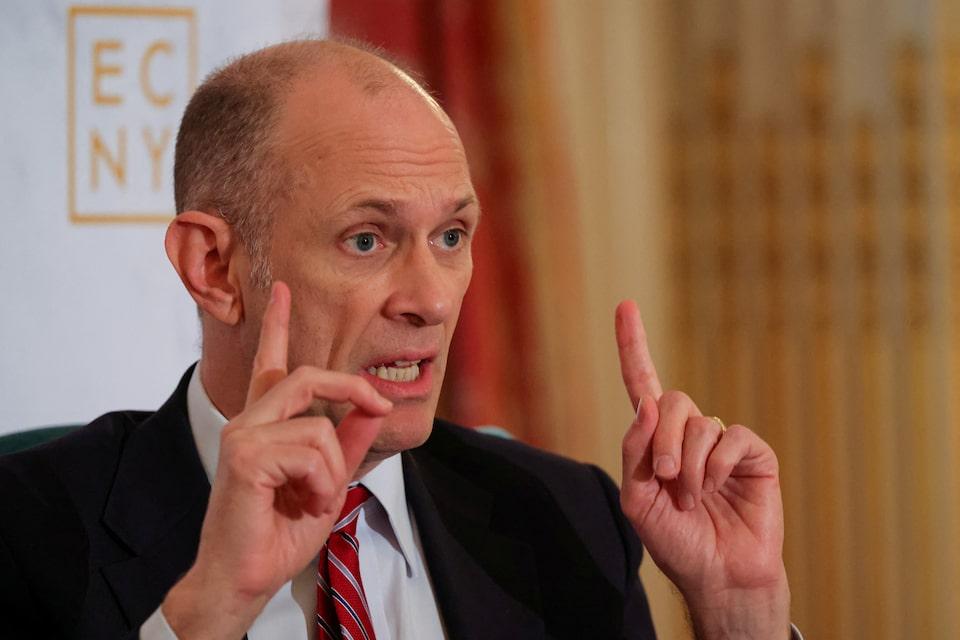
Fed's Goolsbee says uncertainty in economy is high right now Goolsbee says economy was solid ahead of tariff imposition Goolsbee says if economy gets back on track, rate cuts still possible NEW YORK, April 10 (Reuters) - Federal Reserve Bank of Chicago President Austan Goolsbee said Thursday high levels of uncertainty amid very aggressive trade tariffs argues for a wait-and-see approach to monetary policy, amid signs the U.S. government bond market is holding up under a period of high stress. “I don't think you should ever take anything off the table-- that's increases, cuts, holding the same--but the circumstance that we're in now, where there are a lot of major question marks, is more like we need to wait-and-see how these things are getting resolved,” Goolsbee told reporters after giving remarks before a gathering of the Economic Club of New York. Sign up here. The bar for action on monetary policy "is a little higher" at the moment as central bankers scour the data to see how the economy is reacting to actions taken by the Trump administration to make a wide range of import prices sharply higher. Goolsbee noted that the tariffs pursued by President Donald Trump, even as they've been pulled back, are still very high and will impact the economy in a way that's hard for monetary policy to deal with. "There is not a generic playbook for how a central bank should respond” to the import tax surge, as they create a stagflationary shock, or a period of simultaneous higher inflation and depressed growth, Goolsbee told the broader gathering. While uncertainty is high and problematic, if that can be resolved and inflation can move down amid solid job market performance, “I still think that one to two years, 12 to 18 months from now, rates will be lower than they are today,” he said. Goolsbee also noted that while financial markets have been under pressure, he said the pain was not unique just to U.S. assets and can be seen in other markets as well. Amid extreme volatility in Treasury yields, Goolsbee told reporters the successful outcome of the government's 10-year note gave him some "comfort." He also told reporters he still sees the U.S. government bond market holding its long-standing role as a safe haven, noting "when there is a flight to safety, it still feels like the safest asset in the world is a long-term Treasury." RISK OUTLOOK Goolsbee spoke a day after President Donald Trump reversed hefty tariffs on dozens of countries while ramping up pressure on China. The change in tariffs unleashed a global stock rally on Wednesday, but U.S. stocks reversed course on Thursday. Some major banks have forecast that the economy will soon fall into recession. Financial markets have also priced in a more aggressive course of rate cuts, expecting the Fed will need to shift to supporting the job market even with inflation above the Fed's 2% target and tariffs likely to go higher. Goolsbee told the gathering that the current state of economic data looks pretty good, but the lag on when the data is reported could mean it does not reflect the current situation. Goolsbee said it's important for the Fed to look at all the data it can now. He also highlighted the importance of keeping inflation expectations in check, because it helps keep current price pressures under control. While near-term expectations have risen, he said, the critical view on longer-run price pressures has remained anchored so far. If there were a deterioration in expectations, it would likely take primacy in Fed policymaking. If longer-run price pressure expectations start going up, "any central bank almost has to address that...regardless of what the other conditions are." Goolsbee told reporters that he prefers to watch market based measures of inflation expectations over those of surveys. https://www.reuters.com/markets/rates-bonds/feds-goolsbee-rate-cuts-still-possible-if-economy-gets-back-track-2025-04-10/
2025-04-10 17:40
April 10 (Reuters) - Wall Street's main indexes fell hard again on Thursday on concerns over the impact of high tariffs on the global economy, marking a U-turn from the previous session's historic gains when U.S. President Donald Trump moved to temporarily lower the levies on some countries. The renewed selling came a day after the new levies took effect on most trading partners, rattling markets, and Trump then announced a 90-day pause on many of the reciprocal tariffs, while raising them further on Chinese imports. That catapulted the S&P 500 (.SPX) , opens new tab to its biggest single-day percentage gain since 2008, while the Nasdaq (.IXIC) , opens new tab posted its biggest one-day jump since 2001. The two indexes were down 4.6% and 5.4%, respectively, Thursday afternoon. Sign up here. COMMENTS: JJ KINAHAN, CEO OF IG NORTH AMERICA, PRESIDENT OF TASTYTRADE, CHICAGO "It seems to be setting up for a little bit of China versus the U.S. People were glad to see that many other countries got left to where they were at least for now. "With that, I also think a lot of shorts yesterday were getting squeezed and the momentum fed on itself to the upside. As we kept going higher they had to cover short positions and you had a lot of people going through that door at the same time." "Today, the tariff situation leaves a lot of question marks as to what happens with China. At the end of the day we're still operating in an area of unknown and if there's one thing the market hates is unknowns. China is a very large trading partner with a lot of dependencies. " "There still could be inflationary pressure. There's also a question about how you come back from that longer term, to the relationship with China. That becomes a bit of a concern also." JIM CARROLL, SENIOR WEALTH ADVISOR & PORTFOLIO MANAGER, BALLAST ROCK PRIVATE WEALTH, CHARLESTON, SC “This is bonkers. I think a lot of retail clients, talking to their advisors after this latest downturn, are saying, just get me out of the way of this landslide and we can come back later. What they’re feeling is an unusual degree of anxiety. In many ways this is different even than Trump 1.0. and it feels that it could be more serious. We’re backing China up against a wall. What’s going to happen next? It frightens people. “I’m talking to our own clients every day, who do have some unrealized losses as a result of this although nothing close to what we might have had. The conversations happen constantly, and the questions are do we realize some of these losses now because they might get worse, or realize them to offset some gains in other parts of the portfolio? “What we saw yesterday had all of the signs of being a short squeeze, the result of people who were offside needing to be onside again being tapped on the shoulders by risk managers, and told hey, it’s time to close out those short positions. But then when the dust settled overnight and people realized that the biggest player in this game is China and we’re still leaning hard on China, the enthusiasm waned. “We’re in for a period of volatility in both directions. That is what happens when things get like this, you get these violent moves in both directions. When the uncertainty is this high, I don’t have a clue what will be happening next. I don’t have an Excel spreadsheet spitting out an answer.” MICHAEL BROWN, SENIOR RESEARCH STRATEGIST, PEPPERSTONE, LONDON "The move higher after Trump's Truth Social post was incredibly violent and sizable in nature ... so it's no surprise to see a little bit of a pullback and some of the wind come out of the sails as the market takes a bit of a pause for breath." "Somewhat calmer heads are starting to prevail just a little bit from this euphoria that we saw yesterday... the 10% baseline tariff on everyone else is very punchy indeed. The worst case scenario on trade has been avoided but it's not all as fine and dandy as we'd like it to be. We've built in 90 days worth of humongous uncertainty now, which is certainly not going to do (volatility) sellers any favour whatsoever." ADAM HETTS, GLOBAL HEAD OF MULTI-ASSET, JANUS HENDERSON, DENVER "We're still left with this other scenario, which is still not a good scenario of the 10% baseline, the tariffs on autos, aggressive counter tariffs and trade war-style escalation with China and Europe." "So this still gets back to the bear case and sort of the recessionary case. And we still think it's a sell off base case. This has gone from a disorderly sell-off to hopefully back to more of an orderly sell-off because recession risk is much, much higher now than it was a couple weeks ago." ART HOGAN, CHIEF MARKET STRATEGIST, B RILEY WEALTH, NEW YORK "The overall level of tariffs is still higher than what was originally announced and there was an addition to that this morning and that's about when the markets turned a bit. So the realization is that while we got some good news yesterday, we still have to live in a world where there's new uncertainty and the tariffs on China now total 145%. "While yesterday seemed to be a significant rally in the face of good news in terms of the potential for negotiations, the bad news is the trade war with China continues to escalate. And that's what's trying to be priced in by market participants today." MARC CHANDLER, CHIEF MARKET STRATEGIST, BANNOCKBURN GLOBAL FOREX, NEW YORK “Seeing the world as a zero-sum game is not very helpful. I don’t see this as a zero sum but that’s what the administration is pushing.” “The uncertainties that loom have a real cooling element.” “The market requires a higher U.S. interest rate premium to stay long dollars… The dollar is going to require higher premium in order to keep the dollar firm.” SAMEER SAMANA, HEAD OF GLOBAL EQUITIES AND REAL ASSETS, WELLS FARGO INVESTMENT INSTITUTE, CHARLOTTE, NORTH CAROLINA "It's not surprising for two reasons. One, yesterday was a big up day and for anybody who was looking for ... a chance to sell something that maybe they wish they had sold at the lows of the bear market, they probably are now selling. They probably sold yesterday and they're probably selling today. And I think it just shows you how many people are thinking, we're just not sure what is going to happen next, so we're going to just take the money and run, with respect to the huge pop we saw yesterday." "And then the second part of it, which is somewhat related, is, I don't know what happens next, right? Do we do this whole thing in 90 days?" "They say they want to make deals, but what if the other side isn't offering exactly what they would like? Do we do it all again in three months? So I think it's that uncertainty that continues to just weigh on markets." "I think there are people going, 'Look, I'm going to kind of move to the sidelines and come back when the landscape is a little cleaner.' " https://www.reuters.com/markets/us/global-markets-views-quotes-2025-04-10/
2025-04-10 17:11
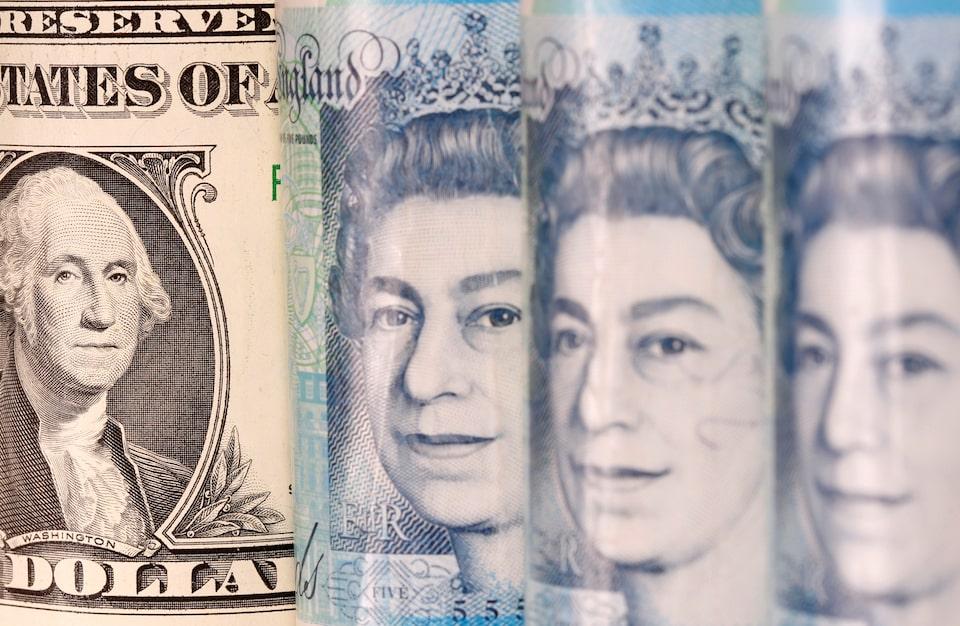
LONDON, April 10 (Reuters) - Sterling was buffeted by moves elsewhere on Thursday, jumping 1% against an under-pressure dollar and dropping more on the resurgent euro as currency markets swung in the aftermath of the previous day's shock postponement of some tariffs. Friday may see British-specific factors take over, with February GDP data due, though it is likely the sharp swings on the back of tariff headlines will continue to drive sentiment across assets. Sign up here. Market moves on Thursday were still in the shadow of the announcement the day earlier from U.S. President Donald Trump that he would temporarily lower the hefty duties he had just imposed on dozens of countries. Though the kneejerk optimism that followed that move for U.S. assets had firmly faded by late on Thursday in Europe, and the pound was last up 1% on the dollar to $1.296 in what would be its biggest one-day gain in more than a month. The move was generally in the same direction as the overall mood across currency markets, with the dollar lower across the board. In contrast, however, the British currency weakened on the euro, with the common currency up 1.3% on the pound to 86.47 pence, testing its 16-month top of 86.62 pence hit the day before. Barring the safe haven Japanese yen and Swiss franc, the euro has been the biggest beneficiary of the turmoil in U.S. markets, which analysts attribute in part to European investors reducing their once large holdings of U.S. equities and bonds. Any equivalent flows for the pound are much less. In addition, the tariff reprieve meant less for Britain than Europe, as direct tariffs on British imports remain unchanged at 10%, even if it benefits slightly from the smaller hit to global growth as a result. In this context investors will be closely watching Friday's economic data. Deutsche Bank analysts expect a marginal rebound from the 0.1% shrinking in GDP in January, but they said in a Thursday note that "despite the temporary tariff reprieve, the UK finds itself in a difficult place". "Trade uncertainty will no doubt remain elevated. Sentiment will likely have weakened. And policy makers will need to carefully calibrate their next steps as we brave into a new economic world." But they said this was unlikely, at this stage, to move the Bank of England to faster rate cuts. "We think things will have to get markedly worse to convince the majority of the (monetary policy committee) for a bigger rate cut." Markets currently see a 25-basis point Bank of England rate cut at its next meeting in May as all-but-certain, with at least two and possibly three further such moves by year-end, at roughly every other BoE meeting. Bank of England Deputy Governor Sarah Breeden said Thursday the impact on UK inflation from U.S. President Donald Trump's trade tariffs - and the implications for interest rates - remained unclear even if Washington's new policies were likely to lower growth. https://www.reuters.com/markets/currencies/sterling-strengthens-dollar-weakens-euro-british-gdp-up-next-2025-04-10/
2025-04-10 16:46
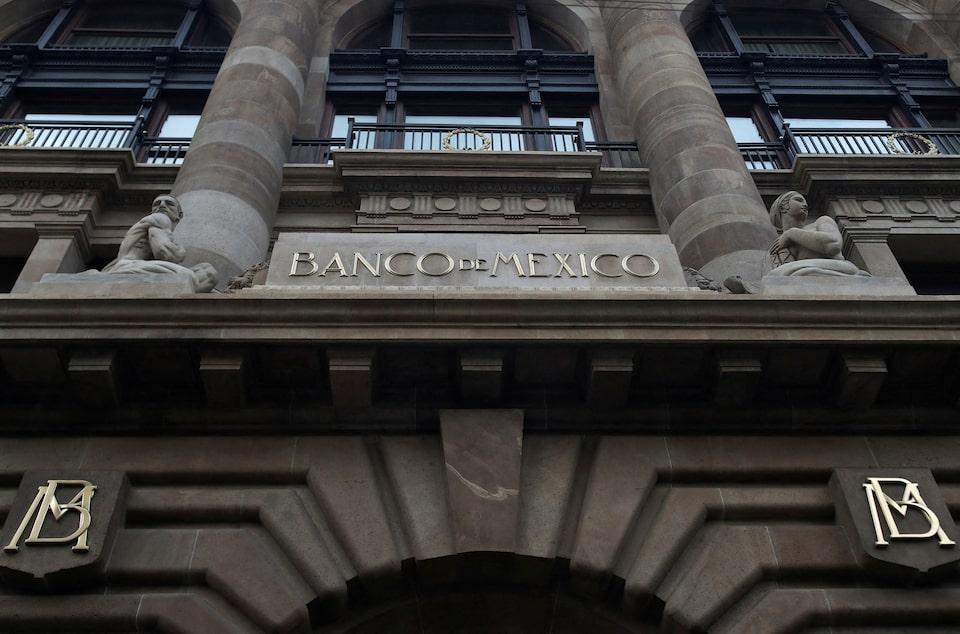
MEXICO CITY, April 10 (Reuters) - Most of the Bank of Mexico's five governing board members agreed that the risks associated with U.S. President Donald Trump's tariffs will add uncertainty to the future path of inflation, minutes of its March 27 monetary policy decision showed on Thursday. Inflation forecasts remain uncertain, the board members noted in the minutes, adding that although the balance of risks for the trajectory of inflation remains biased to the upside, it has improved. Sign up here. "The changes in economic policy by the new U.S. administration have added uncertainty to the forecasts," the minutes noted. "Its effects could imply inflationary pressures on both sides of the balance." Mexico's annual inflation sped up in March, up 3.80%, but remained within the central bank's target range of 2% to 4%, data released on Wednesday showed. The central bank's inflation forecasts remain unchanged, however, and board members still expected headline inflation to converge to the target in the third quarter of 2026. Board members pointed out that as a result of uncertainty around U.S. trade policies, there was now also a greater possibility of a further exchange rate depreciation and further economic weakening. Banxico, as the central bank is known, delivered a unanimous 50-basis-point interest rate cut to 9.00% last month, highlighting progress on inflation but warning of heightened uncertainty relating to trade tensions and a weakening economy. Some board members mentioned that weakness in the Mexican economic activity "is expected to have deepened in the first quarter of 2025," said the minutes. A first-quarter contraction would mark a technical recession, after the economy shrunk in the fourth quarter - its first quarterly contraction since the pandemic. One board member underscored that the effects of the uncertainty resulting from U.S. tariffs were already reflected in an additional weakening of the Mexican economy. (This story has been refiled to fix the second byline) https://www.reuters.com/world/americas/bank-mexico-us-tariffs-may-exert-pressure-both-ends-inflation-2025-04-10/
2025-04-10 16:45
SAO PAULO, April 10 (Reuters) - The acquisition of some of lender Banco Master's assets by Brazil's government-controlled bank BRB (BSLI3.SA) , opens new tab is likely to exclude "much more" than 23 billion reais ($3.89 billion) in assets, BRB's president said on Thursday. BRB is still analyzing Banco Master and the final price for its assets has not been defined, although it is expected to decrease from earlier indications, President Paulo Henrique Costa said at a press conference, after the bank released fourth-quarter results. Sign up here. The initially announced price was 2 billion reais. "Due diligence at this moment is focused on the credit portfolio," he said, adding that only a portion of the credit operations would be considered part of the business to be analyzed by the Brazilian central bank. Last week, Costa told Reuters the deal would involve the purchase of Master's healthiest and most strategically relevant assets, leaving assets worth about 23 billion reais outside the deal. On Thursday, Costa said the Master operations that interest BRB are those dealing with medium and large business segments, payroll credit cards, and foreign exchange services. "Therefore, assets that do not have guarantees or risk profiles aligned with BRB will not be part of it," he said. ($1 = 5.9060 reais) https://www.reuters.com/markets/deals/brazilian-lender-brb-expects-lower-banco-master-price-with-deal-adjustment-ceo-2025-04-10/