2025-04-10 15:40
BRASILIA, April 10 (Reuters) - Brazil will pursue trade negotiations with the U.S. while reaffirming its support for multilateralism and seeking to expand its network of trade agreements, Foreign Trade Secretary Tatiana Prazeres said on Thursday. "Our approach (with the U.S.) is to negotiate, negotiate, and negotiate - that's what we've been doing," Prazeres said at an event organized by the Brazil-China Business Council (CEBC). Sign up here. She stressed that increasing sales to the European Union - with whom the South American Mercosur bloc hopes to ratify a long-awaited trade deal- could help diversify exports. Mercosur is also advancing talks with EFTA, the European Free Trade Association formed by Norway, Switzerland, Iceland and Liechtenstein, she noted. According to Prazeres, Latin America's largest economy could benefit from trade flow shifts caused by sweeping new tariffs announced earlier this month by U.S. President Donald Trump's administration, as occurred in the past when Brazilian soybean exports to China surged during Trump's first term. However, she emphasized that Brazil does not favor a scenario of volatile and unilateral tariff swings hampering the global economy, emphasizing that for some commodities, Brazil simply does not have a market that can replace what China buys. "There are significant risks for the global economy, international trade, and trade governance," she warned. "Brazil has always supported multilateralism and rules-based trade and does not want to see the current situation deteriorate." On China, Brazil's top trade partner and a major buyer of its soybeans, iron ore and crude oil, Prazeres said that removing sanitary, phytosanitary and regulatory barriers could significantly boost Brazilian exports. She also called the bilateral relationship "dual," noting that while China is a major buyer of Brazilian goods, its exports also put pressure on domestic industries such as consumer goods and automobiles. Chinese investment in Brazil's auto sector and in productive capacity has helped ease some of those tensions, said Prazeres. https://www.reuters.com/world/americas/brazil-pursue-us-talks-while-seeking-expand-trade-deals-says-official-2025-04-10/

2025-04-10 14:48
SAO PAULO, April 10 (Reuters) - Brazil's services sector grew more than expected in February, according to data from statistics agency IBGE on Thursday, after showing signs in the prior three months of cooling amid tight monetary policy. Services sector activity, the main driver of Latin America's largest economy, was up 0.8% in February from the previous month, IBGE said, above the 0.1% increase expected by economists polled by Reuters. Sign up here. "In February, the services sector showed widespread growth, with four out of the five activities surveyed having positive results. With this month's advance, there was a recovery from the loss observed in January," said Rodrigo Lobo, research manager at IBGE. IBGE data earlier this month showed industrial output fell unexpectedly due in part to the negative impact of high interest rates. Brazil's central bank has hiked rates to bring inflation back to its 3% target. The benchmark interest rate stands at 14.25%, and central bank policymakers have signaled a smaller rate hike at their next meeting as they monitor signs of an economic slowdown. Forward-looking economic indicators, however, support expectations of a robust economy in the first quarter, according to Nicolas Borsoi, chief economist at Nova Futura Investimentos. "Going forward, we expect services activity to benefit from federal fiscal transfers to low-income households with a high propensity to consume," Alberto Ramos, head of Latin America economic research at Goldman Sachs, said in a note. On an annual basis, according to IBGE, services output grew 4.2% in February from February 2024, the 11th consecutive positive reading. Economists in a Reuters poll had forecast a median rise of 3.3%. https://www.reuters.com/world/americas/brazils-services-activity-growth-beats-expectations-february-2025-04-10/

2025-04-10 12:34
COPENHAGEN, April 10 (Reuters) - Ireland will go ahead with at least three more offshore wind auctions by the end of this decade, its marine minister told Reuters on Thursday, adding that it was unlikely the country would meet its target of 80% of electricity generation from renewable sources by 2030. The commitment to offshore wind comes despite a vicious cycle of inflationary pressure, higher interest rates and bottlenecks in the supply chain which have caused auctions to fail and cancellations and postponements of projects around the globe. Sign up here. "There'll be probably three more auctions, maybe more (towards 2030)," Timmy Dooley, a junior minister at the Department of the Environment, Climate and Communications said on the sidelines of a wind conference in Copenhagen. They would come in addition to Ireland's second offshore wind auction which is scheduled later this year, aiming to procure 900 MW of capacity. "We don't see any pathway back to fossil fuels ... We are absolutely committed to offshore wind as the energy source of the future," Dooley said. A government spokesperson said that they expected to get ten bids in the upcoming auction. While Ireland will move ahead with its target of reaching a combined 5 gigawatts (GW) of offshore wind by 2030, 20 GW by 2040 and 37 GW by 2050, Dooley said it would be challenging to meet the target of 80% renewable electricity generation by 2030. "(But) it will be close ... We hope to be a long way there by 2030," Dooley said. Ireland's recently re-elected coalition government reaffirmed its pledge to achieving 80% of Ireland's electricity generation from renewable sources by 2030 in its policy programme published in January. The government is working to remove obstacles to development, with marine area planning reforms and port infrastructure investments underway, Dooley said. The country generates around 40-45% of its electricity from renewable sources, primarily from over 5 GW of installed onshore wind capacity, grid operator EirGrid data showed. Ireland has just 25 MW of offshore capacity as of today. https://www.reuters.com/sustainability/climate-energy/ireland-commits-more-offshore-wind-auctions-despite-industry-turmoil-2025-04-10/

2025-04-10 12:33
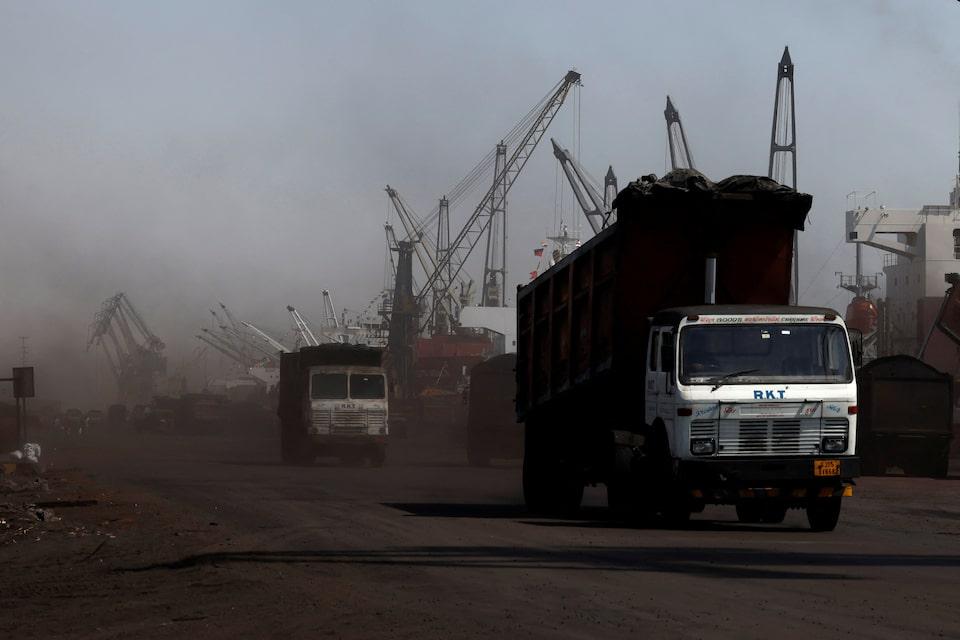
April 10 (Reuters) - India's GreenLine Mobility Solutions will invest $275 million to accelerate decarbonization of heavy trucks in the country, the company said on Thursday, in a move to cut logistics-related emissions and align its supply chain with sustainability goals. Companies in India, the world's third-largest emitter of greenhouse gases, are investing billions of dollars to help the country reach the net-zero emissions target by 2070. Sign up here. GreenLine, which is part of retail-to-mining Essar Group, said it will use the investment to deploy over 10,000 liquefied natural gas (LNG) and electric trucks. The Mumbai-based firm will also establish a nationwide network of 100 LNG refueling stations, EV charging stations and battery-swapping facilities. "We see this as an opportunity to not only build the green mobility ecosystem, but also, in the future, invest in clean energy sources to power our electric trucks," said Anshuman Ruia, director of Essar Group. GreenLine supplies LNG-fueled trucks to firms such as miner Hindustan Zinc (HZNC.NS) , opens new tab and battery maker Exide Industries (EXID.NS) , opens new tab. GreenLine said its LNG-powered trucks cut carbon dioxide emissions by up to 30%. The firm currently operates a fleet of 650 LNG trucks and has covered more than 38 million kilometers so far, reducing these emissions by 10,000 tonnes. https://www.reuters.com/sustainability/climate-energy/indias-greenline-mobility-invest-275-million-decarbonize-heavy-truck-fleet-2025-04-10/
2025-04-10 12:33
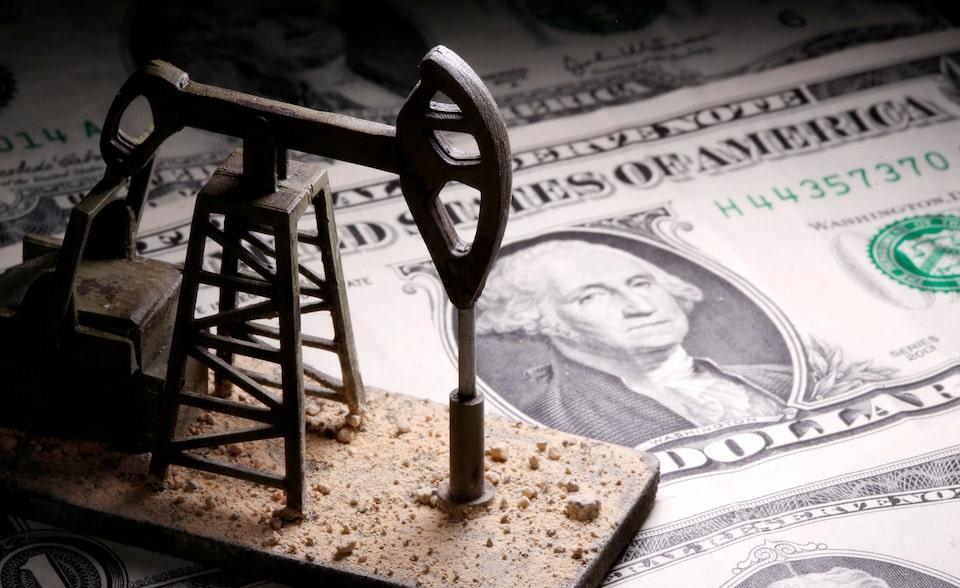
LONDON, April 10 (Reuters) - A positive correlation between global oil benchmark Brent crude and U.S. equities has reemerged in 2025, reflecting concern about the slowing economy and the impact of U.S. President Donald Trump's trade wars. Asset classes moving in tandem presents a conundrum for money managers, challenging ideas like commodities are a good way to diversify portfolios as they are less likely to fall at the same time as stocks. The current environment with widespread growth fears has spurred investors to seek new strategies. Sign up here. Since Trump took office on January 20, crude and U.S. stocks have moved in lockstep, as concern about the outlook for the global economy and growth have rattled sentiment across markets. The one-month correlation between the two - a metric that reflects how much two assets tend to follow one another, with -1.0 reflecting no correlation at all and 1.0 reflecting a near-perfect correlation - rose to as much as 0.9 in March. "The oil price is moving today not because of inflation, but because of growth and that's why oil and equities are becoming more correlated," said Shaniel Ramjee, co-head of multi-asset funds at Pictet Asset Management in London. "The market is more worried about growth than anything. Tariffs can increase short-term inflation but it's really the impact on growth that's driving this correlation." On Wednesday, Trump said he would temporarily lower the duties he had just imposed on dozens of countries while further ramping up pressure on China, sending stocks and oil higher. Oil resumed falling on Thursday ahead of the U.S. stock market open. "Oil and equities tend to highly correlate when concerns about economic slowdown are rising," said Tamas Varga of oil broker PVM. "Demand prospects, together with the outlook for equities, are at the whim of the chaotic policymaking of the U.S. administration, which is presently negative." A positive correlation between oil and equities is not that rare, however. Brent and the S&P500 were strongly correlated for most of the June-August period last year. Tim Evans of advisory firm Evans on Energy said trading the correlation presented at least two difficulties - uncertainty over how long it will last and whether it's any easier to forecast direction of the S&P 500 or the oil price. "Those with a confident view of the S&P 500 may be better off trading the index than trading oil," he said. CUTTING OIL INVESTMENT Some fund managers have cut back on investments in crude futures, instead preferring other commodities such as gold. A benchmark gold futures contract hit a record high last week. "We don't have a positive view on oil. Tariffs are definitely impacting the demand picture," said Luc Filip, head of investments at SYZ Private Banking in Geneva. Antonio Cavarero, head of investments at Generali Asset Management, agrees. "Oil is more exposed to the possible softening of the economic cycle," Cavarero said. "In this moment you want to be in corners of the market that are less exposed to unpredictable decisions by policymakers." Ramjee of Pictet Asset Management said the oil and stocks correlation could weaken should the U.S. administration stop short of its more extreme tariff threats. "If the tariffs aren't that impactful or more scaled down, we will likely see a decoupling," he said. "People will go for oil to take advantage of that improved growth picture, but we're not seeing this yet, there's still the possibility for a negative surprise on growth." For now, the funds he manages have built up a large position in gold and gold mining stocks to diversify away from more correlated markets. He's also trading less and putting on smaller positions because of the volatility in markets. https://www.reuters.com/business/energy/oil-moves-closer-stocks-2025-trump-tariffs-roil-markets-2025-04-10/
2025-04-10 12:27
WASHINGTON, April 10 (Reuters) - The United States is considering offers from 15 countries on tariff agreements and is close to deals with some of them, White House economic adviser Kevin Hassett said on Thursday after President Donald Trumplowered some of the duties in a stunning reversal. "USTR has informed us that there are maybe 15 countries now that have made explicit offers that we're studying and considering and deciding whether they're good enough to present the president," Hassett told reporters at the White House. Sign up here. Hassett said principals in the administration's trade policy would meet at the White House later on Thursday to "make sure that the countries that are most important for getting this to the finish line are the countries that we bring in first." He said he expected a lot of movement on trade deals in the next three or four weeks. "This is a really, really fast process now that's not beginning today or yesterday. It began long before," he said. "There's a big inventory of deals that are right close to the finish line," Hassett told CNBC earlier. Trump's turnabout on Wednesday, which came less than 24 hours after steep new tariffs kicked in on most trading partners, followed the most intense episode of financial market volatility since the early days of the COVID-19 pandemic. The upheaval erased trillions of dollars from stock markets and led to an unsettling surge in U.S. government bond yields that appeared to catch Trump's attention. https://www.reuters.com/world/us/us-close-trade-deals-with-trading-partners-white-houses-hassett-says-2025-04-10/