2025-04-10 11:19
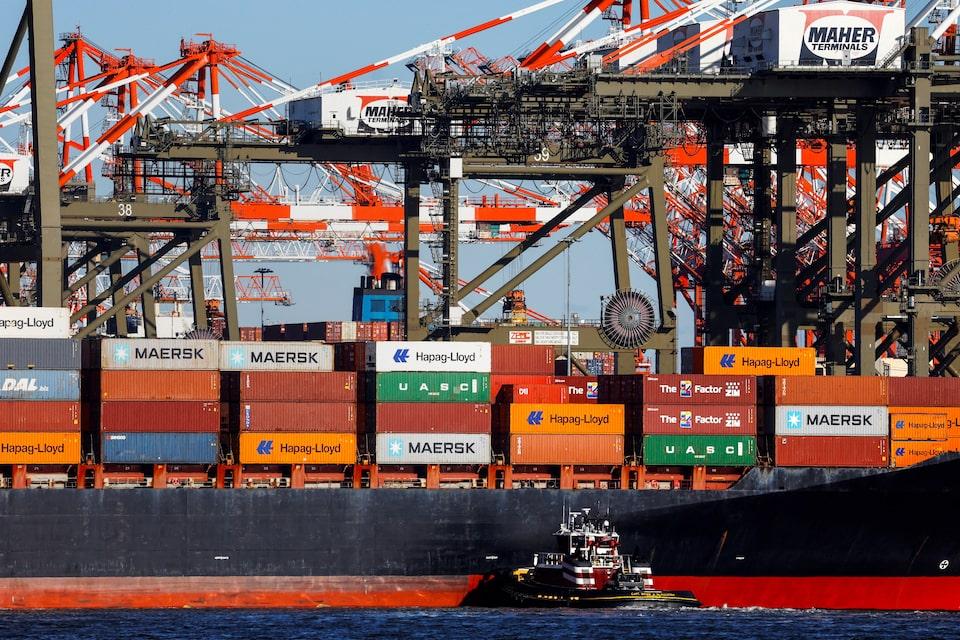
April 10 (Reuters) - A freight liberalisation agreement allowing Ukrainian cargo to enter the EU without a transport permit has been extended until the end of the year, Ukrainian officials said on Thursday. The agreement, signed in 2022, cancels the requirement for Ukrainian carriers to obtain permits for bilateral and transit transport to the EU and avoids exports of Ukrainian products having to stop at road checkpoints. Sign up here. The arrangement is critical in a situation where Ukrainian Black Sea ports, key to imports and exports, have been blocked since the Russian invasion in February 2022. However, the sharp increase in traffic across Ukraine's borders with the EU has caused protests from hauliers in neighbouring countries. Ukrainian Deputy Prime Minister Oleksiy Kuleba said the extension was important news for Ukraine's economy and its exporters. Prime Minister Denys Shmyhal also welcomed the development. "This is the fourth extension of the Agreement, which proves its effectiveness and efficiency," he wrote on X. https://www.reuters.com/world/europe/permit-free-entry-eu-ukrainian-cargo-extended-till-year-end-kyiv-says-2025-04-10/

2025-04-10 11:19
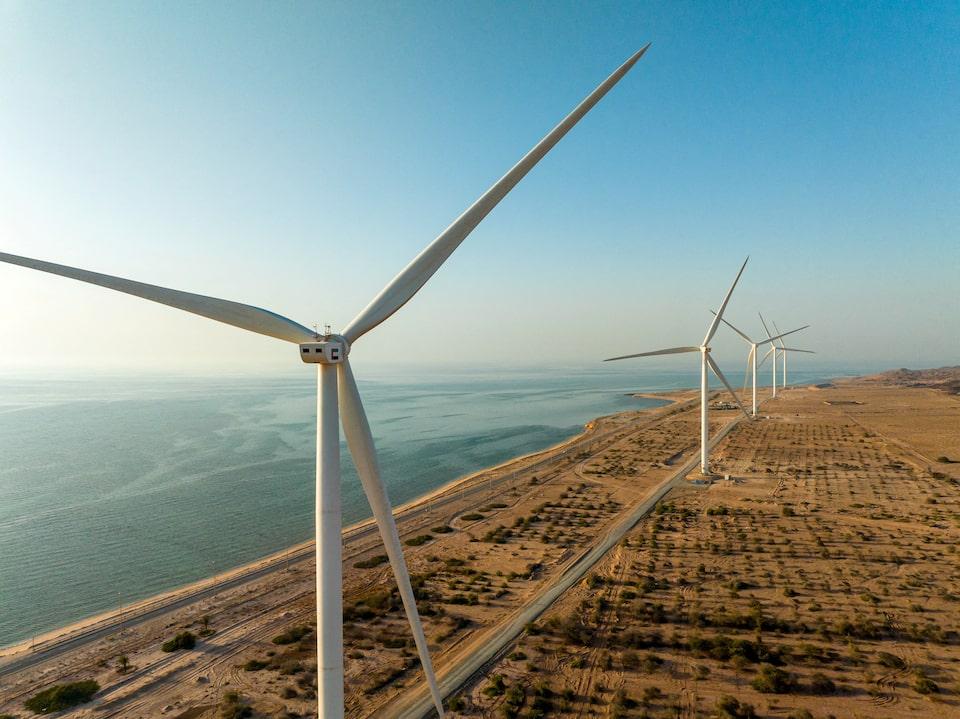
DUBAI, April 10 (Reuters) - United Arab Emirates' renewable energy company Masdar said on Thursday it had fully acquired Greece's Terna Energy (TENr.AT) , opens new tab, after buying a majority stake last year, a further step in its international expansion strategy. Masdar, seeking to capitalise on opportunities in a sector hit by high interest rates and rising debt costs, has been growing its presence in European markets in recent months. Sign up here. It acquired 70% of Terna in November at 20 euros a share, which it had said gave Terna an enterprise value of 3.2 billion euros ($3.52 billion) and an equity valuation of 2.4 billion euros. The remaining shares were bought at the same price through a mandatory tender offer and squeeze-out of the remaining shareholders, Masdar said in a statement. Masdar CEO Mohamed Jameel Al Ramahi said Terna's acquisition underscored the company's commitment to the energy transformation in Greece and in Europe. The company also has plans to grow in Asia and the United States. It wants to increase its capacity to 100 gigawatts of renewable energy by 2030 from about 51 gigawatts, currently in various stages of development. Headquartered in the UAE capital Abu Dhabi, Masdar is controlled by power and water firm TAQA, state oil giant ADNOC and sovereign wealth fund Mubadala Investment Company. Reuters reported last month it is in the early stages of considering an initial public offering. ($1 = 0.9083 euros) (This story has been corrected to say the deal for 70% of Terna gave the company an enterprise value of 3.2 billion euros, not that the deal was valued at that amount, in paragraph 3) https://www.reuters.com/business/energy/uae-renewable-energy-firm-masdar-completes-purchase-greeces-terna-energy-2025-04-10/
2025-04-10 11:14
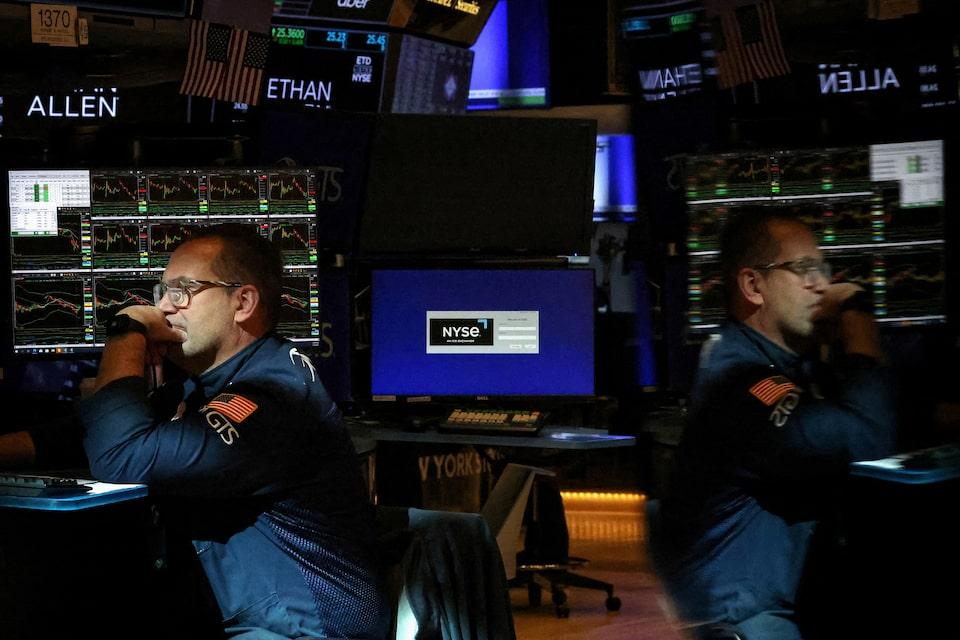
LONDON, April 10 (Reuters) - What matters in U.S. and global markets today By Mike Dolan , opens new tab, Editor-At-Large, Financial Industry and Financial Markets Sign up here. Even compared to other market rollercoasters, the one we've been on over the last week has been extreme. We've seen some of the biggest intra-week swings in 25 years, with few investors having a clear idea of what will happen next in the unfolding global trade war. I'll discuss all the twists and turns below and then explore where all this nervy capital is likely to flee. Today's Market Minute * Global shares surged and a manic bond selloff stabilised on Thursday after U.S. President Donald Trump said he would temporarily lower the hefty duties he had just imposed on dozens of countries. * The "Magnificent Seven" stocks amassed more than $1.5 trillion in market value on Wednesday after Trump's surprise announcement. * Chinese companies that sell products on Amazon are preparing to hike prices for the U.S. or quit that market due to President Donald Trump's unprecedented tariff hikes, sellers and the head of China's largest e-commerce association said. * Ray Dalio, founder of the world's largest hedge fund, called for a U.S. deal with the Chinese on tariffs. * Wall Street bosses are girding for Europe to sideline American investment banks in response to the tariff war unleashed by U.S. President Donald Trump, fearing client boycotts and in a worst-case scenario, even formal restrictions. Ninety more days of guesswork The S&P 500 (.SPX) , opens new tab staged a near 10% bounceback on Wednesday after President Donald Trump announced a 90-day pause in his sweeping "reciprocal" tariff hikes, while also intensifying pressure on Beijing by jacking up U.S. levies on Chinese goods to 125%. China refused to be cowed and responded on Thursday by hiking tariffs on U.S. imports to 84%, along with additional restrictions on 18 U.S. companies. Whatever happens with Trump's broader tariff push - and 10% universal tariffs remain despite the hiatus - the world's two biggest economies are in a full-blown trade war. Wall Street's relief surge rippled across stock markets around the world overnight, with Japan's Nikkei (.N225) , opens new tab almost matching the S&P 500 rally and European stocks (.STOXXE) , opens new tab rebounding about 5%. Even China's stocks rose 1-2%. Now what? Taking a step back from the wild volatility of the past 24 hours - and wild it was with the VIX 'fear index' (.VIX) , opens new tab still near 40, almost twice historical averages - the S&P 500 remains down 4% since the April 2 tariff salvo, and 10-year U.S. Treasury yields are 10 basis points higher than a week ago. U.S. stock futures , , have also given back 2-3% of Wednesday's jump. The dollar (.DXY) , opens new tab remains slightly nonplussed in the middle of all that, with its main DXY index down about 2% since April 1. But the greenback is up 1% against China's offshore yuan over that period, as the People's Bank of China allowed the official rate to weaken for the sixth straight day to 19-month lows. While the U.S.-China row deepens, other countries now have to consider how they will handle the pause. The European Commission said it would take the time to assess Trump's delay and consult member states. But uncertainty over what will happen in three months' time will now cast a pall over the second quarter, with much corporate planning likely sidelined for longer. Meanwhile, full-year guidance from the looming first-quarter earnings season will kick in tomorrow. Much of the speculation on Wednesday was that a sharp selloff in Treasuries this week was chiefly responsible for Trump blinking on wider tariffs. While worries about China's potential withdrawal from Treasuries mounted, the 10-year note auction went better than feared on Wednesday. And 30-year bonds are going under the hammer later on Thursday. The stock rally took almost one full Federal Reserve rate cut out of futures pricing for the remainder of the year. Fed minutes were also released from the most recent meeting. The tone was cautious, though these comments have clearly been overtaken by last week's events and Chair Jerome Powell's hawkish speech from last Friday. U.S. March inflation numbers that are due for release later on Thursday will similarly be slightly out of date. For today's deep dive, I'll look into just where frightened money is heading now that Treasuries' 'safe haven' qualities have been compromised. Safe European home? Scared money seeks German bunds At a scary moment when almost no place in global markets looks safe, Germany's recently rocky government bonds may be one of the few true havens left. A week of precipitous global stock market losses driven by Washington's unfolding trade war took an alarming turn on Tuesday as offsetting safety bets in U.S. Treasury bonds turned sour too. The wild and unpredictable ride continued late on Wednesday, when Trump blinked in his tariff campaign and paused the so-called 'reciprocal' import levies for 90 days for all except China, prompting a mind-blowing 8% in stocks. Whatever happens next, the market playbook up to that point sets a jarring precedent for the inevitable next convulsion. Treasuries had been behaving well again this year as a portfolio buffer, surging in value as equities tanked on tariff fears. Indeed, the correlation between the two asset classes actually hit its most negative in two years last week. But that correlation flipped violently again this week. As an example of how that affects savings pots, exchange traded funds that track standard 60/40 equity/bond portfolios , which had been fairly serene from November's election right through the turbulent first quarter, tanked 8% since the U.S. tariff plan was first laid out last Wednesday. Indeed, U.S. Treasury ETFs and the S&P 500 (.SPX) , opens new tab are down more than 2% each this week. The twin stock/bond selloff seems to have had many triggers, including the escalating U.S.-China tariff battle, fears that traders' margin calls in risky bets were leading to liquidation of safe assets, and a perceived reluctance of the Federal Reserve to ease credit. All may have been in play, but the burgeoning narrative now is that overseas investors are fleeing American assets at large due to the seemingly chaotic nature of Trump's trade war. With total U.S. investment liabilities to foreign savers standing at more than $62 trillion at the end of last year, that thought is alarming, to say the least. Goldman Sachs currency strategist Michael Cahill said U.S. assets and the dollar were being hit by recessionary fears and high uncertainty about the endgame in the trade war as well as a growing worry about the stability of U.S. institutions. "Negative trends in U.S. governance and institutions are eroding the appeal of U.S. assets for foreign investors," Cahill told clients this week. The capital flight argument should be especially worrying for U.S. savers and retirees nursing expensively priced investments, pumped up for years with overseas money drawn in by the U.S. "exceptionalism" theme. Those worries often, understandably, home in on China, not least due to its $760 billion of Treasury holdings, which could potentially be weaponized if the trade war escalation continues. But much of the additional foreign money that flooded into America's megacap stocks and relatively high-yielding bonds over the past decade was mostly from Europe. And scared money tends to go home. BUNKER BUNDS As U.S. Treasuries sold off violently this week, Europe's traditional safe haven - Germany's government bunds - rallied sharply. So much so that the yield premium of U.S. versus German 10-year debt surged 30 basis points this week to some 170 bps - the widest spread in a month. Even though bunds were jarred in March by the new German government's trillion euro defence and infrastructure spending push, they have roared back since, despite an intensifying trade war that has major ramifications for euro area growth and European Central Bank policy. But what has been truly notable this week is that bunds behaved like a safe haven when Treasuries didn't. The extent to which this countervailing bund rally is driven by transatlantic repatriation is unknowable, but what can be safely assumed is that any returning European money won't necessarily go back to European equities, not yet at least. So the bund market seems like the logical option. Indeed, there appear to be few doubts that the country is 'money good' even if its debt/GDP ratio is set to rise. Just look at the rock bottom German sovereign credit default swap pricing and the benign reactions of credit rating firms to the German fiscal stimulus. "German Bunds offer better value as a safe haven with yields still elevated after the recent shift in fiscal policy," HSBC's global head of fixed income Steve Major told clients. Major argues that if the ECB were to cut rates by more than forward markets now imply, bund yields have significant scope to fall across the curve and "are a good alternative safety play to US Treasuries". While the modest size of the German bond market may mean it would have more difficulty absorbing a headlong dash for safety compared to the huge Treasury market, the supply of bunds is rising and there are higher yielding alternatives in the well supplied government debt markets of its euro zone partners. Ultimately, the prospect of Germany, and Europe more generally, becoming a comfortable home for funds seeking safe assets has profound implications for the euro and dollar's respective roles in sovereign currency reserves. The return to Europe has taken on many forms this year. But the retreat to its debt havens may be one of the more meaningful. Chart of the day With the US-China trade war escalating despite the broader tariff pause, China's latest consumer price report shows the country was still in deflationary mode in March, in stark contrast to the still above-target U.S. CPI inflation. Given the speed and scale of the tit-for-tat tariffs being levelled from each side, the growth and inflation fallout for both countries has become pure guesswork. The March figures for U.S. inflation are due late on Thursday. U.S. CPI inflation is expected to have eased to 2.6% last month from 2.8% in February, but none of this will yet capture the potential impact of the ever-evolving tariff plans. Today's events to watch * U.S. March consumer price inflation, weekly jobless claims * Kansas City Federal Reserve President Jeffrey Schmid, Boston Fed President Susan Collins, Philadelphia Fed President Patrick Harker, Dallas Fed boss Lorie Logan, Chicago Fed chief Austan Goolsbee and Richmond Fed chief Thomas Barkin all speak; Bank of England Deputy Governor Sarah Breeden speaks * Senate Banking Committee holds hearing on nomination of Michelle Bowman to Federal Reserve vice chair for supervision * Spanish Prime Minister Pedro Sanchez will visit China * US corporate earnings: Carmax * US Treasury sells $22 billion of 30-year bonds Opinions expressed are those of the author. They do not reflect the views of Reuters News, which, under the Trust Principles , opens new tab, is committed to integrity, independence, and freedom from bias. https://www.reuters.com/markets/us/global-markets-view-usa-2025-04-10/
2025-04-10 11:12
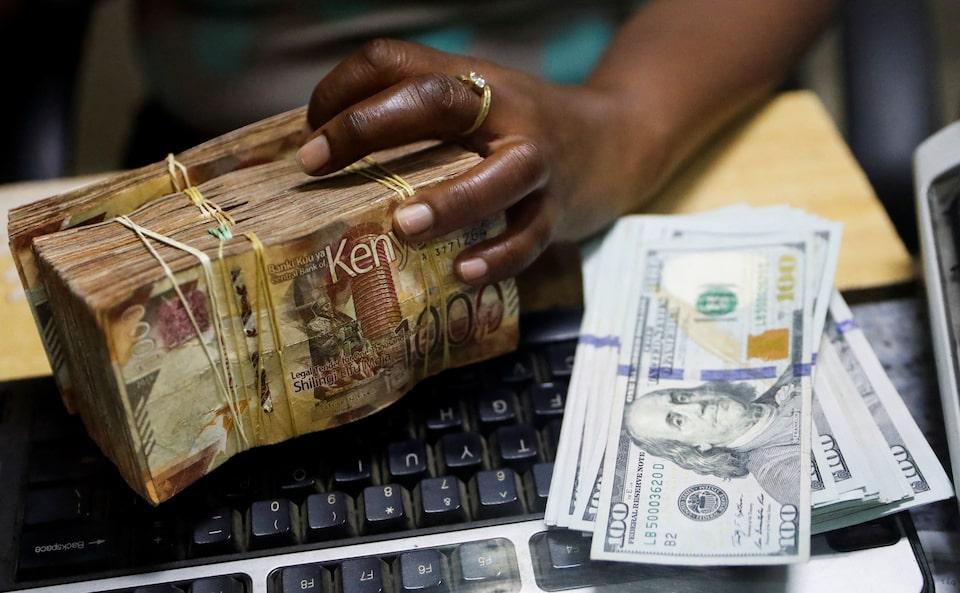
ABUJA, April 10 (Reuters) - The Nigerian and Ghanaian currencies are expected to be broadly stable in the next week to Thursday thanks to central bank support, while the Ugandan and Zambian currencies could fall, traders said. NIGERIA Nigeria's naira is seen holding steady as central bank dollar sales counteract pressure from foreign investors trying to pull their money to safe havens because of U.S. President Donald Trump's changing tariff policies. Sign up here. The naira was quoted around 1,620 to the dollar in intraday trading on Thursday, compared with a closing quote of 1,530 naira a week earlier. The unit was sold at 1,620 naira to the dollar in street trading on Thursday. "We are seeing a lot of foreign investors trying to leave the market. But with the 90-day freeze (in Trump's tariffs) we expect some slower movement," one trader said. GHANA Ghana's cedi is expected to remain broadly stable next week, also thanks to central bank support meeting increased demand for dollars. LSEG data showed the cedi trading at 15.45 per dollar on Thursday, the same as last Thursday's close. "The cedi opened the week on the back foot against the dollar, as US tariff concerns spurred offshore demand for the greenback. However, timely intervention by the Bank of Ghana helped contain the pressure," Chris Nettey, head of trading Stanbic Bank Ghana, said. "Looking ahead, we expect the cedi to hold firm on the back of sustained BoG support," he added. Sedem Dornoo, a senior trader at Absa Bank Ghana, said continued central bank intervention should prevent any sharp moves in the dollar/cedi pair. UGANDA Uganda's shilling could slip as uncertainty caused by Trump's tariffs continues to weigh on market sentiment. Commercial banks quoted the shilling at 3,680/3,690 to the dollar, compared to last Thursday's close of 3,647/3,657. "Even with the pause, there's still quite a cloud of fear and uncertainty as to how this whole tariff whirlwind will impact global trade," one trader said. That fear, he said, would continue to push banks and importers to seek hard currency in the short term. He predicted the shilling would swing in the 3,660-3,720 to the dollar range in the coming week. ZAMBIA Zambia's kwacha is expected face continued pressure due to a plunge in the price of copper because of Trump's trade war. On Thursday the currency of Africa's second-largest copper producer was quoted at 28.39 per dollar from 27.98 a week ago. "For Zambia, where mining accounts for over 70% of foreign exchange earnings, this (copper price) slump spells trouble for the kwacha," Access Bank said in a note. KENYA Traders were reluctant to predict how Kenya's shilling would trade in the week ahead, saying a lot would depend on Trump's next tariff moves. LSEG data showed the shilling at 129.30/80 per dollar on Thursday compared with last Thursday's close of 129.00/50. "There's so much going on, it depends on what Trump says (next). The market corrected yesterday after he backed down (by announcing a pause in some tariffs), and so we've seen a bit of a recovery," one banker said. https://www.reuters.com/markets/currencies/africa-fx-nigeria-ghana-currencies-seen-stable-central-bank-support-2025-04-10/
2025-04-10 11:04
Kazakhstan says it exceeded OPEC+ output quota in March Country pledges to fulfil its obligations in April Kazakhstan says it didn't cut CPC oil exports in March ALMATY, April 10 (Reuters) - Kazakhstan has been in talks with oil producers about reducing output, which has been above the country's OPEC+ quota, Interfax news agency reported on Thursday citing the energy ministry. Kazakhstan has been pumping oil above the limit agreed by the Organization of the Petroleum Exporting Countries and its allies led by Russia for months. Sign up here. OPEC+ members have been pressing Kazakhstan to reduce output to honour the agreed quotas. Kazakhstan's energy ministry said on Thursday that the country exceeded its OPEC+ quota in March but will fulfil its commitments in April and partially compensate for earlier overproduction, according to Interfax. Numerous Western majors, such as Chevron (CVX.N) , opens new tab, Shell (SHEL.L) , opens new tab, ExxonMobil , TotalEnergies (TTEF.PA) , opens new tab and Eni (ENI.MI) , opens new tab, are active in Kazakhstan, a top 10 global oil producer. A production boost at the Chevron-led Tengiz oilfield, Kazakhstan's largest, has been the main contributor to the country's overall increase in oil output. Interfax also cited the energy ministry as saying that Kazakhstan did not cut oil exports via the Caspian Pipeline Consortium (CPC) last month. According to industry sources, expected Black Sea CPC Blend oil exports for April were revised down. The pipeline's infrastructure suffered from Ukrainian drone attacks in February and March. Russia also restricted CPC's exporting capacity at the Black Sea, which was partially restored earlier this week. https://www.reuters.com/business/energy/kazakhstan-talks-with-oil-producers-about-output-cuts-ifx-reports-2025-04-10/

2025-04-10 10:08
Calm returns to U.S. Treasuries after Trump tariff pause Treasury market key to financial market stability Bond vigilantes back - analysts LONDON, April 10 (Reuters) - U.S. President Donald Trump's decision to pause the hefty duties he had said he would impose on dozens of countries one week ago followed turmoil in financial markets that included an acute selloff in the $29 trillion Treasury market. Trump said on Wednesday the bond market had recovered well after investors became queasy about it in reaction to his tariff announcements. Sign up here. "The bond market now is beautiful," he told reporters. The selloff is the latest sign of the power of government bond markets to act as a restraint on policymakers, while talk of a return of so-called bond vigilantes has risen in recent years. WHAT HAPPENED IN BOND MARKETS THIS WEEK? In short, the U.S. Treasury market -- a central pillar of the global financial system -- came under heavy selling pressure, sending 10-year borrowing costs surging. At one-point, 10-year bond yields were set for their biggest weekly jump in more than a decade. Bond yields move inversely to the price. Trading at 4.27% on Thursday, those yields are comfortably below Wednesday's peak of 4.51% . They are also well below the high of almost 5% hit in late 2023 and the double-digit levels seen in the 1980s. Notably, this jump was a sharp reversal of the initial fall seen after Trump's sweeping tariff announcement last week that raised U.S. recession risks and expectations for rate cuts. WHY DO WE CARE? Because the Treasury market is crucial to financial market stability at home and abroad. A government can raise revenue to fund spending through income such as tax receipts or borrow money on the bond markets. Not only does it face higher borrowing costs it there's a bond selloff but those increases filter across to mortgages and corporate loans, spreading out the economic damage. The 30-year mortgage rate for instance is benchmarked to 10-year Treasuries , which surged by more than 20 bps at one point on Wednesday - before the tariff pause brought calm. Yields on U.S. corporate bonds, which are priced off of U.S. Treasuries, have shot up. Yields on U.S. junk bonds closed Wednesday nearly a percentage point higher than a week ago at 8.38%, an ICE BofA index shows (.MERH0A0) , opens new tab Higher Treasury yields also pushed up borrowing costs across the globe, a headache for countries such as Britain or France that are already grappling with high amounts of debt. Heavily indebted Japan's 30-year bond yield this week surged to 21-year highs, and Britain's 30-year bond yields hit their highest since 1998. Both were below those peaks on Thursday , . HOW BAD WAS THE STRESS? The speed and the scale of the selloff in Treasuries meant signs of dislocation emerged as hedge funds unwound some debt-fuelled bets. While market participants, who include brokers, traders and investors, said the selloff was orderly, indicators such as bid-ask spreads -- or the difference between buyers' and sellers' price offers -- widened on Wednesday before Trump's announcement. One trading desk said the bid-ask spread was double its normal levels. Investors and analysts likened this week's moves to the frantic "dash-for-cash" of March 2020, when a crash in the Treasury market forced the Federal Reserve to step in with a massive $1.6 trillion bond-buying rescue. The scale of the selloff, highlighting vulnerabilities in a key market, also drew parallels with Britain's 2022 mini-budget crisis that sparked a UK bond rout. DID HEDGE FUNDS CAUSE THE SELLING? One explanation for the sharp selloff was that a rapid unwinding of so-called basis trades was exacerbating the selling. Basis trades, typically the domain of macro hedge funds, rely on selling futures contracts or paying swaps and buying cash Treasuries with borrowed money, with a view to exploiting slight price differences. If a prime brokerage, which lends money to hedge funds, asks for their money back that can lead to an unwinding of the basis trade. There was also some concern that China could offload U.S. Treasuries, something that would take time to show up in official numbers. China is the second-biggest foreign holder of U.S. government debt after Japan, holding almost $761 billion of bonds in January. WHERE DO THE BOND VIGILANTES COME INTO IT? The term bond vigilantes, coined in the 1980s, refers to debt investors who seek to impose fiscal discipline on governments they perceive as profligate by raising their borrowing costs. In the context of this week, the term is also being used to describe the bond market selloff as a sign of investors expressing concern about the consequences of erratic policymaking. "The Bond Vigilantes have struck again," Yardeni Research said in a note, adding that they were the only players with a 100% success rate in U.S. markets. "As far as we can tell, at least with respect to U.S. financial markets, they are the only 1.000 hitters in history." https://www.reuters.com/markets/us/what-just-happened-us-treasury-market-2025-04-10/