2025-04-10 05:06
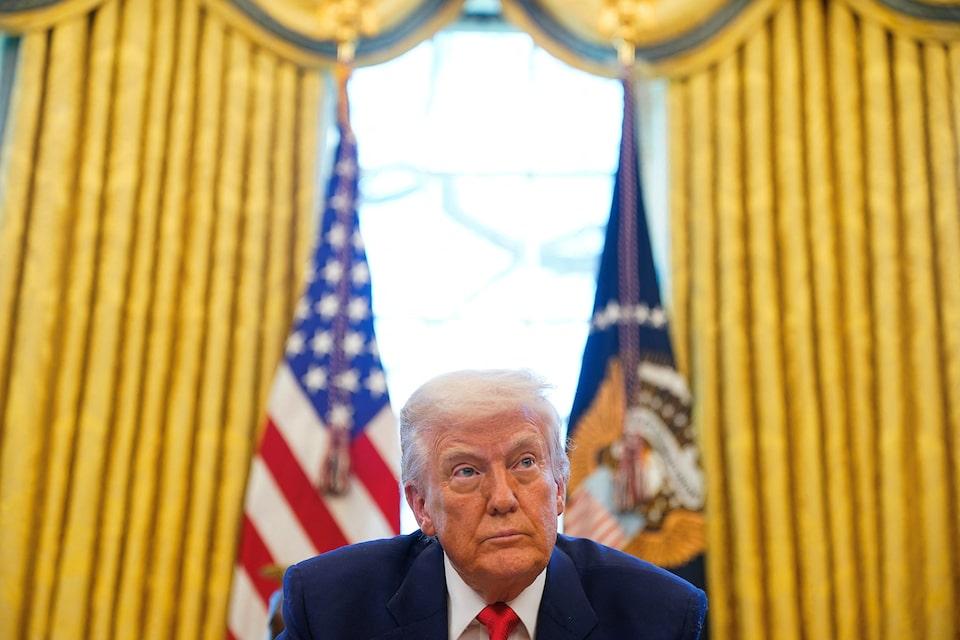
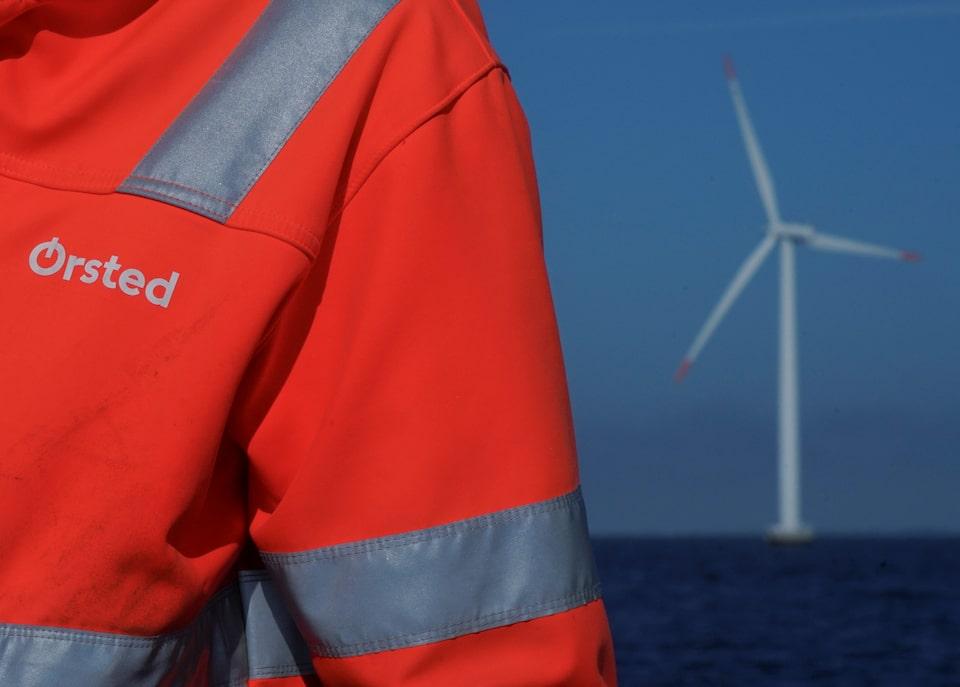
April 10 (Reuters) - Denmark's Orsted (ORSTED.CO) , opens new tab would have a "meaningful impact" on the cost of its projects in the U.S. due to President Donald Trump's tariffs, CEO Rasmus Errboe told the Financial Times in an interview published on Thursday. Errboe told the newspaper that Revolution Wind and Sunrise Wind, Orsted's two large wind projects in the U.S., would be hit by the new tariffs on aluminum and steel. Sign up here. The FT report added that Orsted also published a piece calling for European capitals to commit to consistent annual support for the industry to meet offshore wind targets and help reverse rising costs. Orsted did not immediately respond to a Reuters request for comment. In a stunning reversal, Trump earlier on Wednesday said he would temporarily lower the hefty duties he had just imposed on dozens of countries while further ramping up pressure on China. Energy companies have slowed construction of offshore wind farms in the U.S., specially since U.S. President Donald Trump suspended new offshore wind leasing on his first day back in the Oval Office in January. https://www.reuters.com/business/energy/trump-tariffs-have-impact-cost-orsteds-us-projects-ceo-tells-ft-2025-04-10/
2025-04-10 05:02
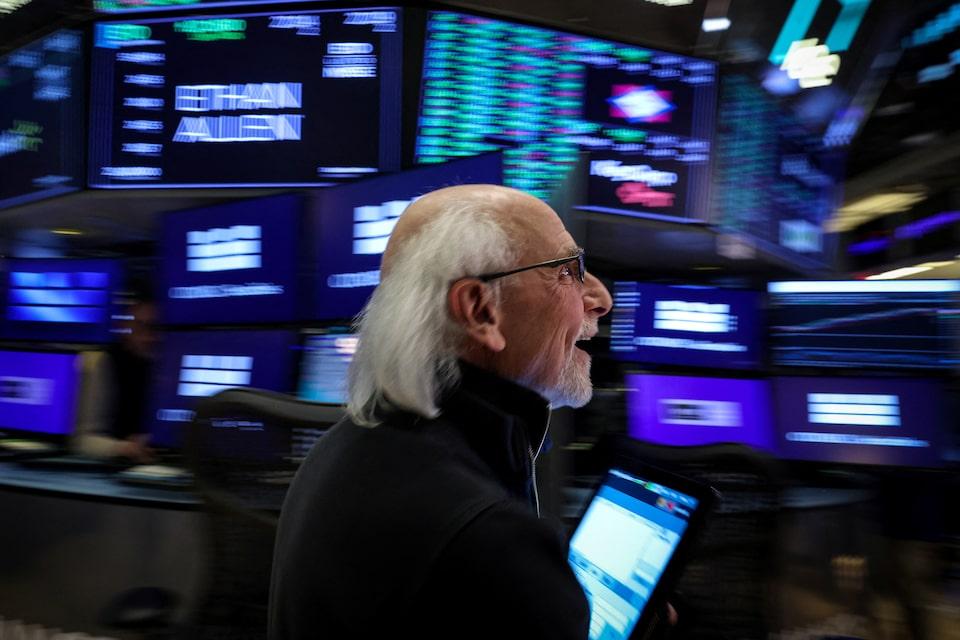
Trump's flip-flop on tariffs stokes dramatic market volatility Market turmoil reminder of scenes from pandemic trading Analysts warn risks remain despite short-term relief for markets NEW YORK, April 10 (Reuters) - Wall Street traders and investors have been sent to the brink over the past week by President Donald Trump's tariff policy, scrambling to figure out strategies and calming clients as trillions were wiped off stock market values. A massive relief rally, however, comes with a caution sign. Sign up here. Since announcing sweeping tariffs on April 2, the S&P 500 has done a near round-trip of historic proportions. The benchmark index extended its slide from its February high to the brink of confirming a bear market, as investors priced in dire scenarios for the economy after Trump announced tariffs that would raise U.S. trade barriers to the highest levels in over a century. The Cboe Volatility index (.VIX) , opens new tab, Wall Street's "fear gauge," soared earlier this week to its highest closing level since the COVID-19 pandemic five years ago. Then, in a stunning reversal on Wednesday, Trump said he would temporarily lower the hefty duties on dozens of countries while further ramping up pressure on China, prompting a massive relief rally, sending the S&P 500 up nearly 10%, its biggest one-day jump since October 2008. The rapid policy changes translated into non-stop action, stress and drama on trading floors and investment houses. "It's been a quite a wild ride," said Joe Tigay, portfolio manager for Rational Equity Armor Fund, who said it brought back memories of trading through massive swings during the pandemic. "Personally, honestly, this is what I live for." The rapid pace of unfolding events in recent days prompted a deft juggling of priorities, including client calls, trading and making sense of markets, said Chris Murphy, co-head of derivative strategy at Susquehanna Financial Group, as the market drama surpassed the wild trading seen during the COVID-induced market crash of March 2020. "This is more headline driven than what we saw in COVID," Murphy said. "There's just not enough time because you're going from one thing to the next." Clients wanted frequent updates as market losses stacked up, advisers said. "We reached out to as many clients as possible via a client letter and phone calls," said Gina Bolvin, president of Bolvin Wealth Management Group in Boston. "Some of my nervous clients were comforted when they learned that as the market was declining I had been investing some of my own money." But while some have embraced the volatility, others caution that the market remains fragile, U.S. policy remains unpredictable and that the U.S. is not out of the woods. "It's definitely good news because it shows that the negotiations are in good enough shape that they think that they've accomplished what they needed to by this initial conversation," said Mark Hackett, chief market strategist, Nationwide Investment Management Group in Philadelphia. "But I want to put a pretty big caveat out there because 8% rallies in 20 minutes in the Nasdaq aren't a heck of a lot healthier than 8% declines." TRUMP PUT BACK ON? After a week of concern that Trump was no longer worried about stock market losses, some investors speculated that markets had prompted Trump's decision, including a rout in the bond market that came to a head on Wednesday and led to a massive spike in Treasury yields. Investors had previously relied on the theory of a Trump put, a reference to investor belief that Trump would reverse policy if markets ran into trouble. "I think this is a reminder that Trump does not want a bear market in stocks, and he does not want a recession, so this is forcing a rethink of the approach," said Talley Leger, chief market strategist, The Wealth Consulting Group. But many investors said persistent uncertainty around tariff policy could still have broad fallout, impeding the ability of companies to plan and influencing consumer behavior. "They hit the pause button and the market rejoiced," said Alex Morris, chief investment officer at F/m Investments. "But of course, there is no promise that we’ll manage to solve anything in 90 days." Deutsche Bank said in a note that while the Trump put appears back on, the policy back-and-forth will cause lasting damage. "Even if the tariffs are permanently suspended, damage has been done to the economy via a permanent sense of unpredictability in policy." Market volatility on Wednesday had been trained on the bond market, which saw a bruising selloff in U.S. Treasuries, with some market participants saying funds had been selling such liquid assets such as Treasuries to meet margin calls. "There's definitely sensitivity to what happens in the Treasury market," said Matt Orton, chief market strategist at Raymond James Investment Management. "If something breaks in the Treasury market, that could be very, very bad." Trump said on Wednesday the bond market had recovered well after investors became queasy about it in reaction to his tariffs. "The bond market now is beautiful," he told reporters. The White House said Trump's move to hike tariffs on China and pause tariffs on other countries came after receiving "good-faith commitments from a majority of our trading partners willing to strike favorable trade deals." "The only interest guiding President Trump’s decision making is the best interest of the American people," White House spokesman Kush Desai said. "The Trump administration remains committed to using every tool at our disposal to address the national emergency posed by chronic trade deficits – including both tariffs and negotiations.” 'STRESSFUL WEEK' Some investors felt the relentless string of bad news for markets and wild gyrations were impossible to maintain. "We had assumed that some form of capitulation would be forthcoming," said Christopher Hodge, chief economist for the US at Natixis in New York, citing the financial carnage and expectation of economic pain. Since Trump unveiled his tariff plan on April 2, the stock market has undergone some record-breaking gyrations. It notched an 8.1% intra-day price swing in the benchmark S&P 500 index on Monday, while Tuesday's market saw one of the biggest reversals for the benchmark index in at least the last 50 years. Wednesday's market about-face was even more stark, with the day's 10.7% range stacking up as the fifth largest in at least the last fifty years. Bolvin said this had been "a stressful week." "When my 3 year old woke up and asked if the market was down, I knew we were close to the bottom," Bolvin said. https://www.reuters.com/markets/us/wall-streets-week-whiplash-brought-fear-relief-caution-2025-04-10/
2025-04-10 04:33
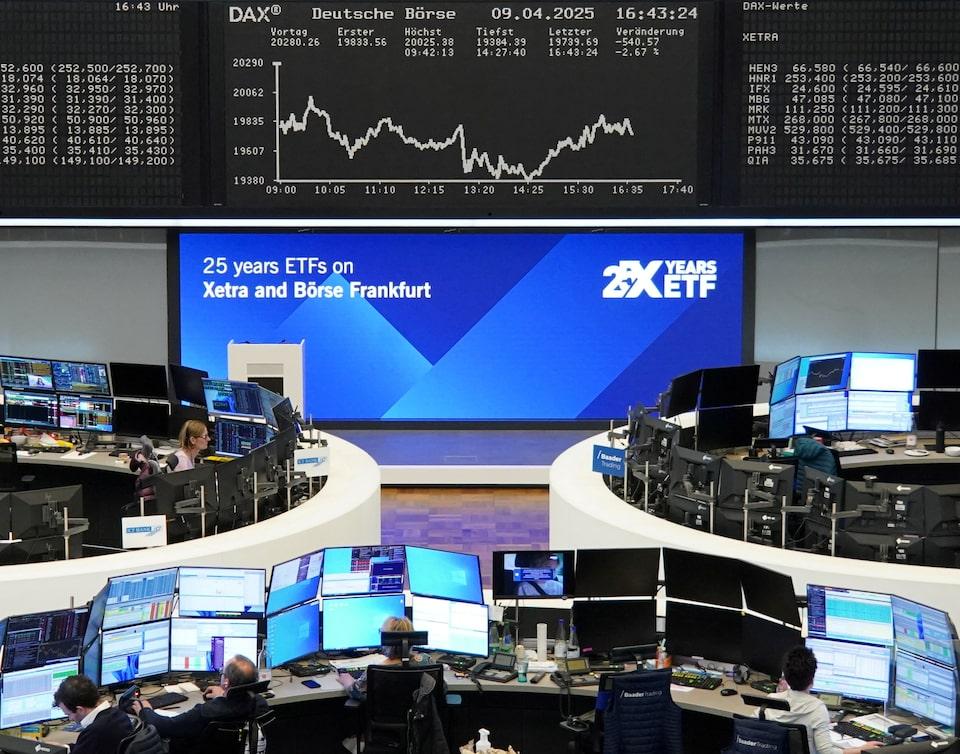
A look at the day ahead in European and global markets from Rae Wee Asian stocks and European stock futures surged on Thursday, joining the relief rally over a 90-day reprieve on most new U.S. tariffs, but that policy reversal excluded China, where an intensifying trade war signalled more trouble ahead for markets. Sign up here. Indeed, the dollar struggled to hold overnight gains, particularly against the safe-haven yen and Swiss franc, and U.S. stock futures turned lower after a brief early rally, a potential warning of wavering investor confidence in the U.S. economy. As economists at J.P. Morgan put it, this is "merely the end of the beginning", and the U.S. war on trade is far from over. Wall Street indexes logged their largest daily percentage gains in more than a decade overnight, relieved that, with U.S. President Donald Trump's latest U-turn on tariffs, global trade was no longer about to grind to a complete halt. But the gloves have come off between the world's two trade powerhouses, with Trump dealing an explicit blow to China by raising the levy on Chinese imports to 125%, up from the 104% duty that came into effect on Wednesday. China had raised additional duties on American products to 84% and imposed restrictions on 18 U.S. companies. By contrast, Vietnam - a huge beneficiary of global manufacturers' "China plus one" strategy that aims to diversify supply chains - said on Thursday it had come to an agreement with the United States to launch negotiations for a trade pact. Chinese stocks opened on a strong note on Thursday and Hong Kong's Hang Seng Index (.HSI) , opens new tab surged 4%, even as the onshore yuan tumbled to its weakest level in more than 17 years. Some analysts attributed the rise to hopes for talks between the world's two largest economies, as well as support from Beijing for the markets and the economy. A manic bond selloff also stabilised on Thursday as U.S. Treasury yields retreated, after heavy selling in the previous sessions had reignited fears of fragility in the world's biggest bond market. In other news, the March report on U.S. inflation is due later on Thursday, although it will likely be of less importance to markets given the figures mostly predate the latest round of hefty levies imposed by Trump. Still, an upside surprise could be nasty, given it would be just a taste of the sharp price increases coming once tariffs fully kick in. Key developments that could influence markets on Thursday: - Tariff news - U.S. inflation data (March) Trying to keep up with the latest tariff news? Our new daily news digest offers a rundown of the top market-moving headlines impacting global trade. Sign up for Tariff Watch here. https://www.reuters.com/markets/europe/global-markets-view-europe-2025-04-10/
2025-04-09 23:12
LONDON, April 10 (Reuters) - Climate activist shareholder group Follow This said on Thursday a lack of investor appetite has forced it to suspend its nearly decade-long campaign seeking stronger commitments from major oil and gas producers to emission cuts. The Dutch group started filing climate resolutions at shareholder meetings in 2016, reaching shareholder support in subsequent years of 80% at Phillips 66 (PSX.N) , opens new tab, 60% at Chevron, around a third at Exxon (XOM.N) , opens new tab and Shell (SHEL.L) , opens new tab and a fifth at BP (BP.L) , opens new tab. Sign up here. However, a surge in oil and gas prices triggered by Russia's invasion of Ukraine and lower-than-expected returns from investments in renewable energy have shifted shareholders' focus back to more profitable oil and gas. BP, Shell and Equinor (EQNR.OL) , opens new tab, among other companies, have rolled back their energy transition ambitions in recent months. "Institutional investors are reluctant to use their voting power," Follow This founder Mark van Baal said. Exxon last year sued Follow This and Arjuna Capital after they filed a climate-related resolution. A judge ultimately dismissed the suit, but only after the defendants withdrew their resolution and promised not to resubmit a similar one or help others do so. "Follow This talks with supportive investors about reassessing strategies and addressing these barriers, exploring what is preventing other investors... from casting their votes, despite their stated commitments," van Baal said. https://www.reuters.com/business/environment/climate-activist-shareholder-group-follow-this-pauses-big-oil-campaign-2025-04-09/
2025-04-09 22:59
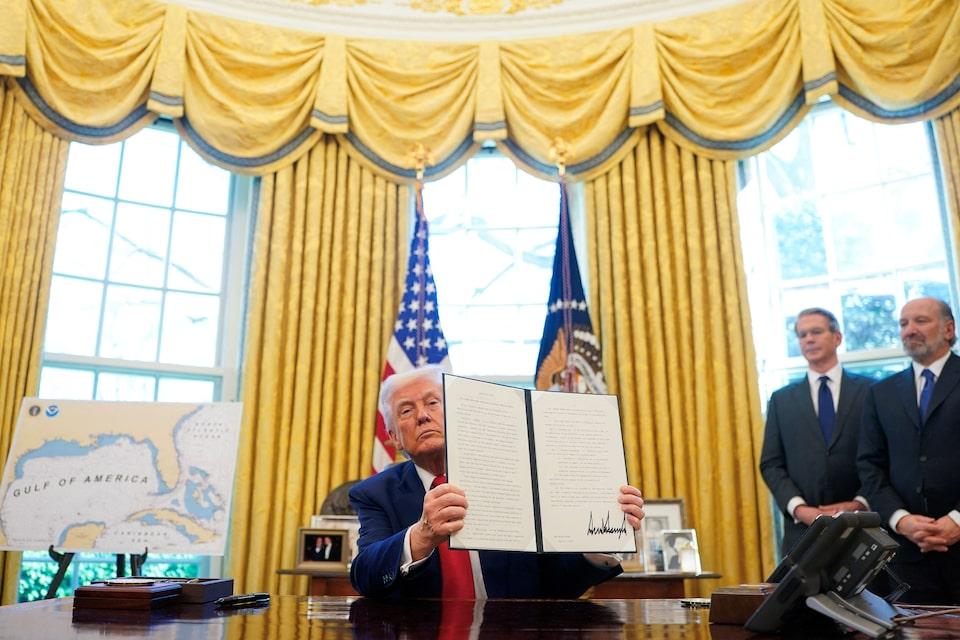
Lawmakers welcome order, plan legislation to move forward USTR says will finalize remedies, including possible fees, by mid-April Trump vows to spend 'a lot of money' on shipbuilding WASHINGTON, April 9 (Reuters) - U.S. President Donald Trump signed an executive order on Wednesday aimed at reviving U.S. shipbuilding and reducing China's grip on the global shipping industry, vowing to boost funding for the effort in coming years. Republican and Democratic U.S. lawmakers for years have warned about China's growing dominance on the seas and diminishing U.S. naval readiness. Sign up here. Senators Mark Kelly, a Democrat, and Todd Young, a Republican, welcomed the executive order and said they would reintroduce their bipartisan legislation to provide the congressional authorizations needed to revitalize the industry. The order directs the U.S. Trade Representative to move ahead with a proposal that included levying million-dollar U.S. port docking fees on any ship that is part of a fleet that includes Chinese-built or Chinese-flagged vessels. Allies will be pushed to act similarly. USTR's recommended port fees had sparked sharp criticism from commodities exporters, trade groups and U.S. ship operators, who warned of supply chain disruptions, job losses in port cities and inflation. The order must be finalized by an April 17 deadline. U.S. Trade Representative Jamieson Greer on Wednesday said USTR should have a final decision on remedies by middle of the month and repeated his comments from Tuesday, saying that not all of the measures outlined by the agency's original proposal would be implemented. "This could have been a miscommunication issue, some people thought that all of those measures would be imposed," Greer said. But after feedback and public comments, "now we consider which of those measures is most appropriate." The order also requires USTR to consider proposing tariffs on ship-to-shore cranes manufactured, assembled, or made using components of Chinese origin, or manufactured anywhere in the world by a company owned, controlled, or substantially influenced by a Chinese citizen, as well as tariffs on other cargo handling equipment. The executive order further requires the Department of Homeland Security to enforce collection of Harbor Maintenance Fees and other charges, and to prevent cargo carriers from circumventing those fees by routing goods to ports in Mexico and Canada and then sending cargo into the United States via land borders. Trump, speaking in the Oval Office, said the United States would be spending "a lot of money on shipbuilding" to restore American capacity in the sector. "We're way, way, way behind," he told reporters. "We used to build a ship a day, and now we don't do a ship a year, practically, and we have the capacity to do it." The order said recent data showed the United States built less than 1% of commercial ships globally, while China built about half, an increase from just 5% in 1999, according to the Center for Strategic and International Studies. Trump's order called for creation of a Maritime Security Trust Fund to provide reliable funding for programs aimed at shoring up U.S. maritime capacity, including consideration of potential new or existing tariff revenue, fines, fees, or tax revenue. It also calls for incentives to encourage private investment in construction of commercial components, and improvements to shipyards, repair facilities and dry docks. The U.S. shipbuilding industry, which peaked in the 1970s, has struggled due to high costs and a complex regulatory structure, which has enabled rivals including China to grow rapidly. https://www.reuters.com/business/autos-transportation/trump-expected-sign-executive-order-us-shipbuilding-sources-2025-04-09/
2025-04-09 22:42
April 9 (Reuters) - U.S. President Donald Trump on Wednesday signed an executive order that aims to boost energy production by automatically cutting "outdated regulations," the White House said. The move is the latest in a string of efforts by Trump's administration to pump up domestic energy output, loosen government policies and remake the U.S. energy landscape. Sign up here. The order directs ten agencies and subagencies to assign one-year expiration dates to existing energy regulations. If they are not extended, they will expire no later than September 30, 2026, according to a White House fact sheet on the order. The order also said any new regulations should include a five-year expiration, unless they are deregulatory. That means any future regulations would only last for five years unless they are extended. "This Order will ensure American energy regulations are continually reviewed and updated to keep up with modern technology and needs," the White House said. https://www.reuters.com/world/us/trump-order-sets-new-expiration-dates-existing-energy-rules-white-house-says-2025-04-09/