2025-04-09 21:13
RIYADH, April 8 (Reuters) - Saudi Arabia's foreign minister arrived in the United States on Tuesday for an official visit aimed at planning U.S. President Donald Trump's expected trip to the kingdom later this spring, a source close to the Saudi royal court told Reuters. Prince Faisal bin Farhan Al-Saud discussed with U.S. Secretary of State Marco Rubio on Wednesday the developments in Gaza, Sudan, Yemen as well as the Russian-Ukranian conflict, the Saudi foreign ministry reported without giving further details. Sign up here. The Saudi foreign minister was expected to discuss the status of Yemen's Houthis during meetings with U.S. government officials, the source said. The trip was scheduled before last week's U.S. tariffs announcement, the source added. Trump's tariff offensive has rattled markets and raised fears of a global recession that could drive down the price of oil, Saudi Arabia's main export. Trump plans to visit Saudi Arabia as early as May to sign an investment agreement in what will be the first foreign trip of his second term, with stops also planned in Qatar and the United Arab Emirates. Trump made Saudi Arabia and Israel the initial stops on his inaugural foreign trip during his first term in 2017. The U.S. president met with Israeli Prime Minister Benjamin Netanyahu at the White House on Monday and discussed a proposal for the U.S. to take control of Gaza. Trump's plan has been globally condemned, including by Saudi Arabia. Trump also said on Monday he would like the war in Gaza to stop and he thinks that could happen relatively soon. In Yemen, which borders Saudi Arabia to the south, the United States has launched airstrikes against the Iran-aligned Houthis in an effort to force an end to the group's attacks on shipping in the Red Sea. The airstrikes are the biggest U.S. military operation in the Middle East since Trump took office in January. https://www.reuters.com/world/saudi-arabias-foreign-minister-us-plan-trump-visit-2025-04-08/

2025-04-09 21:03
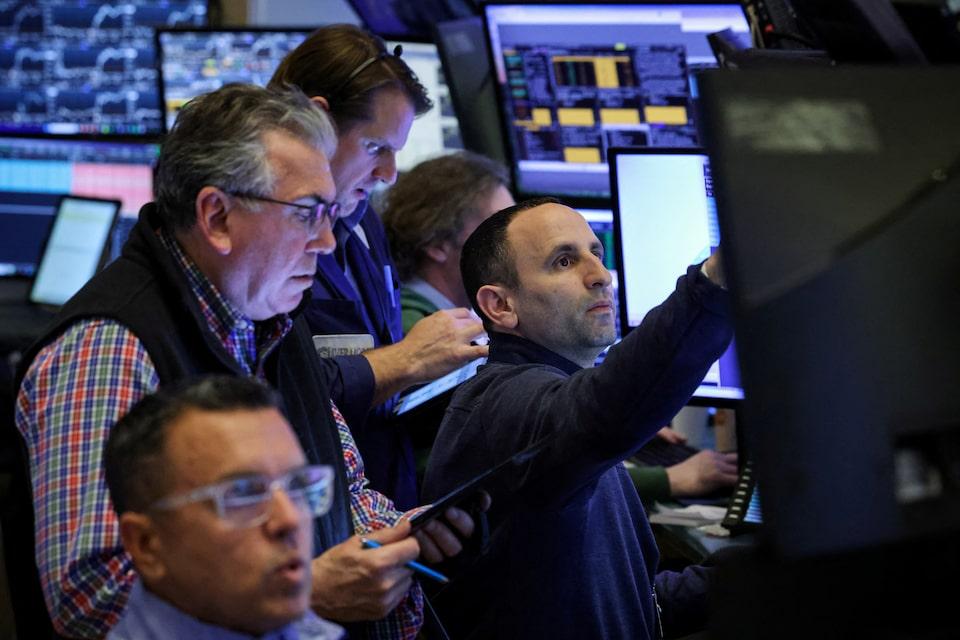
ORLANDO, Florida, April 9 (Reuters) - TRADING DAY Making sense of the forces driving global markets Sign up here. By Jamie McGeever, Markets Columnist Trump blinks, Wall Street soars Wall Street clocked one of its best days in history on Wednesday after President Donald Trump announced a 90-day pause on tariffs and reduced levies on many countries, triggering a wave of relief that will add trillions of dollars of lost value back onto world stocks. It was the S&P 500's best day since 2008 and the Nasdaq's second-biggest rise on record, historic moves that will leave investors reeling. In a good way, for once. But it may be a fragile calm that sets in when the euphoria fades - tariffs on China were increased to 125%, and recent dislocation in the U.S. bond market is unlikely to disappear overnight. More on all that below, but first, a round-up of the main market moves on another extraordinary day. I'd love to hear from you, so please reach out to me with comments at [email protected]. You can also follow me at @ReutersJamie , opens new tab and @reutersjamie.bsky.social , opens new tab. If you have more time to read today, here are a few articles I recommend to help you make sense of what happened in markets. Today's Key Market Moves Boom! Trump tariff pause sparks monster rally Vladimir Lenin doesn't often figure in analysis of modern-day financial markets, but anyone trading or investing on Wednesday will know exactly what the Soviet revolutionary meant with his 1917 observation that: "There are decades where nothing happens; and there are weeks where decades happen." One week ago, U.S. President Donald Trump unveiled how much America will tariff imports of goods from dozens of countries around the world. His "Liberation Day" announcement sparked fears of global recession and a wave of turmoil that wiped trillions of dollars off the value of world markets. Fast forward to this Wednesday, and Trump's social media announcement that tariffs will be paused for 90 days and reduced for most countries to 10% unleashed a feeding frenzy on Wall Street that has rarely been seen. Ever. Treasury Secretary Scott Bessent said the administration needed time to negotiate with more than 75 countries that had reached out, and suggested Trump had used the tariffs to create "maximum negotiating leverage for himself". Trump himself told reporters it was a "good" day on the stock market and the bond market is now "beautiful". It wasn't all beautiful, however. Trump escalated the trade war with China, raising tariffs to 125% due to "the lack of respect that China has shown to the World's Markets". It's a move that could trigger a response in kind from officials in Beijing who have already vowed "to fight to the end". Before Trump's bombshell, China's offshore yuan had tumbled to a record low 7.4287 per dollar, the onshore yuan was nudging 7.35 per dollar and lows last seen in 2007, and the central bank's daily fixing was the weakest since September 2023. Some of that pressure should now lift as part of the global relief rally. But ultimately, Sino-U.S. trade tensions have intensified and China's options in the face of 125% U.S. tariffs are limited - it may yet opt to allow the yuan to devalue. But the mood across world markets is suddenly a whole lot brighter. The scale of the rally triggered by Trump's retreat is a reminder of just how gloomy sentiment was only a few hours earlier. It will be fascinating to see whether Wednesday April 9 really is a turning point from Wednesday April 2. Creaking U.S. bond market signals danger still lurks Global markets are breathing a huge sigh of relief following U.S. president Donald Trump's surprise announcement of a 90-day hiatus in much of his tariff agenda, but it would be premature to think the dangers posed by the U.S. bond market dysfunction this week have suddenly disappeared. When financial crises migrate to Treasuries, regulators start to get very nervous, as stress here can lead to large, rapid shifts in prices that suddenly clog up market 'plumbing' and inhibit its functioning, requiring the Federal Reserve to step in. And cracks started to appear this week in the $29 trillion Treasury market, the bedrock of the global financial system and the benchmark for trillions of dollars of loans globally, as investors dumped huge amounts of long-dated bonds. The moves in Treasuries and swap spreads were extraordinary, in some cases historic. The 30-year swap spread briefly widened through -100 basis points on Tuesday, its most negative since the pandemic. The 10-year yield at one point was up more than 40 bps and on course for its biggest weekly rise since 2001. And the 30-year yield gapped up 60 bps, on track for its biggest weekly rise since 1981. These moves were not reflective of a liquid, well-functioning market, especially as they came in a deep 'risk off' environment, which should, in theory, have been spurring huge safe-haven inflows. Indeed, the speed and scale of liquidation in the scramble to raise cash, limit losses and meet margin calls had echoes of the early days of the pandemic crisis five years ago. Tensions had cooled a bit even before Trump's announcement on Wednesday, but yields remain elevated, and the trade war is far from over – just ask China – so these bond tremors could easily erupt again. MARKET FUNCTIONING Federal Reserve officials will thus continue to watch keenly for any warning signs of danger ahead, including evaporating liquidity, plummeting demand, widening bid-offer spreads and 'gapping' yields in certain parts of the curve. The Fed will be on the lookout for a 'buyers' strike', whether that's domestic or foreign investors, something that may have been brewing this week before Trump's tariff surprise. Bank of America's Meghan Swiber warned earlier on Wednesday that further deleveraging and liquidation risked a downward spiral that could only be halted by official intervention. What would the Fed's options be in this scenario? Interest rate cuts would be highly unlikely, as they would not be especially helpful in resolving a market dislocation issue. The central bank has amassed an array of liquidity backstops and lending facilities since 2008, such as the overnight reverse repo program, standing repo facility, dollar swap lines with foreign central banks, and the discount window. These tools could all be sharpened, deployed or extended as policymakers see fit. The Fed could also announce a temporary or permanent exemption for Treasuries in banks' Supplementary Leverage Ratio calculations, which would ease bond market strains and encourage banks to keep the lending taps open. It could also end its balance sheet runoff, or quantitative tightening program, earlier than planned. And in extremis, if the market really froze like it did in 2020 and 2008, the Fed could go full circle and start buying bonds again. That's the ultimate bazooka, which the Fed will be loath to dust down and fire. It would prefer not to be called upon at all, and maybe Trump's tariff pause means it won't have to. But more volatile weeks like this one in Treasuries, and it may have no choice. What could move markets tomorrow? Opinions expressed are those of the author. They do not reflect the views of Reuters News, which, under the Trust Principles , opens new tab, is committed to integrity, independence, and freedom from bias. Trading Day is also sent by email every weekday morning. Think your friend or colleague should know about us? Forward this newsletter to them. They can also sign up here. https://www.reuters.com/markets/global-markets-trading-day-graphics-2025-04-09/
2025-04-09 21:02
ROME, April 9 (Reuters) - The Italian government opposes the CEO of STMicroelectronics (STMPA.PA) , opens new tab, the economy minister said on Wednesday, as the Franco-Italian chipmaker faces a sustained downturn in its key automotive and industrial markets. "The behavior of the Italian shareholder will be one of criticism and opposition," Economy Minister Giancarlo Giorgetti told reporters during a press conference on Italy's multi-year budget framework. Sign up here. Rome is increasingly unhappy with STMicroelectronics Chief Executive Jean-Marc Chery and wants Paris to back an effort to replace him, an Italian official previously said. The company, in which the Italian and French governments own a combined 27.5% share through a holding company, forecast a 28% drop in first-quarter revenue on January 30. Giorgetti said the government's position "reflects the behavior of management itself, which sold STM shares it held the day before reporting the negative results." The company, whose ADRs trade in the U.S., was hit with a proposed U.S. shareholder class action lawsuit last year that alleged STMicro leaders misled investors between January 25 and July 24, 2024, by failing to accurately disclose a deterioration in the company's business. Chery and other insiders sold shares during that period, according to U.S. regulatory reports. Italy also faces resistance over the appointment of Marcello Sala, a leading official at the economy ministry, as a member of STMicrolectronics supervisory board. https://www.reuters.com/technology/italy-says-it-opposes-ceo-stmicro-2025-04-09/
2025-04-09 21:01
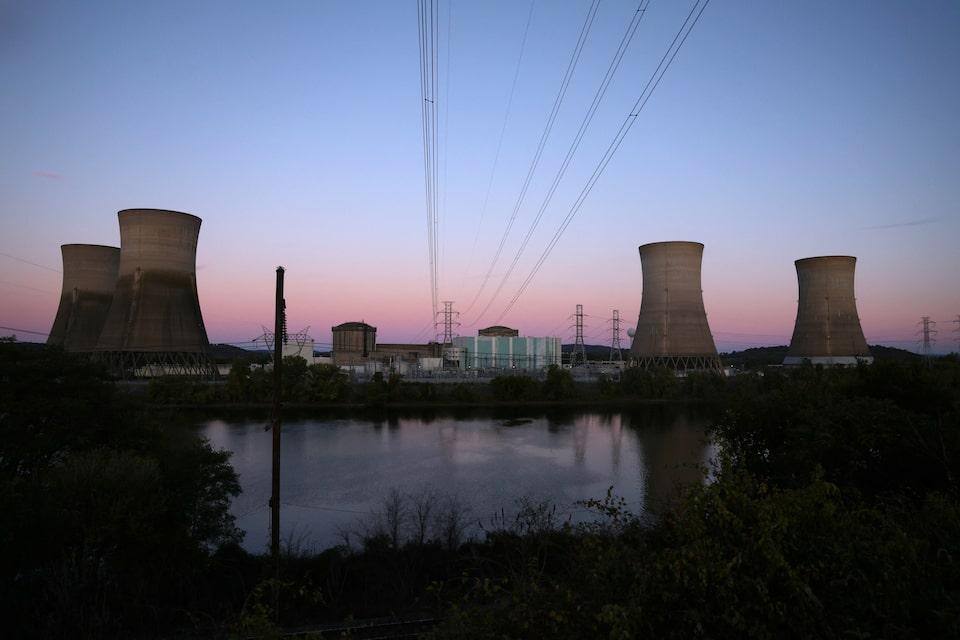
NEW YORK, April 8 (Reuters) - Major U.S. power provider Constellation Energy (CEG.O) , opens new tab defended its planned acquisition of Calpine to regulators on Tuesday, after consumer groups protested that the deal would give the merged company too much market power, a regulatory filing showed. In January, Constellation announced its agreement to buy Calpine, a privately held natural gas and geothermal company, for $16.4 billion, in one of the country's biggest-ever U.S. power industry acquisitions. The companies, later that month, asked the Federal Energy Regulatory Commission to approve the transaction, which would make Constellation the largest U.S. independent power company. Sign up here. Consumer advocate groups in Maryland and Pennsylvania have since filed protests with FERC against the deal, citing concerns that the merger had the potential to ultimately stifle competition and drive up power bills. "The merger would incentivize and facilitate the surviving company's opportunities for anticompetitive conduct, such as the withholding of supply, given the fleet changes post-merger and the supply and demand conditions in the generation and capacity markets," the Maryland Office of People's Counsel said in its protest last month to FERC. The consumer advocate for Pennsylvania echoed the sentiment in its separate protest, saying Constellation's share of competitive retail supplies to the state would grow to nearly 40% from 32% post-merger. Environmental advocacy groups, including Earthjustice, have also asked that FERC deny the acquisition application. Constellation, in its filing on Tuesday, said its deal with Calpine was not anticompetitive and that it passed the commission's screenings to identify mergers that were not anticompetitive. Constellation, which asked FERC to reject the protests, said that there were numerous safeguards in place to prevent it from withholding supply and that it had no financial reasons to do so. "Constellation applicants have both a legally binding obligation and an economic incentive to bid and sell their power generation," Constellation said in its filing with FERC. https://www.reuters.com/business/energy/constellation-defends-calpine-deal-after-consumer-groups-object-2025-04-08/
2025-04-09 20:35
BUENOS AIRES, April 9 (Reuters) - Argentina's government expects the International Monetary Fund board will approve a $20 billion loan deal at the end of the week, a government spokesman said on Wednesday, in what would mark a key step to boost the flagging economy. On Tuesday, the IMF announced it had reached a staff-level agreement on the deal, paving the way for the vote in an expected board meeting on Friday. Sign up here. "For us it's extremely important that the IMF is on its way to approving this agreement, which will be finalized on Friday," presidential spokesman Manuel Adorni told radio station El Observador. The IMF deal is key for Argentina to dig itself out of its worst economic crisis in decades. It is emerging from triple-digit inflation, a recession and a dangerous slide in foreign currency reserves that remain in the red on a net basis. The government has been pushing for the IMF to disburse some 40% of the funds up front, which while contentious has been backed publicly by IMF chief Kristalina Georgieva. On Wednesday, a government source close to Argentina's libertarian President Javier Milei suggested the first disbursement could even come in higher, between $10-$12 billion, adding that could arrive in early May. Argentina desperately needs the deal to unlock investment-blocking capital controls, bolster its depleted foreign currency reserves and come out of a tight inflationary pinch. "We hope the first disbursement will arrive as soon as possible," said the government source, adding that the IMF board was still discussing timing. The deal will give the government leeway to start dismantling currency controls in place since 2019, while the IMF's backing should help Argentina regain access to global capital markets after years of being frozen out. While the local peso has come under pressure in recent weeks, the source said the government would "never" devalue the currency, though capital controls could be eased from July or August, after which "the market will decide the dollar's value". The source did not give further details and President Milei has previously suggested capital controls would no longer be in place beyond the end of the year. Argentina is the IMF's largest creditor and has a spotty past with the Washington-based lender. The South American nation has had 22 programs with the fund, including a $44 billion deal which it is still repaying. https://www.reuters.com/world/americas/imf-board-approve-20-bln-argentina-loan-deal-friday-argentina-government-says-2025-04-09/
2025-04-09 20:33
April 9 (Reuters) - U.S. shale firm Occidental Petroleum (OXY.N) , opens new tab said on Wednesday the prices it received for oil and gas production during the first quarter were higher than in the preceding three months. Benchmark Brent crude prices averaged $74.98 a barrel during the first quarter, up 1.3% from the prior quarter, while U.S. natural gas prices jumped 30%, helped by higher demand from a cold winter in the country. Sign up here. Last week, industry bellwether Exxon Mobil (XOM.N) , opens new tab also signaled higher oil and gas prices and stronger refining margins would help lift its earnings by roughly $900 million. Occidental's shares, which have fallen nearly 19% so far this year, closed up over 11% on Wednesday following U.S. President Donald Trump's announcement to further increase tariffs on China and temporarily lower the levies he announced last week for most other countries. Earnings snapshots released by shale producers such as Exxon and Occidental are closely watched by investors to gauge how the industry will fare when companies begin reporting quarterly results in a few weeks. Occidental said its average realized price for oil output was $71.07 per barrel, compared to $69.73 per barrel it realized during the last quarter of 2024. Meanwhile, its average realized price for total natural gas production rose to $2.30 per thousand cubic feet (Mcf) from $1.26 per Mcf during the quarter ended December 31. The company's realized price for natural gas liquids (NGL) was $25.94 per barrel, up roughly 19% from the fourth quarter. Roth MKM analyst Leo Mariani said natgas realization for the quarter was nearly 7% above the brokerage's expectations, while NGL prices surpassed estimates by 8.5%. The producer will report its first-quarter financial results on May 8. Analysts expect the company to post an adjusted profit of 72 cents per share for the three months ended March 31, according to data compiled by LSEG. https://www.reuters.com/markets/commodities/occidental-petroleum-says-it-realized-higher-prices-oil-q1-2025-04-09/