2025-04-09 20:29
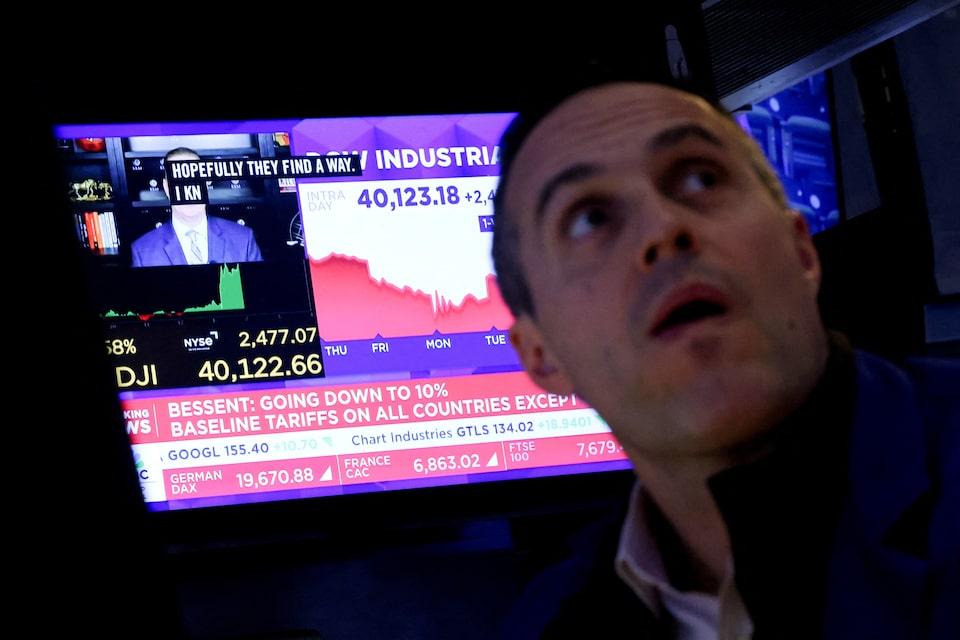
NEW YORK, April 9 (Reuters) - Wall Street surged after U.S. President Donald Trump announced a 90-day pause in tariffs unveiled last week that roiled markets and erased trillions of dollars from global stock markets. The policy changes also include a lowered overall tariff of 10% during that 90-day period, and an increase in tariffs on Chinese imports to 125%, from the 104% that went into effect overnight. Sign up here. MARKET REACTION: STOCKS: S&P 500 surged 7%, while the Nasdaq jumped more than 9%. TREASURIES: U.S. Treasury benchmark yields pared gains after the tariff announcement, following a government auction of $39 billion 10-year notes that suggested good demand. The auction came amid a bond market rout that was sparked by the U.S. tariffs and prompted forced selling and a dash for cash. CURRENCIES: The U.S. dollar -- which had been lower earlier in the day -- strengthened against the yen and other currencies. COMMENTS: TOM BRUCE, MACRO INVESTMENT STRATEGIST, TANGLEWOOD WEALTH MANAGEMENT, HOUSTON “It has been great news for the market... to see U.S. bonds sell off has been very strange, amid a broader emphasis on taking risk off in portfolios. Seeing stress build in the credit market was really worrying. So today was a great relief. "But we’re still not clear what it all means yet, for the EU, for instance. And an increase in tariffs on China is not a good thing, especially for retailers. "It’s beginning to look like this thing has been all about China. Certainly, the big tariffs package just didn’t make sense to economists like me. It felt like they were creating maximum leverage by creating maximum chaos -- classic game theory. So we needed a reprieve from that, and got one.” TOM GRAFF, CHIEF INVESTMENT OFFICER, FACET, PHOENIX, MARYLAND "It sounds like Trump is pivoting to a focus on China, and going easier on other countries. I still think a 10% universal tariff will have negative effects, but if this 90-day pause becomes more long term, it takes the worst-case scenario off the table." TIM HOLLAND, CFA, CHIEF INVESTMENT OFFICER, ORION, OMAHA, NEBRASKA “Investors will anxiously be waiting to see how other nations respond. We also think the fact that U.S. investor sentiment was so bearish heading into today’s announcement by the president is additional fuel for the move higher.” RON PICCININI, DIRECTOR OF INVESTMENT RESEARCH, AMPLIFY, SCOTTSDALE, ARIZONA “Today’s move is a classic example of why not to panic, and why having a disciplined approach is so crucial." “Our allocations are remaining unchanged, as we viewed the current episode as a bit of a replay of the events of December 2018, where the markets were down 18.5% by December 24, amid fears related of trade tariffs, government spending, high equity valuations, and interest levels considered too high by some. Markets made back all the losses quickly (about a month and a half)... we stay the course.” GINA BOLVIN, PRESIDENT OF BOLVIN WEALTH MANAGEMENT GROUP IN BOSTON "This is the pivotal moment we’ve been waiting for. The immediate market reaction has been overwhelmingly positive, as investors interpret this as a step toward much-needed clarity. The timing couldn’t be better, coinciding with the start of earnings season, which kicks off with the big banks this Friday. "This pause may provide companies with a clearer backdrop for their guidance, offering some relief to a market hungry for direction. "However, uncertainty looms over what happens after the 90-day period, leaving investors to grapple with potential volatility ahead." UTO SHINOHARA, SENIOR INVESTMENT STRATEGIST, MESIROW CURRENCY MANAGEMENT, CHICAGO “Amid the recent doom-and-gloom sentiment, investors were eager for any signs of optimism... Risk-sensitive currencies saw the strongest rebound, led by the Australian dollar, while traditional safe-havens like the Japanese yen and Swiss franc came under pressure.” AMARJIT SAHOTA, EXECUTIVE DIRECTOR, KLARITY FX, SAN FRANCISCO “The questions are really going to come: why did we see this reprieve today and is it even a good idea? Personally, I don't think it's a good idea: 90-day pause just creates more uncertainty." "But why today? I think that the talking point on nearly all desks this morning was what on earth is happening with the U.S. 10-year yield and why were we seeing this huge rally in the yields and people are offloading bonds and who in particular is offloading those bonds? ... Speculation has been that it was real money sellers and also foreign interest. That may have been enough to spook the administration into offering a reprieve.” STUART THOMAS, FOUNDING PRINCIPAL, PRECIDIAN INVESTMENTS, NEW YORK "This is a positive signal for the markets and validates Trump’s use of tariffs as a negotiating tool and highlights his willingness to deal with our trading partners in good faith." CAROL SCHLEIF, CHIEF MARKET STRATEGIST, BMO PRIVATE WEALTH, MINNEAPOLIS, MINNESOTA "Markets had been looking for a reason to rally for a few days. Markets can only sustain extreme conditions for so long before exhaustion sets in – rather like a toddler and a tantrum." "The 90-day suspension does allow nice breathing room to allow negotiation to settle in and market valuations have clearly been reset. Yet, the uncertainty for companies remains." STEVE SOSNICK, CHIEF MARKET STRATEGIST, INTERACTIVE BROKERS, GREENWICH, CONNECTICUT "This was definitely a surprise, considering that the administration consistently said they would not back off the tariffs and that they were non-negotiable... This is a very understandable relief rally." "We now have to wonder whether the tariffs resume in 90 days or not. That will impede companies’ ability to plan for the near future and to offer guidance regarding the current quarter. Uncertainty is reduced, but not fully dissipated." JAY HATFIELD, CEO, INFRASTRUCTURE CAPITAL ADVISORS, NEW YORK "This is going to come as a huge relief to the markets. This is what should have been done initially... We think that the selloff was overdone anyway and nobody was taking into consideration that oil prices are lower and that there are positive things happening too." "We are now set up for a good rally going into the earnings season... this rally makes sense now. There will be some residual concerns around the broader economy and recession, but that will get clearer with more data." ART HOGAN, INVESTMENT STRATEGIST, B. RILEY WEALTH MANAGEMENT, BOSTON "The day that felt really nuts was two days ago, when someone on Twitter posted what the White House called a fake news report that Donald Trump was considering doing what now he has just done – halt tariffs for 90 days. That triggered $2 trillion in buying in just eight minutes. Now we have the reality, and it’s no surprise we’re seeing another giant move upward." ALEX MORRIS, CHIEF INVESTMENT OFFICER, F/M INVESTMENTS, WASHINGTON, D.C. “This is a giant meltup, because the announcement was the walkback the market needed to see. They hit the pause button and the market rejoiced. But of course, there is no promise that we’ll manage to solve anything in 90 days. We’re certainly not out of the woods, and we may see inflation data spike. "What convinced the president to act was the bond market, which had begun sending signals that this was going to get steadily worse. The market moves have been an absolute whiplash... Stocks are trading on tweets and sentiment and the fear of silly policies being enacted. But there is plenty of liquidity and the market structure has held up very well.” MARK HACKETT, CHIEF MARKET STRATEGIST, NATIONWIDE INVESTMENT MANAGEMENT GROUP, PHILADELPHIA "It's definitely good news because it shows that the negotiations are in good enough shape that they think that they've accomplished what they needed to by this initial conversation." "But I want to put a pretty big caveat out there because 8% rallies in 20 minutes in the Nasdaq aren't a heck of a lot healthier than 8% declines ... so I'm careful about giving an all-clear." CHRISTOPHER HODGE, CHIEF ECONOMIST FOR THE US, NATIXIS IN NEW YORK “We had assumed that some form of capitulation would be forthcoming – the financial carnage, let alone the economic pain that has yet to be felt, and it was inconceivable that the administration to endure for much longer. The decoupling with China looks to be real with no sign of concessions from either side. Will the EU similarly stand firm? The fractures appear to be deep." "We may revert to the Trump 1.0 playbook of foreign countries agreeing to purchase more specific goods from the U.S. This could improve the trade deficit marginally, but will not fundamentally change the trading relationship like the administration desires." JOHN CANAVAN, LEAD ANALYST, OXFORD ECONOMICS, NEW YORK "The way President Trump worded this makes it not entirely clear if we actually have a pause or if we just have lower reciprocal tariffs at 10%... the president is backing off some of the worst of his tariff threats here, and I think that's clearly going to be a net positive for risk assets." "One thing that it doesn't do is eliminate uncertainty... because the level of tariffs just seems to change from day to day." "This only adds to the broader uncertainty as we go forward. But at least for the time being, while we can't be certain where the tariff situation is going to wind up, we can at least see that the president is showing an increased willingness to back down from the worst of his tariff threats and allow for some calm to enter the markets." (This story has been corrected to fix the date to December 24, not December 4, in paragraph 12) https://www.reuters.com/markets/us/stocks-rally-trump-tariff-pause-after-market-rout-2025-04-09/
2025-04-09 20:29
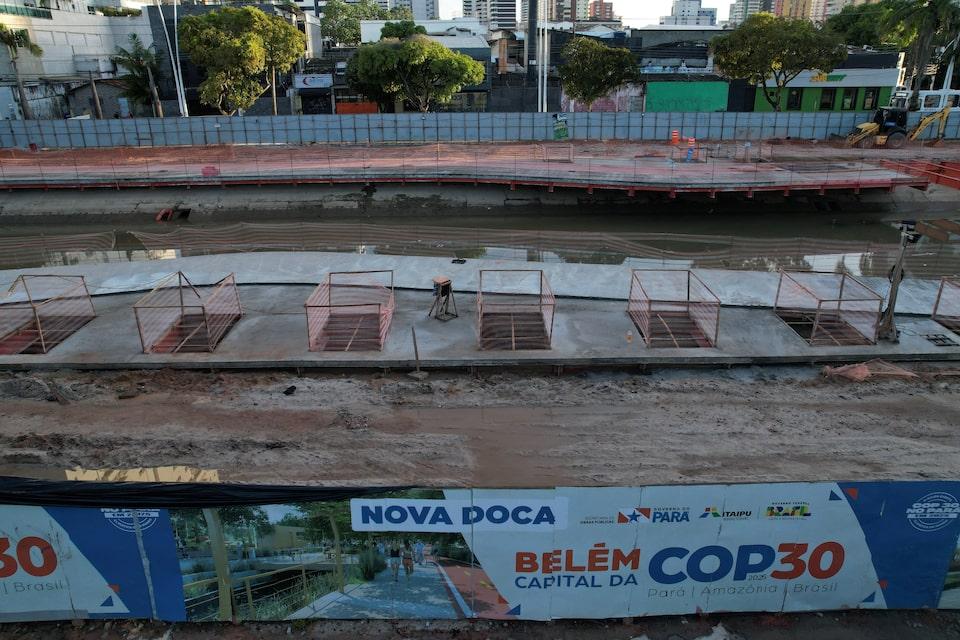
BRASILIA, April 9 (Reuters) - Brazil has scheduled the preliminary round of negotiations that help countries prepare for the global climate summit, known as COP30, for October, roughly a month before the main event starts at the Amazonian city of Belem, the government's special secretary for COP30, Valter Correia da Silva, told Reuters on Wednesday. The early negotiations, called the Pre-COP, will take place in Brasilia, the nation's capital, on Oct. 14 and 15, he said. Despite being a much smaller event, with only the main negotiators, the Pre-COP has gained importance this year because countries are struggling to deliver their new pledges to reduce the greenhouse gas emissions that cause global warming, known as Nationally Determined Contributions (NDCs). Sign up here. So far, more than 90% of countries have failed to meet the February deadline for submitting their new NDCs, as the world has turned its attention to wars and trade disputes, and financing for climate projects has dried up. The United Nations decided to extend the deadline to September. "The pre-COP this year can help make Belem a success or a failure. Brazil's intention is for the talks there to lead to effective negotiations a month later," a source who follows the issue told Reuters. https://www.reuters.com/sustainability/brazil-hold-preliminary-talks-ahead-cop30-climate-summit-2025-04-09/
2025-04-09 20:01
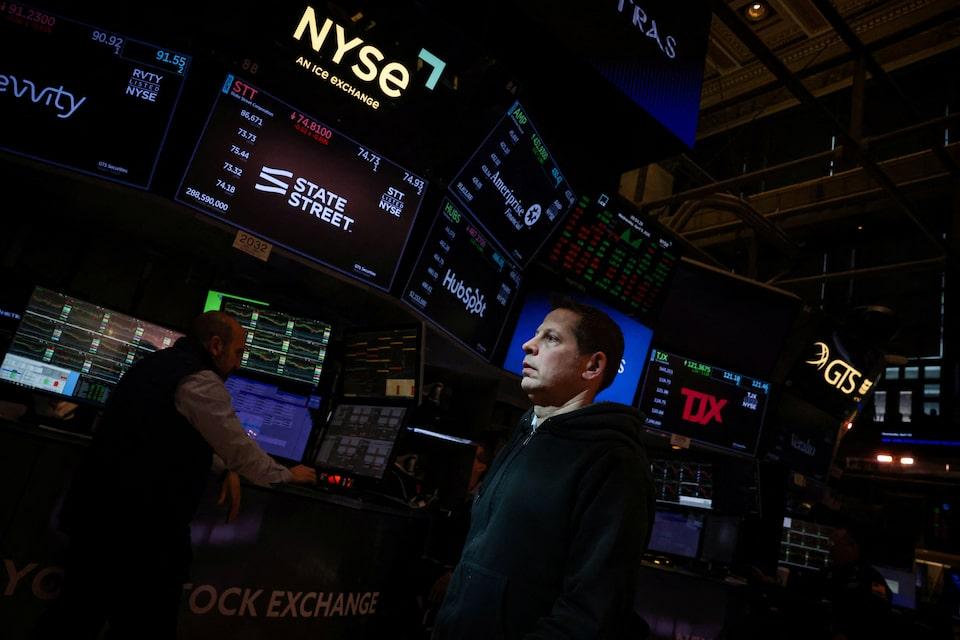
Trump sets 90-day tariff pause but raises China levy to 125% Nasdaq's second-biggest daily gain, S&P's biggest since 2008 All S&P 500 sectors rally, with tech adding 14.15% Indexes rally: Dow 7.87%, S&P 500 9.52%, Nasdaq 12.16% April 9 (Reuters) - The S&P 500 soared 9.5% on Wednesday for its biggest daily gain since 2008 after U.S. President Donald Trump declared an immediate 90-day tariff pause for many countries, bringing some relief to investors worried about the global economic impact of U.S. trade policies. The rally, which followed Wall Street's biggest four-day percentage loss since the pandemic, was triggered by an afternoon announcement that Trump would temporarily lower many new tariffs, while he raised the levy on Chinese imports to 125%. Sign up here. The pause of heftier tariffs on dozens of countries came less than 24 hours after they kicked in. However, the White House kept a 10% blanket duty on almost all U.S. imports. The increase in China tariffs was in retaliation for China's announcement of an 84% levy on U.S. goods starting April 10. Traders took the opportunity to shop for beaten-down stocks. Since Trump announced broad tariffs late on April 2, stocks had fallen more than 12%. "This is the pivotal moment we’ve been waiting for. The immediate market reaction has been overwhelmingly positive, as investors interpret this as a step toward much-needed clarity," said Gina Bolvin, president of Bolvin Wealth Management Group. "However, uncertainty looms over what happens after the 90-day period, leaving investors to grapple with potential volatility ahead." After Trump's pause announcement, Goldman Sachs said it was rescinding its recession forecast and reverting to its previous baseline estimate for the economy to grow in 2025. Kevin Gordon, senior investment strategist at Charles Schwab, said the rally from oversold levels made sense but cautioned that "to have a high conviction call on anything right now is a fool's errand." "We just have to wait and see what the ultimate policy is, but unfortunately the policy changes almost on a daily basis," said Gordon, adding he was concerned about companies' ability to make spending and hiring decisions in such an environment. Even with the rally, all three of Wall Street's major averages ended the session below the April 2 close, the last trading day before Trump unveiled broad tariffs. The Dow Jones Industrial Average (.DJI) , opens new tab rose 2,962.86 points, or 7.87%, to 40,608.45. The S&P 500 (.SPX) , opens new tab gained 474.13 points, or 9.52%, to 5,456.90 for its biggest daily gain since October 2008, during the global financial crisis. The Nasdaq Composite (.IXIC) , opens new tab added 1,857.06 points, or 12.16%, to 17,124.97, for its biggest gain since January 2001, during the dotcom market bubble. The smallcap Russell 2000 Index (.RUT) , opens new tab added 8.66%, for its biggest one-day jump since March 2020. All 11 of the S&P 500's major industry indexes finished higher, with technology (.SPLRCT) , opens new tab adding 14.15%. Defensive utilities (.SPLRCU) , opens new tab were the slowest gainer, adding 3.91%. Large technology stocks provided the biggest boost, with Nvidia (NVDA.O) , opens new tab adding 18.7% and Apple (AAPL.O) , opens new tab rising 15.3%. The S&P 500 Auto Index (.SPLRCAU) , opens new tab ended up 20.95%, by far its biggest daily gain on record. Also helping to calm investor sentiment was the U.S. Treasury's $39-billion 10-year note auction. The auction came within market expectations, priced at a high yield of 4.435%, lower than the rate forecast at the bid deadline, suggesting solid investor demand. "Longer-term questions will almost certainly remain. But this afternoon’s announcement, combined with the Treasury auction, is a welcome relief after several days of very high volatility," said Jeffrey Palma, head of multi-asset solutions and macro research at Cohen & Steers in New York. The CBOE Volatility Index (.VIX) , opens new tab - seen as Wall Street's "fear gauge" - fell sharply after the tariff pause to end the day at 33.62 points, compared with its session high of 57.96. Minutes from the Federal Reserve's meeting last month were also released in the afternoon. Fed policymakers were nearly unanimous that the U.S. economy faced risks of simultaneously higher inflation and slower growth, with some policymakers noting that "difficult tradeoffs" could lie ahead for the central bank. A consumer price inflation report scheduled for Thursday morning will be closely watched by investors for clues on the inflation trajectory. The upcoming earnings season will offer more insights into the health of corporate America as investors fear a hit to economic growth from the tariffs. U.S. banks, including JPMorgan Chase (JPM.N) , opens new tab, will report first-quarter results on Friday. Delta Air Lines (DAL.N) , opens new tab shares soared 23.4% after the carrier beat first-quarter profit expectations. The company, though, pulled its 2025 financial forecast and projected current-quarter profit below expectations. Advancing issues outnumbered decliners by a 6.4-to-1 ratio on the NYSE where there were 30 new highs and 1,187 new lows. On the Nasdaq, 3,841 stocks rose and 684 fell as advancing issues outnumbered decliners by a 5.62-to-1 ratio. The S&P 500 posted one new 52-week high and 100 new lows while the Nasdaq Composite recorded 12 new highs and 646 new lows. Wednesday was a record day for trading volume with 30.5 billion shares changing hands on U.S. exchanges, compared with the 18.06 billion average for the last 20 sessions. https://www.reuters.com/markets/us/futures-struggle-trumps-reciprocal-tariffs-shake-up-global-trade-2025-04-09/
2025-04-09 19:50
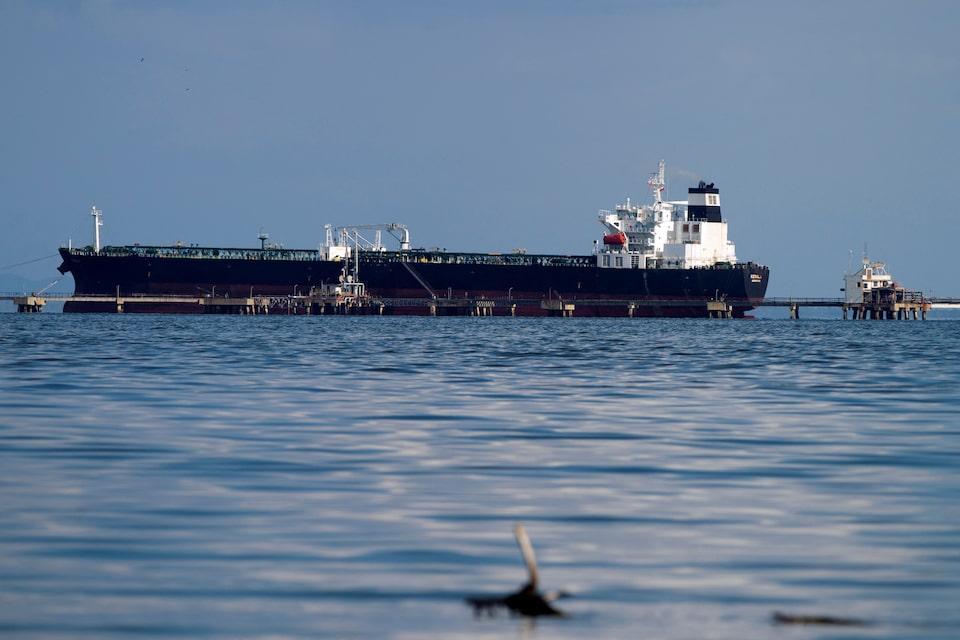
Tankers return to ports to finish loading a week after pause, delays Crude cargoes set sail, destinations include India and China Cuba has benefited, to receive more cargoes this month April 9 (Reuters) - Many buyers of Venezuelan oil have resumed loading crude onto tankers after a week-long hiatus at the country's ports after the U.S. applied tariffs that President Donald Trump imposed on importers of the OPEC nation's oil, according to shipping data and documents. In March, the U.S. Treasury Department gave U.S. oil producer Chevron (CVX.N) , opens new tab and other foreign partners and customers of PDVSA until May 27 to wind-down operations and cease oil exports from Venezuela. Days later, Washington imposed tariffs on buyers of Venezuela's oil and gas. Sign up here. The measures prompted the suspension of some tanker loadings at the country's main oil port of Jose and created delays at smaller terminals. Trump's hardening stance discouraged traders and importers from continuing to ship Venezuelan oil. Following the U.S. measures on oil buyers, many vessels undocked at Jose and moved offshore. Now, many of these have returned to complete their loading. They have begun departing from Venezuelan waters bound for destinations including India and China, according to the data and internal documents from Venezuelan state oil firm PDVSA. "There was a panic moment when the vessels undocked, but they later received instructions to complete their cargoes," a PDVSA source said. As of Wednesday, crude cargoes allocated to Chevron for U.S. delivery, Reliance Industries (RELI.NS) , opens new tab for India delivery and several intermediaries for China delivery were setting sail in a signal that Venezuela's oil exports will not collapse in the short term. PDVSA, Chevron and Reliance did not immediately reply to requests for comment. The government of President Nicolas Maduro has blasted U.S. sanctions on Venezuela as an "economic war." On its side, PDVSA is reorganizing output and crude upgrading to refine more oil domestically in the second half of the year. This could blunt the impact of lower crude exports. In China, the main importers of Venezuela's heavy crude grades are independent refiners known as teapots that buy through intermediaries. As the tariffs loomed last month, some refiners delayed or suspended imports from the South American country, opting for Brazilian and West African crudes instead. Chinese traders and refiners told Reuters last month they would wait to see how the tariff order was implemented and whether Beijing would direct them to stop buying. Some independent refiners temporarily paused purchases from Venezuela as they sought information on whether supply would remain available and at what price. China is Venezuela's largest oil buyer, directly and indirectly taking in some 480,000 barrels per day (bpd) of crude and fuel this year. The U.S. is the No. 2 destination with 250,000 bpd, India is third with 63,000 bpd and Europe fourth with 44,000 bpd. In the long run, analysts forecast oil output will decline between 150,000 and 350,000 bpd by year end if the wind-down period granted to buyers is not extended or secondary tariffs lifted. Venezuela produced 921,000 bpd of crude last year, according to figures reported to OPEC. Some joint venture partners of PDVSA, including Europeans Eni (ENI.MI) , opens new tab and Repsol (REP.MC) , opens new tab, have said they are in talks with Washington seeking exemptions to the U.S. sanctions on the country that would allow them to keep producing oil and gas in Venezuela even if barrels are not exported. The loading hiccups are temporarily benefiting Venezuela's political ally Cuba, with more crude cargos planned for that destination this month, the documents showed. https://www.reuters.com/markets/commodities/venezuelas-oil-flows-again-after-week-panic-2025-04-09/
2025-04-09 19:45
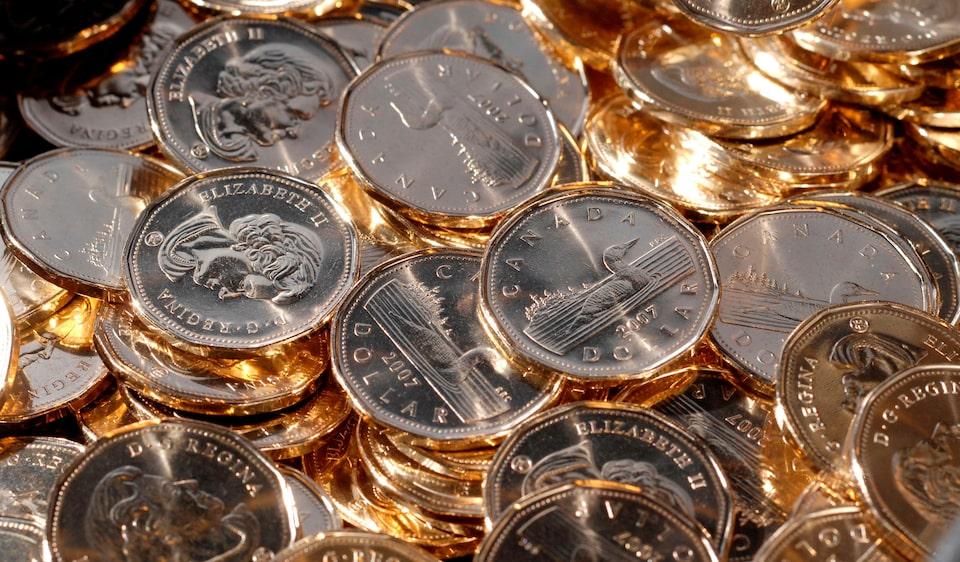
Canadian dollar gains 1.2% against the greenback Posts biggest advance since January 20 Price of U.S. oil settles 4.65% higher Two-year yield touches a six-week high TORONTO, April 9 (Reuters) - The commodity-linked Canadian dollar strengthened by the most in nearly three months against its U.S. counterpart on Wednesday as a sudden reversal by the U.S. on tariffs bolstered the outlook for the global economy. The loonie was trading 1.2% higher at 1.4095 per U.S. dollar, or 70.95 U.S. cents, its biggest advance since January 20. The currency touched its strongest intraday level since Friday at 1.4076. Sign up here. U.S. President Donald Trump said he would temporarily lower new tariffs on many countries, even as he raised them further on imports from China. "The global growth outlook looks better is the bottom line for the Canadian dollar right now," said Adam Button, chief currency analyst at ForexLive. "Extreme reciprocal tariffs were likely to create a worldwide recession and now it's clear it was all a negotiating tactic." Wall Street jumped, clawing back some recent steep declines, and the price of oil, one of Canada's major exports, settled 4.65% higher at $62.35 a barrel. Canada, which is this year's chair of the G7 developed economies, and Japan have agreed to cooperate to maintain stability in financial markets and the global financial system, Japan's Ministry of Finance said. Canadian bond yields rose across much of a flatter curve, tracking moves in U.S. Treasuries. The 2-year was up 13.8 basis points at 2.622% after touching its highest intraday level since February 25 at 2.709%. https://www.reuters.com/markets/currencies/canadian-dollar-strengthens-investors-ditch-us-currency-2025-04-09/
2025-04-09 19:41
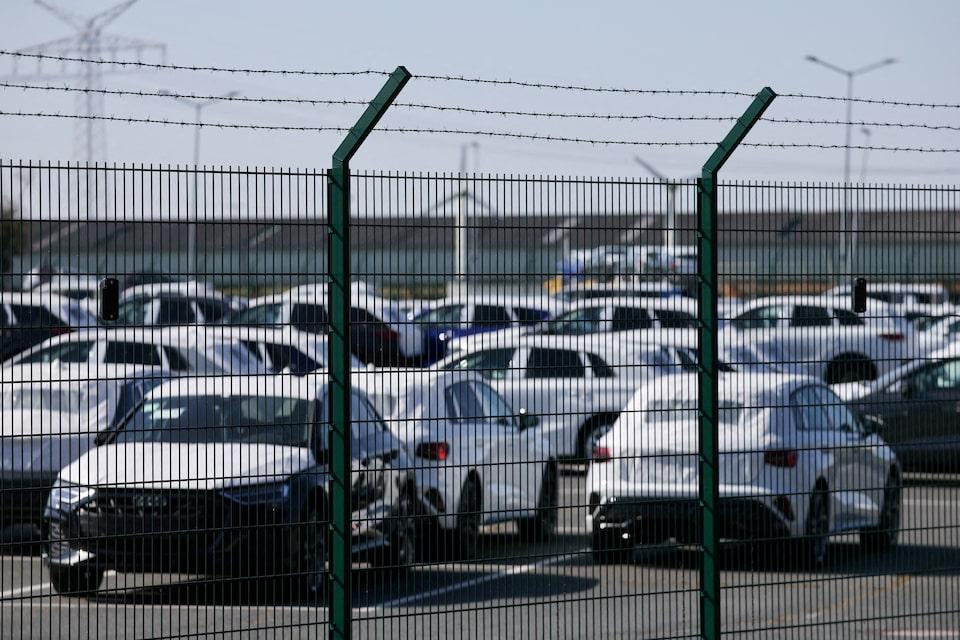
Shares rise 8.2% Volkswagen still heavily exposed to US tariffs European politicians have yet to approve relaxation of EU carbon rules BERLIN, April 9 (Reuters) - Volkswagen's first-quarter earnings fell far short of market expectations, plunging about 40%, as Europe's biggest carmaker factored in costs for penalties of missing EU carbon emissions targets and for cars affected by U.S. tariffs. Volkswagen's shares were up 8.2%, as relief swept through markets after the U.S. administration's announcement of a 90-day pause on tariffs imposed less than 24 hours earlier on dozens of countries, but a 25% tariff on autos imports remains in place and Volkswagen is heavily exposed. Sign up here. Europe's autos index was up 4.9% at 0814 GMT, while a wider European index rose 7.9%. After lobbying from the car sector, the European Commission, the EU executive, has proposed to loosen rules that most of the industry is likely to breach this year, leading to billions of euros in fines. The proposal, which would give Volkswagen and the rest of the industry more time to boost sales of low emission electric vehicles, has yet to be approved by the European Parliament. As a result, Volkswagen included a 600 million euro ($658 million) provision for potential fines in its first-quarter result, as well as 200 million euros for restructuring at its software unit Cariad, which is in the midst of layoffs. That lowers its operating return on sales to around 3.6%, down from 6% last year. A spokesperson declined to provide detail on the costs related to US tariffs. Those linked to the valuation of vehicles in transit to the United States, where a 25% import tariff was imposed from April 3, weighed on results. The bulk of the VW brand's U.S. sales is from cars made in Mexico and its Audi and Porsche brands have no U.S. manufacturing base. The company confirmed its full-year outlook of up to 5% sales growth and operating return on sales of between 5.5% and 5.6% but said in its results statement these forecasts excluded the possible impact of tariffs since it was too early to assess their impact. ($1 = 0.9113 euros) https://www.reuters.com/business/autos-transportation/vw-quarterly-results-fall-sharply-us-tariffs-eu-carbon-rules-restructuring-2025-04-09/