2025-04-09 16:29
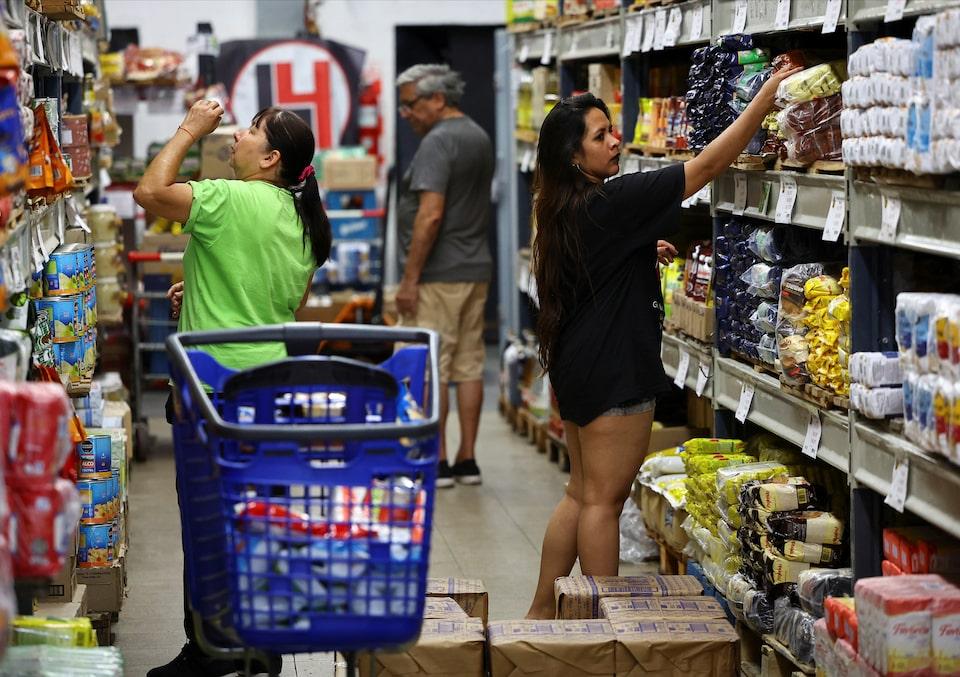
BUENOS AIRES, April 9 (Reuters) - Argentina's monthly inflation rate likely sped up to 2.6% in March, marking the second consecutive month on the rise, a median of analysts polled by Reuters showed on Wednesday. If that figure is confirmed in official data published on Friday, it would put the government further from its goal of bringing the monthly rate down to 1%. Sign up here. Despite a slowed rate in the monthly devaluation of the peso currency, known as the crawling peg, and a curb in spending on utilities, "the monthly inflation rate still hasn't broken the long-awaited 2% barrier," consulting firm Eco Go said in a report. The range of the estimates from the 19 local and foreign analysts varied from 2.3% to 2.9%, with the average pegging the monthly rise at 2.6%. The education, transportation and food sectors likely logged the highest price increases in the month, analysts said. "The seasonality of the month, which marks the end of (the Southern Hemisphere) summer and the return to classes, implies higher rises in sectors like education," Eco Go added. Further uncertainty comes from abroad, with a global trade war threatening to erupt, along with market expectations of a $20 billion loan deal with the International Monetary Fund (IMF). That will likely translate into higher prices in coming months, analysts added. Locally, "potential changes to the exchange-rate policy amid upcoming elections add tension to prices" as well, said economist Pablo Besmedrisnik. "On top of the domestic reality and the IMF negotiations, the global outlook is fragile with pressure to devalue emerging currencies," he added. Argentina's National Statistics Institute is set to publish March's inflation data on Friday at 1900 GMT. https://www.reuters.com/world/americas/argentinas-inflation-likely-sped-up-again-march-2025-04-09/
2025-04-09 15:57
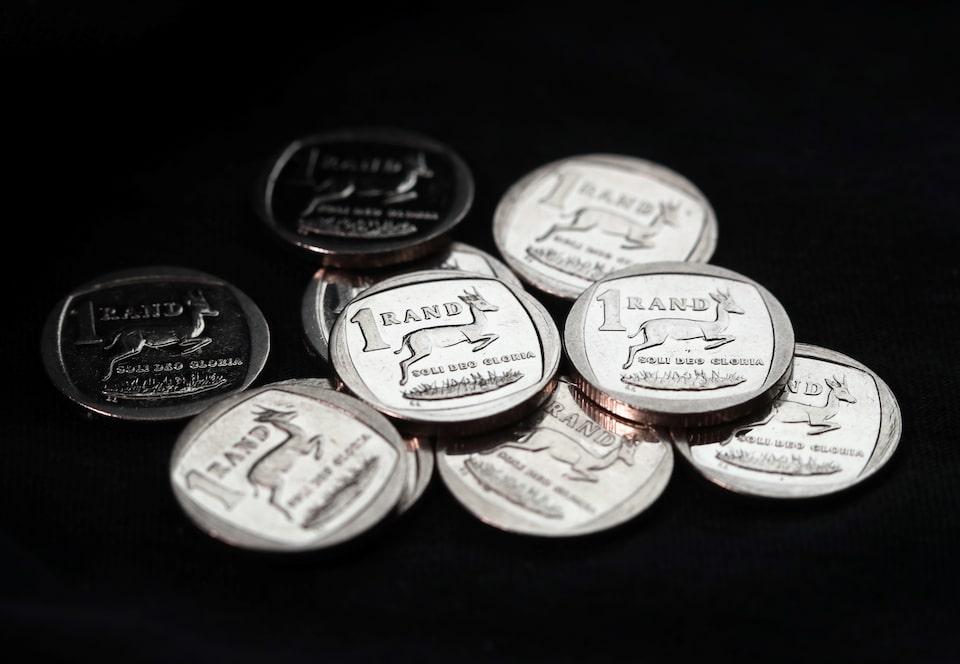
JOHANNESBURG, April 9 (Reuters) - The rand struck an all-time low in jittery trade on Wednesday, as U.S. President Donald Trump's trade war and the risk that South Africa's market-friendly coalition government could split unnerved investors. The rand fell as low as 19.9325 to the dollar , weaker than the previous record low of 19.9075 hit in June 2023, data from the London Stock Exchange Group showed. Sign up here. It had recovered to 19.81 by 1533 GMT, but it was still down 0.2% on the day and more than 3% lower this week. "The past few trading sessions have been a wild ride, and there are no indications as yet that the volatility is about to end," said Danny Greeff, co-head of Africa at ETM Analytics. China and the European Union announced new tariffs on U.S. goods on Wednesday as the standoff between the United States and major economies showed no sign of resolution. Nicky Weimar, chief economist at South African bank Nedbank, said the rand was also being dragged lower by local politics. The two biggest parties in the coalition government, the African National Congress (ANC) and Democratic Alliance (DA), disagreed sharply over the budget, with the DA voting against it in parliament and going to court to try to block it. Despite both parties saying on Tuesday that they were not yet walking away from the Government of National Unity (GNU), investors are worried that the pro-business DA could quit the coalition or be forced out by the ANC. "Investors are starting to price in the possibility that the current GNU, anchored by the ANC and the DA, will dissolve," Weimar said. The Johannesburg Stock Exchange's Top-40 index (.JTOPI) , opens new tab closed 2% lower. The benchmark 2030 government bond price also dropped, with the yield rising 10.5 basis points to 9.305%. https://www.reuters.com/markets/currencies/south-african-rand-near-record-low-tariff-war-coalition-friction-2025-04-09/
2025-04-09 14:58
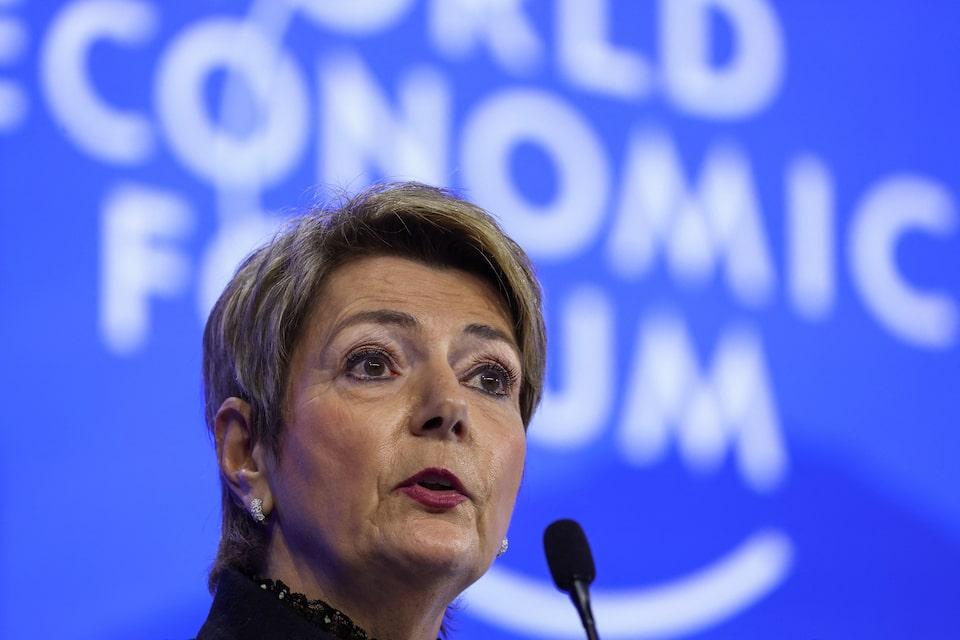
ZURICH, April 9 (Reuters) - Swiss President Karin Keller-Sutter said on Wednesday she had spoken to U.S. President Donald Trump by telephone about trade and was looking forward to reaching agreements after Switzerland was hit with bigger import tariffs than its EU neighbours. "In today's phone call with President Donald Trump I conveyed both Switzerland's stance on bilateral trade, and ways to address U.S. ambitions," she said on X. "We agreed to continue talks in the interest of both our countries. Looking forward to working out solutions in the very near future." Sign up here. When the Trump administration announced its tariffs last week, Switzerland was hit disproportionately with a 31% rate, compared with 20% on the European Union and 10% on Britain. Switzerland, which abolished industrial tariffs last year, has an economy heavily oriented to trading with the rest of the world, and the U.S. is its single biggest export market. Earlier, a survey of industry lobbies and firms by business group Economiesuisse showed that nearly half were strongly or very strongly affected by U.S. tariffs on Swiss exports. https://www.reuters.com/world/swiss-president-talks-trade-with-trump-hopes-fixes-soon-2025-04-09/
2025-04-09 14:32
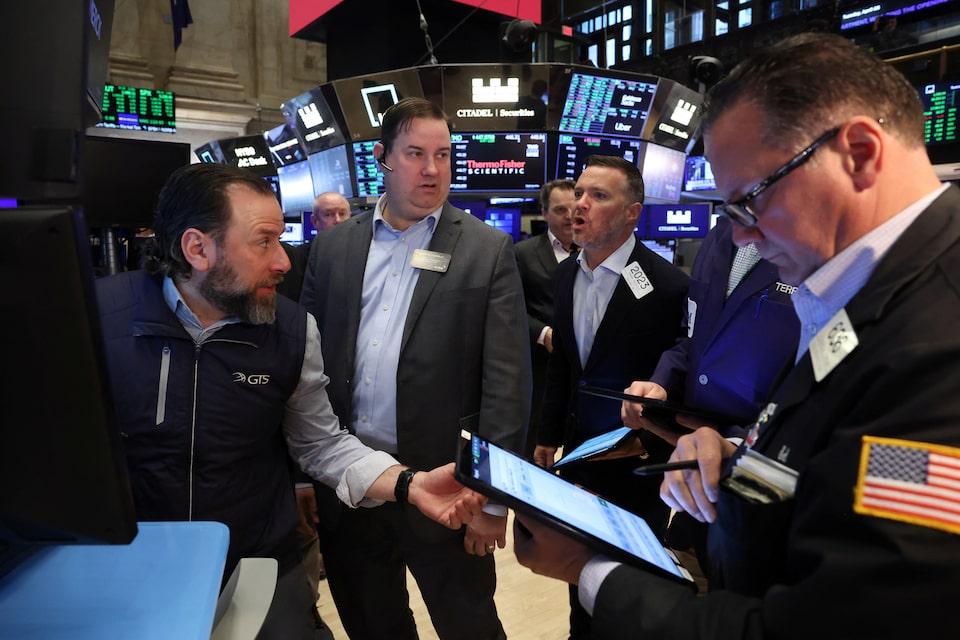
Dollar and U.S. Treasuries take a hit Gold near record peak LONDON, April 9 (Reuters) - Investors are dumping U.S. assets they usually favour in times of turmoil as fear over the economic impact of U.S. President Donald Trump's reciprocal tariffs shakes confidence in traditional safe-havens. The dollar and U.S. Treasuries have taken a beating as Trump's tariffs, plus a 104% duty on China, took effect, while China swiftly retaliated. In contrast, safe-haven favourites such as gold and the Swiss franc continue to pull in cash. Sign up here. The rapid rise in U.S. Treasury yields has worried investors, who fear this could be forced selling to cover portfolio losses and a dash for cash, rekindling memories of the COVID-19 market turmoil. Here is a glance at how traditional safe havens have fared so far during the tariff turbulence: 1/ DOLLAR TAKES BACKSEAT The dollar was the first to lose its shine after Trump announced tariffs, when it dropped along with stock markets. This was an unusual move raising questions about the global standing of the U.S. currency, often dubbed "King Dollar" for its strength and dominance in global currency markets. The dollar has shed more than 5% this year against a basket of other currencies after posting its weakest start to a year since 2016, LSEG data shows . The dollar's failure to benefit from rising U.S. Treasury yields has added to investors' worries because, until now, higher returns on Treasuries relative to other bond markets had boosted the dollar's appeal. "The dollar not getting support from (higher) yields suggests the dollar is not a currency safe-haven," State Street Global Markets' head of macro strategy Michael Metcalfe said. 2/ BOND ROUT Investors initially rushed into government bonds on heightened recession risks, but that has quickly changed. After plunging 26 basis points last week, U.S. 10-year Treasury yields have surged more than 40 basis points so far this week. Longer-dated bonds are the worst hit, with 30-year yields up nearly 50 bps, set for their biggest weekly jump since the early 1980s. Bond yields rise when prices fall. An index of Treasury volatility (.MOVE) , opens new tab has risen to its highest since late 2023. Yields have surged even as traders price in faster U.S. Federal Reserve rate cuts, suggesting deliberate dumping of Treasuries rather than selling driven by changes in economic expectations. This is reflected in a widening gap between Treasury yields and interest rate swaps, derivatives used for hedging. Pepperstone senior strategist Michael Brown said that pointed to a real lack of desire to hold Treasuries. "Whether this is participants selling down Treasuries to raise cash in order to meet their liquidity needs, or a representation of how institutional confidence in the U.S. has continued to be eroded, remains to be seen." Investors also believe the unwinding of a widely used hedge fund arbitrage trading strategy between cash and positions in Treasury futures, known as the basis trade, is adding to these market moves. The bond market pain is spreading. In Britain, 30-year bond yields rose to their highest since 1998, putting pressure on the country's stretched finances. 3/ GOLDEN ERA Gold has a long history as a safe-haven asset. It tends to rise in a financial or political crisis. The 1970s energy crisis, the 1980 U.S. recession, the 2008 global financial crisis and the 2020 COVID-19 pandemic all triggered a rise in gold. This time gold has surged to all-time highs above $3,000 an ounce, having almost doubled in the past 2-1/2 years . It was caught up in the broader market selling of the past week, as investors rushed to raise cash to plug losses elsewhere. But gold was up more than 2% on Wednesday, only narrowly below its record peak at $3,167. Central banks and investors, who scooped up gold as a hedge against the inflation spike after the COVID pandemic, have continued buying even as inflation eased. And with Trump's isolationist trade policies playing out, more investors are buying it to protect their wealth. 4/ BACK IN FAVOUR Japan's yen is often the biggest major currency to benefit from safe-haven flows and typically performs well when stocks falter. The yen was set for its best day against the dollar since September on Wednesday and has rallied 7.5% so far this year, while another safe-haven favourite, the Swiss franc, has strengthened just as much , . 5/ DEFENSIVE PLAYS Stocks are usually in the front line in recessions and financial crises. Investors take profits, yanking their cash as they run for shelter. But most cannot abandon the equity market entirely, so when trouble hits, they pile into stocks with recession-proof earnings, such as drugmakers, utilities and food and beverages. In the last 25 years, so-called defensive stocks have consistently outperformed cyclical stocks that are most closely linked to the global economy, such as technology or mining shares. Even though there is no sign yet of a recession, a basket of global defensive stocks has fallen less since Trump's November election win than a basket of cyclicals, reflecting investors' caution. https://www.reuters.com/markets/us/tariff-turmoil-leaves-investors-with-few-hiding-places-2025-04-09/
2025-04-09 13:57
ISLAMABAD, April 9 (Reuters) - Pakistan plans to allocate part of its surplus electricity to Bitcoin mining and AI data centres, the head of Pakistan's Crypto Council and adviser to the finance minister said on Wednesday, adding it had held talks with several mining firms. Pakistan's energy sector is grappling with challenges, including high electricity tariffs and surplus generation capacity. Sign up here. The rapid expansion of solar energy has further complicated the landscape, as more consumers turn to alternative energy sources to mitigate high costs. Bilal Bin Saqib, chief executive officer of the council, told Reuters the location of the mining centre will be finalised based on the availability of excess power in specific regions. Documents seen by Reuters outline the role of Changpeng Zhao, founder of Binance, who will serve as a strategic adviser to the Pakistan Crypto Council. Zhao was in May last year sentenced to four months in prison after pleading guilty to violating U.S. laws against money laundering at the world's largest cryptocurrency exchange. His role on the Pakistan council will include supporting blockchain infrastructure, advising on regulatory frameworks, and assisting with national initiatives, such as digital currency, mining, and youth education in blockchain technologies. Saqib said the country has 15-20 million crypto users and is the third-largest global freelancer economy, with a growing fintech space. "Pakistan is in the top 10 global crypto adopters despite it not being regularised," he said. Saqib said he wants regulatory sandboxes, or safe environments for testing, to foster innovation and growth in the fintech and freelancer economy. He also said upskilling Pakistan's youth in blockchain and AI can drive job creation and the economy, boosting exports through digital services, and positioning the country as a hub for emerging tech talent on the global stage. https://www.reuters.com/world/asia-pacific/pakistan-turns-bitcoin-miners-ai-data-centers-use-surplus-power-2025-04-09/

2025-04-09 13:46
MEXICO CITY, April 9 (Reuters) - Mexico's annual inflation sped up in March but remained within the central bank's target range, data released on Wednesday showed, giving credit to expectations that the monetary authority will further trim its benchmark interest rate by half a percentage point. Consumer prices in Latin America's second-largest economy were up 3.80% in the 12 months through March, statistics agency INEGI said, in line with the 3.80% from analysts polled by Reuters and up from 3.77% in the previous month. Sign up here. Despite the increase, inflation remained within the Bank of Mexico's target band of 2% to 4%. In March the central bank cut its benchmark rate by 50 basis points to 9%, the lowest level since 2022, and said that the size of the cut could be matched in future decisions if the inflationary environment allowed. Lower rates could also provide much-needed support to Mexico's struggling economy, which, like other countries, faces headwinds from U.S. President Donald Trump's sweeping trade policies. Mexico's 12-month core inflation index, often seen as a more reliable measure of price trends as it excludes volatile energy and food prices, came in at 3.64% in March, INEGI said, in line with market expectations. https://www.reuters.com/world/americas/mexico-annual-inflation-accelerates-march-2025-04-09/