2025-04-09 13:28
ECB can ensure financial stability, Villeroy says Hedge funds coping well, Knot says, as Trump tariffs bite Negative risks materialising, firming rate cut case, Rehn says FRANKFURT, April 9 (Reuters) - The European Central Bank is ready to preserve financial stability in case of further market turmoil but the sector, including hedge funds, appears well prepared for the recent rout, ECB policymakers said on Wednesday. Since U.S. President Donald Trump announced a raft of tariffs last week, stocks have fallen sharply, the dollar has weakened and U.S. Treasuries sold off overnight, raising fears of escalating market turmoil that could drag the world into a financial crisis. Sign up here. "The Bank of France and the European Central Bank are fully mobilised to ensure the (euro zone) economy is well financed and (ensure) financial stability," French Central Bank chief Francois Villeroy de Galhau said. "They are monitoring to make sure the financial system's liquidity is good, including in times of market stress." Some economists fear that stress may be coming from so-called shadow banks, including hedge funds, which fall under easier regulation and do not have access to central bank liquidity facilities. However, data so far indicate they are coping well. "Market functioning so far has been preserved," said Klaas Knot, the head of the Dutch central bank and the chair of the Financial Stability Board. "The hedge fund sector had already de-levered, they saw this coming. And so they were capable of meeting the margin calls, which was not the case in earlier episodes." The tariffs are still likely to have a deep impact on the euro zone and sources close to the ECB say that growth is likely to take a far bigger hit than the half a percentage point earlier predicted. The ECB is now revisiting its own economic models and could present fresh estimates at next week's policy meeting. Some policymakers say that such a hit on its own would be enough to justify another rate cut next week, which would be the ECB's seventh in the past year. "Since the March meeting, many of the risks identified at that time have now either materialised or are materialising," Finnish central bank chief Olli Rehn said in a speech. "Based on the overall assessment of inflation and growth, I believe the case for further rate cuts at the April meeting has clearly strengthened." Rehn spoke after a raft of policymakers, including Villeroy and ECB board member Piero Cipollone, had already argued for more policy easing. Markets are now fully pricing in an April move and see another cut in June, to be followed by one or two more steps this year. Jose Luis Escriva, head of the Spanish central bank, said it was too early to talk about recession, but the result of the U.S. tariff blitz would be a disruption of supply, "a very harsh one, which does have the potential to generate sharp falls in economic activity or a slowdown in economies like ours". The ECB next convenes on April 17 but policymakers are also likely to hold informal talks later this week in Warsaw, on the sidelines of an informal gathering of central bank governors and finance ministers. https://www.reuters.com/markets/europe/tariffs-create-stagflationary-shock-long-term-ecbs-knot-says-2025-04-09/
2025-04-09 12:52
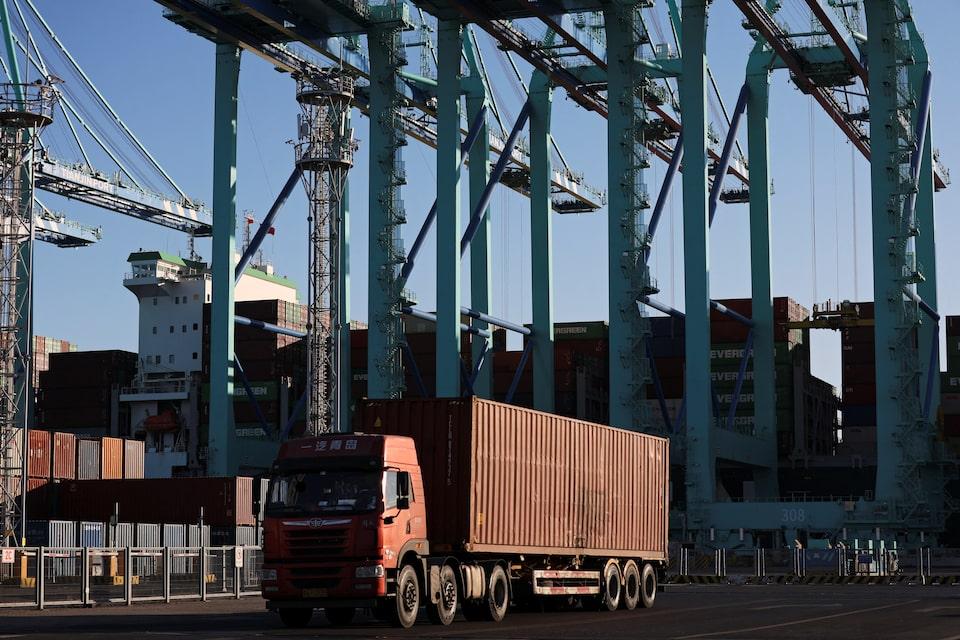
China raises additional duties on U.S. goods to 84% amid trade war Beijing imposes restrictions on 18 U.S. companies China's trade surplus with U.S. widened to $295.4 billion last year China releases white paper on U.S.-China commercial ties Beijing accuses U.S. of reneging on its side of 2020 trade deal BEIJING, April 9 (Reuters) - China hit back at U.S. President Donald Trump singling out the world's second-largest economy for tariffs of more than 100% by raising additional duties on American products to 84% on Wednesday, deepening the trade war between the two superpowers. Beijing also imposed restrictions on 18 U.S. companies, mostly in defence-related industries, adding to the 60 or so American firms punished over Trump's tariffs. Sign up here. The move comes after Trump made good on his threat to impose an additional 50% tariff on China unless it withdrew its retaliatory levies on the United States, taking total new U.S. duties on Chinese goods this year to 104%. Beijing announced in response it would also raise its levies on U.S. goods by 50%, adding to the 34% increase previously announced and due to be implemented on Thursday. "The U.S. escalation of tariffs on China is a mistake on top of a mistake, which seriously infringes of China's legitimate rights and interests and seriously undermines the rules-based multilateral trading system," China's finance ministry said in a statement. Trump has imposed "reciprocal" tariffs on dozens of economies he accuses of "ripping off" the U.S. by selling goods into the world's largest consumer economy while maintaining trade barriers that inhibit U.S. firms' market access. But he has singled out China for the most punishing taxes, setting the stage for a standoff between the world's top two economies. Earlier on Wednesday, China released a white paper on U.S.-China commercial ties in which it called the trade gap between the world's top two economies "inevitable". "China does not deliberately pursue a trade surplus," said the report, which was released by the State Council Information Office shortly after the higher U.S. tariffs took effect. "The trade imbalance in goods between China and the U.S. is both an inevitable result of structural issues in the U.S. economy and a consequence of the comparative advantages and international division of labour between the two countries," the report added. TRADE SURPLUS China's trade surplus with the U.S. widened to $295.4 billion last year from $279.1 billion in 2023, according to U.S. Census data. The goods trade gap peaked in 2018 at $418 billion, the same year Trump, in his first term as president, imposed tariffs on Chinese outbound shipments. The first U.S.-China trade war concluded with Beijing agreeing to a "Phase 1" trade deal with Washington in 2020 in which it agreed to increase purchases of U.S. exports by $200 billion over a two-year period. Beijing failed to meet its targets when the COVID-19 pandemic struck, but said in its white paper that it had "scrupulously fulfilled its obligations" by taking steps to boost its purchases of U.S. goods and accused Washington of having reneged on the deal. "The US has systematically escalated economic and other forms of pressure against China, the report said. "Concurrently, the U.S. has promoted false narratives related to human rights, Hong Kong, Taiwan, Xinjiang and the pandemic." China also talked up its efforts to boost its trade in services with the U.S., economic activity that the Trump administration has not factored into its "reciprocal" duties. "The U.S. stands as the largest source of China's deficit in service trade, with the deficit generally exhibiting an upward trend," the white paper said. WAR OF ATTRITION China is bracing for an economic war of attrition as it tries to court other markets in Asia, Europe and the world. But other countries have much smaller markets than America and are also taking a hit from the tariffs. During Trump's first term, China frustrated U.S. financial and professional services firms by holding up licence applications and carrying out office raids. But Beijing cannot dip into the same playbook this time as it is trying to attract fresh foreign investment to bolster its economic recovery. Still, Chinese policymakers are backing themselves to go toe-to-toe with the Trump administration a second time. "If the U.S. insists on escalating trade restrictions, China has both the determination and the means to respond forcefully - and will do so," a commerce ministry spokesperson said in a statement accompanying the white paper's launch. "There are no winners in a trade war. China does not want one, but the government will never allow the legitimate rights and interests of the Chinese people to be harmed or taken away." Ordinary Chinese people have started to voice their concern. "The situation has already reached a blatant financial and trade war on the global stage," said Ling Wanhua, a 20-year-old Shanghai resident. "It's already hard for college graduates to find jobs. If the overall environment gets worse, the employment situation for graduates will be even worse." Reuters reported China's top leaders planned to convene a meeting as early as Wednesday to discuss measures to boost the economy and stabilise the capital markets. "I think the 104% tariffs are kind of exaggerated," said Wu Lina, a 68-year-old tourist holidaying in Shanghai. "This president, the way this country treats China, oh my God, it will definitely cause some harm." https://www.reuters.com/world/china/china-says-it-does-not-want-trade-war-will-fight-us-tariff-hikes-2025-04-09/
2025-04-09 12:43
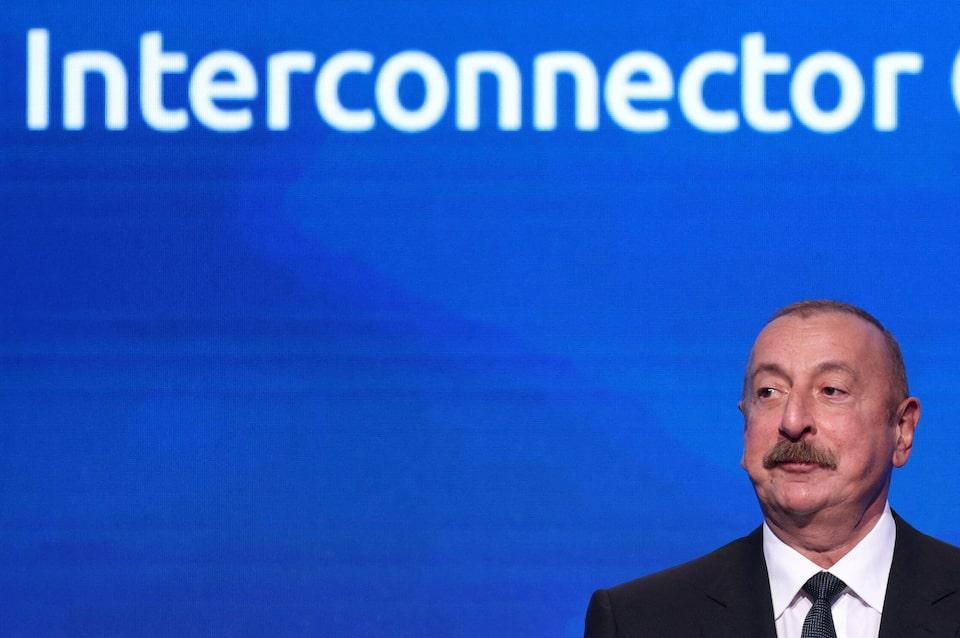
BAKU, April 9 (Reuters) - The European Union must reassess its financing and policies on long-term contracts if it wants to keep importing natural gas from Azerbaijan, President Ilham Aliyev said on Wednesday, adding Baku may seek other export markets instead. He named the European Investment Bank's ban on new fossil fuel financing and a lack of long-term gas purchase contracts as barriers to expanding exports to the EU. Sign up here. "The EU market is premium in terms of legislation, rules and pricing, but we should not look only to the west," Aliyev told a policy forum. "We can look to the east, to the south. This is important for the future of Azerbaijan's gas industry and Europe's energy security." As it diversified its energy imports from Russia following the start of the war in Ukraine, the EU has increased gas imports from the South Caucasus country to nearly 13 bcm in 2024 from 8 bcm in 2021. In 2022 Brussels signed a deal with Baku to double gas imports to at least 16 bcm a year by 2027. But Aliyev's comments suggested those goals might be elusive, given challenges with securing infrastructure financing from Brussels. "All our major energy projects - oil or gas - were funded on a 70% borrowed, 30% corporate financing model," Aliyev said. "Now European institutions must return to that approach." Azerbaijan has said it wants to expand its main gas artery to Europe, the Southern Gas Corridor network, which runs across 3,500 km (2,175 miles) from Azerbaijan to Italy. A total of 12 countries, including ten in Europe, receive Azerbaijani gas, Aliyev said, with gasification projects agreed in Albania and planned in Bulgaria. European countries who are not currently members of the Southern Gas Corridor have requested imports of Azerbaijani gas amounting to 14 bcm, the country's energy minister said this month. The United States is also vying to sell liquefied natural gas to Europe in the context of possible trade negotiations. (This story has been corrected to rectify the statement by the energy minister to show European countries requested imports of 14 bcm from Azerbaijan, not that Azerbaijan plans to send 14 bcm to those countries, in paragraph 10) https://www.reuters.com/business/energy/azerbaijan-urges-eu-reassess-finance-restrictions-gas-corridor-expansion-2025-04-09/
2025-04-09 12:39
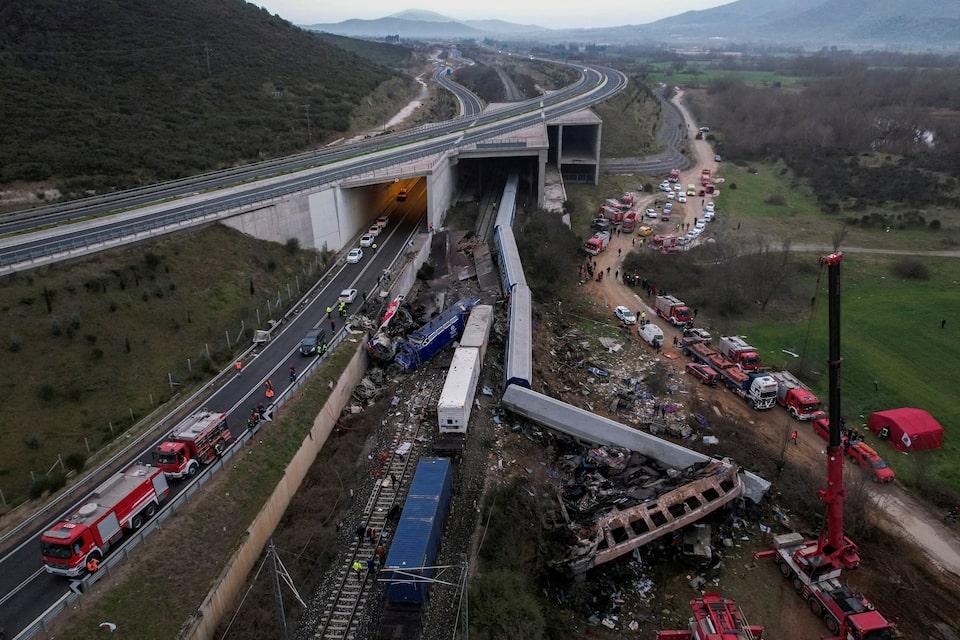
ATHENS, April 9 (Reuters) - The supervisor of Greece's national investigation into a 2023 train crash resigned on Wednesday, a move expected to further complicate efforts to shed light on the country's worst rail disaster that killed 57 people. According to opinion polls, most Greeks view the crash as emblematic of the neglect of the country's railways in recent decades and also of a persistent failure by the state to address safety concerns. The crash has prompted angry protests, fuelled further by a lack of trust in institutions. Sign up here. Christos Papadimitriou, the head of the railway division at Greece's Air and Rail Accident Investigation Authority (HARSIA), stepped down days after a top court prosecutor ordered a probe into HARSIA's findings. In February, HARSIA said the safety gaps, which failed to prevent the head-on collision of a freight train and a passenger train on February 28, 2023, had not yet been fixed. It also found that a fireball that followed the collision could not have been caused by train equipment, generating doubts about the freight train's cargo as well as political wrangling. HARSIA decided this week to remove the section which refers to the causes of the fireball, after at least one of the foreign universities cited in its report said it had neither reviewed nor authorised the content. Greece's Supreme Court prosecutor ordered a probe into the developments to determine if there was an attempt to influence a judicial investigation which has been underway since 2023. HARSIA, an independent authority, was only set up in late 2023. It launched its probe in March 2024, more than a year after the crash, which meant it had to rely on others for much of its information. "I tried to serve the public interest... in a difficult situation," said Papadimitriou in his resignation letter, standing by HARSIA's main findings. https://www.reuters.com/world/europe/lead-investigator-2023-deadly-greek-train-crash-resigns-2025-04-09/
2025-04-09 12:27
BRASILIA, April 9 (Reuters) - Retail sales volumes in Brazil rose 0.5% in February from the previous month, reaching the highest level since the data series began in 2000, statistics agency IBGE said on Wednesday. The result matched the 0.5% increase forecast by economists in a Reuters poll. Sign up here. IBGE noted the gain marked a more robust expansion after four months of near-zero changes. The increase was despite tight financial conditions in Latin America's largest economy, with the central bank carrying out an aggressive interest rate tightening cycle to tackle inflation. Four of the eight activities surveyed by IBGE showed growth in February, with the strongest performances from hypermarkets and supermarkets, food, beverages and tobacco, which expanded by 1.1%, and furniture and appliances (up 0.9%). On a year-on-year basis, retail sales rose 1.5%, slightly below market expectations for a 1.6% increase. https://www.reuters.com/world/americas/brazil-retail-sales-rise-05-february-hit-record-2025-04-09/
2025-04-09 12:20
SINGAPORE/NEW DELHI, April 9 (Reuters) - Chinese petrochemical makers that buy $11 billion worth of U.S. liquefied petroleum gas (LPG) annually are poised to cut output or shut for maintenance in coming weeks as Beijing's retaliatory tariffs on U.S. imports drive up costs, industry insiders said. The industry of over 30 propane dehydrogenation (PDH) plants relies heavily on U.S. LPG, or propane, for processing into plastics intermediary propylene. Sign up here. Armaan Ashraf, global head of natural gas liquids at consultancy FGE, said tariffs could force Chinese PDH operators to cut average operating rates by nearly 15 percentage points and curb demand for propane from steam crackers and PDH plants by at least 500,000 metric tons per month. The tit-for-tat trade war that saw China on Wednesday escalate retaliatory duties on U.S. imports to 84% threatens to put a Chinese PDH sector already struggling under thin margins for two years into what an east China-based executive with a major PDH plant called a "harsh winter". The executive, declining to be named due to company policy, expects overall PDH plant utilisation rates to drop below half of total industry capacity as early as May. China's 731,000 bpd-PDH sector operated at nearly 70% of capacity in March, down from a peak of around 85% in 2020, according to industry insiders and FGE, with plants losing an average of 480 yuan ($65.31) per ton in the week of April 6, deepening from the week ago's 384 yuan, LSEG Oil Research analysts said. Last year, China bought a record 17.3 million tons of U.S. propane, or 550,000 barrels per day, 60% of China's total imports of the gas liquid. The trade war during President Donald Trump's first term brought China's LPG imports to a halt for nearly two years, but the industry was much smaller then, and operators used cargoes from the Middle East as replacement. Fuelled by cheap U.S. propane, a by-product of the shale gas boom, PDH plants mushroomed on China's east coast over the past decade, leading to overcapacity amid weakening demand for propylene, said traders and the executive. Prices of U.S. propane for Asian exports, or the Far East Index assessment, fell nearly 30% to $425 per ton this week as traders factored last Friday's retaliatory tariffs by Beijing. In physical shipments, it's unclear whether U.S. suppliers and Chinese buyers can agree to lower prices to absorb the shock. While some buyers may be able to re-negotiate with suppliers if contracts permit, others, with term supply deals, may be forced to resell to other Asian buyers. A growing price gap limits Chinese plants' ability to swap U.S. shipments for rival Middle East barrels that are mostly destined for South Korea and India, traders said. "The market is still in massive shock and confusion, with buyers and sellers struggling to reach a physical deal. The tariffs have thrown the pricing structure out of the balance," said a veteran trader. ($1 = 7.3493 Chinese yuan renminbi) https://www.reuters.com/markets/commodities/china-petchem-plants-face-shutdown-tariffs-us-lpg-loom-2025-04-09/