2025-04-09 10:22
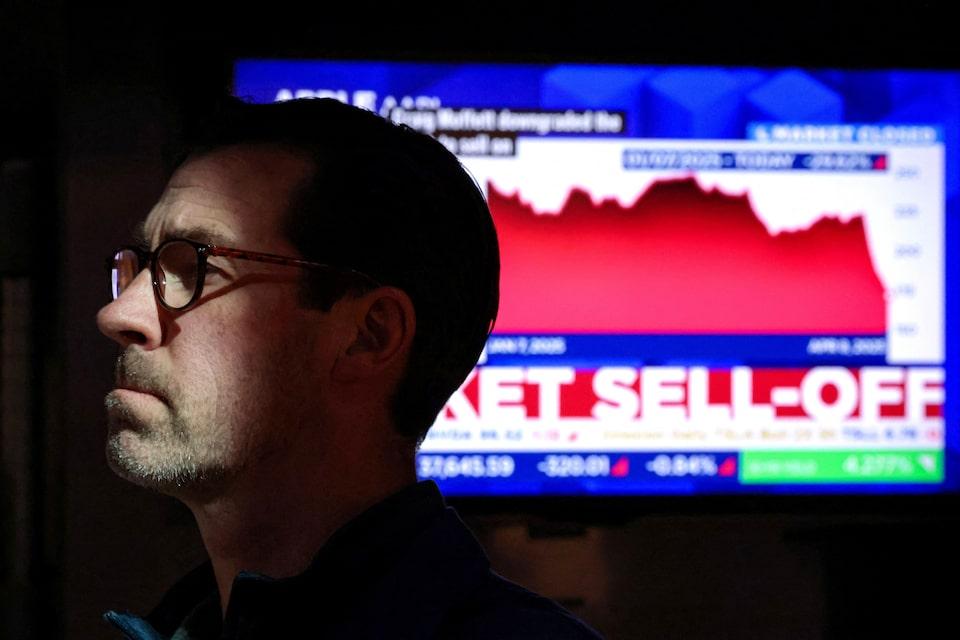
LONDON, April 9 (Reuters) - What matters in U.S. and global markets today By Anna Szymanski, Editor-in-Charge, Reuters Commentary Sign up here. Global markets have been pummeled yet again on Wednesday as President Donald Trump's eye-popping 104% tariffs on China took effect and a savage selloff in U.S. bonds sparked fears that foreign funds were fleeing U.S. assets. Here is an overview of all the market news you need to start your day. Mike is off today, but check out his latest column to find out why the yuan is making analysts across Wall Street rip up their recently revised dollar forecasts. Today's Market Minute * China's top leaders plan to convene a meeting as early as Wednesday to discuss measures to boost the economy and stabilise capital markets, people with knowledge of the matter said. * U.S. Treasuries extended heavy losses on Wednesday in a sign investors are dumping even their safest assets as a global market rout unleashed by U.S. tariffs takes an unnerving turn towards forced selling and a dash for the safety of cash. * Taiwan Semiconductor Manufacturing could face a penalty of $1 billion or more to settle a U.S. export control investigation over a chip it made that ended up inside a Huawei AI processor, according to two people familiar with the matter. * China's central bank has asked major state-owned banks to reduce U.S. dollar purchases, people with direct knowledge of the matter said on Wednesday. * French industry minister Marc Ferracci on Wednesday urged French companies to suspend their investments in the United States, given clashes between France and Europe with U.S. President Donald Trump's administration over tariffs. It's a 'bond story' now This week has brought crisis-era volatility to markets, erasing trillions of dollars in value from stocks and hitting commodities and emerging markets with force. At the epicentre of the latest rout are U.S. Treasuries, effectively the backbone of the global financial system. The benchmark U.S. 10-year yield rose by as much as 26 basis points to a high of 4.515% in Asia, before the selloff abated, leaving it up 7.7 bps at 4.34%. "Last week was an equity story but as ever, it's moved from an equity story to the more important bond story," Chris Beauchamp, chief strategist at IG, said. "This is the financial plumbing and clearly, the plumbing has begun to seize up." Potentially adding to the pressure on Treasuries is an auction of new 10-year notes later on today that could prove a crucial litmus test of investor appetite for U.S. government debt. Meanwhile, the yield on the 30-year Treasury briefly spiked above 5% before dropping back below 4.9%. Not to be outdone, British 30-year government bond yields surged to their highest since 1998 on Wednesday. , opens new tab The dollar - which is typically the ultimate safe-haven - fell broadly, as investors dashed into the likes of gold and the Swiss franc, accelerating the flight from stocks and industrial commodities. Overnight, Washington confirmed 104% duties on imports from China would take effect at 12:01 a.m. Eastern Time, as planned. That deadline passed with no new developments on trade. China's onshore yuan finished its domestic session on Wednesday at 7.3498 per dollar, the weakest close since December 2007. U.S. stock futures were anchored in negative territory early on Wednesday. The S&P 500 has lost $5.8 trillion in stock market value, the deepest four-day loss since it was created in the 1950s. In Europe, the STOXX 600 (.STOXX) , opens new tab fell nearly 3% in early trading, bringing the loss in market capitalisation since April 1 - the day before Trump's 'Liberation Day' - to roughly $1.4 trillion. Chart of the day While President Trump continues to assure Americans that his tariff "medicine" will ultimately be worth it, the U.S. public seems less than convinced. The latest Reuters/IPSOS opinion poll conducted after the sweeping global import tariffs were announced last week shows almost 60% are opposed to the moves, with one-in-four self-identified Republican voters against the tariffs. Trump seems determined to plow ahead despite the anxiety. But if a much-feared economic downturn ensues as a result of these moves, Americans may increasingly conclude that the "cure" is worse than the "disease". Today's events to watch * Mexico March inflation * Federal Open Market Committee minutes from March meeting * Richmond Federal Reserve President Thomas Barkin speaks; European Central Bank board member Piero Cipollone and Dutch central banker Klaas Knot speak; Bank of England Deputy Governor Clare Lombardelli speaks * WTO meets in Geneva * U.S. corporate earnings: Delta Airlines, Constellation Brands * U.S. Treasury sells $39 billion of 10-year notes Opinions expressed are those of the author. They do not reflect the views of Reuters News, which, under the Trust Principles , opens new tab, is committed to integrity, independence, and freedom from bias. https://www.reuters.com/markets/us/global-markets-view-usa-2025-04-09/
2025-04-09 10:16
LONDON, April 9 (Reuters) - Global markets were took a beating again on Wednesday as U.S. President Donald Trump's eye-watering 104% tariffs on China took effect, and a savage selloff in U.S. bonds sparked fears that foreign funds were fleeing U.S. assets. U.S. Treasuries extended losses in a sign investors are dumping even their safest assets and the dollar, a traditional safe-haven, was weaker against other major currencies. Sign up here. Warning signals had been flashing for a few days, as spreads between Treasury yields and swap rates in the interbank market collapsed under a weight of bond selling. Hedge funds were at the heart of it because their lenders could no longer stomach the 'basis trade' - large positions betting on small differences between cash Treasuries and futures prices as markets started to swing on tariff headlines. COMMENTS: JAMIE NIVEN, SENIOR FIXED INCOME PORTFOLIO MANAGER, CANDRIAM, LONDON "Are moves in Treasuries a concern? It is to some extent if the market's not functioning properly. We're not there yet, clearly, but at some point we could expect the Fed to take some steps to shore up things. You look at what happened to the curve last night, that was pretty extreme by anyone's metrics - 2s-10s steepening 30 basis points in a few hours, I've certainly never seen that. I'm not sure it's happened anytime recently. "We have a very marginal long in Treasuries because the core scenario is that we have recession in the U.S., and therefore 10-year Treasuries at 4.40% look like a good level, but we were very cognisant of these risks - more of the foreign sellers, and also the fiscal side of things - so we didn't have a very large position in Treasuries. "We are now looking at that with interest, given the level, and the potential for the Fed to shore up the Treasury market." KENNETH BROUX, SENIOR STRATEGIST FX AND RATES, SOCIETE GENERALE, LONDON "Central banks will be watching liquidity carefully for funding. Market turmoil heightens risk of negative shock to growth, disinflationary so eventually rate cuts." MICHAEL METCALFE, HEAD OF MACRO STRATEGY, STATE STREET GLOBAL MARKETS, LONDON "What we are seeing is a move back to cash and also maybe a question of what assets are safe and it seems right now that cash is the only thing. We're looking at things like the correlation between the dollar and yields. The dollar is not getting support from yields and that suggests the dollar is not a currency safe-haven. The fact that U.S. Treasuries are selling off at the same time as stocks suggests this is a deleveraging move." MARK ELWORTHY, HEAD OF FIXED INCOME, CURRENCIES AND COMMODITIES TRADING, BANK OF AMERICA, AUSTRALIA "This is up there with GFC and COVID level of volatility. Would expect to have some central bank response in the near term if markets continue to behave like they have been in the last 12-24 hours." KERRY CRAIG, GLOBAL MARKET STRATEGIST, J.P. MORGAN ASSET MANAGEMENT, MELBOURNE "The move in the U.S. 10-year over the last day could also be the market starting to focus more on inflation side of equation rather than just growth. There may be also market functioning reasons ... and the use of basis trades by hedge funds which may be unwinding." "So far the US administration has not been concerned with the market sell-off, and in the past referred to the 10 year yield as its preferred barometer. However, if there is risk to financial stability in the US from the currency policy action, then the administration may have to pay more attention or face the risk of living through their own Liz Truss moment." MUKESH DAVE, CHIEF INVESTMENT OFFICER, ARAVALI ASSET MANAGEMENT, SINGAPORE "These kind of things become problematic if the prime broker starts saying that now, because of the volatility in the underlying Treasury curve, I want to charge you higher margin or I basically want more margins from you for holding the positions for you. "Those (hedge funds), if they're not able to fork up the cash or the margins, then they have to unwind those positions ... so that's what happening at the moment. You can see that there's a huge move in 10-year Treasuries for the last two, three days. It was rallying initially because obviously it was a risk off kind of thing, but now it's going the other way around because people are looking for cash. "I don't see who are the buyers in the Treasury markets at the moment, because even the foreign central banks are not buying it so then obviously it creates a problem in the cash market, in terms of liquidity, in terms of price, in terms of clearing such a huge volume, everything is a issue." GRACE TAM, CHIEF INVESTMENT ADVISOR, BNP PARIBAS WEALTH MANAGEMENT, HONG KONG "Markets are now concerned about China and other countries (could)'dump' U.S. Treasuries as a retaliation tool. Hence, UST yields up. There has been some spillover to global yields including Japan, which are all up. In the short term, we expect the bond market to remain volatile given the uncertainty over tariffs, potential negotiations, and potential retaliations. Market has been highly sensitive to any progress on tariffs and negotiations. That said, weaker economic data from the US could drive yields down again on worries over rising recession risk." JACK CHAMBERS, SENIOR RATES STRATEGIST, ANZ, SYDNEY "This is beyond fundamentals right now. This is about liquidity. There was, earlier this year, especially in dollar swap spreads, a lot of positioning to be paid swap spreads, on expectations that treasuries outperform swaps. "Obviously that's all unwound, and then some. Swap spreads have fallen a very long way in a very disorderly way." "It's relatively esoteric...but as with the plumbing, the plumbing only matters when it's the only thing that matters." https://www.reuters.com/markets/rates-bonds/global-markets-bonds-update-1-quotes-2025-04-09/
2025-04-09 10:13
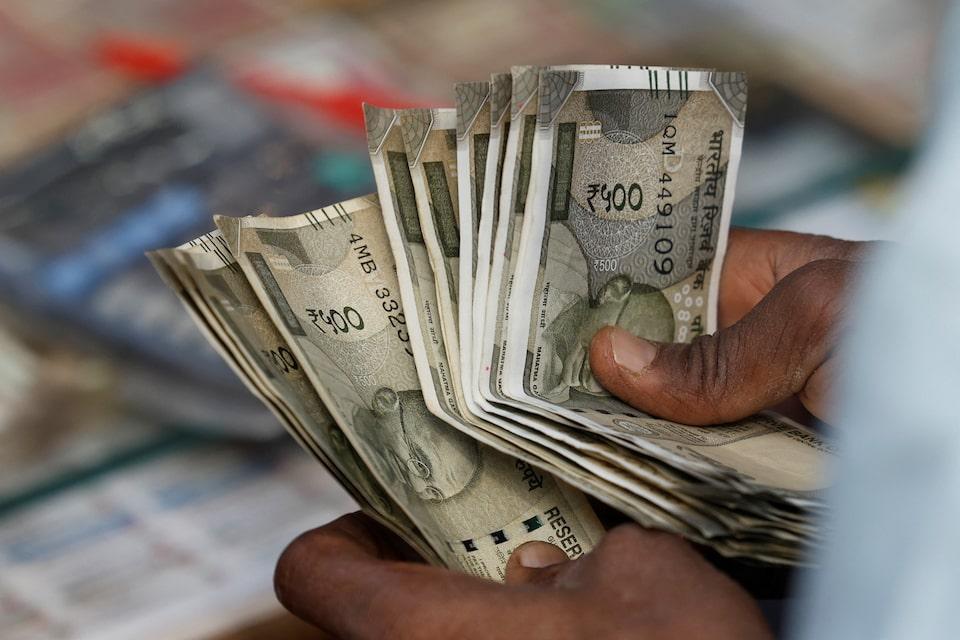
MUMBAI, April 9 (Reuters) - The Indian rupee declined to a three-week low on Wednesday, tracking the weakness in the Chinese yuan as sweeping U.S. tariffs came into effect, including a 104% levy on China, and fuelled worries of a slowdown in global growth. The rupee closed at 86.6875 per U.S. dollar, down nearly 0.5% on the day. It hit a three-week low of 86.71 earlier in the session. Sign up here. The Reserve Bank of India, meanwhile, cut its key repo rate for a second consecutive time and eased its monetary policy stance, signalling room for more cuts ahead as it looks to boost a sluggish economy in the face of U.S. tariffs. While the RBI's cut was widely expected, the change in stance was "slightly dovish" and added slight pressure on the rupee, a trader at a state-run bank said. The onshore Chinese yuan declined to a 19-month low against the dollar after its offshore counterpart fell to a record low overnight as concerns about trade war escalations stayed front and centre for investors. China's central bank will not resort to immediate sharp yuan depreciation to soften the blow from tariffs, sources told Reuters. "The yuan's moves and global financial market uncertainty are the key downside risks for the rupee. We believe the RBI is unlikely to engineer any underperformance of the currency," ANZ said in a note. India's benchmark equity indexes, the BSE Sensex (.BSESN) , opens new tab and Nifty 50 (.NSEI) , opens new tab, ended in the red. Indian government bonds outpaced regional peers as a steep selloff in U.S. Treasuries sparked concerns that hedge funds are unwinding leveraged trades and that investors are dumping even their safest assets and the dollar. The 10-year U.S. Treasury yield rose as high as 4.5150% in Asia trading. "The 'sell America' scenario is becoming tangible again as Treasuries and U.S. equities are under pressure," ING Bank analysts said. India's financial markets are shut on Thursday for a local holiday. https://www.reuters.com/markets/currencies/rupee-bogged-down-by-weaker-chinese-yuan-us-tariffs-kick-2025-04-09/
2025-04-09 10:11
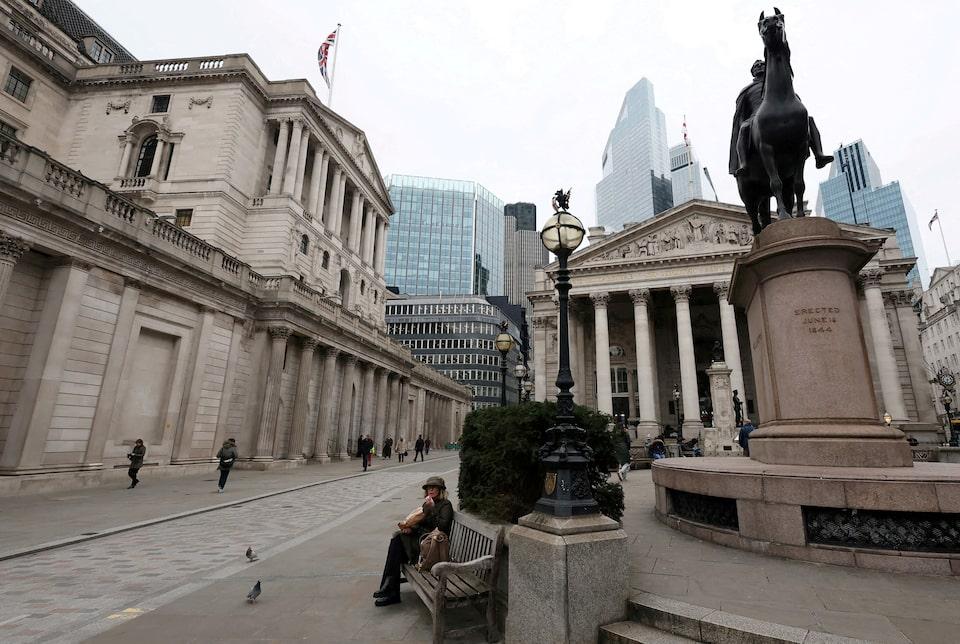
LONDON, April 9 (Reuters) - Risks of a hit to the global economy and further sharp falls in financial markets have grown due to U.S. President Donald Trump's import tariffs and the UK is exposed to the fallout, the Bank of England said. "The probability of adverse events, and the potential severity of their impact has risen," the BoE's Financial Policy Committee said on Wednesday. Sign up here. A major shift in global trade could damage the financial system by weakening economic growth, the FPC said in a summary of a two-day meeting which ended on Tuesday. "As the UK is an open economy with a large financial sector, global risks are particularly relevant to UK financial stability," the FPC statement said. The sell-off in global bond markets since Trump announced his tariff plans last week intensified on Wednesday. British government bond yields soared across maturities with long-dated yields hitting their highest since 1998, tracking a leap overnight in U.S Treasury yields. The FPC highlighted its long-standing concerns about risks around the world posed by high public debt levels. "Risks associated with debt sustainability concerns, including sharp increases in government bond yields, could crystalise relatively quickly, particularly if accompanied by rapid capital outflows," the FPC said. Financial markets seemed to be functioning in an orderly way but the FPC said it would pay particular attention to firms using highly leveraged trading strategies in core markets and risks in the private equity market from slower growth. The FPC also said it was worried about the risk of reduced global co-operation which could make the financial system less resilient. The committee warned in November, shortly after Trump's election victory, that higher trade barriers could hit global growth and cause volatility in financial markets. In its statement on Wednesday, the FPC said it was confident UK banks would be able to sustain households and business borrowers even if economic and financial conditions turn out to be substantially worse than expected. It maintained its countercyclical capital buffer requirement for banks at 2%, saying they were well capitalised but it would monitor their ability to withstand shock scenarios. The BoE in February halved its forecast for UK economic growth in 2025 to 0.75%. The budget forecasts used by finance minister Rachel Reeves for her tax and spending plans see growth at 1%. However, Trump's tariffs plans have raised fears of a sharper slowdown. https://www.reuters.com/world/uk/bank-england-warns-uk-is-exposed-risks-global-hit-trump-tariffs-2025-04-09/
2025-04-09 09:59
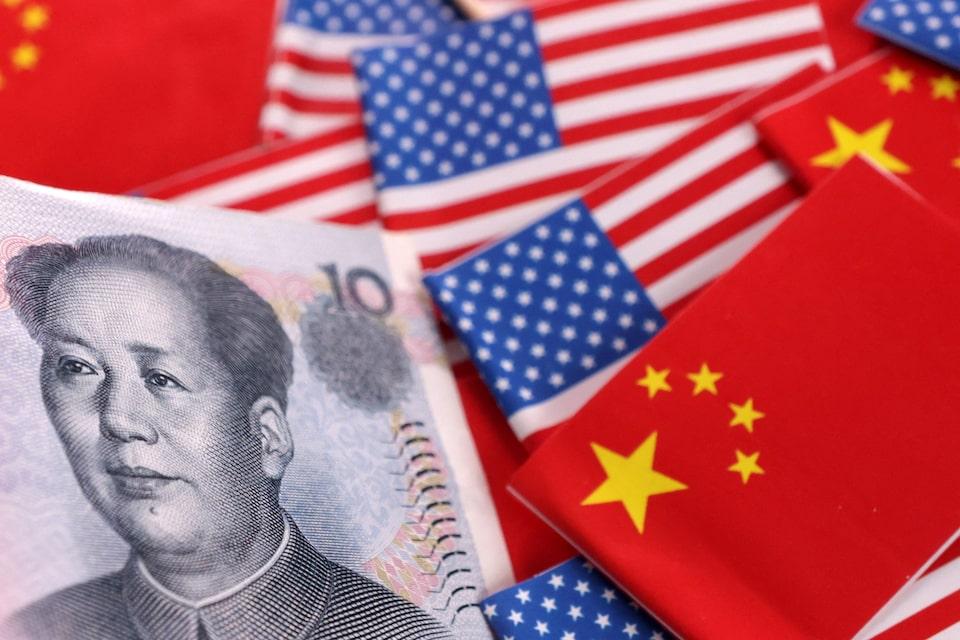
Onshore yuan closes at lowest since 2007 Offshore yuan bounces after sliding to record low overnight Chinese state banks selling dollars to stabilise markets SINGAPORE/HONG KONG, April 9 (Reuters) - China's yuan ended at its weakest level in more than 17 years on Wednesday after its offshore counterpart fell to a record low overnight, as an escalating Sino-U.S. trade war rattled currency markets. The onshore yuan finished the domestic trading session at 7.3498 per dollar, its weakest close since December 2007. Sign up here. The declines come as a trade war between the world's two largest economies escalates. U.S. President Donald Trump's "reciprocal" tariffs on dozens of countries took effect on Wednesday, including massive 104% duties on Chinese goods. China's top leaders plan to meet as soon as Wednesday to hammer out measures to boost the economy and stabilise capital markets, people with knowledge of the matter said. While despite the tariff pressure, China's central bank will not allow sharp yuan declines and has asked major state-owned banks to reduce U.S. dollar purchases, people with direct knowledge of the matter said on Wednesday. "Unless they are rolled back, the latest U.S. tariff hikes mean that China's shipments to the U.S. will more than halve over the coming years, even assuming the renminbi weakens to 8 to the dollar," Capital Economics said in a note to clients. "This will reduce China's GDP by somewhere between 1.0-1.5% depending on the extent of rerouting (exports through other countries). That's a larger hit than we had assumed but will probably be met with a further expansion in fiscal support." The offshore yuan pared losses and climbed about 0.7% to 7.3769 yuan per dollar in Asian trade, after sinking more than 1% in the previous session and hitting its record low of 7.4288 overnight. MARKET STABILISATION The People's Bank of China on Wednesday set the midpoint rate - around which the onshore yuan is allowed to trade in a 2% band - at 7.2066 per dollar, the lowest since September 11, 2023. Based on the fixing level, the yuan is allowed to drop as far as 7.3507, a whisker stronger than the 7.3510 low struck in September 2023. The fixing was 1,282 pips firmer than a Reuters estimate, suggesting the central bank is reluctant to see a drastic depreciation of the currency. Chinese state-owned banks were busy selling dollars in the onshore spot market to slow the pace of yuan declines early on Wednesday morning, according to two people familiar with the matter. Still, both the onshore and offshore yuan have fallen more than 1% so far this month, leaving them weaker since the start of the year, pressured by fears of the tariffs impact. Trump on Tuesday accused China of manipulating its currency to offset the impact of tariffs. A weaker yuan would make exports cheaper and alleviate some pressure on China's trade and the broader economy, but a sharp decline could fuel unwanted capital outflow pressure and risk financial stability, economists said. https://www.reuters.com/markets/currencies/yuan-falls-2007-lows-us-tariffs-china-kick-2025-04-09/
2025-04-09 07:53
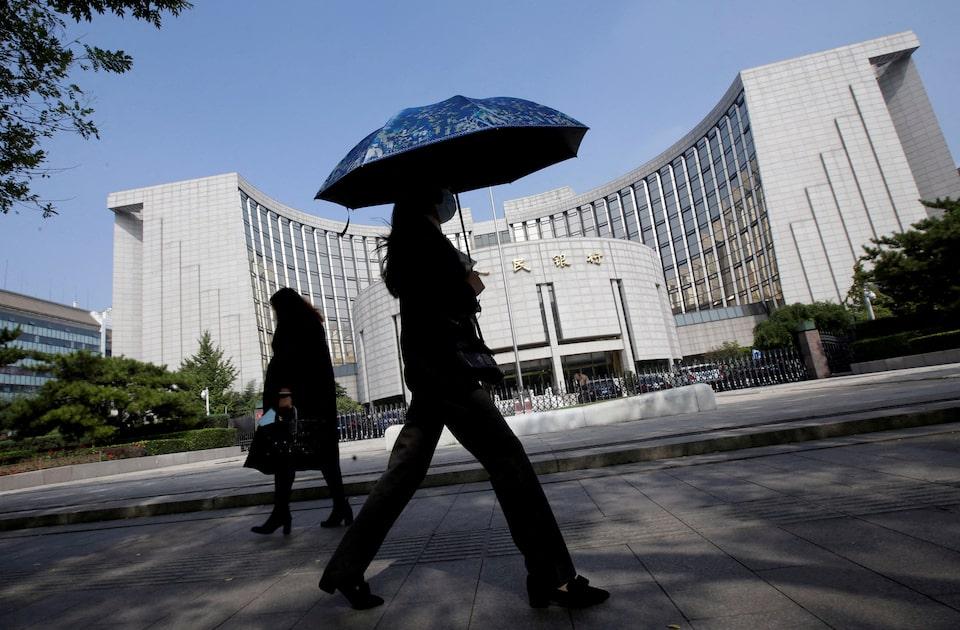
April 9 (Reuters) - China's central bank will not allow sharp yuan declines and has asked major state-owned banks to reduce U.S. dollar purchases, people with direct knowledge of the matter said on Wednesday. The directive from authorities comes as the yuan faces heavy downward pressure following massive U.S. tariffs on Chinese exports and retaliatory moves by Beijing. Sign up here. The People's Bank of China (PBOC) sent the window guidance, which is its informal style for managing policy around markets, to state banks this week, asking them to withhold U.S. dollar purchases for their proprietary accounts, three sources said. Big banks were also told to step up checks when executing dollar purchase orders for their clients, one of them said, in a move markets interpret as a way for the central bank to curb speculative trades. The country's big state banks were seen selling dollars and buying yuan aggressively to slow the pace of yuan declines in the onshore spot market on Wednesday, two separate sources said. China's yuan has lost about 1.3% so far this month and was last at 7.35 per dollar on Wednesday, while its offshore counterpart hit a record low overnight. Additionally, China's central bank will not resort to yuan devaluation to soften the blow from tariffs on exports and the broad economy, three policy advisers and another banker familiar with the central bank's thinking told Reuters. "A sharp depreciation will not happen as that could hurt market confidence, but a modest depreciation will help exports," said one of the policy advisers. "We should also assist key enterprises through subsidies, tax rebates, or market diversification." The PBOC's focus on steady yuan moves comes even as the worsening U.S. trade war severely challenges the competitiveness of China's massive export sector, suggesting financial market stability remains the priority. The PBOC did not immediately respond to a request by Reuters for comment. All the sources spoke on condition of anonymity, as they were not authorised to talk about market matters publicly. https://www.reuters.com/world/china/chinas-central-bank-asks-state-lenders-reduce-dollar-purchases-sources-say-2025-04-09/