2025-04-09 07:47
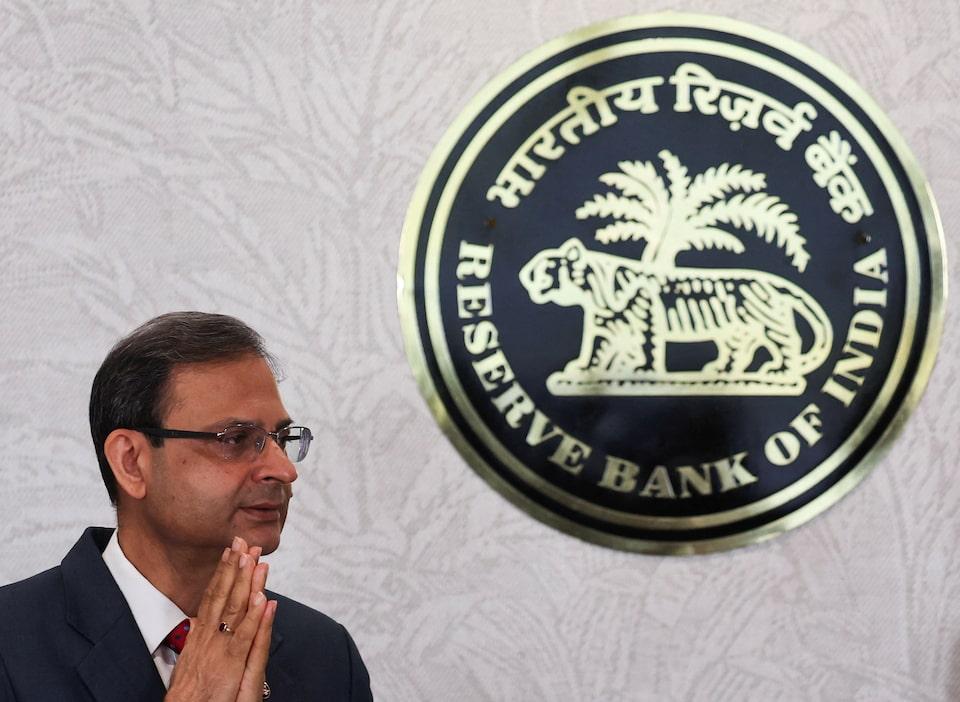
RBI cuts policy rate for second consecutive meeting Policy stance changed to 'accommodative' signalling room for further easing 2025-26 GDP growth forecast cut to 6.5% from 6.7%; inflation forecast cut to 4% from 4.2% Trade protectionism, currency wars could further pressure rupee MUMBAI, April 9 (Reuters) - The Reserve Bank of India (RBI) lowered its key repo rate on Wednesday for a second consecutive time and changed its monetary policy stance signalling room for more cuts ahead, as it seeks to boost the sluggish economy in the face of fresh U.S. tariffs. India became the second central bank after the Reserve Bank of New Zealand to cut interest rates since the wide-ranging trade levies were announced. Sign up here. The tariffs have raised the risk of a global slowdown and a U.S. recession while sparking financial turmoil, leaving emerging market central banks facing a tough choice between cutting rates to support growth and shoring up their fragile currencies. India's Monetary Policy Committee (MPC), which consists of three RBI and three external members, cut the repo rate (INREPO=ECI) , opens new tab by 25 basis points to 6.00% as expected. It started reducing rates with a quarter-point reduction in February, its first cut since May 2020. The central bank also changed its stance to "accommodative" from "neutral". The 26% tariffs announced by the U.S. on imports from India have exacerbated uncertainties but quantifying the impact on growth is difficult, central bank Governor Sanjay Malhotra said in his statement. "Growth is improving after a weak performance in the first half of the financial year 2024-25, although it still remains lower than what we aspire for," said Malhotra, adding that the inflation outlook is benign. All six MPC members voted to cut the repo rate and change the policy stance. The change in stance means the MPC is considering only two options, either status quo or a rate cut, and the stance does not directly link to liquidity conditions, he said. "With uncertainty around U.S. trade policy set to rumble on and inflation looking contained, further rate cuts are likely," said Shilan Shah, deputy chief emerging markets economist at Capital Economics. "We think the repo rate will drop to 5.50% this year," Shah said in a note. ANZ Research also expects two more rate cuts and sees these by August 2025. GROWTH, INFLATION FORECASTS CUT The RBI now estimates growth at 6.5%, slightly lower than its earlier estimate of 6.7%. It sees inflation at 4% compared to 4.2% earlier. "In such challenging global economic conditions, the benign inflation and moderate growth outlook demands that the MPC continues to support growth," the committee said in its written statement. India's benchmark 10-year bond yield was marginally lower at 6.50% after the announcement, against 6.51% before, while the rupee was little changed at 86.57. The benchmark equity indexes extended their losses and were down around 0.6% each. Economists estimated growth in the world's fifth-largest economy could be hit by 20-40 basis points in the current fiscal year due to the direct and indirect fallout of higher tariffs. "We see growth undershooting the RBI's estimates and expect it at 6.3% for the fiscal year 2026," Sakshi Gupta, principal economist at HDFC Bank said. RUPEE WEAKNESS In an accompanying monetary policy report, the central bank said that rising trade protectionism and threat of currency wars could put further pressure on the rupee. If the rupee depreciates by 5% over its current assumption of 86 per U.S. dollar, inflation could rise by around 35 bps, though GDP growth could benefit by around 25 bps through the trade channel as exports would become more competitive, the report said. The central bank's currency management policy will continue to target "excess volatility", Malhotra said. The RBI does not target any level on the rupee but "will not shy from intervening if there is excess volatility," he said. The rupee has declined 1.2% since the U.S. reciprocal tariffs were announced, largely in line with losses seen in major Asian peers. It hit a record low of 87.95 on February 10. https://www.reuters.com/markets/rates-bonds/india-cenbank-cuts-rates-second-time-us-tariffs-add-growth-risks-changes-stance-2025-04-09/
2025-04-09 07:33
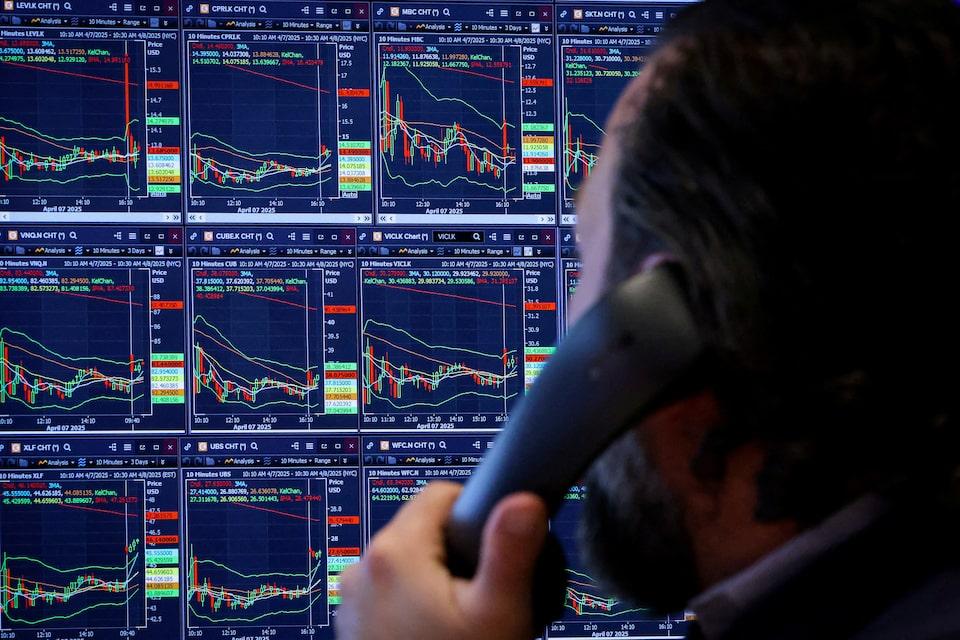
Selloff at some points reached levels not seen since 2001 10-year auction comes within expectations, in relief Traders point to forced but orderly selling by hedge funds Some analysts question long-term demand for Treasuries Live updates on latest developments and global reaction April 9 (Reuters) - U.S. Treasury investors were left bruised on Wednesday despite a temporary pause in U.S. tariffs, as some funds were forced to sell bonds in a dash for cash while others called into question the bonds’ status as the world’s safest asset. Yields on 10-year Treasury notes, which had jumped to a seven-week high, maintained higher levels after President Donald Trump said on Wednesday he authorized a 90-day pause for most of his new tariffs but was raising the tariff rate for China to 125%, effective immediately. Sign up here. At different points during volatile trading, the run-up in yields so far this week topped the biggest weekly jump since 2001. The dollar, also a traditional safe haven but which had weakened against other major currencies, rebounded, as did U.S. stocks, after Trump's announcement. Analysts and investors across the globe pointed to the sell-off in Treasuries this week as evidence that confidence in the world's biggest economy has been shaken. "The market has lost faith in U.S. assets," Deutsche Bank analysts wrote in a research note earlier on Wednesday before Trump's announcement. Marc Rowan, CEO of Apollo Global Management, the massive alternative asset manager, said in a CNBC interview that he was worried about damage to the U.S. brand. As U.S. trading got underway on Wednesday, some analysts said the situation had deteriorated in some corners of the market where investors had loaded up on debt. Even so, three market sources said dislocations had not hit crisis levels and that trading, though volatile, had been orderly. An afternoon auction of 10-year Treasury bonds, which had been a focus of the market, came in within market expectations. The auction results provided further relief to the market. Even so, questions on the outlook remained. "The 90-day suspension does allow nice breathing room to allow negotiation to settle in and market valuations have clearly been reset," said Carol Schleif, chief market strategist at BMO private wealth. "Yet the uncertainty for companies remains." In the past, moves of this magnitude in global markets have tended to elicit a forceful response from major governments and central banks, with the United States leading the way. On Wednesday, however, the world's largest economy was absent from an announcement that Japan and Canada, which chairs the G7 developed economies, had agreed to cooperate to maintain stability in financial markets and the global financial system. Before Trump's tariffs announcement on Wednesday, Treasury Secretary Scott Bessent downplayed the market rout. In a morning interview with the Fox Business Network, he said he expected the bond market to calm down and had not seen anything systemic about the selloff so far. After the tariff pause, Bessent said the market did not understand that the tariff plan was maximum levels. He also noted that the 10-year bond auction had been good. PRESSURE TO ACT The rise in Treasury yields, which move inversely to prices, dragged borrowing costs across the globe higher, raising pressure on central banks and policymakers to act fast to shelter economies facing a sharp slowdown. Rising government borrowing costs also filter through to corporate loans and mortgages, meaning what happens in bond markets can cause economic damage to businesses and households. Left unchecked, they can also hamper policymakers’ ability to pursue their agenda, as "bond vigilantes" make it punishingly expensive for governments to borrow. The Japanese 30-year government bond yield surged to 21-year highs and Britain's 30-year bond yields rose to their highest level since 1998 , . In contrast, German 10-year bonds were steady. FORCED SELLING The Treasury market is the bedrock of the global financial system, with investors, banks and others holding U.S. bonds in large quantities as a safe investment that can be easily sold to raise money when needed. One source of the selling pressure, several market participants said, came from hedge funds that had taken on debt-fueled bets in the Treasury market that they then had to unwind as brokers demanded they post margins or additional collateral to back their trade. As a result, they were selling Treasury bonds to raise funds. These "basis trades" are typically the domain of macro hedge funds. They rely on selling futures contracts or paying swaps and buying cash Treasuries with borrowed money, with a view to exploiting slight price differences. "When the prime broker starts tightening the screws in terms of asking for more margins or saying that I can't lend you more money, then these guys obviously will have to sell," said Mukesh Dave, chief investment officer at Aravali Asset Management, a global arbitrage fund based in Singapore. Warning signals have flashed for a few days, as the difference between Treasury yields and swap rates, a type of interest rate derivative, in the interbank market collapsed under the weight of bond selling. As Treasuries were dumped this week, bond yields have soared and fallen out of sync with swaps . At the 10-year tenor, the gap has shot to 64 basis points, the largest on record. Another sign: Long-dated bonds, used by hedge funds in the basis trades, saw yields rise. Thirty-year Treasury yields rose 12 bps to 4.835%. At one point, they clocked their biggest three-day jump since 1982 . The selloff in long-dated bonds also pushed the gap between two- and 10-year yields, a closely watched metric called the yield curve, to the widest since 2022. "You look at what happened to the curve last night, that was pretty extreme by anyone's metrics - 2s-10s steepening 30 basis points in a few hours; I've certainly never seen that," said Candriam senior fixed income portfolio manager Jamie Niven. Some analysts and investors said another factor was driving the market sentiment: A longer-term structural shift is taking place. Trump’s tariffs are changing the makeup of global trade flows, which over the long term could slow foreign buying of U.S. debt as deficits reduce. There were also worries that major foreign holders, such as China and Japan, could turn sellers. "Markets are now concerned that China and other countries could 'dump' U.S. Treasuries as a retaliation tool," said Grace Tam, chief investment adviser at BNP Paribas Wealth Management in Hong Kong. https://www.reuters.com/markets/global-markets-tariffs-bonds-2025-04-09/
2025-04-09 07:26
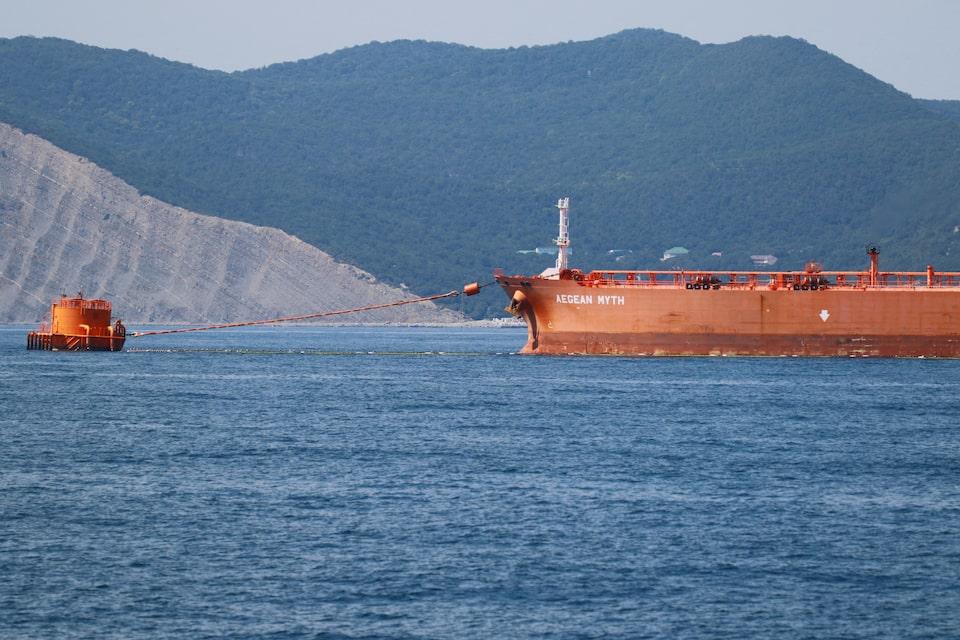
MOSCOW, April 9 (Reuters) - The Caspian Pipeline Consortium is operating at two of the three moorings at its Black Sea export terminal after a Russian court lifted restrictions on its infrastructure, it said on Wednesday, easing worries about a drop in Kazakh oil output and exports. The CPC usually utilizes two of its three moorings, keeping one as a backup. It said it will give further information later about a resumption of operations at its third mooring, Single Point Mooring-2 (SPM-2). Sign up here. A source close to the CPC said the restrictions on one of the moorings still put a strain on its operations and exports. The court ruled on Friday that the CPC's terminal facilities should not be suspended, overturning a decision by the transport watchdog to halt two of three moorings after a snap inspection related to a massive fuel spill in December. The resumption of loading from one of the moorings will help avert a potential fall in Kazakhstan's oil production and supplies via the CPC, which accounts for around 80% of the country's oil exports. Expected Black Sea CPC Blend oil exports for April were still revised down to 1.6 million barrels per day, or 6.2 million metric tons, from 1.7 million bpd in the preliminary plan, according to two industry sources. The decline in loading is due to a fall in Russian oil exports via the CPC, the sources said, as there will be no supplies from the oil depot in the Krasnodar region, where there was a large fire in March after a drone attack. The CPC has been in the spotlight since the start of Russia's war in Ukraine. The consortium closed all but one of its mooring points several times in 2022 due to damage, severely cutting exports via the route. The pipeline is a major oil export route for Kazakhstan, which - due mainly to rising production from the giant Chevron-led Tengiz oilfield - has been breaching export quotas within the OPEC+ producer group, which includes OPEC and Russia. Other OPEC+ members, including Saudi Arabia, have also been pressing Kazakhstan to cut production to meet its quotas. On Thursday, OPEC+ decided to raise output ahead of schedule, signalling the group was confident non-compliant members would reduce output in the coming weeks. https://www.reuters.com/business/energy/caspian-pipeline-consortium-operating-two-three-black-sea-oil-loading-points-2025-04-09/
2025-04-09 07:22
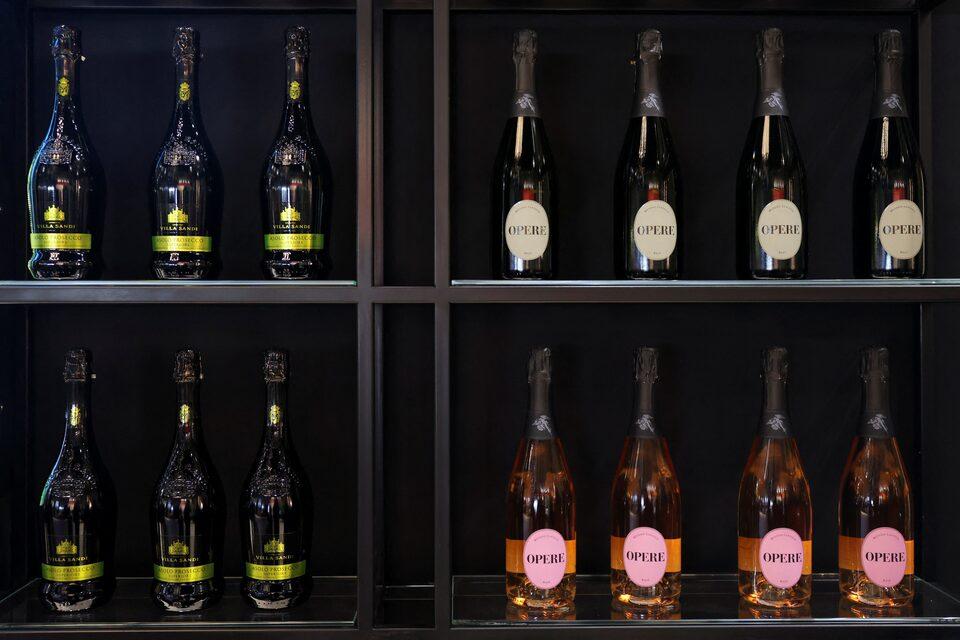
NEW YORK, April 8 (Reuters) - Adam Williams, 57, owner of Ansley Wine Merchants in Atlanta, said he was bracing for the worst on Wednesday, as President Donald Trump's tariffs are set to kick in, which will spike costs of the imported wines and liquors he sells. "That means everything will go up," he said, including the customer favorite, a 2023 vintage Sancerre from France which can cost $45. The Trump Administration has said it will institute a 20% tariff on goods from the European Union, which would cause the price of a bottle of wine to surge past what a casual customer would pay. Sign up here. Other wine merchants are worried too. The National Association of Wine Retailers in a statement released over the weekend said it expected "significant revenue reductions, layoffs, and business closings." The U.S. imports more wine from the European Union than any other part of the world, led by France and Italy. Sales of French wine and spirits could drop by at least 20% when the tariffs go into place, the French wine and spirits exporters FEVS said last week. The National Association of Wine Retailers, a U.S. trade group, said any hope for tariffs spurring sales of domestic wines "is misplaced. When faced with the higher prices that will result from the across-the-board tariffs, consumers will rein in their spending. The first thing they cut back on is non-essential items like wine." Williams has 1,500 different labels and has tasted them all, and most of his stock comes from overseas. "I haven't started losing sleep yet, but maybe I should be already," Williams said. "I just don't know how bad this is going to be, but 90 percent of my labels are from overseas, France, Italy. All from small family-owned vineyards. Small producers. Not the mass-produced grocery store wines." He said there have been hardly any new shipments from overseas because distributors and importers are in "wait-and-see" mode. If the tariffs hit like he thinks, he said, "I'm not sure what will happen. I have eight employees who are like family. I have to look out for them. But what's going to happen here, I don't know. "But I won't sell mass-produced wine," he said. "The bottom line is, prices are going up," said Ryan Stanton, general manager of a mid-sized wine importing company, Ultimate Wine Distributors, based in Atlanta. "Buy America is great in theory, but there are a lot of things that we don't and can't make in America," he said. "We have a lot of wine ready to set sail in France, but it's just parked there as everyone waits to see what happens. It's in negotiations. We're waiting for the dust to settle," he said. https://www.reuters.com/business/retail-consumer/us-wine-sellers-worry-trump-tariffs-set-hit-wednesday-2025-04-08/
2025-04-09 07:21
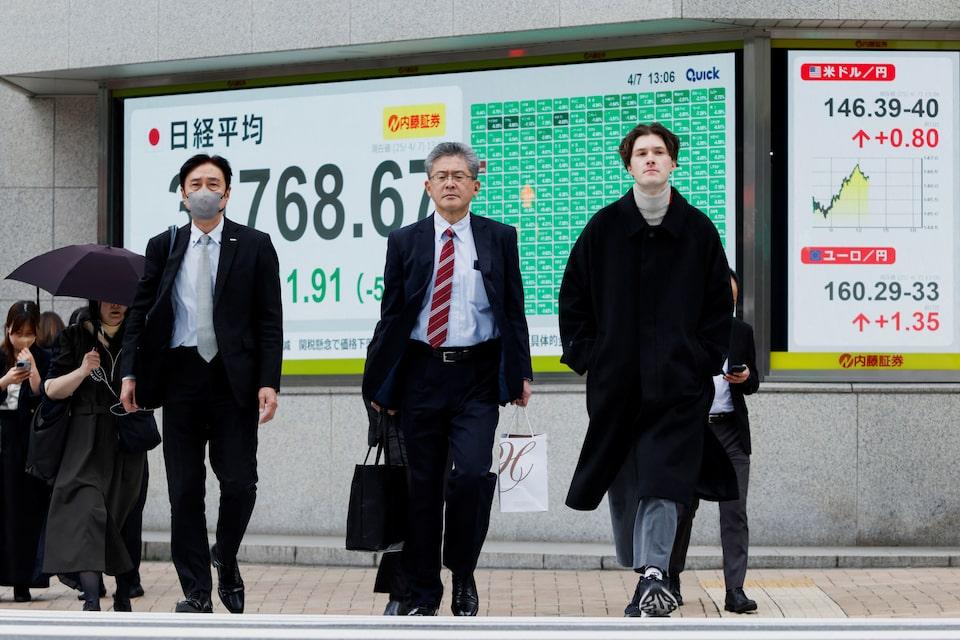
TOKYO, April 9 (Reuters) - Japan's Nikkei share average slipped on Wednesday, ending nearly 4% lower in a broad sell-off, as traders gauged concerns over a potential economic slowdown amid an intensifying trade war between the United States and China. The Nikkei share average (.N225) , opens new tab fell 3.9% to close at 31,714.03, while the broader Topix (.TOPX) , opens new tab dropped 3.4% to 2,349.33. Sign up here. The index saw significant volatility this week, closing 6% higher on Tuesday after a 7.8% slump on Monday pushed it to a 1-1/2-year low. The Nikkei extended its losses to 5.3% earlier in the day after U.S. President Donald Trump's "reciprocal" tariffs on dozens of countries took effect, including massive 104% duties on Chinese goods, deepening his global trade war even as he prepared for negotiations with some nations. The deepening losses of the Nikkei index were associated with a surge of U.S. Treasury yields in Asia trade, in a sign investors are selling even their safest assets amid the rout, said Shuutarou Yasuda, a market analyst at Tokai Tokyo Intelligence Laboratory. "The markets are now in panic, and any big move could drive a sell-off of risk assets," said Yasuda. In Japan, technology stocks drove the losses on Nikkei, with Advantest (6857.T) , opens new tab and Tokyo Electron (8035.T) , opens new tab falling 7.8% and 6%, respectively. Technology investor SoftBank Group (9984.T) , opens new tab fell 7.2%. The yen's gain against the dollar pressured exporters, with the Japanese currency rising as high as 144.865 yen to the greenback due to safe-haven bets. A stronger Japanese currency tends to hurt shares of exporters, as it decreases the value of overseas profits in yen terms when firms repatriate them to Japan. "Investors are uncertain about how much further the Nikkei could fall. They are trying to find where the bottom is," said Hiroyuki Ueno, chief strategist at Sumitomo Mitsui Trust Asset Management. Of the more than 1,600 stocks trading on the Tokyo Stock Exchange's prime market, 89% saw declines, while 9% posted gains. https://www.reuters.com/markets/asia/japans-nikkei-falls-track-wall-street-amid-growth-worries-2025-04-09/
2025-04-09 07:18
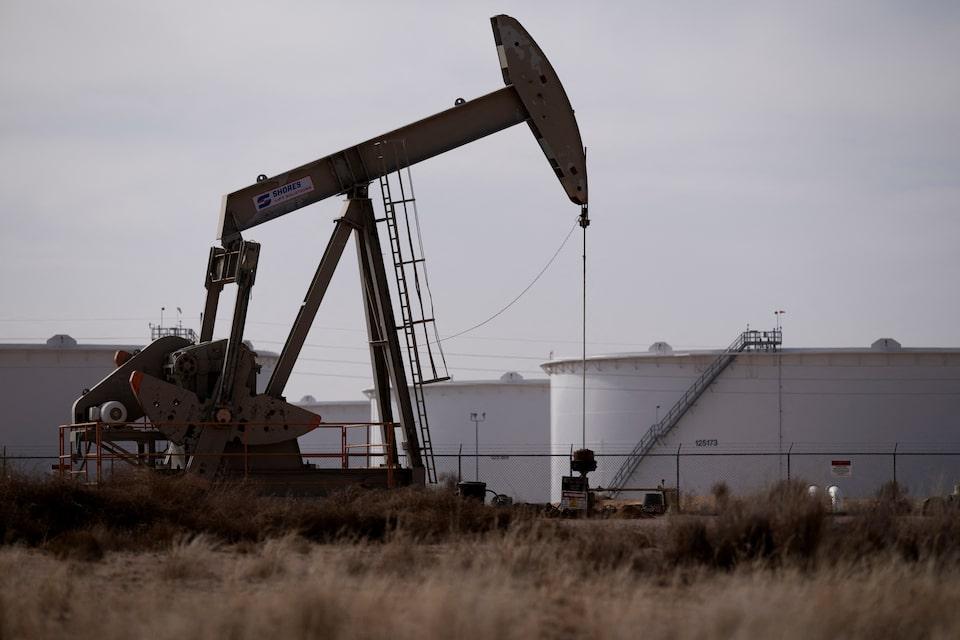
Brent, WTI down as much as 4% US imposes 104% tariff on imports from China as Beijing sticks to its levies US crude stockpiles fell last week, industry data shows SINGAPORE/BEIJING, April 9 (Reuters) - Oil prices fell for a fifth day to their lowest since February 2021 on Wednesday on looming demand concerns fuelled by an escalating tariff war between the U.S. and China, the world's two biggest economies, and a rising supply outlook. Brent futures dropped $1.39, or 2.21%, to $61.43 a barrel as of 0655 GMT. U.S. West Texas Intermediate crude futures fell $1.50, or 2.52%, to $58.08. Both contracts lost as much as 4% before paring some losses. Sign up here. Both Brent and WTI have tumbled over the five sessions since U.S. President Donald Trump announced sweeping tariffs on most imports sparking concerns a global trade war would dent economic growth and hit fuel demand. The premium of the Brent futures contract to the contract six months later slumped to 98 cents a barrel, its lowest since mid-November. That premium has contracted from $3.53 on April 2 when the tariffs were announced and as the trade war with China has escalated. The narrowing of the Brent market's backwardation, the market structure when prices for prompt futures are higher than later-dated supply, indicates investors are becoming increasingly concerned about falling crude demand and the potential for excess supply. Trump's 104% tariffs on China kicked in from 12:01 a.m. EDT (0401 GMT) on Wednesday, adding 50% more to tariffs after Beijing failed to lift its retaliatory tariffs on U.S. goods by a noon deadline on Tuesday set by Trump. Beijing vowed not to bow to what it called U.S. blackmail after Trump threatened the additional 50% tariff on Chinese goods if the country did not lift its 34% retaliatory levy. "China’s aggressive retaliation diminishes the chances of a quick deal between the world’s two biggest economies, triggering mounting fears of economic recession across the globe," said Ye Lin, vice president of oil commodity markets at Rystad Energy. "China’s 50,000 bpd to 100,000 bpd of oil demand growth is at risk if the trade war continues for longer, however, a stronger stimulus to boost domestic consumption could mitigate the losses," she said. Exacerbating oil's decline was a decision last week by OPEC+, which groups together the Organization of the Petroleum Exporting Countries and allies including Russia, to hike output in May by 411,000 barrels per day, a move that analysts say is likely to push the market into surplus. Goldman Sachs now forecasts that Brent and WTI could edge down to $62 and $58 per barrel by December 2025 and to $55 and $51 per barrel by December 2026. As oil prices sank, Russia's ESPO Blend oil price fell below the $60 per barrel Western price cap level for the first time ever on Monday. In one positive sign for demand, data from the American Petroleum Institute industry group showed U.S. crude inventories fell by 1.1 million barrels in the week ended April 4, compared with expectations in a Reuters poll for a build of about 1.4 million barrels. Official inventory data from the Energy Information Administration is due on Wednesday at 10:30 a.m. EDT (1430 GMT). https://www.reuters.com/business/energy/oil-slides-nearly-4-us-kicks-off-104-tariffs-china-2025-04-09/