2025-04-09 07:14
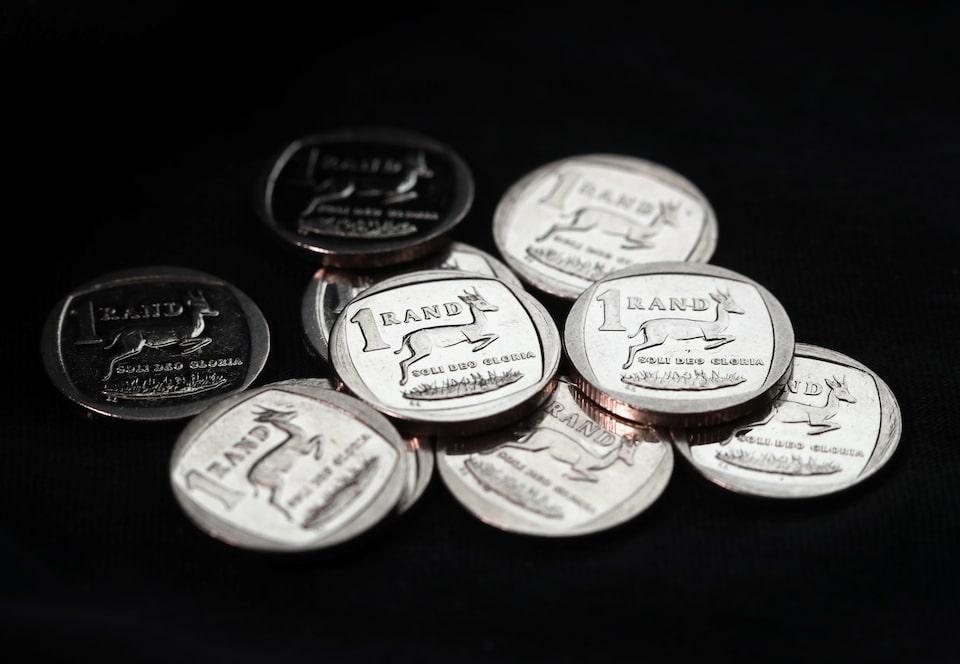
JOHANNESBURG, April 9 (Reuters) - The South African rand neared an all-time low against the dollar in early trade on Wednesday, bruised by global risk aversion linked to U.S. President Donald Trump's tariffs and uncertainty over the future of the country's ruling coalition. The rand fell as low as 19.8225 to the dollar, not far from the weakest it has ever traded at 19.9075 in June 2023 . Sign up here. By 0655 GMT, it had recovered some ground to reach 19.73, up 0.2% on the day, but it is still down over 3% so far this week. The South African currency is highly susceptible to shifts in financial market sentiment, which has soured badly over Trump's tariff war. U.S. tariffs on dozens of countries kicked in on Wednesday, while China was hit with 104% duties. Another important factor behind the rand's recent slide is local politics. The two biggest parties in the broad coalition government have disagreed sharply over the budget, with the junior partner voting against it in parliament and going to court. Despite both parties saying on Tuesday that they are not yet walking away from the Government of National Unity (GNU), investors are still worried about the prospect that the pro-business Democratic Alliance could exit government. "Local developments concerning the GNU have intensified the shift away from the rand," ETM Analytics said in a note. The benchmark 2030 government bond dropped in early deals, as the yield rose 13 basis points to 9.33%. https://www.reuters.com/markets/currencies/south-african-rand-nears-all-time-low-tariff-turmoil-coalition-tension-2025-04-09/
2025-04-09 07:08
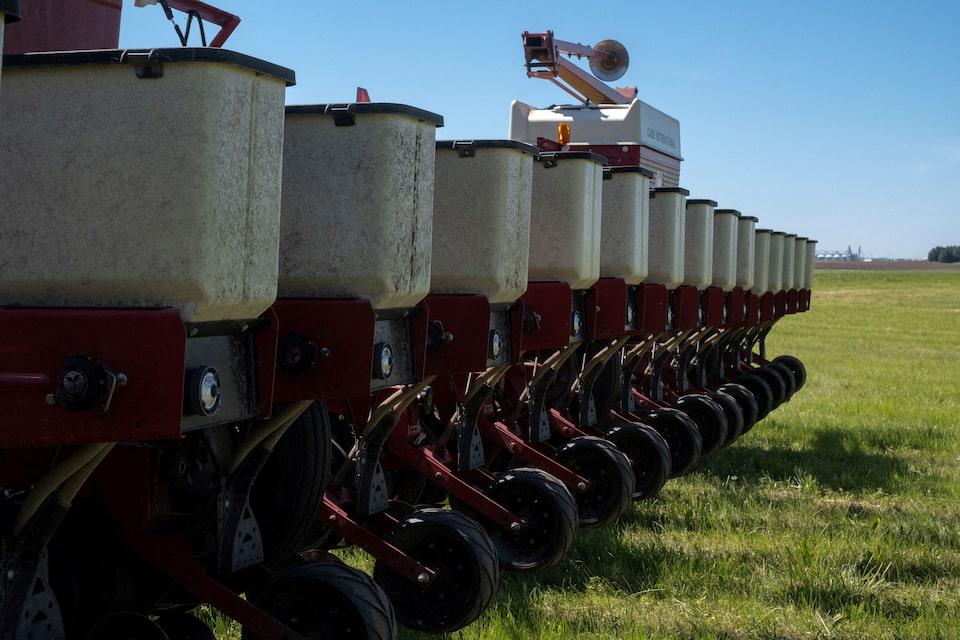
Limited non-Chinese vessel availability raises freight costs Japan, South Korea may shift corn, soybean imports Southeast Asia grain importers face potential supply shortfalls Click here for full list of tariffs SINGAPORE, April 9 (Reuters) - Asian buyers are reducing purchases of U.S. agricultural goods as Washington's planned fees on China-linked vessels and sweeping import duties on key regional trading partners stoke uncertainty and dampen appetite for American products. China, which retaliated with 34% duties on U.S. goods, is the largest importer of U.S. agricultural products, but other Asian countries including Japan, South Korea and Thailand also buy significant volumes of U.S. wheat, corn, and soybean meal. Sign up here. President Donald Trump's plan to revive U.S. shipbuilding using port fees of up to $1.5 million on China-linked ships has forced exporters to hunt for non-Chinese ships and, in turn, driven up freight costs, denting demand for U.S. farm goods. "It makes the U.S. now an unattractive destination for over half of the world's fleet," said Kansas-based freight consultant Jay O'Neil. Ship owners and operators are reluctant to provide quotes for U.S. ports for April, May and June due to the looming fees, he said. The shipping challenges and trade war uncertainties are likely to weigh on benchmark Chicago soybean and wheat futures , which are trading close to multi-month lows, traders said. "As of now, most importers are not taking the risk of importing from the U.S.," said a Singapore-based trader at an international company which sells U.S. grains and oilseeds into Asia. "Shipping costs have gone up and there is so much uncertainty over the trade war." U.S. tariffs on dozens of countries took effect on Wednesday, including massive 104% duties on Chinese goods, even as the president prepared for negotiations with some nations. SCARCE SHIPPING Asia buys about 35% of wheat and corn shipped worldwide. For soybeans, China takes more than 60% of the oilseed traded globally. While other Asian grain importers are not expected to retaliate against U.S. tariffs, limited vessel availability and trade-war uncertainty are taking a toll on purchasing, traders said. "We are trying to switch vessels for cargoes we had booked earlier to supply U.S. wheat to Southeast Asia. We are having to pay higher freight to get a non-Chinese boat. So for now it is a big no to U.S. grains," a second Singapore-based trader said. Traditional U.S. wheat buyers like Japan and South Korea are expected to continue purchasing American cargoes, however they may buy some corn and soybeans from alternative suppliers in South America and the Black Sea region. "As of now, buying of U.S. products has virtually stopped. But looking ahead, we expect Japan and South Korea to keep taking U.S. wheat as they are committed to buying from the U.S.," the second Singapore trader said. It is difficult for buyers like Japan and South Korea to switch from U.S. wheat as it is used for direct human consumption, but they can shift to alternative shipments for feed grains such as corn and soybeans. Most Southeast Asia grain importers have yet to book about half of their requirement for May, the second Singapore trader said, leaving them vulnerable to supply shortfalls. Mike Steenhoek, executive director of the Soy Transportation Coalition in the United States, said a prominent U.S. exporter was unable to get bids from ocean vessel companies to ship soymeal because of the proposed fee on China-linked vessels. "You're already seeing impact." https://www.reuters.com/markets/asia/asian-buyers-shun-us-farm-goods-hit-by-ship-crunch-trade-war-2025-04-09/
2025-04-09 06:56
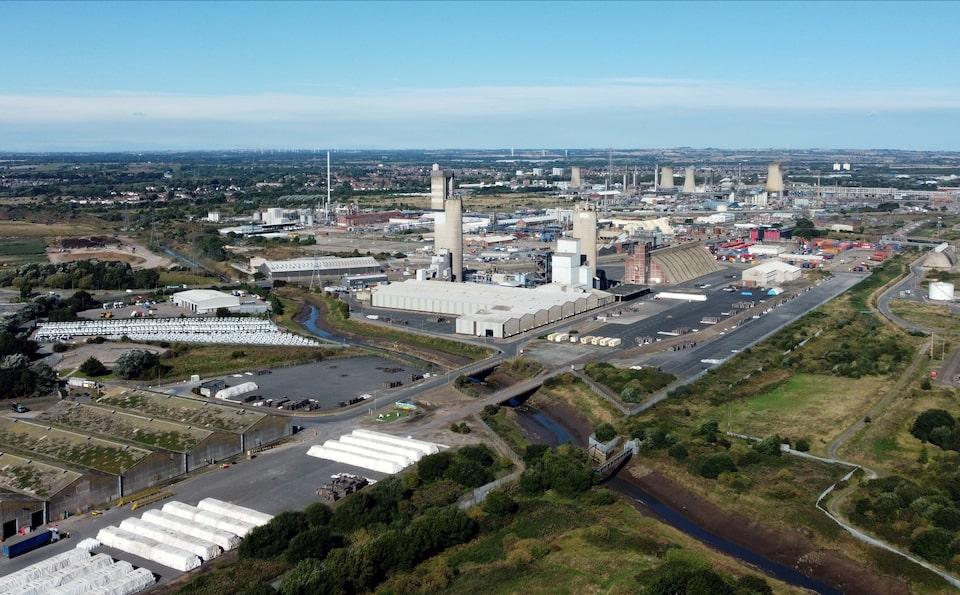
April 8 (Reuters) - CF Industries (CF.N) , opens new tab said on Tuesday it has formed a joint venture with Japan's largest power generator, JERA, and trading house Mitsui & Co (8031.T) , opens new tab to build one of the world's largest low-carbon ammonia facilities for about $4 billion. WHY IS IT IMPORTANT Former President Joe Biden passed the largest climate change legislation in U.S. history in 2022, meant to kick off a boom in American clean energy development including low-carbon emission products. Sign up here. Ammonia producer CF Industries said it is expected to qualify for 45Q tax credit on sequestration of about 2.3 million metric tons of carbon dioxide (CO2) per year. According to JERA, the Japanese government is also expected to provide price support for the difference between ammonia and coal prices for 15 years. Hydrogen and ammonia, which emit no CO2 when burned, are key to Japan's energy security strategy as the country seeks to reduce its reliance on traditional fossil fuels. CONTEXT The joint venture will construct an autothermal reforming (ATR) ammonia production facility with a CO2 dehydration and compression unit at CF Industries' Blue Point Complex in Louisiana, to prepare captured CO2 for transportation and sequestration. Occidental's (OXY.N) , opens new tab carbon capture firm, 1PointFive, will provide transportation and sequestration of CO2 for the joint venture. Production of low-carbon ammonia is expected to begin in 2029. BY THE NUMBERS CF Industries will hold a 40% stake in the joint venture, with JERA owning 35% and Mitsui the remaining 25%. The facility will have an annual production capacity of about 1.4 million tons, which would be the largest ammonia production facility by nameplate capacity in the world, CF Industries said. Each partner will fund the project in proportion to their stake and offtake ammonia accordingly. JERA plans to offtake 490,000 tons and is considering supplying it primarily to its Hekinan thermal power station in central Japan, though specifics are yet to be finalised, Executive Officer Yuichiro Kato told reporters. "We expect ammonia demand from Europe and other regions for power, industrial, and marine use to emerge at the time of project launch," he said. JERA, jointly owned by Tokyo Electric Power (9501.T) , opens new tab and Chubu Electric Power (9502.T) , opens new tab, aims to start commercial co-firing of 20% ammonia with coal at two Hekinan units by 2030, requiring about 1 million tons of ammonia annually. Mitsui, Japan's biggest ammonia importer, also sees growing demand in Europe as emissions regulations continue to tighten, a company official said. https://www.reuters.com/sustainability/climate-energy/cf-industries-forms-jv-4-billion-low-carbon-ammonia-facility-2025-04-08/
2025-04-09 06:54
NEW DELHI, April 9 (Reuters) - India's Reliance Industries (RELI.NS) , opens new tab has shut a crude unit and some secondary units for maintenance for 21 days from this week at its 660,000 barrels-per-day domestic market-focussed refinery, trade sources familiar with the matter said. Reliance, operator of the world's biggest refining complex at Jamnagar in Western Gujarat state, has two refineries at the complex with a combined capacity to process about 1.4 million bpd of crude oil. Sign up here. The shutdown also includes maintenance shutdown of a diesel hydrotreater among other secondary units, the people said. The company did not immediately respond to a Reuters email seeking comment. https://www.reuters.com/business/energy/indias-reliance-shuts-crude-unit-21-days-maintenance-sources-say-2025-04-09/

2025-04-09 06:41
Margin calls, need for liquidity exacerbate bond selloff Unwinding of basis trade reminds investors of 2020 market crash Swap spreads tighten sharply, signaling selling pressure NEW YORK, April 9 (Reuters) - A violent U.S. Treasury selloff, evoking the COVID-era "dash for cash," has reignited fears of fragility in the world’s biggest bond market. The $29-trillion Treasury market had surged in recent weeks as investors dumped stocks for the safety of government bonds in a tariff-fueled risk-off shift. But on Monday, even as equities stayed under pressure, Treasuries were hit by a wave of selling that sent benchmark yields soaring by 17 basis points on the day, while trading within a yield range of about 35 basis points, one of the wildest trading swings for 10-year yields in two decades. Sign up here. The selloff picked up pace on Tuesday and into Wednesday, pushing benchmark 10-year yields above 4.425%, 16 basis points higher on the day. Some market participants said they believed based on the dramatic Treasury market moves and sharp tightening of swap spreads that investors including hedge funds have been selling liquid assets such as U.S. government bonds to meet margin calls due to portfolio losses across asset classes. Some hedge funds have offloaded stocks as the market plunge forces them to curtail trading using borrowed cash. "The big moves in the market across asset classes triggered the unwind," said Jan Nevruzi, U.S. rates strategist at TD Securities in New York. Investors and analysts said the move was reminiscent of the dash-for-cash at the onset of the COVID-19 pandemic in March 2020, when the market seized up as fears about the coronavirus grew, prompting the U.S. central bank to buy $1.6 trillion of government bonds. Similar to that episode, at play on Monday was also a reduction of the so-called basis trade, a popular hedge fund arbitrage trading strategy between cash and futures Treasury positions whose unwinding likely exacerbated the 2020 crash, investors and analysts said. "When you have big moves like that and you're relying on some arbitrage relationship, spreads tightening for whatever reason, you might have to trim your positions," Nevruzi said. The basis trade has been closely watched by regulators over the past few years because it could be a source of instability for markets if highly leveraged hedge fund positions are unwound rapidly. That scenario could reduce banks' ability to provide liquidity, or intermediation, in the Treasury market, the building block of global finance. Torsten Slok, chief economist at Apollo Global Management, estimated in a note on Tuesday the basis trade is currently worth around $800 billion. Hedge funds typically borrow from the repo market to buy Treasuries and use the latter as collateral. Falling prices of Treasuries due to the selloff provided less collateral value for borrowing, prompting margin calls, analysts and investors said. "There was certainly some unwinding of a lot of basis trades over the last few days, some margin calls to banks," said David Rolley, portfolio manager and co-head of the Global Fixed Income Team at Loomis Sayles. To be sure, other triggers could be at play. One explanation is the bond market is coming around to the view that U.S. President Donald Trump's tariffs on large U.S. trade partners are inflationary, which would curb the Federal Reserve's ability to cut interest rates despite slowing growth. "Can you really bid bonds when we might have a 4% handle on inflation again two months from now?" said Spencer Hakimian, CEO of Tolou Capital Management. 'DEMAND DESTRUCTION' Many in the markets remain worried the vulnerabilities that emerged in previous incidents, such as in March 2020, could still reappear in the case of spikes in volatility. "We have been banging the tables for years that the depth of liquidity in the Treasury market is poor and has been for years," Andrew Brenner, head of international fixed income at National Alliance Capital Markets, said in a note to clients on Tuesday. "These basis trades, which can be leveraged up to 100x, overwhelmed the bond markets," he said in reference to Monday's sharp bond selloff. Besides the sharp increase in yields, several analysts also pointed to changes in the price differential between Treasuries and interest rate swaps as evidence of specific selling of Treasuries, as opposed to a broader move reflecting, for instance, changes in monetary policy expectations. An executive catering for hedge fund clients at a large bank, speaking on condition of anonymity, said investors have been looking for alternatives to U.S. assets amid market volatility, including alternatives to U.S. Treasuries. Swap spreads, which reflect the gap between the fixed rate on an interest-rate swap and the yield on a comparable Treasury and are often used to hedge or bet on shifts in rates, tightened dramatically, particularly for longer-dated maturities. The underperformance of Treasuries compared to swaps signaled "heavy foreign real money selling," said Jonathan Cohn, head of U.S. rates desk strategy at Nomura Securities International. A consensus trade among hedge funds was to be positioned for a widening of swap spreads, he said, due to expectations of further bank deregulation. Those positions likely had to be unwound, contributing to the Treasury selloff, added Cohn. The 10-year swap spread has dropped sharply or tightened since April 3, after Trump's announcement of sweeping tariffs on imports. They were last seen at minus 63 basis points - their most negative since at least late 2022. Analysts at Citi said in a note on Tuesday the selloff culminated on Monday with a "light dash-for-cash, showing signs of possible demand destruction for U.S. Treasuries." While factors driving swap spreads lower are generally a sign of worries over the fiscal trajectory, they said tariffs were also adding pressure. "Presumably less trade will limit the growth in global USD reserves which tend to find their way into U.S. Treasuries," they said. https://www.reuters.com/markets/rates-bonds/global-markets-tariffs-treasuries-analysis-2025-04-09/
2025-04-09 06:35
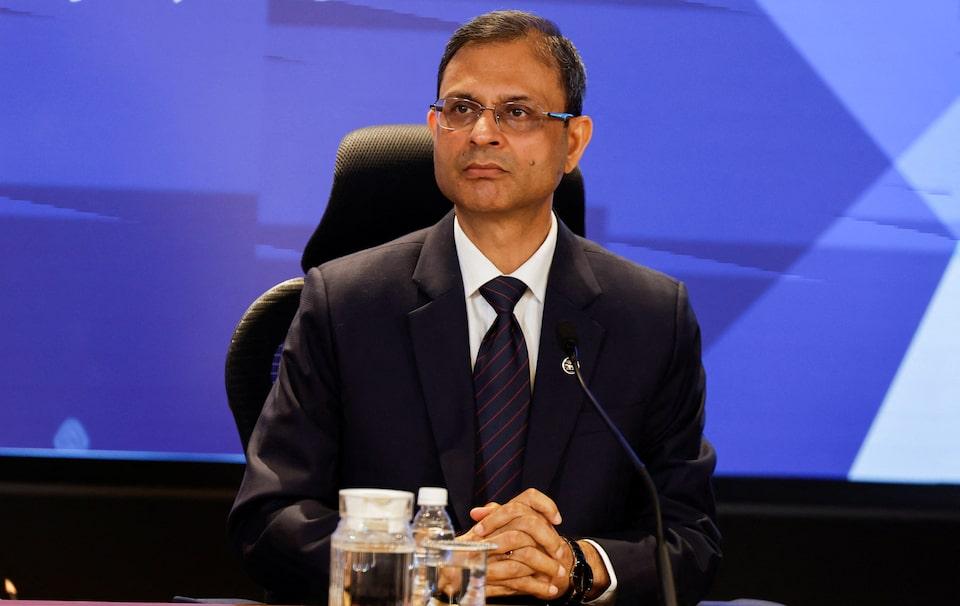
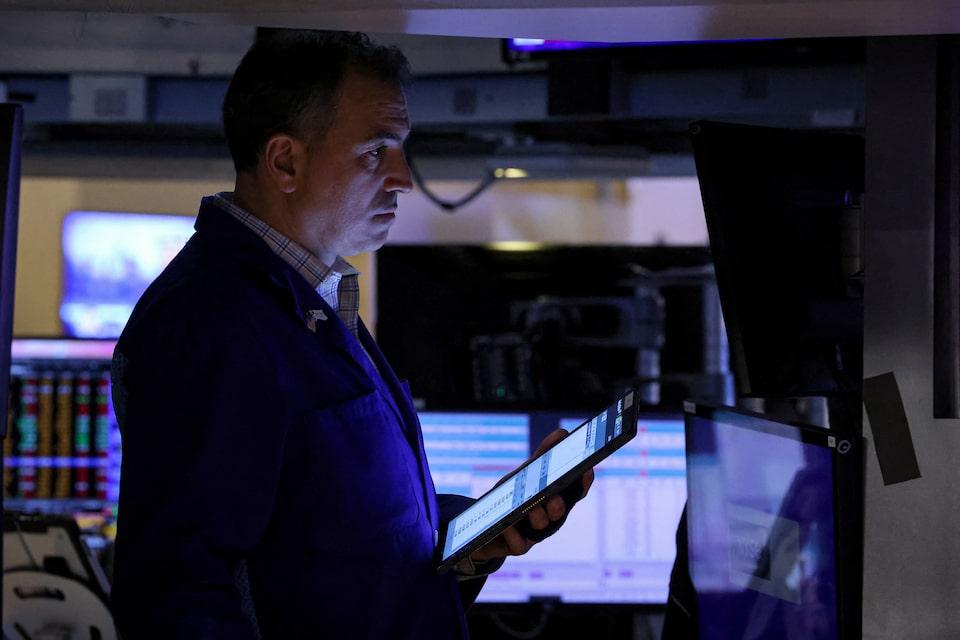
MUMBAI, April 9 (Reuters) - India's foreign exchange reserves (INFXR=ECI) , opens new tab stood at $676.3 billion as of April 4, the central bank governor said on Wednesday, the highest level in five months and gaining for a fifth consecutive week. The reserves rose by $10.9 billion in the reporting week, the most in a month, after increasing by a cumulative $26.7 billion in the prior four weeks. Sign up here. The reserves provide an import cover of about 11 months, Reserve Bank of India Governor Sanjay Malhotra said, while announcing the policy decision. India's external sector remains "resilient", Malhotra said. Changes in foreign currency assets are caused by the central bank's intervention in the forex market as well as the appreciation or depreciation of foreign assets held in the reserves. In the week to April 4, the rupee gained 0.3% week-on-week, after the announcement of sweeping U.S. reciprocal tariffs jolted global currency markets and dragged the dollar lower. Investors are grappling with a turbulent landscape in the wake of the tariff war and growing recession fears in the U.S. The rupee was trading at 86.53 per dollar on Wednesday from 86.58 before the RBI's policy decision and 86.2650 in the previous session. Forex reserves include India's Reserve tranche position at the International Monetary Fund. https://www.reuters.com/world/india/indias-forex-reserves-rise-6763-billion-central-bank-governor-says-2025-04-09/