2025-04-09 06:22
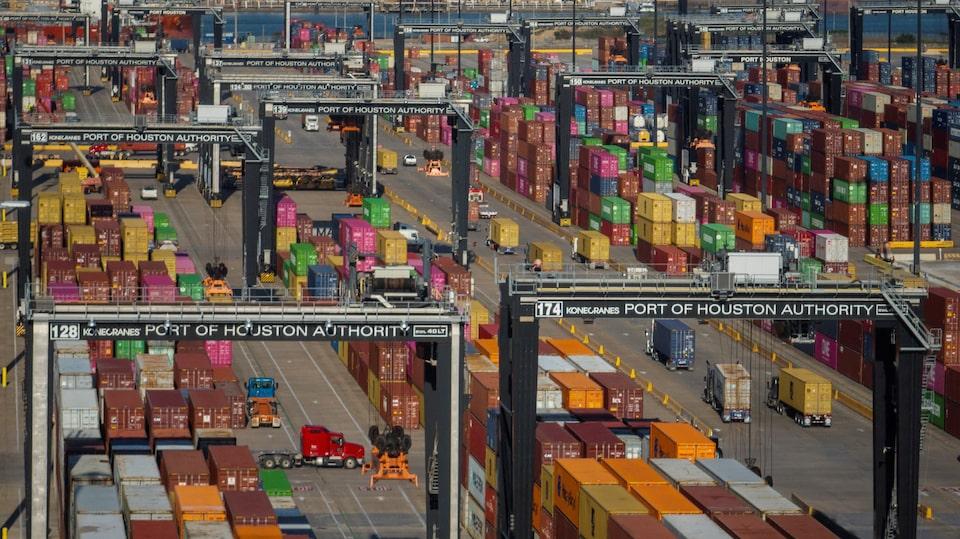
Trump announces sudden reversal on tariffs Most country-specific tariffs paused, but duties raised on China imports US Treasury Secretary Bessent says strategy is deliberate Stocks rise sharply, but uncertainty remains WASHINGTON, April 9 (Reuters) - In a stunning reversal, U.S. President Donald Trump said he would temporarily lower the hefty duties he had just imposed on dozens of countries while further ramping up pressure on China, sending global stocks rocketing higher. Trump's turnabout on Wednesday, which came less than 24 hours after steep new tariffs kicked in on most trading partners, followed the most intense episode of financial market volatility since the early days of the COVID-19 pandemic. The upheaval erased trillions of dollars from stock markets and led to an unsettling surge in U.S. government bond yields that appeared to catch Trump's attention. Sign up here. "I thought that people were jumping a little bit out of line, they were getting yippy, you know," Trump told reporters after the announcement, referring to a golf term. Since returning to the White House in January, Trump has repeatedly threatened an array of punitive measures on trading partners, only to revoke some of them at the last minute. The on-again, off-again approach has baffled world leaders and spooked business executives, who say the uncertainty has made it difficult to forecast market conditions. The day's events cast into stark relief the uncertainty surrounding Trump's policies and how he and his team create and implement them. U.S. Treasury Secretary Scott Bessent asserted that the pullback had been the plan all along to bring countries to the bargaining table. Trump, though, later indicated that the near-panic in markets that had unfolded since his April 2 announcements had factored in to his thinking. Despite insisting for days that his policies would never change, he told reporters on Wednesday: "You have to be flexible." But he kept the pressure on China, the No. 2 provider of U.S. imports. Trump said he would raise the tariff on Chinese imports to 125% from the 104% level that took effect at midnight, further escalating a high-stakes confrontation between the world's two largest economies. The two countries have traded tit-for-tat tariff hikes repeatedly over the past week. Trump's reversal on the country-specific tariffs is not absolute. A 10% blanket duty on almost all U.S. imports will remain in effect, the White House said. The announcement also does not appear to affect duties on autos, steel and aluminum that are already in place. The 90-day freeze also does not apply to duties paid by Canada and Mexico, because their goods are still subject to 25% fentanyl-related tariffs if they do not comply with the U.S.-Mexico-Canada trade agreement's rules of origin. Those duties remain in place for the moment, with an indefinite exemption for USMCA-compliant goods. "China is unlikely to change its strategy: stand firm, absorb pressure, and let Trump overplay his hand. Beijing believes Trump sees concessions as a weakness, so giving ground only invites more pressure," said Daniel Russel, vice president of international security and diplomacy at the Asia Society Policy Institute. "Other countries will welcome the 90-day stay of execution — if it lasts — but the whiplash from constant zigzags creates more of the uncertainty that businesses and governments hate," Russel said. U.S. stock indexes shot higher on the news, with the benchmark S&P 500 (.SPX) , opens new tab index closing 9.5% higher. Bond yields came off earlier highs and the dollar rebounded against safe-haven currencies. The relief spread through Asian markets as they opened on Thursday with Japan's Nikkei index (.N225) , opens new tab surging almost 9%. Trump's tariffs had sparked a days-long selloff that erased trillions of dollars from global stocks and pressured U.S. Treasury bonds and the dollar, which form the backbone of the global financial system. Canada and Japan said they would step in to provide stability if needed - a task usually performed by the United States during times of economic crisis. Analysts said the sudden spike in share prices might not undo all of the damage. Surveys have found slowing business investment and household spending due to worries about the impact of the tariffs, and a Reuters/Ipsos survey found that three out of four Americans expect prices to increase in the months ahead. Goldman Sachs cut its probability of a recession back to 45% after Trump's move, down from 65%, saying the tariffs left in place were still likely to result in a 15% increase in the overall tariff rate. Treasury Secretary Bessent shrugged off questions about market turmoil and said the abrupt reversal rewarded countries that had heeded Trump's advice to refrain from retaliation. He suggested Trump had used the tariffs to create maximum negotiating leverage. "This was his strategy all along," Bessent told reporters. “And you might even say that he goaded China into a bad position." Bessent is the point person in the country-by-country negotiations that could address foreign aid and military cooperation as well as economic matters. Trump has spoken with leaders of Japan and South Korea, and a delegation from Vietnam met with U.S. officials on Wednesday to discuss trade matters, the White House said. Bessent declined to say how long negotiations with the more than 75 countries that have reached out might take. Trump said a resolution with China was possible as well. But officials have said they will prioritize talks with other countries. "China wants to make a deal," Trump said. "They just don't know how quite to go about it." Trump told reporters that he had been considering a pause for several days. On Monday, the White House denounced a report that the administration was considering such a move, calling it "fake news." Earlier on Wednesday, before the announcement, Trump tried to reassure investors, posting on his Truth Social account, "BE COOL! Everything is going to work out well. The USA will be bigger and better than ever before!" Later, he added: "THIS IS A GREAT TIME TO BUY!!!" https://www.reuters.com/world/trumps-latest-tariffs-loom-set-deepen-global-trade-war-2025-04-09/
2025-04-09 06:19
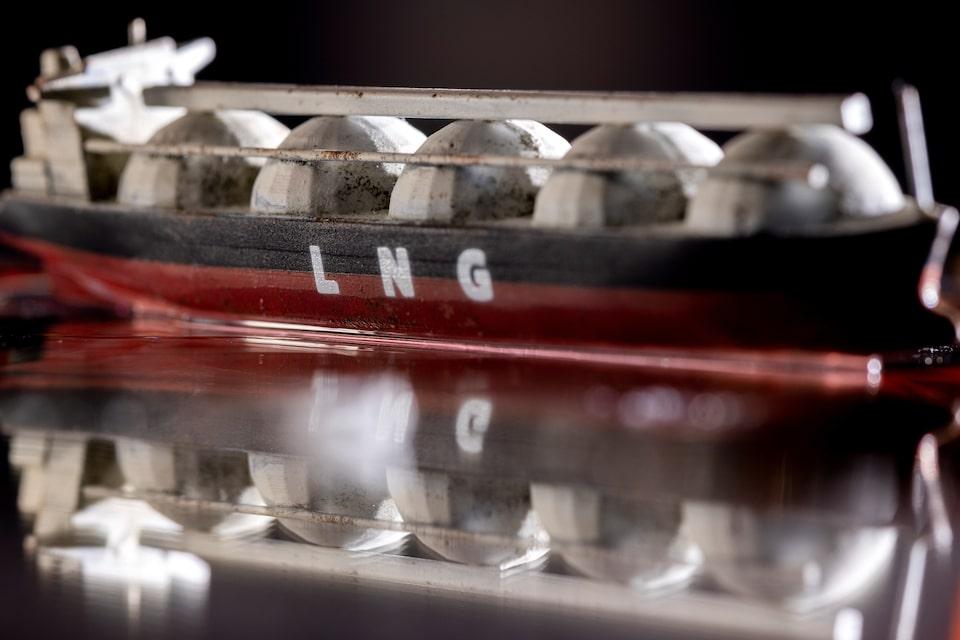
JAKARTA, April 9 (Reuters) - Indonesia's upstream oil and gas regulator SKK Migas will during April and May divert five export cargoes of liquefied natural gas to domestic buyers, its chief said on Wednesday. Indonesia will also optimise gas exports from the Natuna area to neighbouring Singapore, while reducing exports via its Sumatra pipeline to Singapore, chief Djoko Siswanto added. Sign up here. The moves are aimed at meeting more of Indonesia's domestic demands, Djoko said. Indonesia aims to reduce exports to Singapore by 30 Million standard cubic feet per day via the pipeline in June, he said. https://www.reuters.com/business/energy/indonesia-divert-lng-cargoes-local-buyers-april-may-adjust-singapore-exports-2025-04-09/
2025-04-09 06:03
NIS has had to switch to spot market purchases, sources say OMV, Eko no longer buy transport fuel from NIS due to sanctions NIS says ready to meet obligations, refinery operating normally LONDON/BELGRADE, April 9 (Reuters) - Serbian oil firm NIS is struggling to buy oil from traders abroad, while at home its former clients are seeking alternative fuel suppliers as pending U.S. sanctions have impacted operations, sources familiar with the matter told Reuters. NIS is majority-owned by Russia's Gazprom Neft (SIBN.MM) , opens new tab and Gazprom (GAZP.MM) , opens new tab and as such is one of Russia's last remaining oil assets in Europe. It is crucial to Serbia's energy security as it operates the Balkan country's only oil refinery. Sign up here. It is hard for other companies to work around NIS because its dominant position in the Serbian market is compounded by logistical constraints in the landlocked country. NIS supplies around 80% of Serbia's gasoline and diesel, and 90% or more of jet fuel and heavy fuel oil, according to one trader. But the company's recent struggles highlight what could come if U.S. sanctions take effect, with President Aleksandar Vucic warning that Serbia could lose access to oil imports. The U.S. Treasury's Office of Foreign Assets Control designated NIS AD Novi Sad a sanctioned entity on January 10, giving Gazprom Neft 45 days to exit its investment, before extending that deadline with back-to-back 30-day waivers. NIS, which usually buys crude in long-term contracts, cancelled its 2025 tender, according to its procurement site. It is instead making shorter-term purchases in the spot market from international trading houses still willing to do business with it, two of the sources told Reuters. NIS' crude procurement changes have not previously been reported. NIS said it recently successfully closed a deal to buy oil in accordance with the waiver, and was sourcing crude from multiple suppliers. It did not give details. "The company is adapting its business activities to the newly-arisen circumstances," it told Reuters. NIS' crude imports via Croatia's Omisalj port - where 80% of the company's crude supply arrives via the Janaf pipeline - are averaging around 28,000 barrels per day this year, according to global real-time data and analytics provider Kpler. That compares with 40,000 bpd in 2024 and 70,000 bpd in 2023. Meanwhile, fuel suppliers OMV, from Austria, and Greek-owned Eko are now importing key transport fuels for their Serbian retail networks instead of buying from NIS, the companies told Reuters. The move has not been previously reported. OMV is importing fuels on Danube river barges from its other European refineries, it said, while Eko is supplying products from Greece, a company official said, asking not to be named. Both companies suspended fuel purchases from NIS due to U.S. sanctions, they said. Imports alone would struggle to cover Serbia's 44,000-49,000 bpd diesel demand and 14,000 bpd gasoline consumption because of limited capacity and infrastructure for barges, railcars, and trucks, one Serbian fuel trader said. NIS told Reuters it was "prepared to fulfill all contractual obligations, including those with corporate clients and major buyers such as other oil companies," adding that its Pancevo oil refinery was operating normally. https://www.reuters.com/world/europe/us-sanctions-hit-serbian-oil-firm-nis-operations-despite-waivers-2025-04-09/
2025-04-09 05:45
April 9 (Reuters) - The Reserve Bank of India cut its key repo rate on Wednesday for a second consecutive time and changed its monetary policy stance to "accommodative" from "neutral" to boost the sluggish economy, which is facing further pressure from U.S. tariffs. As expected, the Monetary Policy Committee (MPC) cut the repo rate (INREPO=ECI) , opens new tab by 25 basis points to 6.00%. It started reducing rates with a quarter-point reduction in February, its first cut since May 2020. Sign up here. COMMENTARY ANIRUDH GARG, PARTNER AND FUND MANAGER, INVASSET, MUMBAI "The U.S. tariff escalations, weaker dollar and volatile crude prices pose potential risks to India's exports and imported inflation. Yet, the RBI believes the domestic economy is well-positioned to weather these shocks." "The RBI has signaled its intent: revive growth while keeping inflation in check. For equity markets and investors, this marks the start of a more supportive monetary cycle, aligning well with India's long-term structural growth trajectory." SAMANTAK DAS, CHIEF ECONOMIST, JLL INDIA, MUMBAI "This move is a clear vote of confidence in India's economic resilience, aiming to reignite consumption, investment, and improve consumer sentiment in a challenging global landscape." "For the property sector, this rate cut could be transformative." "With two consecutive reductions, we're looking at a potential boost for home-buyer sentiment and affordability." SAKSHI GUPTA, PRINCIPAL ECONOMIST, HDFC BANK, GURUGRAM "We expect two more rate cuts from the RBI from here on, with the next one expected as soon as the June policy as monetary easing is front-loaded." "Recognising the increasing global headwinds due to tariff tensions, the RBI revised down its GDP growth forecast to 6.5%. As things stand today, we see growth undershooting this level in FY26 and expect growth at 6.3% for FY26." ADITI NAYAR, CHIEF ECONOMIST, ICRA, GURUGRAM "Given the burgeoning global uncertainty, the reduction in the MPC's FY2026 forecasts for both the CPI inflation and GDP growth by 20 bps each and the change in stance..., we now expect an additional 50 bps of rate cuts over the next three policy reviews." GARIMA KAPOOR, ECONOMIST, INSTITUTIONAL EQUITIES, ELARA SECURITIES, MUMBAI "In the backdrop of weakening growth momentum and an uncertain global macroeconomic backdrop, we expect RBI's MPC to remain growth supportive. We expect another 75 bps rate cut in FY26." SUJAN HAJRA, CHIEF ECONOMIST & EXECUTIVE DIRECTOR, ANAND RATHI GROUP, MUMBAI "The RBI has retained its real GDP growth projection for FY2025-26 at 6.5%, which is 20 basis points lower than its previous estimate. We believe this reflects a conservative stance; in our view, real GDP growth is likely to trend closer to 7%, aided by improving domestic demand, easing financial conditions and strong corporate earnings momentum." "The policy demonstrates a cautious but supportive posture on both growth and inflation. The overall tone is market-friendly and should be viewed as positive for both equity and debt markets. Financials and infrastructure-related sectors stand to benefit the most." DEVENDRA KUMAR PANT, CHIEF ECONOMIST, INDIA RATINGS & RESEARCH, GURUGRAM "The repo rate cut was on expected lines due to factors such as uncertain global environment due to reciprocal tariffs by the U.S., growth slowdown and the trajectory of retail inflation." "We expect 50 bps rate cut in the rest of FY26." RADHIKA RAO, SENIOR ECONOMIST, DBS BANK, SINGAPORE "Overall, policy guidance was dovish while monitoring global uncertainties and a consequent need to maintain stability in domestic financial markets. We expect 50 bps more cuts this year." KUNAL KUNDU, INDIA ECONOMIST, SOCIETE GENERALE, BENGALURU "With inflation expected to be on the lower side, coupled with the fact that the trade war will prove to be deflationary outside the U.S., we feel that the stage is set for deeper rate cuts by the RBI going forward." UPASNA BHARDWAJ, CHIEF ECONOMIST, KOTAK MAHINDRA BANK, MUMBAI "The (RBI) Monetary Policy Committee's decision to ease repo rate by 25 bps and shift its stance to accommodative is in line with expectations." "We note the increasing global turmoil and its spillovers to the Indian growth slowdown will necessitate the MPC for deeper rate cuts. We see scope for additional 75-100 bps of rate cuts in the year ahead depending on the scale of global slowdown." https://www.reuters.com/markets/rates-bonds/view-india-central-bank-cuts-rates-changes-stance-accommodative-2025-04-09/
2025-04-09 05:37
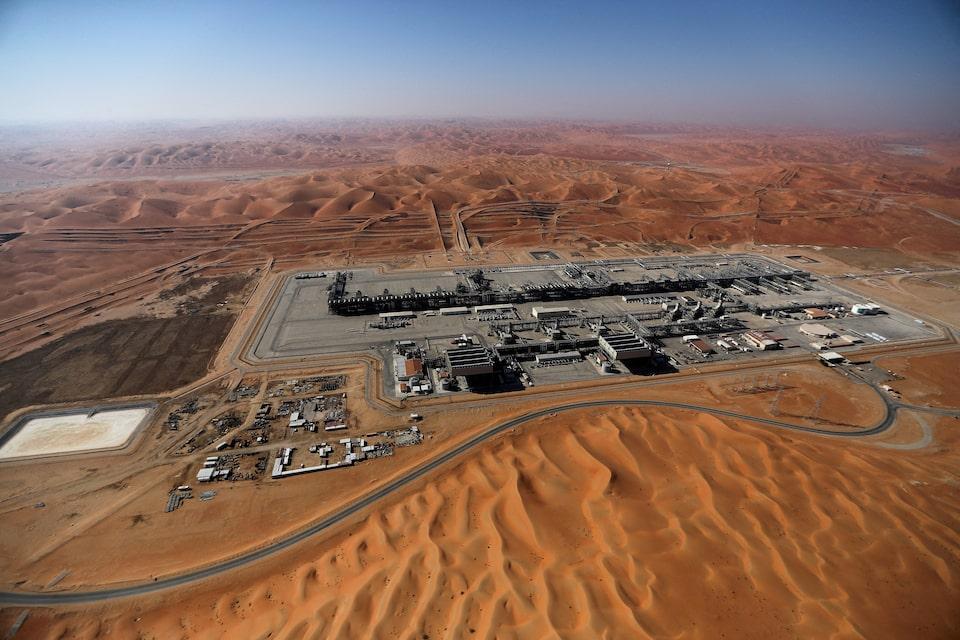
Saudi Arabia losing patience with OPEC+ non-compliance Trump tariffs offer Riyadh opportunity Saudi would prefer to avoid protracted market share war LONDON, April 9 - President Donald Trump's global trade war has created tumult in the oil market that Saudi Arabia did not seek, but can turn to its advantage even if its window for navigating a price war is narrow. Tensions in the world’s largest commodity market have been simmering for a while. Rising global production, slowing consumption growth and deepening uncertainty over the long-term demand outlook have largely kept oil prices in a steady range of $70 to $90 a barrel in recent years. Sign up here. At the same time, OPEC+, the Organization of the Petroleum Exporting Countries and other major producers including Russia, has struggled to maintain internal discipline. Saudi Arabia, OPEC's de-facto leader and the world's biggest oil exporter, has grown impatient with non-compliant members. The top three offenders are Kazakhstan, Iraq and the United Arab Emirates, which have repeatedly failed to stick to production quotas under a series of agreements since 2022 to reduce output by 5.85 million barrels per day. Each exceeded its February quotas by at least 300,000 barrels per day, accounting for most of the larger group’s overproduction of 1.2 million bpd that month, according to the International Energy Agency. Now Trump's tariff announcement has sent oil prices nosediving some 16% since April 3 to below $63 a barrel, Saudi Arabia appears to be seizing the opportunity to send a message to producers both inside and outside its alliance. WARNING SHOTS Riyadh issued its first warning shot the day after Trump's tariff announcement as financial markets entered freefall. Saudi Arabia and seven other OPEC+ members caught traders off-guard with a decision to accelerate the planned unwinding of the first tranche of 2.2 million bpd of production cuts. The decision will add 411,000 bpd to global supply in May, even though the market is already well supplied. Then on Sunday, the Saudi state oil company Aramco sharply cut its oil selling prices for May for Asian buyers to the lowest in four months. The price of its flagship Arab Light grade was cut to a premium of $1.20 a barrel above the average of Oman and Dubai rates. That is down $2.30 from the previous month, the biggest cut in more than two years. These aggressive moves signal that the Kingdom is willing to take a financial hit to reestablish discipline and undercut other sellers to gain market share. 2014 REDUX? The current moment might feel similar to 2014. That year, Saudi Arabia memorably flooded the market with oil to try to overwhelm upstart U.S. shale competitors and reassert its supremacy. Brent crude prices more than halved in the six months to January 2015 to $51 a barrel, leading to a protracted slowdown in new investments. There are certainly common elements today. U.S. shale producers require an average U.S. oil price of $65 a barrel to drill a new well, a survey , opens new tab conducted by the Federal Reserve Bank of Dallas showed. Western Texas Intermediate (WTI) prices traded below $60 on Wednesday. So if oil prices persist at their current levels for a sustained period, many U.S. producers will be forced to scale back operations, especially given that drilling costs look set to rise due to Trump's tariffs on steel and equipment. So what is different this time around? First, curbing U.S. production will not be the main aim of any price war, but just a welcome side effect, as U.S. crude volumes were already set to plateau by the end of the decade. Another difference is that the Saudis will likely have much less room and time to navigate. Riyadh will not want to risk seeing prices crater or let any price war go on too long, as that could lead to a collapse of the already weakened OPEC+ alliance, which has become a central element of the Kingdom’s foreign policy. Additionally, Saudi's economy depends on high oil prices. It will require an average oil price of $91 a barrel this year to balance its national budget, according to the IMF. By contrast, one of the other major OPEC+ powers, the UAE, can break even at $50 a barrel. This chasm may make Riyadh hesitant about entering a lengthy price war that it is not best placed to withstand. For now, the turmoil in global markets has given Saudi Arabia an opportunity to impose its will on other OPEC+ producers and challenge drillers outside the group. But Riyadh may find that it has become tougher to win a price war, especially one it did not intend to start. ** The opinions expressed here are those of the author, a columnist for Reuters. ** Want to receive my column in your inbox every Thursday, along with additional energy insights and trending stories? Sign up for my Power Up newsletter here. https://www.reuters.com/business/energy/saudi-will-not-waste-trump-fuelled-oil-crisis-bousso-2025-04-08/
2025-04-09 05:29
JAKARTA, April 9 (Reuters) - Japanese oil and gas explorer Inpex Corp (1605.T) , opens new tab on Wednesday started the front-end engineering design process for its Abadi liquefied natural gas project in Indonesia, as the government put pressure on the company to accelerate development. The Abadi LNG project had faced years of delays including from requests by the previous administration to move the LNG plant onshore from an earlier offshore plan, Shell's exit from the project and a change in the development plan to incorporate a carbon capture and storage component. Sign up here. The FEED launch marks major progress for the Abadi project while the company works to accelerate its development, chief executive Takayuki Ueda told reporters in Jakarta. Inpex has previously said it plans to reach a final investment decision (FID) for the project in 2027 and aims for production to start in early 2030s. Indonesian authorities however are asking Inpex to move the timeline ahead. "FID must be reached next year," Djoko Siswanto, chairman of upstream oil and gas regulator SKK Migas, said on Wednesday. He also demanded Inpex begin Abadi production in 2029. To start production in 2029 would be "very, very challenging" for Inpex, Ueda said in response to SKK Migas's request. "But since we understand that demand in Indonesia is growing very fast ... So we'll make our best effort to accelerate the project so that we can reach the target for the production the government requested before 2030," he said. Indonesia's oil and gas production has declined in the past decade because of depleting reserves and delays at new projects. The government is keen to reverse the trend as President Prabowo Subianto vows to make Indonesia energy independent. The Abadi project is expected to produce at its peak 9.5 million metric tonnes of LNG a year, 150 million standard cubic feet per day of pipe gas and 35,000 barrels of condensate per day, data from SKK Migas shows. Inpex operates the Abadi project and controls a 65% stake in it. Indonesia's Pertamina and Malaysia's Petronas took over Shell's 35% holding in the project in 2023. https://www.reuters.com/business/energy/japans-inpex-launches-feed-abadi-lng-project-indonesia-2025-04-09/