2025-04-09 05:23
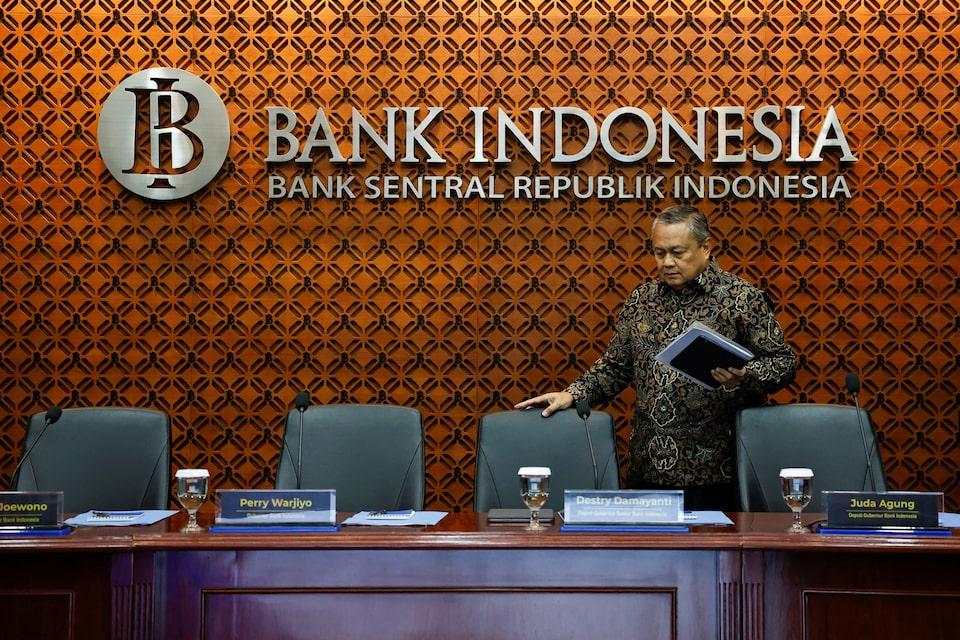
Rupiah hit fresh record low on Weds Indonesia c.bank says rupiah weakens due to Trump's tariff war Businesses halt unnecessary imports to ease currency pressure JAKARTA, April 9 (Reuters) - Indonesia's central bank will act boldly to maintain rupiah stability by intervening in the spot, domestic non-deliverable forwards, and bond markets, a deputy governor said on Wednesday after the rupiah hit a record low against the dollar. Bank Indonesia's (BI) senior deputy governor Destry Damayanti told Reuters that moves in domestic bonds on Wednesday indicated that investors still had confidence in the sovereign bond market. Sign up here. The rupiah hit an all-time low of 16,970 per dollar on Wednesday morning, before paring some of its losses, according to LSEG data. Destry said regional currencies were weaker on the day because of the escalating global trade war. "This was triggered by President Trump's decision to suddenly decide to increase tariffs on Chinese products by 104%," she said, adding Indonesia's economy remained resilient. It was the second day in a row that the rupiah had fallen to new lows. Indonesia's financial markets felt the whiplash from the U.S. tariff announcement on Tuesday when markets reopened after a long holiday. Despite low inflation, BI does not have much room to cut interest rates as it wants to stabilise the rupiah, Maybank Indonesia economist Myrdal Gunarto said on Wednesday. "BI seems focused on maintaining domestic economic performance through keeping the stability of rupiah from potential money outflows during the recent unfavourable global economic condition," he said referring to the trade war started by U.S. President Donald Trump. BI will announce the result of its upcoming two-day policy meeting on April 23. Last month, BI held its benchmark interest rate at 5.75% to keep inflation within target, maintain rupiah stability and support growth. Businesses were worried the record-low rupiah will add more pressure to the economy on top of Trump's 32% tariffs on Indonesian goods, which took effect on Wednesday, Indonesian employers association chairwoman Shinta Kamdani said. "We hope the government will immediately mobilize all possible intervention efforts to stabilise the exchange rate, thankfully it can strengthen in the near future," she said. To ease pressure, businesses have started to hold back on unnecessary purchases, especially imported goods, Shinta said, adding currency hedging is too costly at the moment due to high volatility. Jakarta has said it will not retaliate against U.S tariffs on Indonesia goods and will pursue negotiations, which will include higher imports from U.S. and possible tax cuts on electronic goods and steel. Indonesia is expected to send a high-level delegation to the U.S. next week to discuss the tariffs. It will be led by chief economic minister Airlangga Hartarto, who will be accompanied by by Finance Minister Sri Mulyani Indrawati and Foreign Minister Sugiono. https://www.reuters.com/markets/asia/bank-indonesia-says-will-act-boldly-maintain-rupiah-stability-2025-04-09/
2025-04-09 05:17
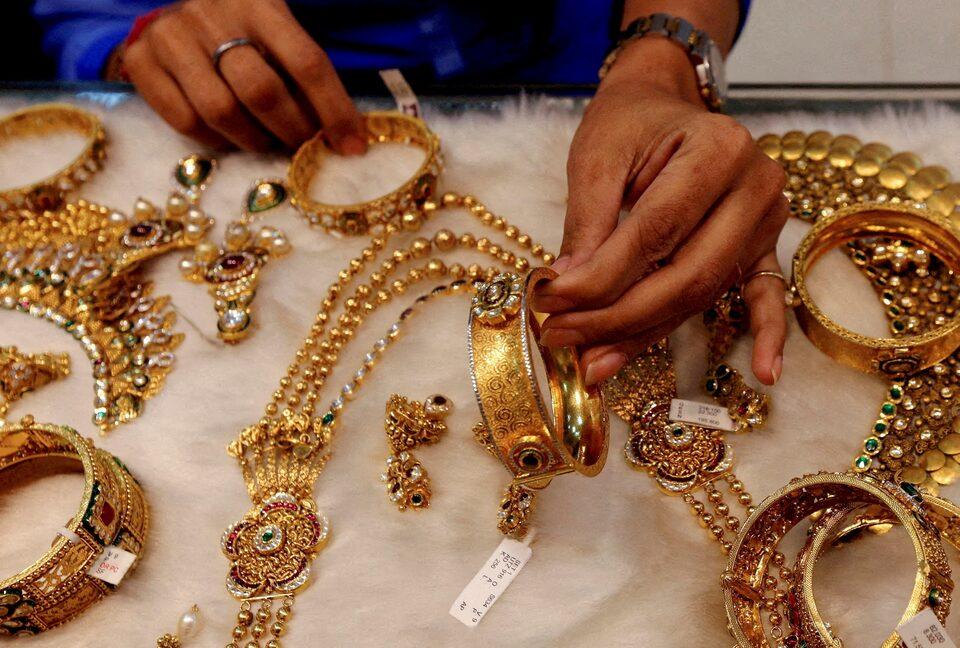
US import tariffs take effect US benchmark 10-year note yield hits over one-month high Gold's current rally: echoes of the 1980s Fed meeting minutes due later in the day April 9 (Reuters) - Gold prices climbed nearly 2% on Wednesday as the dollar weakened after U.S. President Donald Trump's tariffs on China took effect, with most traders flocking to safe-haven bullion for cover as global trade and recession jitters intensified. Spot gold was up 1.9% at $3,038.54 an ounce, as of 0700 GMT. U.S. gold futures rose 2.2% to $3,056.60. Sign up here. The dollar (.DXY) , opens new tab lost ground, making greenback-priced gold cheaper for overseas buyers. Trump ratcheted up duties on Chinese imports to 104% to counter Beijing's retaliatory tariffs, accusing Beijing of manipulating the yuan to offset the levies. China refused to bow to what it called a blackmail, vowing to "fight to the end". Country-specific tariffs took effect at 12:01 a.m. Eastern Time (0401 GMT), as planned. "The downward shift in the dollar on tariff worries effectively paved the way for gold to reclaim the $3000 level," KCM Trade chief market analyst Tim Waterer said. "Due to global growth and inflation uncertainties, gold is still on track to pursue new all-time highs despite experiencing a few bumps in its progress over the last week." Some gains in non-yielding bullion were limited by U.S. benchmark 10-year note yield hitting an over one-month high. Gold hit a record high of $3,167.57 on April 3. Its excursion to these levels has drawn comparisons with the last time political and economic turmoil were the main drivers of record prices, back in 1980 during the Iranian Revolution. Gold-backed exchange-traded funds registered the largest quarterly inflow in three years during January-March 2025, World Gold Council data showed. Markets await minutes of the Federal Reserve's latest policy meeting, expected later in the day, and U.S. consumer price index on Thursday. "The Fed's guidance will likely be the same, cautiously watching for inflationary resurgence over growth risks," said Kelvin Wong, senior market analyst, Asia Pacific at OANDA. Spot silver gained 1.3% to $30.23 an ounce, platinum was steady at $921.62, and palladium added 0.9% to $914.73. https://www.reuters.com/markets/commodities/gold-gains-ground-dollar-wavers-tariff-jitters-2025-04-09/
2025-04-09 05:11
ORLANDO, Florida, April 8 (Reuters) - TRADING DAY Making sense of the forces driving global markets Sign up here. By Jamie McGeever, Markets Columnist U.S. stocks slide, yields spike as Trump holds China tariff line A strong relief rally across Asian and European stocks on Tuesday fizzled out in U.S. trading, and Wall Street closed sharply lower after President Donald Trump doubled down on his pledge to slap eye-watering tariffs on imports from China. It was a remarkable flip, as U.S. stocks had earlier been up nearly 5%. Just as remarkable was the second surge in long-dated U.S. bond yields, a move that is frustrating Trump and Treasury Secretary Scott Bessent's hopes for a lower 10-year yield. More on that below, but first here are the main market moves on yet another extraordinary day in global markets. I'd love to hear from you, so please reach out to me with comments at [email protected] , opens new tab. You can also follow me at @ReutersJamie , opens new tab and @reutersjamie.bsky.social , opens new tab. Today's Key Market Moves If you have more time to read today, here are a few articles I recommend to help you make sense of what happened in markets today. All pain, no gain on Wall Street It started out so brightly. With the Trump administration lining up talks with South Korea and Japan, and dozens more countries reaching out for "tailor-made" tariff-reducing deals with Washington, investor sentiment on Tuesday was much more positive and a relief rally swept across Asia and Europe. But that optimism was quickly snuffed out when Washington repeated that 104% duties on imports from China, America's main economic and geopolitical rival, will take effect shortly after midnight. Other country-specific tariffs of up to 50% will also take effect as planned, but the duties on China are the ones that investors fear the most, as they are the ones that will escalate the global trade war most. China has refused to bow to what it called "blackmail" and has vowed to "fight to the end." While Trump insists he is open to dialogue, markets are extremely skittish and any green shoots of optimism that appeared over the last 24 hours have been trampled back into the dirt. Japanese and U.S. stock futures are pointing to fall of around 2% at the open on Wednesday. The Nasdaq remains mired in a bear market, and the S&P 500 is once again on the brink - not the calmest backdrop for the central banks of New Zealand and India to be announcing their latest policy decisions. The picture is muddied even further by the eye-popping rise in long-dated U.S. bond yields. The 20-year yield leaped 17 basis points on Tuesday, taking its two-day rise to 37 bps. The 30-year yield is up around 37 bps over the last two days too. If you exclude the pandemic, this marks the steepest two-day rise in the long bond yield in more than 40 years. Extraordinary, and not a little worrying for policymakers in Washington. U.S. 10-year yield not dancing to Bessent's tune Short-term stock price moves are rarely meaningful – especially not when markets are panicking – but the 10-year U.S. Treasury yield's round-trip since President Donald Trump's 'Liberation Day' last week is extraordinary. Treasury Secretary Scott Bessent is on record saying he is focused squarely on getting the 10-year yield down, leading investors to surmise that lower borrowing costs are more important to the administration than higher equity prices. This is a major departure from Trump's first term, when he regularly celebrated stock market gains in social media posts. To that end, the 10-year yield's slump in the two days after Trump's tariff reveal on April 2 fit the script, though Bessent and Trump would probably have preferred a driving force other than exploding recession fears. In theory, lower borrowing costs will cushion the blow that a tariff-weakened economy could inflict on businesses and households. And crucially, they will also ease the federal government's huge debt-servicing burden. Cutting interest rates, as Trump recently implored Federal Reserve Chair Jerome Powell to do, would be an added benefit for everyone. But it's not working out that way. Trillions of dollars have been wiped from U.S. stock markets in recent days and interest rate cut expectations have ramped up aggressively, yet the 10-year yield is now above the 4.10-4.20% range it was in on 'Liberation Day'. Zoom out further, it's notable that even though the benchmark yield has declined 60 basis points since January, it is still 60 bps above its September low. Or, looked at another way, although the S&P 500 has fallen 17% in the last five months, losing around $9 trillion in market cap, the 10-year yield is essentially unchanged. You can always pick and choose your timeframe to suit a narrative, but it is clear that yields are not falling as much as Bessent and Trump would like, or as most observers would expect in such a febrile 'risk off' environment. Treasuries are simply not attracting the 'flight to safety' demand from global investors, as they have in almost every period of stock market turbulence in recent decades. NEGATIVE TRENDS What gives? For one, tariffs are typically considered inflationary, at least initially, and inflation forecasts are being ramped up across the board, including at the Fed itself. With inflation still above the Fed's 2% goal and expectations not fully anchored, Powell made it clear on Friday that cutting rates is not the slam dunk it might have been in past crises. Economists at JPMorgan noted that Powell's speech was his most hawkish in some time, while economists at Morgan Stanley changed their Fed forecast and now see no rate cuts at all this year. Then there's the politics. The widespread derision of the formula used to calculate Trump's 'reciprocal' tariffs and concern about the administration's other controversial policies are shaking overseas investors' faith in the U.S. "Negative trends in U.S. governance and institutions are eroding the appeal of U.S. assets for foreign investors," wrote Goldman Sachs analysts on Monday. "It is now clear that foreign officials have taken a number of actions to attempt to reduce their reliance on the dollar." And there is also plenty of Wall Street chatter about whether some central banks may seek to reduce their U.S. bond holdings strategically as a weapon in the global trade war. The focus of this speculation is squarely on China, America's main economic and geopolitical rival, which boasts the biggest bilateral trade surplus with the U.S. and holds large quantities of Treasuries that could be sold. Sticky yields, never mind rising yields, hugely complicate Bessent's aim of reining in the near-$1 trillion of net interest payments on U.S. public debt in fiscal year 2024. The Congressional Budget Office expects that figure to almost double to $1.8 trillion by 2035. Bessent and Trump clearly hope that tariffs will eventually narrow the trade deficit, heralding looser monetary policy and lower yields. But with inflation fears, unprecedented uncertainty and toxic politics thick in the mix, 'eventually' seems a long way off. What could move markets tomorrow? Opinions expressed are those of the author. They do not reflect the views of Reuters News, which, under the Trust Principles , opens new tab, is committed to integrity, independence, and freedom from bias. Trading Day is also sent by email every weekday morning. Think your friend or colleague should know about us? Forward this newsletter to them. They can also sign up here. https://www.reuters.com/markets/global-markets-trading-day-2025-04-09/
2025-04-09 04:38
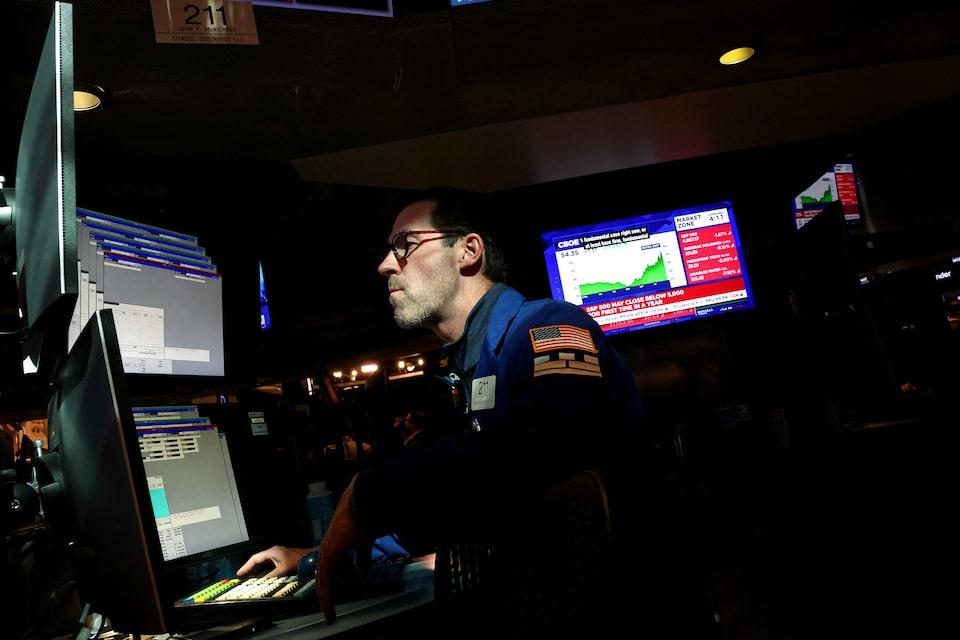
S&P 500 posts biggest 1-day percentage gain since 2008 US Treasury auction sees strong demand Dollar up vs yen and other currencies NEW YORK, April 9 (Reuters) - Stock indexes posted their biggest one-day gains in years, with the S&P 500 (.SPX) , opens new tab recording its largest rise since 2008, while the dollar gained and Treasuries pared losses on Wednesday after U.S. President Donald Trump declared a temporary U.S. pause on tariffs. The announcement by Trump came in the afternoon after days of market turmoil, with bond prices and the U.S. dollar selling off earlier in the day on fears that the administration's plans to raise tariffs to levels last seen more than 100 years ago would push the economy into recession. Sign up here. The president announced an immediate 90-day tariff pause for many countries even as he raised the levy on Chinese imports to 125%. The news of a pause brought sudden relief to the market. The S&P 500 ended 9.5% higher, while the Nasdaq rose 12.2% in its biggest one-day gain since January 3, 2001, and its second-biggest on record. But investors said uncertainty about the longer-term plan for tariffs persisted. "This is the pivotal moment we've been waiting for," said Gina Bolvin, president of Bolvin Wealth Management Group in Boston. "The timing couldn’t be better, coinciding with the start of earnings season." "However, uncertainty looms over what happens after the 90-day period, leaving investors to grapple with potential volatility ahead," Bolvin added. The upcoming U.S. quarterly reporting period will offer more insights into the health of corporate America, with several U.S. banks, including JPMorgan Chase (JPM.N) , opens new tab, due to report results on Friday. Benchmark 10-year Treasury prices had also trimmed earlier losses after the U.S. Treasury Department saw strong demand in an afternoon auction of the notes. The yield on benchmark U.S. 10-year notes rose 6.8 basis points to 4.328%. It earlier reached 4.515%, the highest since February 20. Bond yields move opposite to prices. A sharp selloff in Treasury prices this week and reports of large liquidations of bonds had raised concerns about deteriorating market liquidity. The dollar was lower before Trump's announcement. The selloff in U.S. assets since Trump's announcement of sweeping tariffs on April 2 has been broad and deep, with Deutsche Bank analysts in a note earlier on Wednesday saying that the "market has lost faith" in them and the world was entering uncharted territory in the global financial system. The dollar index , which measures the greenback against a basket of currencies including the yen and the euro, rose 0.25% to 103.03, with the euro down 0.08% at $1.0947. Against the Japanese yen , the dollar strengthened 1.04%, while the dollar rose 1.01% versus the Swiss franc . U.S. stocks sharply extended gains on Trump's announcement. The Dow Jones Industrial Average (.DJI) , opens new tab rose 2,962.86 points, or 7.87%, to 40,608.45, the S&P 500 (.SPX) , opens new tab rose 474.13 points, or 9.52%, to 5,456.90 and the Nasdaq Composite (.IXIC) , opens new tab rose 1,857.06 points, or 12.16%, to 17,124.97. MSCI's gauge of stocks across the globe (.MIWD00000PUS) , opens new tab rose 42.32 points, or 5.70%, to 785.28. Earlier in the day, the pan-European STOXX 600 (.STOXX) , opens new tab index ended down 3.5%. Oil prices also jumped on the tariff news. Brent futures rose $2.66, or 4.23%, to settle at $65.48 a barrel. U.S. West Texas Intermediate crude futures rose $2.77, or 4.65%, to $62.35. https://www.reuters.com/markets/global-markets-wrapup-1pix-2025-04-09/
2025-04-09 04:36
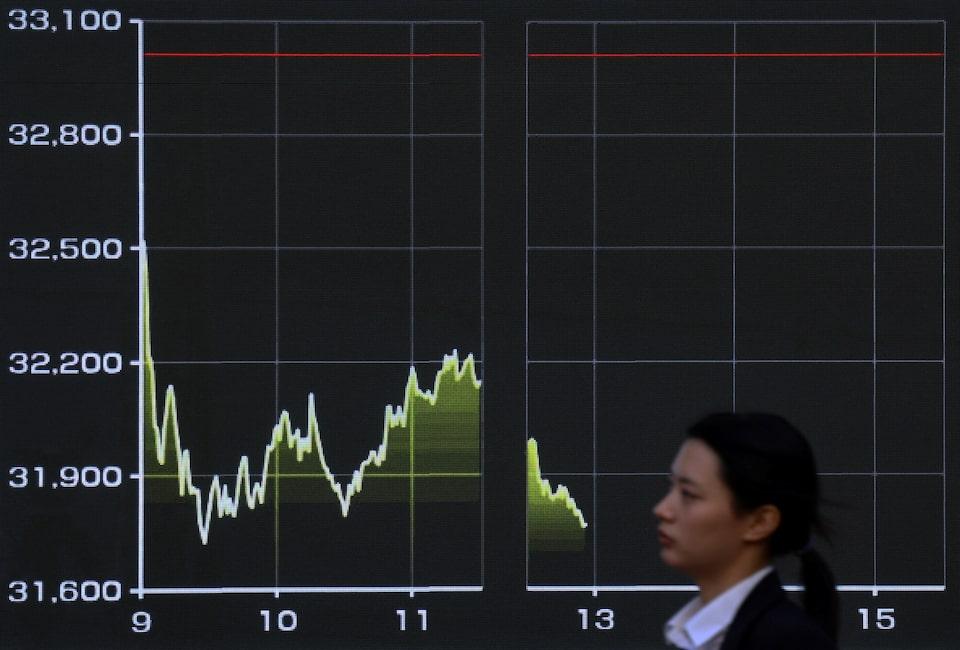
A look at the day ahead in European and global markets from Ankur Banerjee As the next leg of the rapidly escalating trade war comes into view, investors remain shell-shocked, extending a deep stock market rout and flocking to the safe-haven yen and Swiss franc, awaiting, and hoping, for some semblance of good news. Sign up here. At the stroke of midnight (U.S. hours), President Donald Trump's reciprocal tariffs took effect, including 104% levies on Chinese goods, keeping fears of recession alive and upending a global trading order that has persisted for decades. Markets had pinned their hopes on negotiations, but so far it appears that Washington and Beijing are heading for a showdown. That has left investors scurrying for cover as the relief rally on Wednesday fizzled out and Asian stock markets were a sea of red. European futures point to a significantly lower open on the day. So, the yen and the Swiss franc were the go-to for nervous investors as relentless dollar selling showed no signs of stopping. In emerging markets, the Indonesian rupiah sank to a record low and was on the verge of breaching 17,000 per dollar. The yuan weakened to a 19-month low, while its offshore counterpart inched away from the record low it hit in wild overnight trading. And yet, the flight to safety has not included U.S. Treasuries. The yield on the benchmark 10-year note was up an eye-popping 21 basis points. That fact that sweeping tariffs could result in a recession and markets are pricing in more interest rate cuts would normally provide a good reason to buy bonds, but that has not been the case. ING economists said the 'sell America' trade is one that's now dominating the rising recession risk theme that typically would have pushed yields down. In short, brace yourself. Key developments that could influence markets on Wednesday: Tariff updates Trying to keep up with the latest tariff news? Our new daily news digest offers a rundown of the top market-moving headlines impacting global trade. Sign up for Tariff Watch here. https://www.reuters.com/markets/europe/global-markets-view-europe-2025-04-09/
2025-04-09 04:23
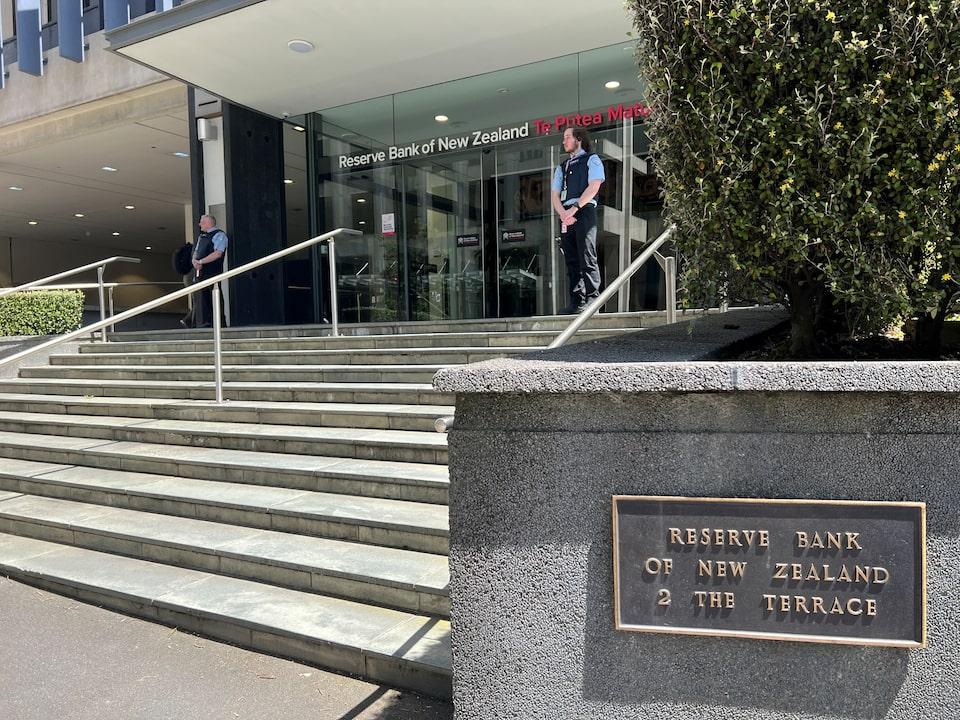
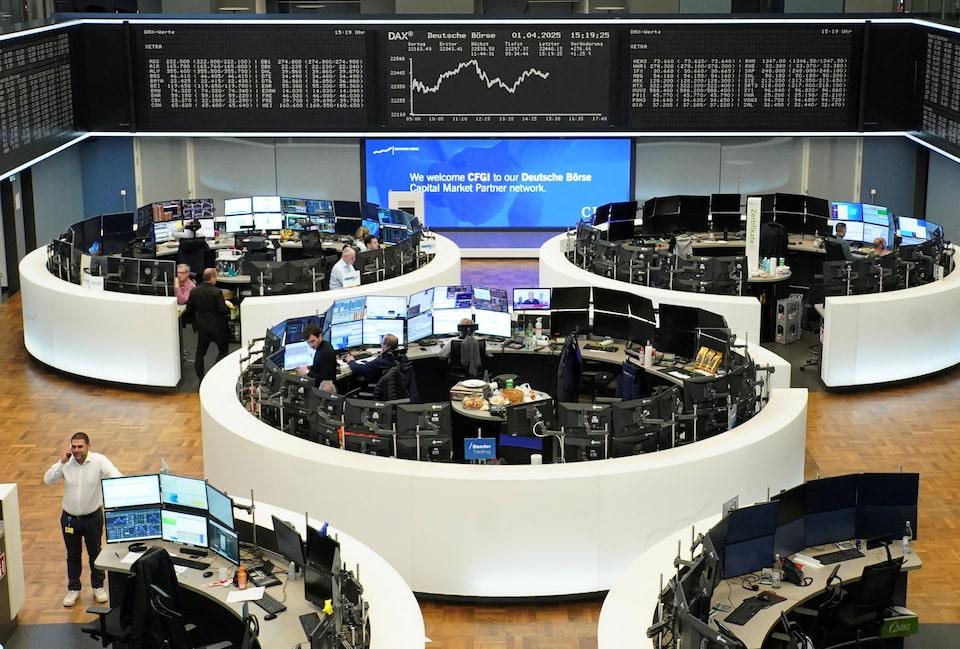
RBNZ cuts rates for fifth straight meeting Future policy decisions to be determined by inflation outlook Says as tariff impact becomes clearer, has scope to lower rates as appropriate Economists see possibly looser settings than previously forecast New Zealand dollar rises 0.3% to $0.5550 WELLINGTON, April 9 (Reuters) - New Zealand's central bank cut its benchmark rate on Wednesday, as widely expected, signalling a greater readiness to lower borrowing costs further as the economy faces headwinds from weak demand and trade barriers. The Reserve Bank of New Zealand (RBNZ) is the first in the region to conduct a policy review since the U.S. imposed sweeping import tariffs last week, causing global markets to spiral as policymakers grapple with heightened recession risks. Sign up here. The central bank cut the benchmark rate by 25 basis points to 3.50%, as widely expected, heightening economists' expectations for looser policy settings than previously expected. In minutes of the meeting, the Committee agreed that a 25 basis point reduction in the official cash rate (OCR) would be consistent with their mandate of maintaining low and stable inflation. "The recently announced increases in global trade barriers weaken the outlook for global economic activity. On balance, these developments create downside risks to the outlook for economic activity and inflation in New Zealand," the RBNZ said. "As the extent and effect of tariff policies become clearer, the Committee has scope to lower the OCR further as appropriate," the minutes added. All 31 economists in a Reuters poll had forecast the rate cut. The New Zealand dollar rose 0.3% to $0.5550, coming off a five-year low. Markets are now pricing in a 95% chance for a cut in May and for rates to be at 2.67% by the end of 2025. Capital Economics said the RBNZ statement was rather dovish signalling that further easing would be forthcoming in the months ahead. "We think the Bank will ultimately loosen policy settings to a greater degree than most are currently predicting," it added. The RBNZ statement added that having consumer price inflation close to the middle of its target band of 1% to 3% puts the Committee in the best position to respond to developments. TARIFF RISKS New Zealand, which faces a 10% tariff on exports to the U.S., is expected to fare relatively well as a soft New Zealand dollar offsets much of the impact but will be hit by weak economies of trading partners, economists have said. New Zealand's economy emerged from recession in the fourth quarter of 2024 with 0.7% quarterly growth. However, employment is expected to continue to rise in the first half of this year and sentiment remains soft. The RBNZ said in its statement that household spending and residential investment remain weak. ASB chief economist Nick Tuffley said it expects the central bank will have to cut to a stimulatory level and is pencilling in the cash rate falling to 2.75% from a previous expectation of 3.25%. "If the tariff war gets dialled back in tempo to more of a skirmish, then the RBNZ may not need to cut the OCR to a sub-neutral rate. But it appears that would take a lot of negotiation or position reversal," Tuffley added in note. The RBNZ's move on Wednesday marks the first interest rate decision since Christian Hawkesby took up the role of governor following Adrian Orr's unexpected resignation in March. New Zealand, which has cut rates by 200 basis points since August, is one of several central banks around the globe that have started cutting rates as inflation has eased. Concerns around a global downturn are now adding to their concerns. The central bank is not due to release updated economic forecasts until it meets in May. https://www.reuters.com/markets/rates-bonds/rbnz-cuts-rates-tariffs-loom-economists-expect-more-stimulus-2025-04-09/