2025-04-09 00:32
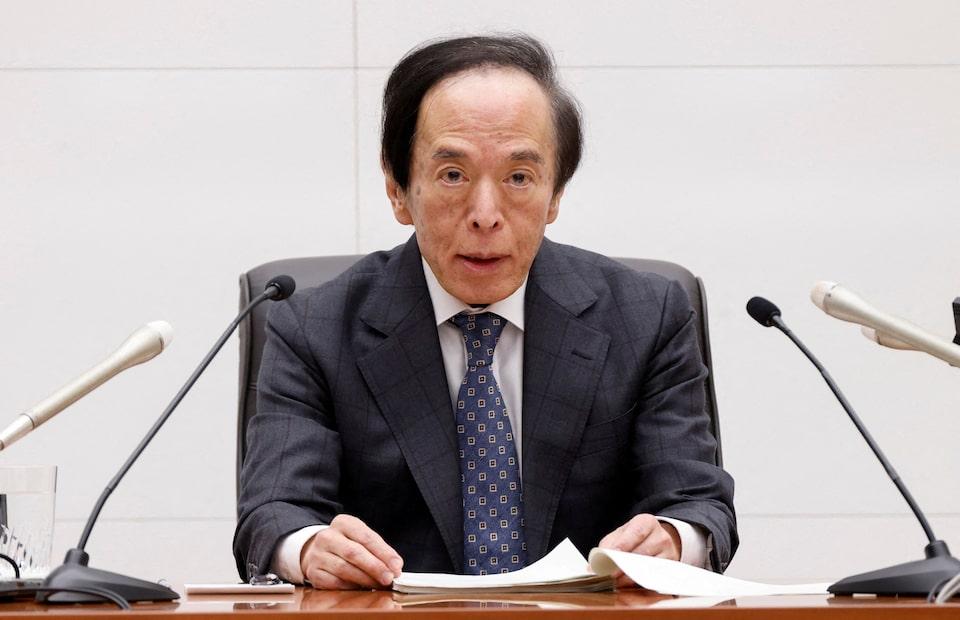
Ueda repeats BOJ will keep hiking rates if economy improves Underlying inflation accelerating as wage hikes continue BOJ must focus on risks such as tariff uncertainty Ueda avoids committing to bold action against Trump headwind BOJ board to meet April 30-May 1, issue quarterly forecasts TOKYO, April 9 (Reuters) - Bank of Japan Governor Kazuo Ueda said the central bank must scrutinise "without preconception" whether the economy is on track to meet its projection, suggesting the chance of a pause in interest rate hikes as U.S. tariffs jolt markets. While still below the central bank's 2% target, Japan's underlying inflation is gradually accelerating as wage hikes continue, Ueda said on Wednesday, adding that economic and price conditions were moving roughly in line with its forecasts. Sign up here. "But we need to pay due attention to risks, especially recent heightening uncertainty over developments in each country's trade policy," Ueda said in a speech, highlighting the BOJ's alarm over the potential damage from U.S. tariffs. Ueda reiterated that the BOJ will continue to raise interest rates if the economy continues to improve and move in line with its current projections. "We must, however, scrutinise without preconception at each policy meeting whether our forecasts will indeed materialise," Ueda said, suggesting the BOJ could stay on a holding pattern until there is more clarity on the impact of U.S. tariffs. The remarks come ahead of the BOJ's next policy meeting on April 30-May 1, when it is seen keeping interest rates steady at 0.5% and issuing fresh quarterly economic and price forecasts. The new forecasts, which will extend through fiscal 2027 for the first time, will offer clues on how the BOJ sees the balance between risks to growth from U.S. President Donald Trump's tariffs and domestic inflation pressure from rising food costs. The BOJ exited a radical stimulus programme last year and raised interest rates to 0.5% in January on the view Japan was on the cusp of sustainably achieving its 2% inflation target. Ueda has repeatedly stressed the bank's readiness to keep hiking rates to levels that neither cool nor overheat growth - seen by analysts as somewhere around 1-1.5%. But Trump's decision to impose sweeping tariffs worldwide, including on Japan, has complicated the BOJ's plan to continue raising interest rates from still-low levels. Most economists expect Trump's tariffs to knock 0.6 percentage point off Japan's economic growth in the current fiscal year ending in March 2026, a survey by the Japan Center for Economic Research released on Wednesday. The survey, conducted between March 27 and April 3, also showed most economists projecting the BOJ to hike rates again in the latter half of this year. Speaking earlier in parliament, Ueda said the BOJ's past decisions to raise interest rates were made with a focus on underlying inflation, which has gradually accelerated toward 2%. The decisions were also based on the view that removing excessive monetary support now will help the BOJ avoid raising rates sharply later to combat a too-high inflation rate, and ensure Japan's economy achieves sustainable growth, he added. When asked by a lawmaker to deliver stronger language committing to combat economic headwinds from tariffs, Ueda said only that there was still uncertainty about U.S. trade policy . "We will scrutinise developments, analyse how they affect the economy, prices and markets to come up with solid projections, and guide policy appropriately," Ueda said. https://www.reuters.com/world/japan/boj-will-scrutinise-us-tariff-impact-setting-policy-governor-ueda-says-2025-04-09/
2025-04-09 00:00
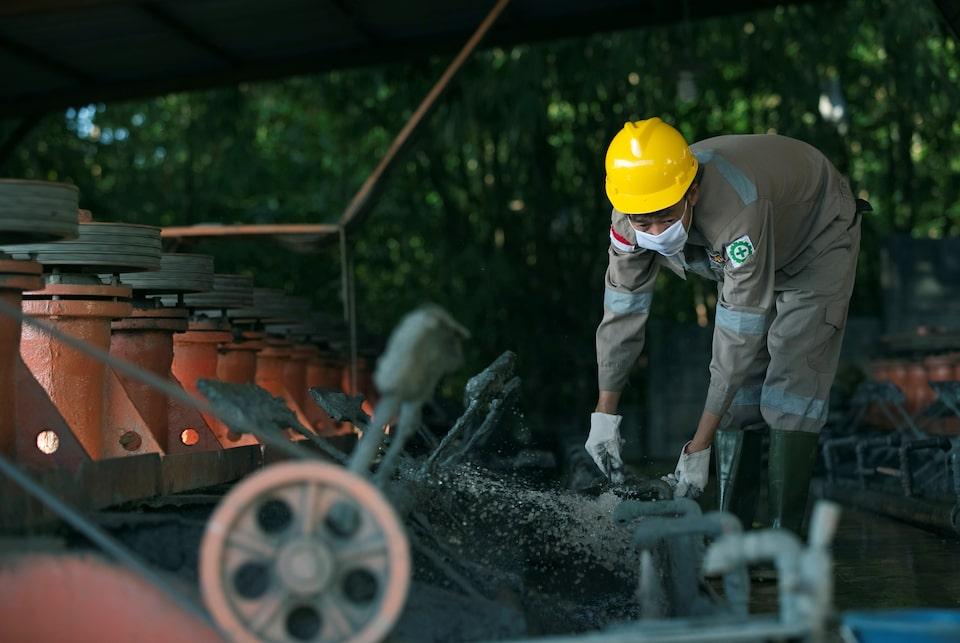
LONDON, April 8 (Reuters) - Zinc has been the consistent under-performer of the London Metal Exchange (LME) base metal pack since the start of 2025 and this year's benchmark smelter treatment charge reinforces the galvanising metal's bear narrative. Korea Zinc (010130.KS) , opens new tab and Canadian miner Teck Resources (TECKb.TO) , opens new tab have agreed annual fees of $80 per metric ton for the smelter to process Teck's zinc concentrates into refined metal, according to Bloomberg. Sign up here. That's a sharp drop from last year's benchmark of $165 per ton and the lowest outcome in at least 50 years, according to consultancy CRU. Given smelters get to charge more in times of raw materials over-supply and less during periods of scarcity, this year's super-low benchmark might at first glance seem a super-bullish signal. But only relative to last year's benchmark deal. Relative to spot treatment charges, which turned negative towards the end of 2024, this year's benchmark is a sign that both smelters and miners expect mined zinc supply to recover strongly in 2025. YEAR OF UNEXPECTED FAMINE Last year's benchmark processing deal, negotiated by the same two companies, was out of date almost as soon as the ink had dried. Spot treatment charges slumped over the remainder of 2024, touching an unprecedented low of minus $40 per ton in the fourth quarter, according to Chinese data provider Shanghai Metal Market (SMM). The yawning disconnect with the annual benchmark showed just how unexpected was the shortfall of zinc concentrates. A year of expected plenty turned into a year of famine due both to price-related mine closures in 2023 and a string of supply hits such as the fire at the big new Ozernoye mine in Russia. At its April 2024 meeting The International Lead and Zinc Study Group (ILZSG) forecast global mine production to rise by 0.7% relative to 2023. The reality was a 2.8% contraction, marking the third consecutive year of falling output, it said in a February update. The squeeze on raw materials availability caused global refined zinc production to fall by 2.6% last year, pulling the market into a 62,000-ton supply-demand deficit. MINE SUPPLY CRANKS UP Chinese spot treatment charges for imported zinc concentrates have bounced sharply from their late 2024 lows and were last assessed by SMM at $35 per ton. China's zinc concentrate import volumes are also recovering after falling by 13% in 2024, the first year-on-year decline since 2021. Inbound shipments over January and February jumped by 33% relative to the same two months last year. China has started importing zinc concentrate from the Democratic Republic of Congo for the first time in many years, attesting to the restart of the Kipushi mine , opens new tab, majority owned and operated by Ivanhoe Mines (IVN.TO) , opens new tab. Imports from Russia more than doubled year-on-year in January-February, suggesting the delayed Ozernoye mine is now also ramping up production. Improved concentrates availability and recovering spot treatment terms are encouraging Chinese zinc smelters to lift run-rates. Production of refined zinc in the world's largest producer fell by 3.4% last year, according to ILZSG. Output was still down by 3.0% in the first quarter of this year, according to SMM, but the data provider's latest survey suggests production in March itself was up by 4.0% on March last year. Output is expected to rise even faster in April. FEEDING THE BEAR NARRATIVE If mined output continues to rise, Chinese smelters will be more than happy to process it into more metal. Which is why zinc is out of favour with metals analysts right now. Global demand grew by just 0.1% last year, according to ILZSG and zinc's prospects this year don't look encouraging. Zinc's heavy usage in construction leaves it exposed to a globally weak sector, while demand from the broader manufacturing sector will be buffeted by U.S. President Donald Trump's tariff turbulence. The prospect of too much supply flowing into a weak-demand environment is why LME three-month zinc has fallen below the $2,600-per ton level for the first time since August and is now down by 13% on the start of the year. ANOTHER SURPRISE? The scale of the zinc price collapse injects a note of uncertainty into the market's bear script. Were the zinc price to fall much further, it would be back at the depressed levels that caused multiple mine suspensions in 2023, contributing to last year's scarcity. Zinc supply has proven to be highly price sensitive in recent years, which is why raw material supply-chain dynamics can shift quickly, wrong-footing smelters. Last year's smelter processing benchmark proved an unreliable guide to how the zinc raw materials market ended up playing out. The jury is out on whether this year's will be any more reliable. The opinions expressed here are those of the author, a columnist for Reuters https://www.reuters.com/markets/commodities/annual-zinc-processing-benchmark-looks-bullish-isnt-andy-home-2025-04-08/
2025-04-08 23:40
Canadian crude oil discount to US oil widened after shutdown South Bow stock tumbled to lowest since October Company estimates around 3,500 barrels of oil was leaked NEW YORK/HOUSTON, April 8 (Reuters) - The Keystone oil pipeline from Canada to the United States was shut on Tuesday after an oil spill near Fort Ransom, North Dakota, its operator South Bow (SOBO.TO) , opens new tab and the state's Department of Environmental Quality said. The 4,327-km (2,689-mile) Keystone pipeline is a major conduit for the supply of crude oil from Alberta to U.S. refineries in Illinois, Oklahoma and along the U.S. Gulf Coast. Some U.S. refiners, especially in the Midwest, rely heavily on the type of oil produced in Canada and delivered by Keystone. Sign up here. South Bow shut down the pipeline after its leak detection systems detected a pressure drop, a spokesperson said. Bill Suess, a program manager at the North Dakota Department of Environmental Quality said he expects the pipeline to be shut until at least Wednesday. A South Bow spokesperson said that the affected segment is isolated, containing the release, with the system still shut down as crews recover the oil. South Bow late on Tuesday said an estimated 3,500 barrels of oil was released due to the rupture. South Bow did not provide a timeline for the restart. The company's shares were last down nearly 4% to C$31.99, after hitting their lowest since October at C$30.99 earlier in the session. RBC analysts noted that Keystone's physical integrity is one of the biggest risks for South Bow investors. Oil market participants were bracing for supply disruptions from the shutdown, two crude oil traders told Reuters, requesting anonymity as they are not authorized to speak to the media. The price of Western Canadian Select crude oil fell to a wider discount against U.S. West Texas Intermediate crude. WCS for May delivery traded $11.25 below WTI on Tuesday, compared to a $9.20 discount on Monday, a broker said. At least five prior spills have been reported on Keystone since its start-up in 2010, which took one to three weeks to resolve, said Rory Johnston, energy analyst and founder of the Commodity Context newsletter. The most recent major spill was in December 2022, when around 14,000 barrels leaked in rural Kansas due to an issue that originated during construction of the pipeline. It was the biggest U.S. oil spill since 2013, and shut a portion of the pipeline for 21 days. https://www.reuters.com/business/energy/keystone-oil-pipeline-shut-after-spill-north-dakota-2025-04-08/

2025-04-08 23:37
WASHINGTON, April 8 (Reuters) - U.S. Agriculture Secretary Brooke Rollins said on Tuesday that new deals could be struck with other countries over trade tariffs by the end of this week. Rollins made the comments in an interview to Fox News host Bret Baier on the network's "Special Report" show. Sign up here. WHY IT'S IMPORTANT President Donald Trump said last week that he would impose a 10% baseline tariff on all imports to the U.S. and higher duties on dozens of other countries, including some of Washington's biggest trading partners, rattling global markets and bewildering U.S. allies. After China retaliated with its own tariffs, the United States said on Tuesday that 104% duties on imports from China would take effect shortly after midnight, even as the Trump administration moved to quickly start talks with other trading partners targeted by Trump's sweeping tariff plan. KEY QUOTE "I believe, sincerely, it will be sooner rather than later. I believe we'll be hearing about new deals that are being struck, perhaps by the end of the week," Rollins said, adding 70 countries had reached out to the U.S. for talks. CONTEXT U.S. stocks dropped on Tuesday , opens new tab for a fourth straight trading day since Trump's tariffs announcement last week. The administration has scheduled talks with South Korea and Japan, two close allies and major trading partners, and Italian Prime Minister Giorgia Meloni is due to visit next week. Trump's sweeping tariffs have raised fears of recession and upended a global trading order that has been in place for decades. https://www.reuters.com/world/us/us-agriculture-chief-says-new-deals-may-be-struck-over-tariffs-by-end-week-2025-04-08/
2025-04-08 23:27
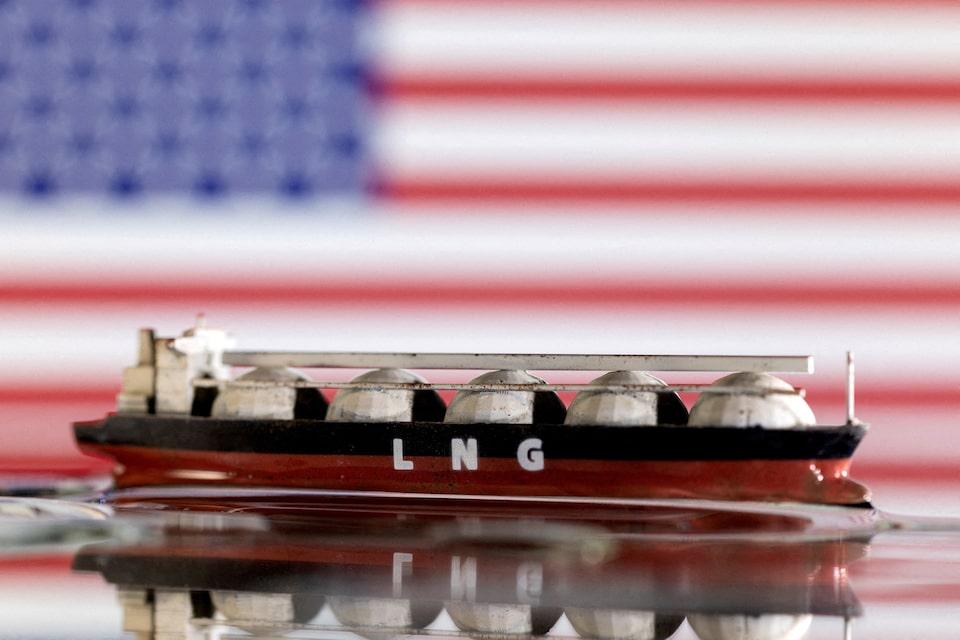
April 8 (Reuters) - U.S. liquefied natural gas producer NextDecade (NEXT.O) , opens new tab said on Tuesday it had signed an agreement with a subsidiary of top oil producer Saudi Aramco (2222.SE) , opens new tab to supply the superchilled gas from its Rio Grande facility for 20 years. The United States is already the world's largest exporter of LNG and producers have plans in place that would double capacity in coming years. Sign up here. Aramco is seeking to become a big player in the LNG market, and had been in discussion about a supply deal with NextDecade for some time. The two signed a non-binding agreement in June 2024. The Aramco subsidiary will purchase 1.2 million tonnes per annum of LNG from the fourth liquefaction facility, known as a train, at Rio Grande. The deal is subject to NextDecade taking a positive final investment decision (FID) on the project. The Rio Grande LNG export plant has suffered repeated delays and been in development for years. The first train is expected to reach completion by 2027. The expected cost of the first phase of the project, including the first three liquefaction trains, is about $18 billion. The company made an FID to construct the project in 2023. LNG developers typically take FIDs on projects when they have lined up enough supply deals to obtain the financing needed to build. Aramco has shown interest in both taking equity positions in U.S. LNG projects and signing long-term LNG supply agreements with U.S. producers. Aramco last June signed a Heads of Agreement with Sempra Infrastructure for 5 million tonnes per annum of LNG from its Port Arthur LNG Phase 2 expansion project. The HoA could also see Aramco taking a 25% stake in the 13.5 million tonne per annum Phase 2 project should it get a financial greenlight. (This April 8 story has been corrected to say that the project's first three trains are expected to cost $18 billion, not that the first train is expected to cost $18 billion, in paragraph 5) https://www.reuters.com/markets/deals/nextdecade-signs-20-year-deal-with-aramco-supply-lng-rio-grande-facility-2025-04-08/
2025-04-08 23:25
The suspension hits projects by Shell, BP and Trinidad's NGC Companies have until May 27 to wind down activities Trinidad's government seeks meeting with Washington April 8 (Reuters) - The United States has revoked two licenses it had granted in recent years for the development of offshore natural gas projects between Trinidad and Tobago and Venezuela, the Caribbean country's prime minister, Stuart Young, said on Tuesday. Trinidad is the largest exporter of liquefied natural gas (LNG) in Latin America and one of the world's largest exporters of ammonia and methanol, but the Caribbean island was aiming to develop offshore fields in Venezuela and on the maritime border to counter its declining reserves and secure supply. Sign up here. The projects are seen as the only real opportunities in the near term for Venezuela to monetize its vast gas reserves and begin exports to open a much-needed new source of revenue. The licenses, which have allowed Shell (SHEL.L) , opens new tab, BP (BP.L) , opens new tab and Trinidad's National Gas Company (NGCTT.UL) to plan the projects as exemptions to the U.S. sanction regime on Venezuela, now have a May 27 deadline for the companies to wind down activities, Young said in a press conference. Venezuela in 2023 granted Shell a 30-year license to operate the Dragon field, which contains 4 trillion cubic feet of natural gas reserves. The project aimed to begin gas exports to Trinidad next year to be turned into LNG. A similar license was granted by Venezuela last year to BP to develop a cross-border field called Manakin-Cocuina. U.S. licenses are needed for the companies to negotiate, plan and develop the projects because of Washington's sanctions on Venezuela's energy industry and its state-owned company PDVSA. U.S. President Donald Trump's administration last month began suspending many authorizations linked to Venezuela, including to U.S.-based Chevron (CVX.N) , opens new tab, Italy's Eni (ENI.MI) , opens new tab and Spain's Repsol (REP.MC) , opens new tab, giving them all until May 27 to wind down operations and exports. The United States has accused Venezuelan President Nicolas Maduro of not doing enough to restore democracy and secure the return of migrants illegally in the U.S. Venezuelan officials have said the sanctions amount to an economic war. Shell declined to comment. BP and Venezuela's government did not immediately respond to requests for comment. Trinidad and Tobago's prime minister, Young, said the revocation stops any payments to Venezuela related to the projects. Trinidad is seeking a meeting with the U.S. government to discuss the suspensions and also its recent tariff imposition on Chinese shipping, which could harm the Caribbean island and others in the region. https://www.reuters.com/business/energy/us-licenses-trinidad-venezuela-gas-projects-revoked-trinidad-says-2025-04-08/