2025-04-08 23:00
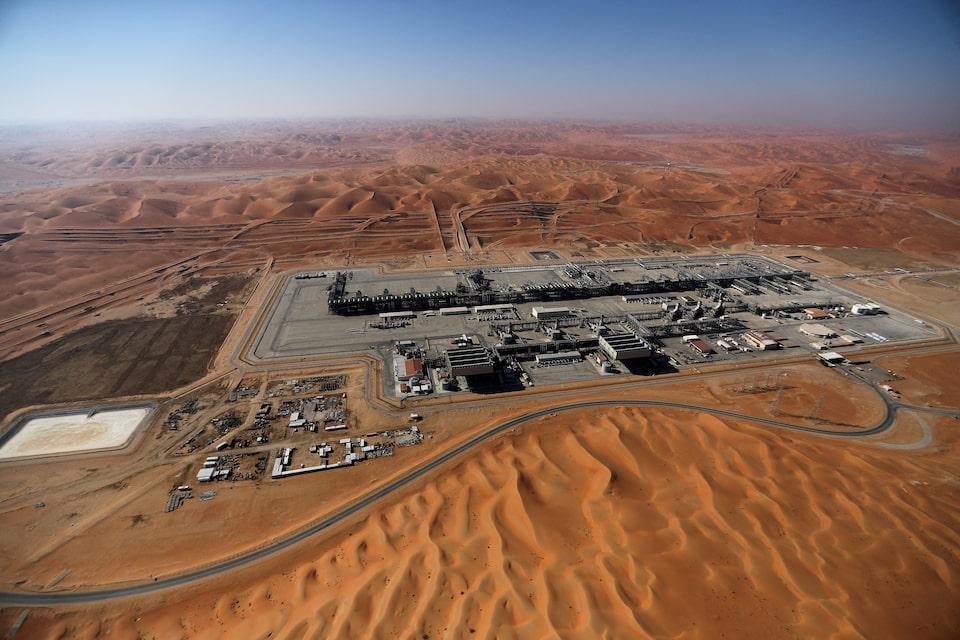
Benchmark Brent crude oil has neared four-year lows Oil revenue made up 62% of state budget last year Kingdom and sovereign fund need more debt, analysts say Oil giant Aramco, long-time cash cow, slashing 2025 dividends DUBAI, April 8 (Reuters) - Saudi Arabia, with its wealth linked inextricably to oil revenue, faces mounting pressure to raise debt or cut spending after a plunge in crude prices, complicating plans to fund an ambitious agenda to diversify its economy. Oil prices have tumbled to near four-year lows on fears a trade war will hit global growth and after a surprise decision by some OPEC+ oil producers, including Saudi Arabia, to boost their output plans. Sign up here. The price decline threatens to erase tens of billions of dollars of Saudi revenue, along with a planned drop in dividends from state-controlled energy giant Saudi Aramco. The International Monetary Fund and economists estimate Riyadh needs oil prices of over $90 a barrel to balance its budget. Benchmark Brent prices slipped below $65 this week. VISION 2030 While Saudi Arabia funds its Vision 2030 reform program off budget, the government needs to spend on mammoth infrastructure projects linked to the program, which aims to wean the economy off its self-declared "oil addiction." The $925 billion Public Investment Fund, which is steering Vision 2030, also partly relies on oil, including through its shares in Aramco. "Saudi Arabia is likely to rely on debt financing, and it will have to delay or scale back some planned contracting awards given 2024 was already in a twin deficit," said Karen Young, senior research scholar at Columbia University's Center on Global Energy Policy, referring to fiscal and current account deficits. Before the U.S. tariffs announcement, she said analysts had expected Saudi public debt to surge by $100 billion in the next three years. It jumped 16% to over $324 billion in 2024, official figures show. Aramco's dividends are also expected to fall by a third this year, meaning the government and PIF will receive about $32 billion and $6 billion less, respectively, Reuters calculations show. Oil generated 62% of government revenue last year. Riyadh has not forecast oil revenue this year but in its 2025 budget released in November, it projected a 3.7% fall in total revenue. RECALIBRATING PIF is also likely to seek additional financing, analysts said. The fund's Governor Yasir Al-Rumayyan said last year it intends to boost annual investments to $70 billion between 2025 and 2030 from $40-50 billion. PIF declined to comment. Saudi Arabia was among the largest emerging market debt issuers last year and the government has already raised $14.4 billion in bonds this year. PIF, which borrowed $24.8 billion last year via bonds and loans, has already raised $11 billion in 2025. Several other state-linked entities have also raised billions. PIF has ploughed hundreds of billions of dollars into the local economy, in everything from a camel dairy firm to NEOM, a gargantuan futuristic city in the desert. Projects ahead include the 2029 Asian Winter Games, set to feature artificial snow and a man-made freshwater lake, and the 2034 World Cup, for which 11 new stadiums will be built and others renovated. The finance ministry is "recalibrating and prioritising" spending to ensure the economy, including the private sector, can "catch up" while avoiding "overheating the economy," a spokesperson said. "We are assessing the recent developments and stand ready to take whatever policy decisions needed to ensure that our fiscal position remains strong," the spokesperson said. "We remain confident that most of our vision targets are either achieved or on track and we will deliver on the key events we are hosting." The plunge in oil coincides with geopolitical realignments as U.S. President Donald Trump upends a global economic order in place since World World II. Trump has pressured OPEC and its de facto leader Saudi Arabia to cut oil prices and urged Riyadh to invest $1 trillion in the United States. He is due to visit Saudi Arabia, Qatar and the United Arab Emirates on his first foreign visit in May. Lower oil prices "will likely lead to additional re-prioritisation of major projects, further rationalisation, revision of delivery timelines and a reduction in project work forces," said Neil Quilliam, associate fellow at the Middle East and North Africa Programme of London-based think tank Chatham House. Yet, the government is likely to view the short-term risk of lower oil prices as worth the long-term benefit, Quilliam said, noting the kingdom enjoys a low debt-to-GDP ratio and confidence from lenders. S&P raised Saudi Arabia's rating to 'A+' from 'A' last month, but said unfavourable oil price movements and more debt-funded investments were among factors that could lower that rating. https://www.reuters.com/markets/commodities/how-oil-price-plunge-complicates-saudi-arabias-economic-agenda-2025-04-08/
2025-04-08 23:00
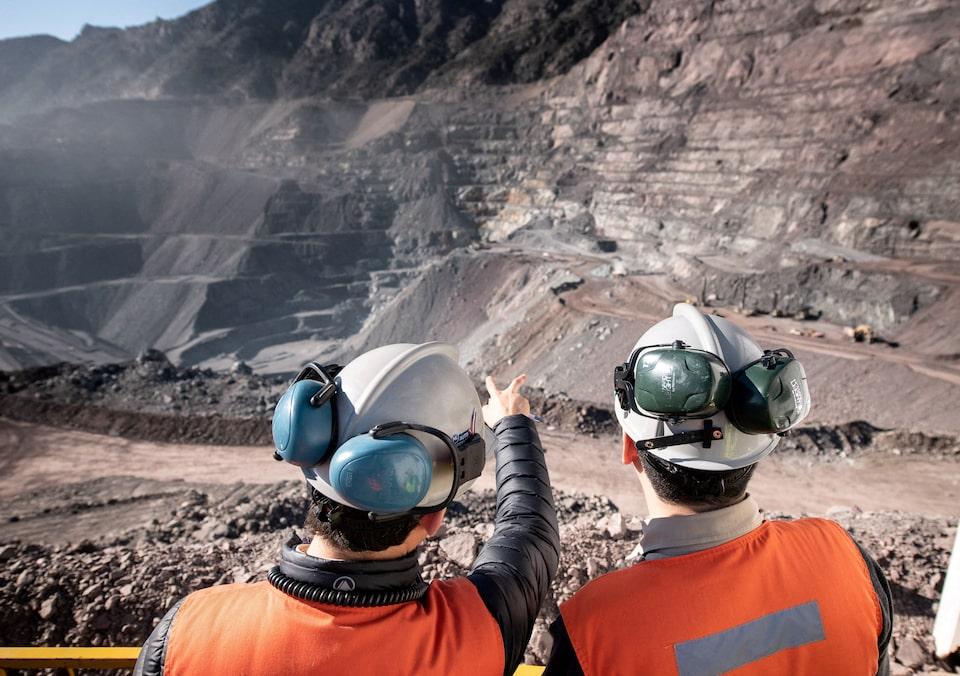
SANTIAGO, April 8 (Reuters) - Chile needs to speed up its permitting processes to help copper mining expand ahead of a large supply gap expected in the coming years, Anglo American (AAL.L) , opens new tab Chile CEO Patricio Hidalgo said on Tuesday. Chilean President Gabriel Boric has pledged to cut the permitting timeline by a third, yet a reform that would streamline the process is still under debate in Congress. Sign up here. Numerous mining companies in Chile, which supplies about a quarter of the world's copper, have urged a swift passage of the initiative. Anglo American, one of the world's biggest miners that was a takeover target of bigger rival BHP (BHP.AX) , opens new tab last year, in Chile operates Los Bronces and owns 44% of Collahuasi, two major copper mines. Hidalgo said demand for copper in 2040 was expected to be as large as 80 Los Bronces mines due to the needs of the energy transition, emerging economies and digitalization. Los Bronces produced 172,000 metric tons of copper in 2024. "When one sees this demand or this structural gap that will occur in the copper market, we need much more agility to bring copper to the market," he said. He also noted the potential for partnerships to help maximize production, such as Anglo American's recent agreement to share infrastructure at Los Bronces with the neighboring Andina mine owned by state-run copper miner Codelco. The deal, which aims to increase production by 120,000 metric tons a year, was referenced by Freeport-McMoRan (FCX.N) , opens new tab CEO Kathleen Quirk at the CRU copper conference in Santiago on Tuesday. "We need to do more of those types of deals where we're sharing essentially," she told the conference. Hidalgo said he saw potential for further infrastructure sharing deals in Chile. "When you look at the Andean corridor ... you see all the potential synergies. This is a call to challenge certain paradigms in the sector." https://www.reuters.com/markets/commodities/anglo-american-urges-faster-permits-chile-close-copper-supply-gap-2025-04-08/
2025-04-08 22:54
LONDON, April 9 (Reuters) - Peabody Energy (BTU.N) , opens new tab is reviewing all options related to its $3.78 billion acquisition agreement with Anglo American (AAL.L) , opens new tab for some of its Australian steelmaking coal assets after a fire halted production at a mine included in the deal. The deal was signed last year and expected to close in mid-2025. Sign up here. Production at Anglo American's Moranbah North coal mine - located in the Bowen basin in Queensland, Australia - was suspended after an underground fire broke out at the mine last week. Peabody said on Tuesday it was in conversation with Anglo American to better understand the impacts of the event and would preserve all rights and protections under its purchase agreements. Anglo American said it was providing information to Peabody on the suspension at Moranbah North. "At the mine, conditions remain stable as we progress with developing our staged re-entry management plan and risk assessment," it said in an emailed statement on Wednesday. U.S.-based coal producer Peabody said it had engaged in preliminary discussions with potential investors regarding permanent financing for the acquisition. Peabody's deal for Anglo American's assets included an upfront payment of $2.05 billion at completion, deferred cash consideration of $725 million and another potential $550 million. It also included a contingent cash consideration of $450 million linked to the reopening of the Grosvenor mine, after another fire broke out there in June, ahead of the acquisition. Anglo American's Peabody deal was its first major divestment in a wider restructuring plan. The London-listed company, which last year fended off a $49 billion takeover bid from the world's biggest miner BHP Group (BHP.AX) , opens new tab, has agreed to sell its nickel and coal assets and is in the process of divesting platinum and diamonds to focus on copper and iron ore. https://www.reuters.com/markets/deals/peabody-energy-reviews-options-378-billion-deal-anglo-americans-assets-2025-04-08/

2025-04-08 22:35
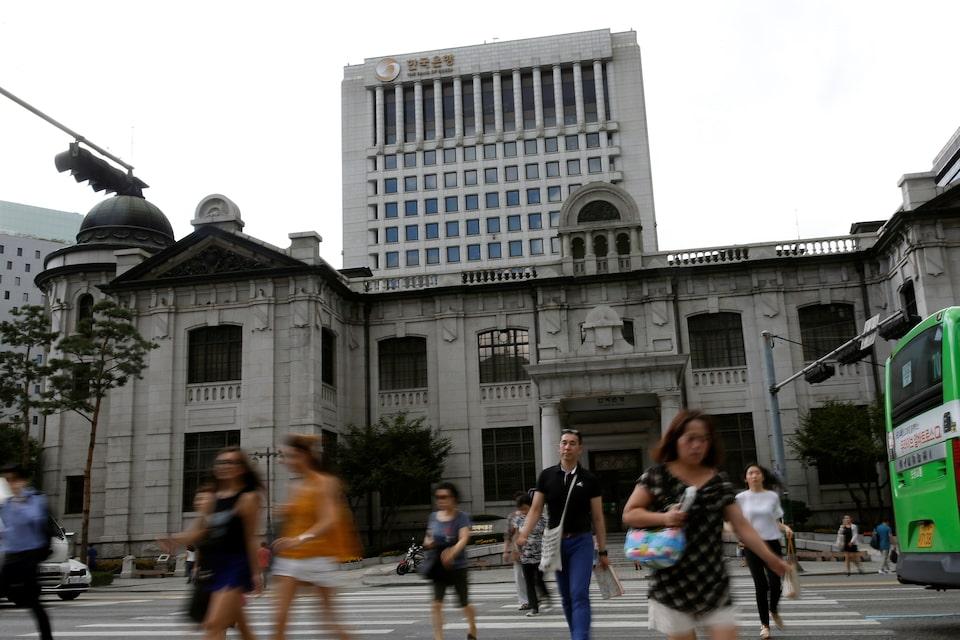
BOK may accelerate rate cuts amid recession risk U.S. tariffs impact South Korean exports, economy Economists predict deeper rate cuts due to tariff shocks SEOUL, April 9 (Reuters) - South Korea's central bank may be forced to bring forward or deepen interest rate cuts this year as Asia's fourth-largest economy grapples with the risk of recession due to the escalating U.S. trade war. Until recently, the Bank of Korea was expected to make two quarter-point cuts in the benchmark interest rate for the remainder of the year - one in the second quarter and another in the third. Sign up here. The global market meltdown and drastic changes to the outlook brought on by tariffs now mean the bank's next cut could come as soon as next week with even deeper easing likely to be needed to revive a struggling economy in the months ahead. Citi Research on Monday brought its projection forward for the next BOK rate cut to April 17 from May 29, while ING on Friday also said it may bring forward its forecast for a cut to next week from May. The increasingly dovish rate expectations come as central banks shift their policy focus to supporting economic activity, away from immediate concerns about inflation or currency stability. Policy decisions in New Zealand, India, the Philippines and Singapore are due over the coming week with all their central banks expected to ease monetary settings. "We are reassessing downside risks to growth this year due to the 25% tariff announced last week as well as the fallout expected from all the retaliatory measures," said an official familiar with the BOK's thinking, referring to U.S. President Donald Trump's sweeping tariffs last week and the BOK's revised quarterly outlook due in May. "Depending on how we review this downside risk, it's possible to adjust the pace of easing," said the official, who asked not to be named due to restrictions on talking to media. South Korea was slapped with a 25% tariff on exports to the United States, among the highest imposed on a security ally, amid pressure from Washington to slash its $55.7 billion trade deficit with the Asian factory powerhouse. The tariff blow comes at a sensitive time for South Korea, which is dealing with a leadership vacuum after months of political turmoil. Yoon Suk Yeol was removed from office last week, four months after his failed bid to impose martial law, which has left the economy without clear policy direction. The political crisis also came as Korea Inc. faces increasing pressure to raise U.S.-bound investment and relocate production to America. Finance minister Choi Sang-mok said on Tuesday U.S. tariffs will deal a "huge blow" to South Korean exporters including those with production in Vietnam and elsewhere, as weakening demand threatens the trade-reliant economy. The BOK cut rates in February, its third reduction since it started pulling rates away from a 15-year high in October. Government bond pricing suggests investors expect further easing. The yield on the policy-sensitive three-year government bond fell to 2.405% from 2.569% at the end of March. The BOK is expected to further downgrade its economic growth forecast this year after cutting it to 1.5% in February from 1.9% previously. Economists agree that the impact of the tariffs and the market upheaval they have unleashed may open the door to deeper rate cuts by the BOK. "The estimated negative impact of tariff shocks on both economic growth and inflation suggests a sharper rate cutting cycle," Citi research economist Kim Jin-wook said. He expects cumulative cuts of around 150 basis points by the end of 2026, or six 25 bps cuts to 1.25% from the current 2.75%. While currency pressures pose some constraint to central banks, economic growth is now expected to remain a priority. The won was one of Asia's worst performing currencies last year and made its sharpest daily decline against the dollar in five years on Monday. It was trading at 1,472.3 per dollar on Tuesday. "The greenback is gaining amid inflation concerns and the flight to safety, which leaves the won under downward pressure," Lee Seung-heon, former senior deputy governor of the BOK, said. "Having said that, policymakers also need to consider growing downside risks to the economy." https://www.reuters.com/markets/rates-bonds/trade-war-pressures-south-korea-cut-rates-faster-deeper-2025-04-08/
2025-04-08 22:13
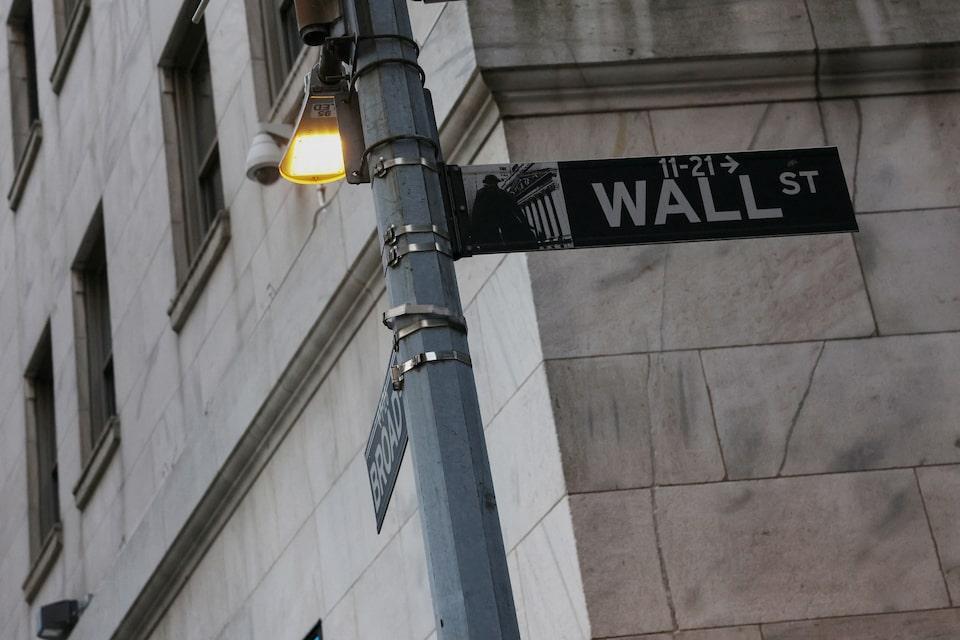
April 8 (Reuters) - The S&P 500 closed below 5,000 points for the first time in almost a year, reversing a strong morning rally as hopes faded for any imminent U.S. delays or concessions on tariffs ahead of a midnight deadline. The benchmark index (.SPX) , opens new tab fell 1.6% on Tuesday marking a $5.8 trillion loss in market value since President Donald Trump unveiled hefty global tariffs against U.S. trading partners on Wednesday. This represented more than 12% for its biggest four-day percentage decline since the pandemic. Sign up here. By finishing almost 19% below its record close on Feb. 19, it also was on the cusp of a 20% selloff that would denote a bear market. The Dow Jones Industrial Average (.DJI) , opens new tab fell 0.84%, while the Nasdaq Composite (.IXIC) , opens new tab 2.15%. COMMENTS: MARK MALEK, CHIEF INVESTMENT OFFICER, SIEBERT FINANCIAL, NEW YORK “It’s not good, this kind of market close. Even though the rally lost steam in the afternoon, we could have, should have had a better close. Stocks have already factored in a trade war and there wasn’t enough new news to knock the market down further by changing what is already priced in materially. There are going to be a lot of technical traders tonight scratching their heads. “But I’m still slightly positive, which is rare for me recently. I think the body language coming from the administration signals that they’d rather negotiate, that the 104% tariffs on China we heard about later in the session are a negotiating tactic.” PETER TUZ, PRESIDENT, CHASE INVESTMENT COUNSEL CORP, CHARLOTTESVILLE, VIRGINIA "Early in the day, the market kind of had some indication that there might be a quicker fix to the tariff issue than we thought last week. But as the day wore on and the news came out, that thought went away and uncertainty about everything -- earnings, tariffs -- going forward just grew again and the market sold off." "I don't even know how you begin to make an (earnings) estimate for a lot of companies right now. ... So I just view any earnings estimate made right now for a lot of companies and for the S&P 500 as fraught with huge potential for change, probably to the downside. And it's just hard to put a value on the market in many stocks until you have some comfort in the earnings going forward." CHRIS GRISANTI, CHIEF MARKET STRATEGIST, MAI CAPITAL MANAGEMENT, NEW YORK “I found the market reaction today troubling. Of course, we were elated to see the strong market this morning, and then making this finish that much worse, because it took our joy and turned it into sorrow. “But on a more technical level, it makes a lot of sense to me, because how can you really make meaningful investments at this stage when there's so much uncertainty? I think you need a level of humility here to be able to admit that there's a lot of stuff we just don't know. I strongly think, at this point, ‘caution’ is the better watch word, rather than ‘looking for opportunities’. “I think it will be difficult for the economy to avoid a recession, even if the tariffs disappeared tomorrow. Because I think things are very seized up, meaning things are not moving because the businesses, especially, don't know what decisions to make. So, they're just not making any decision. So, I think we're just about beyond the point of no return. We're going to start seeing first quarter numbers starting on Friday, I wouldn't be at all surprised to see companies pulling guidance left and right that they gave in January. There's a lot of bad stuff that still has the potential to happen over the next couple of weeks.” https://www.reuters.com/markets/us/global-markets-stocks-quotes-2025-04-08/
2025-04-08 21:45
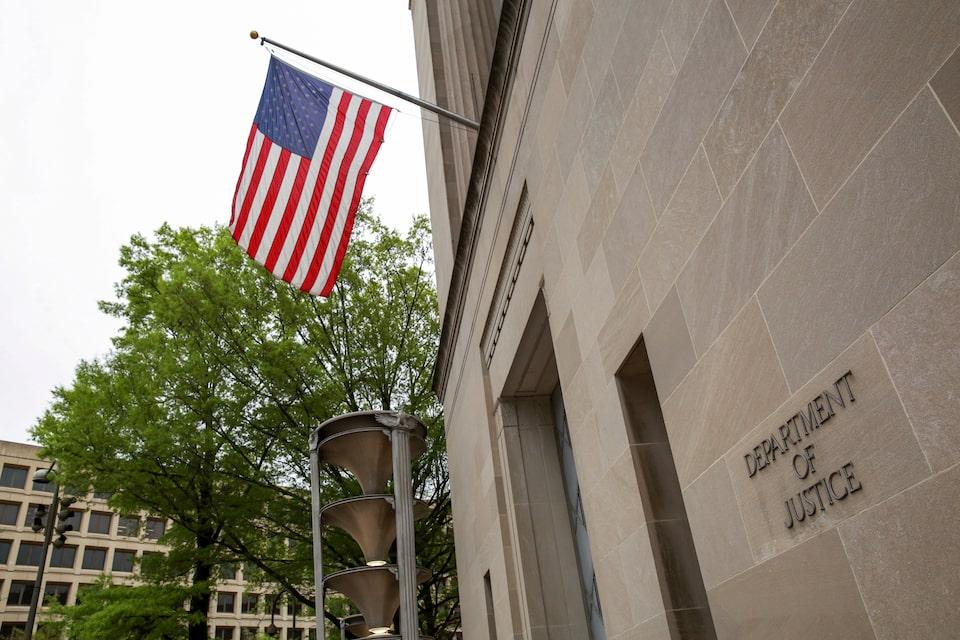
April 8 (Reuters) - The largest U.S. egg producer, Cal-Maine Foods (CALM.O) , opens new tab, is cooperating with a U.S. Department of Justice investigation into high egg prices and whether producers have conspired to raise them, the company said on Tuesday. The DOJ sent Cal-Maine a civil investigative demand last month, the Ridgeland, Mississippi-based company said in a regulatory filing, adding that the eventual scope, duration and outcome of the investigation could not be predicted at the time. Sign up here. Abigail Slater, head of the DOJ's antitrust division, has said the division will prioritize enforcement against anticompetitive conduct in U.S. consumer markets. Egg prices have declined in recent weeks from record highs, though their wholesale cost is still up 60% from this time last year at $3 per dozen, according to USDA data. Weaker demand and a lull in new cases of bird flu have helped cool prices, analysts said. Industry experts said Friday that tariffs levied by the Trump administration could boost the price of imported eggs. https://www.reuters.com/world/us/cal-maine-says-cooperating-with-justice-departments-probe-into-high-egg-prices-2025-04-08/