2025-04-08 21:10
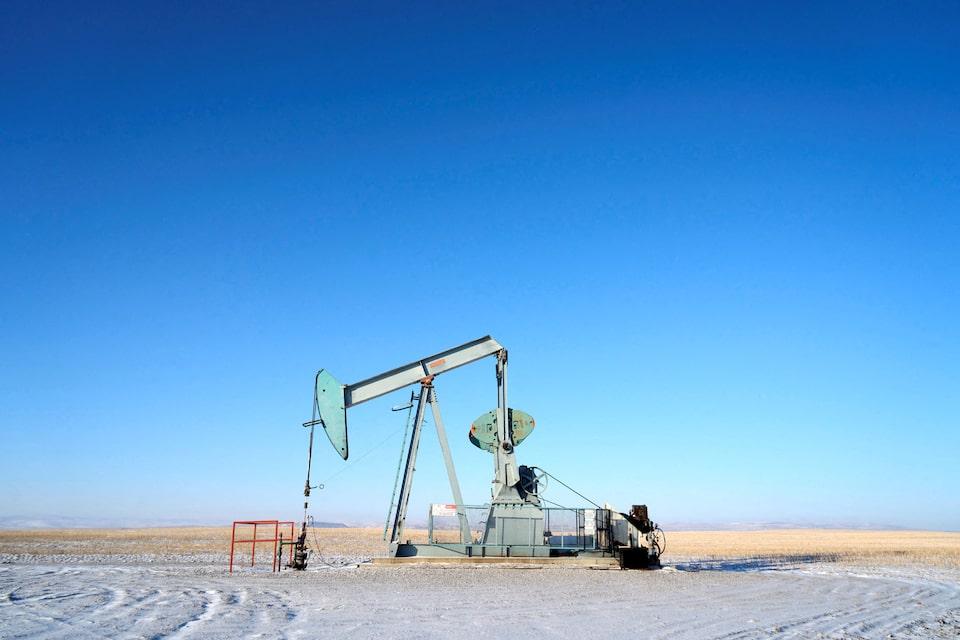
Global oil prices at four-year lows after tariff-related selloff Canadian oil production growth this year could be limited if lower prices persist, economists say Canadian companies holding off on making changes for now TORONTO, April 8 (Reuters) - CEOs of Canadian oil and gas producers said on Tuesday they are seeking to avoid making abrupt decisions about spending or production, as global oil prices hit four-year lows and recession fears grow. Canada, the world's No. 4 oil exporter, was spared the Trump administration's broad global tariffs on April 2 but faces U.S. tariffs on steel and cars. Sign up here. "My suspicion is that most companies will work to invest through this cycle, though I would also say that in price downturns, this industry does a really good job of shedding costs," said Jon McKenzie, CEO of oil sands producer Cenovus Energy (CVE.TO) , opens new tab, in an interview in Toronto. "We'll probably see some cost reductions throughout the industry." Doug Bartole, CEO of InPlay Oil (IPO.TO) , opens new tab, said his company does not foresee reducing production or capital spending in the short term. "Don't make any rash decisions. Let's take a longer view of things and see where it all settles out," Bartole said. But he said that could change if oil continues its slide. "I think $50 oil would change things a bit more, obviously," Bartole said. "We can easily pull back capital. We're a small company, we're nimble. We make decisions quick." On Tuesday, ATB Capital Markets lowered its price target for InPlay shares, citing "the current WTI pricing environment." Brent futures and West Texas Intermediate crude futures have slumped since U.S. President Donald Trump's April 2 announcement of broad tariffs. Oil prices fell further on Tuesday, trading around $60 per barrel, over recession fears exacerbated by trade conflict between the United States and China. ATB said in a research note it still expects Canadian production to grow this year, but warned sustained lower oil prices would pressure companies to limit spending and constrain output growth. "If we do go into a recession and prices are a bit lower, then it could ultimately affect our capital plans," said Mike Rose, CEO of Tourmaline Oil (TOU.TO) , opens new tab, in an interview. Peter Tertzakian, economist and founder of think tank Studio.Energy, said Canada's biggest oil sands companies can be profitable at lower prices, but smaller, higher-cost operators may revise their capital budgets if prices do not rebound. "It's a question of whether there's enough (money) to grow, and if $61-$62 is sustained for the balance of the year, we're not likely to grow very much," Tertzakian said. Eric Nuttall, senior portfolio manager with Ninepoint Partners, does not expect much loss of Canadian production this year. But he added he would not be surprised to see job losses, especially in the drilling sector and among smaller producers. "Companies are going to be proactive, they're not going to sit around and wait," he said. "Where there's discretionary expenditures to be cut, you're going to be seeing that in real time." Chris Carlsen, CEO of Canadian natural gas producer Birchcliff Energy (BIR.TO) , opens new tab, said the slide in oil prices could benefit natural gas producers in the long term if it leads to an overall reduction in North American drilling. "When they're drilling less oil, there's less associated gas with that, which means we could be short on the natural gas production side," Carlsen said. https://www.reuters.com/business/energy/canadian-oil-gas-ceos-avoiding-rash-decisions-during-price-rout-2025-04-08/
2025-04-08 20:57
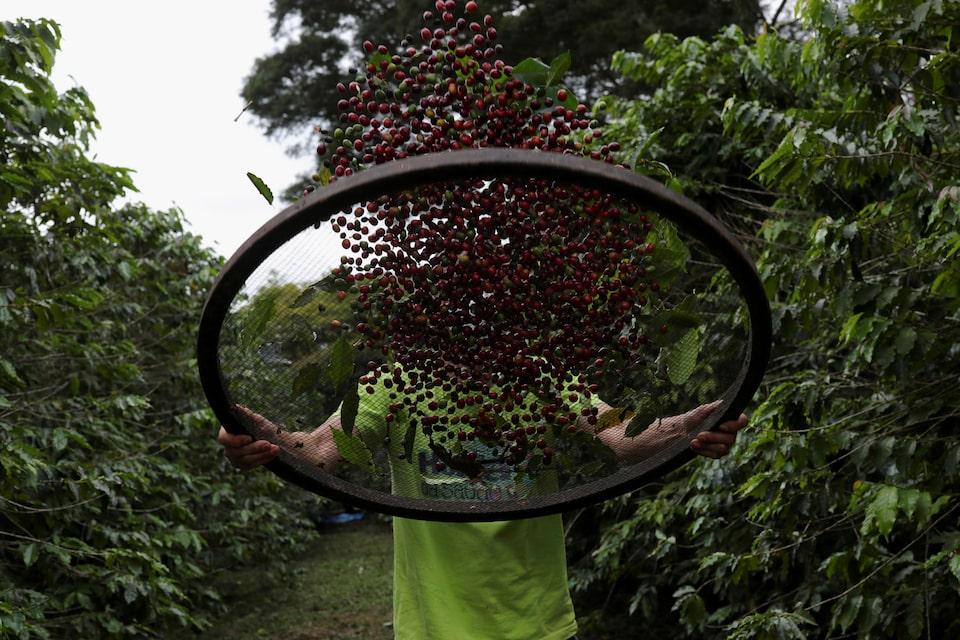
SAO PAULO, April 8 (Reuters) - Brazilian coffee exporters see U.S. President Donald Trump's global tariffs as an opportunity to send more robusta beans to the United States after international rivals were hit with even heavier charges. Trump's tariffs levy a charge of 10% on imports from Brazil, while Vietnam and Indonesia - the world's first and third-largest robusta producers - got hit by 46% and 32% tariffs respectively. Sign up here. Opportunities could arise for Brazilian exporters if the U.S. coffee industry fails to get the grain - of which the United States does not produce much - put on a tariff exemption list, as well as if Vietnam is unable to reverse its own charge in separate negotiations, the Brazilian Coffee Exporters Council (Cecafe) said on Monday. "There are opportunities, but the scenario is more one of concern than of gains", Cecafe director general director Marcos Matos said in an interview. The United States was Brazilian coffee's biggest buyer in 2024, with purchases of 8.13 million 60 kilogram bags, according to Cecafe, accounting for a 16% share of total Brazilian coffee exports. Vietnam and Indonesia accounted for some 2 million bags of coffee bought by the U.S. market, Matos said, adding that most of their exports were robusta beans. Each year, Brazil, the world's largest coffee grower, produces more of the milder Arabica beans than the stronger-tasting robusta. However, experts forecast a decrease in Arabica output during the 2025 harvest and a significant increase in robusta production. Coffee tends to fare better than other goods during turbulent times, Matos said - citing the COVID-19 pandemic - and added that Brazil is at least facing the lowest possible tariff and is in a position to maintain its share of sales to the U.S.. "Coffee tends to be resilient in economic crises..., but obviously it has limits, it can grow less," Matos said. The best outcome would see coffee included on a tariff exemption list, Matos said, citing studies showing that every dollar of coffee imports generates $43 for the U.S. economy. "We are trying to go the way (of an exception list), showing the benefit coffee has for the economy," Matos said. https://www.reuters.com/markets/commodities/brazil-coffee-exporters-glimpse-opportunity-amidst-us-tariffs-2025-04-08/
2025-04-08 20:49
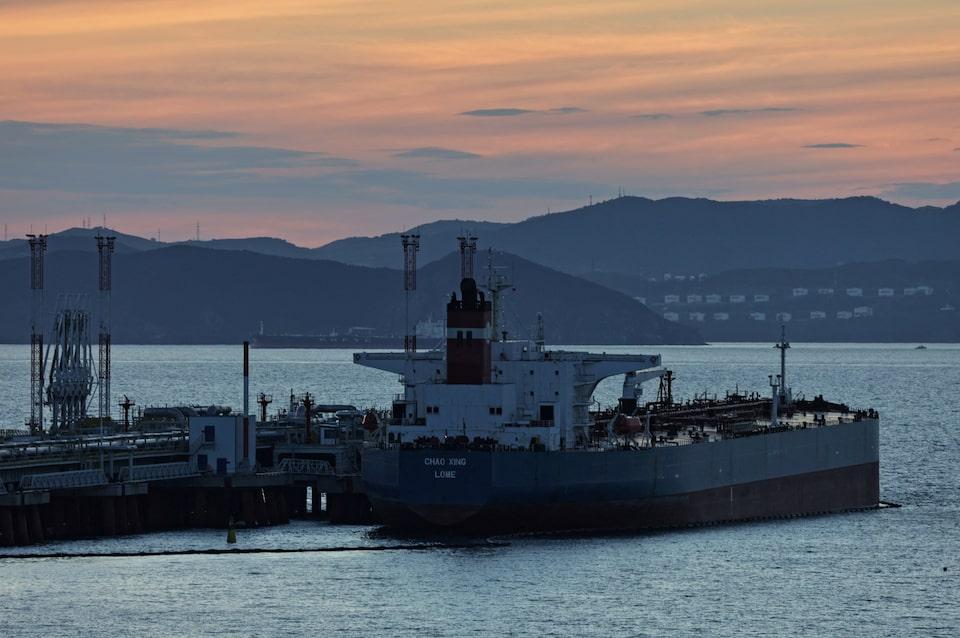
Oil prices settle down more than $1 a barrel Downside risks remain as US, China escalate tariff conflict Goldman Sachs says Brent, WTI could hit $62 and $58, respectively, by December 2025 Trump says US and Iran will hold nuclear talks in Oman HOUSTON, April 8 (Reuters) - Oil prices settled down more than $1 a barrel on Tuesday at a four-year low as investors priced in an increasing likelihood of a recession due to the escalating trade war between the U.S. and China, the world's two biggest economies. Brent futures settled down $1.39, or 2.16%, at $62.82 a barrel. U.S. West Texas Intermediate crude futures settled down $1.12, or 1.85%, at $59.58. Sign up here. The two benchmarks have slumped by 16% since U.S. President Donald Trump's April 2 announcement of tariffs on all U.S. imports. The U.S. will impose a 104% tariff on China from 12:01 a.m. EDT (0401 GMT) on Wednesday, a White House official said, adding 50% more to tariffs after Beijing failed to lift its retaliatory tariffs on U.S. goods by a noon deadline on Tuesday set by Trump. Beijing vowed not to bow to what it called U.S. blackmail after Trump threatened the additional 50% tariff on Chinese goods if the country did not lift its 34% retaliatory tariff. China's Commerce Ministry said the country would fight to the end, ratcheting up fears about a contraction of the global economy. Both oil benchmarks continued to fall in post-settlement trade. U.S. crude futures dipped to $57.88, while U.S. stock indexes also broadly sank. "The scenario has presented a case for a global recession, where fears of energy demand declining have emerged," Alex Hodes, director of market strategy at financial services firm StoneX, said in a note. U.S. Trade Representative Jamieson Greer told U.S. senators on Tuesday that China has not indicated it wants to work toward trade reciprocity. Goldman Sachs forecast that Brent and WTI crude prices would be at $62 and $58 a barrel, respectively, by December 2025, and at $55 and $51, respectively, a year after that, under different scenarios. The U.S. administration has indicated a strong preference for reducing crude prices to $50 or lower, considering this goal a top priority among its objectives, according to Natasha Kaneva, head of global commodities strategy at J.P. Morgan. "This includes being willing to endure a period of industry disruption similar to the one experienced by the shale sector during the 2014 price war between OPEC and shale, if it ultimately results in lower cost of oil production," Kaneva said. IRAN TALKS On Monday, Trump also made a surprise announcement that the U.S. and Iran were set to begin direct talks on Tehran's nuclear program, but Iran's foreign minister said the discussions would be indirect. U.S. Energy Secretary Chris Wright said on Tuesday that Iran can expect tighter sanctions if it does not come to an agreement with Trump on its nuclear program. "So absolutely, I would expect very tight sanctions on Iran, and hopefully drive them to abandon their nuclear program," Wright said in an interview on CNBC. Meanwhile, U.S. crude and distillate inventories fell while gasoline stocks rose last week, market sources said, citing American Petroleum Institute figures on Tuesday. Crude stocks fell by 1.1 million barrels in the week ended April 4, the sources said on condition of anonymity. Gasoline inventories rose by 210,000 barrels and distillate stocks fell by 1.8 million barrels, they said. Official weekly oil inventory data from the Energy Information Administration is due on Wednesday. https://www.reuters.com/business/energy/oil-prices-climb-1-after-heavy-us-tariff-driven-selloff-2025-04-08/
2025-04-08 20:40
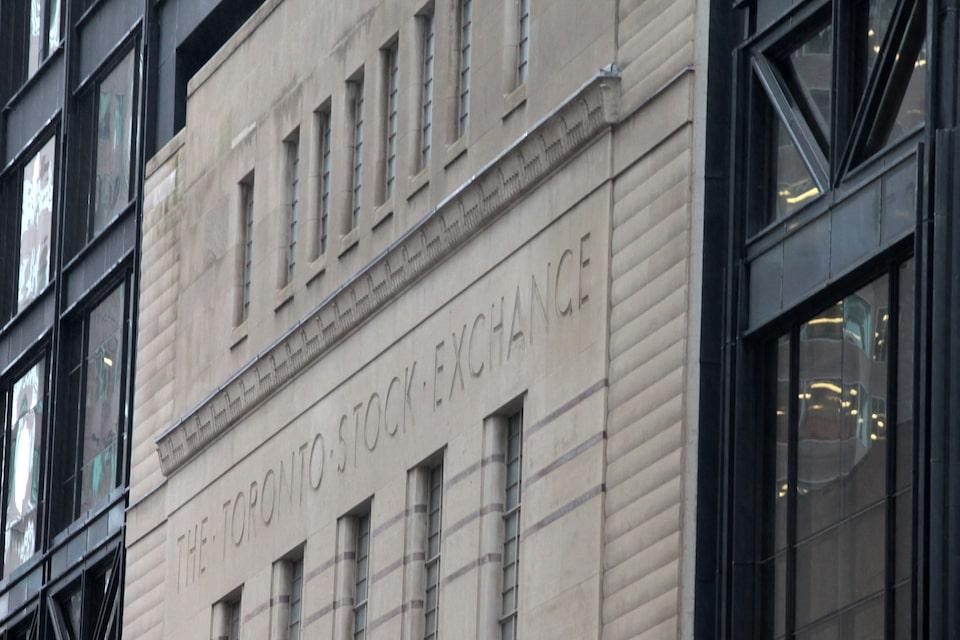
April 8 (Reuters) - Canada's main stock index gave back its earlier gains to hit a near eight-month low on Tuesday, as energy and consumer discretionary shares led broad-based declines ahead of an expected escalation of the trade war between the United States and China. Toronto Stock Exchange's S&P/TSX composite index (.GSPTSE) , opens new tab ended down 352.56 points, or 1.5%, at 22,506.90, its fourth straight day of steep declines after the U.S. unveiled a sweeping regime of trade tariffs that spooked investors globally. It posted its lowest closing level since August 12. Sign up here. The United States said that 104% duties on imports from China will take effect shortly after midnight, even as the Trump administration moved to quickly start talks with other trading partners targeted by President Donald Trump's sweeping tariff plan. "The U.S. and China are butting heads," said Elvis Picardo, a portfolio manager at Luft Financial, iA Private Wealth. "As two of the biggest economies in the world, the collateral damage from something like that if it continues for a while could be significant." The energy sector fell 4.8% as the price of oil extended its recent declines, settling 1.1% lower at $59.58 a barrel. "The recession odds in the U.S. have spiked up since the (stock market) selloff," Picardo said. "If the U.S. goes into a recession, it's unlikely the rest of the world escapes that scenario and obviously you see energy demand fall on the back of that." CEOs of Canadian oil and gas producers said they are seeking to avoid making abrupt decisions after the recent rout in oil prices. All ten major sectors on the TSX lost ground, with consumer discretionary down 2.5% and industrials ending 1.4% lower. Shares of Tilray Brands inc tumbled nearly 21% after the cannabis firm reported third-quarter revenue that fell short of analysts' estimates. The health care sector, which includes Tilray Brands, was down 8.5%. https://www.reuters.com/world/americas/tsx-futures-rise-after-selloff-eyes-prospect-tariff-talks-2025-04-08/
2025-04-08 20:24
WASHINGTON, April 8 (Reuters) - President Donald Trump said on Tuesday that he will tap the Defense Production Act to boost coal mining, a move that could put the federal purse behind reviving the fading industry in the United States. Trump is signing executive orders on Tuesday to boost coal production in the U.S. Sign up here. https://www.reuters.com/world/us/trump-says-he-will-tap-defense-production-act-boost-coal-production-2025-04-08/

2025-04-08 20:21
Trump won't grant near-term tariff exemptions, Greer says USTR working quickly on trade barrier talks, no set timeline Senators from both parties vent frustrations over Trump tariffs Some supply chain adjustment pain necessary, Greer says WASHINGTON, April 8 (Reuters) - U.S. Trade Representative Jamieson Greer told U.S. senators on Tuesday that President Donald Trump's administration will not change tactics on tariffs in the near term and warned that some pain for businesses will be necessary to bring home manufacturing jobs. During a sometimes tense U.S. Senate Finance Committee hearing, Greer said higher across-the-board tariff rates on 57 trading partners from the European Union to China and Brazil would go into effect at 12:01 a.m. on Wednesday, days after a 10% tariff was imposed on all other countries. Sign up here. "The president has been clear, again, that he's not doing exemptions or exceptions in the near term," Greer said. Past tariff carveouts created a "Swiss cheese" approach full of holes that failed to slow the growth of a $1.2 trillion U.S. trade deficit, he said. TRADE BARRIER TALKS The Trump administration is negotiating with more than 50 countries, but Greer said that to gain relief, trading partners will need to lower their tariff and non-tariff barriers to make U.S. trade more balanced. China has retaliated, prompting Trump to escalate U.S. tariffs to 104% on all Chinese goods since he took office. Greer said it was "good news" that most trading partners have chosen not to retaliate. "Other countries have signaled that they'd like to find a path toward reciprocity. China has not said that and we will see where that goes," Greer said. He declined to provide a timeline for Trump's trade talks, but said USTR and other countries are working quickly, including over nights and weekends. "The trade deficit has been decades in the making and it's not going to be solved overnight," he said. TARIFF FRUSTRATION Greer is the first Trump trade official to face Congress since Trump launched the first salvos of his trade war in February on China. Since then it expanded to Canada, Mexico, steel, aluminum and autos. Then, Trump announced broad global tariffs last week. Democrats vented their frustration at Greer over the duties. Some Republicans from farm states also criticized the tariffs. Democrat Ben Ray Lujan of New Mexico pushed Greer to concede that the tariffs would hurt families and businesses through price hikes and stock market losses. Greer disagreed and said his concerns were more with Main Street than Wall Street. "We can't keep doing the same thing we always did, and if companies are having trouble adjusting their supply chains, which I'm very sensitive to, we have to deal," Greer said. Thom Tillis, a North Carolina Republican, said he was skeptical about the administration's decision to impose tariffs on allies, noting that 4 million Americans each year turned 65 and they were seeing their retirement savings dwindle daily. "I'm just trying to figure out whose throat I get to choke if it's wrong," he said, questioning the blanket approach. Senator Mark Warner, a Virginia Democrat, raised his voice when questioning Greer about why the U.S. hit top ally Australia with a 10% tariff. The U.S. has a free trade agreement, and a rare trade surplus -- with Australia. "The idea that we are going to whack friend and foe alike...is both insulting the Australians, undermines our national security and frankly makes us not a good partner," Warner said. Greer criticized Australia for restrictions on American beef over mad cow disease, and said that with fewer trade barriers the U.S. would be "running up the score" on Australia with an even bigger trade surplus. https://www.reuters.com/world/us/us-trade-rep-faces-bipartisan-questions-scope-duration-tariffs-2025-04-08/