2025-04-08 12:07
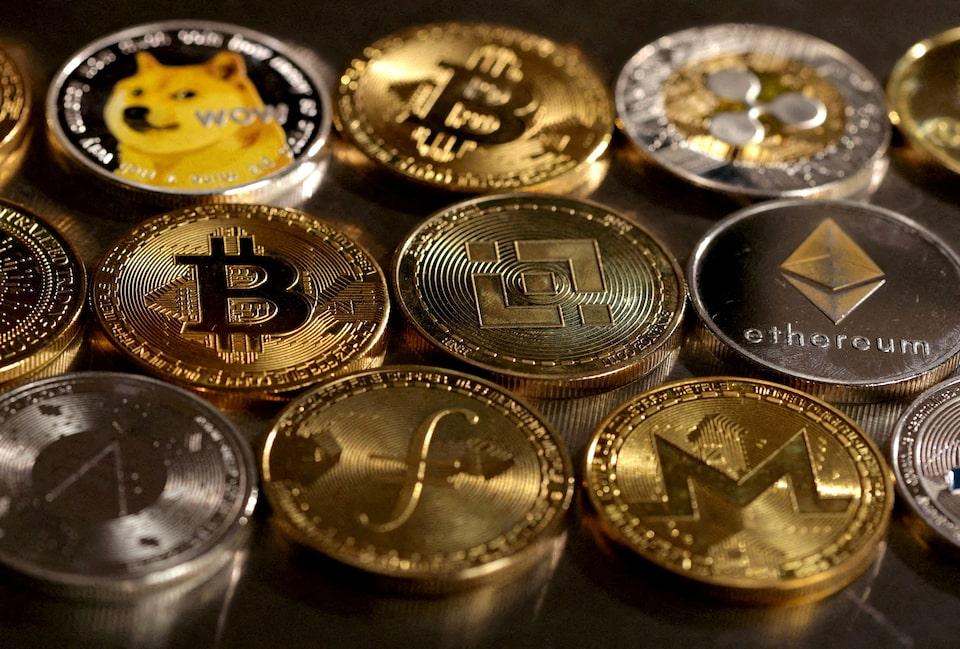
April 8 (Reuters) - Ripple said on Tuesday it will buy multi-asset prime broker Hidden Road in a $1.25 billion deal, making it one of the largest acquisitions by the crypto company. This is the second billion-dollar-plus deal involving a crypto company this year, as digital assets such as bitcoin gain more prominence under U.S. President Donald Trump, who has promised to be the "crypto president". Sign up here. "The U.S. market is effectively open for the first time due to the regulatory overhang of the former SEC coming to an end, and the market is maturing to address the needs of traditional finance," Ripple CEO Brad Garlinghouse said. Prime brokers help in the day-to-day operations of clearing, securities lending, leveraged trade execution, among others. Large hedge funds and institutional investors usually avail these services. Hidden Road clears $3 trillion annually across markets with over 300 institutional clients. The deal will allow the Hidden Road to expand exponentially using Ripple's balance sheet and become the largest non-bank prime broker globally, the crypto company said. Ripple will also become the only crypto company to own and operate a global multi-asset prime broker due to the deal, which is expected to close in the coming months, it said. The acquisition also enhances Ripple USD's (RLUSD) utility as Hidden Road uses the stablecoin as collateral across its prime brokerage products. Ripple launched RLUSD, a stablecoin pegged to the U.S. dollar, last year, as it sought to disrupt the market dominated by Tether and USD Coin. https://www.reuters.com/markets/deals/crypto-firm-ripple-buy-prime-broker-hidden-road-125-billion-2025-04-08/
2025-04-08 12:07
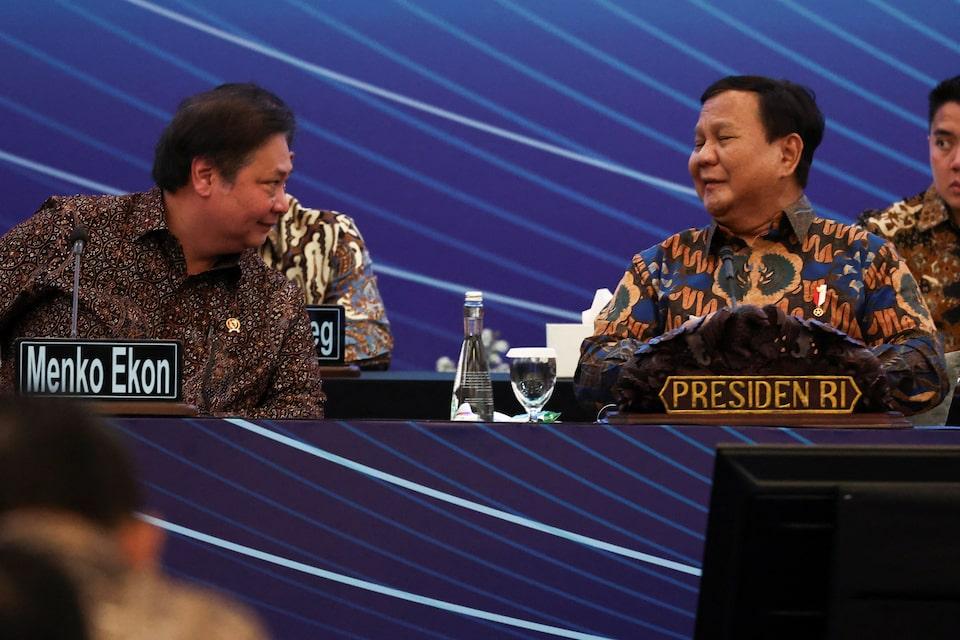
Indonesia to buy U.S. LPG, LNG, soybeans Will lower duties on U.S. steel, mining products, health equipment Delegation to travel to U.S. on Apr. 17 for talks President calls for relaxing import rules JAKARTA, April 8 (Reuters) - Indonesia announced a raft of concessions on U.S. imports Tuesday, including reducing taxes on electronic goods and steel, ahead of trade negotiations with Washington over President Donald Trump's sweeping tariffs. Southeast Asia's biggest economy will send a high-level delegation to the United States next week in hopes of securing a deal to ease the impact of a 32% tariff due to take effect on Wednesday. Sign up here. Indonesia plans to buy U.S. liquefied petroleum gas, liquefied natural gas and soybeans as part of the negotiation efforts, said chief economic minister Airlangga Hartarto, who will lead the delegation travelling to Washington on April 17. He was speaking at a conference discussing how to respond to U.S. tariffs that was attended by President Prabowo Subianto, senior officials and business leaders. Prabowo told the conference that some import quotas were no longer necessary. Indonesia imposes quotas on imported rice, corn, sugar and beef among other goods. And there was also room for flexibility on what he called Indonesia's uncompetitive local content rules, suggesting they should be replaced with incentives. The rules came into the spotlight last year when Indonesia banned the iPhone 16. It was cleared for sale last month after Apple pledged more than $300 million in investments. Finance Minister Sri Mulyani Indrawati said Indonesia would also lower import duties on U.S. steel, mining products and health equipment to 0% to 5% from 5% to 10% currently. Taxes on electronics, mobile phones and laptops from any country will be lowered to 0.5% from 2.5%, she said. The government is also discussing buying U.S. components for an oil refinery project. Sri Mulyani said there was room for Indonesia to replace Vietnam, Bangladesh, Thailand, and China as a source of some exports to the U.S. under Washington's new tariff regime. President Prabowo's economic advisor Luhut Pandjaitan, meanwhile, said Indonesia planned to discuss a partnership on critical minerals with Washington. Indonesia posted a $16.8 billion trade surplus with the U.S. - its third-biggest export destination - last year, according to Indonesian government data, with electronics, apparel and clothing, and footwear its leading export products. https://www.reuters.com/markets/indonesia-announces-trade-concessions-us-ahead-talks-2025-04-08/
2025-04-08 12:00
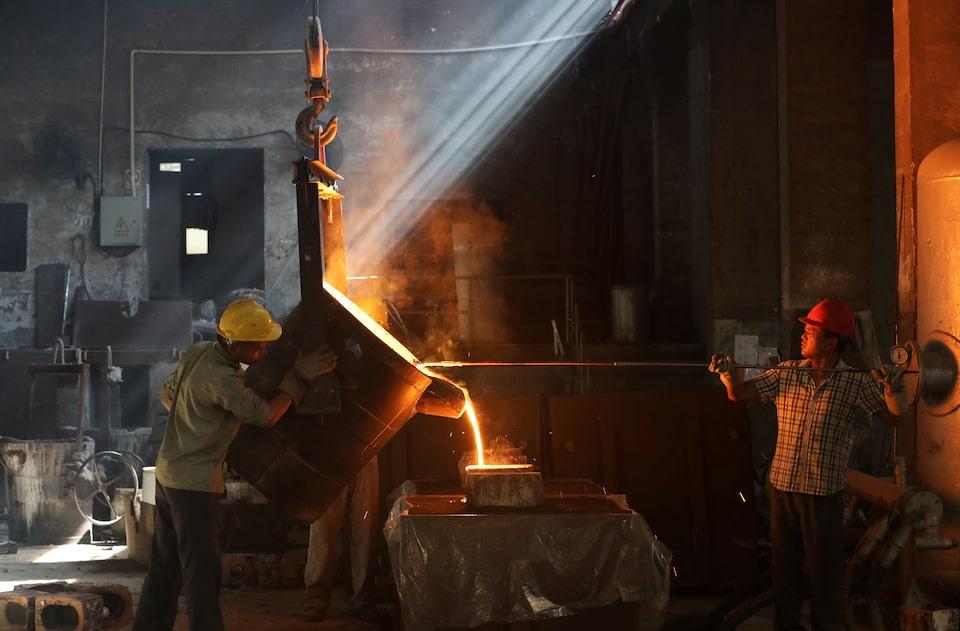
LAUNCESTON, Australia, April 8 (Reuters) - Iron ore is probably the commodity most exposed to China and while the price of the steel raw material has eased, it has held up better than other major commodities like crude oil and copper in the wake of U.S. President Donald Trump's tariff turmoil. Iron ore futures traded on the Singapore Exchange ended at $99.54 a metric ton on Monday, a three-month low and down 4.1% from the $103.77 close on April 2, the day Trump imposed sweeping tariffs on U.S. trading partners. Sign up here. The Singapore contracts largely reflect the views of market participants outside of China, which buys about three-quarters of all global seaborne iron ore and produces just over half of the world's steel. But even China's domestic iron ore futures on the Dalian Commodity Exchange have held up, losing just 3.6% since April 2 to Monday's close of 762.50 yuan ($104.31) a ton. In contrast to iron ore's relatively modest declines, Brent crude futures shed 14.1% from April 2 to Monday's close of $64.36 a barrel, a four-year low, while London-traded copper contracts dropped 10% to end at $8.732 a ton. China is the world's biggest buyer of crude and copper, but unlike iron ore these commodities have a broader investor base and tend to more rapidly reflect changes in market sentiment and dynamics. But even so, iron ore's performance seems at odds with Trump's announcement last week of a 34% tariff on U.S. imports from China, which was on top of 20% already imposed. The mercurial U.S. president doubled down on Monday, threatening an additional 50% on imports from China after Beijing responded with a 34% tariff of its own on imports from the United States, as well as export controls on a series of minor metals, many of the critical to defence and technology. If all the threatened tariffs go ahead, China's exports to the United States will face an impost of 104%, which would likely have the effect of ending all trade between the world's two largest economies. OUTLOOK DARKENS In this scenario it's hard to construct a case that iron ore will continue to outperform other major commodities, it's actually easier to see it suffering more. Manufacturing accounts for about 25% of China's steel demand, so any major hit to this sector from weaker demand for exported goods such as appliances and vehicles will flow directly through to steel consumption. The question is whether Beijing will take decisive action to stimulate both parts of the economy hit by tariffs and other sectors not as exposed but capable of helping boost overall economic growth. If China does act to boost its economy through stimulus of sectors such as infrastructure and consumer spending on manufactured goods, it becomes a matter of whether this will be enough to keep steel demand at relatively strong levels. If steel demand and output hold up, then so too should iron ore imports, and thus prices. It's too early to say if iron ore imports are weakening amid the tariff concern, with March data compiled by commodity analysts Kpler suggesting a solid, if unspectacular, result. China imported 102.1 million tons of iron ore in March, up from 84.36 million in February, although that month's total was lower than expected because of weather disruptions in top supplier Australia. The March figure was only slightly below the 104.9 million tons from the same month in 2024, according to Kpler data. In addition to iron ore, the other key steel raw material is metallurgical coal, and it has also shown a somewhat subdued reaction to the escalating tariff war. Singapore Exchange contracts , which track the price of metallurgical coal from Australia, the world's biggest exporter of the fuel also called coking coal, have actually risen, gaining 5.9% from the close on April 2 to end at $186 a ton on Monday. However, the price increase is because of weather-related disruptions in Australia's Queensland state, home to the bulk of the country's metallurgical coal mines. China's coking coal contracts have slipped 3.1% from April 2 to the close of 971.50 yuan a ton on Monday, perhaps a better reflection of some demand concerns emerging amid the tariff uncertainty. The views expressed here are those of the author, a columnist for Reuters. https://www.reuters.com/markets/commodities/iron-ore-coking-coal-hold-up-amid-tariff-chaos-how-long-russell-2025-04-08/
2025-04-08 11:56
ECB steps up monitoring of euro zone banks, sources say No signs for alarm seen yet, despite market selloff Bank supervisors calling banks more often FRANKFURT, April 8 (Reuters) - Central bankers and supervisors in the euro zone, Britain and Switzerland have increased their monitoring of banks and markets amid a trade-war-driven rout in global stocks but have found no reason for alarm yet. Stocks around the world have fallen sharply since U.S. President Donald Trump unveiled sweeping global tariffs, stoking fears of a recession in the world's largest economy and a potentially destabilising market crash. Sign up here. The European Central Bank, which sets interest rates for the euro zone and oversees its biggest banks, has heightened its level of scrutiny because market selloffs can translate to damage to the real economy if they last long enough, four sources told Reuters. ECB supervisors have been calling banks on their watch more frequently than usual to check on deposits and other forms of funding. The feedback so far has been reassuring, the sources said, a point also made by Bank of Spain supervisor Mercedes Olano. ECB central bankers and market regulators in Switzerland and France were also reassured to see that market liquidity had not dried up, meaning sellers could easily find buyers, even for large positions. The market operates in very large volumes, allowing all investors to trade according to their needs, French market watchdog AMF said in an emailed statement. A source said that the Bank of England was also monitoring the markets for any liquidity strains. ECB policymakers, who unlike their peers elsewhere in Europe, have to contend with a bloc of 20 different economies, have zeroed in on government bond spreads, or the premium that weaker borrowers pay over the euro zone's safe haven, Germany. Seen as a measure of investor confidence in the euro zone, spreads have widened slightly but remained under control. Italy's 10-year bonds, for example, were yielding just 122 basis points more than their German counterparts. This is a far cry from the 250 basis points spread investors were demanding to own Italian debt at the height of the COVID pandemic in 2020 and when the ECB began raising rates in 2022. SHORT-TERM OVERREACTION Speaking in Spain on Tuesday, ECB Vice-President Luis de Guindos said markets "always overreact in the short term" and had to find a new equilibrium in a new, more fragmented world where growth will likely be lower and inflation higher. The euro was also rising against the dollar as the world reassessed the United States' economic prospects and diversified away from the U.S. currency, de Guindos and others noted. While the situation in Europe remained under control, officials in the euro zone and Switzerland were still worried about trouble spilling over from Wall Street and particularly from funds acting as lenders. "It is very important that we primarily follow developments in the so-called non-bank financial institution sector, which includes hedge funds, private equity funds, credit funds and so on," Switzerland's top market regulator Stefan Walter told Reuters on Tuesday. ECB sources also flagged the risk that damage at these so-called shadow banks could ricochet on the traditional banking system. Another ECB source flagged a spike in volatility - as evidenced by the widely monitored VIX index that measures option prices on U.S. stocks - as an indication that financing conditions were worsening on capital markets. ECB policymakers were set to compare notes at a meeting of the European Union's financial policymakers in Warsaw later this week. But sources said an in-depth discussion would only happen at a Governing Council meeting next week, when the ECB is expected to cut rates. An ECB spokesperson declined to comment. https://www.reuters.com/markets/europe/ecb-ups-monitoring-banks-bonds-no-alarm-so-far-sources-say-2025-04-08/

2025-04-08 11:52
Rio to supply 70% iron ore for new Austrian plant Plant to cut carbon emissions via hydrogen-based process Project scheduled to start operations in mid-2027 April 8 (Reuters) - Rio Tinto (RIO.AX) , opens new tab will supply 70% of the iron ore for a new hydrogen-based steelmaking plant being developed with Austrian steelmaker Voestalpine (VOES.VI) , opens new tab and steel-making technology provider Primetals Technologies, the companies said on Tuesday. The test facility, to be constructed at Voestalpine's Linz site, will have a capacity of three tons of metal per hour, will utilize hydrogen instead of coal to process iron ore, potentially eliminating carbon emissions from the steelmaking process. Sign up here. Rio Tinto will contribute technical expertise regarding iron ore quality while supplying 70% of the raw material from its global operations for the prototype plant and will aid in accelerating the technology's market readiness. The technology permits iron ore to be used directly without first forming it into pellets, which could reduce costs and energy consumption. The project, also supported by Mitsubishi Corporation (8058.T) , opens new tab, is set to begin operations in mid-2027 and has secured funding from the Austrian government and European Union programs, according to the statement. https://www.reuters.com/sustainability/climate-energy/rio-tinto-supply-70-iron-zero-carbon-steel-plant-austria-2025-04-08/
2025-04-08 11:40
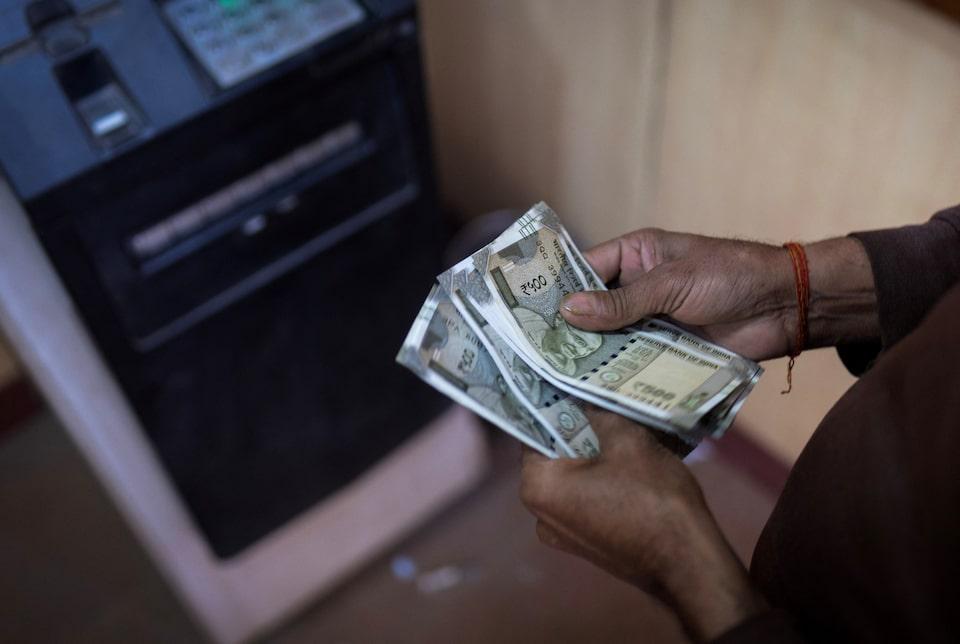
MUMBAI, April 8 (Reuters) - The Indian rupee fell to a more than two-week low on Tuesday, weighed down by a weaker yuan and corporate hedging demand, while forward premiums eased on rising U.S. bond yields. The rupee closed at 86.2650 against the U.S. dollar, down 0.5% on the day. The currency hit a low of 86.29 during the session, its lowest since March 21. Sign up here. The onshore Chinese yuan declined 0.4% to 7.33 on Tuesday after the country's central bank set the midpoint rate , around which the yuan is allowed to trade in a 2% band, at the weakest level since September 2023. Asian currencies weakened, with the Indonesian rupiah hitting a record low as traders returned from an extended break. The Indian rupee also came under pressure from importer hedging and broader regional weakness, a trader at a state-run bank said. Importer dollar bids were "quite strong," towards the close of the session, the trader added. After days of tariff-driven volatility, global equities found some breathing room on Tuesday, with India’s benchmark Nifty 50 (.NSEI) , opens new tab closing up about 1.7%. European stock indexes were in the green as well while futures also pointed to a positive start for US stocks. "If equities do find a bit of respite, the dollar could remain offered today alongside JPY and CHF," ING Bank said in a note. Although U.S. President Donald Trump "has given little signs of scaling back protectionism, and there is a risk that markets are again erring on the side of optimism," the note added. Meanwhile, dollar-rupee forward premiums declined pressured by a rise in U.S. bond yields. The 1-year implied yield was down 7 basis points at 2.33%. Investors now await the Reserve Bank of India's policy decision due at 10:00 a.m. IST on Wednesday. The central bank is widely expected to cut policy rates by 25 basis points. https://www.reuters.com/world/india/rupee-hits-over-two-week-low-hurt-by-weaker-chinese-yuan-importer-hedging-2025-04-08/